
Horror Franchise · Based on Stephen King's 1974 novel
Carrie
Five decades of Carrie White: the 1976 film, its direct sequel, independent screen remakes, the 2026 television series and the stage musical.
Franchise Overview
Carrie is a horror property originating in Stephen King’s first published novel, released in 1974. Its screen history began with Brian De Palma’s Carrie (1976) and subsequently developed through a direct sequel, two new screen adaptations and a streaming television series. Across these productions, Carrie White’s difficult adolescence, religiously restrictive home life and telekinetic abilities have been reinterpreted for different generations. The franchise also has a substantial theatrical history, most notably the 1988 stage musical and its extensively revised 2012 revival.
The five screen entries follow different narrative relationships. The Rage: Carrie 2 (1999) connects directly to the first film through Sue Snell and a new central character; Carrie (2002) and Carrie (2013) each retell King’s premise independently. Carrie (2026), developed for Prime Video by Mike Flanagan, moves the story into long-form television, with an initial eight-episode season released in October 2026 and a second season subsequently commissioned. This is a history of connected adaptations and remakes rather than one continuous fictional biography.
Carrie Movies & TV Series in Release Order
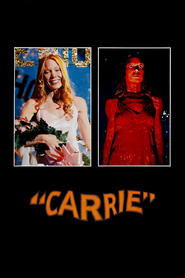
Director Brian De Palma
Carrie White is an isolated teenager whose strict religious mother keeps her ignorant of ordinary adolescent life. After her classmates humiliate her at school, Carrie discovers she can move objects with her mind. Sue Snell tries to make amends by arranging a prom date with Tommy Ross, but Chris Hargensen and Billy Nolan plan a cruel public prank. Carrie’s tentative hope of acceptance leads toward a night of terror.
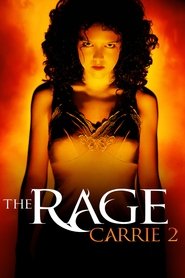
Director Katt Shea
Rachel Lang begins displaying telekinetic abilities after the death of her friend Lisa. School counselor Sue Snell, a survivor of the events surrounding Carrie White, recognizes the signs and fears another tragedy. As Rachel grows closer to Jesse, classmates exploit her vulnerability and organize a humiliating confrontation. The sequel follows a new protagonist while retaining Sue as a direct link to the 1976 film.
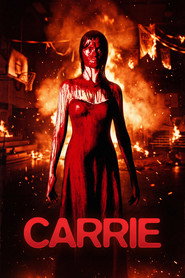
Director David Carson
A detective reconstructs the events surrounding Carrie White through interviews with students and teachers at Ewen High School. The investigation moves between the bullying Carrie endured, her emerging telekinetic powers and the prom-night disaster. Written by Bryan Fuller, this television adaptation uses testimony to frame the story and changes its aftermath, opening a different possibility for Carrie’s life.
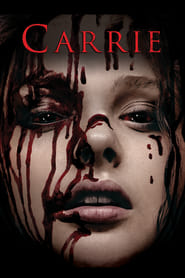
Director Kimberly Peirce
Carrie White faces bullying at school and rigid religious control at home while discovering her telekinetic powers. In this remake, footage of an abusive locker-room incident is recorded and shared, spreading her humiliation beyond the original witnesses. Sue Snell hopes a prom invitation from Tommy Ross will help Carrie, but Chris Hargensen prepares revenge. The contemporary setting brings digital surveillance into the familiar story.
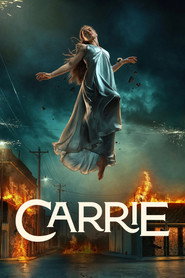
After her father’s death, a homeschooled Carrie White enters public high school under the restrictive influence of her mother Margaret. She confronts unfamiliar peer relationships, viral humiliation and the gradual emergence of telekinetic powers. Mike Flanagan’s eight-episode first season expands the novel’s characters and school environment for serialized television, with Summer H. Howell as Carrie and Samantha Sloyan as Margaret.
From the 1974 Novel to the Original 1976 Film
Stephen King’s Carrie was published by Doubleday on April 5, 1974, establishing the central material from which the later adaptations would develop. The book concerns an isolated teenager living in a small Maine community, with two environments exerting pressure on her life: a school where other students ridicule her and a home where religious prohibitions shape almost every aspect of her upbringing. Telekinesis is part of the premise from the beginning, but its emergence is tied to Carrie’s gradual awareness of her body, her anger and the limited freedom available to her. The combination made the story adaptable to psychological horror, supernatural tragedy and adolescent drama. King’s narrative also uses an unusual documentary framework. Newspaper reporting, expert commentary, testimony and retrospective materials reconstruct a disaster whose consequences are already known to the reader.
That structure makes the wider community a significant participant in the story: Carrie’s experience is examined through the recollections and judgments of people who failed to understand her while she was alive. Subsequent screenwriters have made different choices about these devices. Some adaptations concentrate on a largely chronological account of Carrie’s experience, while others restore investigative perspectives or shift the story toward the events that follow the prom. The source material is unusually durable because it offers several distinct points of adaptation. Carrie can be presented as a victim of communal cruelty, a person whose emerging abilities cannot be contained, or a dangerous figure observed by the same society that helped produce the crisis. Margaret White introduces a separate conflict involving parental authority and religious fear. Sue Snell’s remorse and Chris Hargensen’s hostility establish opposing responses to wrongdoing within the school. Later works change the balance between these elements, making the differences between adaptations as historically revealing as their shared plot.
The move to cinema happened rapidly. Brian De Palma directed the first feature adaptation, with a screenplay by Lawrence D. Cohen and production by Paul Monash through Redbank Films. American Film Institute documentation records that the project was originally developed at Twentieth Century-Fox before United Artists acquired it. Principal photography began in March 1976, and the film reached American audiences later that year. It became the first theatrical feature derived from a Stephen King novel, beginning a long relationship between the author’s fiction and the screen industries. Sissy Spacek portrayed Carrie, opposite Piper Laurie as Margaret White. Amy Irving played Sue Snell, while William Katt, Nancy Allen and John Travolta appeared among the principal school characters.
Spacek and Laurie both received Academy Award nominations for their performances. Those distinctions helped position the film beyond the exploitation market in which many supernatural or adolescent horror features were then discussed. De Palma’s association with the picture also linked Carrie to an established director whose interests included suspense, spectatorship and volatile identities. The adaptation altered how the novel’s world could be recognized in popular culture. The prom-night image of Carrie covered in blood became the central visual shorthand for the property, even for viewers who had never encountered the book. The original film’s continuing theatrical circulation and home-video editions provided a stable reference point for every later revival.
The Direct Sequel and Television Reinterpretation, 1999–2002
The Rage: Carrie 2, released in March 1999, remains the only direct sequel to De Palma’s film. Directed by Katt Shea from a screenplay by Rafael Moreu, it introduces Rachel Lang, played by Emily Bergl, as a new teenage protagonist. The narrative gives Rachel a familial connection to Carrie White while exploring the treatment of girls by socially powerful boys at her school. Its central concerns are related to King’s original material, although the film has a different cast of young characters and a late-1990s social setting. The most concrete continuity link is Sue Snell. Amy Irving reprises the part she played in 1976, now working as a school counselor and recognizing the danger surrounding another girl with telekinetic abilities.
Her presence distinguishes The Rage from a remake: the earlier catastrophe is part of the new story’s history, and one survivor carries its memory into another generation. The narrative does not require Carrie herself to return. Its sequel status comes through the legacy of the tragedy, a surviving witness and a new person who becomes vulnerable to similar forms of abuse. Released through United Artists, the film did not lead to another Rachel Lang sequel. Amy Irving’s return and the familial link between the two protagonists remain its most important differences from the later remakes.
In November 2002, NBC broadcast a new Carrie television film written by Bryan Fuller and directed by David Carson. Angela Bettis played Carrie and Patricia Clarkson played Margaret, in a production made by MGM Television and Trilogy Entertainment Group. Presented as a three-hour network event including commercial time, the film took advantage of television’s extended running length to accommodate supporting characters and a reconstructed account of the school disaster. Its development is particularly revealing because the project was conceived with possible continuation in mind. Fuller placed a police inquiry around the central story, using interviews with survivors to reconsider the familiar sequence of events. This approach recalls the documentary material in King’s novel without simply transferring the book’s full structure to the screen.
The larger departure came at the ending: Carrie survives, leaving Sue Snell in a position to help her escape and making an ongoing series at least narratively possible. Fuller explained in a contemporary interview that keeping Carrie alive would force the character to confront the moral consequences of destructive actions, a concern that could support future episodes. NBC did not commission that proposed ongoing series. The 2002 film therefore survives as a self-contained production whose ending preserves an unfulfilled television ambition. It occupies an unusual position in the franchise because it neither continues the 1976 film nor merely copies its conclusion. The production also demonstrates how network programming requirements can affect adaptation choices: a broadcaster seeking a recognizable television event and a studio considering serial storytelling may encourage a different resolution from those of a theatrical tragedy.
Modern Screen Adaptations: 2013 and 2026
A new theatrical Carrie arrived in October 2013, directed by Kimberly Peirce. Chloë Grace Moretz took the title role and Julianne Moore portrayed Margaret White. The screenplay credits Lawrence D. Cohen and Roberto Aguirre-Sacasa, linking the production to the earlier screen tradition while establishing an independent adaptation of King’s novel. Metro-Goldwyn-Mayer, Screen Gems and Misher Films were among the companies involved, with Sony Pictures handling the American theatrical release. The 2013 version emerged during a period in which studio horror frequently revisited established titles for new audiences. Its marketing placed the familiar school setting and Carrie’s physical transformation at the center of recognition, while the production incorporated contemporary communication technology into the cruelty directed at her. The humiliating school-shower incident, for example, becomes something that can circulate beyond its immediate witnesses. This changes the social reach of the event without requiring an entirely different premise: Carrie’s isolation now exists alongside a networked public in which private embarrassment can be replayed and shared.
The transition to serialized streaming television came with Carrie (2026), written and developed by Mike Flanagan for Prime Video. Summer H. Howell plays Carrie White, with Samantha Sloyan as Margaret White. The cast includes Siena Agudong as Sue Snell, Alison Thornton as Chris Hargensen and Joel Oulette as Tommy Ross. The first season premiered with eight episodes on October 7, 2026. Flanagan directed four episodes; Kate Siegel, Axelle Carolyn, Kyra Sedgwick and Hiromi Kamata each directed one. The format allows the school community and family relationships to be developed over several hours. In interviews around the premiere, Flanagan outlined a possible three-season arc for Carrie White. Amazon MGM Studios renewed the series for a second season on October 22, 2026; no third season had been commissioned and no premiere date for the second season was announced.
Continuity, Characters and Changing Social Context
The 1976 film and The Rage: Carrie 2 (1999) form the only direct screen continuation: Amy Irving returns as Sue Snell, and the earlier catastrophe belongs to Rachel Lang’s history. The later productions restart the story of Carrie White with independent casts and different outcomes. The 2002 NBC film alters the conclusion of King’s story. The 2013 theatrical remake resets the premise again. The 2026 streaming series is a separate television reinterpretation that received a second-season order in October 2026. Release order therefore records the history of adaptations rather than a single chronology of fictional events.
Four actresses have portrayed Carrie White in the main screen adaptations: Sissy Spacek (1976), Angela Bettis (2002), Chloë Grace Moretz (2013) and Summer H. Howell (2026). The corresponding performers of Margaret White are Piper Laurie, Patricia Clarkson, Julianne Moore and Samantha Sloyan. Sue Snell provides a rare casting connection between productions: Amy Irving returned in 1999, when Sue had become a school counselor. The character’s presence connects The Rage to the 1976 film, while the independently adapted versions cast their own Sues and Margarets. The recurring mother-daughter conflict and the involvement of classmates offer each version a familiar dramatic framework.
The means by which Carrie’s humiliation spreads have changed with each production. King’s 1974 novel presents school cruelty through retrospective testimony, press reports and commentary on the disaster; the 1976 film condenses those perspectives into an unfolding school story. Carrie (2013) adds mobile-phone footage of the locker-room incident, allowing classmates to circulate an assault that would otherwise have remained within the school. The 2026 television series extends that shift to social media, making the online dissemination of bullying part of its contemporary setting. Across the adaptations, the prom remains a recognizable setting, while the roles of Sue Snell, Chris Hargensen and the adults around Carrie change with each script. The 1988 stage musical and its 2012 revision approach the same setting through songs, ensemble performance and theatrical staging. These differences demonstrate how the same literary premise has been transferred between print, feature films, network television, streaming television and live theatre.
The Musical, Distribution and Commercial History
The principal expansion beyond screen drama was Carrie: The Musical, with music by Michael Gore, lyrics by Dean Pitchford and a book by Lawrence D. Cohen. The original production was presented by the Royal Shakespeare Company at Stratford-upon-Avon in February 1988 before transferring to Broadway. Directed by Terry Hands, it opened at the Virginia Theatre on May 12, 1988, and closed after sixteen previews and five regular performances. Linzi Hateley played Carrie on Broadway and Betty Buckley played Margaret, having appeared in the 1976 film as the school gym teacher. The musical’s notoriously short New York run became a separate chapter in the property’s public reputation, particularly because the production had attempted to translate a story of supernatural violence into a large-scale stage event. For years the show had little authorized performing life. Its creators eventually returned to the material, and MCC Theater presented a substantially revised Off-Broadway production in 2012 under director Stafford Arima. Marin Mazzie and Molly Ranson played Margaret and Carrie in a version that revised the book and score and shifted the focus toward the intimate family and school conflicts. The revised version subsequently entered licensed circulation for regional, educational and international productions, establishing a performing life beyond the original Broadway run.
The first film passed from development at Twentieth Century-Fox to United Artists and was produced by Paul Monash through Redbank Films. United Artists also released the 1999 sequel. The 2002 adaptation was made for NBC by MGM Television and Trilogy Entertainment Group. The 2013 remake involved MGM Pictures, Screen Gems and Misher Films and was distributed domestically by Sony Pictures Releasing. Amazon MGM Studios brought the property to Prime Video as an eight-episode television season in 2026. The October 22 renewal marked the first commissioned follow-up season for a screen version of the Carrie White story.
The Numbers reports production budgets and theatrical grosses for the three cinema releases, as presented below. The television film of 2002 and the Prime Video series of 2026 are excluded. Values are nominal US dollars, without inflation adjustment. The original film’s historical revenue is disputed between tracking services: The Numbers lists $25,878,153 domestic and $25,945,800 worldwide, whereas Box Office Mojo reports $33,800,000 domestic. The disparity exceeds the recorded international returns and reflects different historical datasets; the table follows The Numbers consistently rather than mixing incompatible totals.
| Theatrical release | Production budget | Worldwide theatrical gross | Original US distributor |
|---|---|---|---|
| Carrie (1976) | $1,800,000 | $25,945,800 | United Artists |
| The Rage: Carrie 2 (1999) | $21,000,000 | $17,760,244 | United Artists |
| Carrie (2013) | $30,000,000 | $82,409,520 | Sony Pictures Releasing |
Reporting note: Worldwide grosses in The Numbers are not complete historical admissions records, especially for 1976 and 1999. The figures do not include home video, TV or streaming revenue.
Sources & References
- Stephen King, official website — Carrie (1974), novel. Original publication date, book synopsis and King’s account of the inspiration behind Carrie White.
- American Film Institute — Carrie (1976), AFI Catalog. Production history, cast, screenplay, original distribution and contemporaneous documentation.
- Stephen King, official website — Carrie (1976), motion picture. The author’s filmography entry identifying De Palma, Cohen and United Artists.
- The Numbers — Carrie — Franchise Box Office History. Comparable production budgets and theatrical grosses for the 1976, 1999 and 2013 releases.
- Box Office Mojo — Carrie (1976), title box-office summary. Independent historical domestic total used to document the difference from The Numbers.
- Los Angeles Times — Mature Sequel to Carrie Rages Against High School Machismo (1999). Contemporary reporting and criticism of Katt Shea’s sequel and Rafael Moreu’s screenplay.
- NBC, reproduced by Crashdown — NBC Three-Hour Movie Event Carrie Begins Production (2002). Contemporary production notice for the Bryan Fuller and David Carson television project.
- Deseret News — Carrie Is Back (2002). Contemporary interview with Bryan Fuller about the film’s structure, new ending and potential continuing series.
- American Film Institute — Carrie (2013), credits. Production companies, screenplay, director and US theatrical distributor of the remake.
- Demilo Films — Carrie (2013). Producer’s record of creative credits, partners and original release.
- Sony Pictures — Carrie and Evil Dead at New York Comic Con (2012). Contemporary studio announcement naming the 2013 production’s director, stars and writer.
- Stephen King, official website — Carrie (2026), television. Verified first-season production credits, performers, directors and release date.
- Amazon — Carrie on Prime Video and Season 2 Renewal (2026). Official confirmation of eight released episodes and a commissioned second season.
- TheWrap — Carrie Scores Season 2 Renewal at Prime Video (2026). Independent contemporary account of the October 22 renewal and the platform’s stated audience results.
- Internet Broadway Database — Carrie (1988), original Broadway production. Opening and closing dates, previews, performances and original stage credits.
- Playbill — Look Back at the Original Production of Carrie on Broadway. Retrospective on the 1988 musical and its subsequent revival.
- Playbill — Revised Carrie Opens Off-Broadway (2012). Contemporary coverage of the MCC Theater revision and changed scale.
- Concord Theatricals — Carrie: The Musical. Licensor documentation of the musical, its original and revised productions and the licensed performing version.
- The Playlist — Mike Flanagan on Carrie and a possible three-season arc (October 9, 2026). Interview explaining the potential multi-season direction and distinguishing it from confirmed orders.