
Horror Franchise
Coffin Joe
The three-film Coffin Joe story, a 1970 experimental appearance and the enduring Brazilian horror persona created by José Mojica Marins.
Franchise Overview
The Coffin Joe franchise centers on Zé do Caixão, the undertaker created and performed by Brazilian filmmaker José Mojica Marins. A black cape, top hat and unnaturally long fingernails make him immediately recognizable; his defining obsession is to father a child who will perpetuate what he considers a superior bloodline. Marins had introduced the figure on Brazilian television in October 1963, before his theatrical debut in 1964. Later broadcast programs, illustrated publications and public appearances sustained the persona until the belated 2008 conclusion. For many viewers, the character's image became inseparable from Marins himself.
The continuous story comprises At Midnight I'll Take Your Soul (1964), This Night I'll Possess Your Corpse (1967) and Embodiment of Evil (2008). The fourth film in this selection, Awakening of the Beast (1970), examines Coffin Joe as an image within an experimental narrative. The list highlights that central trilogy and one influential self-referential work; other films featuring the persona, including the 1974 and 1978 productions, are addressed in the wider history below.
Coffin Joe Movies in Release Order
Release order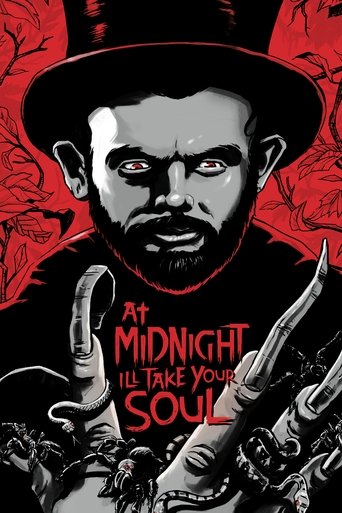
Director José Mojica Marins
In a small Brazilian town, undertaker Zé do Caixão openly ridicules his neighbors' religious beliefs and insists that his bloodline must continue through a child he considers worthy of him. Frustrated with his marriage, he becomes fixated on another woman and uses intimidation and murder to remove obstacles. The community fears his brutality, but the suffering he causes begins to return to him through ominous warnings and supernatural visions. His conviction that nothing exists beyond death comes under increasing pressure as the town confronts the crimes committed in its midst.
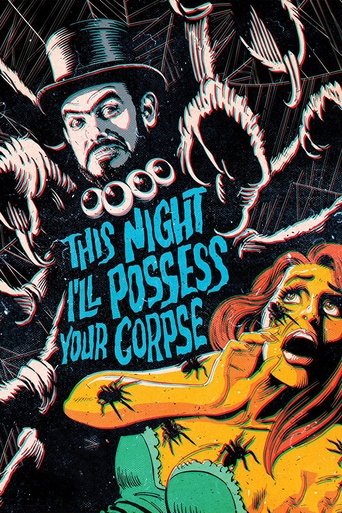
Director José Mojica Marins
After the events that made him notorious, Zé do Caixão continues searching for a woman who can provide the heir he believes will carry his superior bloodline. With the assistance of Bruno, he abducts women and submits them to trials designed to satisfy his cruel requirements. His actions provoke further fear and resistance, while disturbing visions of punishment challenge the undertaker's contempt for religion. The pursuit leads him into increasingly elaborate cruelty and forces him to confront the consequences of his own beliefs.
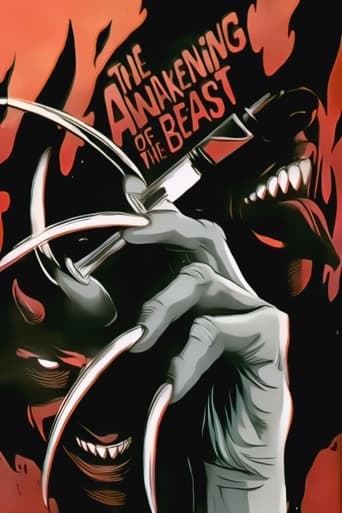
Director José Mojica Marins
In a series of televised discussions, specialists argue over the effects of drugs and the relationship between unconventional behavior, sexual morality and violence. A researcher conducts an experiment on four volunteers, using LSD and the notorious image of Zé do Caixão to investigate their fears. The participants' visions reveal how the fictional undertaker has entered the popular imagination. The film combines satire, pseudo-documentary discussion and hallucinatory horror, placing Coffin Joe within an experiment separate from the narrative trilogy.
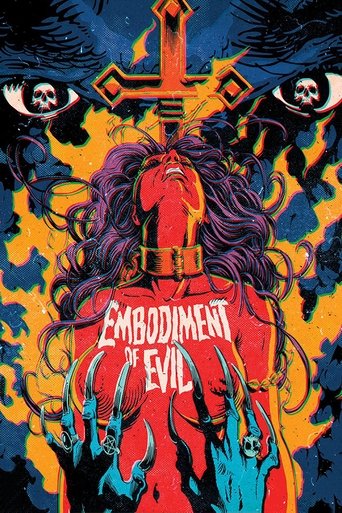
Director José Mojica Marins
After approximately four decades confined to a psychiatric institution, the undertaker Zé do Caixão is released into contemporary São Paulo. He resumes his pursuit of a woman capable of bearing the child he believes will preserve his bloodline, gathering followers and attracting the attention of people determined to stop him. Memories of his earlier crimes and disturbing apparitions accompany his return. As the city confronts the violence associated with his name, the aging Coffin Joe struggles to complete the ambition that has defined his life.
The Creation of a Brazilian Horror Figure
Before creating Coffin Joe, José Mojica Marins directed A Sina do Aventureiro (1958), a low-budget Brazilian western, and Meu Destino em Tuas Mãos (1963), a family-oriented melodrama featuring a child singer. Both were made through the small independent production network he developed in São Paulo, where financing and exhibition could be difficult to secure. Film historian Laura Loguercio Cánepa identifies At Midnight I'll Take Your Soul (1964) as the first Brazilian feature explicitly promoted as horror, while documenting earlier national films that had used frightening or supernatural subjects.
Marins later associated Coffin Joe's conception with a nightmare. The colloquial Portuguese name Zé do Caixão and his formal, funeral-like appearance produced a character at once locally recognizable and theatrical. His attacks on religious belief, confident speeches and contempt for the townspeople established a distinct personality; promotional photographs and personal appearances helped carry that identity beyond the original film.
The 1964 feature achieved commercial success despite limited production resources, allowing Marins to pursue further horror projects. Writer and performer Magda Mei was among his collaborators. Marins's work occupied the independent São Paulo cinema world from which the later Boca do Lixo production scene and Cinema Marginal would emerge, although his films retained an individual combination of popular melodrama, shock effects and theatrical performance.
As the character's popularity grew, the distinction between the fictional undertaker and his creator became harder to maintain in public. Marins appeared both as himself and in costume, while films and broadcasts alternately treated Coffin Joe as a dramatic character, a horror host and an object of parody. This overlapping identity was vital during the decades when the narrative trilogy remained unfinished.
The Character's Philosophy and the Narrative Trilogy
Coffin Joe believes that his bloodline must survive through a child conceived with a woman he judges physically and intellectually superior. He presents this demand as an exercise of reason and individual freedom, but treats the women around him as potential mothers and rules his community through threats and murder. The search for an heir supplies continuity across the three films despite changes in setting, cast and production scale.
His contempt for religion runs into experiences the films frame as spiritual punishment. Apparitions, curses and visions of the dead expose the conflict between the undertaker's materialist declarations and the supernatural world around him. These encounters grow more elaborate across the trilogy, while the question of whether he can maintain his beliefs under threat becomes central to its endings.
The films also reveal the contradictions within his claimed independence. Coffin Joe denounces social and religious authority while imposing absolute authority on others, particularly women. Academic interpretations have examined this tension through the politics of reproduction, patriarchal control and religion in Brazil.
The 1964 and 1967 features followed one another within three years. After a gap of forty-one years, Embodiment of Evil resumes the storyline with an aging Coffin Joe released after decades of confinement. His continued pursuit of an heir links the conclusion to the earlier films, while the consequences of his previous violence return through surviving enemies, memories and supernatural visitations.
A Larger Filmography Than the Three Narrative Chapters
The narrative trilogy is only one part of the Coffin Joe screen history. The Strange World of Coffin Joe (1968) is a three-story horror anthology. Its episodes are largely separate from the trilogy, but the segment Ideologia features Marins as Professor Oãxiac Odéz, a name and performance that echo his public persona. The film demonstrates how the Coffin Joe identity could frame or transform other horror material. Writer Rubens Francisco Lucchetti became an important collaborator in these films and related publications.
Awakening of the Beast, made around 1969–70 under the earlier title Ritual dos Sádicos, examines the image of Coffin Joe outside the trilogy's narrative. Debates about drugs and supposedly deviant behavior precede an experiment in which volunteers confront the imagined power of Zé do Caixão after receiving LSD. Participants associated with independent São Paulo cinema, including Carlos Reichenbach and Jairo Ferreira, appear in its discussion scenes. The film uses the celebrity and notoriety of a fictional villain as evidence of wider cultural anxiety; its prolonged censorship is addressed in the historical context below.
In The Bloody Exorcism of Coffin Joe (1974), Marins appears in a story involving his own fictional creation. Hallucinations of a Deranged Mind (1978) follows a psychiatrist obsessed with Coffin Joe and again plays on the boundary between performer and character. In The Strange Hostel of Naked Pleasures (1976), officially credited to Marcelo Motta, Marins completed the direction after his former student left the production. Marins also plays the sinister hostel proprietor, revealed as Zé do Caixão at the climax. These films are associated screen appearances, not further chronological chapters of the trilogy.
Marins also directed films without Coffin Joe, notably The End of Man and When the Gods Fall Asleep. Their stories of messianic figures, authority and public credulity reveal preoccupations that overlap with the undertaker's world without belonging to its continuity. Career retrospectives commonly screen these works alongside the Coffin Joe titles.
Television: From the First Appearance to Cine Trash
According to Carlos Primati's historical account for the Portal Brasileiro de Cinema, Marins presented Coffin Joe on television on 15 October 1963, on Walter Forster's variety program Clube do Lar. The character's appearance on television therefore preceded the 1964 theatrical release, an unusually early example of a screen horror figure being promoted across media.
After the success of the early films, the character hosted programs of short horror stories. Além, Muito Além do Além began on TV Bandeirantes on 15 September 1967; Primati records thirty-four broadcasts through 26 July 1968. O Estranho Mundo de Zé do Caixão followed on TV Tupi from 13 July to 16 November 1968, directed by Antônio Abujamra. Their schedules briefly overlapped. Lucchetti contributed horror writing that suited the shorter television format.
Another series, Um Show do Outro Mundo, aired on Rede Record from 1 August to 25 October 1981, totaling twelve episodes. Primati's account notes that much of the surviving broadcast material was lost through videotape reuse or damage to television archives. Surviving newspaper records, production testimony and publications consequently carry unusual weight in reconstructing the programs.
Marins returned as the presenter of Cine Trash on Bandeirantes in 1996, introducing imported horror films during weekday afternoon broadcasts. The program brought Coffin Joe's hosting persona to a younger Brazilian television audience, many of whom knew the costume and voice better than the original feature films.
Comics, Photostories and Collaborators
Coffin Joe also developed a significant publishing life through comic books, magazines and photo stories. A concrete example is O Estranho Mundo de Zé do Caixão, whose first issue was published by Editora Prelúdio in January 1969. It featured scripts by Rubens Francisco Lucchetti and artwork by Nico Rosso. The opening issue included the story Noite Negra; later issues continued the association between original illustrated horror tales and Marins's recognizable screen identity.
Lucchetti traced his collaboration with Rosso to 1966, when the pair began producing horror comics for Brazilian publishers. Drawing on Lucchetti's scripts for the television program O Estranho Mundo de Zé do Caixão, they developed a magazine in which Coffin Joe introduced macabre stories as a presenter. The print format made room for original Brazilian horror narratives between the character's feature-film appearances.
According to Lucchetti, the first 52-page issue allocated 34 pages to an illustrated story and 13 to a serialized photo-story adaptation of the 1968 film The Strange World of Coffin Joe. For the photo story, he worked with film frames selected with Jean Silva (later known as filmmaker Jean Garrett), as well as new studio photographs of Marins in character taken by Luiz Fidélis Barreira. Photographs placed at key moments were integrated with Rosso's drawings, connecting the actor's screen persona to the illustrated horror format.
Censorship, Religion and the Military Dictatorship
The first feature opened in 1964, the year of the Brazilian military coup. Coffin Joe's attacks on religion, sexual coercion and screen violence challenged prevailing standards. This Night I'll Possess Your Corpse offers a particularly specific example: its ending was altered so that the dying undertaker professes belief in God, heard in voice-over as his face turns away. In a 2009 interview published by Offscreen in 2010, Marins said his intended ending had the character confined to an asylum without renouncing his convictions. The 2008 film revisited the consequences of this censorship-era compromise.
Awakening of the Beast faced a more sustained prohibition. Its pseudo-documentary treatment of LSD, sex, violence and social behavior drew official scrutiny, and federal censorship prevented ordinary public exhibition for roughly fourteen years. Brazilian Cinemateca records preserve the original title Ritual dos Sádicos and documentation reflecting differences in reported production dates; the International Film Festival Rotterdam also records the lengthy ban. The film's delayed circulation distinguishes its release history from that of the main trilogy.
After Institutional Act No. 5 in December 1968, the military government's control over expression intensified. The suppression of Marins's work illustrates how the authorities treated blasphemy and sexual transgression as threats to accepted morality, alongside overtly political material. Different films faced different forms of intervention, from mandated changes to long-term restrictions on exhibition.
Film Form: Theater, Practical Effects and the Changing Image
The early features use theatrical speech, abrupt shifts of tone and low-budget physical spectacle. Cinematographer Giorgio Attili photographed the first two films in stark black and white, often isolating the figure of Marins against confined settings. Editor Luiz Elias worked on both productions. Rapid turns from grotesque humor to intimidation and suffering give the encounters a forceful, sometimes confrontational rhythm.
The vision of Hell in This Night I'll Possess Your Corpse is the series' most striking formal rupture. The film switches from black and white to color for a landscape of tormented bodies and vivid punishment. The change marks the supernatural as an intrusive realm with its own visual rules. Embodiment of Evil later developed similar infernal imagery using more extensive sets, makeup and effects.
Film scholarship has connected the trilogy's treatment of suffering and theatrical exaggeration with the Grand Guignol tradition. That comparison is particularly useful across productions separated by decades: the early films rely on constrained sets and confrontational acting, while the 2008 film intensifies bodily spectacle for an audience accustomed to more graphic horror. Marins's performance and the character's speeches remained central to both approaches.
The final film had a larger technical team. Production company Gullane credits cinematographer José Roberto Eliezer, production designer Cassio Amarante, composers André Abujamra and Marcio Nigro, editor Paulo Sacramento and co-writer Dennison Ramalho. Their work on the photography, environments, score and effects reflects the change from small independent productions to a substantially more developed Brazilian feature-film operation.
The Long Production Road to Embodiment of Evil
Plans for a third narrative film predated its eventual production by decades. Dennison Ramalho told Offscreen that Jairo Ferreira's documentary Horror Palace Hotel, filmed during the 1978 Brasília Film Festival, had already discussed a third Coffin Joe film with Marins. The project passed through failed attempts to assemble producers and financing.
Ramalho recalled a renewed effort in 2001, when producer Paulo Sacramento and he approached Marins about the project. Approximately six years of funding attempts followed. State support from São Paulo, a Fox pre-distribution agreement and exhibition-related financing were among the elements he identified; producers Fabiano Gullane and Caio Gullane later became involved. Marins directed and starred, with Ramalho contributing to the screenplay and Sacramento producing and editing.
Reconnecting the long-delayed conclusion to its predecessors required access to earlier footage. Marins said he had to negotiate the purchase of film rights he did not fully control before using material from the original productions. The team also recreated passages in period style; Ramalho described casting Raymond Castile to portray a younger Coffin Joe. The combination of archival images and reconstructions allowed the 2008 film to revisit earlier scenes while showing the consequences of the character's history.
Embodiment of Evil completed production in 2008 with an expanded cast and crew, closing the trilogy that had begun in 1964. Its contemporary São Paulo setting and far more elaborate bodily effects distinguish it from the original films, while the decades-long delay became part of the character's fictional imprisonment and return.
From Domestic Success to International Rediscovery
Coffin Joe was a popular Brazilian screen and television figure long before his international cult reputation developed. Specialist magazines, foreign distributors and festival retrospectives gradually brought Marins's work to audiences outside Brazil. The English-language name Coffin Joe provided a recognizable entry point for viewers unfamiliar with Zé do Caixão.
The retrospective history gained momentum at Montreal's Fantasia festival, which presented a substantial Marins program in 2001. Embodiment of Evil reached the inaugural Paulínia Film Festival in July 2008, winning seven awards including the jury's best fiction feature and the critics' prize. It was also presented outside competition at Venice in 2008, in a midnight screening, and received recognition at Sitges that year. Marins returned to Fantasia in 2009 with the finished film and received a lifetime achievement award.
The documentary Damned: The Strange World of José Mojica Marins, directed by André Barcinski and Ivan Finotti, helped document the filmmaker's career and was later included in archival home-video material. Such records are especially valuable because the surviving television broadcasts are incomplete and some theatrical versions were altered before audiences could see them.
Arrow Video's 2024 six-disc collection Inside the Mind of Coffin Joe assembled ten films from Marins's career, including the trilogy and several associated productions. The restoration sources differed from film to film: the first feature used an interpositive and print, the 1967 sequel involved camera-negative and interpositive elements, and When the Gods Fall Asleep relied on a print described as the only known surviving source. The package also gathered commentaries, interviews and other archival material.
Box Office and Theatrical Performance
Reliable, comparable theatrical totals are unavailable for the 1964 and 1967 releases. The censorship-restricted distribution of Awakening of the Beast also lacks comparable theatrical figures. For Embodiment of Evil, Brazilian theatrical reporting supplies admissions, gross ticket revenue and screen count; its reported production budget is a different measure from theatrical receipts.
| Film | Reported production budget | Brazilian theatrical gross | Brazilian admissions |
|---|---|---|---|
| At Midnight I'll Take Your Soul (1964) | Not established | Not reliably documented | Not reliably documented |
| This Night I'll Possess Your Corpse (1967) | Not established | Not reliably documented | Not reliably documented |
| Awakening of the Beast (1970) | Not established | Release restricted by censorship | Not reliably documented |
| Embodiment of Evil (2008) | R$ 1.8m (reported) | R$ 184,403 | 25,762 |
Sources: ANCINE theatrical exhibition records, Filme B and contemporary Brazilian reporting. The 2008 figures cover the Brazilian theatrical market, not worldwide receipts or home-video revenue. Earlier unavailable figures must not be read as zero earnings.
Reception, Scholarship and the Franchise's Cultural Place
Studies of Brazilian horror cinema situate Coffin Joe within a national history extending beyond Marins's films. Cánepa's work identifies earlier uses of the fantastic and the macabre; other scholarship reads the trilogy through religion, bodily suffering, performance and the politics of reproduction. The films' provocative imagery drew hostility from some contemporary authorities and critics, while their popularity supported a career that moved between cinema, television and publishing.
José Mojica Marins died in São Paulo on 19 February 2020, aged 83. Later festivals, restorations and scholarly research have continued to circulate both the three-film Coffin Joe narrative and the broader, less easily classified work made around its central persona.
Sources & References
- Revista Pesquisa FAPESP - Horror, Brazilian Style - Historical research on Brazil's horror industry, Marins and the character's reception.
- Portal Brasileiro de Cinema - Zé do Caixão na TV (Carlos Primati) - Documented television chronology from 1963 to the 1996 Cine Trash revival.
- Offscreen - José Mojica Marins: Up-Close and Personal (2005) - First-person interview on Marins's career, working conditions and public persona.
- Offscreen - Coffin Joe Returns to Montreal (2010) - Interview with Marins and Dennison Ramalho on the long development and financing of the final trilogy film.
- International Film Festival Rotterdam - O despertar da besta - Programming documentation of the film's television framing, production context and fourteen-year ban.
- Cinemateca Brasileira - O despertar da besta - Film archive account of the original title, disputed production date, censorship and later restoration.
- Galaxia / SciELO - O horror como performance da morte - Peer-reviewed study of the Coffin Joe trilogy and Grand Guignol performance.
- Gullane - Embodiment of Evil - Primary production credits for the 2008 trilogy conclusion.
- Senses of Cinema - This Night I'll Possess Your Corpse - Critical contextualization of the black-and-white imagery and color Hell sequence.
- Arrow Video - Inside the Mind of Coffin Joe, special-edition documentation - Primary release documentation: restoration elements, ten films and archival interviews.
- ANCINE - Results of the Brazilian theatrical market in 2008 - Official context and methodology for Brazil's 2008 theatrical reporting.
- Filme B - Brazilian theatrical market, twenty-year database - Historical theatrical market dataset, including the 2008 film's revenue and admissions.
- Diário do Grande ABC - A volta de Zé do Caixão (2008) - Contemporary reporting on the approximately R$ 1.8 million production budget of Embodiment of Evil.
- Museu Brasileiro de Rádio e Televisão - Além, Muito Além do Além - Independent broadcast history for Coffin Joe's 1967-1968 television program.
- Portal Brasileiro de Cinema - Meu Destino em Tuas Mãos - Production history of the pre-horror feature.
- R. F. Lucchetti - A revista O Estranho Mundo de Zé do Caixão - First-person account of Nico Rosso and the 1969 comic magazine.
- American Genre Film Archive - The Strange Hostel of Naked Pleasures - Catalog entry and film credits.
- Folha de S.Paulo - Encarnação do Demônio at Paulínia (2008) - Contemporary reporting on the festival premiere and production.
- Gazeta do Povo / G1 - Encarnação do Demônio at Venice and Sitges (2008) - Festival appearances and Paulínia awards.
- Folha de S.Paulo - José Mojica Marins obituary (2020) - Independent documentation of Marins's death.
Editorial updated: