
Horror Franchise · Comic-book Anthology
Creepshow
From the King–Romero horror comics tribute to a theatrical sequel, a later home-video film, Shudder television and a continuing comics anthology.
Franchise Overview
The Creepshow franchise began with the 1982 horror anthology written by Stephen King and directed by George A. Romero, a deliberate tribute to the lurid American comic books of the 1950s. Its format allowed several unrelated stories to share the same movie while a skeletal host, printed frames and darkly comic endings established a recognizable identity. The 1987 sequel retained the association with King and Romero through story and screenplay credits; a separate third film followed in 2006. Greg Nicotero later revived the title for a four-season Shudder television series, released between 2019 and 2023.
The illustrated adaptation of 1982 and the Image Comics/Skybound line launched in 2022 place publishing at both ends of the franchise’s history. From theatrical releases and home video to streaming television and ongoing print anthologies, the Creepshow name has supported changing creative teams within a distinctive horror-comics framework.
Creepshow Movies & TV Series in Release Order
Release order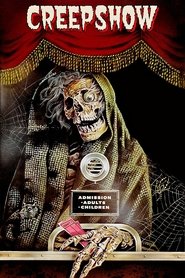
Director George A. Romero
After his father throws away his forbidden horror comic, a boy watches as the Creep opens its pages to reveal five tales of supernatural revenge, jealousy, greed and cruelty. A murdered patriarch interrupts a family gathering, a lonely farmer encounters an object fallen from space, and a wealthy man stages a lethal revenge. Elsewhere, a mysterious crate is opened at a college and a germ-fearing businessman confronts an infestation he cannot control. Illustrated interludes join the stories in the style of lurid 1950s horror comics.
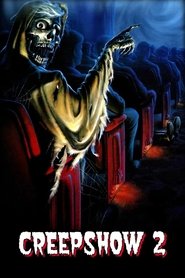
Director Michael Gornick
A new Creepshow comic frames three stories of violence and retribution. In Old Chief Wood'nhead, a wooden figure outside a struggling general store awakens after a brutal robbery. The Raft follows four young people stranded on a lake platform by a strange organism moving through the water. In The Hitchhiker, a driver who has fled a fatal collision finds herself repeatedly confronted by the person she struck. Animated comic-book sequences and a recurring host connect the otherwise separate tales.
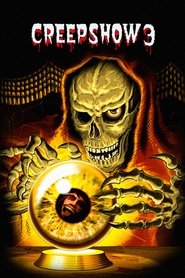
Director Ana Clavell, James Glenn Dudelson
Five horror stories occupy an interconnected neighborhood. A teenager experiences disturbing changes after her father acquires a mysterious remote control; a security guard begins following instructions from an unusual radio; and a murderous call girl encounters an unexpected threat. Two former students investigate their professor's young fiancée, while a doctor's careless act toward a homeless man brings an uncanny consequence. Characters cross between the tales, giving the anthology a shared setting even as its episodes follow different protagonists.
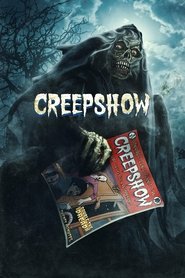
A skeletal host presents short horror stories styled as the pages of a comic book coming to life. Across four seasons, ordinary households, soldiers, isolated travelers and small communities encounter malicious objects, supernatural visitors, grotesque transformations and fatal bargains. Episodes generally contain two independent narratives, drawing on original screenplays as well as stories by established horror writers. The series ran from 2019 to 2023 with twenty-three regular episodes and two separately released specials in 2020.
From EC Comics to the King–Romero Collaboration, 1950–1982
The origins of Creepshow lie in the relationship between 1950s American horror comics and a group of filmmakers who grew up reading them. EC titles such as Tales from the Crypt, The Vault of Horror and The Haunt of Fear presented short narratives of crime, betrayal, supernatural revenge and gruesome irony. Their pages made a spectacle of lurid colors, emphatic lettering and final-panel reversals. The titles circulated well before the Motion Picture Association rating system permitted comparable material in mainstream American cinemas. EC's horror line had effectively disappeared by the mid-1950s, but its artwork and storytelling habits survived through reprints and the memory of its readers. The 1972 British film Tales from the Crypt had already demonstrated one route from EC's stories to cinema. Creepshow would take a different approach: it would make the imagined comic book itself a central part of the screen experience.
The EC connection had an institutional history as well as an aesthetic one. American comic books became a target of public campaigns against juvenile reading during the early 1950s, and industry self-regulation helped bring the publisher’s crime and horror titles to an end. Their distinctive storytelling nevertheless remained available to later artists as a model of the illustrated horror short story: a compact premise, a limited cast, a narrator who invites the reader into danger and an ending that may punish a character's worst impulses. When King and Romero returned to this tradition in the late 1970s, they were working within a film industry that could show violence and bodily transformation more directly than the old comic-book market had been able to sustain. The project therefore connected two different periods of American popular horror rather than simply recreating a set of vintage stories.
According to film historian Simon Brown's research, the idea developed from discussions in Maine in 1979 between Stephen King, George A. Romero and producer Richard P. Rubinstein. They were considering ways to establish the financial confidence needed for a proposed screen adaptation of King's The Stand. King suggested a self-contained anthology inspired by EC's old horror titles, and the concept grew into Creepshow. Unlike a film assembled from previously completed short features, it was conceived as a coordinated production with a common screenplay, visual framework and theatrical identity. King wrote the original screenplay, Romero directed and Rubinstein produced through the Laurel organization. The decision joined King's growing reputation as a bestselling horror author with Romero's career in independently produced genre cinema. Their collaboration was the primary creative attraction of the project, while the imagined comic-book branding gave the resulting film an identity that could survive beyond either creator's participation.
The fictional magazine supplied a flexible form: a child reads a horror comic whose pages become live-action tales. Its panels and transitions permit changes of cast, setting and supernatural rules without a continuous shared story world. The Creep functions as a recurring host, while macabre reversals, lurid colors and stylized illustrations give the anthology its identity across different productions.
The 1982 Film: Production, Publication and a Distinctive Screen Format
After a documented screening at Cannes on May 20, 1982, Creepshow opened in Los Angeles and New York on November 10; the AFI records November 12 as the scheduled wider release date, although contemporary trade reporting was not entirely consistent about the nationwide opening. Warner Bros. distributed the Laurel Show production. Stephen King wrote its screenplay and played Jordy Verrill, Romero directed, Michael Gornick photographed the film, John Harrison composed its music and Tom Savini supervised special makeup effects. The cast included Hal Holbrook, Adrienne Barbeau, Fritz Weaver, Leslie Nielsen, Carrie Nye, E. G. Marshall, Viveca Lindfors and Ted Danson. In the framing story, Billy’s father Stan throws his comic into the garbage; the Creep opens its pages to the five tales, and Billy later uses a mail-order voodoo doll against his father.
Comic panels, graphic compositions, vivid lighting and animated transitions made the illustrated magazine part of the film’s visual structure. The episodes could move between broad humor, cruelty and bodily horror without adopting a uniform emotional register. This screen adaptation of an imagined comic book became a defining formal feature for later productions, even as their directors, effects techniques and distribution models changed.
The project reached print in July 1982, before its United States theatrical opening but after the documented Cannes screening. Plume published an illustrated adaptation of the five principal stories, credited to Stephen King with drawings by Berni Wrightson, color by Michele Wrightson and a cover by EC veteran Jack Kamen. The book physically realized the fictional comic that inspired the film’s presentation. Its artwork reflected the connection between the original EC artists and the newer horror filmmakers. The film’s original theatrical results are summarized in the standardized box-office table below; later television, video and licensing income cannot be inferred from those grosses.
King adapted two previously published stories for the original screenplay: the extraterrestrial infection tale developed from “Weeds” and the college-set creature story from “The Crate.” The other three episodes were devised for the film. Their combination of literary adaptations and original material anticipated the approaches later used by the Shudder series and the modern comics, each of which commissioned independent horror narratives alongside adaptations of published fiction.
Creepshow 2: The Sequel and the Scripts That Were Never Filmed, 1984–1987
A sequel was discussed soon after the first film's release, but its production took several years and did not reproduce the original creative arrangement. According to the American Film Institute's chronology, Laurel Entertainment was preparing a new film by 1984 and Warner Bros. elected not to distribute it. By summer 1986, New World Pictures was involved in co-producing and distributing the project, and filming began that September. Michael Gornick, the cinematographer of the first film, became director; Romero wrote the screenplay from stories developed by King. The combination preserved the association with both original creators, but their functions had changed. The finished film opened in the United States on May 1, 1987, under a different distributor and at a smaller reported budget in The Numbers' account. Its release confirmed that Creepshow could be sold as a named anthology series despite the absence of recurring protagonists.
The finished Creepshow 2 contains three episodes: Old Chief Wood’nhead, The Raft and The Hitchhiker. Animated comic-book material and Savini’s appearance as the Creep frame their stories. Drafts preserved in the University of Pittsburgh’s George A. Romero Archival Collection document shifting plans for Pinfall, involving rival bowling teams, and Cat from Hell, about a hit man hired to kill a cat. Pinfall was also considered for Tales from the Darkside: The Movie, whose producers instead used Cat from Hell. The latter was filmed for that separate 1990 anthology, directed by John Harrison; neither tale appeared in the completed Creepshow 2. Jason Mayoh subsequently illustrated Pinfall for an Arrow Video limited-edition Blu-ray release, preserving one of the abandoned stories as a comic.
The transfer of Cat from Hell to Tales from the Darkside: The Movie documents an overlap in creative personnel rather than a merger of franchises. Creepshow 2 relied on New World Pictures for distribution, with Michael Gornick directing a script by Romero based on King stories. The Numbers lists $3.5 million as its budget, while the AFI preserves a higher contemporary estimate; these are differing reported figures, not interchangeable measurements of final production cost.
Separate Rights, Creepshow 3 and the Limits of a Shared Continuity
Following the 1987 theatrical sequel, the Creepshow name circulated through other production arrangements. Taurus Entertainment was involved in the production of Creepshow 3 and later in attempts to renew the title for the web and television markets. The available documentation establishes named production and licensing relationships at different dates, but it does not justify assigning every underlying right to one company across the franchise’s complete history. The changes in producers and distributors help explain why later screen projects could proceed without the direct creative participation of Romero or King.
Creepshow 3, directed by Ana Clavell and James Glenn Dudelson, was produced through Taurus Entertainment and Creepy Film Productions without the creative involvement of King or Romero. It received a limited 2006 screening in Rhode Island before HBO Video issued the American DVD on May 15, 2007. Its stories—Alice, The Radio, Call Girl, The Professor’s Wife and Haunted Dog—follow separate characters whose lives cross within one neighborhood. That structure differs from the independent stories of the 1982 and 1987 films, while its principal commercial circulation belonged to the home-video market.
Contemporary criticism in Dread Central and Slant Magazine highlighted the third film’s uneven presentation and its distance from the earlier comic-book aesthetic. These judgments describe its reception, while the production credits and HBO Video release document its industrial position. The next attempt to revive the name was a short-form web project: Creepshow: RAW, developed by HDFilms with Taurus Entertainment. Its eight-minute pilot, Insomnia, directed by Wilmer Valderrama and featuring Michael Madsen, debuted through IGN on October 30, 2009. The planned web anthology did not continue beyond that pilot. Its existence marks an intermediate stage between the DVD-led third film and the later subscription-streaming revival.
Greg Nicotero and the Shudder Revival, 2019–2025
Shudder premiered its new Creepshow anthology on September 26, 2019, with Greg Nicotero serving as showrunner and executive producer. AMC Networks identified The Cartel, Monster Agency Productions, Taurus Entertainment and Striker Entertainment as the production partners. The inaugural directing roster included Nicotero, John Harrison, David Bruckner, Roxanne Benjamin and Rob Schrab; announced participants also included Tom Savini. Their series revived comic-panel transitions, illustrated frames, emphatic colors and the Creep as a host. Shudder organized the new stories into seasonal episodes, commonly with two separate segments, making serialized release scheduling compatible with an anthology of independent narratives.
The first season comprised six episodes with twelve stories, including adaptations of Stephen King’s Gray Matter and Joe Hill’s By the Silver Water of Lake Champlain. Nicotero explained in a 2019 interview that comic-book art and transitions from illustrations to live action were essential to the production’s design. Later seasons broadened the range of performers and directors, with contributors including Joe Lynch and Rusty Cundieff. The stories combined existing horror fiction with original screenplays, allowing each episode to adopt a distinct subject and tone.
Shudder’s early production announcement also named Josh Malerman, Joe R. Lansdale, Kasey Lansdale, Keith Lansdale and Christopher Buehlman among the authors whose fiction would supply material for the series. Their involvement broadened the adaptation slate beyond the stories by King and Joe Hill featured in the first season.
The program also demonstrated the usefulness of stand-alone specials. During the disruption to normal production caused by the COVID-19 pandemic, Shudder released A Creepshow Animated Special in October 2020, featuring King's Survivor Type and Hill's Twittering from the Circus of the Dead, with Kiefer Sutherland and Joey King among the voice performers. A Creepshow Holiday Special followed in December 2020. These were separate presentations rather than ordinary episodes of a numbered season. The full television run subsequently comprised four seasons released from 2019 through October 2023: six episodes in season one, five in season two, six in season three and six in season four. That makes twenty-three regular episodes, in addition to the two 2020 specials.
AMC broadcast the first Shudder season in spring 2020, expanding its distribution beyond streaming subscribers. Shudder cited strong subscriber engagement in its renewal announcements, although it did not provide independently comparable viewing figures. The series’ conclusion was confirmed in September 2025, when a complete-series Blu-ray edition was also announced.
Return to Comics: Publishing, the Creep and the Anthology Brand
Image Comics and Skybound launched the modern Creepshow comic anthology on September 21, 2022. The first issue paired stories by Chris Burnham and by Paul Dini and Steve Langford, illustrated by John McCrea. The publisher’s licensed project established a regular print outlet for original short-form horror, with changing writers and artists contributing separate stories under the Creepshow masthead. The issues draw on the EC anthology tradition and on the presentation popularized by Nicotero’s television production.
The first five-issue series was collected in 2023, and further volumes followed. Image’s catalog documents a fourth five-issue volume that concluded in January 2026, with a paperback collected edition published that March. The publisher also issued deluxe collections and expanded the line through stand-alone special issues. Those collected editions extended the monthly comics into a longer-lived book catalog, while new commissioned stories continued after the television series stopped producing seasons.
The Creep has remained the brand’s principal visual host across the original film, the 1987 sequel, the Shudder series and the modern comic anthologies. The figure frames stories and introduces their macabre tone; its recurring appearance gives continuity to the presentation without requiring a stable fictional biography or one protagonist whose adventures carry through the different works.
The one-shots expanded the publishing line beyond its numbered volumes. Creepshow Holiday Special #1, released on December 6, 2023, presented stories by Daniel Kraus and Jonathan Wayshak and by James Asmus and Letizia Cadonici; a second holiday special followed on December 11, 2024. Creepshow: Joe Hill’s Wolverton Station, published on February 14, 2024, adapted Hill’s story with Jason Ciaramella and Michael Walsh. Creepshow in Love, released on February 12, 2025, assembled three horror stories around the theme of romance.
In 2026 the line expanded further through Super Creepshow, a five-issue superhero-horror anthology that followed a special issue from the preceding autumn. Published between March and July, the miniseries commissioned contributors including Kieron Gillen, Ryan North, Gerry Duggan, Marv Wolfman, James Harren and Ram V, among others. The premise treated powers, costumes and heroic mythology as material for grotesque reversals. A collected edition appeared later in 2026, combining the miniseries with its earlier special. The project applied Creepshow’s short-story format to superhero imagery and conventions.
The fifth five-issue Creepshow volume began in September 2026, with Tyler Boss, Francesca Ciregia and Lorenzo De Felici identified in publisher material for its opening installment. As of November 5, 2026, later issues remained scheduled rather than all published. The print revival has also reached Italy: saldaPress released a collected Creepshow volume in April 2026 and an Italian Super Creepshow edition in October. These editions document the franchise’s international publishing activity beyond its original US comics market.
Distribution, Box Office and the Franchise’s Place in Horror History
The franchise’s theatrical and home-video distribution has varied sharply between entries. Warner Bros. released the 1982 film in US cinemas and New World Pictures handled the 1987 sequel. Creepshow 3 had only limited theatrical exposure and received its main US home-video release through HBO Video in May 2007. The standardized table records the reported production budgets and US theatrical grosses of the first two films; figures for the third film, streaming series and comics cannot be compared on the same basis. Domestic box office is neither worldwide revenue nor a measure of distributor profit.
For the Shudder series, subscriber retention, seasonal release schedules and long-term catalog availability became commercial considerations distinct from theatrical ticket sales. Its subsequent Blu-ray collection offered another distribution channel after production ended.
The franchise’s position in horror history begins with EC’s 1950s American comics and also draws on British portmanteau-film traditions. Romero and King translated those influences into an unusually direct combination of printed-page imagery, practical makeup effects and theatrical anthology storytelling. The later collaborations surrounding Tales from the Darkside, the Shudder revival and Image/Skybound publications show how the approach circulated across creative networks and distribution formats over subsequent decades.
| Theatrical film | Production budget | Recorded US box office | US distributor |
|---|---|---|---|
| Creepshow (1982) | $8,000,000 | $20,036,244 | Warner Bros. |
| Creepshow 2 (1987) | $3,500,000 | $14,000,000 | New World Pictures |
Reporting note: Figures follow The Numbers, which reports US theatrical receipts for both releases. Its worldwide totals currently match its US totals because of limited international documentation. The data exclude home-video and streaming revenue; Creepshow 3 and the television series have no directly comparable recorded theatrical figures. AFI cites a separate contemporary $5.2 million budget estimate for Creepshow 2, while The Numbers lists $3.5 million.
Sources & References
- Oxford Academic / Liverpool University Press — Simon Brown — Creepshow: Telegrams of Terror, The Making of Creepshow — Film-history research documenting the 1979 discussions, King, Romero, Rubinstein and the EC-derived concept.
- American Film Institute — Creepshow (1982): AFI Catalog — Original production, film structure, cinematography, distributors and release date.
- American Film Institute — Creepshow 2 (1987): AFI Catalog — Preproduction chronology, New World deal, filming and contemporary budget reports.
- Bloody Disgusting / University of Pittsburgh Romero Collection — Creepshow 2: Pinfall — The Unmade Zombie Bowling Segment — Archival discussion of unused screenplay drafts and Cat from Hell.
- Bloody Disgusting — Creepshow Complete Series Announced; Shudder Run Concludes (2025) — Confirmation of four seasons, twenty-three episodes, two specials and complete home-video release.
- Image Comics — Creepshow — Comics and Collected Editions — Publisher catalog documenting the 2022–2026 line and later releases.
- The Numbers — Creepshow — Franchise Box Office History — Recorded domestic grosses and production budgets for the two theatrical films.
- AMC Networks — Production Begins on Creepshow (2019) — Original Shudder announcement naming the first-season writers, anthology format and launch team.
- ComingSoon — Creepshow RAW Episode 1 Now Online (2009) — Contemporary report on the HDFilms and Taurus pilot, director and online debut.
- Slice of SciFi — Creepshow 3 DVD Release Announcement (2007) — Contemporary reproduction of HBO Video’s May 15, 2007 US DVD release details.