
Horror Franchise
Death Scenes
Nick Bougas's three shockumentary videos (1989-1993), from Los Angeles police photographs to archival footage of recorded deaths.
Franchise Overview
Nick Bougas's Death Scenes trilogy (1989–1993) began with a scrapbook of Los Angeles crime photographs and expanded into newsreel and television footage. Later DVD editions changed the original numbering, and the first film circulated under the Faces of Death VII name. The trilogy was produced independently of the Faces of Death series.
Death Scenes Films in Original Release Order
Release order
Director Nick Bougas
Anton LaVey introduces and narrates Nick Bougas's documentary drawn from the crime-scene scrapbook of Los Angeles homicide detective Jack Huddleston. The photographs, largely from the 1930s and 1940s, depict suicides, murder-suicides, homicides and deaths associated with Hollywood. The original VHS concludes with World War II newsreel footage and LaVey's closing remarks on death.
Director Nick Bougas
Narrated by Harold Wells, the second Death Scenes video gathers footage of the Manson murders, war and other violent incidents. It includes the 1982 accident on the set of Twilight Zone: The Movie, the Zapruder film of President John F. Kennedy's assassination, and the televised suicide of Pennsylvania politician R. Budd Dwyer. News and documentary recordings replace much of the still-photograph format of the 1989 film.

Director Nick Bougas
Nick Bougas's third documentary presents recordings of political violence, crime and publicized deaths. Its material includes footage associated with the war in Bosnia-Herzegovina, the executions of Nicolae and Elena Ceaușescu, and the 1993 killing of Maritza Martín Muñoz, filmed during an interview for Ocurrió Así, a Spanish-language news program on the United States television network Telemundo.
Origins of the Death Scenes Trilogy
Wavelength Productions distributed Nick Bougas's three Death Scenes videos on VHS between 1989 and 1993. Each installment assembled recorded material into an anthology for the American home-video market. The original release titles and years, rather than the numbering on later DVD covers, identify the chronology of the series.
The first film originated in a scrapbook of crime photographs compiled by Los Angeles homicide detective Jack Huddleston during the 1930s and 1940s. After acquiring the collection, Bougas approached Anton LaVey about narrating a video based on it. Records described by Peggy Nadramia for the Church of Satan confirm that Bougas travelled to San Francisco to show LaVey the scrapbook, then provided the script and a copy of the material before LaVey made his recordings. Feral House published the photographs in 1996 as Death Scenes: A Homicide Detective's Scrapbook, edited by Sean Tejaratchi with contributions from Katherine Dunn.
How the Series Developed Its Shockumentary Format
The films belong to the death-compilation branch of mondo cinema. Bougas assembled photographs and recordings obtained from police, news and other archives, adding narration and music. The original material predates the videos: the dates of the productions cannot be used as dates for the events depicted. Identifying the underlying sources is therefore necessary when discussing particular incidents.
The first installment relies on still photographs; the sequels feature more moving footage, including television news, filmed accidents and international political events. Bougas's selection and editing shaped how audiences encountered this material, often without the information needed to establish the source and circumstances of an individual recording.
Original Titles, VHS Circulation and DVD Renumbering
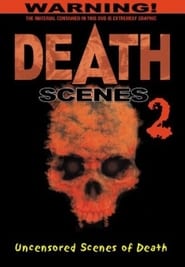
Wavelength's original order was Death Scenes (1989), Death Scenes 2 (1992) and Death Scenes 3 (1993). When Anthem Pictures issued the trilogy on DVD in 2005, the covers adopted a different numbering scheme. The 1989 film became Death Scenes 3: Los Angeles; the 1992 installment was marketed as Death Scenes 1: Manson; and the 1993 film became Death Scenes 2: Uncensored Scenes of Death. These labels account for the apparently conflicting numbers found in catalogues and cover artwork.
In a 2012 comparison of the original Wavelength VHS editions and the Anthem DVDs, Mondo Research Laboratories found no missing material in the 1992 and 1993 films apart from differences in their opening titles. The Anthem DVD of the 1989 film ends abruptly, omitting approximately two minutes of World War II newsreel footage, LaVey's 30-second closing remarks and the end credits. The comparison attributed the omission more plausibly to a DVD authoring or editing error than to deliberate censorship.
The title Faces of Death VII creates a cataloguing problem. The 1989 Death Scenes circulated under that name, while the 1992 German-market Gesichter des Todes VII is a separately catalogued release incorporating material from Bougas's film. The shared title and footage do not establish that their edits are identical, and neither release adds another original installment to the Death Scenes trilogy.
Place Within Mondo Cinema and the Death-Compilation Market
The practice of assembling sensational nonfiction material for commercial exhibition predates Bougas's videos. Mondo Cane (1962) helped establish a market for provocative documentary spectacles, and the later Faces of Death series became prominent in the home-video era. Bougas's trilogy drew on police photographs and news footage within that broader tradition, without sharing the other filmmakers' authorship. Footage of the 1993 killing of Maritza Martín Muñoz also appeared in the independently produced Traces of Death, illustrating how individual recordings circulated across separate shockumentary series.
Archival Context, Ethical Questions and Legacy
The use of police photographs and news recordings as shock entertainment often separates the material from its original investigative or journalistic context. The people depicted did not perform for these videos, and their families may not have been consulted about the later distribution of their images. The trilogy's circulation therefore raises concerns about privacy, consent and representation.
Sources & References
- The Cinematic Adventures of Anton LaVey, Church of Satan. Production correspondence concerning Bougas, LaVey and the original scrapbook.
- Death Scenes - Anthem vs Wavelength, Mondo Research Laboratories (2012). Direct comparison of VHS and DVD editions, including the renumbering and missing ending.
- Death Scenes: A Homicide Detective's Scrapbook, Feral House (1996). Bibliographic information on Jack Huddleston's archive and its publication.
- Johnny Walker, Traces of Snuff: Black Markets, Fan Subcultures, and Underground Horror in the 1990s, in Snuff: Real Death and Screen Media (2016). Scholarly context for the circulation of extreme nonfiction video.
- David Flint, Gross Out Cinema: The Faces of Death Story (2021). Historical discussion of the Faces of Death brand and related releases.
Editorial updated: