
Horror Franchise
Faces of Death
The Schwartz shockumentaries, later compilation tapes, a reported German seventh-titled edition and the 2026 film.
Franchise Overview
Faces of Death began with John Alan Schwartz's 1978 pseudo-documentary and grew into a complicated international video-era franchise. The screen catalogue contains genuine sequels, compilation tapes, an explanatory retrospective, a German seventh-titled edition reported in film catalogues as drawing on Nick Bougas's Death Scenes, and Daniel Goldhaber's 2026 fictional thriller. These releases do not form one uninterrupted production line.
Its history connects the staged-and-authentic footage controversy with VHS distribution, British and Australian censorship decisions, and the development of a new fictional film for the age of online content moderation. Understanding which footage and which editions distributors circulated is central to understanding the franchise itself.
Faces of Death Films, Compilations and Reimagining by Catalogue Year
Catalogue chronology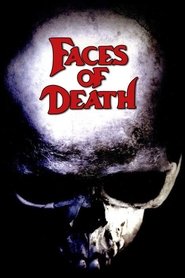
Director John Alan Schwartz
A fictional pathologist introduces a series of disturbing images presented as a survey of mortality. Medical procedures, accidents, animal deaths and apparent executions appear alongside episodes staged with performers and practical effects. The film does not clearly tell viewers which sequences are documentary records and which were manufactured, allowing its narration to suggest that all of the material belongs to the same investigation. The resulting uncertainty became central to the film's reputation and to the later series.

Director John Alan Schwartz
The second film returns to the format of narrated death-related footage, bringing together material associated with accidents, medical work, conflict and other fatal events. Its apparent documentary records come from differing sources, and the presentation does not consistently identify the difference between authentic imagery and constructed scenes. The returning fictional host provides continuity with the first installment, while the selection of new episodes extends the series' unsettling mixture of observation, sensationalism and doubt about the images on screen.

Director John Alan Schwartz
Presented in its familiar home-video version by the fictional Dr. Francis B. Gross, the third installment arranges disturbing documentary-style material around episodes involving fear, criminal violence and apparent investigative evidence. Several incidents are dramatizations rather than records of actual crimes, including an extended courtroom sequence featuring filmmaker John Alan Schwartz as an accused killer. The release was reworked from an earlier project titled Fear, so its narration and selection of footage reflect a later effort to place that material within the established series.
Director John Alan Schwartz
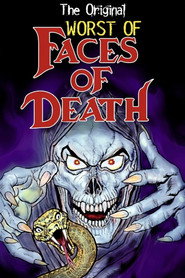
This compilation selects disturbing sequences from the first three Faces of Death films and presents them in a shorter retrospective program. Dr. Louis Flellis, portrayed by James B. Schwartz, introduces the material as another survey of violent and unusual deaths. Because much of the footage originated in earlier productions, the collection mixes previously staged incidents and documentary images without resolving their different origins. Its principal new element is the way familiar episodes are edited and reframed for another home-video audience.

Director John Alan Schwartz
Dr. Louis Flellis returns to guide viewers through another anthology of violent deaths, alleged catastrophes and other alarming incidents. The fourth installment combines material presented as documentary evidence with sequences shaped by performance and sensational narration. Unlike the later numbered video compilations, it was produced as a new entry in the original series. Its episodes are grouped by the host's commentary, while the film continues to leave the origins and authenticity of individual images unclear.
Director Nick Bougas
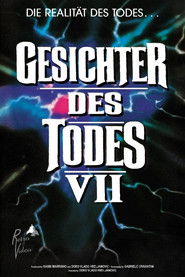
Circulated under a seventh Faces of Death title in Germany, this shock compilation draws substantially on material associated with Nick Bougas's earlier Death Scenes. Historical crime photographs, images of public figures and other archival records are presented as a collection of disturbing evidence. The edition was not a newly filmed seventh installment by John Alan Schwartz, and its precise selection and editing differ in ways that are not fully documented. Its relationship to the main series lies chiefly in the title and regional repackaging of existing footage.

Director John Alan Schwartz
A later video compilation assembles sequences already seen in earlier Faces of Death installments. The release revisits the series' familiar combination of documentary images and performed incidents without presenting a comparably extensive new production. Reused extracts appear under another numbered title, and their earlier introductions and contexts are not always preserved. The result reflects the franchise's shift from creating new collections toward rearranging its existing library of disturbing footage.

Director John Alan Schwartz
The sixth numbered release draws primarily on footage previously circulated within the Faces of Death series, including material associated with the original film and the fourth installment. It presents another edited selection of alarming images, some derived from real documentary sources and others from staged productions. As a direct-to-video compilation, its identity comes chiefly from its arrangement of earlier material, not from a new set of investigations or filmed incidents.

Director John Alan Schwartz
Filmmaker John Alan Schwartz revisits the methods behind the Faces of Death series in a retrospective devoted to its claims of authenticity. Identified through his directing pseudonym Conan Le Cilaire, Schwartz discusses the use of archival recordings, performers and staged effects that helped make the earlier films controversial. Interviews and explanations reconsider incidents that audiences had treated as factual documents. The program turns the uncertainty promoted by the original releases into the subject of an examination of how the footage was constructed and marketed.

Director Daniel Goldhaber
Margot Romero works as a content moderator for an online video platform, reviewing disturbing recordings that other users upload. She begins to notice material that appears to recreate deaths depicted in the notorious 1978 film Faces of Death. As the similarities accumulate, Margot suspects someone is filming actual murders and disguising them as imitations of an exploitation classic. Her efforts to establish the footage's origin draw her toward a filmmaker exploiting the platform's appetite for shocking content, where separating staged violence from real danger becomes increasingly difficult.
Faces of Death: The Franchise, Its Versions and Its Afterlife
A Shockumentary Becomes a Repeatable Format
The original Faces of Death (1978) was made by John Alan Schwartz, credited as Conan Le Cilaire for direction and Alan Black for writing. The film established its distinctive format through the presentation: Michael Carr played the fictional pathologist Dr. Francis B. Gröss, introducing unrelated scenes as though they were chapters in a medical investigation. Schwartz could move between autopsy rooms, accidents, documentary recordings and staged executions through a single authoritative voice.
The production method supplied the series with its defining ambiguity. Archival recordings and medical images appeared alongside incidents constructed with actors, prosthetics and special effects. In a 2012 On the Media interview, Schwartz specifically identified the monkey-brains sequence and the electric-chair execution as fabrications; in the former, a live monkey was replaced during filming by a prosthetic head. The director and effects technicians have offered differing retrospective estimates of the balance of authentic and staged footage. Neither the frequently repeated sixty-percent figure nor an approximate half-and-half division has been established through a definitive scene-by-scene inventory. In the finished film, staged incidents and documentary recordings receive the same authoritative narration, making their different origins hard to identify.
The anthology could be extended without the continuity constraints of a conventional feature series. A new release could use a different selection of recordings and a returning narrator while promising another look at images normally excluded from conventional entertainment. The series developed along several tracks: new programs in Schwartz's series, footage compilations, retrospectives and regional releases bearing the name. A numbered title could refer to an original production, a re-edited film or newly packaged excerpts.
From Theatrical Exploitation to the VHS Shelf
The series began near the end of the 1970s, when mondo filmmaking already offered an international model for assembling extraordinary or disturbing scenes under a documentary voice. The format relied on selection and commentary: the viewer could be made to accept images from unrelated places as evidence of a single theme. In the United States, Aquarius Releasing handled the original film's theatrical distribution; its later circulation through Gorgon Video became central to the franchise's cultural reach. Home viewing made the work available to audiences who encountered its reputation through rental stores, traded copies and accounts passed between friends.
VHS gave the title advantages that a conventional theatrical release could not provide. A recognizable cassette cover and a warning about graphic material could sell a compilation years after production. The tape could be paused, shared and replayed, and its contents became subjects of arguments about what had really happened. Disagreement over whether a particular scene was genuine became part of the cassette's reputation. Later media coverage, including reporting by the Los Angeles Times and The Independent, documents the importance of this circulation to the film's reputation and to the 2026 filmmakers' decision to revisit the name.
A complicated edition history followed. Prints and videocassettes circulating in different territories were not necessarily identical. Narration could be changed, and sequences removed or substituted; the international Junk branding is part of this story. A new overseas title did not necessarily identify newly filmed material. A collector encountering a numbered cassette needs to know whether it represents a newly produced feature, a distinct edit of an existing work or a distributor's repackaging of unrelated footage.
The Schwartz Sequence, 1981-1990
Faces of Death II (1981) extended the first film's method through another collection of accidents, aftermath images and purportedly documentary episodes. The returning presenter helped identify it as a continuation even when its episodes had no narrative connection. It also established that the original's commercial proposition could support a sequence of releases without a story world in the ordinary sense.
The third numbered film followed a more circuitous route. Schwartz had assembled a feature called Fear, with material about different kinds of human fear and contributions from speakers absent from the later American video release. Reworked as Faces of Death III (1985), it acquired new framing appearances by Gröss and alterations to its sequence of episodes. The original Fear cut and the American video version were released together in a 2026 restoration, allowing their construction to be compared directly. Contemporary reference material also places the film's American VHS circulation in 1986 despite an earlier 1985 date associated with other release records. The 1985 catalogue year and the documented 1986 American VHS circulation describe different stages in the film's distribution.
The Worst of Faces of Death established a separate compilation line. It assembled highlights from the first three films and used Dr. Louis Flellis, played by James B. Schwartz, to introduce the selections. The title is commonly catalogued under 1987, although accounts of its American VHS circulation place it in 1991. In either case, the compilation marked a commercial turn toward repackaging earlier footage for another home-video audience.
Faces of Death IV returned to a fuller newly assembled installment, with Flellis continuing as host. The 1990 catalogue year differs from reported dates of later American theatrical and home-video circulation. The film also changes the internal fiction surrounding its hosts. The transition from Gröss to Flellis is one of the few strands of character continuity running through the early volumes, although it remains secondary to the anthology material itself. Later numbered video compilations would largely forgo the level of new production associated with the fourth film.
Numbering, Regional Repackaging and the Seventh-Titled Video
The title Faces of Death VII (1992) presents a particular problem. It is associated in catalogues with material originating in Nick Bougas's separate Death Scenes (1989), narrated by Anton LaVey and developed from a homicide detective's scrapbook. The Church of Satan's archival account documents the Bougas-LaVey production independently of Schwartz's films. Secondary film catalogues list a 1992 German video edition as Gesichter des Todes VII, drawing substantially on Death Scenes material. Surviving descriptions do not establish the precise editing history of every marketed version.
The seventh numeral did not signify another Schwartz production. Secondary catalogues justify classifying the edition as a regional repackage. The year 1992 comes from catalogue listings, while its first German sale date remains unverified. Its placement ahead of parts V and VI reflects catalogue chronology, not the order of production.
Photographs and moving images travelled between programmes, territories and narrators. Distributor branding could turn an older compilation into another apparent installment without creating new footage. This practice also complicates attempts to identify distinct versions from a title and year alone.
Compilations and Retrospective: 1995-1999
Faces of Death V (1995) and Faces of Death VI (1996) belong to the compilation phase. The fifth draws from highlights of the first four features and presents them in a further numbered release. The sixth likewise gathers pre-existing segments, with particular reliance on scenes associated with the original and the fourth film. Both primarily reassemble earlier footage, although different editions may vary in the selection and order of extracts.
Faces of Death: Fact or Fiction? (1999) occupied another position within the brand. The retrospective brought Schwartz, identified through his pseudonym, back to the series' claims about its origins and its manufactured images. The questions that helped sell the original films became the selling point of a program devoted to explanation. Such disclosure changed the viewer's relationship to earlier footage but could not establish the authenticity of every unexamined extract or settle all competing accounts of the production.
By the 1990s, the VHS catalogue contained different modes of production and circulation. Part IV retained the host-driven anthology format, parts V and VI predominantly recombined older material, and the retrospective revisited how the earlier programmes were made. Their common branding concealed substantial differences in content and purpose.
Censorship, Publicity and the Limits of Ban Claims
The series' reputation for prohibition became nearly as influential as the images themselves. Advertising for the first film used the claim that it was banned in 46 countries. The phrase is historically important as marketing, but it is not an independently established count of formal government prohibitions. Laws and classifications vary by country; a prosecution, rejection of a submitted cassette, theatrical ban and edited adult certificate are different events. The status of one installment also cannot be assumed for the entire series.
The United Kingdom supplies a documented example. The film appeared amid the video-nasties controversy and is included in the historical DPP-list survey. More decisively, the British Board of Film Classification records an August 22, 2003 home-video classification with compulsory cuts for images of fighting dogs and a monkey being cruelly beaten. The BBFC entry cites animal-cruelty legislation and its guidelines. Its wording identifies the material to be removed, but does not serve as a shot-by-shot authentication of the film: Schwartz's account of using a trained monkey and a prosthetic head in a staged sequence raises questions that the classification record alone does not settle.
Australian records document a different outcome across two periods. An official review dated November 1, 1983 records Refused Classification for public exhibition. The same title later received an R 18+ classification for DVD sale or hire on March 30, 2007. The older refusal and the later classification apply to different submissions and market circumstances. They also show why a phrase such as 'banned worldwide' obscures the regulatory history.
The Escondido Classroom Case, 1985-1987
One unusually well documented example of the film's social impact occurred outside cinemas and video shops. In June 1985 a high-school mathematics teacher in Escondido, California, showed portions of Faces of Death to students near the end of the school year. Contemporary Los Angeles Times reporting records that the teacher, Bart Schwartz, was suspended and that students alleged they had not been permitted to leave while explicit sequences were shown. The dispute led to civil litigation against the teacher and school district.
A January 1987 report documents settlements totalling $100,000 for two former students. The district paid the first $1,000 under its insurance agreement, and the insurer covered the remaining $99,000. This case shows how the work's reputation intersected with real institutional responsibility: a graphic film was screened to minors within a compulsory classroom setting. The school board subsequently adopted stricter rules governing films and videotapes used in classrooms.
The Myth Becomes Part of the Product
The fictional doctor, disputed video authenticity and prohibitive publicity created a recognizable brand long before the internet offered instantaneous access to violent material. When Schwartz spoke publicly about the production decades later, he described how certain images had been fabricated and how others came from documentary sources. The disclosure did not end the series' cultural life. Instead it supplied a new interpretive question: why did particular footage remain persuasive even after its construction became known?
Its recognisable element was the presentation technique: an apparently authoritative narrator guided viewers through disturbing recordings whose provenance was often unclear. Changing narrators or moving segments between volumes did little to interrupt that identity. Its method descended from earlier mondo compilations, especially the practice of using commentary to assemble a succession of sights into a purported account of unfamiliar worlds. Rental-store culture gave that older method a new physical form: a provocative cassette sleeve, sequels distinguished by numerals and a persistent rumor that the images were forbidden evidence.
The Guinea Pig franchise offers a useful comparison: several Japanese entries cultivated their own notoriety through simulated extreme violence and their appearance on videocassette. The Japanese productions were independent of Schwartz's series, but both circulated in exploitation-video markets where questions about the authenticity of extreme images shaped audience response.
The Long Route to the 2026 Film
Development of a contemporary Faces of Death feature preceded its release by many years. Producers Don Murphy and Susan Montford described a protracted rights and redevelopment process in a 2026 TheWrap account, including an earlier screenplay by J. T. Petty that did not proceed to production. Goldhaber said that Legendary approached him and Isa Mazzei in 2019, after acquiring the remake rights; their interviews identify content moderation as an idea they had been exploring independently.
Directed by Daniel Goldhaber and co-written with Mazzei, Faces of Death (2026) uses a fictional thriller to examine the older film's legacy. Barbie Ferreira plays the content moderator Margot Romero, who notices videos recreating incidents from the 1978 title. Dacre Montgomery plays Arthur Spevak, the antagonist at the centre of her investigation. The 1978 film exists within the new story as a well-known cultural object. Goldhaber describes the project as a slasher inspired by the earlier film and the cultural afterlife of its images.
The new filmmakers described the internet as the crucial difference between the two eras. The original invited an audience to wonder whether unfamiliar footage could be trusted; the 2026 film concerns a platform worker required to assess violent material in a constantly expanding online supply. Goldhaber has discussed his experience of content moderation while developing the film. Interviews with Goldhaber and Mazzei also document deliberate decisions about incorporating real footage and the ethical discomfort associated with its procurement. In the 2026 narrative, uncertainty about whether a recording is staged is also a problem of paid moderation, platform incentives and the circulation of graphic videos.
Release, Reception and Commercial Evidence in 2026
The film's 2026 screenings and theatrical release provide a clear distribution chronology. Beyond Fest billed its April 5, 2026 Chicago screening as the world premiere and specified a 35mm presentation; the Overlook Film Festival included it in its April 9-12 programme. Independent Film Company opened it widely in the United States on April 10, with Shudder attached to distribution. The Numbers lists a $7.4 million production budget and $2,609,598 domestic theatrical gross. The reported domestic gross is lower than the declared production budget; later digital revenue and international receipts are not included in that comparison.
Critical reception of the 2026 film can be measured through contemporary review aggregation. On Rotten Tomatoes, the film stood at approximately 69% positive reviews from 129 critics in late October 2026, with a consensus describing it as a self-aware, confrontational reworking that at times falls back on familiar exploitation devices. This contrasts with the original's approximately 21% from a far smaller and historically scattered review sample; different dates and review bases make the percentages poor tools for ranking the two films' cultural significance. WNYC also reported an estimated $35 million for the original, but that older earnings figure and the new film's domestic theatrical gross measure different things.
The Numbers records a video release on May 12, 2026, following the April theatrical run. Subsequent streaming availability placed the film within the same on-demand media environment that its plot depicts. Where the earlier works travelled through cinema prints and videocassettes, the 2026 feature reached audiences through theatrical exhibition and online platforms.
Scope of the Franchise and the Value of the Catalogue
Surviving Faces of Death releases comprise distinct production types: the original, three principal sequels, three compilation tapes, a 1999 retrospective and the 2026 narrative feature. The seventh-titled regional edition draws on a separate production history associated with Nick Bougas. The separate Death Scenes franchise deserves to remain independently identifiable, even where archival images or distribution labels overlap.
Physical editions make those differences particularly visible. An original print of Fear, a later American edit billed as part III and a VHS compilation of older material may all carry familiar branding while differing substantially in content and historical meaning. Surviving prints, tapes and classification records can establish which version audiences in a particular territory actually encountered.
Sources & References
- WNYC / On the Media - The Legacy of Faces of Death (2012) - On-record Schwartz interview about effects and staged material.
- The Independent - The Original Viral Video Phenomenon (2018) - Original production and videocassette history.
- BBFC - Faces of Death Classification (2003) - UK animal-cruelty cuts recorded by the regulator.
- Australian Classification - November 1983 Refusal - Original Australian refusal record.
- Australian Classification - March 2007 DVD - Later R 18+ classification.
- Los Angeles Times - Escondido Suspension (1985) - Contemporary account of the school incident.
- Los Angeles Times - Student Settlement (1987) - Documented civil settlement.
- Schnittberichte - Faces of Death III: US Video Version (2026) - Editorial comparison of the Fear cut and the reworked American version.
- PEOPLE - Why the 2026 Film Is Not Really a Remake (2026) - Goldhaber explains the new film's relationship to the original.
- TheWrap - How the New Faces of Death Courted Controversy (2026) - Original interview about rights and development.
- Beyond Fest - Faces of Death (2026) - Official 35mm premiere and distributor.
- Overlook Film Festival - 2026 Lineup - Official programme.
- The Numbers - Faces of Death (2026) - Contemporary theatrical receipts and production budget.
- Rotten Tomatoes - Faces of Death (2026) - Aggregated critical response, changing over time.
- Church of Satan - The Cinematic Adventures of Anton LaVey - Archive-led documentation of Death Scenes, distinct from Schwartz's series.
Editorial updated: