
Horror Franchise
Scary Movie
The horror-parody films from the Wayans family 2000 original through the 2026 revival, including all five sequels.
Franchise Overview
Scary Movie is an American horror-parody franchise that began with the Wayans family's Scary Movie (2000) and has expanded to six theatrical films through the 2026 revival. Its central comic method is to reconstruct scenes, characters and marketing conventions from recent horror hits, then interrupt them with slapstick, bodily humor, pop-cultural references and deliberately unstable genre logic. The original drew heavily on the self-aware slasher revival associated with Scream and I Know What You Did Last Summer; later installments followed supernatural horror, found footage, possession, alien invasion and the modern legacy-sequel cycle.
The first two films were directed by Keenen Ivory Wayans, with Shawn Wayans and Marlon Wayans central to the writing and ensemble. After the family's departure, David Zucker directed the third and fourth installments, and Malcolm D. Lee directed the fifth. This succession changed the balance of the humor, the films' ratings and the kinds of horror being imitated. Anna Faris as Cindy Campbell and Regina Hall as Brenda Meeks provided continuity through much of the original run.
The 2026 Scary Movie, directed by Michael Tiddes, brought the Wayans brothers, Faris and Hall together again after a thirteen-year theatrical gap. Released by Paramount in association with Miramax, it returned the franchise to an R rating and a theatrical marketplace shaped by requels, prestige-horror branding and social-media culture. Across the six films, changes in authorship, distribution and audience expectations are as important to the franchise's history as its catalog of recognizable spoofed scenes.
Scary Movie Movies in Release Order
Release order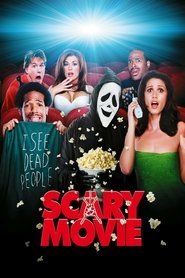
Director Keenen Ivory Wayans
A year after Cindy Campbell and her friends cover up a fatal accident, a masked killer begins targeting the teenagers in their hometown. Cindy tries to understand the threatening phone calls and attacks while a television reporter pursues the story and the local police struggle to identify the assailant. As suspicion spreads through the group, the murders turn familiar slasher-film situations into increasingly absurd encounters. The comedy draws particularly on Scream and I Know What You Did Last Summer, with the characters repeatedly caught between recognizable horror conventions and their own reckless behavior.
Director Keenen Ivory Wayans
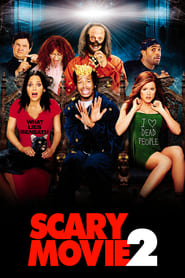
Cindy Campbell joins a group of college students recruited by Professor Oldman for a supposed research project at Hell House, a mansion with a history of supernatural disturbances. The participants soon encounter the building's eccentric caretaker, hostile spirits and rooms where ordinary objects behave in increasingly disturbing ways. With little help from the people running the experiment, Cindy and her companions attempt to survive the night and discover what the professor really intends. The haunted-house setting provides a framework for parodies of supernatural horror films, including The Haunting and The Exorcist.
Director David Zucker
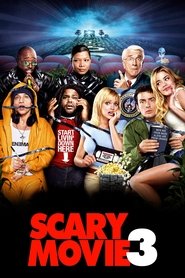
Television reporter Cindy Campbell investigates a mysterious videotape said to cause the death of anyone who watches it seven days later. Her search for the tape's origins intersects with unexplained crop circles appearing on the farm of Tom Logan, who is caring for his daughter and younger brother. As reports of strange phenomena spread and the United States government responds to a possible extraterrestrial threat, Cindy tries to connect the apparently separate mysteries. The story combines the cursed-video premise of The Ring with the alien-invasion scenario of Signs and a series of other popular-film parodies.
Director David Zucker
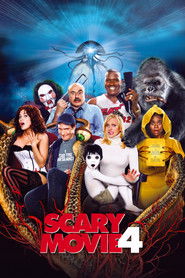
Cindy Campbell takes a job caring for an elderly woman in a house haunted by the apparition of a young boy. While looking for answers about the child's death, she meets Tom Ryan, a divorced father whose family becomes caught in a sudden alien invasion. Enormous machines attack cities, forcing the survivors to flee as Cindy follows clues that may connect the haunting to the wider catastrophe. Her journey brings together parodies of The Grudge, War of the Worlds, Saw and other contemporary horror films, with supernatural encounters unfolding alongside the chaos of an invasion.

Director Malcolm D. Lee
Dan Sanders and his wife Jody take custody of three children who have been living alone in the woods and move into a house equipped with surveillance cameras. Soon after the family settles in, unexplained events begin disturbing the home, and the children speak of a mysterious figure called Mama. Jody's ambitions as a ballet dancer and Dan's work with laboratory primates become entangled with the escalating paranormal activity. Seeking help from specialists, the couple investigate the apparent haunting while the film parodies Paranormal Activity, Mama, Black Swan and several other contemporary releases.

Director Michael Tiddes
Twenty-six years after their first encounter with a masked murderer, Cindy Campbell, Brenda Meeks, Shorty Meeks and Ray Wilkins find themselves facing a new masked killer modeled on the Ghostface-style slasher threat, whose attacks draw a younger generation into danger. The former survivors reunite as familiar slasher scenarios return in forms shaped by contemporary horror, remakes and franchise revivals. While Cindy and her friends confront the new threat, the film uses the killer's return to parody changing genre conventions and the entertainment industry's appetite for sequels and reboots. The original central characters lead the story alongside new victims and suspects.
Origins: A Slasher Revival Becomes a Spoof Franchise
The success of late-1990s slasher cinema created an unusually direct opening for a parody. Wes Craven's Scream franchise had already made the characters' awareness of horror-movie conventions part of the story, while I Know What You Did Last Summer helped establish another commercially recognizable template: young people conceal a fatal incident and are pursued by a killer. Scary Movie could therefore draw humor from material audiences were already accustomed to seeing both seriously and self-consciously. The original's title was itself associated with the working title of Scream, adding another layer to that relationship.
The first picture was developed around the comic sensibilities of the Wayans family, especially director Keenen Ivory Wayans and writer-performers Marlon Wayans and Shawn Wayans. The screenplay credits Shawn and Marlon Wayans, Buddy Johnson, Phil Beauman, Jason Friedberg and Aaron Seltzer. Friedberg and Seltzer later wrote and directed Date Movie (2006), Epic Movie (2007) and Disaster Movie (2008), extending the commercially oriented spoof cycle that Scary Movie had helped popularize. Dimension Films, operating within Miramax, brought the production to cinemas through the established machinery of mainstream genre distribution. Its July 2000 release exploited a moment when slasher iconography and the rules associated with it were exceptionally recognizable.
The parody's basic structure was more coherent than many of its individual jokes. The familiar masked killer, threatening telephone calls, a high-school friendship group and a covered-up accident supplied a narrative through-line; comic disruptions could then arrive without requiring a wholly new plot for every gag. Cindy Campbell, played by Anna Faris, anchored the increasingly irrational proceedings. Regina Hall as Brenda Meeks, together with the characters played by the Wayans brothers, helped build a recognizable ensemble. The recurring performers made later films feel connected even as individual storylines became largely disposable.
The First Film: Rating, Audience and Commercial Breakthrough
Scary Movie (2000) arrived with an R rating and an approach to parody that mixed horror violence with aggressive sexual, scatological and racial humor. The film's willingness to push beyond the gentler tone of some mainstream spoof comedies was part of its identity and advertising appeal. Its jokes could satirize a recognizable scene, abandon the horror reference altogether or disrupt a serious moment with a deliberately crude punchline. That variable comic rhythm would become a lasting feature of the property.
The commercial result was striking. The Numbers reports a $19 million production budget, a $42.35 million domestic opening weekend and about $277.2 million worldwide in theatrical ticket sales. The large ratio between reported production cost and gross helped establish the premise as a repeatable theatrical property. The initial film also benefited from strong recognition of its parodied titles, whose popularity supplied the audience with much of the context for the jokes.
Its success generated a particular industrial expectation. The property could move quickly to the next cycle of recognizable horror films while retaining a few audience-favorite characters. The question was whether this approach could be repeated without the novelty of the first encounter with a self-parodying slasher film. The immediate sequel answered by changing the subgenre being spoofed, even while much of the creative team remained in place.
Scary Movie 2: The Haunted-House Turn and a Compressed Follow-Up
Scary Movie 2 (2001) arrived barely a year after its predecessor, again directed by Keenen Ivory Wayans. Its main organizing setting shifted from teen-slasher suburbia to a haunted mansion and a group assembled for a purported research experiment. This gave the sequel opportunities to parody The Haunting, The Exorcist and other supernatural films that rely on atmosphere, possession and haunted architecture. It retained Cindy and several characters from the original while constructing new jokes around a location designed to be attacked room by room.
The quick turnaround is an important part of the film's production history. A follow-up built around a succession of visual and verbal gags can be assembled around the memory of the first film's success, but it also requires a steady supply of effective new comic ideas. Contemporary critical response was substantially harsher than that for the original. The Numbers lists a $45 million budget and about $141.19 million in worldwide theatrical grosses: a commercially meaningful result, but a pronounced decline from the first film's worldwide receipts despite the higher production cost.
The sequel also marks the end of the Wayans family's direct creative leadership for the next three films. Marlon Wayans later attributed the family’s departure to disagreements over compensation and creative control with the Weinstein-led Dimension organization; the account reflects his recollection of the negotiations. The distribution rights and franchise identity nevertheless continued under the companies that had released the first two films.
David Zucker, Scary Movie 3 and a Different Comic Language
Scary Movie 3 (2003) brought David Zucker to the director's chair. Zucker's association with the Airplane! and The Naked Gun tradition signaled a transition toward a denser stream of visual non sequiturs, absurd literalism and throwaway background jokes. The film maintained Cindy and Brenda, now joined by performers including Leslie Nielsen as President Harris and Charlie Sheen as Tom Logan. Craig Mazin and Pat Proft worked on the screenplay; Mazin later created the television series Chernobyl and co-created The Last of Us. Shawn and Marlon Wayans no longer wrote or performed in the series; Keenen Ivory Wayans had directed the first two films. This amounted to a change of comic authorship as well as personnel.
The horror subjects changed with the genre's marketplace. The cursed videotape of The Ring and the crop-circle and alien-invasion imagery of Signs provided two conspicuous narrative strands. Moving between a supernatural investigation and an extraterrestrial threat allowed the film to parody the early-2000s popularity of American remakes of Asian horror and the major success of an atmospheric invasion thriller. References to other contemporary titles broadened the field beyond those central plots.
The third film was released with a PG-13 rating, a substantial shift from the R-rated first pair. That altered the space available for the series' earlier brand of sexual and bodily comedy and exposed the franchise to a wider adolescent theatrical audience. Worldwide reporting differs sharply: Box Office Mojo records $220.67 million, whereas The Numbers lists $155.2 million, largely because of their divergent international totals. The film's reception and commercial performance showed that Scary Movie could remain viable after its founding creative family left, although the meaning of the brand was changing.
Scary Movie 4: Disaster Cinema and the End of the Mid-2000s Cycle
Zucker returned for Scary Movie 4 (2006), with Cindy once again placed at the center of a collision between different contemporary horror premises. The Grudge furnished the haunted-child material, War of the Worlds the overwhelming invasion imagery, and Saw another source of recognizable iconography. By placing these references side by side, the film revealed how the series depended on the audience's ability to recognize a varied slate of current hits, sometimes from only a prop, costume or camera angle.
The fourth installment illustrates the increasingly mixed targets of the franchise. The original's immediate slasher models had shared a fairly close narrative grammar; here the supernatural haunting and the alien-invasion spectacle originate in fundamentally different kinds of filmmaking. The comedy must engineer an artificial route between them. This is part of the tradition of anthology-like spoofing within a nominally continuous plot, and it makes narrative coherence secondary to the recognition and timing of individual references.
Leslie Nielsen returned as President Harris, while Anthony Anderson reprised Mahalik; Craig Mazin was again among the screenplay writers. The movie carried a PG-13 rating. Its approximate $178.71 million worldwide gross against a reported $40 million production budget kept the series commercially active, although it trailed Scary Movie 3 when the latter is measured using Box Office Mojo's $220.67 million worldwide total. Yet this was the last entry directed by Zucker, and the franchise did not immediately continue at the earlier one-to-three-year pace. The market for rapid-response spoofs was also evolving: parody pictures and their marketing strategies faced the challenge that the audiences most familiar with each joke might already have seen similar references in other films, trailers or online comedy.
Scary Movie 5: Found Footage, a Recast Center and a Seven-Year Gap
Scary Movie 5 (2013) arrived seven years after the fourth film, directed by Malcolm D. Lee. Ashley Tisdale became the new central performer alongside Simon Rex, who returned to the series after playing George in Scary Movie 3 and Scary Movie 4. Anna Faris and Regina Hall did not appear. The change weakened one of the series' longest-running connective elements while allowing the fifth film to target the horror cycle of its own period. The fifth film retained the PG-13 rating used by the two previous sequels. Its found-footage and domestic-surveillance material drew on Paranormal Activity, while the story also spoofed Mama, Black Swan and a range of other popular films.
This installment was produced in a climate different from the one that had sustained the original. Found-footage horror was attractive precisely because many prominent examples had modest budgets and apparent immediacy; a studio parody could recreate its stationary surveillance framing, increasingly strange household behavior and accumulation of ominous recordings. The film's competing references, however, pushed the spoof toward a collection of recognizable set pieces rather than a stable central ensemble. Its lack of the franchise's familiar leads made that difference especially visible.
The Numbers records a $20 million production budget and about $78.61 million worldwide. It was the lowest worldwide gross in the six-film series on that source's current figures. Critical response was severe, and the fifth film became the end of the theatrical run for more than a decade. Its place in the franchise is therefore significant both for the topics it parodied and for the question it raised: whether the Scary Movie name could continue as a succession of topical sketches after losing the performers most closely identified with its beginning.
Rights, Control and the Wayans Return
The property's corporate history is central to understanding its creative changes. Dimension Films and Miramax were central to the original releases, while the 2026 revival was presented by Paramount Pictures in association with Miramax. The return of the Wayans family followed years in which the founders publicly criticized their departure from the franchise. In a 2025 Variety account of Miramax's repositioning, Marlon Wayans described the earlier dispute and Miramax leadership discussed a new arrangement intended to give the creators a greater stake in the revival. The precise contractual terms of the new arrangement have not been disclosed.
The long interval was not simply a period without horror films to imitate. The genre underwent profound shifts: the prestige-driven marketing associated with so-called elevated horror, socially charged studio successes, legacy-sequel cycles, streaming-first releases and a new emphasis on internet circulation. The old Scary Movie format had once competed mainly on how swiftly it could lampoon a successful theatrical film. A revival in 2026 had to decide how much to parody the changing business and language of horror itself, rather than just the latest recognizable murder scene.
The decision to reunite the Wayans family with Anna Faris and Regina Hall offered an answer grounded in performers and authorship. Paramount's own publicity emphasized the return of Cindy, Brenda, Shorty and Ray, branding the ensemble as a returning core group. The film could market nostalgia for its 2000 beginning alongside a fresh selection of contemporary references. That strategy positioned the sixth entry as both a sequel to the brand's earlier story world and a response to the industry's enthusiasm for legacy revivals.
The 2026 Revival: R-Rated Parody After the Requel Boom
The sixth theatrical installment, Scary Movie (2026), was directed by Michael Tiddes. Marlon, Shawn and Keenen Ivory Wayans returned as writers, with Craig Wayans and Rick Alvarez among the credited screenplay contributors; Marlon and Shawn also resumed their established characters. The film returned to an R rating, a decision consistent with the comeback's stated interest in the more abrasive comic identity of the earliest entries. The theatrical US opening took place on June 5, 2026, after international engagements began earlier that week.
The title deliberately repeats the name of the 2000 original. The repetition makes sense within a contemporary marketplace accustomed to sequels using an earlier title without a numeral. The film's targets encompass current franchises, reboots and the vocabulary of contemporary horror, including the idea that old properties continually announce their own reinvention. The familiar quartet gives the satire a point of continuity while a new supporting ensemble provides material for jokes about changed media habits, fashions and genre expectations.
The revival's financial performance was a marked rebound. Paramount reported an approximately $105.5 million global opening; the studio's announcement characterized it as a franchise opening record. The Numbers records a $54.34 million North American opening weekend, ahead of the earlier franchise record of $48.11 million held by Scary Movie 3 on that tracker, and approximately $231.28 million worldwide against a $30 million production budget. Those figures place the sixth film second only to the 2000 original in the worldwide series ranking on that provider's figures. By the end of its theatrical run the film exceeded $100 million domestically, the first R-rated comedy to surpass $100 million in North America since Girls Trip (2017). Paramount later announced its September 3, 2026 arrival on Paramount+, following its theatrical run.
Critical reception was appreciably less enthusiastic than the ticket sales. By October 2026, Rotten Tomatoes listed 23% positive reviews from critics and a 63% verified-audience score. The disparity accompanied strong ticket sales despite an unfavorable critical reception. The revival established a commercial audience for the property while reopening arguments about whether deliberately offensive, reference-heavy parody had substantially evolved.
Narrative Continuity and the Films Being Parodied
Scary Movie has always maintained a flexible relationship with continuity. Cindy and Brenda can recur across films without their experiences forming a tightly regulated chronology, and the cast may change even when the franchise retains its familiar naming and comic conventions. The fifth film foregrounded a new household, while the sixth leaned back toward its original ensemble. The viewer's recognition of the characters matters more than resolving every apparent contradiction. This elasticity is a feature of the parody format: retaining a performer or running gag is useful only so long as it supports the joke at hand.
The franchise's connection to Scream is especially enduring. Both emerged from the same period of self-conscious slasher filmmaking, and the original title and disguised killer became foundational reference points. Yet the series soon absorbed other waves of horror. The Ring-style supernatural investigation in the third film, the J-horror imagery and Saw-related material in the fourth, and the surveillance conventions of the fifth record what mainstream distributors and audiences regarded as recognizable horror at each moment. In this sense, the six films provide a chronology of marketable genre imagery from 2000 through 2026.
This relationship is often described simply as mockery, but it also testifies to a target film's commercial reach. An effective parody assumes the spectator can understand the reference before the joke is explained. The franchise therefore rewards viewers who have watched the films being lampooned, while some gags remain accessible as self-contained slapstick. Those two levels of recognition help explain why the property travels between explicitly horror-specific humor and broader celebrity or pop-culture material.
Box Office and Commercial Performance
The following table reports nominal theatrical grosses. Figures come from The Numbers except Scary Movie 3, for which Box Office Mojo reports $220,673,217 worldwide and a $48 million production budget; The Numbers instead reports $155,200,000 and a $45 million budget. The sources differ principally in recorded international revenue. Home-video and streaming revenue are excluded from the theatrical figures.
| Film | Production budget | Worldwide box office | US distributor |
|---|---|---|---|
| Scary Movie (2000) | $19,000,000 | $277,200,000 | Miramax / Dimension |
| Scary Movie 2 (2001) | $45,000,000 | $141,189,101 | Miramax / Dimension |
| Scary Movie 3 (2003) | $48,000,000 | $220,673,217 | Dimension Films |
| Scary Movie 4 (2006) | $40,000,000 | $178,710,620 | Dimension Films |
| Scary Movie 5 (2013) | $20,000,000 | $78,613,981 | Dimension Films |
| Scary Movie (2026) | $30,000,000 | $231,277,762 | Paramount Pictures |
Using the figures in the table, the six theatrical releases total approximately $1.128 billion worldwide, including the higher Box Office Mojo figure for the third film. Using The Numbers for all six would instead produce approximately $1.062 billion. Both methods rank the original film first by worldwide gross, followed by the 2026 revival and the third film when Box Office Mojo's total is used. All figures are nominal and do not represent net studio profit.
Reception, Influence and the Horror-Parody Market
The franchise's critical standing has been uneven throughout its history. Reviewing a parody involves assessing the construction and timing of jokes, while its commercial appeal can depend heavily on whether the target films are already part of an audience's everyday language. The first entry was associated with the novelty of turning a self-aware horror cycle into explicit comedy. Later pictures encountered a harder test because audiences knew the recurring format: a new threat is introduced, familiar scenes are reconstructed, and the anticipated scare is interrupted by a gag.
The sequence from the Wayans-directed R-rated films to the PG-13 third, fourth and fifth entries and then to the 2026 R-rated return documents shifts in industrial positioning as well as comic style. The mid-2000s installments leaned further into a broad, accessible spoof tradition; the comeback tied transgression and ensemble familiarity to the marketing of an event comedy. Neither change alone determines how well individual jokes work. Both show how producers attempted to reconcile the brand's identity with different theatrical audiences and prevailing standards of mainstream comedy.
Scary Movie is consequently important to horror history as a durable commercial response to horror trends. Its makers relied on the popularity and legibility of successive waves of genre filmmaking, and the resulting films preserve a record of what a broad audience was expected to recognize in a given year. The sixth installment confirmed that this relationship could still attract theatrical viewers after a thirteen-year gap, even when contemporary criticism questioned the freshness of the approach.
Sources & References
- Miramax - Scary Movie (2000), official film credits - Lists the six credited screenplay contributors.
- Miramax - Craig Mazin filmography - Confirms his credited involvement in the third film.
- AFI Catalog - Scary Movie V - PG-13 rating and principal production credits for the fifth film.
- Box Office Mojo - Scary Movie 3 - Alternative documented worldwide gross and budget used in the table.
- Rotten Tomatoes - Scary Movie (2026) - Critic and audience reception recorded in October 2026.
- Paramount Press Express - Scary Movie launches on Paramount+ (August 2026) - Official credits, core cast, production and release strategy.
- Paramount / Skydance - Scary Movie franchise-record opening (June 2026) - Studio release reporting on opening-weekend results.
- Variety - Miramax's post-Weinstein strategy and the Wayans reunion (2025) - Interviews with Marlon Wayans and Miramax leadership on creative control and the revival.
- Variety - Marlon Wayans on the franchise and business dispute (2026) - First-person recollections of the original films and split.
- Hollywood.com - Scary Movie cast interview (2000) - Contemporary context for the first film's targets and Wayans approach.
- The Numbers - Scary Movie theatrical franchise figures - Standardized six-film budgets, openings and global theatrical receipts.
- Variety - 2026 international box-office campaign - Studio marketing and Marlon Wayans' international promotional approach.
- Variety - Scary Movie Paramount+ release (August 2026) - Release window and retrospective context for the Wayans reunion.
- Rotten Tomatoes - 2026 first reviews - Contemporary overview of the revival's critical reception.
Editorial updated: