
Horror Franchise · EC Comics Legacy
Tales from the Crypt
From EC Comics and British anthology cinema to HBO, the Crypt Keeper, theatrical spin-offs and the modern revival of its archive.
Franchise Overview
The Tales from the Crypt franchise began with EC Comics' horror publishing in 1950. William M. Gaines and Al Feldstein developed an anthology whose stories and macabre hosts subsequently reached film and television. The principal screen productions include Tales from the Crypt (1972), The Vault of Horror (1973), HBO's Tales from the Crypt (1989), Tales from the Cryptkeeper (1993), and three later features. The films and series draw on the same publishing tradition without forming a continuous story.
The property has passed through EC's censorship controversy, British anthology filmmaking, HBO's seven-season television run, Universal's 1990s film initiative and several children's productions. Kevin Yagher's mechanical Crypt Keeper, voiced by John Kassir, became its best-known screen host. The history also includes reprints, records, merchandising, unproduced projects, Oni Press's renewed EC publishing program in 2024 and the HBO series' arrival on Shudder in 2026.
Tales from the Crypt Movies & TV Series in Release Order
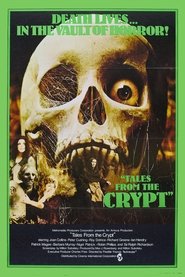
Director Freddie Francis
An Amicus anthology directed by Freddie Francis frames five episodes of wrongdoing and supernatural retribution through encounters with a mysterious guide in a crypt. Ralph Richardson, Joan Collins and Peter Cushing appear in the ensemble. The film brings EC horror material into a British portmanteau format whose continuous setting belongs to its own screen presentation.

Director Roy Ward Baker
Amicus continued its EC-inspired anthology cycle under Roy Ward Baker. Another confined group exchanges stories involving theft, punishment and the supernatural, with a new framing situation rather than the same characters continuing the 1972 film. The connection is chiefly one of producers, format, source material and theatrical marketing.

Directors Various directors
HBO revived the EC anthology as an adult horror series in which independent stories were introduced by a decaying puppet host voiced by John Kassir. Produced across seven seasons from 1989 to 1996, the program drew on multiple EC titles and television-original scripts. The complete HBO run consists of 93 episodes.
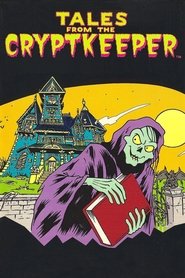
Directors Various directors
Nelvana adapted the Crypt Keeper and EC-derived anthology principle for a younger audience. John Kassir returned to voice the host while the stories reduced the violence and emphasized supernatural adventures, comedy and ironic reversals. Its 39 episodes span three seasons, including a later revival under the New Tales from the Cryptkeeper presentation.
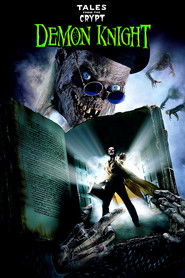
Director Ernest R. Dickerson
A supernatural feature directed by Ernest R. Dickerson was released through the HBO-era brand after originating as a separate screenplay. New Crypt Keeper framing material connected the film to the television property’s identity. Its own fictional mythology stands apart from the Amicus stories and the anthology television episodes.
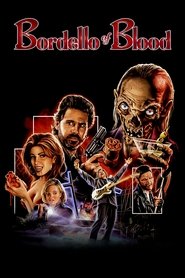
Director Gilbert Adler
Gilbert Adler directed the second Universal feature associated with the Crypt Keeper’s HBO identity. Its vampire-comedy premise and independent characters illustrate the theatrical imprint’s strategy of packaging separate genre stories under a familiar presenter. The film’s disappointing theatrical performance contributed to the loss of momentum for that proposed production line.
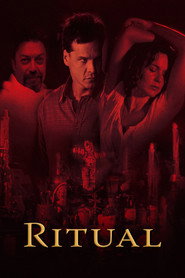
Director Avi Nesher
Developed with producers associated with HBO’s Tales from the Crypt, Avi Nesher’s supernatural feature circulated internationally from 2002 before its branded US DVD release in 2006. Its production links predate that home-video presentation.
From EC's Crime Comics to the Crypt, 1947–1950
The history of Tales from the Crypt begins before a magazine carried that name. Its earliest identity belonged to the publishing business built by Maxwell Gaines, whose Educational Comics imprint passed to his son William M. Gaines in the late 1940s. In a market crowded with westerns, humor, romance and detective titles, the younger Gaines and editor-writer Al Feldstein began shifting EC toward stories of crime, supernatural punishment and moral reversal. The change was gradual and visible in the publication's numbering. Material previously issued as International Crime Patrol and Crime Patrol moved toward horror; The Crypt of Terror appeared with issue #17 in 1950, and Tales from the Crypt became the cover title with issue #20, dated October–November 1950. EC retained the inherited numerical sequence instead of restarting its issue numbers. Consequently, the famous name appeared on twenty-seven numbered issues, #20 through #46, although a historical account of the publication's ancestry reaches back further.
EC built the property from short stories, distinctive artwork and the recurring voice of a horror host. The Crypt-Keeper emerged during the transition from crime to horror, introducing otherwise independent tales. This structure offered readers a consistent personality while allowing each issue to feature different characters, locations and supernatural circumstances. It also supplied an adaptable framework for later screen anthologies.
Gaines and Feldstein's collaboration took shape at a time when horror in American popular culture circulated across inexpensive magazines, radio programs, cinema and comic strips. The significance of EC's adaptation was that the illustrated page could deliver a complete disturbing incident within a few pages. Panel transitions made sudden revelation unusually effective. A face could be withheld until the final panel, or an apparently ordinary exchange could acquire a second meaning once its speaker was revealed as a corpse. Such techniques depended on layout, lettering, coloring and the reader's control of pacing; they were never merely prose stories decorated with drawings. When later filmmakers translated this material, they inherited a narrative arrangement defined by compressed setup, escalating error and the reversal at the end.
The publisher's transformation connected Tales from the Crypt to a wider family of EC periodicals. The Vault of Horror and The Haunt of Fear supplied other horror stories and narrators, while Crime SuspenStories, Shock SuspenStories and Harvey Kurtzman's Two-Fisted Tales explored criminal suspense, social conflict and war. Gaines and Feldstein also published Weird Science and Weird Fantasy, companion titles devoted to speculative fiction. These merged into Weird Science-Fantasy in 1954 and were subsequently succeeded by Incredible Science Fiction. The publishing distinction later became significant when HBO reused the EC anthology format for science fiction in Perversions of Science (1997).
The title invited a broad range of macabre subjects: ghost stories, criminal betrayals, revenge fantasies and grotesque comedy. Its flexible framework subsequently appealed to filmmakers working in different countries and formats. The original magazine's publication sequence remains the starting point for tracing those adaptations.
The EC House Style: Artists, Hosts and Morality
EC's visual reputation cannot be separated from the artists who gave the stories their identity. Johnny Craig, Jack Davis, Graham “Ghastly” Ingels, Wallace Wood, Reed Crandall and other contributors created very different versions of the macabre. Craig's precise arrangements could turn an affluent domestic interior into the setting for a meticulously staged crime. Davis favored elastic expressions and physical energy, allowing a scene to shift rapidly between comic exaggeration and bodily horror. Ingels developed a decaying, heavily textured world of rotten interiors, exhausted figures and intrusive corpses. The contrasts made an issue feel like a small anthology of artistic voices instead of the work of one illustrator reproducing a uniform house model.
Gaines and Feldstein frequently used surprise endings to expose greed, cruelty and betrayal. Their stories return the consequences of wrongdoing through grotesque accidents, revenge and grim wordplay. Punishment was not always proportionate: apparently innocent characters could suffer, and some endings valued shock over justice. The mixture of moral irony and arbitrary cruelty later shaped the screen adaptations.
The narrators themselves created another form of unity. The Crypt-Keeper, the Vault-Keeper and the Old Witch developed as hosts attached to related publications, each inviting readers into an archive of terrible events. Their introductions and comments were part of an affectionate parody of the storyteller's authority. A host might sound knowledgeable, mocking, intimate or absurdly enthusiastic about suffering. This mechanism was important in a medium in which letters pages, editorial notes and recurring characters helped publishers build a relationship with readers. The hosts did not need to survive the dangers presented in every story; they existed outside the immediate plot and could return at the next publication date.
The macabre jokes associated with the franchise grew from that relationship between presentation and material. Punishment might be appalling inside the story while the framing voice responded with cheerful bad taste. That friction generated the tonal mixture later associated with HBO: gruesome incidents presented through a knowingly theatrical performance. In the 1950s comics, the humor was not always a relief from terror. It could sharpen the ending by treating the victim's fate as a punch line. The screen Crypt Keeper inherited the host's willingness to celebrate outcomes that the audience had just been asked to fear. John Kassir's later voice performance intensified the distinction between the apparent cheerfulness of the presenter and the consequences of the stories he announced.
The artists also acquired an unusually visible identity for a mass-market comics publisher. Collectors' reprints preserved their individual drawing styles, cover designs and final-panel revelations. Jagged lettering, graveyard architecture, exaggerated reactions and rotting flesh became recurring visual elements. Amicus later adopted a comparatively restrained British Gothic appearance; HBO developed a mechanical host and a more mobile camera; children's animation used saturated colors and simplified menace.
Public Controversy, the 1954 Hearings and the End of EC Horror
The collapse of the original horror line was inseparable from the increasingly organized criticism of comic books in postwar America. Concern about juvenile delinquency, violent popular culture and children's reading became a political issue before Tales from the Crypt reached its final numbers. Psychiatrist Fredric Wertham argued that comic books contributed to harmful behavior, an argument popularized by Seduction of the Innocent in 1954. EC's striking covers and crime stories were especially easy to display as examples of supposedly dangerous material. Critics could reproduce one disturbing image without reproducing the story's narrative context, while Gaines defended a form of commercial entertainment whose effects on readers were being asserted far more confidently than they were demonstrated.
The United States Senate Subcommittee to Investigate Juvenile Delinquency held hearings in 1954, receiving testimony from Wertham, Gaines and other witnesses. The exchange between Senator Estes Kefauver and Gaines over a Crime SuspenStories cover depicting a severed head became particularly notorious. That comic was not an issue of Tales from the Crypt, a distinction sometimes lost when the incident is condensed into a generic story about one banned magazine. The hearings targeted a broader publishing category. They exposed a divide between a publisher defending the conventions of horror fiction and public officials evaluating imagery as if it were direct evidence of a social problem. The record establishes the political controversy; it does not establish that reading EC horror caused violent acts.
The industry response was the Comics Code Authority, a self-regulatory system backed by publishers and distributors. Its restrictions directly affected the vocabulary of EC horror, prohibiting certain supernatural figures and the use of horror-related words in titles. For a magazine whose principal appeal rested on corpses, vampires, ghouls, grotesque revenge and surprise violence, compliance would have required changes to both content and identity. Gaines attempted to redirect the company through other titles, but the economics of distribution and the new approval regime proved inhospitable. The EC horror magazines disappeared by 1955, with the final Tales from the Crypt issue numbered #46. Mad, developed within the wider EC operation, followed a different trajectory and became the enduring survivor associated with Gaines.
The effect on the franchise extended well beyond the withdrawal of a periodical. The sudden end helped define an unusually clear historical boundary between the original publication and its later revivals. The horror catalog became a closed body of work that could be collected, studied, licensed and reinterpreted. This distinguishes Tales from the Crypt from properties that had maintained uninterrupted production through the decades. When Amicus adapted EC stories in the 1970s, it was drawing on comics already associated with a notorious censorship struggle. When HBO relaunched the name at the end of the 1980s, an adult subscription channel offered a commercial environment in which graphic horror could again be part of the selling point.
The history also complicates the frequent claim that EC was simply "banned." The American government did not pass a single law outlawing Tales from the Crypt. Senate scrutiny, public campaigns, the commercial leverage of distributors and restrictive industry self-censorship combined to make the original model of publication difficult to sustain. That institutional sequence matters because the property subsequently became a recurring example in debates about freedom of expression and genre entertainment. The comics’ disappearance and later rehabilitation form a significant part of its cultural identity, documented through specific testimony, industry rules, distribution decisions and their effects on EC’s business.
Preservation, Reprints and the Journey from Print to Screen
Collectors and licensed reprint programs sustained interest in Tales from the Crypt after its original newsstand editions disappeared. Dealers, specialist magazines and fan communities helped circulate rare issues and information about the EC artists. The reprints later made the stories accessible to readers and screen producers encountering the magazine decades after its first publication.
Reprints were not merely convenient substitutes for increasingly scarce originals. They changed how the work could be understood. Reading a full run in sequence revealed repeated concerns with domestic violence, fraud, theatrical performance, scientific arrogance, social humiliation and bodily decay. Viewing an artist's stories together made the contrasts between Craig, Davis and Ingels easier to recognize. It also became possible to compare how similar themes appeared under the different EC imprints. This historical perspective later assisted the reassessment of the comics as authored visual literature and provided screen producers with a catalog from which a self-contained episode or feature segment could be selected.
Russ Cochran's editions, the EC Archives, artist-focused Fantagraphics publications and later Dark Horse collections preserved different portions of the EC catalog. Restored coloring, page layouts and editorial materials shaped how readers encountered the stories. The resulting editions also made it easier to compare individual artists' work and the evolution of EC's horror titles.
British producers Milton Subotsky and Max J. Rosenberg had already established the portmanteau horror film as an Amicus specialty. A shared framing situation allowed several short stories and their casts to fit within a single feature. The format suited a British production environment in which compact schedules and recognizable performers could support internationally distributed genre films.
The rights and adaptation process revived individual stories from the original magazine in a new screen format. Amicus selected material from EC's horror anthology catalog and created a new dramatic frame for a cinematic audience. The result introduced the Tales from the Crypt name into film exhibition decades before HBO adopted it. Ralph Richardson portrayed the human Crypt Keeper in the 1972 film, long before the skeletal HBO puppet became the best-known incarnation. By 1989, the title already possessed a publishing legacy and an earlier screen adaptation that had demonstrated the material’s portability.
Amicus and the British Films, 1972–1973
Freddie Francis directed Tales from the Crypt (1972) for Amicus from a screenplay by Milton Subotsky. Five strangers encounter the Crypt Keeper in a burial place, where the host introduces stories about the consequences of their lives. Ralph Richardson played the host as a grave, human-appearing guide. His restrained performance contrasts with the manic, skeletal television incarnation introduced in 1989.
The feature translated brief illustrated narratives into performances with locations, music and carefully timed reversals. It brought together stories of domestic cruelty, supernatural interference and punishment within one framing mystery. This arrangement could accommodate several horror styles without requiring recurring characters in the individual segments.
Highgate Cemetery's Circle of Lebanon supplied the film with a distinctive Gothic setting documented by the British Film Institute. Ralph Richardson, Joan Collins and Peter Cushing brought established screen reputations to an ensemble of concentrated performances. The later HBO series similarly recruited prominent actors for individual anthology stories, although it operated under a different production and distribution model.
Amicus followed with The Vault of Horror (1973), directed by Roy Ward Baker. Five men assemble inside a building and recount disturbing dreams, each developing into another EC-style story of revenge or supernatural punishment. The shared producers, format and release sequence establish the film as the direct Amicus follow-up to the 1972 feature.
British classification rules affected the circulation of The Vault of Horror, which underwent cuts for its original UK release. This intervention arose from cinema regulation, whereas EC's mid-century difficulties concerned public campaigning, newsstand distribution and the Comics Code. The films brought the stories to a new audience through British performers and production practices.
Hollywood Reclaims the EC Catalog: The Birth of the HBO Series
By the late 1980s, American television provided an opportunity to return the EC material to a serial anthology format. Producer Joel Silver became a central figure in assembling a creative group that included Richard Donner, Walter Hill, Robert Zemeckis and David Giler. The project was linked to HBO, which distributed programming by subscription and operated under different content constraints from conventional American broadcast networks. The original arrangement contemplated a small set of stories that could develop into a continuing series. Contemporary reporting in the Los Angeles Times in December 1988 described how the project was attracting established feature filmmakers and how the producers expected to use a substantial catalog of EC stories.
Hill, Donner and Zemeckis brought experience in directing action, suspense and comedy; Giler and Silver were established film producers. Their involvement helped HBO develop short EC narratives as compact television films, with changing casts and directors and a recurring host to identify the series. The half-hour format also gave filmmakers the opportunity to experiment with tone on a smaller scale than a theatrical feature.
The series premiered on HBO on June 10, 1989. The Paley Center's record for The Man Who Was Death credits Walter Hill as director and co-writer, alongside writer Robert Reneau; Ry Cooder composed the episode score and Danny Elfman provided the series' theme. Its executive producers included Richard Donner, David Giler, Hill, Joel Silver and Robert Zemeckis. The host sequences had their own puppetry and production credits, a practice that reflects the scale of the effects operation behind the weekly presentation.
The HBO series drew on an extensive EC story archive, including issues from several related publications. Its format depended on a reliable system for adapting short fiction and commissioning original scripts, together with the recurring opening title, music and narrator. Actors, settings and directors could change from episode to episode.
HBO's distribution context was crucial to the resulting identity. More explicit violence, adult dialogue and sexual themes could be accommodated than would normally have been possible on a mainstream American television network in 1989. This freedom helped connect the series to the reputational legacy of the comics, whose original publishers had been challenged for precisely the kinds of material that commercial television had long restricted. EC reached newsstand buyers in the 1950s; HBO addressed paying television subscribers in 1989. The 1989 program converted a once-controversial comic-book form into a recognizable sign of adult premium-cable programming.
The HBO Production Model and Its Anthology Identity
HBO's Tales from the Crypt (1989) produced ninety-three episodes over seven seasons, ending in 1996. Episodes ranged from crime thrillers and grotesque comedy to supernatural and science-fiction horror. The Crypt Keeper's introductions and closing jokes supplied a consistent presentation while each production could adopt a different cast, setting and visual style.
An anthology on that scale required careful control of production. Returning producers, script editors and design personnel had to reconcile directors' individual styles with episode lengths and budgets. Locations, prosthetic effects, optical work and post-production schedules varied from story to story. Some scripts depended primarily on performance and dialogue; others required elaborate creatures, injuries or transformations. The show's recurring opening and closing sequences helped absorb this variation by providing a stable frame. A viewer could accept an unusually broad range of approaches because the opening title, music and host established the shared identity before each story began.
The production network included filmmakers whose participation sometimes involved directing and sometimes executive oversight. Robert Zemeckis, Richard Donner and Walter Hill were particularly visible early in the series, while other episodes brought in directors such as William Friedkin, Tobe Hooper and Russell Mulcahy. The guest-director model was part of the franchise's public appeal, and the short EC stories created a viable canvas for contrasting forms of direction. An episode could be structured like a noir revenge film, a domestic chamber drama or a grotesque Hollywood comedy, each within a recognizable anthology package.
Episodic casting attracted performers including Kirk Douglas, Tim Curry, Demi Moore, Christopher Reeve and Catherine O'Hara. Roles often gave familiar actors the chance to play villains, grotesque victims or exaggerated comic figures. Each appearance could be completed within a short production without a recurring cast commitment.
The final season moved production to Britain, adding a transatlantic phase to a series that had already drawn on the British Amicus adaptations for part of its screen history. The seven-season HBO run became the franchise's most sustained screen production.
A related experiment reached American television as Two-Fisted Tales, developed in 1991 by producers associated with the HBO anthology and broadcast as a Fox television movie on January 18, 1992. The pilot joined three segments under a host played by William Sadler: Robert Zemeckis directed Yellow, Richard Donner directed Showdown, and Tom Holland directed King of the Road. Only Yellow adapted a specific EC story, drawn from Shock SuspenStories; it had already appeared on HBO, while the other two segments were subsequently shown within Tales from the Crypt. The unsuccessful pilot is an early example of producers testing whether the Crypt production model could support a related anthology outside horror.
HBO followed with Perversions of Science (1997), a ten-episode adult science-fiction anthology developed from EC's Weird Science tradition. Chrome, a robotic host voiced by Maureen Teefy, introduced self-contained stories about aliens, technology and speculative disasters. The series extended the HBO creative approach into another branch of the EC catalog; its brief run remains a notable spin-off outside the seven principal horror-screen titles listed above.
The Crypt Keeper: A Printed Host Becomes a Television Performer
No single transformation defines the franchise's movement into popular television more clearly than the design of the HBO Crypt Keeper. The 1950s host had belonged to the deliberately theatrical idiom of comic-book narration. Ralph Richardson's 1972 version remained broadly human in appearance and solemn in delivery. The television production instead needed a presenter who could appear every week, carry promotional material and embody the balance of horror and comedy promised by the show. Makeup and effects artist Kevin Yagher developed a physical puppet in place of conventional actor makeup. The choice made the host unmistakably artificial and allowed the design to display extensive decay without exposing a human performance underneath.
Yagher's account to the Television Academy in October 2026 describes how the decision emerged from his earlier effects work and discussions with Joel Silver. The Crypt Keeper combined manually operated head and hand performance with mechanical facial elements, a strategy less cumbersome than the fully cable-operated system Yagher had used for Chucky. Different puppeteers controlled aspects of the figure during filming. The host's appearances were themselves directed and staged sequences with separate credits; the Paley Center's records preserve names of the operators and identify Yagher's work on those segments. Their technical construction is part of the production history, since the puppet was expected to converse, perform jokes and eventually appear in promotional situations outside the confines of an episode opening.
John Kassir provided the Crypt Keeper's rasping voice and comic timing. Yagher has recalled advocating for Kassir during casting. Multiple operators coordinated facial movements, gestures and mechanical effects with the recorded performance. Kassir also voiced the host in the animated series and the framing sequences of the branded feature films.
The Crypt Keeper's introductions and closing comments were central to the program's tonal economy. Episodes could end with a corpse, a catastrophe or an unresolved image of terror, after which the host supplied a joke that converted the event into macabre entertainment. The arrangement echoed the EC comics' host tradition while making the narrator more central to the screen identity than he had been in much of the source material. The television puppet became the most recognizable face of the property even though it seldom participated directly in the individual stories.
Story Adaptation Across the EC Imprints
HBO adapted material from several EC titles, including Tales from the Crypt, The Vault of Horror, The Haunt of Fear, Crime SuspenStories and Shock SuspenStories. Some episodes preserved comic plots closely, others changed settings and endings, and some stories were created for television. The American Film Institute's account of the 1972 feature also notes that numerous television episodes were written specifically for the series.
The method was closer to editorial repurposing. A short narrative originally designed for a few illustrated pages had to become a dramatic unit with dialogue, sets, actors and a timed structure. An internal monologue could become a confrontation, a printed final-panel reveal could be delayed through editing, and a visual joke could be transformed into a performance. Conversely, a complicated illustrated sequence might have to be simplified for practical production. Such decisions established a relationship between the source text and the screen version without requiring word-for-word fidelity. They also created an opportunity to intensify material that would have been constrained by the comic's limited page count.
The EC catalog offered motives readily adapted to contemporary settings: jealousy, greed, professional fraud, betrayal and vanity. A scheme involving a dishonest employer or an abusive marriage could be relocated to the late twentieth century while preserving its ironic reversal. Updating these situations also demonstrated the continued relevance of the source material's concerns with money, reputation and power.
In EC's printed comics, narrators could interrupt stories through captions and jokes. HBO filmed the Crypt Keeper's introductions and closing segments as separate performances. These bookends established the episode's mood and often foreshadowed or teased the central plot.
Anthology Form, Television Freedom and Cultural Reception
HBO could present stronger language, nudity and graphic effects than contemporary US broadcast networks typically permitted. The series used that freedom differently from episode to episode: some relied on dialogue and suspense, others on elaborate practical effects. Edited television reruns demonstrated how the same material could circulate under more restrictive content standards.
Reviews and audience responses varied with the episodes' shifting tones. Harsh crime fiction could appear beside deliberate camp comedy, and directors often emphasized different aspects of the EC stories. This variety attracted admirers of the series' experimentation while also producing complaints about inconsistency. The Crypt Keeper's introductions helped audiences navigate those changes.
The Television Academy recorded seven Primetime Emmy nominations for the series, including recognition for acting, makeup and costume work. Makeup artists, practical-effects teams and production designers created distinct worlds within episodic schedules. The nominations document the range of craft labor behind a program often remembered first for its celebrity cast and grotesque host.
The HBO run ended in 1996. Its accumulated stories, host performances and technical work continued to circulate through cable broadcasts, home video and licensed products, even as new film and television initiatives encountered commercial and legal obstacles.
Animation, Children's Television and the Expansion of the Audience
The animated Tales from the Cryptkeeper (1993), associated with Canadian studio Nelvana, brought the host and anthology premise to younger viewers. Its stories favored supernatural adventure, comedy and relatively mild moral reversals. The violence and adult humor of the HBO production were substantially reduced.
John Kassir returned to voice the Crypt Keeper, providing a strong audible connection across the two media. The adaptation demonstrated how a character developed through grotesque special effects could survive as a simplified drawing. In animation, movement no longer depended on a puppet's mechanical limits, and exaggerated expressions could be achieved through different means. Other EC horror hosts, including the Old Witch and the Vault-Keeper, appeared in versions appropriate to the new format. Their presence also restored some of the wider host ensemble associated with the original comic line, a connection often obscured by the greater prominence of the HBO Crypt Keeper in public memory.
The animated series produced thirty-nine episodes across three seasons. Its later return in 1999 was marketed as New Tales from the Cryptkeeper, with changes in broadcast arrangements and presentation. It remained part of the same animated television production.
CBS's Secrets of the Cryptkeeper's Haunted House (1996–1997) took the character into children's game-show television. Young contestants navigated staged obstacles and challenges with the Crypt Keeper as a presenter. The adaptation used the established horror imagery for suspenseful entertainment aimed at children.
The Theatrical Imprint: Demon Knight and Bordello of Blood
Universal released Tales from the Crypt: Demon Knight (1995) in January 1995 as the first theatrical feature associated with the HBO series. Producer Gilbert Adler and director Ernest R. Dickerson worked from a screenplay that had circulated independently of EC's comic stories. New Crypt Keeper bookends established its connection with the HBO brand.
The film adopted a feature-length supernatural narrative rather than the multiple-story format of Amicus or the HBO half-hour anthology. The narrator's framing appearances gave audiences a recognizable point of entry to an otherwise original horror screenplay.
Universal followed with Bordello of Blood (1996), directed by Gilbert Adler from material associated with Robert Zemeckis and Bob Gale. It emphasized vampire comedy and a different ensemble from Demon Knight. Both films used Crypt Keeper framing material as part of Universal's proposed theatrical label.
The second film earned substantially less at the North American box office than Demon Knight, and Universal's planned theatrical series stalled. The Numbers' reported receipts and budget figures appear in the table below. The public grosses do not establish overall studio profit, which would also depend on distribution terms, marketing and later exploitation.
Ritual, the Unfinished Film Program and the Problem of Labels
Ritual (2002), directed by Avi Nesher, was developed in the orbit of the Tales from the Crypt film initiative. The credited producers are Robert Zemeckis, Ted Hartley, Richard Donner, David Giler and Walter Hill, confirming substantial personnel links to the HBO-era project. The film revisits I Walked with a Zombie (1943), produced by Val Lewton and directed by Jacques Tourneur. It circulated internationally before its branded US DVD release in May 2006.
Different circulated versions of Ritual did not all feature the Crypt Keeper framing scenes. The American Tales from the Crypt Presents: Ritual release included those scenes and marketed the film as a franchise entry. Its development history, original circulation and later home-video presentation account for the two dates associated with the title.
The abandoned Dead Easy, also promoted as Fat Tuesday, was intended to follow Demon Knight. The proposed feature was set in New Orleans and centered on the living dead; the Crypt Keeper even advertised the title in a post-credits teaser attached to the earlier film. Producer and director Gilbert Adler recalled scouting locations in Louisiana before Joel Silver informed him that Universal had withdrawn approval for the project and wanted the team to work on Bordello of Blood instead. Interviews with Adler and A. L. Katz describe the switch as a decisive turning point for the series, particularly because the vampire film required extensive rewrites and developed under contested casting and scheduling decisions.
Another proposed title, Body Count, figured in planning for the original theatrical group. Retrospective accounts also identify Peter Jackson's The Frighteners and Quentin Tarantino's From Dusk Till Dawn among scripts considered as possible Tales from the Crypt releases. Both ultimately reached theaters as independent productions. Such possibilities were development discussions, not completed installments; they show how the producers sought material that could accommodate a recognizable Crypt Keeper introduction. As a result, the 1990s film history includes several distinct types of unmade project: announced sequels, work abandoned during preproduction and outside screenplays evaluated for the brand.
The Crypt Keeper Beyond Television: Music, Products and Promotion
The Crypt Keeper's voice, grotesque appearance and macabre jokes made the character a useful promotional figure during the television run. He appeared in advertising, music videos and licensed products, extending the brand beyond individual EC stories. These appearances required effects and puppetry work adapted for short performances outside the series' regular bookends.
The best-known musical extension was the early-1990s Crypt Jam, associated with John Kassir's Crypt Keeper performance and the production's growing appetite for playful self-promotion. A detailed Los Angeles Times retrospective published in October 2026 traced the recording and video through interviews with participants. The material reveals how the puppet's delivery could be organized around rhythmic performance while retaining its familiar comic character. The project also illustrates a shift in the franchise's cultural position. A host originally conceived for macabre EC-style introductions had become a personality whose antics could be enjoyed independently from a specific tale of terror.
The 1994 album Have Yourself a Scary Little Christmas adapted seasonal songs to the Crypt Keeper's grotesque humor. Recordings and packaging used John Kassir's vocal performance to market the host as a character whose appeal extended beyond the HBO episodes. The franchise also released music associated with its television and film productions.
Merchandise included video compilations, toys, collectibles and a 1993 pinball machine. The machine incorporated the host's voice, graveyard imagery and other recognizable elements without adapting an individual comic story. Physical editions and licensed objects gave the property a commercial presence between screen releases.
Rights, the Abandoned TNT Revival and Changes in Distribution
Rights to the EC stories, the HBO production, the Crypt Keeper's television design and later licensed uses developed under different agreements. The property involved publishers, Amicus, US film companies, broadcasters and distributors. Those layers became significant when producers attempted to launch new projects years after the original series ended.
In January 2016 TNT announced plans for a renewed Tales from the Crypt initiative associated with M. Night Shyamalan. Contemporary reporting described a proposed horror programming block, with Shyamalan and Ashwin Rajan involved as executive producers. The announcement attracted attention partly because the original HBO program had been absent from first-run television for many years and partly because Shyamalan had built a public reputation around suspense and surprise endings. The project belonged to a different television landscape from the one in which HBO had launched its series: branded cable channels, serialized dramas and streaming distribution were reshaping the economics of genre programming.
The TNT revival was never completed. In 2017 network executive Kevin Reilly described the rights position as difficult, and contemporary reports linked the project's cancellation to licensing obstacles. No episode of the planned Shyamalan-associated series reached broadcast. The public record does not establish the details of every private negotiation.
Clearing rights for a new production is distinct from licensing completed HBO episodes for streaming. The long absence of the original series from major subscription platforms raised separate distribution questions, which were addressed when Shudder announced its 2026 agreement.
EC's Modern Return and the 2026 Streaming Restoration
Oni Press announced a new EC Comics publishing partnership with William M. Gaines Agent, Inc. in 2024. The initiative included original anthology titles Epitaphs from the Abyss and Cruel Universe, drawing on the publishing tradition established by Gaines's original line. The new books were separate from the production of further Tales from the Crypt film or television episodes.
Archival publishing also continued. Dark Horse's EC Archives program collected historical issues, and a substantial hardcover Complete Tales from the Crypt Archive was announced for 2026. These editions made the original magazine material accessible alongside studies of its creators and the censorship controversy.
Shudder announced in April 2026 that the seven-season HBO anthology would receive its subscription-streaming debut beginning May 1, with weekly additions through June 12. The publicity campaign included John Kassir. Later that year AMC selected the Crypt Keeper to host its thirtieth-anniversary FearFest event, and the Television Academy published an interview with Kevin Yagher on the host's construction and operation.
AMC Global Media credited Dark Castle Entertainment, Lauren Shuler Donner and Walter Hill of Tales from the Crypt Holdings in connection with the streaming agreement. The release concerned the existing ninety-three-episode archive; no new HBO season was announced.
Creative Legacy, Commercial Record and the Nature of the Franchise
The franchise's different screen forms have left distinct marks on horror production. Amicus brought EC's compact stories to British anthology features; HBO developed them as adult premium-cable television; Universal attempted to extend the television brand into feature distribution. John Kassir's Crypt Keeper became a familiar screen host across those formats and the children's adaptations.
Distribution and content regulation changed what audiences could see. The Comics Code contributed to the end of EC's horror line; British classification affected The Vault of Horror; HBO's subscription model permitted more explicit content; and subsequent licensing determined when older programs reached new platforms. These events belong to different periods of the property's history, with consequences for preservation and availability.
Available North American theatrical figures for the five associated features are summarized below.
Institutional collections now document the EC stories and the HBO production. The Library of Congress has exhibited the comics, while the Television Academy records the series' nominations and its practical-effects work. In 2026 the original publications continued to circulate in archival editions as the completed HBO series returned to streaming.
| Film | Production budget | North American box office | US distributor |
|---|---|---|---|
| Tales from the Crypt (1972) | N/D | N/D | Cinerama Releasing |
| The Vault of Horror (1973) | N/D | N/D | Cinerama Releasing |
| Tales from the Crypt: Demon Knight (1995) | $12m | $21.09m* | Universal Pictures |
| Bordello of Blood (1996) | N/D | $5.60m* | Universal Pictures |
| Ritual (2002) | N/D | N/D | Buena Vista (US DVD, 2006) |
N/D means that a sufficiently comparable production budget or North American theatrical gross was not established in the consulted sources. Figures from The Numbers refer to recorded receipts; an unavailable amount is not assumed to be zero.
The table excludes television, home-video sales, international broadcast licensing, merchandise and streaming. Ritual's initial international circulation and its 2006 American branded DVD cannot be compared directly with a conventional wide US theatrical release.
The theatrical record is only one part of the property’s history. Its television episodes, archival comics and licensed editions continued to circulate during the long intervals between new screen productions.
Sources & Further Reading
- Library of Congress — Tales from the Crypt, Geppi Gems — Primary curatorial account of the magazine’s retitling, original period and the Crypt Keeper.
- U.S. National Archives — Senate Investigation of Comic Books — Original 1954 Senate evidence and the testimony of Wertham and William Gaines.
- Library of Congress — The Senate Comic Book Hearings of 1954 — Historical legal analysis of the hearings and the Comics Code.
- American Film Institute — Tales from the Crypt (1972) — Original production, writing, directing and company credits; relationship to the 1973 follow-up and HBO series.
- British Film Institute — Tales from the Crypt (1972) — British production and filmography records.
- British Film Institute — Amicus at 60 — Production locations, including Highgate Cemetery and the Circle of Lebanon.
- EOFFTV — The Vault of Horror (1973) — Specialist production history with original trade references and documented UK classification cuts.
- Los Angeles Times — Home of the Grave (1988) — Contemporary news of the HBO project’s original production plans.
- The Paley Center for Media — The Man Who Was Death — Primary broadcast record for the June 1989 premiere and detailed cast/crew credits.
- The Paley Center for Media — Yellow — Primary record of later HBO production and Crypt Keeper sequences.
- Television Academy — Tales from the Crypt Awards & Nominations — Official record of the series’ seven Primetime Emmy nominations.
- Television Academy — How HBO Made the Crypt Keeper a Horror Icon (2026) — First-person Kevin Yagher interview about the puppet, performances and early HBO production.
- Cryptic Rock — Interview with John Kassir — Interview about the Crypt Keeper’s voice, puppeteers and development.
- TV Guide — Secrets of the Cryptkeeper’s Haunted House — The family game-show spin-off and broadcast history.
- Bloody Disgusting — Demon Knight Production Commentary (2026) — Production commentary about the independently developed screenplay and branded bookends.
- Dread Central — The History Behind the Tales from the Crypt Movies (2026) — Specialist reconstruction of the theatrical initiative and Ritual’s later branded release.
- The Numbers — Tales from the Crypt Franchise — Reported theatrical grosses and release dates of the two Universal features.
- The Numbers — Demon Knight Production Budget and Release — Documented 1995 theatrical figure and $12 million production budget.
- Los Angeles Times — TNT and Shyamalan Announce Revival (2016) — Contemporary announcement of the unrealized horror programming block.
- Bloody Disgusting — Tales from the Crypt Rights Issues (2017) — Reports TNT’s withdrawal and its rights-related explanation.
- Oni Press — EC Comics Returns (2024) — Official publisher/family announcement of the new EC Comics line.
- Penguin Random House — Complete Tales from the Crypt Archive (2026) — Publisher catalog detailing the modern archival hardcover collection.
- AMC Global Media — Tales from the Crypt Comes to Shudder (2026) — First-party streaming announcement for seven seasons beginning May 2026.
- AMC Global Media — Crypt Keeper Hosts FearFest 30th Anniversary (2026) — Official confirmation of the character’s promotional return during FearFest 2026.
- Los Angeles Times — The Crypt Keeper’s Crypt Jam (2026) — Recent original interviews about the musical spin-offs and performer.
- Library of Congress — Weird Science — EC science-fiction magazines, Weird Fantasy and their later merger.
- TVmaze — Perversions of Science — 1997 HBO spin-off, ten episodes and the Chrome host.
- Daily Dead — Gilbert Adler Interview — Producer testimony on the cancellation of Fat Tuesday and development of Bordello of Blood.
- Blu-ray.com — Ritual DVD (2006) — US home-video date and Disney/Buena Vista distribution credit.
- Rotten Tomatoes — Ritual, Cast & Crew — Director and five credited producers.
Editorial updated: