
Horror Franchise · Created by Rod Serling
The Twilight Zone
The history of Rod Serling’s anthology across four television series, a theatrical film, an archival TV feature, a Disney attraction and related media.
Franchise Overview
The Twilight Zone is an American speculative-fiction anthology franchise created by Rod Serling. The original CBS program began on October 2, 1959, and ran for 156 episodes over five seasons. Its self-contained stories placed ordinary people in situations where familiar explanations failed, bringing together psychological horror, science fiction, fantasy and social criticism. The title subsequently supported three television revivals, a feature film, an archival television film, radio and comics adaptations, and licensed attractions.
The franchise is defined by a recurring storytelling framework rather than a continuous cast or a common fictional timeline. Each incarnation was produced for a different market: the original network era, the theatrical and syndicated revivals of the 1980s, early-2000s broadcast television, and late-2010s subscription streaming. The same structure eventually reached print fiction, immersive attractions, radio performances and the stage, with each medium reshaping the relationship between a narrator, an unsettling premise and its audience.
The Twilight Zone Movies & TV Series in Release Order
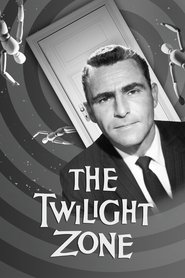
Rod Serling's original anthology follows ordinary people who encounter experiences that disrupt the rules of their familiar world. A man desperate for quiet finally receives the solitude he craved after a catastrophe, at a cruel price; a quiet neighborhood turns against itself during an apparent extraterrestrial threat; and an airline passenger becomes convinced that something is moving outside his aircraft. Other stories use uncanny doubles, unsettling changes of identity and encounters with mortality to expose fear, prejudice and human weakness. Introduced by Serling, each self-contained episode moves between science fiction, psychological horror, fantasy and moral drama, generally building toward a revelation that changes the meaning of what came before.
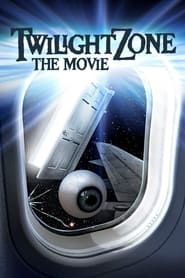
Four stories bring the television anthology to the cinema. In John Landis's Time Out, a prejudiced man is forced into historical situations that expose him to the persecution he once dismissed. Steven Spielberg's Kick the Can follows elderly residents of a retirement home who are offered a startling chance to experience youth again. In Joe Dante's It's a Good Life, a woman enters a household ruled by a child whose extraordinary powers have made his family prisoners. George Miller's Nightmare at 20,000 Feet follows a frightened airline passenger who sees a threatening creature on the wing during a storm. A separate prologue and narration connect these episodes under the Twilight Zone name.
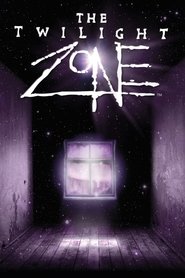
The first television revival returns to the anthology's unsettling encounters with impossible events. In Shatterday, a man calls his own telephone number and hears another version of himself answering; in A Little Peace and Quiet, an exhausted woman finds an object that can stop time. Other stories explore altered memories, mysterious visitors, scientific experiments and unfamiliar realities beneath ordinary daily life. Episodes sometimes combine two or three short narratives within a single broadcast, allowing horror, dark comedy and speculative drama to share the same program. The series began on CBS in 1985 and continued in syndication, retaining the original concept while bringing new writers, directors and color-era production techniques to its stories.

James Earl Jones introduces two television stories developed from Rod Serling's surviving material. In The Theatre, a woman attending a cinema discovers that the screen is showing private moments from her own life, followed by disturbing glimpses of events yet to happen. Where the Dead Are takes place in nineteenth-century New England, where a physician investigates a patient whose medical history suggests that he survived an impossible injury. His inquiries lead toward another doctor conducting experiments on the boundary between life and death. Directed by Robert Markowitz, the production brings one completed Serling script and another of his story treatments, adapted by Richard Matheson, to the screen decades after their creation.
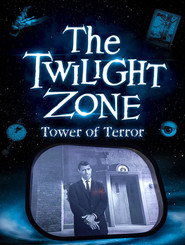
Guests entering Disney's Hollywood Tower Hotel are shown a fictional television introduction in the style of Rod Serling's original series. The presentation recounts a mysterious Halloween-night incident in which hotel visitors entered an elevator and vanished during a violent storm. That disappearance becomes the premise for the attraction, inviting present-day guests to enter the same building and confront its unexplained past. Produced as part of The Twilight Zone Tower of Terror, the footage uses the anthology's familiar narration, imagery and supernatural setup to lead into a physical ride. It is a licensed attraction pre-show rather than an independent television episode or theatrical feature.
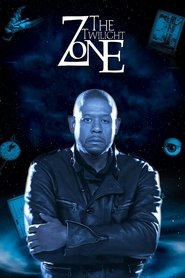
Forest Whitaker introduces a new set of self-contained stories in which apparently normal lives are interrupted by unnatural events and unsettling changes in perception. The episodes revisit the series' recurring concerns with fear, selfishness, guilt, technology and the consequences of seemingly harmless choices. One installment, It's Still a Good Life, returns to the isolated town of Peaksville and the terrifying psychic powers of Anthony Fremont, now an adult with a daughter of his own. Other stories create independent characters and situations for a contemporary audience. Produced for UPN, the revival ran for one season in 2002–2003 and retained the anthology format while giving its narrator a visible presence.
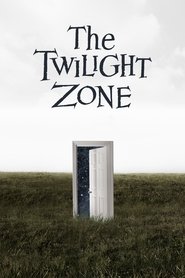
Jordan Peele serves as narrator and host for a new anthology of people drawn into disquieting situations whose explanations remain uncertain. A commercial flight, an apparently ordinary neighborhood, personal memories and encounters with unfamiliar technology become settings for stories about paranoia, ambition, identity and collective fear. The production mixes original premises with new interpretations of ideas associated with the 1959 series, including a modern variation on the anxious airplane-passenger story. Each episode presents a largely separate cast and fictional situation, connected through Peele's framing appearances and the franchise's interest in moral consequences. Created for CBS All Access, this incarnation ran for two seasons between 2019 and 2020.
The Time Element: Rod Serling and the Origin of the Series
The franchise originated in the frustrations and ambitions of Rod Serling, a dramatist whose live television plays had made him one of the most visible writers of American television's first decade. Patterns and Requiem for a Heavyweight demonstrated his interest in power, humiliation, individual conscience and the circumstances in which ordinary people discover the cost of submission. Network sponsors and broadcasters could intervene in scripts dealing directly with race, violence or controversial institutions. Serling's move toward fantasy allowed similar questions to emerge through invented circumstances. The resulting program retained the dramatic seriousness of his earlier work while changing its storytelling mechanism.
An early version of the idea appeared as The Time Element, broadcast on November 24, 1958, within Westinghouse Desilu Playhouse. The story concerns a man convinced that he has repeatedly experienced the hours preceding the attack on Pearl Harbor. William Bendix and Martin Balsam starred. Producer Bert Granet championed the script after CBS had declined to develop it in its original form. Its strong response helped persuade the network to commission a pilot for Serling's proposed weekly anthology. A speculative premise had proved able to sustain the kind of moral and psychological tension previously associated with prestige live drama.
The new pilot, Where Is Everybody?, premiered as the opening episode of The Twilight Zone on October 2, 1959. Earl Holliman played a man confronting the uncanny absence of other people in an apparently inhabited town. The story used uncertainty about the nature of the environment to create pressure on a single central character. Its resolution connected the disturbance to a recognizable human fear, establishing a durable relationship between the impossible event and everyday vulnerability. The series' signature idea was a region of experience in which conventional explanations failed and decisions acquired extraordinary consequences.
Serling developed The Twilight Zone for the commercial broadcast system, with recurring sponsors, weekly scheduling and production deadlines. Its initial survival could never be taken for granted: the original series had loyal viewers and critical recognition, but its ratings did not make renewal automatic. That tension between creative ambition and the commercial structure of network television shaped the franchise from its beginning. Later revivals would face comparable problems under different industrial conditions, from syndicated television to subscription streaming.
The Original CBS Production, 1959–1964
CBS broadcast five seasons of the original series between 1959 and 1964, comprising 156 episodes. Most were made for half-hour slots; the fourth season expanded to an hour before the final season returned to the shorter format. The change was more than a matter of running time. The short episodes encouraged compact setups, limited casts and dramatic endings that could arrive with unusual abruptness. The hour-long stories required additional plotting and often expanded situations that had worked most effectively as intense short fiction. The return to half-hours acknowledged the strength of the series' original production rhythm.
Producer Buck Houghton became an important collaborator in establishing a consistent production process during the early seasons. Serling supplied a large share of the scripts, but the anthology also depended on Richard Matheson, Charles Beaumont, George Clayton Johnson and Earl Hamner Jr. Their different approaches enlarged the imaginative range of the program. Serling often emphasized public morality and social behavior; Matheson's speculative fiction could convert a small domestic fear into a formidable menace; Beaumont favored strange circumstances and the instability of personal identity. Episodes by these writers remained identifiable as Twilight Zone stories because their dramatic arrangements converged around uncertainty and consequence.
The series' directors worked with familiar television resources, but often produced strikingly distinct visual results. Compact sets could be transformed by framing, shadow and an actor's relation to empty space. Speculative scenarios were sometimes achieved through props and sound effects, while other installments required unusual makeup, miniature work or carefully controlled camera illusions. The practical limitations created opportunities for suggestion, and the series frequently exploited an audience's awareness of what lay outside the visible frame. Such techniques supported horror without requiring a consistently monstrous presence on screen.
Serling became the on-screen presenter associated with the series, moving from a primarily disembodied introductory voice toward a visible figure who could speak directly to viewers. The host operated outside the characters' immediate experiences. His presence framed each independent story as a visit to the same conceptual territory, even when the period, location and type of fantasy changed. The visual identity evolved along with the narration, through memorable title graphics and the theme associated with Marius Constant. Together they created a recognizable public signature that would be reproduced, quoted and reworked across subsequent decades.
The original run ended in 1964 after a sequence of renewal difficulties. Its longevity came increasingly from repeat broadcasts and syndication, which allowed new generations to encounter the episodes outside their initial network context. That afterlife was foundational to the later franchise: a show with a finite first run became a repeatable cultural property, with each new production confronting viewers' familiarity with Serling's voice, title sequence and established storytelling conventions.
The original five-season run comprised thirty-six episodes in the first season, twenty-nine in the second, thirty-seven in the third, eighteen in the fourth and thirty-six in the fifth. The eighteen fourth-season installments used an hour-long broadcast format, whereas the other seasons were produced primarily as half-hour programs.
An Anthology of Horror, Fantasy and Social Anxiety
The original Twilight Zone covered science fiction, ghost stories, psychological horror, moral fantasy and occasionally comedy. Its framework accommodated premises that would have been difficult to sustain within a series organized around recurring characters. A vulnerable individual could enter a hostile alternative reality in one episode, while another concerned a group whose collective fears produced its own disaster. This freedom of setting made the franchise adaptable to changing social circumstances without demanding a continuous fictional chronology.
Cold War tension, nuclear anxiety and the possibility of human extinction recur in the earliest production. Other episodes examine prejudice, mob behavior, militarism, authoritarianism and the temptation to sacrifice someone else in order to feel secure. Such themes reflected Serling's earlier reputation as a socially engaged television writer. The fantastic device gave conflict a concrete form: a neighborhood could turn against its residents, a society could enforce uniform appearance, or a technological promise could be revealed as a new instrument of control. These stories expressed their concerns through dramatic situations and the choices made within them.
The series also repeatedly returned to memory and dislocation. Characters seeking the safety of childhood or a vanished home encountered the limits of nostalgia; individuals who wished to escape their identities sometimes discovered unexpected costs. These stories broadened the franchise beyond horror's immediate mechanisms of pursuit and shock. The unease often arose from a mismatch between the world a character wanted and the world available to them. The fantastic could therefore produce tenderness, regret or an unsettled comic conclusion alongside fear.
Serling's closing narration often provided a pointed interpretation of the preceding events, but the strongest episodes did not depend exclusively on their final twist. The situation, performances and formal design could remain disturbing even when the outcome was familiar. By circulating for decades through reruns, the series demonstrated that its reputation survived repeated exposure to episodes whose endings many viewers already knew. The anthology form also allowed unusually diverse acting and directing choices under a common title, establishing a model for later horror television.
The franchise's horror identity encompasses this range of approaches. Some stories contain explicitly supernatural threats, while others generate fear through conformity, loneliness, persecution or unstable perception. Across the different television versions, the territory named by the title remains a space in which ordinary assumptions stop providing reliable protection. That thematic inheritance is more stable than any recurring monster, location or character.
The series also developed a particular approach to the question of agency. Its characters frequently occupy apparently small positions within larger institutions: a passenger in an aircraft, a resident in a tightly controlled community, an employee forced to conform, or a witness whose account is dismissed. Fantasy can intensify these imbalances by removing ordinary ways of testing reality or proving the truth. The resulting drama is closely related to suspense and horror even when no supernatural creature is involved. Across later incarnations, new writers returned to these situations because the underlying human predicament could be relocated to a different historical moment without requiring the revival of an earlier storyline.
The Authors, Performers and Visual Language Behind the Brand
The name The Twilight Zone became closely associated with Serling, yet its original production was collaborative. Richard Matheson's published fiction and television writing supplied several of its defining psychological and speculative situations. Charles Beaumont wrote stories that exploited uncertainty over whether events were supernatural, imagined or deliberately staged. George Clayton Johnson contributed narratives of chance, mortality and moral judgment, while Earl Hamner Jr. brought a distinctive interest in family settings and apparently ordinary communities. The credits show a writer-centered anthology sustained by a continuing dialogue between literature and television production.
The original series attracted established performers and emerging actors who could undertake a demanding central role within a short production schedule. Burgess Meredith, William Shatner, Agnes Moorehead, Robert Redford and many others appeared without becoming a recurring ensemble. A single exceptional performance could carry an episode built around isolation or restricted knowledge. Casting also encouraged viewers to recognize familiar screen personalities in situations that changed their established public image. As the series acquired a larger audience through syndication, these appearances became a substantial part of its archival appeal.
Directors including John Brahm, Douglas Heyes, Richard Donner, Ida Lupino and others brought experience from crime films, melodrama, television westerns and suspense. Their work repeatedly tested the expressive capacity of modest sets, unusual lighting and tightly structured editing. The series could place an unsettling figure at the edge of a frame, use an otherwise ordinary prop as a sign of danger, or build tension through a sound whose source remained uncertain. Its production design created a flexible imaginary space, ranging from recognizable American neighborhoods to environments whose very emptiness suggested a rupture in reality.
Music supplied the series with two distinct historical identities. Bernard Herrmann composed the orchestral title music used in the first season and also scored individual episodes. From the second season, the familiar opening signature was assembled from two short cues written by Marius Constant for the CBS music library: Étrange 3 and Milieu 2. The cues were joined for the program rather than originally composed as a continuous title theme. Scores by Herrmann and other composers gave individual stories their own sound worlds, while the repeated opening music became an immediately recognizable part of the franchise.
These creative contributions explain why later producers found the material open to renewed interpretation. The brand did not require a fixed cast to remain recognizable, but its successors inherited demanding expectations regarding tone, literary craft and the precision of the central dramatic premise. Revivals could imitate a title sequence or enlist well-known directors, yet they were judged in relation to a program whose most durable achievements arose from tightly integrated writing, performance and formal invention.
The program's visual iconography was reinforced by editorial decisions that made the boundary between story and introduction feel unusually permeable. Its opening graphics repeatedly suggested motion through dimensions, spaces and abstract objects, preparing viewers to enter narratives whose rules were not known in advance. The visual sequence and the spoken invitation became reusable elements for advertising and later revivals. Each new version could identify itself quickly through those signals even when the actual episode had different production values and a different conception of fear.
From Cancellation to Franchise: Reruns, Licensing and Screen Afterlife
The original network run ended before the property's broadest period of cultural circulation. Syndication allowed episodes to appear at different hours, in different regional markets and alongside programming produced decades later. Viewers could discover the series without experiencing the original weekly release sequence. The passage of time also changed the historical meanings of its stories: issues that had been immediately topical in the early 1960s became recognizable features of postwar American culture, while their emotional scenarios remained accessible to audiences with no direct memory of the period.
Repeat broadcasts reinforced the program's identity as an anthology of compact, self-contained works. Unlike serial dramas, an episode could be shown almost anywhere within a package of reruns without disrupting an ongoing plot. Broadcasters could schedule themed marathons; distributors could sell collections built around memorable installments; home-video editions could group episodes by season, writer or subject. This flexibility helped preserve the title's commercial value through long intervals without new episodes. Its eventual revival depended in part on the original series having remained visible in precisely this way.
Licensing extended the name beyond broadcast television. Dell and Gold Key published Twilight Zone comics beginning in the early 1960s, with Gold Key's longer-running line continuing beyond Serling's lifetime. The comics used the recognizable title and sometimes Serling's image while creating new illustrated stories. They belonged to the commercial expansion of an existing screen property, reversing the more familiar process in which a comic is adapted into film. Later comic-book publishers revisited the brand, demonstrating its usefulness as a format for short speculative narratives in other media.
Books, script collections and historical studies served a related but distinct purpose. Published teleplays allowed readers to examine construction and dialogue, while retrospectives documented the contributions of writers and directors whose names were sometimes overshadowed by the famous host. The Twilight Zone title appeared on recordings and other merchandise, but scholarly and archival work also strengthened the perception of the original series as a major television achievement. These forms of preservation supported renewed productions by keeping the source material accessible and its authorship visible.
The transition from a finished television series to a franchise therefore occurred incrementally. It was shaped by commercial exploitation, cultural memory and repeated interest from filmmakers who had grown up with the original. By the beginning of the 1980s, the conditions existed for a theatrical version that would draw directly on the audience's familiarity with the title while presenting newly filmed stories.
The property's long afterlife made a distinction between the value of individual episodes and that of the title increasingly clear. An archival television channel could promote a familiar story, while a later producer could advertise the wider Twilight Zone name without reviving any particular character. Both forms of recognition supported the same franchise, but they were not interchangeable. A new series needed fresh production financing and audience attention; an old episode could remain commercially active through licensing alone. This distinction shaped the relationships among the completed productions in the decades that followed.
The Twilight Zone Magazine, 1981–1989
Rod Serling’s The Twilight Zone Magazine extended the franchise into original horror and fantasy fiction at a time when the 1959 series was established in syndication but no new television revival had yet premiered. Launched in April 1981 by Montcalm Publishing under a licensing arrangement, the magazine used Serling’s name and the television property’s identity to frame short stories, novellas, film criticism and retrospective articles. Its fiction ranged from supernatural horror to science-fiction and fantasy, offering original material that carried the atmosphere of the anthology without depending on existing television characters.
Writer and editor T. E. D. Klein led the magazine during its early years, followed by Michael Blaine and Tappan King. It published sixty issues before ending with its June 1989 number. The magazine’s combination of fiction, criticism, illustrations and coverage of the film and television incarnations made it a sustained editorial institution rather than a brief promotional tie-in. Its schedule changed from monthly to bimonthly, and its readership connected the television brand to the developing horror-literature culture of the 1980s.
The publication also created an archive of writing that remains distinct from the filmed franchise. Its writers worked within a broader weird-fiction tradition, while the familiar title encouraged readers to approach new stories with expectations shaped by Serling’s original series. The magazine therefore helped bridge the long interval between the 1964 cancellation and the 1985 television revival, demonstrating that the property could support new creative work in a literary medium.
Twilight Zone: The Movie (1983) and the Limits of the Theatrical Revival
Twilight Zone: The Movie was released by Warner Bros. on June 24, 1983. Steven Spielberg and John Landis produced the feature, which combined four independently directed sections under a single theatrical title. Landis directed a newly conceived story concerning racial hatred; Spielberg reworked a theme of restored youth; Joe Dante adapted the premise of a child with terrifying powers; George Miller revisited the panic of a passenger convinced that something is attacking his aircraft in flight. Three of the principal sections drew on specific stories from the television run, while the opening dramatic segment provided an original treatment of a familiar Serling concern.
The film restored the anthology to commercial cinema at a moment when Spielberg's success had increased interest in large-scale fantasy and genre projects. Its directors offered sharply contrasting tones and production techniques, illustrating both the adaptability of Serling's concept and the difficulty of making separate creative approaches feel like one coherent feature. John Lithgow's airplane performance renewed public attention to the original premise previously associated with William Shatner. The new film also made the property available as a high-profile theatrical release for viewers more familiar with the title through reruns than with its original first broadcast.
Production was permanently marked by a fatal accident on July 23, 1982, during filming of Landis’s segment. Actor Vic Morrow and child performers Renee Shin-Yi Chen and Myca Dinh Le were killed when a helicopter crashed during a sequence involving pyrotechnics. Investigations and criminal proceedings followed, while the circumstances intensified scrutiny of safety practices and of the employment of children during hazardous filming. The accident and its aftermath became inseparable from the production history of the 1983 feature.
The theatrical release drew on the fame of the original episodes and on the reputations of its four directors. Unlike a series built around recurring characters, the film combined separate situations into a single cinema program. No immediate sequel followed, and the next major expansion of the franchise came through CBS’s new weekly television version in 1985.
The film remains a significant stage in the property's industrial history. It demonstrated the willingness of a major studio and leading directors to invest in a television title as an anthology feature, preserved familiar source narratives in new performances and left an enduring safety legacy. Its place in the franchise is defined by those circumstances rather than by membership in a shared fictional continuity.
The film's multi-director structure also exposed a tension between television anthology and theatrical event. In the original broadcast series, the weekly title and host could accommodate large changes of tone from one half-hour to the next. A cinema audience encountered the four stories in one uninterrupted sitting, with a single ticket and one feature's marketing campaign. That changed the relation between the component parts. The production depended on the reputation of its participating directors as well as on Serling's source program, creating a film whose identity belonged equally to 1980s Hollywood and to the history of classic television.
The CBS Revival of 1985: A New Writers' Room and New Format
CBS relaunched The Twilight Zone in September 1985 under executive producer Philip DeGuere. The program was designed for a different television landscape from Serling's: higher expectations for color photography, more elaborate effects, and competition with a wider range of genre entertainment. The network initially scheduled hour-long broadcasts often containing multiple short stories, thereby retaining the compressed structure of the original while packaging segments within a larger weekly program. The new approach made available a varied collection of narrative lengths, although it complicated subsequent episode counts and syndication edits.
The production assembled experienced science-fiction and horror writers. Harlan Ellison served as creative consultant, and writers associated with the revival included Alan Brennert, J. Michael Straczynski and George R. R. Martin. Contemporary interviews with DeGuere and Ellison described negotiations over stories, editorial standards and the responsibilities of the creative team. The writers could draw on literature by established speculative authors as well as new screenplays, giving the revival a different relation to the printed genre tradition from the original series. A number of stories also revisited premises associated with classic episodes.
Directors such as Wes Craven, William Friedkin and Joe Dante brought experience from contemporary horror and feature cinema. The production used color, effects work and distinctive sound design as assets in presenting the uncanny to viewers accustomed to increasingly sophisticated genre imagery. The Grateful Dead contributed to the music, another departure from the strongly associated sound of the 1959 production. The resulting identity was immediately recognizable as The Twilight Zone while reflecting the technical and stylistic priorities of American television in the mid-1980s.
Charles Aidman narrated the initial CBS episodes. Unlike Serling's visible presence as the original host, his performance generally operated as voice-over. The choice made the revived program less dependent on replacing the creator with a presenter who could imitate his on-screen manner. Casts, directors and periods changed between stories, while a common opening sequence and the name of the program provided recognition. That organization preserved the format's basic flexibility even as the revival altered its visual texture.
The network moved the series between time slots and adjusted its running format as ratings fell short of expectations. CBS eventually ended the network run, but production continued for first-run syndication, where Robin Ward became narrator. The syndicated phase was designed for half-hour programming and altered the way multiple-story broadcasts circulated. Across three seasons extending into 1989, the revival acquired several numbering systems for its broadcast episodes and individual story segments.
The revival's musical and sonic identity deserves attention because it illustrates a deliberate departure from the program most audiences remembered. Producer DeGuere pursued experimental sound treatment, and contemporary reporting described work involving the Grateful Dead and unusual audio techniques. Harlan Ellison was more concerned with the dramatic text than with the production's technical experiments. These contrasting priorities were not unique to the series, but they are unusually well documented in press interviews from 1985. The anthology became a place where arguments about the value of writing, technology and television spectacle played out within a single production.
The 1988–1989 Syndicated Season and the Economics of Anthology
The syndicated continuation of the 1985 series reveals the commercial forces that could keep an anthology alive after a network cancellation. Producers sought a sufficiently large library of material to support repeated scheduling across local television stations. The new programs were made on different budgets and often distributed as half-hour installments. Earlier hour-long broadcasts containing multiple stories were adjusted for a format that could be sold and scheduled consistently. Such changes affected how later catalogs counted episodes and segments.
A 1992 Los Angeles Times retrospective traced the consequences of re-editing broadcasts and commissioning additional material for syndication. Some hour-long programs were shortened; other stories were separated or combined into half-hour slots. These alterations produced lasting inconsistencies between counts of original network transmissions, individual dramatic segments and later syndicated episodes. The changes also show how television distribution practices could reshape the presentation of work originally conceived for a different schedule.
The production's Canadian phase also illustrates the geographic flexibility of the title. The franchise could be renewed without the same studios, crews, narrators or initial broadcast conditions that had supported Serling's original run. Its most durable industrial assets were the licensing rights, the anthology format and recognition among distributors and viewers. The stories themselves continued to be independently cast and designed, permitting new production teams to work within the familiar label.
The 1980s revival did not attain the enduring first-run status of the original CBS version. Its contribution was nonetheless substantial. It established a second major body of television work under the name, expanded the roster of writers and directors associated with the property and tested the ability of an established anthology to move between network and syndication markets. This experience would inform later uses of the title, particularly attempts to produce a contemporary television version for a new generation of viewers.
Rod Serling's Lost Classics and the 1994 Rediscovery
The Twilight Zone: Rod Serling's Lost Classics aired on CBS in 1994 as a television film presenting two stories linked to Serling's unpublished or unproduced work. It came from an archival impulse as well as an interest in renewing a recognizable television property. Carol Serling, Richard Matheson and other producers were involved in bringing the material to the screen. James Earl Jones served as host, and Robert Markowitz directed both sections.
The longer segment, Where the Dead Are, originated in a completed Serling script and concerned a nineteenth-century doctor whose investigations encounter troubling questions about life and death. The shorter The Theatre was written by Matheson from a Serling treatment. Its premise concerns a viewer who discovers that events from her own life appear on a cinema screen. The distinction between a completed Serling teleplay and a later adaptation from his treatment is essential to understanding the authorship of the two portions.
Contemporary coverage in the Los Angeles Times described how the project emerged from material preserved after Serling's death in 1975. The television film occupied a different position from the 1985 revival, which had commissioned a broad mixture of new stories. Here the central claim of the program was proximity to the creator's surviving work. It invited audiences to reconsider the archival record and the possibilities that had remained unrealized when his original television series ended.
The project did not become the beginning of a new ongoing television run. It belongs in the franchise's screen chronology as a standalone television production whose significance is historical and editorial. Its existence also illustrates the continuing role of the Serling estate in promoting the writer's creative legacy, alongside the separate corporate arrangements governing the broadcast property.
Tower of Terror: The Twilight Zone as a Theme-Park Experience
Disney opened The Twilight Zone Tower of Terror at Disney-MGM Studios in Florida on July 22, 1994. The attraction used the television franchise’s imagery, narration and conventions to construct a supernatural incident inside a fictional Hollywood hotel. Its short pre-show, linked here as The Twilight Zone Tower of Terror – Preshow, introduced the disappearance of elevator passengers on Halloween night and connected the guests’ journey to an apparent lost episode of the anthology. Walt Disney Imagineering adapted the program’s introduction and atmosphere to a physical environment whose ride machinery became part of the story.
The attraction placed guests inside the kind of ordinary environment that might gradually reveal itself as extraordinary in a Serling story. An apparent archival television presentation, an uncanny disappearance and the recreation of a mysterious incident gave context to the ride's physical effects. Serling's image and voice were recreated through licensed and archival techniques, lending the experience a recognizable host. The relationship between a film segment, elaborate sets and an actual moving ride made this one of the franchise's most materially distinct adaptations.
The Florida attraction underwent technical and creative alterations to its drop sequences after opening. Disney later introduced related installations in California and Paris. Not every attraction called Tower of Terror used the Twilight Zone license: the Tokyo DisneySea version developed its own fictional history and characters. The California version was subsequently rethemed into a Guardians of the Galaxy attraction. Corporate licensing and local creative decisions therefore determined whether a recognizable ride format operated as part of the television franchise.
The park project extended the brand into experiential entertainment, where visitors physically pass through a sequence resembling an anthology story. Archival presentation, carefully constructed interiors, controlled sound and the sensation of falling transformed the show’s uncertainty into a bodily experience. That combination allowed the attraction to evoke Serling’s television style while relying on techniques unavailable to the original broadcasts.
UPN's 2002 Revival and a New Television Audience
The next episodic television iteration premiered on UPN in September 2002. The Twilight Zone featured Forest Whitaker as on-screen host and narrator, placing a contemporary performer in the presentation role most strongly associated with Rod Serling. The series was conceived for viewers accustomed to science-fiction television, horror cinema and younger-skewing broadcast schedules. It retained standalone stories of misfortune, social pressure and speculative disturbance while updating production design, casting and dialogue.
The 2002–2003 production ran for one season and presented forty-three individual stories, several paired within longer broadcast slots. Some installments reworked earlier Twilight Zone premises, while others introduced new situations. Familiar material gave the production immediate recognition but also placed its performances and endings in direct comparison with earlier episodes. The revival sought a contemporary identity through its cast, pacing and Forest Whitaker’s visible role as narrator.
The series included a continuation of It's a Good Life, returning Bill Mumy to the character he had played in the original show. The idea created an unusual exception within an otherwise independent anthology format: a recognizable fictional character reappeared in a later production, allowing viewers to consider what might have happened after a classic story ended. Such connections are meaningful but limited. They do not convert every era of The Twilight Zone into a unified fictional timeline.
UPN's series ended after its single season in 2003. Its brief life shows the difficulty of translating a prestigious anthology property into a durable commercial program when audiences and network schedules have changed. It also demonstrates that the host was no longer tied to one production style. Whitaker's presentation made an explicit connection to the historical brand, yet the visual rhythm and storytelling concerns belonged to a different era of broadcast television.
The 2002 program placed a recognizable presenter on screen at a moment when genre television had become much more serial in its popular forms. Long-running mythology, continuing casts and seasonal narrative arcs dominated several successful science-fiction and horror properties. The anthology had to compete on the strength of an isolated premise every week. Its reuse of a legacy name provided immediate recognition, yet also exposed the production to comparison with episodes that had remained prominent in reruns. The single-season outcome suggests the limits of name recognition when a broadcaster cannot establish a sustained appointment-viewing audience.
The 2019–2020 Streaming Revival with Jordan Peele
CBS All Access announced a new Twilight Zone adaptation with Jordan Peele as host, narrator and executive producer. Production began in Vancouver in October 2018, and the first season premiered on April 1, 2019. Peele and Simon Kinberg developed the project with a team associated with CBS Television Studios, Monkeypaw Productions and Genre Films. The broadcaster explicitly presented the series as a modern reimagining of Serling's socially conscious anthology. Its release coincided with the growing commercial importance of subscription-streaming originals.
The revival used contemporary genre cinema's attention to institutional power, technology, race, public anxiety and individual identity. Longer episodes could incorporate multiple reversals and a greater degree of psychological elaboration than the original half-hour format typically allowed. The writers and directors also inherited a public expectation that the program would address important subjects through speculative situations. Each new story was viewed in relation to both Serling's original and Peele's contemporary horror work, increasing the interpretive weight placed on the choice of premise.
Peele's on-screen introductions and closing narration restored a visibly present host after the different narration models of the 1980s and the Whitaker series. The visual identity incorporated recognizable motifs associated with earlier versions, including the language of doors, corridors and fractured expectations. The host supplied continuity across the new collection without appearing as a character in its independent stories. Unlike the original weekly television run, the first season was available through a subscription platform with episodes released on a recurring schedule and subsequently watched on demand.
CBS All Access renewed the production in April 2019. Its second season was released on June 25, 2020, completing a twenty-episode run across two seasons. The second set expanded the group of directors and performers while retaining the same general production identity. The series ended after those seasons; in February 2021 it was confirmed that the project would not continue through the transition to Paramount+. The conclusion reflected a particular corporate and programming decision, not a termination of the underlying franchise rights.
The 2019 production provides the fourth major television incarnation of the brand. It demonstrates how the anthology's flexible framework could be connected to a new host whose career was already associated with social horror, while the original Serling program remained available to viewers as a point of comparison. Its place in the broader history concerns the renewed corporate use of the property and the relationship between established television heritage and modern streaming production.
The streaming model also changed the relationship between premiere date and continuing availability. A viewer could watch the newly released stories on the platform's schedule or encounter them later as a complete season. Discussion of individual installments therefore occurred alongside judgments of the season as a whole. This differs from the original network era, when the next story arrived according to a shared broadcast timetable and public engagement could be renewed through local syndication. The newest incarnation belongs to a market in which catalog access and exclusive originals are closely connected business strategies.
Comics, Theater, Radio Drama and Licensed Games
The property has supported substantial work outside film and television. Comics published under the title began during the original series' broadcast life. Dell and Gold Key used the recognizable name to present stories that could stand apart from specific episodes. Later publishers, including NOW Comics and Dynamite, revived print versions under new licensing arrangements. As with the television anthology, a recurring title and an expectation of uncanny situations could connect stories without a continuous cast. The medium also allowed visual exaggeration and narrative compression unlike those available in a broadcast studio.
A radio adaptation program began development in 2002 through Falcon Picture Group under a licensing arrangement with CBS Enterprises. Stacy Keach assumed the narrator’s role, and producer Carl Amari helped develop the adaptations. The dramas reimagined familiar television stories through dialogue, sound effects and music, allowing scenes that once depended on visual uncertainty to unfold entirely through sound. Radio performance brought a renewed intimacy to the anthology’s recurring themes of isolation, doubt and sudden changes in reality.
The franchise also reached the stage through Anne Washburn’s adaptation of stories by Rod Serling, Charles Beaumont and Richard Matheson. Directed by Richard Jones, The Twilight Zone premiered at London’s Almeida Theatre in December 2017 and ran until January 2018. The production combined multiple stories and used theatrical illusions, monochrome visual effects and live performance to reproduce the tension between ordinary surroundings and impossible events. It transferred to the Ambassadors Theatre in London’s West End, where performances ran from March to June 2019.
Bally’s Twilight Zone pinball machine, released in 1993 and designed by Pat Lawlor, brought the television property into coin-operated gaming. The wide-body game used a miniature gumball machine, magnetic flippers, a clock and a special ceramic ball as parts of an intricate rules system. Its cabinet artwork, playfield references and voice performances drew on the anthology’s familiar imagery. The adaptation translated recurring motifs into mechanical challenges instead of reproducing an individual episode, demonstrating the breadth of the name’s licensing appeal before the 1994 Disney attraction opened.
The franchise also influenced commercial publishing beyond directly licensed adaptations. Histories, interviews, script editions and anniversary collections preserved the work of the original writers and the production histories of successive revivals. The Rod Serling Memorial Foundation maintains information about the writer's legacy and licensing, while archival organizations document broadcasts and production credits. Such resources help distinguish the artistic contributions of an individual dramatist from the later commercial uses of the brand.
Licensed objects and attractions provide another form of continuity. A title sequence, an iconic opening theme or a host's silhouette may be enough to identify the property in situations far removed from the original broadcast. The variety of media is best understood as an expansion of the franchise's presentation system. Every new use draws on the audience's expectation of a disturbing or impossible encounter, even when the mechanism of that encounter is a printed page, an audio performance or a theme-park ride.
Rights, Ownership and the Boundaries of the Franchise
The different uses of The Twilight Zone are tied together by rights and licensing as well as by storytelling conventions. The Rod Serling Memorial Foundation identifies CBS as the holder of Twilight Zone television rights and directs licensing inquiries concerning episodes and broadcast elements to that company. The Foundation separately explains that Serling's other literary and television work can involve different rights holders. Those distinctions help explain why material associated with Serling personally should not automatically be classified as a Twilight Zone installment.
Serling's later Night Gallery was another television anthology built around the appearance of a host and stories of horror and the fantastic. Its creative relationship to The Twilight Zone is evident, but it is a distinct program with its own title, network history and licensing arrangements. Likewise, many later anthologies adopted moral reversals or unsettling premises without belonging to the commercial franchise. The Outer Limits, Amazing Stories and other series are useful for understanding the genre's development, but such influence does not establish franchise membership.
Corporate control has also shaped attempted revivals that never reached release. In 2008 Warner Bros. and Leonardo DiCaprio’s Appian Way began developing a new Twilight Zone feature based on a single sustained storyline rather than the four-part structure of the 1983 film. Various versions circulated in subsequent years, with screenwriters and directors attached at different stages. Matt Reeves entered negotiations to direct in 2011, when Jason Rothenberg had written a screenplay; Joseph Kosinski was reported to be in talks for a newly developed version in 2013. None of these iterations produced a released film.
Warner Bros. continued developing the feature in 2017, hiring Christine Lavaf to write a screenplay. That project followed several earlier scripts and proposed directors, but none of the announced versions reached production. The studio’s long development process reflects the difficulty of translating a television anthology built around separate, short narratives into a single feature-length story.
Licensed attractions, print editions, radio dramas and stage productions operate through agreements that can differ from those governing individual scripts or episodes. Consequently, the Twilight Zone name has remained active across multiple media even during long periods without a new television series or theatrical film. The original broadcasts, later revivals and independently licensed adaptations have continued to circulate alongside one another.
Cultural Legacy, Commercial Record and Historical Perspective
The reputation of The Twilight Zone rests heavily on the original CBS run, whose stories became widely recognizable through repeat broadcasts and critical discussion. The Television Academy records awards for Serling's writing and other achievements, while the Museum of Broadcast Communications identifies the series as a landmark adult science-fantasy anthology. Its continuing impact is visible in the way later filmmakers and television producers employ the title as a shorthand for experiences in which reality becomes unreliable. That association has lasted beyond the specific broadcasting arrangements of any one series.
The franchise’s commercial history has followed several distribution models. Warner Bros. released a theatrical feature in 1983, whereas the main television incarnations circulated through CBS network broadcasting, syndication, UPN and CBS All Access. Licensed print and audio productions, the Bally pinball game, stage performances and Disney attractions represent additional commercial channels. Their histories reveal the lasting market value of a title that could be adapted without a continuous fictional universe.
The original television series also established a valuable model for horror storytelling. Recurring performers and elaborate fictional universes were unnecessary to its basic format, which depended instead on the strength of an unfamiliar premise, a tightly observed human response and a framing presentation. The 1985 revival adapted that model to color television and changing segment lengths; the 2002 series reintroduced a visible host; the 2019 revival relocated it into subscription streaming with an established contemporary filmmaker. Each incarnation reflected a different stage of American television production and distribution.
The associated film, television special and licensed ride demonstrate that the brand could operate outside a weekly anthology. They also reveal limits to that adaptability: a short-form premise may not benefit from expansion, and recognition of an original series does not guarantee a new project's commercial success. The surviving record shows a franchise periodically reactivated when filmmakers and broadcasters find new uses for Serling's conception of the uncanny, while the original programs remain available as independent works of television history.
Box Office and Commercial Scope
The 1983 Warner Bros. feature had a reported production budget of $10 million and recorded approximately $29.5 million in North American theatrical receipts, according to The Numbers. The figures concern theatrical release and do not measure net profit.
| Film | Production budget | North American box office | US distributor |
|---|---|---|---|
| Twilight Zone: The Movie (1983) | $10,000,000 | $29,500,000 | Warner Bros. |
Sources & References
- Television Academy Interviews / Museum of Broadcast Communications — The Twilight Zone — History of the 1959 series, principal creative personnel, 1983 feature and 1985 revival.
- Television Academy — Rod Serling — Official biography and achievements of the creator; episode-count convention.
- Gordon F. Sander — A Serling Performance — Historical reporting on the production and reception of The Time Element.
- Ithaca College — Rod Serling Archives — Archive holdings, including Serling’s television scripts, unproduced works and related historical documents.
- American Film Institute — Twilight Zone: The Movie — Theatrical production credits, development and contemporary accident record.
- The Numbers — Twilight Zone: The Movie — Reported US theatrical gross, production budget and release information.
- Los Angeles Times — CBS Beams Aboard New Science-Fiction Shows (1985) — Contemporary interviews on the revival’s writing and production plans.
- Los Angeles Times — Hearing Is Believing on New Twilight Zone (1985) — Production reporting on the 1985 edition’s sound design and writers.
- Los Angeles Times — The Zone Revisited (1992) — Detailed account of scheduling, cancellation, syndicated production and segmentation.
- Harlan Ellison — Writing Paladin of the Lost Hour — Original writer testimony on the 1985 production.
- Los Angeles Times — Serling’s Dead Comes to Life on CBS (1994) — Contemporary reporting on the two parts and archival origins of Lost Classics.
- Disney D23 — The Twilight Zone Tower of Terror — Official attraction opening chronology and distinctions among Disney locations.
- CBS News — Jordan Peele to Host and Narrate The Twilight Zone (2018) — Original CBS announcement of Peele as host, narrator and executive producer.
- CBS / Paramount — Production Begins (2018) — Official filming and franchise anniversary details.
- CBS News — The Twilight Zone Renewed for Season Two (2019) — Contemporaneous report confirming the second-season renewal.
- Monkeypaw Productions — The Twilight Zone — Production partners, release dates, directing and executive credits for the streaming run.
- TheWrap — Twilight Zone Will Not Return After Two Seasons (2021) — Reporting on end of the 2019 series and transition to Paramount+.
- Rod Serling Memorial Foundation — Rights and Licensing — Foundation guidance distinguishing rights to Twilight Zone and other Serling works.
- Rod Serling Archive — Twilight Zone Comic Books — Illustrated archival record of Dell, Gold Key and later comics.
- Radio World — Radio Enters the Twilight Zone (2002) — Trade report on radio adaptation, license, narration and planned production.
- The Encyclopedia of Science Fiction — Rod Serling’s The Twilight Zone Magazine — Publication history, licensing, editors and sixty-issue run, 1981–1989.
- Almeida Theatre — The Twilight Zone — Official production, cast and creative credits for the 2017–2018 stage premiere and West End transfer.
- Official London Theatre — The Twilight Zone — Documentation of the Ambassadors Theatre West End engagement in 2019.
- Pinside — Twilight Zone (Bally, 1993) — Machine release, designer and mechanical features.
- ClassicThemes — The Twilight Zone — Detailed documentation of the Herrmann season-one titles and Marius Constant’s CBS library cues.
- TheWrap — Matt Reeves and Warner Bros. (2011) — Trade reporting on the proposed feature project and screenplay.
- TheWrap — Joseph Kosinski and Warner Bros. (2013) — Development negotiations for a revised film project.
- ComingSoon — Warner Bros. Hires Christine Lavaf (2017) — Reported screenplay redevelopment and earlier writer/director attachments.
Editorial updated: