
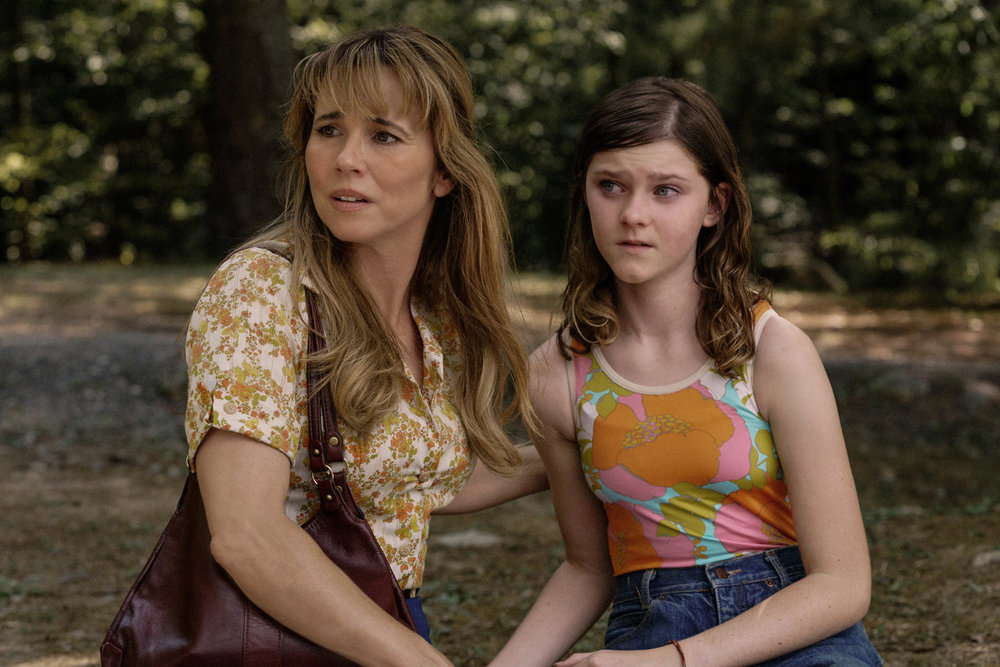
Peacock’s Crystal Lake (2026) brings the Friday the 13th franchise back to the physical makeup effects that helped establish its identity in American horror cinema. Developed by Brad Caleb Kane and produced by A24 for Peacock, the eight-episode series premiered on October 15, 2026, with Linda Cardellini portraying Pamela Voorhees and Callum Vinson playing her young son, Jason.
The production’s approach to special makeup effects is particularly relevant because Crystal Lake depicts Jason during an earlier period of his life, before the character acquired the hockey mask and physical appearance associated with the later films. Rather than reproducing the established adult version, the series required a younger character whose appearance, physical condition and experiences are fundamental to the narrative.
Special makeup effects artist David Presto contributed to the production’s practical effects. His work encompasses the extensive prosthetic makeup used for young Jason and the physical effects associated with the series’ violent sequences. Statements from Presto, actor Callum Vinson and showrunner Kane provide an account of how the production approached these different requirements.
Designing Jason Voorhees Before the Hockey Mask
The original Friday the 13th (1980), directed by Sean S. Cunningham and written by Victor Miller, establishes Jason Voorhees principally through the account of his drowning and the subsequent actions of his mother. For most of the film, Jason is an absent figure whose presumed death motivates Pamela Voorhees’s murders. His physical appearance is revealed during the final sequence, when a deformed child emerges from Crystal Lake and attacks the surviving counselor Alice.
The 2026 television series expands this limited characterization by presenting Jason as a child with a life and relationships preceding the events of the original film. Peacock identifies his condition as hydrocephalus, which affects the character’s physical appearance and is associated in the story with headaches, seizures and bullying. These details make the character’s appearance central to both the visual design and the dramatic material performed by Vinson.
Creating this version of Jason required substantial prosthetic makeup. In an interview with Entertainment Weekly, Vinson described the experience of performing beneath heavy prosthetics, explaining that the physical transformation was unfamiliar to him but became part of his preparation for the role. The actor also emphasized Jason’s desire to be accepted by other children, an important aspect of the performance because the series portrays him before his transformation into the adult killer associated with the franchise.
Peacock’s official account of the production reports that Vinson spent approximately four hours in makeup to become Jason. The length of the process illustrates a practical consideration in prosthetic character design: the finished appearance must remain consistent while allowing the performer to participate in scenes requiring movement, expression and interaction with other actors. In this case, the makeup was being applied to a child actor whose performance depended on communicating vulnerability as well as physical difference.
The visual treatment differs from the original film’s brief presentation of Jason. In 1980, the character’s appearance served primarily as a sudden revelation at the conclusion of the story. In the prequel, his appearance must function across a considerably longer narrative, including scenes centered on his relationship with his mother. The same character therefore presents two distinct technical problems: a short-duration horror effect in the original production and a recurring prosthetic performance in the television series.
This distinction is significant to the history of the character. Jason’s appearance has changed repeatedly throughout the franchise, but Crystal Lake places special makeup in the service of the period before those later designs became established.
Practical Gore and the Influence of the Original Friday the 13th
Practical makeup effects were fundamental to the commercial and visual identity of Friday the 13th from its beginning. Tom Savini, whose work on George A. Romero’s Dawn of the Dead (1978) had established his reputation in special makeup effects, created several of the original film’s most recognizable death sequences and contributed to the appearance of young Jason.
The 1980 production employed physical appliances, constructed body parts, artificial blood and mechanical effects to depict injuries directly in front of the camera. The murder of Jack, played by Kevin Bacon, is a particularly well-known example of the technique. Its illusion depends on the actor’s position in a specially constructed bed setup, a prosthetic neck and the controlled appearance of an arrow emerging through the throat. The effect creates the impression of a continuous physical event rather than relying entirely on an edit to conceal the mechanism.
Other sequences, including Pamela Voorhees’s decapitation and Jason’s emergence from the lake, similarly depended on the construction and photography of physical effects. These scenes helped establish a recurring expectation within the franchise that individual deaths would involve distinctive makeup and mechanical techniques. Savini later returned to the series for Friday the 13th: The Final Chapter (1984), further strengthening his association with its practical-effects tradition.
For Crystal Lake, showrunner Brad Caleb Kane sought to maintain that association with explicit screen violence. In an October 6, 2026, interview published by Entertainment Weekly, Presto recalled discussing the intended level of gore with Kane before carrying out the work. According to Presto, Kane wanted the production to reach the highest level of intensity proposed in that conversation.
Presto also estimated that the production used approximately 50 gallons of artificial blood, possibly more. His statement is an approximate recollection rather than a published inventory or independently audited production total. It nevertheless provides a documented indication of the scale of the practical blood effects used during filming.
Linda Cardellini, who portrays Pamela Voorhees, discussed the physical demands of shooting the violent material in the same interview. She acknowledged the work of the makeup and effects departments and described the discomfort associated with performing while covered in artificial blood. Her comments confirm that the effects were also a practical aspect of the actors’ experience on set.
These accounts establish the importance of physical makeup and blood effects to the production. They do not, however, identify the complete technical construction of every violent sequence or establish that all finished effects were accomplished without digital intervention. Practical effects and digital postproduction can perform different functions within the same production, and a complete technical breakdown would require additional information from the relevant departments.
Visual Continuity Across the Friday the 13th Franchise
The relationship between the 2026 series and the earlier films extends beyond the use of practical makeup. Crystal Lake deliberately incorporates images and situations associated with the 1980 production, including the lake itself, the camp environment and the recurring uncertainty surrounding Jason’s fate.
One documented example appears in the second episode, which recreates elements of the original film’s final canoe sequence. In Cunningham’s film, Alice appears to have survived the murders before Jason rises from the lake and pulls her into the water. The subsequent hospital scene complicates the apparent attack by introducing uncertainty about what she experienced.
Peacock’s official account of the corresponding sequence in Crystal Lake describes Pamela approaching the lake in a canoe before encountering a similar vision of Jason. The scene reproduces recognizable elements of the earlier film while changing the identity and emotional circumstances of the central character. Pamela occupies a position comparable to Alice’s, but her response is shaped by her belief that her son may still be alive.
The recreated sequence demonstrates how the production combines established franchise imagery with new narrative material. It also places Jason’s physical appearance in a different dramatic context. Whereas the original scene presents his emergence as a final shock experienced by a survivor, the television version connects the image to Pamela’s unresolved grief and her search for her son.
Another aspect of continuity concerns Jason’s masks. The character’s familiar hockey mask was absent from the original Friday the 13th and did not become part of his appearance until Friday the 13th Part III (1982). In Friday the 13th Part 2 (1981), the adult Jason wears a cloth covering with a single opening for one eye.
The 2026 series incorporates that earlier form of concealment rather than placing the hockey mask on Jason prematurely. Kane explained that the decision was related to the chronology of the franchise, rather than restrictions on the production’s ability to use the character’s established iconography. Peacock subsequently documented this explanation in its official coverage of the series.
The distinction matters because Jason’s physical design developed across several productions. His brief appearance as a child in 1980, the concealed adult figure in 1981 and the hockey-masked killer introduced in 1982 represent different stages in the character’s screen history. Crystal Lake draws upon the earlier stages while constructing an expanded account of his childhood and relationship with Pamela.
The result is a production that uses familiar visual elements without presenting them as if they had all originated together. The practical makeup applied to young Jason belongs to this process of reconstructing the character’s earlier identity, before the later films established the appearance most widely associated with him.
What the Production Documentation Establishes
The available interviews and official production materials establish several facts about the effects work on Crystal Lake. David Presto participated in the series’ special makeup effects; Callum Vinson underwent a substantial prosthetic transformation to portray young Jason; and Brad Caleb Kane explicitly supported a high level of practical gore. The production also recreated recognizable imagery from the original film and maintained distinctions between Jason’s earlier appearances and his later hockey-mask design.
The documentation is less complete concerning specific fabrication methods, the materials used in individual prosthetic appliances, the precise construction of every death effect and the extent of digital enhancement in completed sequences. Presto’s estimate of artificial blood usage is a useful contemporary statement, but it should not be interpreted as an exact production record. Further technical interviews, published makeup tests or official behind-the-scenes documentation would be necessary to establish those details.
Considered within the history of Friday the 13th, the importance of these effects is clear. The original film helped establish elaborate practical makeup as a recognizable element of the American slasher cycle, with Savini’s work contributing directly to the franchise’s identity. The 2026 series continues that production tradition while applying it to a substantially different dramatic format: an eight-episode account of Pamela Voorhees and the childhood of Jason.
The distinction between the two productions is therefore technical as well as narrative. In 1980, Jason’s appearance was principally a brief physical effect designed for a climactic scene. In Crystal Lake, prosthetic makeup contributes to the sustained portrayal of the same character during an earlier period of his fictional life. The available production accounts document that change in function and provide a basis for understanding how contemporary special makeup effects have been used to revisit one of American horror cinema’s established characters.
Sources and Original Documentation
- NBCUniversal — Official production announcement, cast, creative credits and Peacock release information, October 5, 2026.
- Peacock — Official profile of Callum Vinson, including his prosthetic makeup experience and characterization of young Jason, October 15, 2026.
- Entertainment Weekly — Nick Romano’s original interviews with Linda Cardellini, Brad Caleb Kane, Callum Vinson and David Presto, October 6, 2026.
- Peacock — Official documentation of the recreation of the original Friday the 13th canoe sequence, October 15, 2026.
- Peacock — Documentation of the series’ mask chronology and Brad Caleb Kane’s explanation of the creative decision, October 16, 2026.
Leave a Reply