
HORROR STUDIES | FILM HISTORY | INDEPENDENT CINEMA
Extreme horror was shaped in cinemas, makeshift studios, basement editing rooms, illegal-copy markets, specialist festivals and independent video catalogues. Its history runs through commercially released exploitation films, underground experiments, international art cinema and productions financed by their own audiences. The boundary separating those fields is neither stable nor entirely useful: the same image can circulate first as a scandal, then as a collector’s item, and eventually as an object of film scholarship.
To understand the field, it is necessary to follow how filmmakers construct a convincing image of violence, how the film presents that image and how the result reaches its viewers. Cannibal Holocaust and August Underground both use simulated recordings, but their production systems and narrative methods are fundamentally different.
Martyrs and Headless both contain unusually graphic material, but one organizes suffering around an explicit philosophical premise while the other reconstructs the visual identity of a fictitious 1970s exploitation film. Thanatomorphose and The Burning Moon depend upon sustained practical effects, yet they use the body for entirely different dramatic purposes.
This study examines extreme horror as a history of films and the people who made them. It gives independent and no-budget cinema the same critical attention as commercially successful features, without pretending that all transgressive films share the same artistic ambitions or ethical implications.
The selection is not exhaustive: it concentrates on films whose production circumstances, cinematic methods and circulation can be examined through substantial evidence, without treating budgets or mainstream visibility as measures of artistic importance. The Extreme Horror Movies collection provides a wider film-level catalogue, while this study addresses the production and historical connections that individual entries cannot reproduce in full.
What Defines Extreme Horror?
Extreme horror is a critical designation that encompasses several genres and filmmaking traditions. The expression covers films in which physical suffering, sexual violation, humiliation, mutilation, death or another culturally restricted subject becomes central to the experience of viewing. Its boundaries overlap with splatter, exploitation, body horror, rape-revenge, psychological horror, transgressive art cinema and films intended to resemble criminal evidence. These categories describe different features of a work: its imagery, narrative organization, production history, market and reception. None can be substituted automatically for another.
The distinction between an extreme image and an extreme film is useful. A conventional thriller can include an extraordinarily violent incident without organizing its whole structure around the spectator’s confrontation with that incident. Some extreme works instead prolong the moment, minimize narrative explanation, restrict the camera to an uncomfortable point of view or remove the editing conventions that normally indicate the limits of a fictional situation. A film can also produce an extreme response without especially explicit makeup effects. The Texas Chain Saw Massacre (1974) achieves much of its impact through editing, location, noise, behavior and a sense of continuous exposure to threat. Its reputation for graphic bloodshed exceeds what it actually depicts.
The same scene can be extreme for different reasons. In a cannibal film, it may depend on the ambiguity between a documentary claim and a staged killing. In a body-horror transformation, the passage of time and the visible deterioration of a performer’s prosthetic appearance become central. In an underground mock-documentary, missing context and uncontrolled camerawork can unsettle the audience before an act of violence occurs. The analysis therefore examines editing, performance, point of view and material effects alongside the action shown on screen.
Splatter frequently foregrounds the construction of bodily damage as a spectacle. Peter Jackson‘s Braindead (1992) transforms escalating gore into elaborate physical comedy. The visual excess is inseparable from timing and performance; its effects are displayed as extraordinary feats of craft. The simulated home recording of August Underground (2001) pursues almost the opposite relationship with the spectator. Its images are meant to seem ordinary in the technical sense, as though the audience had encountered something filmed without professional staging.
Neither extreme horror nor extreme cinema should be confused with a linear history of ever-increasing quantities of violence. Film scholar Mattias Frey has shown that the description of a work as transgressive also functions within distribution and critical discourse. Festival programs, promotional language and the willingness of journalists to describe a film as uniquely disturbing can help establish an identity in the market. The reputation of a film may therefore reflect its actual images, its mode of presentation and the commercial narratives surrounding its release.
A useful scholarly account has to separate technical realism from actual injury; artistic purpose from an interpretation made by critics; obscurity from official censorship; and the real historical film from the promotional myths attached to it. The films below provide the evidence needed to apply these categories to particular periods and production methods.
From Blood Feast to Snuff: Exploitation, Mondo and Authenticity
Herschell Gordon Lewis and producer David F. Friedman established a new commercial emphasis on visible mutilation with Blood Feast (1963). Subsequent productions such as Two Thousand Maniacs! (1964) and The Gore Gore Girls (1972) demonstrated that gore could serve as the selling point of an exploitation film. The makeup effects often look conspicuously fabricated to later viewers, but this was a market that depended upon showing injuries conventional horror had usually concealed. Lewis was operating within a commercial circuit of regional promotion and theatrical exhibition rather than the self-distributed video underground that would emerge later.
Another root lies in the mondo documentary, especially Mondo Cane (1962), directed by Gualtiero Jacopetti, Franco Prosperi and Paolo Cavara. Such films assembled sensational material from around the world and placed a premium on the supposed authenticity of spectacles that audiences might never otherwise witness. Questions concerning the staging, selection and ethical presentation of footage accompanied the format. Its importance to extreme horror lies in making the status of an image—whether it is a reliable record or a constructed attraction—part of the viewing experience.
Snuff (1976) pushed promotional ambiguity toward a more direct exploitation of the idea of filmed murder. The feature began as Slaughter, a production associated with Michael and Roberta Findlay, before distributor Allan Shackleton acquired and repackaged it with an additional ending designed to suggest a murder committed by a film crew. The film’s advertising encouraged audiences to question whether the image showed a real killing. That marketing history matters more than repeating the discredited claim that its human death was authentic. The public controversy helped establish a language of forbidden footage subsequently available to other filmmakers.
The commercial success of the controversy surrounding Snuff should also be considered within the wider economy of the grindhouse and drive-in circuit. A publicity campaign could redefine an acquired film without changing most of its existing footage. That industrial process differs from an underground filmmaker choosing the appearance of a criminal recording at the moment of shooting. The distinction becomes clearer when compared with Faces of Death, whose appeal was organized around the unstable status of individual nonfiction and staged episodes.
John Alan Schwartz‘s Faces of Death (1978), released under the directorial pseudonym Conan Le Cilaire, occupied a different position. Constructed as a succession of shocking documentary and dramatized sequences, it mixed authentic material with staged episodes. It developed a large home-video reputation, aided by the uncertainty viewers felt about individual scenes. Unlike a conventional horror feature, it encouraged a process of classification: the viewer examined the recording and attempted to decide which images were real.
The format also complicates the word snuff. A marketing campaign that suggests authentic killing, a documentary that incorporates actual death footage and a fictional film that simulates a private criminal recording are not identical kinds of production. Their moral and legal implications differ, as do the techniques used to make an image convincing. The later underground inherited aspects of all three, particularly the possibility that a rough recording without conventional credits might carry more authority than professionally photographed fiction.
John McNaughton‘s Henry: Portrait of a Serial Killer, filmed in 1985, screened at the Chicago International Film Festival in 1986 and given a limited US theatrical release in 1990, belongs in the same historical conversation without being a pseudo-snuff production. The film uses everyday environments, emotional distance and an absence of glamorous criminal spectacle to make violence appear disturbingly banal. It also includes the killers’ own videotaped record of an attack, forcing the spectator to encounter the event a second time as a recording watched by its perpetrators. That formal device links the film to later discussions of the camera’s responsibility for what it shows.
Italian Extremity: Violence, Documentary Deception and Social Conflict
Wes Craven‘s The Last House on the Left (1972) and Meir Zarchi‘s I Spit on Your Grave (1978) demonstrate two influential approaches to rape-revenge material. Craven drew upon the structure of Ingmar Bergman‘s The Virgin Spring (1960), moving its violence into a contemporary American setting. Zarchi devoted extended screen time to an assault before changing the narrative’s emphasis to retaliation. These films remain contested in part because their revenge narratives do not resolve the ethical questions raised by the presentation of sexual violence itself.
Aldo Lado‘s Last Stop on the Night Train (L’ultimo treno della notte, 1975) adapts the familiar movement from assault to parental revenge while introducing a moving railway setting, divisions of social class and a perpetrator whose outward respectability masks complicity. The presence of Macha Méril alongside the criminals complicates the film’s depiction of social authority. Ennio Morricone‘s score adds another layer of contrast between the apparent normality of travel and the events occurring inside the carriages. Lado later described the film as among his most personal and politically direct works.

Umberto Lenzi‘s Man from Deep River (1972) helped create the conditions for the Italian cannibal cycle, while Ruggero Deodato‘s Last Cannibal World (1977) established a more severe survival narrative. The cycle drew upon exotic-adventure conventions, exploitation distribution and documentary claims that frequently represented indigenous populations through stereotypes. Cannibal Ferox (1981), directed by Lenzi, later exploited the cycle’s accumulated reputation. The films belong to commercial Italian genre filmmaking even when their images circulated internationally as forbidden material.
Deodato’s Cannibal Holocaust (1980) became the pivotal example because it used the ethical failures of an imagined documentary crew as part of its story. Its recovered footage exposes people who manufacture dramatic material by abusing the communities they claim to observe. It therefore creates an explicit argument about the ability of an image to look like evidence while concealing the circumstances of its production. The visual contrast between the framing narrative and the recovered film reinforces that argument.
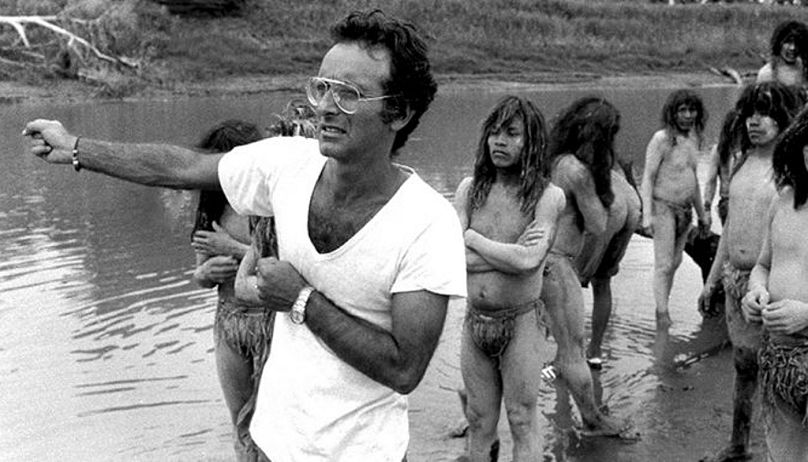
The film’s historical record also includes genuine animal killings. These were not prosthetic effects, and they must be separated from the simulated violence against human characters. The BBFC’s classification history records five minutes and forty-four seconds of cuts for the British 2001 release, reduced to fifteen seconds concerning a specific instance of animal cruelty in 2011 and again in 2022. The change followed a detailed reconsideration of the Board’s guidelines and applicable animal-protection rules, not a discovery that the original footage had been staged.
The Italian tradition also includes bodily violation outside the cannibal cycle. Joe D’Amato‘s Beyond the Darkness (1979) develops a narrative of pathological attachment to a preserved corpse; Lamberto Bava‘s Macabre (1980) associates mourning with the retention of human remains. Such films belong in the wider genealogy of necrophilia and corporeal obsession, though neither should be treated as formally identical to Buttgereit’s later work.
The extreme character of Last Stop on the Night Train also has a tangible production history. In a later interview Aldo Lado said that he completed principal photography in only twenty-five days and attributed his ability to make such an uncompromising feature partly to the pressures facing its producer. That account puts the film’s violence in the context of Italy’s rapidly organized genre-production economy. The later appearance of extended interviews with Lado in home-video editions makes these production circumstances available for examination and broadens discussion beyond the film’s most notorious scenes.
Videotape, the Video Nasties and Alternative Circulation
Affordable recording technology altered the production of horror at the same time as home video changed its exhibition. During the first years of the British cassette market, films could reach consumers without the mandatory review required for theatrical distribution. Independent companies could supply controversial imported titles directly to video shops. The press and political response crystallized around the term video nasties, while the Director of Public Prosecutions developed a changing list of recordings considered potentially obscene.
According to the BFI, seventy-two films appeared on the DPP list over time, with thirty-nine successfully prosecuted. Those figures describe a particular history of British obscenity enforcement, not a ranked list of the world’s most violent films. The Video Recordings Act 1984 introduced compulsory classification for most commercial video works; new requirements applied from 1985. An obscenity prosecution, rejection by the BBFC, removal from sale and the reduction of a particular scene were different legal and industrial events.
The irony of the period is that the same technology associated with public anxiety also opened new opportunities for filmmaking. A director without access to a film laboratory could shoot on video, edit with relatively basic equipment and circulate cassettes through mail order, friends, small shops and festival screenings. Some films were produced with the expectation that theatrical distribution would never be available. A private copy could become the principal surviving record of a production.
This circulation gave visual roughness a new function. Tracking errors, abrupt cuts, inconsistent sound and limited lighting could initially result from practical constraints, but filmmakers learned that such characteristics could also imply illicit provenance. The distinction between an amateur recording and a deliberate imitation of amateur recording would become a central device in Japanese video horror and the American pseudo-snuff tradition.
Guinea Pig and Japan’s Video-Born Extremes
The original Japanese Guinea Pig films were conceived in the direct-to-video environment of the 1980s. Devil’s Experiment (1985), associated with Satoru Ogura, presents staged abuse with minimal context, anonymous participants and a recording style that suggests private documentation. It offers little of the narrative architecture normally used to explain a criminal act. The footage appears to exist before the audience discovers it.
Flower of Flesh and Blood (1985), directed by Hideshi Hino, centers on prolonged prosthetic transformations. Hino’s work as a manga artist contributed to the overtly constructed visual imagination of the episode, even as its presentation supported a reputation for disturbing realism. Stories concerning authorities or prominent viewers mistaking the film for authentic murder became part of its international legend. The existence of those stories does not make every version factually reliable.
The original cycle also included markedly different approaches: He Never Dies (1986) moves toward grotesque comedy, while Mermaid in a Manhole (1988) employs a more developed narrative of bodily degeneration. Treating all the entries as interchangeable false-snuff recordings ignores the differences in tone and construction that made the series a flexible video brand.
Later international editions helped establish the films’ place in underground cinema. Unearthed Films made the Japanese Guinea Pig series central to its early programme after its foundation in 2002. The company’s numbered catalogue begins with Devil’s Experiment / Android of Notre Dame, although a 2015 iHorrorDB interview identifies Flower of Flesh and Blood as the label’s first release. This discrepancy illustrates why catalogue numbering and personal recollections should be distinguished when reconstructing specialist distribution histories.
The Japanese influence expanded beyond direct imitations of snuff imagery. Takashi Miike‘s Audition (1999) uses an extended movement between dramatic registers to make later violence exceptionally destabilizing. Ichi the Killer (2001) approaches explicit injury through hyperbole, criminal fantasy and grotesque comedy. Mou Tun-fei‘s Men Behind the Sun (1988), a Hong Kong production depicting the atrocities of the Japanese Unit 731, raises another set of questions: how extreme fiction stages historically documented crimes and what happens when sensational dramatization is used as a vehicle for remembrance. None of these films belongs to precisely the same production tradition as Guinea Pig.
The European Underground: Lucker, Buttgereit, Schnaas and Ittenbach
Independent European horror developed through several overlapping regional scenes. Johan Vandewoestijne‘s Belgian Lucker the Necrophagous (1986) provides an important chronological counterpoint to Jörg Buttgereit‘s work. It places necrophilia within the violent behavior of a predatory killer. That approach differs from the uncomfortable domestic intimacy of Nekromantik, which appeared the following year. Neither film invented the subject, but each belongs to a different approach to its cinematic representation.
West Berlin’s independent Super 8 and video culture supplied the setting for Buttgereit’s Nekromantik (1987/88). The film combines matter-of-fact everyday behavior with grotesque imagery, black comedy and moments of apparently sincere affection. The shock comes partly from applying familiar emotional and domestic patterns to an encounter with a corpse. Nekromantik 2 (1991) changes the central perspective to a woman seeking some form of ordinary romantic life, extending the director’s examination of social behavior into new domestic and emotional territory.
The production process offers specific evidence of how the film acquired its look. Buttgereit worked with friends and collaborators, including Manfred O. Jelinski, over an extended, intermittent production schedule. Super 8 reversal film had to be processed before the crew could evaluate what had been photographed. The central corpse was constructed in a domestic workspace around a second-hand anatomical skeleton, using inexpensive materials, latex and details derived from animal remains. The apparent physical presence of the corpse was crucial because it had to remain in the frame and be handled by performers over sustained shots.
Sound added another set of constraints. A noisy Super 8 camera limited synchronized recording, and the completed film was shaped through dubbing, effects and compositions by Hermann Kopp, John Boy Walton and Daktari Lorenz. Buttgereit has discussed the disorienting effect of lyrical or melancholic music placed against disturbing images. This method locates the underground’s characteristic texture in specific photographic and editing procedures.
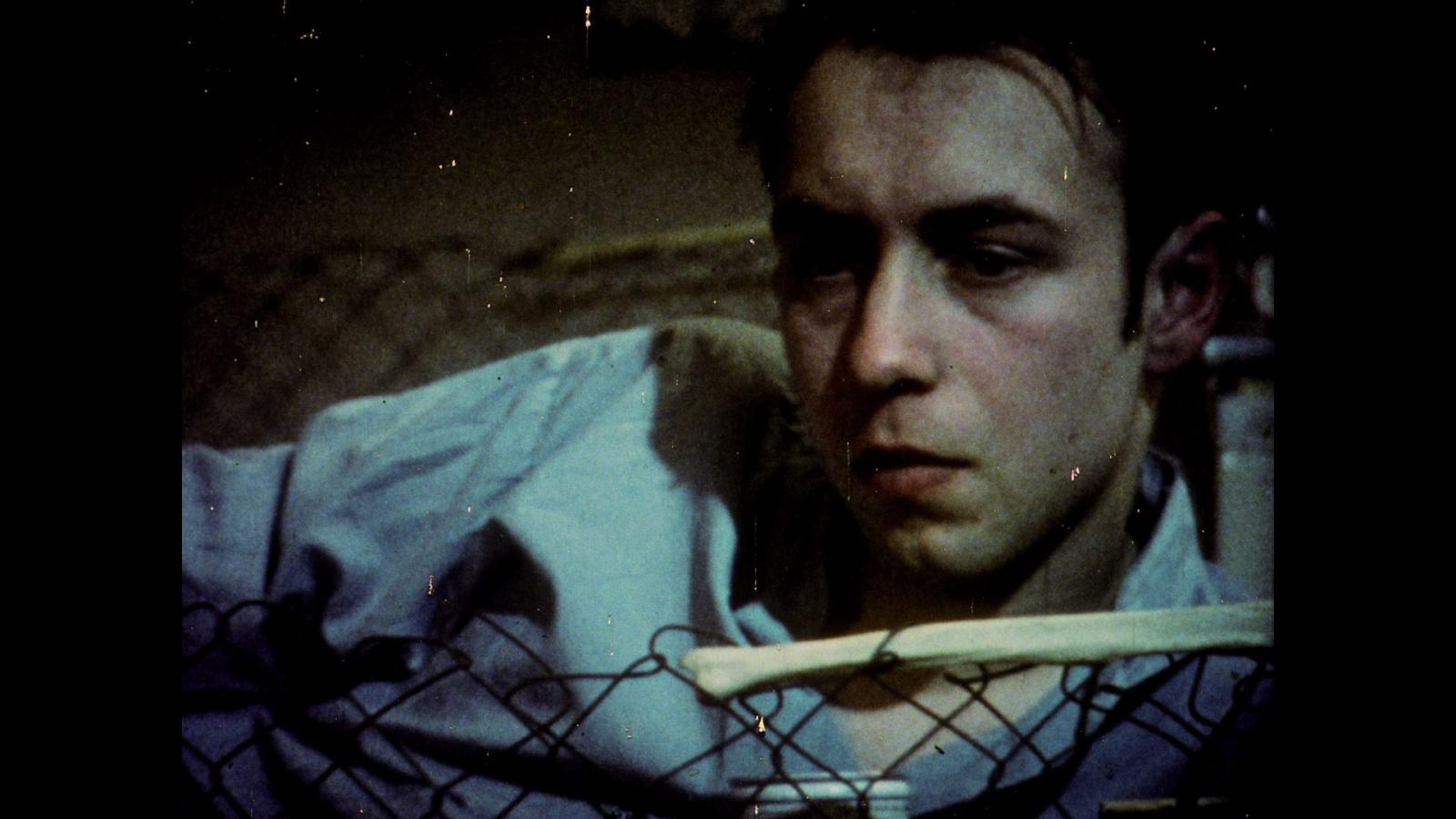
Buttgereit’s Der Todesking (1990) develops an episodic structure around death and suicide, while Schramm (1993) uses fractured chronology to approach the subjective world of a killer. These films matter because the director’s work is sometimes discussed as though it consisted entirely of necrophilic spectacle. His recurring concerns also included isolation, memory, fantasy and the cinematic experience of mortality.
Andreas Schnaas‘s Violent Shit (1989) represents a different model of do-it-yourself gore. Constructed with limited infrastructure, it placed repeated bodily effects ahead of conventional dramatic polish. This strategy made the ability to produce and circulate an unusually graphic feature independently part of the film’s historical significance. The amateur character of the recording should be understood as a production condition and an aesthetic result, not automatically as evidence of superior artistic freedom.
Olaf Ittenbach‘s Black Past (1989) and The Burning Moon (1992) demonstrate another approach. The latter uses a framing story and two horror narratives to accommodate increasingly elaborate prosthetics and supernatural imagery. Its spectacular finale emphasizes the physical construction of bodies and settings. Ittenbach later expanded the scale of this method in Premutos: The Fallen Angel (1997), whose effects and crowd scenes distinguish it from the domestic arrangements of Buttgereit’s early films.
The legal treatment of these productions forms part of their history. Film scholar Kai-Uwe Werbeck has examined German no-budget horror through the disputes surrounding Nekromantik 2 and The Burning Moon, showing how production practices, regulation and subcultural circulation intersected. Restriction of distribution, indexing and seizure under German law have different meanings. Later British classifications of Nekromantik 2 in 2015 and 2024 establish what the BBFC reviewed at those moments; they do not settle every question about the film’s earlier German history.
Other European filmmakers pursued different kinds of disturbing material. Nacho Cerdà‘s short Aftermath (1994) organizes violation within the controlled environment of a mortuary, relying upon duration and carefully composed clinical imagery. Marian Dora‘s Melancholie der Engel (2009) works through extended scenes of degradation, formal patience and a deliberately restricted audience. The films’ different relations to editing, narrative and physical spectacle matter more than their shared presence in collectors’ catalogues.
America’s Microbudget Extreme Horror and the Appearance of Evidence
As consumer video equipment became cheaper, American filmmakers developed horror that used recording technology both as a practical tool and as a narrative premise. Fred Vogel‘s August Underground (2001) is a central example. It simulates home movies recorded by perpetrators, replacing an explanatory police narrative with erratic framing, ordinary conversation and apparently incidental events. The camera does not behave like an impartial observer; it seems implicated in the fiction’s crimes.
That perspective requires deliberate construction. The performances must allow for moments that feel unplanned, while the photography avoids the reassuring coverage of conventional narrative cinema. Makeup effects must appear convincing within a style that pretends not to be showing them deliberately. The sequels August Underground’s Mordum (2003) and August Underground’s Penance (2007) continued this mode while altering the relationships between the participants and the recorded image.
The later home-video history exposes the amount of filmmaking hidden by the final illusion. Unearthed Films’ 2023 edition of the original film includes commentaries, interviews, material connected to the original screener and footage documenting production. Such records are useful because they reintroduce the crew, performers, props and planning that a pseudo-documentary film is designed to keep outside the viewer’s attention.
Matt Jaissle‘s The Necro Files (1997), Nick Palumbo‘s Murder-Set-Pieces (2004) and Ron DeCaro’s The Gateway Meat (2008) represent other strands of American underground exploitation. The first uses grotesque sexual and supernatural imagery; the second places graphic violence within a serial-killer narrative; the third belongs to a milieu of self-financed effects-based filmmaking. Their common audience does not make them formally identical. Some emphasize the effect as spectacle, others the apparent realism of their environment or the discomfort of sustained proximity to the killer.
Jim VanBebber‘s Deadbeat at Dawn (1988) and The Manson Family (2003) are also valuable to a history of independent extremity because they show how a director’s control over action, editing, violence and release history could remain unusually concentrated outside conventional production arrangements. They connect underground horror to neighboring traditions of independent crime cinema and American exploitation, even when the precise genre designation is debatable.
The productions of Canadian filmmaker Lucifer Valentine occupy another, more specialized position in the video underground. His self-described Vomit Gore Trilogy consists of Slaughtered Vomit Dolls (2006), ReGOREgitated Sacrifice (2008) and Slow Torture Puke Chamber (2010). Instead of developing a conventional story around intermittent gore sequences, the films assemble fragmented, often nonlinear material involving fetish performance, vomiting, graphic staged violence and deliberate degradation of the image. The term ‘vomit gore’ was a label applied by the filmmaker to his own work, not evidence of a coherent international movement. Its historical relevance lies partly in the distinctive subcultural identity the trilogy developed and the successive DVD editions through which it reached audiences: initially through Kingdom of Hell Productions in Canada in 2006, then through Unearthed Films in the United States and Black Lava in Austria. That circulation also makes it possible to examine a particularly contested form of extremity without treating notoriety as an artistic achievement.
Found, Headless and Making Off: Horror Examines Its Own Production
Scott Schirmer‘s Found (2012), adapted from Todd Rigney‘s novel, follows a boy who discovers evidence of his older brother’s murders. The film devotes considerable attention to childhood experience, social isolation and family relationships. Its extreme material appears within this dramatic framework and also within a fictional horror film viewed by the protagonist: Headless, presented as a forgotten 1978 exploitation production.

That invented work was expanded into Headless (2015), directed by Arthur Cullipher, who had worked on the gore effects of Found. Nathan Erdel wrote the screenplay; Scott Schirmer and Kara Erdel were among the producers, while Leya Taylor worked on the photography. The production did not literally recover a film from 1978. It manufactured the look of one, drawing on an audience already familiar with the footage staged for Found.
The financing is unusually specific. The 2014 Kickstarter campaign ran from June 23 to July 21 and raised $20,211 against a $15,000 goal, from 324 backers. A contemporary Indiana University account identifies the Bloomington companies Forbidden Films and Gentleman Monster Productions and describes a local crew whose members contributed long working days without advance pay. This documents the local production arrangements more precisely than generalized claims that enthusiasts made the film with no resources.
The transition from the film-within-a-film to a standalone feature connects narrative, effects labor and crowdfunding. Viewers of Found encountered an imaginary object that already seemed to have a hidden history. Those viewers could then finance a new production intended to look as though the object had always existed. Cullipher’s work on practical effects provided continuity across the projects, while the expanded screenplay gave the apparent artifact a full narrative structure.
Cédric Dupuis‘s French Making Off (2012) treats the act of producing an extreme film as grotesque satire. An amateur director attempts to make the most terrifying film possible with friends and limited equipment. His obsessive pursuit of authenticity transforms the making-of process itself into a source of horror. Dupuis developed the project through short-film experiments made with friends and equipment he purchased himself.

In a 2012 interview alongside actor-producer Olivier Bureau, Dupuis traced the idea back to a short inspired by Man Bites Dog (1992), the Belgian mock-documentary in which a film crew follows a murderer. Another short functioned as a technical rehearsal for Making Off. Dupuis had not attended film school: he described buying a computer with his first wage payment and filming equipment with the next, while working in factories and later as an electrician. The interview records a concrete path from personal experimentation to a longer production.
The three films turn their small-scale production environments into subjects for storytelling. Found gives horror spectatorship a role within a coming-of-age narrative; Headless turns a fictitious artefact into a crowdfunding-supported feature; Making Off exposes the destructive absurdity of a filmmaker who confuses artistic ambition with unlimited control over collaborators. Together they show that extreme cinema can examine the conditions of its own manufacture while engaging with shock imagery.
The Practical-Effects Workshop
The most graphic images in extreme horror are often the result of slow technical work. Artists construct skin, tissue, prosthetic heads, replacement limbs and mechanical systems that must behave convincingly under lighting and camera scrutiny. A sequence may require weeks of sculpting and molding for a few seconds of finished footage. The camera angle, the duration of the take and the ability to rebuild an effect determine how the scene can be staged.
The American Guinea Pig revival provides a documented example. Stephen Biro‘s American Guinea Pig: Bouquet of Guts and Gore (2014) was designed around extended practical effects supervised by Marcus Koch of Oddtopsy FX. Koch recalled spending around two months constructing the central fabricated bodies. Because the film involved progressively dismantling those prosthetics, repeating a completed stage could be impossible. The apparent immediacy of the onscreen action depended on painstaking preparation and the order in which the production used its props.
In a 2015 iHorrorDB interview, the director described Koch as indispensable and said the effects team had spent more than two months preparing the film. Unlike a sequence concealed by rapid cuts, extended observation can reveal seams, changes in material or awkward mechanical movement. The body must therefore remain convincing for longer, and the available camera coverage may be constrained by the construction of the effect.
Koch’s subsequent American Guinea Pig: Bloodshock (2015) demonstrates a different relationship between visual format and effects. In an interview, he explained that the production had originally been shot and edited in color before a decision to present it primarily in black and white. The decision was aesthetic; it does not establish that the film was photographed on black-and-white stock. For an effects artist, monochrome can change the visible relations between surfaces, but the final appearance remains the result of lighting, photography and grading as well as makeup.
Effects-centered filmmaking also has a history outside the North American microbudget field. Giannetto De Rossi‘s collaborations with Lucio Fulci on Zombi 2 (1979) and The Beyond (1981) helped establish a distinctive Italian approach to decaying bodies and physical injury. The Burning Moon expands such work into an amateur German setting. Éric Falardeau‘s Thanatomorphose (2012), with decomposition effects by David Scherer and additional prosthetics and bodily fluids by Rémy Couture, develops its horror through the visible deterioration of a single living body across three acts.

In Thanatomorphose, the effects do not function merely as intermittent set pieces. The protagonist’s progressive decomposition is the organizing development of the film, requiring the performer and the physical design to change across its running time. That approach is closer to the structure of a body-horror transformation than to the isolated display of one elaborate gore illusion.
Because extreme imagery is often designed to look uncontrolled or genuinely injurious, the production record matters. A staged prosthetic effect, an actor’s performance and the actual killing of an animal are different events. The professional or independent scale of the crew does not alter that difference. Behind-the-scenes evidence makes it possible to discuss an image’s construction without mistaking the finished illusion for documentation of real harm.
The New French Extremity and Serbia’s Production Nightmares
The New French Extremity describes a critical tendency rather than an exclusively horror-based school. Claire Denis‘s Trouble Every Day (2001) explores desire and bodily destruction through carefully composed images and an unusually restrained dramatic rhythm. Gaspar Noé‘s Irréversible (2002) uses narrative reversal and sustained confrontation with sexual and physical violence within an art-cinema framework. The two works are significant to extreme cinema, but their inclusion in a historical discussion does not require categorizing either as a conventional horror feature.
Alexandre Aja‘s High Tension (2003), Alexandre Bustillo and Julien Maury‘s Inside (2007), and Pascal Laugier‘s Martyrs (2008) brought graphic extremity into more explicitly genre-oriented forms. High Tension organizes violence around pursuit; Inside confines most of its ordeal within a domestic setting; Martyrs moves from revenge horror toward a fictional institution that uses suffering in pursuit of an alleged metaphysical revelation. Those differences in narrative method are essential to their reception.

In the United States, Saw (2004) and Hostel (2005) brought carefully designed threats and graphic violence to wide theatrical markets. The critical label torture porn grouped otherwise different films together. Saw works through puzzles and delayed explanations, whereas Hostel gives violent consumption a literal market structure within the story. Neither can be explained solely by the level of visible injury.
Serbian filmmakers developed two internationally discussed works with particularly revealing relationships to filmmaking itself. Mladen Đorđević‘s The Life and Death of a Porno Gang (2009) follows an unsuccessful filmmaker who enters pornography and assembles a traveling troupe. A profitable opportunity eventually draws the group into a system of recorded violence. Đorđević had previously directed the documentary Made in Serbia (2005), which examined Serbia’s pornography industry. His fiction feature therefore followed an identifiable investigation of labor and performance, even as it took those concerns into grotesque territory.
The relationship between the Serbian films is especially illuminating when their presentation of the performers is compared. Đorđević follows an itinerant group whose marginal working conditions expose them to increasingly exploitative offers. Spasojević restricts the central character’s access to knowledge, creating a system in which production contracts, recording equipment and the director’s authority are used against him. The films confront related economic and moral problems but employ different narrative mechanisms. The first carries the experience of collective precarious labor into its structure; the second organizes coercion through a deliberately controlled and concealed production.
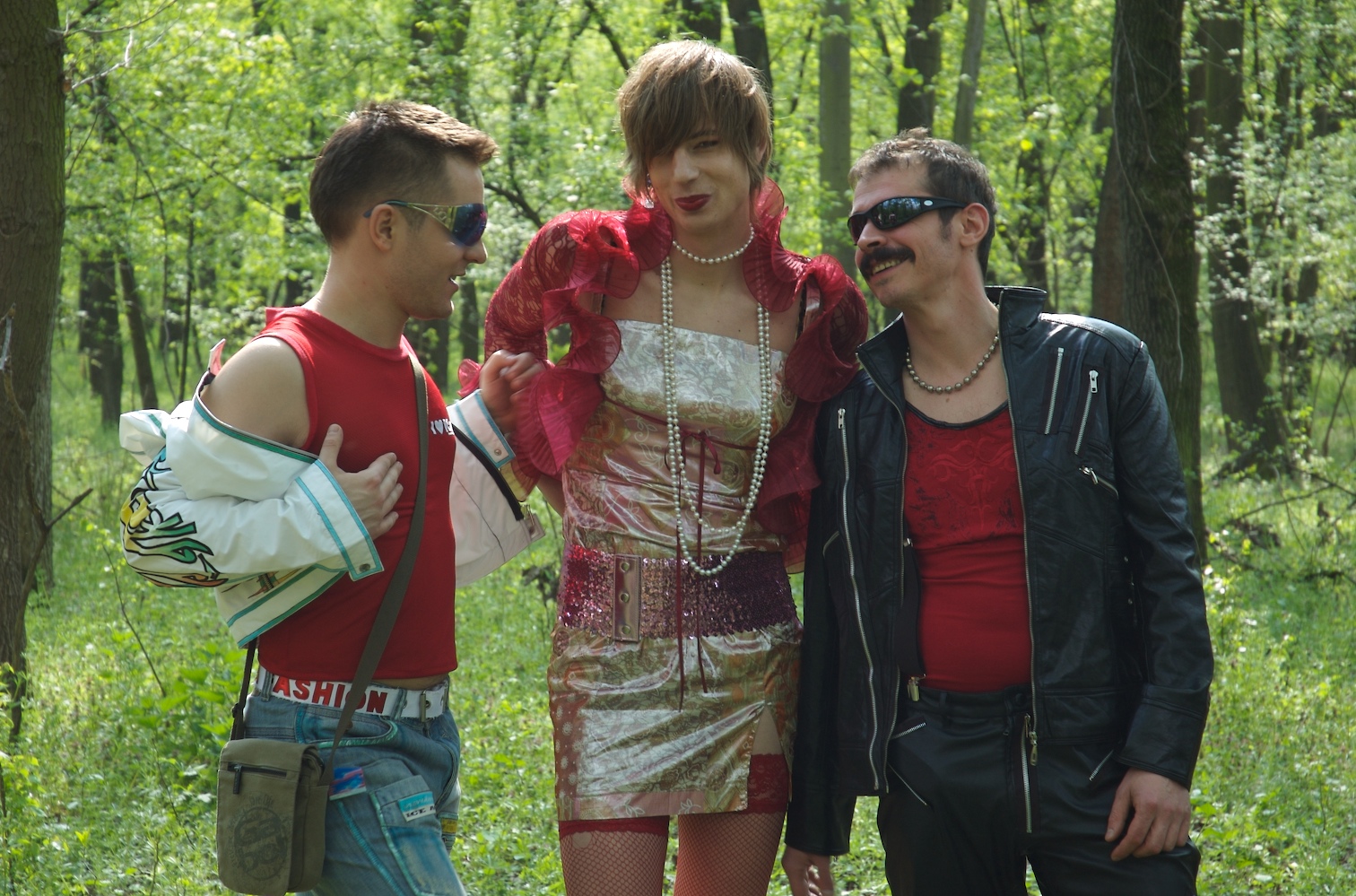
In a February 2009 interview with the Serbian weekly Vreme, Đorđević discussed his interest in death, destruction and aspects of reality he felt were too often avoided. Such testimony establishes the director’s stated concerns, while the film’s actual form allows those concerns to be examined critically. Its movement through a group of marginalized performers makes it different from a narrative centered almost entirely on one manipulated star.
Srđan Spasojević‘s A Serbian Film (2010) centers on a retired pornography performer drawn into a purported art project whose producer-director conceals the true nature of the work. The recording process becomes an instrument of control. Spasojević and screenwriter Aleksandar Radivojević associated their film with political allegory, a declared purpose that has remained controversial because of the relationship between the violence shown and the interpretations proposed by the makers.
The British classification record documents 49 individual cuts across eleven scenes, requested in August 2010. The BBFC initially estimated a reduction of three minutes and forty-eight seconds; the approved video submission contained four minutes and twelve seconds of alterations, partly because of continuity changes. It was classified 18 on October 28, 2010. A planned FrightFest screening was cancelled after organizers declined to show a cut version. The separate events should be kept in sequence, since the cancellation did not mean that no classified version existed.
Both Serbian films dramatize the manufacture of abusive images, but their industrial histories diverge. The Life and Death of a Porno Gang circulated through international festivals before later collector editions; A Serbian Film generated a documented classification dispute around a relatively high-profile international release. The works can be compared meaningfully without reducing Serbian cinema to one sensational reputation.
Independent Extremity Beyond the Better-Known Centers
Latin American filmmakers developed their own independent traditions of extreme horror. Lex Ortega‘s Atroz (2015) grew from experiments involving serial-killer material and recordings intended to resemble evidence. Ortega described unsuccessful attempts to obtain outside financing and a process of self-funding followed by crowdfunding that made further photography possible. The result circulated internationally through specialist horror networks, including later Unearthed Films editions.
Lucio A. Rojas‘s Chilean Trauma (2017) places extreme violence in a narrative linked to the legacy of dictatorship and political repression. A film’s national historical context may be relevant to interpretation, but it must be established through the work and contemporary testimony, avoiding assumptions about a country’s entire horror output. Visceral: Between the Ropes of Madness (2012), also from Chile, belongs to a different mode of effects-based independent extremity and illustrates the range of material produced in the region.
The contemporary international field further complicates any opposition between commercially legible genre horror and underground work. The Sadness (2021), made in Taiwan by Rob Jabbaz, develops unusually graphic pandemic horror within an accessible infection narrative. Damien Leone‘s Terrifier 2 (2022) places elaborate practical-effects splatter inside a theatrically successful American slasher franchise. Neither relies on pretending that the camera has obtained an authentic criminal recording, yet both show that exceptional violence can still structure a production and its identity in the market.
Filmography alone cannot map all these traditions. A useful history needs the production record, the cinematic function of the violence and the path through which the work reached audiences. Those factors explain why the term extreme horror encompasses productions that share little beyond a willingness to depict disturbing material explicitly.
The Specialist Labels: Three Approaches to Extreme Horror Distribution
Specialist distributors have played an important role in the international circulation of extreme horror, particularly for films that rarely reached conventional theatrical or home-video markets. Unearthed Films, Black Lava Entertainment and TetroVideo entered this field from different territories and with different priorities. Their contributions can be examined through the films they released, the audiences they served and the editions through which those works remained available.
Unearthed Films. Owned by Stephen Biro, the American label was an early specialist in the North American distribution of international extreme horror on physical media. Its licensed DVD releases of the Japanese Guinea Pig series gave viewers identifiable editions of films often encountered through unofficial copies. Its catalogue subsequently included Nacho Cerdà’s Aftermath, the August Underground trilogy, Atroz and Lucifer Valentine’s Vomit Gore Trilogy, bringing different independent traditions into the same specialist market. Unearthed also participated in original production through the American Guinea Pig films, extending its role beyond importing and distributing completed work. The label’s historical contribution lies in creating a sustained channel for licensed releases, maintaining relationships with filmmakers and helping establish a recognizable North American audience for cinema that had previously depended heavily on informal circulation and small collector networks.
Black Lava Entertainment. Owned by Thomas Binder in Austria, the label developed a presence in the European collector market focused on underground and transgressive productions. Its association with filmmaker Lucifer Valentine is illustrative. Black Lava issued an Austrian edition of Slaughtered Vomit Dolls in 2014, with German subtitles and limited-edition packaging, and released further works associated with Valentine, including ReGOREgitated Sacrifice, A Perfect Child of Satan and Black Metal Veins. The Vomit Gore Trilogy had already circulated through Unearthed Films in North America, so Black Lava’s editions constituted a later European release. Black Lava’s significance lies in its attention to material with a particularly narrow audience and in the way regional releases, subtitles and physical editions allowed such films to remain visible among collectors beyond their initial markets.
TetroVideo. Owned by Antony Coia, the label combined the circulation of obscure independent films with collector editions that emphasized presentation and supplementary documentation. Releases have included Lucker the Necrophagous, The Life and Death of a Porno Gang, Thanatomorphose and Last Stop on the Night Train, alongside a limited package bringing Found and Headless together. Its 2019 Lucker DVD included alternative versions and an interview with Johan Vandewoestijne, while the commercially pressed 2021 Blu-ray of Thanatomorphose offered multilingual subtitles and extensive supplements. The 2021 Last Stop on the Night Train edition likewise incorporated substantial director material, without being that film’s first Blu-ray release. TetroVideo’s importance rests in connecting underground productions and older exploitation titles with carefully assembled physical releases, helping preserve differences between versions as well as interviews and other materials useful to the films’ subsequent study.
These histories describe complementary forms of distribution, each contributing to preservation and study. Licensed releases, specialist access to marginal work and documentary-rich collector editions all influence what survives and how films can be studied. Packaging or scarcity alone does not establish historical value; the relevant questions concern the version presented, the evidence preserved and the audiences able to encounter it.
Censorship, Versions and the Record of What Was Actually Seen
Censorship histories often reach audiences as slogans, with a film described simply as banned. The most useful records establish the submitted version, jurisdiction, date, intervention and eventual outcome. The BBFC case files for Cannibal Holocaust and A Serbian Film are particularly informative because they record how an authority reached its decision and how edited versions subsequently entered circulation.
| Film | Date | Decision |
|---|---|---|
| Cannibal Holocaust | 2001 | Classified 18 after 5 min 44 sec of cuts |
| Cannibal Holocaust | 2011 | Classified 18 after 15 sec of cuts for animal cruelty |
| Cannibal Holocaust | 2022 | Same 15-sec intervention required |
| A Serbian Film | 25 Aug 2010 | 49 cuts requested across 11 scenes |
| A Serbian Film | 28 Oct 2010 | Revised video classified 18; 4 min 12 sec of alterations |
| The Human Centipede II | 2011 | Initially refused; revised version later accepted after 32 individual cuts |
| The Bunny Game | 2011 | BBFC refused classification |
The same title can exist in multiple cuts, territory-specific releases and transfers prepared years apart. A rejected version and a subsequently classified version are different documentary objects. The British video-nasties episode also illustrates that prosecution under obscenity legislation did not establish an identical prohibition in every town or court. The words used to describe a decision should follow the underlying legal record.
Such documentation also changes how the films themselves can be studied. When a cut alters the duration or placement of an image, it may change pacing, emphasis and the narrative relationship between scenes. Comparing the editions is a historical task distinct from deciding whether a film is sufficiently disturbing to deserve its reputation.
What the History of Extreme Horror Preserves
The history of extreme horror contains several developments unfolding in parallel. Blood Feast made visible injury a commercial attraction; mondo and pseudo-snuff productions challenged the authority of filmed evidence; Italian cannibal cinema combined exploitation with documentary deception; West German independent filmmakers developed personal approaches to bodily violation; and Japanese direct-to-video films made technical realism and minimal narrative framing central to the experience. The American microbudget scene later adapted the characteristics of ordinary videotape into fictional criminal evidence, while European and Serbian filmmakers examined violence through art-cinema form, political allegory and the manufacture of images themselves.
The history also belongs to the labor that usually remains outside the frame. Marcus Koch’s effects work and the financing of Headless are not footnotes to a list of outrageous scenes: they establish how those scenes became possible. Cédric Dupuis’s testimony explains how a series of homemade experiments developed into Making Off. The different releases of Cannibal Holocaust and A Serbian Film show how institutions helped determine which versions audiences could actually see.
To produce a convincing effect, the filmmaker needs to understand both the material object and the viewer’s assumptions. An image of a performer apparently decomposing may depend on changes across multiple shooting days; a fabricated injury shown in a prolonged take may require a purpose-built replacement body; a camera that appears to record events accidentally may have to be rehearsed so that performers and effects remain visible at the correct moments. These preparations belong to film history even when the work was completed without grants, studios or professional distribution.
Extreme horror is artistically uneven, technically inventive and frequently ethically difficult. Some works use explicit violence to develop distinctive cinematic forms; others organize their appeal almost entirely around sensation. Both belong to a properly documented history. Studying the actual films, production evidence and release records produces something more durable than a ranking of the most disturbing titles: an account of a film culture whose images were made, contested and preserved under extraordinarily different circumstances.
Selected Milestones, 1963–2022
References
- Rutgers University Press — Mattias Frey, Extreme Cinema: The Transgressive Rhetoric of Today’s Art Film Culture (2016). Scholarly framework for transgression, distribution and film criticism.
- Journal of the Fantastic in the Arts — Kai-Uwe Werbeck, The State vs. Buttgereit and Ittenbach (2016). Study of German no-budget horror and regulation.
- British Film Institute — Lindsay Hallam, Where to Begin with Video Nasties (2021). Historical review of the British prosecution list.
- British Board of Film Classification — Cannibal Holocaust case study. Original record of cuts and reassessments.
- British Board of Film Classification — A Serbian Film case study. Decisions, dates, edits and festival circumstances.
- iHorrorDB — Barbara Torretti, interview on American Guinea Pig: Bouquet of Guts and Gore (2015). Original testimony on Unearthed Films and practical effects.
- Indiana University — Senior Screenwriter on New Horror Film, Headless (2015). Contemporary production and crowdfunding report.
- DVDpasChériens — Interview with Cédric Dupuis and Olivier Bureau (2012). Firsthand account of Making Off.
- Vreme — Interview with Mladen Đorđević (2009). Primary testimony on the Serbian filmmaker’s approach.
- Indie-eye Cinema — Michele Faggi, “Thanatomorphose, il gore-hardcore di Eric Falardeau in Blu Ray” (2022). Detailed analysis of the film, its craft and archival supplements of the TetroVideo edition.
- American Film Institute — Henry: Portrait of a Serial Killer catalogue entry. Chicago festival screening, theatrical distribution and censorship history.
- FilmTV — Intervista ad Aldo Lado (2015). Firsthand testimony on the 25-day production and political intent of Last Stop on the Night Train.
- Split Tooth Media — Reviving Nekromantik: An Interview with Jörg Buttgereit (2026). Firsthand details on Super 8 photography, dubbing and construction of the corpse prop.
- Body Count Rising — Interview with Filmmaker Marcus Koch of Oddtopsy FX (2016). Primary evidence for Bloodshock‘s color photography and monochrome presentation.
- STARBURST — Interview: Éric Falardeau | Thanatomorphose. Director’s account of the effects contributions of David Scherer and Rémy Couture.
- ComingSoon — Lex Ortega Talks Brutal New Mexican Horror Flick Atroz (2016). Interview on financing, crowdfunding and practical production conditions.
- IMDb — Slaughtered Vomit Dolls, company credits. Documents Kingdom of Hell Productions’ original 2006 DVD distribution and subsequent labels.
Leave a Reply