
FILM HISTORY | ARCHIVAL DISCOVERY | SILENT CINEMA
One hundred years after F. W. Murnau completed Faust (1926), the extraordinary production album presented to him by his collaborators has finally been published in full. Weighing approximately twelve kilograms and containing 412 photographs and illustrations, the original Faust Bible survived war, disappearance, decades of private custody and a mysterious sale for just thirty German marks. Its recovery provides an unusually detailed record of how the film’s sets, lighting and supernatural effects were designed and photographed.
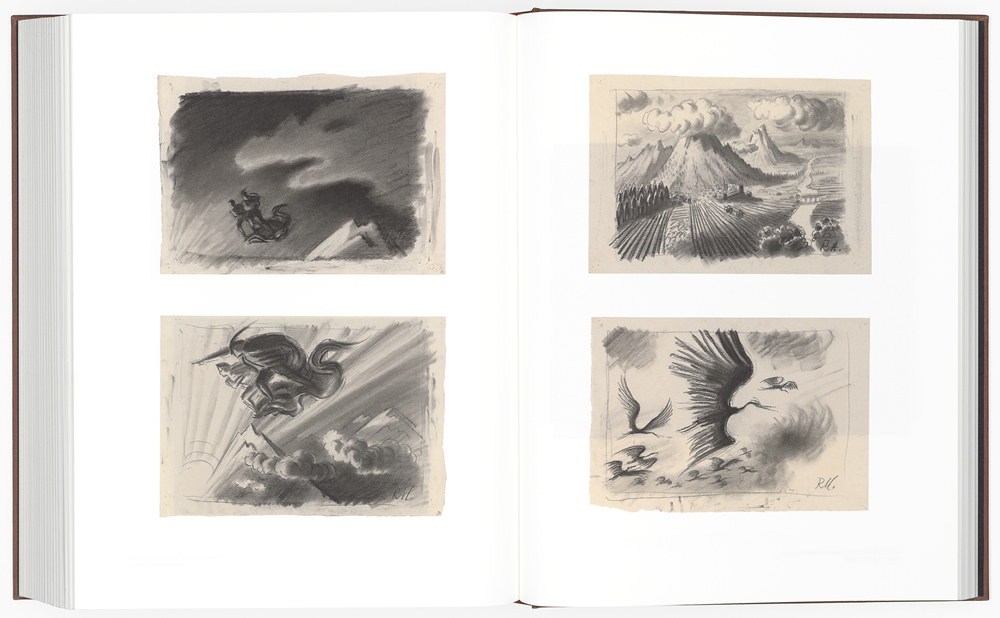
The Publication of an Extraordinary Production Archive
On October 17, 2026, MUBI Editions and the Cinémathèque française presented The Faust Bible: The Making of F. W. Murnau’s Masterpiece, a major archival publication coinciding with the centenary of the film’s original release. The project brings into public circulation the complete contents of a remarkable object assembled during the production of Faust in 1926: an illustrated album documenting the work of Murnau, his production designers, his cinematographer and their collaborators.
The volume was prepared under the editorial direction of Laurent Mannoni, the Cinémathèque française’s scientific director of heritage, whose institution acquired the original artifact in 2017. The book includes archival reproductions, annotations and historical essays, allowing a production record that had remained inaccessible for much of its existence to be studied beyond the confines of the collection in which it is preserved.
The October presentation at the Cinémathèque was accompanied by a screening of Faust in the version associated with the Filmmuseum München. Mannoni introduced the event, with live musical accompaniment provided by Christine Ott and Mathieu Gabry. The publication formed part of the celebrations marking both the film’s centenary and the ninetieth anniversary of the Cinémathèque française.
The timing is significant, but the distinction between discovery and publication is essential. The original album was not discovered in 2026. It had entered the Cinémathèque’s holdings nine years earlier. What has changed is its accessibility: the complete collection has now been reproduced and accompanied by research explaining its provenance, physical characteristics and relationship to the filmmaking process.
The new edition draws attention to evidence that is fundamentally different from the completed motion picture. Its pages preserve proposed compositions, photographs of constructed sets, images captured during production and records of technical experimentation. Together, they make it possible to investigate both the finished images and the processes through which they were developed.
A Twelve-Kilogram Bible with 412 Images
The surviving object is a substantial leather-bound volume measuring approximately 45 by 52 centimeters and weighing around twelve kilograms. Its imposing dimensions reflect its original purpose as a prop prepared for Faust, but its historical importance comes from the transformation undertaken by members of the production team.
During filming, production designer Robert Herlth converted the volume into an illustrated record of the production. Working with fellow designer Walter Röhrig and cinematographer Carl Hoffmann, he assembled photographs, reproductions of drawings and other visual material inside the book. The completed album was intended as a commemorative gift for Murnau.
The Cinémathèque describes the collection as containing approximately 400 original images. A more detailed examination published by the German film journal Filmdienst identifies 412 photographs and illustrations. The two figures are compatible as an approximate institutional description and a more specific count, although the different ways archival material may be counted should be considered when citing precise totals.
The Bible was not organized as a conventional reference manual. It records the progress of a collaborative artistic undertaking through photographic and graphic material selected by those responsible for creating it. The contents include photographs of scenic constructions, reproductions of original designs, enlarged images drawn from the film negative and informal records of activity on the set.
Its physical condition reveals aspects of its later history. The leather cover once carried a prominent metal crucifix, accompanied by protective metal corner fittings. These elements have disappeared, leaving impressions and traces in the surviving binding. The pages and exterior also experienced deterioration during decades of uncertain storage.
There is an important correction to a frequently repeated account of the object’s origins. Because a Bible is thrown into a fire during Faust, some descriptions suggest that the surviving album was rescued directly from the flames. In a 2026 examination of the artifact reported by Filmdienst, Mannoni explained that another prop was used for the burning sequence, while Herlth retained the Bible that would become the album. The surviving object should therefore not be described unconditionally as a fire-damaged book recovered from the photographed scene.
This distinction matters for the archive’s provenance. It separates a visually appealing anecdote from the documented history of an artifact. The Bible’s significance rests on its transformation into a production record and its subsequent survival, not on an unsupported assertion that the exact object was retrieved from a burning set.
The Dedication of March 24, 1926
One of the most revealing items in the album is its dedication. The opening material identifies the volume as a collection of designs and photographs connected with the Faust production and names its principal contributors. Herlth’s inscription dedicates the book to Friedrich Wilhelm Murnau in memory of their work together.
The dedication is dated March 24, 1926, identified in the archival reconstruction as the final day of filming. It provides a precise contemporary connection between the completion of the production and the presentation of the album. Unlike later recollections, the inscription belongs to the object itself and can therefore serve as direct evidence of its original commemorative function.
The date also establishes the circumstances surrounding Murnau’s departure from Germany. By the time Faust was completed, he was preparing to continue his career in Hollywood, where he would direct Sunrise: A Song of Two Humans (1927). The Bible was conceived as a record of the collaboration he was leaving behind.
Its opening pages reveal a degree of familiarity among the principal filmmakers. The volume includes a photographic composition combining Herlth, Röhrig, Murnau and Hoffmann, reflecting the collaborative character of the project. Other pages contain humorous visual arrangements and comments on the difficulties of achieving the director’s exacting requirements.
These details are particularly valuable because Murnau was known for exercising strict control over access to his productions. He was reluctant to permit outsiders to observe filming or discover the practical methods behind his effects. The album was created within that restricted working environment by people who had direct access to the process.
Its existence therefore preserves an unusually intimate form of production documentation. The images were assembled not by a later historian attempting to reconstruct events, but by collaborators who understood the working conditions, practical difficulties and visual objectives of the film.
How the Faust Bible Disappeared
The album’s later history is a documented succession of personal transfers, interrupted archival searches and lengthy periods during which its location was unknown. Reconstructing that history requires distinguishing records associated with identifiable individuals from the gaps that remain in its provenance.
When Murnau departed for the United States in 1926, he left the album among his possessions in Berlin, at his residence on Douglasstraße. He died following an automobile accident in California in March 1931 without returning to retrieve the collection.
Responsibility for the remaining possessions passed to his brother Robert Plumpe, who attempted to protect the filmmaker’s books and papers. During the Second World War, material from the estate was distributed among storage spaces and cellars in Berlin. This strategy exposed portions of the archive to bombing, water damage, loss and possible theft.
When efforts were made to account for the remaining material, many items could no longer be located. The Faust Bible disappeared from the known documentary record. Its apparent loss was especially consequential because the album contained photographs and reproductions of production drawings whose originals were not necessarily preserved elsewhere.
The uncertainty surrounding the object illustrates a wider problem in the preservation of silent-film history. Films, scripts, design sketches, personal correspondence and photographs often followed different routes after a production ended. Some entered institutional collections; others remained with performers or technicians, passed to relatives or were dispersed through private transactions. The survival of one kind of document did not guarantee the survival of another.
In the case of the Faust Bible, the physical object remained intact enough to preserve its visual contents, but the chain of custody connecting Murnau’s Berlin possessions to its eventual rediscovery was interrupted for decades.
Lotte Eisner’s Search and the Thirty-Mark Sale
Film historian Lotte H. Eisner devoted considerable attention to the recovery of documents associated with German silent cinema. Having fled Nazi Germany and established herself in France, she became a central figure in the Cinémathèque française’s preservation work. Her interest in Murnau brought her into contact with people who had known the director and collaborated on his productions.
In 1952, Eisner met Robert Herlth in Munich. She also corresponded with Murnau’s brother, who supplied original script material connected with the director’s films. These efforts contributed to the preservation of evidence about Murnau’s working methods, but the Faust Bible remained beyond her reach.
A more substantial clue emerged in 1961, when Berlin’s Akademie der Künste organized an exhibition dedicated to Murnau. Among those associated with the event was curator Engelbert von Malinckrodt, whose surname also appears with a different spelling in some English-language accounts.
According to the detailed provenance reconstruction published by Filmdienst, Malinckrodt had acquired photographic albums associated with Murnau from a former film producer and restaurant operator named Conscienze. The transaction took place in March 1961 and reportedly involved the payment of thirty Deutsche Marks. Subsequent research established that the material included the Faust Bible.
The circumstances by which Conscienze obtained the object remain unclear. No complete documentary sequence explains how the album passed from Murnau’s dispersed possessions into his hands. The existence of the reported sale is significant, but it should not be treated as evidence that the earlier chain of ownership has been fully reconstructed.
Malinckrodt communicated information about the albums to Henri Langlois, co-founder of the Cinémathèque française. Langlois passed the information to Eisner, who attempted to investigate whether the missing Bible had been located. Her inquiries failed to produce access to the object.
The account becomes more unusual at this point. Malinckrodt did not publicly display the Bible despite his involvement with the Murnau exhibition. Later, he disappeared from the documentary trail. The album remained with a person who had shared his accommodation and was subsequently kept in private custody.
For decades it was stored wrapped in brown paper on top of a cupboard. The survival of an important silent-film production document under such ordinary circumstances stands in sharp contrast to the attention subsequently devoted to it by major film institutions.
Eisner never succeeded in examining the Bible. She died in 1983, leaving the search unresolved. Her failure to locate the album is particularly notable given her close connections with the surviving participants in German silent cinema and the Cinémathèque’s active interest in recovering Murnau-related documents.
German film historian Rolf Aurich eventually traced the object in the early 2010s. Its emergence made possible an institutional acquisition, with the Cinémathèque française ultimately securing the album in 2017.
The history of the Bible’s disappearance is therefore supported by a series of identifiable events, but not by a continuous ownership record. The decades between its wartime dispersal and the 1961 sale remain incompletely documented, as do some of the circumstances surrounding its later private custody. Preserving these uncertainties is necessary for an accurate account of the object.
Restoring the Object Without Recreating Its Missing History
Following the 2017 acquisition, the Cinémathèque undertook the conservation and documentation of the original Bible. The project required attention to the physical condition of a century-old volume whose binding, paper and attached photographs had survived periods of poor storage.
The object had experienced water-related deterioration, while the missing metal decorations left visible traces on its cover. Conservation could stabilize the surviving material and improve its accessibility, but it could not restore every element that had disappeared during the previous century.
The distinction between conservation and historical reconstruction is particularly important. Restoring a damaged page does not establish who owned the object during an undocumented period. Digitizing a photograph preserves its visible content but does not necessarily identify the precise moment or circumstances in which it was taken. Each aspect of the artifact must be interpreted according to the evidence available.
The 2026 publication makes this work accessible through reproduction and editorial annotation. Readers can examine images that would otherwise require direct access to a fragile museum object. The accompanying scholarship supplies context concerning their production, arrangement and subsequent history.
At the same time, the published edition should not be confused in every respect with the original object. The new volume reproduces the complete surviving visual collection, but editorial choices affect the size, layout and arrangement of some illustrations. The original sequence is also preserved through a reduced facsimile reproduction within the publication.
This difference matters for researchers interested in the physical album as a historical object. The placement of a drawing beside a photograph, the ordering of sections and the manner in which pages were constructed may provide evidence of how its original compilers understood the filmmaking process. A modern edition can improve legibility and comparison while still requiring readers to distinguish its editorial design from the original arrangement.
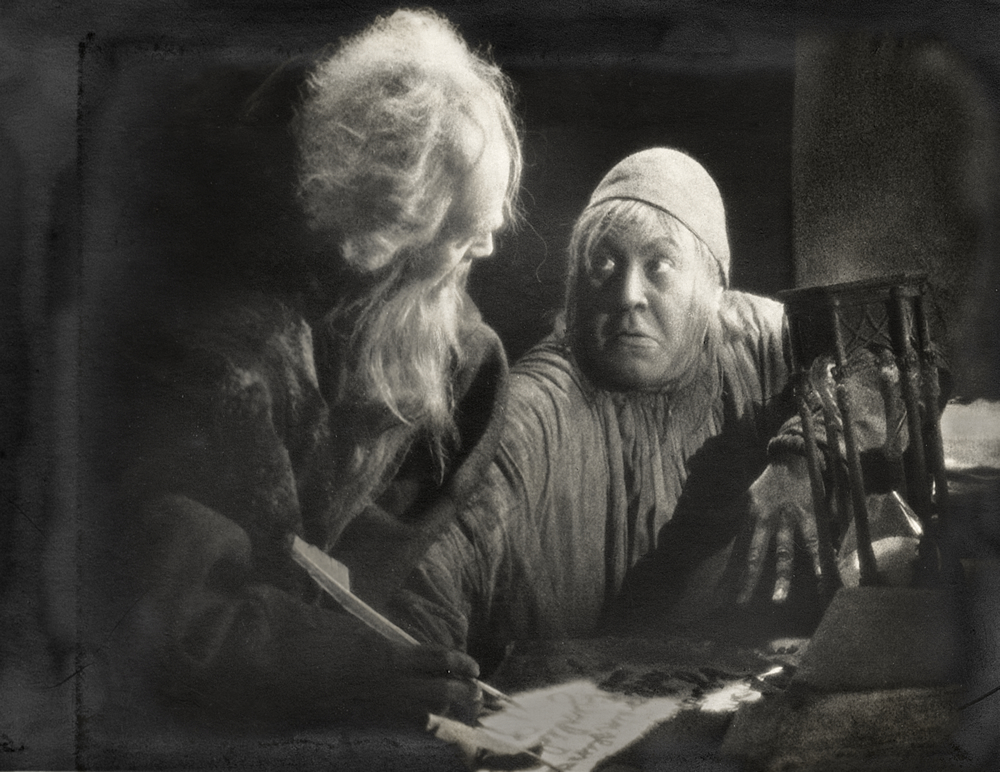
How the Original Album Is Organized
The internal arrangement of the Bible is one of its most informative features. According to the examination of the original object reported by Filmdienst, its contents are divided into four principal sections, using the headings Teil 1, Weltflug, Teil 2 and Rund um die Kurbel.
The first three sections primarily document the visual construction of the film. Drawings by Herlth and Röhrig appear alongside photographic records of the resulting settings and compositions. Some photographs were enlarged from Hoffmann’s original negative, while others show the actual studio constructions or activities surrounding their preparation.
The organization allows the relationship between planning and execution to be studied directly. A proposed arrangement of scenery and figures can be compared with the image eventually photographed, revealing which aspects of the initial design were retained and how lighting or perspective contributed to the final result.
The drawings were often too large to fit inside the Bible itself. Herlth therefore photographed them and mounted the reproductions within the album. This decision has acquired unexpected historical importance because many of the original drawings have subsequently disappeared.
The detailed archival reconstruction indicates that approximately 200 original production drawings once existed, but only around 35 survive as independent objects, largely through earlier preservation efforts associated with Eisner. The photographic reproductions mounted in the Bible thus preserve evidence of designs that might otherwise be known only through their appearance in the completed film.
The final section, Rund um die Kurbel, changes the emphasis. Its title refers to activity around the camera, and its contents include behind-the-scenes photographs and informal images of the production team. Such material documents the working environment as well as the technical equipment and scenic constructions used during filming.
The album therefore has more than one archival function. It preserves designs, provides a photographic record of their realization and documents the people responsible for that work. Its original organization also reveals how its compilers chose to represent their collective achievement to Murnau.
Herlth and Röhrig: When a Drawing Became a Film Image
The Bible offers particularly important evidence about the work of Robert Herlth and Walter Röhrig. Their scenic designs were central to the production’s elaborate environments, but they also influenced the arrangement of figures, lighting and camera viewpoints.
The drawings often incorporate actors directly into the proposed composition, placing performers within the planned architecture. This approach demonstrates that the designers were concerned with the final photographic image, including the scale and placement of human figures within the scenery.
The surviving pages make it possible to study a sequence of decisions beginning with the graphic proposal and ending with the photographed result. The design might establish the position of an architectural element, the direction of a shadow or the proportions of a supernatural figure. The cinematography then had to translate those relationships into an image through construction, exposure, lighting and camera placement.
In later accounts of the production, Herlth emphasized the precision with which Murnau expected the drawings to be realized. The director’s interest extended beyond building the required sets: the photographed composition had to reproduce the intended relationships between objects, bodies, darkness and illumination.
The archive gives this working method material substance. Comparing the drawings with their photographic counterparts allows researchers to examine the practical consequences of demanding that an image conform closely to its original design.
The collaboration was also rooted in established professional relationships. Herlth and Röhrig had worked together on earlier German productions, while Hoffmann brought extensive cinematographic experience. Their involvement in Faust demonstrates how ambitious visual effects depended upon the coordination of specialists who understood one another’s methods.
This is one of the Bible’s principal contributions to film history: it provides evidence for studying artistic authorship as a collaborative process without diminishing Murnau’s responsibility for the direction of the work.
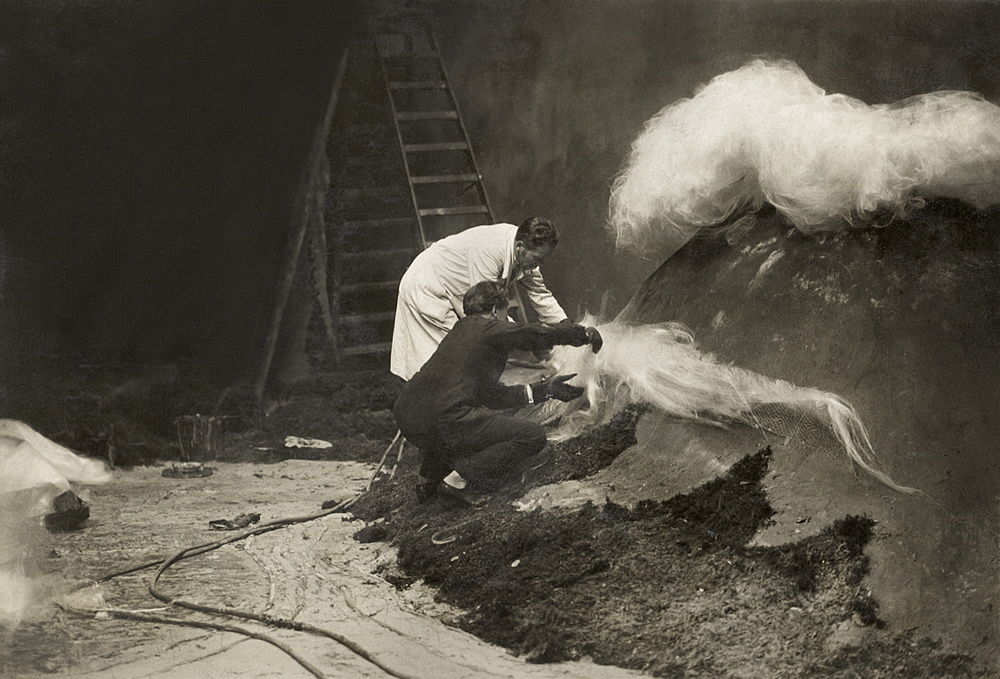
The Weltflug: How a Supernatural Flight Was Engineered
The most technically revealing section of the Bible concerns the Weltflug, or flight around the world. In the sequence, Faust and Mephistopheles appear to travel above an immense changing landscape, creating the impression of supernatural movement through environments far larger than the studio in which the images were produced.
The album preserves diagrams associated with the apparatus developed for the sequence. Historical accounts describe an arrangement involving a low wooden trolley travelling along a plaster ramp, conceived by Herlth and Röhrig after observing the unloading of a vehicle in the street.
The mechanism is an instructive example of silent-era special-effects engineering. Its significance does not lie in mechanical complexity alone, but in the way a controlled physical movement could be transformed through photographic composition into the impression of unrestricted flight.
In the finished image, the spectator experiences a movement through an apparently immense environment. The studio apparatus, however, had to operate within limited physical dimensions. The illusion depended upon the relationship between the moving elements, the scenic construction and the camera’s viewpoint.
The original drawings allow the technical arrangement to be examined instead of inferred solely from the finished footage. They indicate how the filmmakers conceptualized the movement and the physical relationship between components of the effect.
At the same time, the diagrams should not be treated as a complete record of every exposure, camera adjustment or photographic operation involved. The surviving evidence documents central elements of the solution, but it does not necessarily describe every stage of the process by which the final images were achieved.
This distinction makes the material valuable from a historical perspective. A photograph of an effect shows what the audience encountered; a diagram can explain part of the engineering that made it possible. Studied together, they help identify the practical decisions concealed within the finished illusion.
The 2026 publication gives the Weltflug material special attention through foldout reproductions of the technical drawings. Their expanded presentation allows the mechanical relationships to be examined at a scale better suited to research than the individual photographic reproductions found within the original album.
The sequence shows that the production Bible documents practical decisions made during filming. It preserves evidence about the process of constructing a moving image that could not be recovered with comparable precision through visual appreciation of the film alone.
The Faust Bible: How Murnau Made Magic — MUBI Documentary
On October 16, 2026, MUBI published The Faust Bible: How Murnau Made Magic, a short documentary directed by Amos Levin and Ben Porro. Produced in connection with the new archival edition, the film examines surviving drawings and production photographs associated with the Weltflug sequence.
The documentary is especially relevant because it examines the historical materials underlying the publication and the process of interpreting them. It supplies a visual introduction to the relationship between the diagrams and the effects they helped produce.
The Photographs of Hans Natge and the Working Conditions on Set
The surviving photographs associated with Hans Natge provide another kind of evidence. Unlike images enlarged from the completed film, these photographs document the production environment and the practical activities taking place around the camera.
They show technicians working with scenic constructions, performers between takes and the director interacting with collaborators. Such images are especially important given Murnau’s general reluctance to admit visitors or reveal the methods behind his filmmaking.
The informal material also includes photographs and collages that comment upon the production process. Some reflect the difficulties involved in determining the correct appearance or expression for a character. Others record the social life of the set, including moments outside the actual filming of a scene.
These records allow the working atmosphere to be examined without relying exclusively on later descriptions of Murnau’s personality. They demonstrate that the production involved extended practical preparation and collective experimentation, even if they cannot independently establish how every creative disagreement or decision was resolved.
The equipment visible in production photographs also provides information about the physical demands of filmmaking during the period. High-intensity carbon-arc and mercury-vapor lighting systems could produce substantial heat and uncomfortable working conditions. Contemporary accounts indicate that protective glasses and ventilation equipment were necessary during certain operations.
Such details matter because the visual effects documented in the Bible were created through the manipulation of physical environments under technically demanding conditions. The precision of the final images depended on the ability to reproduce lighting, control the appearance of scenic surfaces and maintain suitable working arrangements for performers and crew.
The photographs are therefore evidence of both technical practice and labor. They preserve aspects of the production that cannot be established by inspecting the projected image: the presence of equipment, the handling of materials and the participation of specialists working outside the frame.
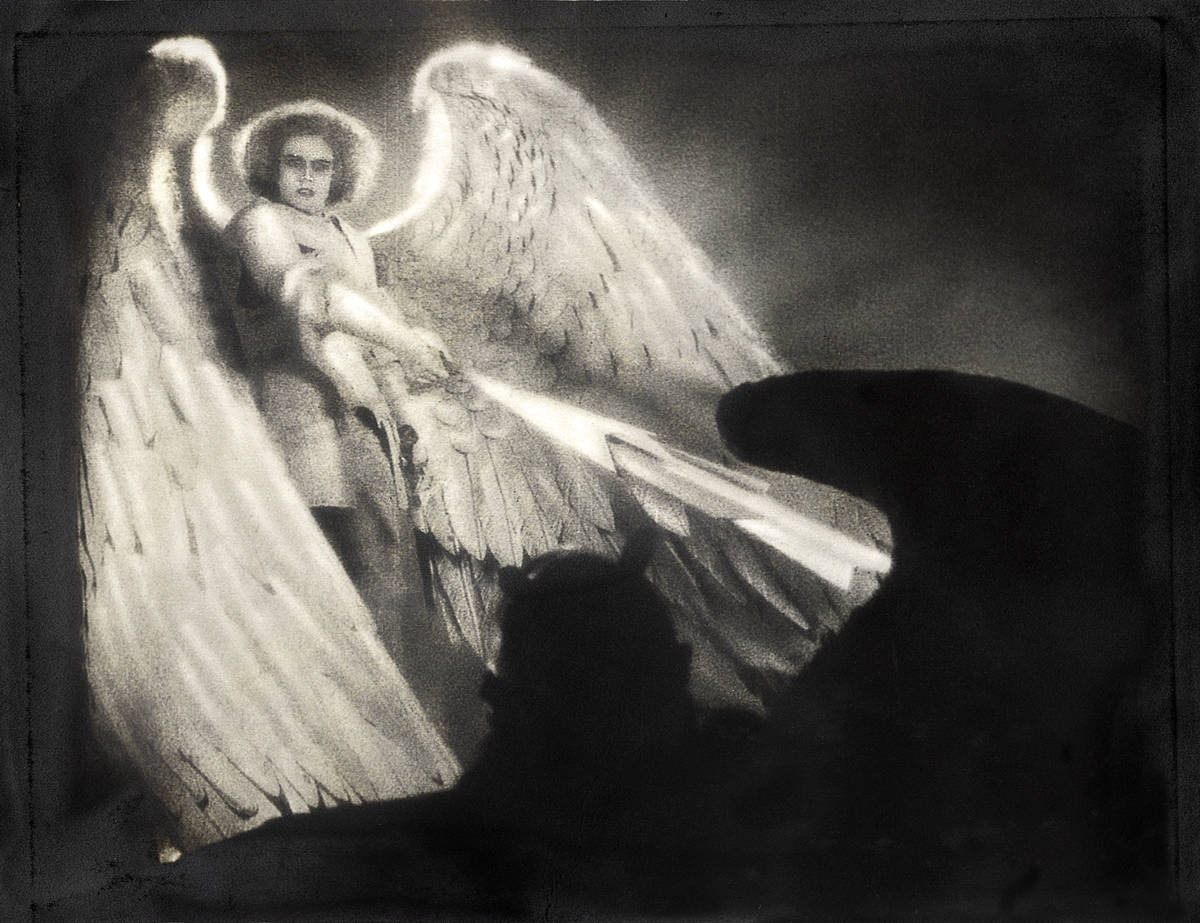
What Survives When the Original Drawings Do Not
One of the most significant consequences of the Bible’s survival concerns the loss of original production artwork. Drawings made during film preparation were frequently treated as temporary working materials. Their purpose was to guide construction or establish visual arrangements, and they were not always preserved after a production ended.
In the case of Faust, the surviving information indicates that many original drawings disappeared. The photographs mounted in the Bible can therefore preserve visual information no longer available through the original paper designs.
These photographic reproductions are not identical to the lost objects. A photograph may omit paper texture, annotations outside the frame or evidence of revisions. Nevertheless, it can retain the central composition, arrangement of figures and scenic relationships that defined the proposed image.
The Bible is particularly useful because it brings these reproduced drawings into proximity with photographs of the completed settings or shots. This arrangement offers a means of evaluating the relationship between preparation and execution even when the original artwork itself has been lost.
The collection also creates opportunities for comparing different kinds of surviving evidence. A drawing can be examined against a photograph of a set, an enlarged image from the original negative and the corresponding sequence in a surviving film print. Where these sources disagree, the differences may reveal revisions, photographic adjustments or alternative choices made during production.
Such comparisons require caution. The Bible is a selected commemorative record, not a complete inventory of every drawing or photograph produced during filming. The inclusion of a particular image demonstrates that its compilers considered it worth preserving, but the absence of other material cannot establish that it never existed.
The value of the archive consequently lies in the specific evidence it preserves and the comparisons it enables. It provides substantial new material for research while leaving room for unresolved questions about the full production process.
What the 2026 Edition Actually Reproduces
The new book published by MUBI Editions and the Cinémathèque française is designed to make the original collection accessible as both a visual archive and a historical research resource. The edition includes editorial explanations and reproductions that allow readers to examine details at a larger scale.
The edition incorporates essays by Laurent Mannoni, Stefan Drössler and K. J. Relth-Miller. Mannoni addresses the discovery and conservation of the Bible; Drössler contributes research on the film’s production history; Relth-Miller discusses its place within the continuing history of cinema.
Their work supplies important context for the photographs and drawings. Identifying the provenance of a document, establishing its relationship to a scene and explaining the function of a technical apparatus require evidence that is not always visible within the image itself.
The publication also incorporates quotations from relevant historical material, including screenplay passages and writings associated with the filmmakers. These documents help establish the circumstances in which particular visual ideas were developed and subsequently realized.
The distinction between the original album and the editorial publication remains important. The contents of the Bible are reproduced in full, but the enlarged images and redesigned arrangements make the new volume a research-oriented presentation whose format differs from the original artifact.
The inclusion of a reduced facsimile section allows readers to understand how the original material was arranged. This is essential because the album’s organization forms part of its history: its compilers selected, sequenced and juxtaposed images to represent their work to Murnau.
For the general reader, the new edition makes an inaccessible collection visible. For researchers, its greater value lies in making comparisons and detailed examination possible without repeated handling of a fragile original.
Why This Archive Matters Beyond the Film’s Centenary
The Faust Bible provides an unusually detailed example of how moving images can be planned through drawings, translated into physical constructions and realized through cinematography. Its historical importance rests on the survival of intermediate stages that document how the completed film was constructed.
The album allows the contributions of Herlth, Röhrig and Hoffmann to be examined alongside Murnau’s direction. This is particularly important for research into early special-effects practice, where the relationship between visual conception and technical execution is often obscured by the finished result.
Its provenance also demonstrates how precarious the survival of production documentation can be. An album created as a personal gift passed through wartime dispersal, private transactions and decades of uncertain custody before reaching an institution equipped to preserve it. The surviving record includes precise names and dates, but also gaps that archival research has not eliminated.
The October 2026 publication does not resolve every technical question about Faust. It provides a substantial new body of material with which those questions can be examined. The documentary images are valuable because they make specific claims about the production testable through comparison, while the annotated edition provides additional historical context.
Most importantly, the Bible demonstrates that the history of a film is not confined to its surviving prints. The drawings, photographs and documents created during production can preserve aspects of artistic and technical decision-making that the completed work does not disclose.
A century after its creation, the Faust Bible has moved from a private commemorative object to an institutional research collection and, finally, to a widely accessible publication. Its journey is an exceptional example of how the preservation of physical evidence can change the questions historians are able to ask about the making of cinema.
Sources and Original Documentation
- La Cinémathèque française — Official archival and publication documentation identifying the original album, its principal contributors, acquisition in 2017, conservation and complete reproduction in October 2026.
- Filmdienst — Philipp Stadelmaier’s detailed examination of the original artifact and Laurent Mannoni’s archival research, documenting its dimensions, March 24, 1926 dedication, 1961 sale, provenance and internal organization, October 2026.
- The Guardian — Pamela Hutchinson’s October 13, 2026 reporting on the album’s rediscovery, the work of Herlth and Röhrig, the photographic designs and the practical apparatus used for the Weltflug sequence.
- MUBI — Official October 16, 2026 documentary by Amos Levin and Ben Porro examining the original production drawings and special-effects engineering behind the flight around the world.
Leave a Reply