
HORROR STUDIES | FILM HISTORY | SLASHER CINEMA
The slasher film is one of horror cinema’s most recognizable forms, although it is also frequently misunderstood. Its history stretches from the suspense and murder films that preceded the genre’s formation to the commercial explosion of the late 1970s and early 1980s, the long-running franchises, the 1990s revival and the many directions taken by contemporary filmmakers. Along the way, changes in production, censorship, distribution, film technique and audience expectations shaped how these films were made and understood. The form extends beyond the simple formula of a masked murderer, a body count and a single survivor.
This study follows those changes from prewar thrillers to the modern slasher. It examines the people and production systems behind the films as closely as the familiar screen figures, distinguishing direct historical relationships from superficial similarities. Its subject is the development of an identifiable cinematic tradition, not a ranking of the deadliest killers or an exhaustive list of every film containing a knife.
A slasher typically organizes suspense around repeated attacks upon people who are threatened within a legible environment: a town, school, home, summer camp, workplace or remote gathering place. The attacker’s identity may be concealed, or it may become the film’s principal attraction; the violence may be implied, graphically staged or transported into a supernatural setting. These traits recur frequently, although individual films may omit them. Neighboring categories (giallo, serial-killer thriller, home-invasion horror, splatter film and survival horror) overlap without being interchangeable.
The distinction between an early antecedent, a film participating in the commercial boom and a later reinterpretation is essential. Describing the whole history as if it had always possessed the same rules would turn a varied, internationally circulating body of work into a checklist. The chapters below address filmmaking, industrial conditions and critical reception together, because no single dimension adequately explains how the slasher became a durable part of horror cinema.
Key turning points
FOUNDATIONS
Origins and Formation
Before the Slasher: Murder, Suspense and Early Cinema
The slasher was not invented by a single director on a single release date. Its familiar pattern (a vulnerable population, an attacker who controls when and where violence occurs, and a prolonged struggle for survival) was assembled from older forms of crime cinema, Gothic horror, melodrama and the murder mystery. These antecedents did not necessarily feature teenagers, graphic effects or franchise-ready masked killers. They established more fundamental questions: who knows where the murderer is, who is allowed to see the attack, and whether a home or familiar street can still function as a place of safety. Film history becomes misleading when every earlier appearance of a knife or anonymous assailant is retrospectively classified as a slasher. The relevant question is how particular narrative and visual methods became available to later filmmakers.
Alfred Hitchcock‘s silent The Lodger: A Story of the London Fog (1927), adapted from Marie Belloc Lowndes, builds suspicion around a possible serial murderer in an urban environment already governed by fear. Its emphasis falls on uncertainty, rumor and the interpretation of behavior, with relatively little attention to spectacular killings. Fritz Lang‘s M (1931) similarly treats serial murder as an event that reorganizes social life: institutions fail, the public becomes suspicious, and the hunt for a killer exposes the fears of an entire city. These films matter as histories of cinematic suspense and social anxiety, although neither supplies the complete later slasher formula. The distinction is important: the slasher would move many of these anxieties into smaller, increasingly confined spaces and attach them to immediately physical danger.
Jacques Tourneur‘s The Leopard Man (1943) offers another relevant route. Produced by Val Lewton, it makes prolonged anticipation of an attack more disturbing than an explicit view of what happens, using darkness, sound and a character’s inability to reach safety. Robert Siodmak‘s The Spiral Staircase (1946) places a murderer within a Gothic household and concentrates its suspense around a threatened woman attempting to escape. Both films suggest that the eventual slasher owes as much to the manipulation of access and duration as to the mechanics of killing. An ordinary journey home, a staircase, a door that will not open and the sense of being watched can organize terror long before the camera displays a weapon.
The distinction between a thriller about a murderer and a slasher cycle also depends on production context. In classic crime cinema, murder often initiates an investigation whose goal is explanation and resolution. In the later slasher, the attacks themselves increasingly determine the film’s rhythm. Spectators may know about the threat before the characters do, and the film can sustain interest by shifting attention toward who will survive, even when the murderer’s identity is already known. That shift was gradual and inconsistent. Some slashers remain mysteries, some reveal the murderer early, and many combine both modes. Studying the genre as a changing set of conventions helps explain its development across national cinemas.
Psycho, Peeping Tom and the Exploitation Tradition
The significance of Psycho (1960) lies partly in its willingness to rearrange what audiences expected from a mainstream thriller. Hitchcock invites identification with Marion Crane and then removes her from the narrative in a shower murder assembled through abrupt cutting, fragments of the body, music and implied contact. The knife appears violent without the sequence relying on sustained views of penetration. The effect also depends on a violation of domestic privacy: an ordinary motel bathroom becomes a trap. For later slashers, the lesson was that a killer’s arrival could destabilize an entire narrative and change the spectator’s relationship to danger, beyond the immediate shock of a murder.
Released the same year, Michael Powell‘s Peeping Tom approaches murder through cinema’s own apparatus. Its protagonist films the terror of women whom he kills, collapsing the distance between the camera as observer and the camera as weapon. The film anticipates later slasher debates about voyeurism and complicity, but its psychological structure differs from the anonymous stalker formula. Together Psycho and Peeping Tom demonstrate two contrasting possibilities: the murderer as the subject of an investigative revelation, and the act of watching as a central source of horror. Neither alone explains the subsequent American boom, yet both made crucial methods available to it.
A parallel history unfolded in lower-budget exploitation production. Herschell Gordon Lewis‘s Blood Feast (1963) and other early splatter films shifted attention toward the spectacle of bodily damage, using advertising that promised sensations unavailable in conventional studio productions. The work of the American independent sector, drive-ins, regional exhibition and grindhouse theaters helped establish a market for explicit violence as a selling point. Such films rarely resemble the mature slasher in every respect; the importance of exploitation cinema is the relationship it created between production cost, specialized publicity and an audience seeking shocks. Later filmmakers and distributors could draw upon that existing commercial grammar even when they retained classical suspense techniques.
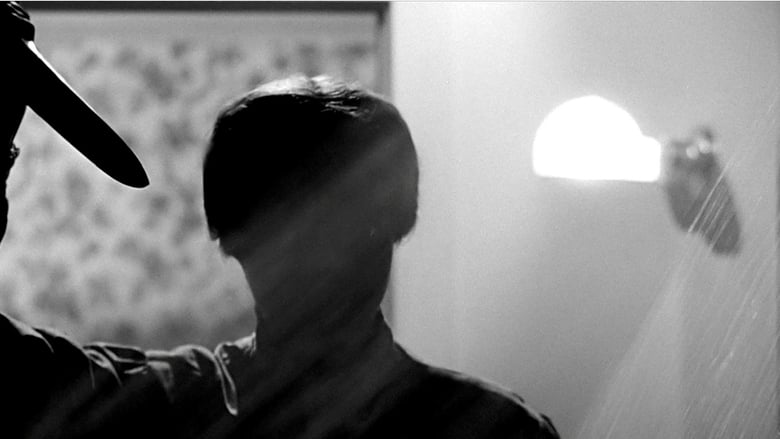
Another distinction concerns the serial killer as a recognizable antagonist. Psycho develops Norman Bates as a psychologically legible character within a specific dramatic puzzle. Later masked killers often become less accessible: their faces disappear, their motives remain fragmentary, and their movements are organized to frustrate realistic explanation. The passage from Norman Bates to Michael Myers or Jason Voorhees was therefore not a straightforward escalation of violence. It involved a change in how narrative attention was distributed among killer, victims and spectator, as well as a growing reliance on the repeatability of a distinctive screen figure.
Italian Giallo and the Architecture of Murder
Italian giallo cinema developed from a different industrial and cultural setting, combining popular mystery traditions, international co-productions, stylized photography and increasingly graphic murder sequences. Mario Bava‘s The Girl Who Knew Too Much (1963) supplies an early model of the amateur witness caught in a murderous intrigue, while Blood and Black Lace (1964) gives extraordinary visual prominence to a masked, black-gloved killer moving through a fashion house. Its murders are staged as discrete attractions, differentiated through color, architecture, objects and the physical vulnerability of victims. The mystery matters, but the film repeatedly suspends investigation to create elaborate sequences of stalking and attack. This dual organization would prove productive for later filmmakers well beyond Italy.
Dario Argento‘s The Bird with the Crystal Plumage (1970) revitalized the form by treating perception itself as unreliable evidence. A witness sees an attack yet misunderstands what he has observed, and the camera continually raises questions about looking, knowledge and interpretation. Argento’s Deep Red (1975) develops the approach through architectural spaces, violent set pieces and music. Sergio Martino‘s Torso (1973) is particularly relevant to slasher history because its later movement toward an isolated rural location and a small group threatened by a killer approaches the spatial logic that would characterize numerous North American films. These works followed Italian thriller conventions, including investigation and deception; their relationship to later American slashers is one of influence and overlap.
Bava’s A Bay of Blood (1971) is an indispensable case because its series of murders in a lakeside landscape resembles the subsequent campsite cycle. Yet its plot centers on conflicting interests in land and inheritance, giving the violence motivations distinct from those often associated with later teenage slasher narratives. The resemblance is therefore simultaneously formal and unstable. Film scholar Adam Lowenstein‘s study of A Bay of Blood and Friday the 13th emphasizes the significance of landscape and spectatorship, showing why the connection deserves more than an assertion that one movie copied another. The natural environment in both films becomes a resource for concealment and a space reorganized by bodies, weapons and movement.
The influence of the giallo should also be understood through circulation. English-language releases, retitled imports, festival and exploitation bookings, professional networks and the experience of filmmakers exposed audiences to imagery and procedures traveling across borders. Individual borrowings may be visible without every direct line of influence being documented. North American slashers generally reduced the giallo’s investigative complexity and placed greater emphasis on the survival of a threatened group. Canadian productions, however, often retained its whodunit structure. Treating giallo and slasher as interacting traditions better describes the evidence than depicting one as a primitive form waiting to be perfected by the other.
American and Canadian Horror Before Halloween
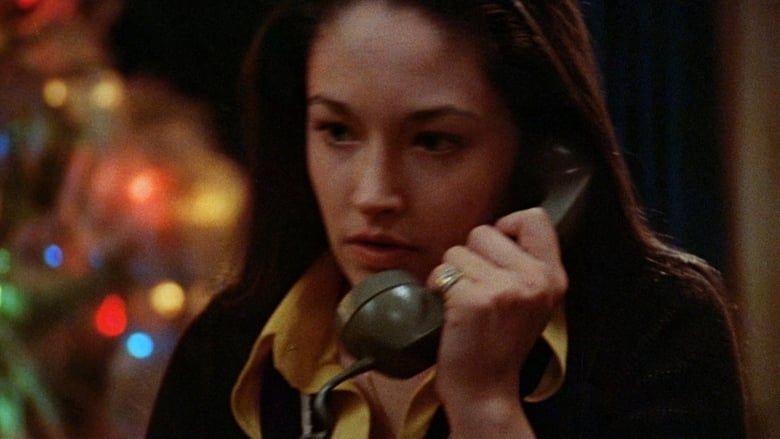
Several productions of the 1970s assembled slasher elements before the commercial breakthrough of Halloween. Bob Clark‘s Canadian Black Christmas (1974) is among the most important. An unseen caller terrorizes women living in a sorority house while institutional efforts to locate him remain ineffective. The film uses threatening telephone calls, an ordinary domestic interior and subjective shots that withhold the assailant’s identity. More strikingly, the danger is not something that must enter from a distant wilderness: the building itself contains the threat. The Christmas setting provides a sharply legible seasonal identity without resolving the story into moral reassurance. Jess’s efforts to make decisions about her own future also complicate reductive accounts of early slasher heroines.
Tobe Hooper‘s The Texas Chain Saw Massacre (1974) followed a different trajectory. Its family of killers, rural location, industrial textures and relentlessly physical pursuit are difficult to fit into a definition based on a solitary masked murderer. Nevertheless, the film decisively expanded the repertoire of confined locations, improvised weapons, exhausted protagonists and extended chases. Its violence is remembered as exceptionally graphic, although implication, editing and sound account for much of its effect. The film’s importance to slasher history is therefore substantial even if it sits at the border between slasher, survival horror and the rural nightmare. Leatherface became an enduring icon through a production whose narrative logic remained notably different from the later suburban template.
Silent Night, Bloody Night (1972), Alice, Sweet Alice (1976) and The Town That Dreaded Sundown (1976) illustrate the diversity of the transition. The first uses an inherited house and family secrets; Alfred Sole‘s Alice, Sweet Alice incorporates Catholic imagery, family grief and an apparently disguised murderer; Charles B. Pierce‘s film invokes a series of murders associated with Texarkana and adopts a quasi-documentary frame. These films do not all belong to one coherent movement, but each makes the recurring attack a central narrative problem. The serial killing becomes connected to places burdened with earlier histories, an idea that would soon become one of the slasher’s most reusable devices.
The immediate pre-Halloween field included The Toolbox Murders (1978), while Tourist Trap (1979) and When a Stranger Calls (1979) demonstrate the genre’s rapid diversification around the same period. Tourist Trap combines stalking with mannequins and apparently supernatural abilities; When a Stranger Calls extends the threat of anonymous telephone contact from the domestic interior into a psychological thriller. The dates matter: not every film discussed as part of the genre’s development preceded Carpenter’s release. What links these titles is an active period of experimentation in which suspense, exploitation violence, murder mystery and the vulnerability of everyday places were beginning to converge.
THE BOOM
The Golden Age, 1978–1984
Halloween and the Commercial Breakthrough
John Carpenter‘s Halloween (1978), co-written and produced by Debra Hill, crystallized a commercially repeatable arrangement of familiar elements. A murderer identified with childhood violence returns to a quiet Illinois town; teenagers pursue ordinary activities while an attacker watches their movements; and a young babysitter, Laurie Strode, struggles to survive. The film’s apparent simplicity reflects careful construction. It establishes the geography of a neighborhood, transforms doorways and windows into potential entry points, and allows the killer to inhabit the edges of shots before the characters register him. Michael Myers’s pale mask suppresses expression and converts an individual criminal into a persistently unreadable presence.
The film is frequently remembered for its point-of-view opening, but Carpenter’s strategy quickly becomes more complex. Shots that seem to align the audience with Michael alternate with scenes built around Laurie’s growing awareness and periods when the killer is visible behind an unsuspecting figure. Dean Cundey‘s cinematography and Carpenter’s spare score create a relationship between what can be seen and what is about to be revealed. The piano motif’s recurrence trains spectators to associate certain rhythmic patterns with approaching danger. Many later imitations copied the mask, the holiday and the teenage victims without achieving this degree of control over off-screen space.
The presence of Debra Hill is central to the production history and to the film’s depiction of its young women. Laurie, Annie and Lynda have distinct personalities shaped by their friendship, responsibilities and attitudes toward dating. The film’s sexual politics remain open to argument: viewers can interpret the order of deaths as moral judgment, but correlation between sexual behavior and victimization does not establish that the story articulates a consistent code of punishment. Laurie is constructed through alertness, empathy and quick decisions as much as through any supposed virtue. The screenplay’s domestic detail makes the ordinary suburban setting convincing before it becomes threatening.
What Halloween changed most decisively was the industry’s understanding of the market. Produced independently and released through a distribution strategy that allowed attention to build, it demonstrated that a comparatively inexpensive horror film with a distinctive title, recognizable villain and strong atmosphere could reach a broad audience. Produced for an estimated $325,000, Halloween earned approximately $47 million at the North American box office over its theatrical runs, according to figures compiled by Box Office Mojo. These figures represent gross ticket receipts, not the producer’s net return; the comparison nevertheless explains the attention paid to the film’s unusually low production cost. Its success encouraged producers to seek properties defined by a memorable occasion or location and an easily communicated threat. It also became a model for sequels, although the original’s ambiguous conclusion was not itself a detailed franchise plan. The slasher existed before 1978; after Halloween, the possibility of reproducing it as a commercially legible cycle became much more visible.
Friday the 13th and the Independent Slasher Economy
Sean S. Cunningham‘s Friday the 13th (1980) adopted the seasonal-title logic of Halloween but reorganized the experience around a summer camp and the promise of increasingly conspicuous killings. Camp Crystal Lake is an efficient dramatic machine: a group arrives to reopen a site associated with an earlier tragedy, isolation delays assistance, and the surrounding woods permit the murderer to approach from different directions. The backstory gives the violence a motivation connected to a particular location while allowing the film to function for long stretches without explaining who is responsible. Its success made the commercial principles of the burgeoning cycle difficult for distributors to ignore. The 1980 film cost $650,000 to produce, according to the American Film Institute and The Numbers, and grossed about $39.75 million in the United States and Canada. Paramount’s involvement was important: a project manufactured on independent-film economics reached a national theatrical market. Box-office receipts should not be confused with profit, since exhibitors, marketing and distributors also took shares of revenue.
Tom Savini‘s makeup effects marked a significant difference from Carpenter’s comparatively restrained use of on-screen gore. Savini had already attracted attention for Dawn of the Dead (1978), and his effects work on Friday the 13th made individual death scenes central attractions. The mechanics matter. Prosthetic heads, hidden appliances, fake blood, editing and carefully chosen camera angles provide the appearance of injuries that cannot safely occur on set. In a production environment where budgets were limited, one unusually memorable scene could become a disproportionately important element of a film’s reputation. The spectacle of death increasingly helped distinguish one release from another within a crowded market.
The franchise’s later identity can easily distort the original film. Jason Voorhees is essential to the mythology but is not the principal murderer of the 1980 story. Pamela Voorhees, played by Betsy Palmer, provides its climactic revelation. Jason takes center stage in Friday the 13th Part 2 (1981), while the hockey mask now associated with him appears in Friday the 13th Part III (1982). The gradual formation of this icon demonstrates how a sequel cycle can reorganize the meaning of its own beginnings. What became a seemingly immutable image was assembled across successive productions, responding to audience recognition, merchandising possibilities and the need to differentiate new installments.

The industrial cycle was larger than one studio property. Independent producers exploited relatively contained locations, young ensembles, specialized makeup work and promotional titles that conveyed the premise at once. Holiday dates offered a ready-made advertising device, as did summer camps, graduation ceremonies and other spaces where groups gathered predictably. Theaters and distributors could sell an experience through posters and trailers without committing to expensive stars or elaborate world-building. Yet the low-budget model had limits: distribution expenses, ratings decisions, regional performance and strong competition meant that a slasher’s apparent simplicity did not guarantee profitability. The history of the boom is a history of financing and exhibition as much as one of screen violence.
Production statistics make the boom more tangible, provided the boundaries of the category are kept visible. One industry history reports approximately 35 American horror pictures produced in 1979, 70 in 1980 and 93 in 1981; these figures cover horror as a whole, not slasher films alone. Dartmouth College’s genre guide, using a narrower film classification, notes more than 20 slasher titles released in the United States between 1978 and 1981. The figures should not be combined into a supposed annual slasher tally: classifications vary, and production year, copyright year and first theatrical release do not always coincide. What the numbers establish is a sharp expansion in the broader production environment and a substantial early slasher cycle within it. For a precise year-by-year slasher count, a consistently defined and audited filmography would be required.
The Canadian Slasher Cycle
The prominence of Canadian productions is one of the most important correctives to a purely Hollywood-centered account. Building upon Black Christmas, films such as Paul Lynch‘s Prom Night (1980), Roger Spottiswoode‘s Terror Train (1980), George Mihalka‘s My Bloody Valentine (1981), J. Lee Thompson‘s Happy Birthday to Me (1981) and Richard Ciupka‘s Curtains (1983) formed a substantial body of work aimed at audiences on both sides of the border. Their settings and marketing often appeared generically North American, but their production histories were shaped by Canadian locations, crews and funding conditions. The country’s tax-shelter era encouraged private investment in commercial filmmaking, including thrillers and horror, within a broader policy environment that did not always produce the national cinema its architects had envisioned.
It is tempting to treat these films as interchangeable imitations of Halloween, but their structures vary considerably. Prom Night associates a high-school dance with an earlier death and uses the preparation for a public event to keep suspicion moving among possible culprits. Terror Train, with Jamie Lee Curtis, relocates its masquerade and revenge plot to a moving train, turning a celebratory excursion into a sequence of compartments and controlled passages. My Bloody Valentine places the story in a mining community where industrial labor, local history and an abandoned mine affect every stage of the pursuit. These are not cosmetic changes: each location determines which characters may circulate, who possesses knowledge and how the final chase can operate.
Happy Birthday to Me extends the whodunit tendency through an elite school social group and a labyrinthine explanation of identity and memory. Curtains moves into a performance setting, confronting actresses with competitive casting, theatrical manipulation and a memorable masked assailant. Film scholar Mikel J. Koven has argued that the Canadian slasher frequently retains particularly strong affinities with the Italian giallo: disguised identity, unreliable evidence, sexualized murder, amateur detection and a playful relation between clues and spectacle. The national cycle therefore complicates the assumption that North American slashers necessarily simplified European models in the same way.

The Canadian industry also illuminates how transnational horror was manufactured. Productions could use Canadian tax provisions and personnel, recruit internationally recognizable performers, and seek American distribution under titles and publicity presenting them as part of the wider genre boom. A film’s cultural identity cannot be established only from its fictional setting or the accents heard on screen. The Canadian cycle deserves treatment as a production phenomenon with its own stylistic tendencies and industrial pressures, not a footnote appended to a story in which all innovation supposedly occurred in the United States.
The Golden Age Beyond the Major Franchises
The early 1980s produced far more than the installments of Halloween and Friday the 13th. Joseph Zito‘s The Prowler (1981) places an attacker in military-style clothing within a graduation-related revenge plot, and its reputation owes much to Savini’s elaborate effects. Tony Maylam‘s The Burning (1981) combines a campsite setting with an urban-legend figure, Cropsey, while giving its ensemble a different social texture from the more mechanically structured Friday the 13th. Tobe Hooper’s The Funhouse (1981) transforms a carnival attraction into an enclosed setting in which teenagers discover that spectacle and genuine danger are no longer distinguishable. Each film shows how producers adapted the basic format to established regional locations and adjacent horror traditions.
Other productions tested the limits of the slasher’s minimalism. Final Exam (1981) reduces the explanatory burden placed on the killer, emphasizing the arbitrary violation of a campus; The House on Sorority Row (1982) constructs its violence around a prank and a concealed death; The Mutilator (1984) draws on tensions between fathers and sons before moving toward the familiar beach-house isolation. Juan Piquer Simón‘s Spanish-American Pieces (1982) embraces the most aggressively lurid possibilities of the murder mystery and splatter tradition. The variations make the cycle more interesting than its reputation for repetition implies: certain films foreground detection, others a terrifying setting, others corporeal damage, and still others the consequences of secrets shared by a group.
The year 1983 provides an especially revealing cross-section. Sleepaway Camp uses summer-camp routines and hostile peer relationships to organize its violence, while its sensational ending has generated enduring debate about gender identity and the film’s manipulation of the viewer. The House on Sorority Row reached audiences amid a crowded field, and other releases increasingly depended on distinctive publicity. By 1984, titles such as Silent Night, Deadly Night used holiday iconography in ways that provoked controversy, while The Initiation offered another example of the sorority environment as a space of secrecy and inherited trauma. The existence of dozens of comparable releases did not prevent unusual experiments, but it created intense pressure to appear instantly recognizable.

Many of these films are now encountered through restored editions, collector labels and retrospective festival screenings. Their historical importance should not depend on whether subsequent cult communities regard each as a masterpiece. Minor releases expose the production habits, recurring crew skills, forms of advertising and variations that are obscured when the history is reduced to four famous villains. They also demonstrate the instability of the category: Maniac (1980), for example, is an urban character study centered on a killer, with a structure distinct from the classic teen-group mystery, but its technical violence and distribution belong to the same commercial conversation. A careful history must examine these overlaps without pretending that all films had identical goals.
A Nightmare on Elm Street and the Supernatural Slasher
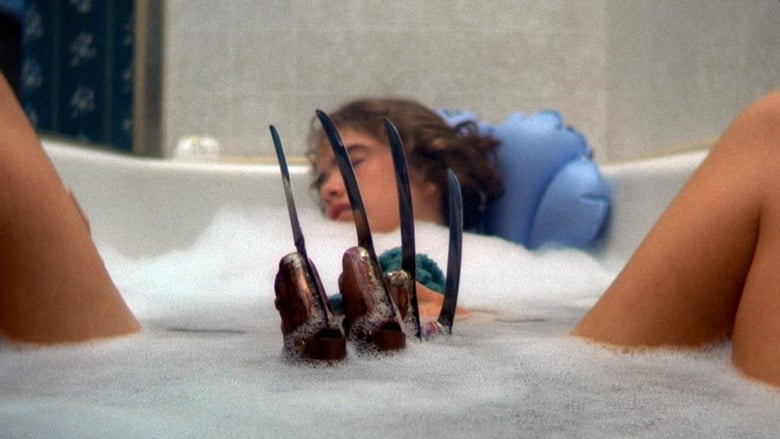
Wes Craven‘s A Nightmare on Elm Street (1984) arrived when the slasher’s commercial conventions were widely recognizable. Its central innovation was to make the killer’s territory impossible to avoid through ordinary physical precautions. Freddy Krueger attacks teenagers in their dreams, where geography can change without warning and injury carries consequences into waking life. A bedroom, school corridor or boiler room can cease to obey the laws that appear to govern it. The film therefore extends the slasher’s established concern with threatened domestic space into a more elaborate design of unstable reality. Nancy Thompson survives by investigating the threat and attempting to impose a practical plan upon something that resists practical explanation.
Freddy also differs from Michael Myers and the early Jason in his visibility and verbal personality. Robert Englund‘s performance, the burned makeup and the glove of blades give the figure a theatrical identity. Subsequent films increasingly exploited that personality through dialogue, stylized dream murders and promotional appearances. The franchise’s evolution reveals one of the industry’s central tensions: the more appealing the killer becomes as a marketable character, the harder it can be to maintain the original balance between victim-centered suspense and antagonist-centered spectacle. The audience may come primarily to watch Freddy devise a new display of cruelty, even though the narrative formally asks it to fear him.
The technical demands of dream violence encouraged variations in practical effects, mechanical staging, optical work and set design. Craven’s film is often described as a supernatural slasher, but it also has affinities with fantasy horror and adolescent nightmare cinema. Its success helped expand the acceptable range of the form at a moment when straightforward masked-killer plots were becoming familiar. The slasher need not be realistic, nor must its attacker remain silent. What survives the transformation is the structure of vulnerability: young people are selected, apparently safe places become dangerous, and one protagonist gradually learns how to survive an attacker whose rules everyone else misunderstands.
The broader mid-decade evolution included Child’s Play (1988), which brings serial-killer violence into the uncanny figure of a possessed doll, and later attempts to combine slashers with the supernatural, comedy or science fiction. Whether these works are classified strictly as slashers depends on the weight given to stalking, repeated individualized attacks and survival. A Nightmare on Elm Street is a landmark precisely because it made that definitional discussion unavoidable while retaining the genre’s recognizable dramatic organization.
FORM AND CONFLICT
Film Language, Authorship and Controversy
The Killer, the Final Girl and the Audience
The slasher is frequently described through recognizable characters: the masked killer, the sexually adventurous friend, the skeptical adult, the victim who separates from the group and the woman who survives. These figures are useful analytical shorthand, but they are not laws governing every entry in the genre. A slasher narrative distributes knowledge unevenly. The killer often knows routes, schedules and vulnerabilities that the victims do not, while spectators may see an approaching figure before anyone on screen does. That disparity generates suspense independently of the number of murders shown. Film historian and theorist Carol J. Clover‘s Men, Women, and Chain Saws (1992) gave this structure an enduring critical vocabulary, especially through the concept of the Final Girl.
Clover identifies a frequently recurring survivor who notices the danger, investigates, resists and eventually confronts the murderer. The concept challenged the assumption that an audience for violent horror could identify only with the aggressor. Laurie Strode in Halloween, Alice in Friday the 13th and Nancy Thompson in A Nightmare on Elm Street follow different dramatic routes, but all require the spectator to experience vulnerability and then survival through a threatened protagonist. The label can become misleading when applied retrospectively as a fixed personality type: the women’s sexuality, relationships, intelligence and choices vary, and some films offer male survivors, groups of survivors or endings that refuse an uncomplicated victory.
Sex and morality remain central to arguments about the genre, in part because numerous films place murder after scenes of intimacy or drug use. These patterns are observable, but they do not establish a single meaning. In some films, sexual activity functions as a practical reason for characters to separate from companions; in others, it provides an opportunity for voyeuristic display or implies social anxiety about youth behavior. Violence against women must be considered alongside the frequent destruction of male characters and the prominence of women as narrative centers. A historically responsible reading distinguishes a film’s repeated actions, the publicity used to sell it and the interpretations viewers later constructed. Simplifying the cycle into a universal warning against sex obscures important differences among its productions.
The masked killer has a similarly variable function. Michael Myers seems largely indifferent to ordinary psychological explanation, while Pamela Voorhees has a specific grievance and the murders of many Canadian thrillers depend upon concealed identities or earlier betrayals. Freddy Krueger possesses an aggressively performative character, and the killer in Scream can be more than one person using the same costume. Masks, uniforms and costumes can remove individuality, generate suspense or make an identity available for reproduction across films. The audience’s relation to those figures changes when the killer becomes the chief advertising attraction: a frightening unknown can gradually become a familiar figure anticipated with enthusiasm. This contradiction has influenced the slasher’s sequels, fan cultures and arguments about screen violence from its inception.
Filmmaking Techniques, Music and Practical Effects
The characteristic slasher sequence is constructed through control of time and space. A director establishes an environment with recognizable exits, obstacles and routes, then begins withholding information about which pathways remain safe. Point-of-view photography can briefly associate the spectator with an approaching attacker, but the form also relies on reverse angles, empty frames, interrupted sightlines and the delayed discovery of a body. Halloween often sustains a composition long enough for viewers to scan its background. The Burning uses open water and forested areas to turn recreational space into a network of hiding places. Terror Train rearranges suspense through corridors and locked compartments. These examples show how much slasher suspense depends on visual design, not just the familiar shot through the killer’s eyes.
Editing controls the difference between violence imagined, anticipated and explicitly shown. The shower murder in Psycho made fragments seem continuous, while Carpenter could use a modest number of graphic images because his film had already established a relationship between sound and off-screen danger. Early-1980s productions increasingly promised visible injury as an attraction and required effects scenes to be carefully timed. A prolonged wait followed by an abrupt cut, a cut before contact, and the sudden revelation of prosthetic damage are distinct strategies, even when all conclude with the death of a character. The rhythm of these decisions determines whether a scene is experienced as suspense, shock or the exhibition of craftsmanship.
Music was equally important to the genre’s identity. Carpenter’s repetitive, electronically oriented Halloween score uses an insistent pattern to supply continuity between scenes and cue the proximity of danger. Harry Manfredini‘s music for Friday the 13th includes a distinctive vocalized motif that functions as an auditory signature, while Charles Bernstein‘s A Nightmare on Elm Street score links threatening textures to the instability of dream space. Films often interrupt music to expose footsteps, breathing, a telephone or the apparently reassuring noise of ordinary life. Silence and the absence of a cue can be as carefully designed as the cue itself. The slasher’s soundtracks shaped the interpretation of images that, without their accompanying sound, might appear far less alarming.
Practical makeup and mechanical effects supplied another form of authorship. Tom Savini’s work on Friday the 13th, The Burning and The Prowler established an influential standard for staging injuries with latex appliances, prosthetics, rigs and editing. Other specialists were directly tied to the series: Kevin Yagher created or developed Freddy Krueger makeup and effects for A Nightmare on Elm Street 2: Freddy’s Revenge (1985) and Dream Warriors (1987), worked on Freddy’s makeup for The Dream Master (1988), and designed and executed the Chucky doll for Child’s Play (1988). John Carl Buechler, a practical-effects specialist who also directed Friday the 13th Part VII: The New Blood (1988), is listed in the AFI credits for that film as “Line prod, Spec make-up eff unit” (special makeup effects unit). The AFI separately credits him as “Des/Supv, Magical Media Industries, Inc.” for Halloween 4 (1988). These assignments illustrate how effects specialists moved between franchise productions and, in Buechler’s case, direction itself. The results depended on collaboration among effects crews, cinematographers, performers, directors and editors; no prosthetic could achieve its intended effect without an appropriate shot and performance. Later digital methods changed that workflow but did not eliminate the value of precisely planned physical spectacle. Modern filmmakers often use practical effects as both an aesthetic choice and a statement of continuity with the 1980s tradition.
Women Filmmakers and the Politics of Slasher Cinema
A history focused only on male directors and male killers misrepresents the labor that shaped the genre. Debra Hill’s role as co-writer and producer of Halloween is fundamental to its development, including the interactions and everyday concerns of the teenagers at its center. In a period when exploitation films were frequently marketed through images of threatened women, women also wrote, produced, directed and edited the material. Their contribution requires more careful treatment than isolating a handful of films as rare exceptions to an otherwise wholly masculine form. Production histories provide the evidence needed to assess interpretations of a film’s apparent politics.
Amy Holden Jones‘s The Slumber Party Massacre (1982), written by Rita Mae Brown, is an especially revealing production. Brown’s project developed from an explicitly satirical approach to slasher conventions, while the finished film emerged within Roger Corman‘s low-budget exploitation environment and combines jokes with recognizable scenes of stalking, sexualized looking and violence. The power drill carried by the killer has prompted sustained interpretations of the film’s treatment of masculinity. Yet the film’s commercial requirements, shooting limitations and negotiation between satire and market expectations are as important as any symbolic reading. The American Film Institute’s historical production notes document the constraints and decisions involved in Jones’s directorial debut.
The series expanded through Deborah Brock‘s Slumber Party Massacre II (1987), whose guitar-drill killer pushes the formula into self-conscious fantasy and rock-musical excess, and Slumber Party Massacre III (1990), directed by Sally Mattison from a screenplay by Catherine Cyran. Carol Frank‘s Sorority House Massacre (1986) developed another Corman-associated variation, joining attacks within a female residence to traumatic memories. These productions demonstrate a more complicated relationship between women filmmakers and the slasher than a simple split between conventional exploitation and conscious subversion. Humor, commodity expectations and critical inquiry can coexist in the same film, sometimes awkwardly.

The critical reassessment of this material also raises questions about whose work has been preserved and remembered. Male special-effects artists and killer performers often became recognizable names through conventions and home-video publicity; writers, editors and producers have not always received comparable attention. Later films such as Sophia Takal‘s Black Christmas (2019) and the 2021 Slumber Party Massacre revisit the tradition from explicitly contemporary positions. Evaluating these works demands attention to both their formal achievements and the political language of their production and publicity. The most useful history does not presume that a woman-directed slasher is automatically feminist, nor that a film presenting violence against women can contain no meaningful critique of gendered power.
Censorship, Moral Panic and the Home Video Market
The success of slasher cinema brought it into direct conflict with rating bodies and public arguments about violent entertainment. In the United States, filmmakers seeking a commercially viable theatrical classification had to negotiate the scrutiny of the Motion Picture Association’s ratings system. Particular sequences could be shortened, re-edited or removed, and different territories sometimes received different cuts. This affected the visibility and rhythm of effects set pieces and complicates contemporary comparisons between theatrical editions and restored releases. A film remembered for an infamous death may circulate in versions where the shot itself lasts only moments or disappears. The relationship between the finished movie and the advertised promise of brutality was consequently shaped by regulatory decisions as well as artistic choices.
The reaction also developed in public criticism outside the formal ratings system. In a September 1980 edition of the television programme Sneak Previews, Gene Siskel and Roger Ebert examined the emerging cycle under the label “Women in Danger”. They objected to films that appeared to align audience identification with attackers and to use the suffering of young women as entertainment. Their treatment grouped productions with significant differences in style and intent, explicitly praising Halloween for the agency of its heroine while objecting to more exploitative films. The broadcast became an influential public articulation of anxiety about slashers, not a formal censorship ruling. It also belongs alongside the later scholarly debate about spectator identification: a camera angle associated with a killer does not by itself establish that every viewer endorses the killer’s actions.
The problem was not limited to explicit gore. Halloween provides an illuminating counterexample: the British Board of Film Classification records how it received an adult cinema classification in its original UK release without cuts, while later reconsideration led to a lower age rating. The film’s capacity to create anxiety through restricted imagery and anticipation complicates the idea that screen violence can be measured simply by the quantity of blood. The controversy around Silent Night, Deadly Night (1984) supplies a documented case of pressure reaching distribution. Protests followed television advertisements presenting a killer in a Santa Claus costume; some commercials aired during daytime hours, according to the American Film Institute’s reconstruction of contemporary trade reports. TriStar stopped running the television advertisements on 8 November 1984, the day before release. The film nevertheless opened on 9 November and remained in selected cinemas before TriStar withdrew it from most theaters after approximately two weeks, also cancelling planned bookings in other regions. TriStar cited poor box-office performance as its reason for withdrawal. The offense taken at a film could emerge from marketing, religious or family expectations as much as from a precise description of what happened on screen.
The British video-nasties controversy became a separate but interconnected history. The early video market made available unclassified horror, exploitation films and versions that had not passed through the same procedures as theatrical releases. Press campaigns, police seizures and political intervention culminated in the Video Recordings Act 1984 and a new framework for classification of home-video releases. The label ‘video nasty’ was not a synonym for slasher: it was applied to a varied collection encompassing cannibal cinema, rape-revenge, supernatural horror and other exploitation forms. The distinct Section 3 seizure-and-forfeiture material should also be kept separate from the cumulative DPP list, since the legal procedures and outcomes were not identical. Treating the controversy as exclusively a reaction to masked-killer films would misrepresent both its legal circumstances and the titles involved.
Videocassettes nonetheless transformed the slasher’s economics and afterlife. Smaller productions could reach viewers who had never encountered them in cinemas, while familiar titles could remain in circulation after their initial theatrical window. Cover art, lurid taglines and rental-store shelving created new conditions of discovery, sometimes elevating films that had made little impact on their first release. The format also fostered collecting, comparison of alternate cuts and the gradual development of cult reputations. Later DVD, Blu-ray and restoration markets continued this process by presenting films with archival material, interviews and reconstructed versions. The existence of a film as a contemporary collector’s item should be understood as part of its reception history, not proof that it originally held the status it now enjoys.
TRANSFORMATIONS
Saturation, International Circulation and Revival
Sequels, Saturation and the Late-1980s Slasher
By the mid-1980s, the commercial identity of the slasher had changed. Early films often sold the experience of encountering a threatening unknown; successful sequels increasingly sold the return of a known antagonist. The Friday the 13th, Halloween and A Nightmare on Elm Street cycles established differing strategies for maintaining continuity. Halloween III: Season of the Witch (1982) famously attempted an anthology direction without Michael Myers, while later films returned to him. Jason became a visually standardized figure across successive Friday the 13th installments, even as the narrative offered new explanations for his apparent indestructibility. Freddy increasingly combined elaborate makeup, jokes and unreal dream environments. Each strategy revealed the difficulty of generating variation from a formula rooted in repetition.
Films made outside the principal franchises also responded to saturation. April Fool’s Day (1986) uses the expectation of a body-count mystery as the foundation for its narrative trick; StageFright (1987) draws on theatrical performance; Intruder (1989) relocates violence to an after-hours supermarket, turning everyday shelves and equipment into obstacles and weapons. Maniac Cop (1988) incorporates police corruption and urban action-thriller elements into the masked-killer tradition. These examples show that the late decade was not solely a period of exhaustion. It was also a period in which the form sought new spaces, narrative jokes and hybrid genres. But the proliferation of releases made distinction increasingly difficult for exhibitors and audiences.
Economic changes were uneven. Some sequels retained a loyal theatrical audience, while other productions reached viewers primarily through video. The genre’s apparent decline at the close of the decade does not mean that slasher films disappeared. It indicates that the spectacular expansion of a recognizable theatrical cycle was no longer sustainable on its earlier terms. Audience familiarity altered suspense: viewers knew the likely functions of the isolated location, the returning killer and the survivor, and filmmakers had to decide whether to satisfy or subvert that knowledge. These late sequels and experiments helped establish the self-referential techniques that became prominent in the 1990s.
The tendency to describe all late-1980s entries as exhausted copies also overlooks historical differences between them. A highly formulaic franchise episode could finance increasingly ambitious effects or introduce an inventive setting, while an independent production could recycle material because its budget or distribution contract rewarded immediate familiarity. Repetition is therefore an industrial practice as well as a critical complaint. It can signify economic caution, a contractual necessity, a deliberate appeal to returning audiences or an invitation to recognize and modify established conventions. The retrospective division between a pure early Golden Age and an entirely derivative late period is too tidy to capture these realities.
International Slasher Cinema
Although the slasher’s most visible franchise economy developed in North America, related films circulated through European and Asian production networks that followed different genre histories. Italian filmmakers maintained close contact with giallo, exploitation and horror traditions. Michele Soavi‘s StageFright (1987) makes the theater a confined killing ground and gives its masked assailant the image of an owl-headed performer. The film combines slasher staging with Italian horror’s attention to theatricality, spatial distortion and striking visual design. Elsewhere, the Spanish production Pieces (1982), directed by Juan Piquer Simón, combines an American campus setting with the logic of a lurid mystery and graphic violence. Its location and market identity are reminders that a film’s fictional country, financing and audience need not coincide.
British films such as Don’t Open Till Christmas (1984) made the seasonal title and murderer-in-costume device available for exploitation, while the Dutch thriller Amsterdamned (1988) staged pursuit and murder around canals and urban movement. Together they show how different national industries adapted a commercially recognizable threat structure to local locations, distribution conditions and adjacent traditions. Even the term ‘slasher’ could be applied retrospectively to films originally marketed as thrillers, mysteries or exploitation. National industries adapted Hollywood models by selecting and recombining motifs already crossing borders through theatrical and home-video markets.
Japan offers a productive case at the border of categories. Toshiharu Ikeda‘s Evil Dead Trap (1988) uses investigative suspense, a remote building and elaborate violence in ways that invite comparison with Western stalk-and-kill cinema, but it also belongs to the particular industrial and aesthetic conditions of Japanese exploitation and horror. Its relationship to the slasher is more instructive than a declaration that it is simply the Japanese equivalent of Friday the 13th. In a different register, Norway’s Cold Prey (2006) adopts mountain isolation and group survival to revisit the form, using an abandoned hotel and winter landscape to generate geographic constraint and a specifically Scandinavian atmosphere.

Other national cinemas later developed their own combinations of slashers, youth thrillers and locally recognizable settings. A comprehensive global history must resist the assumption that a masked killer alone is sufficient evidence of a direct line of influence. Distribution, translation, marketing, regional censorship, the availability of imported films and local genre traditions all affect how conventions are received. An international history benefits from concrete case studies that place each film within its national production and distribution context. Such a method can acknowledge the centrality of the North American boom while allowing foreign productions to contribute their own aesthetic and industrial histories.
From New Nightmare to Scream: The 1990s Revival
Wes Craven’s New Nightmare (1994) made the relationship between horror filmmaking, performer and fictional killer its subject. Set around the people associated with the Nightmare on Elm Street films, it uses the collapse of a boundary between screen fiction and ordinary life to question what it means for an audience to know Freddy Krueger already. The idea did not invent self-reflexive horror, and earlier franchise films had played with recognition and parody. Its significance lies in explicitly treating a successful horror series as a cultural object with an audience, a production history and an unstable relationship between a feared character and a celebrity image.
Craven’s Scream (1996), written by Kevin Williamson, reorganized the slasher around characters who had watched the same movies as the audience. The opening sequence turns a discussion of horror-film knowledge into a life-threatening encounter, while the subsequent murder mystery repeatedly makes viewers question whether genre expertise provides any protection. Ghostface functions simultaneously as a visually standardized identity and a costume that can conceal different people. This reverses an important development of the franchise era: instead of constructing one apparently indestructible personality behind the mask, Scream makes the exchangeability of that identity central to suspense. Its emphasis on friendship, celebrity, media circulation and school life also situated slasher violence within the changing youth culture of the 1990s.
The film’s commercial success produced a new cycle. I Know What You Did Last Summer (1997), also written by Williamson, linked an earlier concealed accident to threats against a group of young people. Urban Legend (1998) organized murders through familiar stories of contemporary folklore, translating the oral transmission of terrifying scenarios into a campus whodunit. The sequels to Scream offered a continuing conversation between survivor experience, publicity and the supposed rules of horror narrative. This late-1990s revival generally placed greater emphasis on polished ensemble casts, teen drama, suspicious social networks and recognizably modern media environments than many of the rougher independent productions of the earlier cycle.

It is misleading, however, to describe the decade as entirely devoid of slashers before 1996. Low-budget sequels, direct-to-video releases and hybrids continued to circulate during the apparent commercial downturn. Nor should the 1990s be understood as an exclusively ironic period. Scream offers genuine suspense and threatening violence precisely because its characters’ familiarity with generic patterns cannot prevent their exposure to danger. The revival demonstrated that self-awareness need not abolish the genre’s emotional mechanics. It could instead provide a new source of uncertainty: a spectator familiar with every rule could no longer assume the film intended to follow any of them.
AFTERLIVES
The Modern Slasher and Its Continuing Forms
Remakes and the New Millennium
The 2000s saw the return of earlier slasher properties through remakes, reboots and new continuity strategies. Marcus Nispel‘s The Texas Chainsaw Massacre (2003) updated the rural-survival film with a more abrasive visual surface and conspicuous bodily degradation. Rob Zombie‘s Halloween (2007) reinterpreted Michael Myers through childhood experience and familial violence, supplying psychological and social material that Carpenter had largely withheld. Nispel’s Friday the 13th (2009) condensed elements from several early installments into a new narrative, recasting Jason as an active territorial hunter. The films exemplify different approaches to remaking: stylistic intensification, explanatory revision and recombination of franchise imagery.
The larger remake economy depended upon the commercial familiarity of established titles and the ability to introduce recognizable brands to audiences who had not seen their originals theatrically. Familiar masks, houses, musical cues and advertising iconography reduced the burden of explaining what sort of film was being sold. At the same time, remakes had to justify their existence through changed acting styles, effects standards or narrative backgrounds. Critical arguments frequently focused on whether greater graphic intensity amounted to greater horror. Such debates sometimes obscured the industrial motivations of the projects: copyright properties, recognizable imagery and audience nostalgia created opportunities independent of any assessment of artistic necessity.
Outside the remake cycle, filmmakers explored the boundaries of the form. Wrong Turn (2003) reactivated the rural ambush and survival scenario, while Alexandre Aja‘s High Tension (2003) brought French extremity and a serial-murder pursuit into close contact with the slasher. Neither belongs to precisely the same tradition as a high-school whodunit. Their importance is how they demonstrate cross-fertilization among stalk-and-kill, survival horror and nationally distinctive approaches to violence. A narrowly defined history might exclude some such films; a wider history must still explain their relation to the slasher instead of treating genre proximity as identity. At the edge of the category, Tim Burton‘s Sweeney Todd: The Demon Barber of Fleet Street (2007) shows how slasher imagery could be absorbed into a Gothic musical in which killings drive the protagonist’s revenge plot.
The period also involved changes to the way films circulated. Theatrical campaigns remained important to major properties, but DVD releases, cable programming, specialized festivals and online communities allowed smaller titles to reach genre audiences without an extensive cinema run. The existence of multiple versions, behind-the-scenes material and cult-oriented marketing changed how contemporary viewers encountered both new slashers and earlier films. Independent producers could position their work explicitly against commercial remakes, emphasizing practical techniques or unusual concepts even while drawing upon the same underlying structure. The slasher was no longer a single dominant release cycle; it had become one of several repertoires available across overlapping horror markets.
Independent Slashers and the Return of Practical Gore
Adam Green‘s Hatchet (2006) deliberately recalled the practical-effects emphasis and grotesque killer iconography of the early 1980s. Victor Crowley, associated with an isolated Louisiana swamp, provided a new figure intended to sustain sequels through recognizable geography and elaborately staged deaths. Behind the Mask: The Rise of Leslie Vernon (2006), directed by Scott Glosserman, pursued another route. Its documentary-like premise examines a would-be slasher killer as if he were preparing for an occupation, identifying the planning and conventions that classic films typically conceal. The film’s humor is grounded in knowledge of slasher construction, but its formal shift also supplies a serious question: what work must be done to make the apparently unstoppable attacker seem supernatural?
Robert Hall‘s Laid to Rest (2009) takes the opposite approach to exposition, foregrounding a masked killer called ChromeSkull and intensely designed bodily violence. You’re Next (2011), directed by Adam Wingard, makes the home-invasion template a vehicle for strategic reversals, with Erin’s survival driven by her expertise and decisive actions. These films demonstrate why contemporary independent slasher history should not be reduced to a crude contest over the quantity of gore. Some prioritize effects virtuosity, others a changed protagonist, others the spectator’s understanding of genre mechanics. Their differing production scales also affect performance styles, settings and distribution prospects.
Damien Leone‘s Terrifier (2016) and its sequels intensified the role of practical gore as spectacle and industrial identity. Art the Clown’s silent performance and graphic set pieces became central to marketing and audience discussion, while the later films expanded the scale of an initially small independent property. The success of this series belongs to an era in which online publicity, festival events and collector culture can help circulate a violent horror image well beyond its initial audience. Its appeal is not adequately explained by describing it simply as more extreme than older films. The contrast between the clown’s theatrical behavior and the consequences of his violence, combined with increasingly ambitious practical effects, defines a distinct artistic and commercial strategy.

The persistence of practical effects does not amount to a rejection of digital production. Contemporary horror routinely combines prosthetics, mechanical rigs, digital cleanup, compositing and conventional editing. What matters is the experience the filmmaker intends to create and the claims made in publicity about physical craftsmanship. Nostalgia has commercial force, but it can also motivate close technical engagement with earlier methods. Independent slashers preserve a tradition by adapting it to changed production conditions, not by existing outside history or repeating 1981 without alteration.
Reinvention, Legacy Franchises and Contemporary Horror
The contemporary slasher occupies several markets at once. The Final Girls (2015) uses a story in which characters enter the world of a familiar camp slasher to explore grief, memory and the artificial rules of a genre. Happy Death Day (2017) organizes a murder mystery through a time loop, allowing repeated deaths to serve comic, dramatic and investigative purposes. Christopher Landon‘s film demonstrates that the slasher structure can survive a lighter tone when the protagonist repeatedly confronts a known threat and must learn how to interrupt its pattern. The Fear Street trilogy (2021) uses a connected mythology to move through different periods and slasher styles, turning historical variation itself into an organizing device.
Ti West‘s X (2022) returns to a rural location, a small group of filmmakers and sustained attention to aging, desire and representation. Its relation to the slasher is entangled with exploitation cinema and self-conscious period reconstruction. The Scream revival beginning in 2022 instead revisits the relationship between traumatic survival, fandom, media attention and franchise expectations. The term ‘legacy sequel’ is useful here because older characters and stories become materials through which new protagonists negotiate their own relation to the past. These films depend on audiences’ awareness that earlier installments have become cultural objects, an essential element of their status as legacy sequels.
More recent releases have continued to vary both technique and tone. Eli Roth‘s Thanksgiving (2023) applies a holiday framework to a contemporary setting and uses consumer spectacle and public disorder as its point of departure. Chris Nash‘s In a Violent Nature (2024) makes an especially striking formal choice by following the killer through extended passages of forest travel, reversing the usual organization of pursuit without abandoning sudden physical violence. Heart Eyes (2025) combines a Valentine’s Day murderer with the conventions of romantic comedy. These productions illustrate how the form can be reoriented through point of view, tonal mixture and the commercial distinctiveness of a holiday image.

Contemporary franchise culture also changes the status of survival. An early slasher often concludes when a threatened character escapes a single ordeal. In long-running series, survival can become the beginning of a public identity, a continuing trauma and a reason for further attacks. Recurring protagonists are then as important to commercial continuity as recurring killers. At the same time, individual filmmakers use slasher grammar within films more accurately described as home-invasion thrillers, murder mysteries or survival narratives. Keeping those distinctions visible is more useful than extending the label until it covers every movie containing a serial murderer.
The history of slasher cinema is therefore neither a straight line from Psycho to a contemporary body count nor a repeating cycle that alternates mechanically between popularity and decline. It is a history of transferable techniques, changing economic opportunities, film censorship, international exchanges and persistent disputes about spectatorship. Its central dramatic problem has proved adaptable to successive generations: the unequal relationship between an attacker who seems to control the environment and a threatened person trying to regain that control. Each major transformation has occurred when filmmakers changed not only the identity of the killer but also the conditions under which an audience experiences the hunt.
Sources and References
View the 18 documentary and scholarly references
- Dartmouth College: Film Genres: Slasher Films. Concise academic definition, periodization and the central role of point of view.
- Edinburgh University Press: Italian Horror Cinema: The Giallo/Slasher Landscape. Adam Lowenstein’s research on A Bay of Blood, Friday the 13th and cross-cultural spectatorship.
- Oxford Academic: The Canadian Giallo, or How the Italian Thriller Influenced the Canadian Slasher Film. Mikel J. Koven’s study of Canadian productions and their relation to Italian mystery cinema.
- Oxford Academic: The Bloody Brood: Canadian Horror Cinema (Past and Present). Scott Preston’s history of Canadian horror production, national identity and the tax-shelter period.
- Princeton University Press: Men, Women, and Chain Saws: Gender in the Modern Horror Film. Carol J. Clover’s landmark study of the Final Girl, identification and gender in modern horror.
- American Film Institute: The Slumber Party Massacre (AFI Catalog). Historical production documentation for Amy Holden Jones and Rita Mae Brown’s film.
- British Board of Film Classification: Halloween (1978): Case Study. Documented UK classification history and an account of the relation between suspense and graphic detail.
- British Board of Film Classification: The Video Recordings Act. Institutional history of British video legislation and the video-nasties controversy.
- British Film Institute: Vile VHS: Unspooling the History of the Video Nasty Controversy. Kim Newman’s historical discussion of the UK VHS market, censorship and later restorations.
- Museum of Modern Art: Slumber Party Massacre: Messaging the Monstrous. Museum screening notes identifying Jones and Brown and situating the film within its production context.
- American Film Institute: Kevin Yagher (AFI Catalog Filmography). Primary filmography documenting the effects and makeup credits on Nightmare on Elm Street sequels and the Child’s Play doll.
- American Film Institute: John Carl Buechler: Friday the 13th Part VII Credits. Filmography recording his direction and credit on the special makeup effects unit.
- American Film Institute: John Buechler: Halloween 4 and Nightmare 4 Effects Credits. Separate indexed filmography documenting Magical Media Industries work on Halloween 4 and A Nightmare on Elm Street 4.
- American Film Institute: Silent Night, Deadly Night (1984): AFI Catalog. Extended production and distributor history, contemporary protest reports, television-advertising withdrawal and shortened theatrical run.
- Box Office Mojo: Halloween (1978): Domestic Gross and Budget. Recorded North American box office and estimated production budget; grosses are not net profits.
- The Numbers: Friday the 13th (1980): Box Office and Financial Information. Domestic theatrical gross and documented $650,000 production budget, used to quantify the independent slasher cycle.
- Eric Nolan Gonzaba: Trying to Kill the Boogeyman: Objections to the Slasher. Substantive historical study of the 1980 Siskel–Ebert broadcast, feminist criticism, point-of-view controversy and audience identification.
- Encyclopedia.com: Genres and Production Cycles: Horror Production Boom. Historical film-industry analysis containing annual production figures for all horror, carefully distinguished from slasher-only totals.
Leave a Reply