
iHorrorDB | Horror History & Censorship
The supplementary Section 3 archive: eighty-two films, police seizure powers, the video-shop era and the changing British treatment of horror and exploitation cinema.
The history of Britain’s video nasties is usually reduced to seventy-two titles and thirty-nine successful obscenity prosecutions. A much wider body of films, however, became entangled in the same controversy through a supplementary list associated with Section 3 of the Obscene Publications Act 1959. The eighty-two titles discussed here form that additional archive. Their legal position was different from a successful prosecution under Section 2: the legislation provided procedures for searching premises, seizing material and seeking its forfeiture. A title’s appearance in this historical list must never be mistaken for proof that the film was convicted of obscenity, banned permanently or refused a certificate by the British Board of Film Classification.
The archive records historical release names, alternative titles and the films associated with British video policing. It also includes works outside conventional horror, because the supplementary list was compiled in response to censorship concerns spanning several film genres.

The forgotten supplementary list
The well-known DPP list of seventy-two films was neither a stable roll call nor a definitive index of what British officials considered objectionable. Its entries changed as proceedings progressed, failed or were discontinued, and later accounts often collapse quite different kinds of official intervention into a single idea of a ban. Alongside it circulated another body of titles associated with police seizure and forfeiture under Section 3. The eighty-two-film grouping reached a wider audience through the documentary research behind Video Nasties: The Definitive Guide Part 2, which devoted two discs to trailers and introductory presentations for the Section 3 films. Distributor Severin Films specifically describes the collection as eighty-two additional titles whose tapes were exposed to seizure and forfeiture without prosecution under the main DPP mechanism.
The supplementary inventory is distinct from the thirty-three titles that appeared on the headline DPP list without a successful prosecution. Those thirty-three belong to the history of the original seventy-two, even though some were subsequently considered within the forfeiture context. The eighty-two titles are the additional body treated here. Conflating the two groups produces misleading totals and makes it difficult to explain why widely recognised films sit next to unknown sexploitation releases in collectors’ catalogues. The two histories are related, but their filmographies and legal pathways should be presented distinctly.
The British press’s label video nasty became more powerful than the documentary meaning of any individual list. For retailers it could mean a cassette attracting police attention; for consumers, a lurid cover promising extreme content; for later enthusiasts, a badge of cult authenticity. None of those meanings supplies the statutory result of a particular case. Proper historical reconstruction requires the actual legislation, the circumstances of circulation and evidence about the film version at issue.
Seizure, forfeiture and prosecution: what Section 3 actually meant
The central law was the Obscene Publications Act 1959. Section 2 governed the offence of publishing obscene material; a successful prosecution could expose a person or business to criminal consequences. Section 3, headed Powers of search and seizure, established a distinct legal mechanism. On an application supported by evidence, a justice of the peace could issue a warrant permitting police to search specified premises or vehicles for material suspected of being held for publication for gain. The legislation also provided procedures through which a magistrates’ court might order the seized articles to be forfeited.
The difference mattered to video-shop owners. A criminal obscenity conviction and a decision concerning the fate of particular seized copies were not the same legal event. A shop could lose stock even without the prosecution of its owner under the more serious route. The procedure was not a licence for police to destroy any tape merely because an officer disliked its packaging: the statute defined conditions for warrants and forfeiture, with opportunities to contest an order and provisions for appeal. The original law and later amendments require careful reading; films on this list were not automatically ‘illegal everywhere’.
Likewise, the term Section 3 nasty is a historical and collector’s label, not a BBFC age rating. A film could appear in this supplementary record, be screened or classified at a different date, or return to British home entertainment in a later version. As a result, statements about a film’s current legal availability require more than a line in an early-1980s police inventory. They require identification of the particular work, the submission, the date and the version under examination.
The unclassified VHS market and the reach of police intervention
In the years before home-video classification became mandatory, British consumers could rent and buy recordings of films that had never been submitted for a cinema certificate, or that differed from prints previously cut for theatrical screening. Smaller distributors acquired rights to horror, crime, exploitation and action productions that could be sold through dramatic titles and sleeve art, with little access to expensive national advertising. The same film might arrive in several territories with different running times, alternate names and locally modified packaging. A cassette therefore operated as a distinct commercial object, sometimes with a reputation very different from the original film’s.
The BBFC’s account of the Video Recordings Act explains how concerns over the availability of such material contributed to legislation passed in 1984. The new system required the classification of applicable video works before distribution, bringing a different regulatory framework to the rental and retail trade. This transition cannot be dated to a single day for every pre-existing title; stock, transitional arrangements and submissions complicated the change. Yet the underlying movement was clear: material whose home availability had initially escaped the standard cinema certification process came under a more systematic form of control.
In this environment, police lists were practical instruments for an unfamiliar marketplace. But their titles could be inaccurate, generic or inconsistent. An officer searching for Communion, Massacre Mansion or Cannibal might find very different cataloguing identities in later reference works. The historian’s task is to establish which production the name on the list identified, how it entered the British market, and why a particular cassette was exposed to scrutiny. The historic complexity is one reason this archive records alternate names as part of each entry.
BFI writing on the wider video-nasty controversy stresses the arbitrariness of some selections and the collision between small-scale distribution, sensational marketing, cultural anxiety and legal practice. The Section 3 inventory arguably makes that heterogeneity still more apparent. Its titles range from artfully constructed horror to marginal shockumentaries, from successful American slashers to politically charged Australian drama. The system was attempting to evaluate circulating material, not to produce a film-history syllabus.
Why Section 3 included crime, war, action and exploitation films
Calling the eighty-two titles ‘eighty-two banned horror films’ misrepresents the archive. Foxy Brown is a landmark blaxploitation crime film, not supernatural horror; The Chant of Jimmie Blacksmith is a historical drama about colonial Australia; The Last Hunter belongs to Italian war cinema. Shogun Assassin, meanwhile, is a re-edited samurai action film whose appearance in popular Section 3 compilations presents a separate question of historical documentation. These inclusions are essential to the story because they show that the enforcement concern was not confined to horror production.
Many of the remaining titles fall between familiar categories. Rape-revenge films used the language of crime, trauma and retaliation; women-in-prison exploitation presented violence through confinement and institutional abuse; mondo-style documentaries marketed allegedly authentic extreme events; science-fiction horror combined spectacular bodily transformations with alien invasion or technological anxiety. In several cases the video distributor’s title emphasised shock more crudely than the finished film did. Censorship controversy therefore formed a temporary association among dissimilar works, not a coherent aesthetic movement.
That distinction also informs iHorrorDB’s catalogue. The films outside the database are still documented in this complete historical inventory, but their inclusion does not oblige the site to classify political drama, samurai action or blaxploitation as horror. The history of censorship should inform a horror encyclopedia without erasing the subject boundaries that make its film records useful.
Six cases that explain the contradictions
Dawn of the Dead: famous, political and repeatedly classified
George A. Romero’s Dawn of the Dead was a major work of contemporary horror, not an anonymous exploitation cassette. Its shopping-mall setting supplied a pointed vision of consumption even as the film offered graphic zombie spectacle. The BBFC records a cut cinema version in 1979 and later video submissions, including a 2020 home-entertainment classification. That documented sequence shows why the Section 3 association cannot be read as a permanent ban or as the only relevant moment in the film’s British history.
The Texas Chain Saw Massacre: refusal, local screenings and later approval
The film’s British history offers an unusually clear case of different authorities and contexts producing different outcomes. The BBFC’s detailed case study describes an unsuccessful attempt to obtain a national cinema certificate in 1975, some screenings authorised locally, distribution in the pre-classification video market and an uncut 18 cinema classification in 1999, followed by video approval. Its inclusion in the supplementary inventory fits within that longer trajectory. Its status was never adequately described by a single word such as ‘banned’.
Deep Red and Suspiria: Italian genre cinema under different labels
Dario Argento’s Deep Red and Suspiria show that sophisticated visual filmmaking and a place in an obscenity-related inventory were not mutually exclusive. The works differ substantially, one an elaborate giallo mystery and the other a supernatural nightmare shaped by colour and sound. The BBFC’s Suspiria record includes a cut 1977 cinema submission and subsequent home-entertainment decisions. A proper documentary record must identify versions, not assume every censored print means the film remains censored today.
The Chant of Jimmie Blacksmith and Foxy Brown: the category was never a genre
The presence of an Australian political drama and a major blaxploitation film is perhaps the clearest rebuttal to accounts that cast the Section 3 inventory as an objective ranking of horror extremity. The significance of their inclusion lies in the scope of the video-policing environment. Their artistic contexts should be explained on their own terms instead of retroactively inventing horror credentials.
What later BBFC certificates can—and cannot—prove
The British Board of Film Classification documents submissions by title, version, running time, medium and date. A film can have different cinema and home-entertainment entries, and a later certificate may apply to a different cut from an earlier one. The records are invaluable evidence about specific decisions, but not proof that every historical cassette matched the submitted version. Conversely, an obscure film’s absence from easily accessible modern search results does not establish that it is forbidden in Britain today.
This dossier links directly to individual BBFC records only where the work has been positively matched. Such links illustrate how to research a film’s later classification; they do not transform the Section 3 list into a register of current bans. For the remaining films, the essays discuss the film and the historical listing without inventing contemporary clearance dates or uncut claims. That is a more accurate practice than placing an unverified ‘banned’ or ‘approved’ badge beside every entry.
The distinction between the film and the release version is particularly important for internationally re-edited titles such as Last Cannibal World, The Erotic Rites of Frankenstein, White Cannibal Queen and Zombie Holocaust. Their national and export identities can be confusing even before censorship is considered. The film’s poster, official title and one classification record may describe different historical moments.
The complete Section 3 archive: all 82 films
The following eighty-two entries follow the standard published supplementary-film sequence, retaining historically used names while identifying well-established alternate releases. All profiles are expanded by default; select the minus symbol to collapse a film or the plus symbol to reopen it. Posters are illustrative of the works, not proof of the exact sleeve seized in Britain. Each linked film points to its existing iHorrorDB record. Film-specific BBFC citations appear only where a corresponding official record has been verified.
Films 01–20
01. Abducted1973

Directed by Don Jones | Also known as: Schoolgirls in Chains
Usually circulated as Schoolgirls in Chains, this low-budget American captivity thriller involves young women abducted and confined by a violently controlling household. Its presence in the Section 3 compilation reflects the breadth of police attention beyond supernatural or monster cinema: confinement, sexual threat and sadistic coercion could be treated as potentially obscene without making a film part of the narrower horror canon. The alternative British title Abducted makes identification less straightforward, especially when comparing old cassette sleeves with modern databases. The original VHS object matters as much as the production itself. A particular tape may have been seized while other versions, carrying different credits or packaging, circulated elsewhere. The documentary record of Section 3 does not establish a successful obscenity prosecution against the film.
02. The Aftermath1982

Directed by Steve Barkett | Also known as: Zombie Aftermath
Steve Barkett’s independently produced post-apocalyptic feature combines science-fiction survival with zombies, mutants and the aftermath of environmental catastrophe. Its isolated survivors move through devastated territory, bringing the film close to horror without belonging to the early-1980s slasher wave. Video audiences sometimes encountered it as Zombie Aftermath, a title that stressed the creatures over its wider dystopian story. The case is valuable precisely because its modest production ambition coexisted with violent imagery and an unusually bleak vision of civilisation after disaster. Its Section 3 association concerns the treatment of a circulating cassette, not a judgment that the film belonged to a single forbidden genre. Subsequent home-video circulation needs to be considered separately from the original legal context.
03. The Black Room1982

Directed by Elly Kenner and Norman Thaddeus Vane
This American psychological horror feature builds its violence around a deceptively ordinary residential setting, with an apartment becoming the location of predatory surveillance and murder. Its central tension comes from control of domestic space: the apparent safety of a room or a familiar landlord becomes unreliable. The premise links it to urban thrillers of the period rather than the rural cannibal or stalk-and-slash cycles that dominate popular accounts of video nasties. Its inclusion on Section 3 demonstrates how the authorities’ net could encompass grim thrillers without spectacular gore or internationally notorious advertising. The film should not be confused with other productions sharing the title The Black Room. A classification entry for a later namesake cannot establish the status of the 1982 picture.
04. Blood Lust1977

Directed by Marijan Vajda | Also known as: Mosquito the Rapist; Mosquito the Defiler
Known under several English names, including Mosquito the Rapist and Mosquito the Defiler, this West German exploitation film centres on a disturbed man whose attacks acquire a voyeuristic and sexually violent dimension. The circulation of competing titles is an important part of its censorship history: an apparently different film on a video shop shelf might in fact be the same work. The original-language title and year therefore matter when tracing Section 3 references. The production belongs more to sexploitation and psychological crime cinema than to a conventional supernatural horror tradition. Its most relevant historical feature is the intersection of graphic threat, provocative marketing and a distribution network willing to rebrand difficult material. Later theatrical or video classification decisions should not be inferred solely from the existence of the historic Section 3 entry.
05. Blood Song1982

Directed by Alan J. Levi | Also known as: Dream Slayer
This American slasher uses the ordeal of a young woman pursued by a murderer to create a highly recognisable early-1980s rental-market product. The film has circulated under the alternative title Dream Slayer, illustrating how independent distributors repeatedly repackaged familiar narratives. Its straightforward suspense mechanisms, murders and musical atmosphere connect it to the abundant regional productions that benefited from the new home-video economy. Section 3 inclusion is therefore less surprising than in the case of prestige thrillers on the same list, yet it still did not mean the authorities had secured a prosecution. The significance lies in the modest film’s passage through the same regulatory machinery as much larger releases. Identification by alternative title is essential when matching old sleeve art to current catalogue records.
06. Blue Eyes of the Broken Doll1974

Directed by Carlos Aured
Paul Naschy stars in this Spanish murder mystery, in which a traveller is drawn into a household of troubled relationships while killings suggest an unseen threat. The film combines the suspense structure of a whodunit with the stylised eroticism and violence associated with Spanish exploitation cinema. Its atmosphere and plotting distinguish it from the straightforward body-count formula later associated with VHS-era nasties. British viewers could encounter the work through a translated title whose emphasis on a damaged doll suggested a different kind of horror from its actual narrative. That gap between label and film is a recurring Section 3 theme. The historical record identifies a title scrutinised for distribution; it should not be treated as proof of a standing national ban or as a substitute for checking any later BBFC submission.
07. Brutes and Savages1978

Directed by Arthur Davis
Brutes and Savages is a mondo-style documentary exploitation production rather than a scripted horror feature. Its sensational presentation of distant cultures and purportedly dangerous rituals reflects a commercially successful tradition that marketed shock as ethnographic revelation. Such works are especially important in a study of censorship because a viewer’s judgment may turn on whether footage is staged, manipulated or depicts genuine harm. Their ethical problems are not identical to the fictional murder scenes that attracted attention in slashers. A Section 3 listing should therefore be explained through the history of exploitation distribution, not through the misleading claim that the film is another monster movie.
08. Cannibal1977

Directed by Ruggero Deodato | Also known as: Ultimo mondo cannibale; Last Cannibal World
Ruggero Deodato’s Last Cannibal World, also marketed as Cannibal and Ultimo mondo cannibale, helped establish the survival-and-tribal-terror pattern of Italian cannibal exploitation. A man stranded in the jungle encounters violent communities, and the film pushes bodily vulnerability and cultural confrontation into increasingly brutal imagery. Its moral difficulties include the sensational depiction of Indigenous people and the use of real animal material in a tradition where documentary authenticity was a sales technique. The different British video and overseas release names can obscure that these refer to the same film. Section 3 status should not be confused with that of Cannibal Holocaust, which belongs to the more notorious DPP prosecution list. Keeping the two films and their separate legal histories distinct is vital to an accurate account of Deodato’s work.
09. Cannibal World1980

Directed by Jesús Franco | Also known as: Mondo Cannibale; The Cannibals; White Cannibal Queen
Marketed as Cannibal World or White Cannibal Queen, this European jungle-exploitation film uses abduction, survival and sexualised danger within the broader Italian-language cannibal cycle. Its competing names are particularly confusing because Cannibal World was also used generically for unrelated jungle pictures. Here the relevant work is the 1980 production commonly associated with the title Mondo cannibale. The emphasis on provocative sleeve art and perceived exotic danger reveals how the VHS market could market material before a viewer understood its story or production background. Its appearance among the 82 is another reminder that the supplementary list was not a formal genre taxonomy. The historic record concerns a specific circulating work and not all other movies carrying a similar cannibal-themed English title.
10. The Chant of Jimmie Blacksmith1978

Directed by Fred Schepisi
Fred Schepisi’s Australian adaptation of Thomas Keneally’s novel reconstructs the persecution of an Aboriginal man, the violence of colonial authority and the consequences of resistance. It is a historical drama of considerable political seriousness, not a horror film. Its inclusion on a list popularly remembered as a collection of shocking horror tapes exposes the misleading nature of that label: disturbing scenes in a historically grounded narrative could enter the same policing conversation as sensational exploitation imports. The film’s social context is essential and should never be reduced to a body-count summary. For an encyclopedia, the responsible approach is to identify the work and explain the censorship anomaly without inventing a horror classification. The Section 3 association documents how broad the early video controversy became, not an artistic affiliation with the slasher cycle.
UK classification record: 1978 cinema classification and 2019 UK home-entertainment classification. BBFC record ↗
11. The Child1977

Directed by Robert Voskanian
Robert Voskanian’s The Child follows a little girl with a disturbing connection to the dead and to the violent events surrounding her family. The story combines domestic unease with supernatural imagery, giving an independent American production a place in the first wave of low-budget zombie-related horror. Its occasionally awkward construction reflects the circumstances of regional filmmaking and does not diminish its historical relevance. British cassette circulation put a modest, often obscure feature into the same policing framework as substantially better-known films. The Section 3 association is historically useful because it shows how obscurity and notoriety were not identical: many listed titles became visible chiefly because collectors later pursued the list. The work should be identified by its 1977 release, not by unrelated films called The Child.
12. Christmas Evil1980

Directed by Lewis Jackson | Also known as: You Better Watch Out
Christmas Evil, also circulated as You Better Watch Out, centres on an emotionally damaged man whose fixation on Christmas mythology collapses into violence. The film is often grouped with seasonal slashers, yet much of its effect comes from psychological characterisation and the tension between festive imagery and alienation. That emphasis distinguishes it from straightforward masked-killer franchises. The alternate name is more than a trivia detail: it affects old VHS identification and later catalogue searches. Its Section 3 inclusion illustrates how threatening promotional associations could turn even an eccentric character study into a suspect video. A historical mention does not by itself describe the editing of any later British release. Discussion of the film is most productive when production, thematic ambition and the specific cassette era are kept separate.
13. Communion1976

Directed by Alfred Sole | Also known as: Alice Sweet Alice; Alice, Sweet Alice
Alfred Sole’s Alice, Sweet Alice was also distributed under the title Communion. It traces violence around a Catholic family, with uncertainty about guilt and religious imagery turning ordinary community spaces into places of menace. The period setting, costuming and ambiguity give the picture a stronger connection to psychological mystery than many of its contemporaries. Its appearance under Communion on a supplementary list may surprise modern readers familiar with the better-known title. The title distinction is essential: this is the 1976 film, not the unrelated 1989 alien-abduction movie also called Communion. The Section 3 episode shows the importance of tracking the British release identity of a film instead of assuming that an archive list will mirror modern database headings.
14. Dawn of the Dead1978

Directed by George A. Romero | Also known as: Zombies: Dawn Of The Dead
George A. Romero’s Dawn of the Dead moves the zombie outbreak into a shopping centre, making consumer space both refuge and instrument of social satire. Its combination of sustained gore, ensemble survival drama and commentary on mass consumption made it a major horror work long before the video-nasty controversy. The film’s British exhibition and video histories include different cuts and running times, so a date attached to one BBFC decision cannot automatically describe every version. The BBFC records a cut cinema submission in 1979 and a much later home-entertainment classification in 2020, confirming a complex classification history involving decisions at different points in time. This entry is especially important for separating the Section 3 list from the reputations of the films: the authorities could seize a tape associated with a filmmaker whose work was already widely discussed as serious cinema.
UK classification record: 1979 UK cinema submission was cut; a 2020 physical-media edition was classified separately. BBFC record ↗
15. Dawn of the Mummy1981

Directed by Frank Agrama
Dawn of the Mummy returns the walking dead to an Egyptian setting, combining tomb-raiding adventure with gore-driven attacks. The story follows intruders who disturb an ancient resting place and provoke violent consequences, a familiar premise updated for the appetite of the early VHS market. The picture occupies an interesting position between traditional mummy imagery and the flesh-eating zombie cycle that became commercially prominent after Romero and Italian exploitation successes. Its modest production and emphasis on practical horror made it suitable for eye-catching rental shelves. The supplementary-list context helps explain why police action was not restricted to films presented as realistic sexual violence. It encompassed supernatural adventure pictures as well, even when the very premise made their violence evidently fictional.
UK classification record: 1985 cinema release underwent cuts; a 2024 home-entertainment submission was classified. BBFC record ↗
16. Dead Kids1981

Directed by Michael Laughlin | Also known as: Strange Behavior
Known internationally as Strange Behavior, Dead Kids blends murder mystery with the manipulation of teenagers through sinister scientific experiments. Its suburban and small-town setting anticipates aspects of later American adolescent horror while retaining the odd tonal combinations of an independent early-1980s film. The alternate British title Dead Kids makes the marketing shift unusually clear: it advertises a blunt promise of violence where the film itself has a more elaborate mystery structure. That difference is fundamental to a study of the trade in cassette artwork and local distribution names. The Section 3 listing records the label under which authorities and retailers could have known the title. Treating the two names as separate films would corrupt any census of the 82.
UK classification record: A later UK record for Strange Behavior (1981) is available under its international title. BBFC record ↗
17. Death Weekend1976

Directed by William Fruet | Also known as: The House by the Lake
Also known as The House by the Lake, Death Weekend is a Canadian home-invasion thriller centred on a woman and her companion confronting violent intruders at a remote house. Its claustrophobic escalation comes from a recognisable crime scenario rather than supernatural forces, making it a close relative of the roughie and survival-thriller traditions. Marketing could stress the brutality more directly than a mainstream suspense release might. Its presence on Section 3 is consequently consistent with the broad approach taken to screen violence during the video scare. The film is a useful counterexample to the idea that the supplementary titles were merely lesser-known horror sequels. It also illustrates why English alternative titles must be matched to their original productions to avoid confusing them with remakes.
18. Deep Red1975
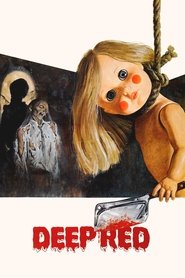
Directed by Dario Argento | Also known as: Profondo Rosso
Dario Argento’s Deep Red, originally Profondo rosso, is one of the central works of Italian giallo. A witness to a murder becomes entangled in a labyrinthine investigation marked by stylised camera movement, elaborate colour design and music by Goblin. The film’s set-piece violence matters, but its construction of clues, memory and perception is equally important to its reputation. A Section 3 appearance is therefore revealing: a formally ambitious and internationally recognised thriller entered a list usually described in tabloid terms as disposable horror filth. The British distribution record is complicated by differing cuts and versions, including variations in dialogue and running time. The dossier must avoid equating the existence of an official classification with proof that every subsequent edit was identical.
UK classification record: 1993 home-video submission recorded cuts; a 2010 classification documents a later edition. BBFC record ↗
19. Demented1980

Directed by Arthur Jeffreys
Demented belongs to the rape-revenge strain of American exploitation cinema, centring on a woman trying to recover from assault while violent threats continue to shape her domestic life. The film’s sexual violence and retaliatory premise explain why it occupied the same censorial conversation as more famous titles, even though it never acquired comparable mainstream recognition. Studying it requires attention to its representation of trauma alongside the context of its lurid video advertising. The Section 3 classification is not a verdict on the psychological plausibility of the film, and it should not be flattened into a claim that rape-revenge was a uniformly censored genre. What matters historically is that such a film could be targeted within a broader concern about what might circulate without theatrical scrutiny in the home-video market.
20. The Demons1973

Directed by Jesús Franco | Also known as: Les Démons
Jesús Franco’s The Demons places witchcraft accusations and sexual coercion within a stylised period setting. It belongs to the European nunsploitation and witch-hunt exploitation tradition, where familiar religious institutions supply both the setting for repression and the imagery through which a film sells its transgressions. Its depiction of historical persecution is deliberately sensationalized. Including it in a Section 3 dossier therefore requires two distinctions: between depiction and endorsement of institutional cruelty, and between an exploitation cycle and an individual British legal outcome. The presence of the title in the eighty-two-film compilation does not indicate that all versions or all Franco films shared the same censorship status. The work also should not be confused with Lamberto Bava’s unrelated Demons.
Films 21–40
21. Don’t Answer the Phone1980

Directed by Robert Hammer | Also known as: Don’t Answer the Phone!
Don’t Answer the Phone! builds its threat around a murderer who targets women in Los Angeles, using telephone contact, surveillance and the fear of private spaces to connect it to the urban serial-killer thriller. It belongs to the violent American independent cinema that found a second and often more provocative identity on videotape. Its sensational title offered a direct warning before a cassette was even taken from the shelf, illustrating why packaging mattered during the British panic. The film’s Section 3 association does not establish that it was successfully prosecuted, a crucial difference from the better-known DPP titles. Nor should an encyclopedia treat the character’s disturbed psychology as a realistic clinical portrait. The historical significance lies in a form of exploitation distribution that converted ordinary domestic technology into a source of menace.
22. Eaten Alive!1980

Directed by Umberto Lenzi | Also known as: Mangiati vivi!
Umberto Lenzi’s Eaten Alive!, originally Mangiati vivi!, draws on the Italian cannibal-film cycle through a search for a missing woman and a journey into increasingly dangerous territory. Its mixture of jungle adventure, cult imagery, violence and repurposed genre conventions demonstrates how producers recycled themes and materials across inexpensive international releases. The title is especially hazardous for cataloguing because Eaten Alive was also used for an unrelated American horror feature directed by Tobe Hooper. The exclamation point and the 1980 production year help identify the intended work. Within Section 3, the film shows that a production associated with a notorious subgenre could attract attention without sharing the exact criminal-prosecution history of Cannibal Holocaust or Cannibal Ferox. Commentary should also distinguish fictitious violence from any actual animal footage present in particular versions.
23. Enter the Devil1972

Directed by Frank Q. Dobbs | Also known as: Disciples of Death
Frank Q. Dobbs’s Enter the Devil, also circulated as Disciples of Death, connects occult threat to a remote rural environment. It is a regional American film that uses isolated locations, disappearance and a cult-like menace to create unease. Its multiple names have caused confusion with other possession and religious-horror productions marketed as Enter the Devil in the 1970s. Such naming collisions are precisely why cataloguing a Section 3 film requires year, original identity and relevant release title together. Its inclusion is significant not because it represents a milestone of horror cinema but because the early rental trade brought obscure works to readers and authorities who had few reliable reference tools. A video sleeve was often the most accessible description of the film.
24. The Erotic Rites of Frankenstein1973

Directed by Jesús Franco | Also known as: La maldicion de Frankenstein; La malédiction de Frankenstein
The Erotic Rites of Frankenstein is Jesús Franco’s unorthodox treatment of Mary Shelley’s characters, mixing gothic iconography, erotic material and a laboratory narrative built around the creation and manipulation of bodies. The film’s fragmented production and version history are characteristic of the director’s international exploitation work: different territories could receive substantially different combinations of footage and language tracks. That makes it particularly unsuitable for a single universal declaration about being cut or uncut. The Section 3 association demonstrates how prestigious literary source material could be repackaged into a provocative commercial form. The proper historical question is not whether the Frankenstein name made the work respectable, but which version was circulated to British retailers and why the authorities treated the cassette as a candidate for seizure.
25. The Evil1978

Directed by Gus Trikonis
The Evil is a late-1970s haunted-house feature in which an apparently restorative project in a large old building exposes its occupants to malignant forces. Its enclosed setting and ensemble structure give familiar possession material an atmosphere of escalating panic. The title is generic enough to create identification problems in modern search results, and the 1978 date is necessary when following the Section 3 compilation. The film is representative of a large body of independently produced supernatural horror that existed alongside better-capitalised studio releases. Its connection to the video-nasty panic highlights the market role of the rental cassette: works with little theatrical prestige could gain a new audience and new official scrutiny once made readily available for repeated private viewing. Section 3 status itself was not an enduring certificate of prohibition.
26. The Executioner1974

Directed by Duke Mitchell | Also known as: Massacre Mafia Style
Duke Mitchell’s Massacre Mafia Style, also circulated as The Executioner, follows a violently ambitious gangster operating outside familiar codes of restraint. Its depiction of organised crime, intimidation and murder is closer to exploitation gangster cinema than to horror, although its willingness to present cruelty directly made it plausible material for the censorial net. The different English names matter because The Executioner is exceptionally common and could otherwise connect readers to entirely unrelated movies. Its historical appearance is useful evidence that Section 3 did not serve as a retrospective list of the scariest films. It grouped videotapes that appeared problematic under a particular enforcement system.
27. Final Exam1981

Directed by Jimmy Huston
Final Exam is an American campus slasher produced during the surge following Halloween and Friday the 13th. Students preparing for the end of term become targets of an anonymous killer, while the film spends more time on ordinary college routines than on elaborate mythology. That restrained framework differentiates it from later sequels built around instantly identifiable villains. The violence exists within a youth-culture setting whose accessibility to teenage viewers helped shape public anxieties about rental shops. Inclusion on the supplementary list underscores the tension between the genre’s repetitive commercial formula and the legal consequences faced by individual tapes. A Section 3 entry records scrutiny of the product in circulation; it does not demonstrate that the entire slasher cycle was outlawed, or that the film’s eventual commercial fate can be deduced from its list position.
28. Foxy Brown1974

Directed by Jack Hill
Jack Hill’s Foxy Brown is a major blaxploitation crime film, starring Pam Grier as a woman confronting corruption, violence and the criminal exploitation of vulnerable people. Its political and cultural importance lies in the agency of its protagonist and its place within African-American popular cinema, not in a supposed identity as a horror film. This is one of the strongest reasons to examine the actual Section 3 inventory and recognize the inaccuracy of the phrase ’82 banned horrors’. The film shares with some exploitation pictures an interest in assault, revenge and vividly staged brutality, but genre classification cannot be reconstructed from police lists. The dossier includes it as historical evidence about the scope of video censorship, without misrepresenting the film’s artistic tradition.
UK classification record: 1987 home-video release had cuts; subsequent classifications include a 2013 edition. BBFC record ↗
29. Friday the 13th1980

Directed by Sean S. Cunningham
Sean S. Cunningham’s Friday the 13th helped turn the isolated summer camp into a defining slasher location. The mysterious killings at Camp Crystal Lake are structured around victims whose separation from one another makes them vulnerable, while the eventual revelation gives the film an identity distinct from later franchise instalments. Its commercial success helped set expectations for independent horror productions entering the early VHS market. The Section 3 association shows that recognisable mainstream horror hits were not automatically insulated from police concern. That does not mean the film experienced the same legal outcome as the DPP’s 39 prosecuted titles. It also matters that the inaugural film is narratively different from its sequels; retroactively attributing the franchise’s later visual trademarks to this entry distorts both production history and the nature of its contemporary reception.
UK classification record: 1980 cinema classification and 2023 UK cinema re-release recorded. BBFC record ↗
30. Friday the 13th Part 21981

Directed by Steve Miner
Friday the 13th Part 2 moves the series to a new group of camp counsellors and introduces Jason Voorhees as its active killer, though not yet in the form that would later dominate the franchise’s iconography. The film refines the original’s mechanisms of isolation, suspense and sudden violence into a more consistent slasher formula. The prominence of the sequel in the supplementary list helps demonstrate that authorities could pay attention to well-known distribution properties as well as obscure imports. It is misleading, however, to use Section 3 to infer that both first two Friday films were successfully prosecuted for obscenity. The distinction between potential seizure and conviction remains essential. This is also the kind of film for which the existence of theatrical and video cuts must be checked against the classification records for each version.
UK classification record: 1981 cinema classification and later video submissions, including 2008. BBFC record ↗
31. GBH1983

Directed by David Kent-Watson | Also known as: Grievous Bodily Harm; G.B.H. | Year note: some historical lists use 1982; BFI and film-release records use 1983
GBH, usually expanded as Grievous Bodily Harm, belongs to British crime and exploitation filmmaking rather than the supernatural horror tradition. Its emphasis on criminal aggression and social conflict makes its appearance especially revealing: the supplementary mechanism was applied to a wider idea of offensive or disturbing videotape content. The title’s initials create a practical archival problem, because a search for GBH can return unrelated later productions, documentaries and television programmes. In a rigorously researched dossier, that ambiguity should be acknowledged instead of attaching the wrong cast, director or poster. Its presence remains important evidence against a simplified account of the panic as a single coherent ‘banned horror’ canon.
32. Graduation Day1981
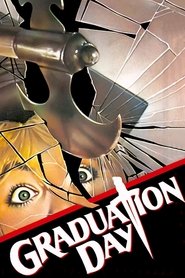
Directed by Herb Freed
Graduation Day turns an American school sporting environment into the setting for a series of murders. Its athletic imagery provides the slasher cycle with a distinctive visual motif, while the escalating deaths and uncertain identity of the killer deliver the familiar pleasures of early-1980s suspense. In the rental market, a film of this kind could be sold through one forceful sleeve image even when the finished picture was less graphically intense than its packaging promised. Its Section 3 position illustrates how seemingly formulaic genre products occupied the same official paperwork as unusual European thrillers and controversial action cinema. As with other listed films, one should avoid converting the historical label into an assertion that every British release has always been cut, refused or illegal. Those are questions for individual classification records.
33. Happy Birthday to Me1981

Directed by J. Lee Thompson
Happy Birthday to Me is a Canadian-American slasher built around a group of privileged students and a sequence of elaborate killings. Its puzzle-like construction, shifting suspicions and emphasis on a central young woman’s memory set it apart from the simplest stalk-and-kill narratives. The film shows how slasher production could intersect with more conventional mystery storytelling while remaining immediately marketable as shock entertainment. It also offers a contrast with low-budget video exclusives: Section 3 did not necessarily distinguish between film-industry visibility and legal suspicion. The question at stake was a particular cassette in a changing regulatory environment. A retrospective dossier should therefore consider the industrial context, original release and subsequent variations, while resisting the tempting but inaccurate shorthand that the movie was ‘banned in Britain’ solely because it appeared on the supplementary list.
34. The Headless Eyes1971

Directed by Kent Bateman
The Headless Eyes follows an unstable man drawn into murderous acts after a violent encounter leaves him mutilated. Its abrasive subject matter and grimy urban setting position it within the rough edge of early-1970s independent American horror, before the better-known slasher boom. The work’s low budget is reflected in its stark locations and direct treatment of bodily damage, features that made it attractive to distributors seeking attention-grabbing videocassettes. An older production could enter the 1980s video panic because the relevant moment was not its original shoot or cinema release but its later circulation. This temporal distance is important throughout the eighty-two-film list. The film’s absence from popular genre histories is not evidence that it escaped official notice: the Section 3 archive is partly a record of the trade’s forgotten margins.
35. Hell Prison1980

Directed by Edoardo Mulargia | Also known as: Escape from Hell
Hell Prison is a women-in-prison exploitation title circulated under English-language alternatives including Escape from Hell. Its importance to the Section 3 story lies in the way institutional confinement, coercion and sexualised violence were sold within international exploitation markets. The picture is not a conventional horror film, and an encyclopedia should not add invented supernatural or slasher elements merely to accommodate it. The multiple English names and the presence of unrelated movies called Escape from Hell make exact identification especially important. The historical listing documents one production in a particular distribution context; it does not authorise attaching a BBFC classification decision found for a differently dated namesake.
36. The Hills Have Eyes1977
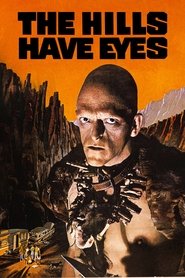
Directed by Wes Craven
Wes Craven’s The Hills Have Eyes uses a family’s journey through an isolated desert to stage a confrontation with another, violently predatory family. It draws horror from the breakdown of the boundary between civilisation and savagery, but its violence is also inseparable from class conflict, family loyalty and the American landscape. Originally released before the VHS boom, the film entered new commercial and regulatory contexts once made available on cassette. Its Section 3 position shows how a well-established work could be reconsidered under a law regulating material’s circulation on home video, years after its original cinema release. The film’s distinctive identity must be kept apart from the 2006 remake; a simple title search can otherwise lead to an inaccurate poster, year or classification record.
UK classification record: 1978 cinema and 1987 video submissions recorded cuts; a later 2003 home edition was classified. BBFC record ↗
37. Home Sweet Home1981

Directed by Nettie Peña
Home Sweet Home uses a Thanksgiving setting and an escaped killer to create a holiday slasher with little interest in supernatural explanation. Its rural domestic environment becomes unsafe as an intruder moves through the celebrations. The film demonstrates the speed with which American independent producers transformed holiday calendars into marketable horror premises during the early VHS period. Its Section 3 association is historically informative despite the production’s relative obscurity: police lists did not function as guides to artistic influence or popular success. The ordinary language of the title creates an additional archival challenge, with many unrelated films using Home Sweet Home. The 1981 production and its cassette identity must therefore govern matching, and the mere presence of a title on Section 3 should not be mistaken for evidence of a successful criminal prosecution.
38. Honeymoon Horror1982

Directed by Harry Preston
Honeymoon Horror places a newly married couple and other characters in an isolated setting where violence undermines the expectation of a private retreat. It belongs to the regional American slasher economy, operating with limited resources and a straightforward narrative of pursuit. The film’s place in the Section 3 inventory says less about its technical originality than about the distribution pathways that gave such works a British audience. The name is specific enough to be recognisable but its production context is poorly represented in mainstream histories, making it valuable as an example of the trade’s margins. Historians should separate contemporary sleeve art, later cult reputation and the precise powers exercised under obscenity legislation. Being listed for possible seizure was not equivalent to receiving an official finding that the film had to remain unavailable forever.
39. Inseminoid1981

Directed by Norman J. Warren
Norman J. Warren’s Inseminoid combines science-fiction isolation with body horror as an extraterrestrial encounter transforms a member of a research group. Set within an enclosed off-world environment, it exploits the contrast between technical mission routines and the disruption of the human body. The movie belongs to British low-budget genre production and reflects the influence of science-fiction horror’s late-1970s commercial success without simply reproducing another film’s narrative. Its inclusion is especially revealing because the Section 3 corpus reached beyond the American and Italian imports that tend to dominate discussions of video nasties. The industrial setting and reproductive-horror premise contribute to its specific identity. The fact that it could be targeted did not turn the film into a successful Section 2 obscenity prosecution, nor does it determine the status of later BBFC-rated releases.
UK classification record: 1981 cinema classification and 2005 home classification; the latter identifies a re-edited edition. BBFC record ↗
40. Invasion of the Blood Farmers1972

Directed by Ed Adlum
Invasion of the Blood Farmers is an eccentric American independent horror film in which a community confronts disturbing disappearances and a sinister blood-related conspiracy. Its crude effects and offbeat narrative are typical of regional exploitation production that acquired a later life on cheap videocassettes. The film predates the video-nasty controversy by approximately a decade, making its Section 3 association a useful reminder of how the 1980s market recycled older pictures. For consumers who encountered it only through packaging, the work might appear newly produced or closely connected to more recent gore cinema. The archive must instead preserve its actual production era and modest genre context. Nothing in the Section 3 designation by itself demonstrates a nationwide theatrical refusal, a video classification decision or a successful prosecution against the distributors.
Films 41–60
41. The Killing Hour1982

Directed by Armand Mastroianni | Also known as: The Clairvoyant
Usually identified as The Clairvoyant, The Killing Hour links a series of murders to a woman’s unusual ability to perceive events beyond normal observation. The film combines police investigation with a supernatural suggestion, placing it near the boundary between psychic thriller and horror. Its alternative titles help explain how British cassette records can be difficult to reconcile with contemporary databases. A search for Killing Hour without the production year may retrieve unrelated features, while the better-known title may not appear on the historical list. That problem is not incidental to the censorship story: an enforcement record based on trade names could operate quite differently from a film scholar’s catalogue. Inclusion on Section 3 marks a historical distribution concern, not a finding that clairvoyance-themed thrillers were uniformly objectionable.
42. The Last Horror Film1982

Directed by David Winters | Also known as: Fanatic
The Last Horror Film follows a would-be filmmaker who becomes fixated on a film star and pursues his ambitions amid the spectacle of the Cannes Film Festival. The story is particularly self-referential: obsession with horror production and celebrity becomes the mechanism of the horror itself. Its use of a real festival environment differentiates it from many inexpensive slashers staged in anonymous suburban locations. The title Fanatic was also used, a potentially confusing alternative given the number of other films carrying that word. In the Section 3 context, the film illustrates an overlap between genre cinema’s own fascination with publicity and the sensational image the press attached to so-called nasties. The legal association concerns the British videotape trade, not a blanket historical judgment on the film’s international release or on its treatment of filmmaking culture.
43. The Last Hunter1980

Directed by Antonio Margheriti
Antonio Margheriti’s The Last Hunter belongs to the Italian Vietnam-war exploitation cycle and is primarily an action picture about combat and survival. Its presence on a supplementary video-censorship list expands the story beyond horror and sexual exploitation: the depiction of military violence could also fall within an enforcement response to disturbing home-video material. The setting and story demand recognition as war cinema even if the violent content was marketed sensationally. As historical evidence, it indicates how policing could move across generic boundaries. As an artistic work, it belongs in a study of Italian commercial war cinema rather than a category of supernatural or slasher horror.
UK classification record: Classified for UK cinemas in 1981; the 1988 home-video edition was cut, while a separate 2022 home-entertainment submission is recorded. BBFC record ↗
44. The Love Butcher1975

Directed by Mikel Angel and Don Jones
The Love Butcher uses a disturbed killer’s divided identity to construct a grim narrative of violence and deception. Its suburban settings and emphasis on psychological instability connect it to 1970s American exploitation thrillers whose sensational themes anticipated aspects of the slasher cycle. Unlike franchise pictures built around a recurring costumed figure, the film is largely concerned with how apparent normality can conceal predatory behaviour. Its Section 3 appearance is a case in which a threatening criminal narrative could be considered within the broad machinery of video obscenity policing. There is no reason to assume that every version marketed later had identical running times, artwork or regulatory decisions. A rigorous historical entry should retain the release year and title but keep those different questions separate.
45. Mad Foxes1981

Directed by Paul Grau | Also known as: The Mad Foxes
Mad Foxes is a European revenge-exploitation film featuring increasingly brutal retaliation between opposing groups. Its appeal rests on escalating violence within a revenge-exploitation narrative. The film is a useful example of the action, crime and sexploitation material that sits uncomfortably under the popular label ‘video nasty horror’. Its international marketing and sensational set pieces made it a plausible target for scrutiny of the early video trade. Nevertheless, the Section 3 association proves only that the film circulated within the supplementary list tradition; it is not equivalent to a DPP Section 2 conviction. A title-specific British classification history would require tracing identifiable submissions and their versions, not repeating a collector’s general assertion that all such films remained permanently banned.
46. Mark of the Devil1970
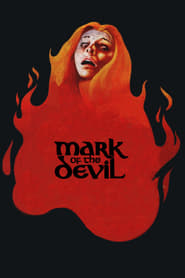
Directed by Michael Armstrong
Mark of the Devil is a period exploitation film about religious persecution and torture, drawing on the spectacle of witch trials while using graphic effects and sensational marketing. Its historical setting lends cruelty the appearance of institutional legitimacy, a strategy characteristic of the witch-hunter subgenre. Posters and advertisements emphasised its extremity, making it a familiar name in exploitation culture well before the British VHS crisis. The film’s placement in Section 3 is therefore a revealing corrective to an inaccurate chronology: an older theatrical controversy was recycled into a new regulatory market years later. Discussion should distinguish the original cinema releases from any British videocassette version and resist treating the documentary’s eighty-two-title list as a collection of films produced specifically for the VHS era. Its cult reputation also extends beyond its British censorship association.
UK classification record: 2003 home-video edition recorded cuts; a later 2013 home version was classified. BBFC record ↗
47. Martin1977

Directed by George A. Romero
George A. Romero’s Martin follows a young man who believes himself to be a vampire, while the film withholds the supernatural certainty expected from traditional gothic horror. Through intimate settings, unsettling behaviour and ambiguous subjective imagery, Romero transforms vampirism into a study of isolation, family authority and violence. The film occupies a central position in his career between Night of the Living Dead and Dawn of the Dead. Its presence on Section 3 is important precisely because it challenges the assumption that the supplementary category contained only disposable exploitation works. A title’s artistic importance and its involvement in police proceedings were independent matters. The film’s low-key storytelling also shows that censorship controversy cannot always be reconstructed by counting on-screen injuries; perception, reputation and rental-shop availability shaped the period’s response.
UK classification record: Martin was classified for UK home entertainment on 13 September 2022. BBFC record ↗
48. Massacre Mansion1976

Directed by Michael Pataki | Also known as: Mansion of the Doomed
Mansion of the Doomed, listed as Massacre Mansion, concerns a surgeon whose determination to restore a loved one’s sight leads him to violent acts against other people. The film transforms medical expertise into a source of horror through bodily violation and a distorted idea of care. Its alternate title exposes a recurring feature of the early cassette economy: different names could reshape the apparent subject of an existing work. Massacre Mansion suggests an outright body-count feature, whereas Mansion of the Doomed better reflects the setting and horror premise. The Section 3 archive should therefore connect the two names explicitly while avoiding a duplicate count. The broader lesson is that historical censorship records often require a filmography of alternate distribution identities before their significance can be assessed.
UK classification record: Classified as Massacre Mansion in 1983; later UK home-entertainment record under Mansion of the Doomed (2024). BBFC record ↗
49. Mausoleum1983

Directed by Michael Dugan
Mausoleum follows a woman whose life is overwhelmed by a supernatural presence connected to family history and a burial site. It combines possession, physical transformation and elaborate effects within a distinctly 1980s American horror vocabulary. The film’s interest in the home as a threatened space connects it to other supernatural pictures on the supplementary list, while its effects-heavy set pieces appeal to the gore audience. Its presence within Section 3 reflects the availability of such content on tape during the period, without implying that all occult horror was legally obscene. The year matters because Mausoleum is also used for later unrelated productions. Preserving the exact 1983 feature in links and image selection is essential to avoid importing the wrong cover or classification record.
50. Midnight1982

Directed by John A. Russo
Midnight is an American independent horror thriller associated with John A. Russo, a co-writer of Night of the Living Dead. It follows vulnerable travellers who encounter violent rural danger, invoking the traditions of captivity, cult violence and the unsafe American back road. That connection to Romero-era independent horror is an important production context, yet the film has its own narrative and should not be described as a zombie sequel. Its generic title makes it especially easy to mistake for a later supernatural feature or thriller. The Section 3 inclusion documents the continued availability and scrutiny of regional horror outside the major franchise economy. As with other supplementary titles, a historical list entry should not be treated as evidence that the work was successfully prosecuted, permanently unavailable or identical in all export and British editions.
51. Naked Fist1981

Directed by Cirio H. Santiago | Also known as: Firecracker
Firecracker, circulated as Naked Fist, is an exploitation action film focused on martial-arts conflict and revenge. Its heroine’s physical struggle and the production’s mixture of combat choreography with sexualised violence position it closer to the low-budget action market than to horror. It is included here because the Section 3 record spans genres and because English retitling complicates reconstruction of the British home-video trade. An archival entry should identify the intended 1981 production without recasting it as a supernatural or slasher picture. The fact that old distributors used provocative language does not eliminate the distinction between artistic genre and regulatory treatment.
52. The Nesting1981
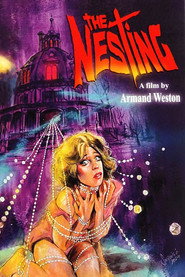
Directed by Armand Weston
The Nesting places a woman suffering from agoraphobia in an isolated mansion that conceals a violent past. Its haunted-house elements and mystery structure rely on the building’s history, the protagonist’s psychological vulnerability and the gradual intrusion of threatening evidence. The premise belongs squarely to supernatural and psychological horror, but it is not interchangeable with similarly named later thrillers. The Section 3 association shows how conventional gothic narratives adapted to contemporary American settings could enter the police inventory alongside explicit gore films. The film’s modest profile also helps explain how collector interest in the lists later recovered otherwise overlooked titles. The historical label should not, however, be read as a statement about the legal availability of every subsequent video or digital release.
UK classification record: UK home-video classification dated 1 December 1986. BBFC record ↗
53. The New Adventures of Snow White1969

Directed by Rolf Thiele | Also known as: Grimm’s Fairy Tales for Adults; Grimm Fairy Tales for Adults
The New Adventures of Snow White is a British circulation name associated with the German adult fairy-tale exploitation production Grimm’s Fairy Tales for Adults. It belongs to an erotic-comedy and fantasy tradition rather than to horror cinema, notwithstanding the presence of familiar fairy-tale characters. Its inclusion is striking precisely because the video panic extended to material whose explicitness was sexual rather than primarily violent. An English rebranding could make a film sound innocuous or market it provocatively depending on the distributor. Tracing the original title and production year is therefore central to identifying the same work across the two markets. The Section 3 list is historically complete only if this non-horror example is retained, but its presence should not be used to redefine the entire programme as eighty-two horror films.
54. Nightbeast1982

Directed by Don Dohler | Also known as: Night Beast
Don Dohler’s Nightbeast combines small-town science-fiction horror with the arrival of a murderous extraterrestrial creature. Its handmade effects and local cast are characteristic of regional American production during the years when inexpensive horror could reach viewers through independent distributors. The narrative moves quickly from the creature’s appearance to attacks and the efforts of local residents to respond, favouring immediate spectacle over elaborate world-building. For the British VHS market, this was precisely the sort of easily advertised premise that could fill shelves without requiring the support of a major studio. The Section 3 record shows that marginal science-fiction horror fell within the supplementary scrutiny, but it says nothing by itself about a permanent ban or later BBFC submissions. Its small-scale industrial origins are a more useful explanatory framework than the notoriety of the list alone.
55. Night of the Living Dead1968
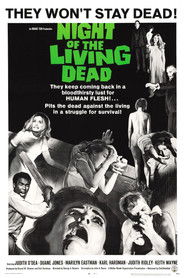
Directed by George A. Romero
Night of the Living Dead established George A. Romero’s modern zombie cinema through a siege narrative in which survivors retreat into a farmhouse while the dead gather outside. Its fragmented social group, pervasive distrust and disturbing ending helped make the picture a lasting subject of critical discussion. By the early 1980s it was already an influential film, yet its presence in the Section 3 compilation demonstrates how notoriety could be reattached to existing works through video circulation. It should never be counted as a member of the DPP’s 39 successful prosecutions simply because a supplementary cassette list mentions it. The film’s numerous public-domain editions and variant transfers create further complications for anyone attempting to reconstruct a particular British tape. Distribution history and classification status require more precision than a generic database entry can supply.
UK classification record: A 2018 record identifies the 1968 film; it is not evidence of an unchanged 1980s cassette version. BBFC record ↗
56. Nightmare City1980

Directed by Umberto Lenzi | Also known as: City of the Walking Dead
Umberto Lenzi’s Nightmare City begins with an aircraft whose passengers bring a rapidly spreading nightmare into an urban environment. The infected attackers are aggressive and mobile, placing the film between zombie cinema, contagion narratives and violent disaster thriller. Its relentless movement distinguishes it from more deliberate siege pictures, while its practical effects and chaotic city settings reflect the commercial ambitions of Italian horror in the early 1980s. Alternative names, including City of the Walking Dead, can complicate historical identification. The Section 3 designation is a reminder that British authorities encountered internationally repackaged works under names sometimes different from those accepted by modern film histories. It should not be taken as a complete record of the film’s many theatrical and videocassette edits across different countries.
57. Oasis of the Zombies1982

Directed by Jesús Franco | Also known as: Oasis of the Living Dead; L’Abîme des morts vivants
Oasis of the Zombies, a European production associated with Jesús Franco, combines desert-war backstory with the awakening of undead soldiers and later travellers’ encounters with the dead. The film is a hybrid of wartime adventure and low-budget zombie horror, with a narrative that moves between generations and locations. Its fragmentary international distribution and varying titles make it a characteristic candidate for confusion in video-nasty catalogues. The work’s historical value lies as much in its place within Franco’s prolific genre production as in its marginal presence on British cassette shelves. A Section 3 entry records the film’s inclusion in a supplementary confiscation context, not proof that it was ever successfully prosecuted under the DPP’s main list. Other productions involving undead soldiers should not be substituted for this specific 1982 film.
58. Parasite1982

Directed by Charles Band
Parasite is an American science-fiction horror film involving an organism that feeds on its host within a bleak, damaged society. Its creature effects connect it to early-1980s body horror, while the sparse futuristic environment and threat of contamination echo wider genre anxieties about biological transformation. The film’s modest financing and video-friendly premise help explain its place among obscure independent titles that could be marketed internationally through a striking monster image. As a Section 3 title, it demonstrates how science-fiction shock cinema was folded into the same enforcement environment as slashers, crime dramas and cannibal pictures. The name Parasite has been used by many later films, including works in entirely different genres; a historically correct link must identify the 1982 production precisely, avoiding confusion with more recent films sharing the name.
59. Phantasm1979
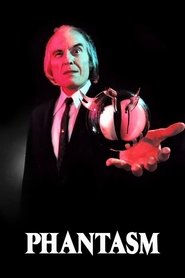
Directed by Don Coscarelli
Don Coscarelli’s Phantasm builds an unsettling mythology around a mortuary, the enigmatic Tall Man and a boy’s encounters with evidence that death conceals other possibilities. Its dreamlike continuity, surreal horror imagery and memorable sphere weapon distinguish it from the formulaic slasher production of its era. It was an established cult film before being absorbed into a British Section 3 compilation, demonstrating that a supplementary seizure list could contain artistically distinctive work. The film’s later sequels further complicated public understanding of the original, but only the 1979 feature belongs to this particular entry. Its inclusion is not proof that the film was successfully prosecuted as one of the 39 DPP titles. The example shows why historical cataloguing should treat regulatory lists as evidence of a particular distribution and enforcement moment.
UK classification record: Phantasm has a documented UK cinema classification in 1979 and later video classifications including 2005. BBFC record ↗
60. Pigs1973

Directed by Marc Lawrence | Also known as: Daddy’s Deadly Darling
Pigs, also known as Daddy’s Deadly Darling, centres on a woman, a rural property and the disposal of human bodies through the feeding of animals. The film’s combination of psychological instability, grim crime and exploitation shock places it at the margins between horror and a disturbing character study. The alternative title is particularly important: a modern reader might incorrectly count the two names as different films or confuse the film with unrelated titles containing the word Pigs. The historical cassette identity helped determine how viewers and authorities understood what was being offered. Within Section 3, the production illustrates how grisly story material could attract scrutiny without creating a sustained cultural scandal. Its place in the archive deserves documentation even though it never achieved the reputation of Romero, Argento or Carpenter.
Films 61–82
61. Prey1977

Directed by Norman J. Warren
Norman J. Warren’s Prey turns the arrival of a seemingly vulnerable stranger into the source of increasingly disturbing events within an isolated household. Beneath the initially domestic story lies a science-fiction horror premise, handled with the intimacy characteristic of the director’s modestly budgeted British productions. The film’s tension relies on shifting relationships and an uncertainty about the newcomer’s intentions before its genre identity becomes fully apparent. Prey is a common title, so both the 1977 year and Warren’s authorship are essential for accurate identification. Its Section 3 listing also demonstrates the presence of homegrown British horror in a controversy often described exclusively through American slashers and Italian gore imports. Later classification or release history cannot be derived automatically from the original supplementary status.
62. Prom Night1980

Directed by Paul Lynch
Prom Night follows high-school students whose graduation celebrations are overshadowed by a violent secret from childhood. The film ties the slasher formula to adolescence, memory and the fear that a past mistake will return, while the prom setting supplies a distinctive commercial identity. Its success made it recognisable well beyond the original British videotape market. That visibility is significant in the Section 3 story because the supplementary category was not limited to unmarketable underground curiosities. Popular theatrical titles could coexist with highly obscure exploitation films in the same policing paperwork. The original 1980 production must be distinguished from remakes and sequels, which may have completely different age classifications. Its historical inclusion also should not be presented as proof of a successful obscenity prosecution.
UK classification record: 1980 cinema submission and 2019 physical-media classification are recorded. BBFC record ↗
63. Rabid1977

Directed by David Cronenberg
David Cronenberg’s Rabid explores infection, bodily transformation and the uncontrolled spread of violence following an experimental medical procedure. Its grotesque premise connects the director’s fascination with the boundaries of the human body to a wider social narrative of contagion. The film is unmistakably horror, yet its importance is not reducible to the visceral moments that might have alarmed some viewers. It belongs to a developing Canadian body-horror cinema that would exert influence well beyond the 1970s exploitation market. The Section 3 association indicates that an earlier, critically significant work could be caught up in the video controversy through British distribution. It must be kept separate from the later remake sharing its title. The film’s original national context and its distinct theatrical history are both relevant to its place in this archive.
UK classification record: 1977 cinema submission and a 2019 home-entertainment classification. BBFC record ↗
64. Rosemary’s Killer1981

Directed by Joseph Zito | Also known as: The Prowler
The Prowler, known in Britain as Rosemary’s Killer, is a slasher built around an earlier tragedy and a violent killer returning during a community celebration. The film is particularly associated with elaborate practical effects, which became a significant selling point for the cassette audience. Its alternative title frames the central crime more directly than the American name, demonstrating how marketing could reshape the same movie for another market. Section 3 inclusion records scrutiny of this specific 1981 picture, not of every later work named The Prowler. For a serious filmography, the year and alternative British title are therefore indispensable. The legal history should also be separated from decisions about individual edited versions: an original supplementary mention is not evidence that a modern release must contain the same cuts.
65. Savage Terror1978

Directed by Sisworo Gautama Putra | Also known as: Primitives
Savage Terror, often identified as Primitives, is an Indonesian jungle-horror and adventure production directed by Sisworo Gautama Putra. It employs a combination of survival peril, indigenous-themed sensationalism and violence that brought it into the international exploitation marketplace. The film’s circulation demonstrates that the British panic was not confined to European and North American pictures; lower-budget Asian productions could also be renamed and sold through Western cassette networks. Discussion requires care in describing cultural representation, since the marketing of supposedly ‘primitive’ peoples often reflects the assumptions of the distributors more than reliable anthropology. The Section 3 label records a regulatory episode connected to this circulation, not a general judgment about Indonesian horror. Alternative titles must be used to establish the same production before linking catalogues or images.
66. Scanners1981
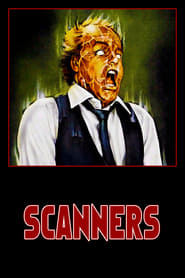
Directed by David Cronenberg
David Cronenberg’s Scanners imagines people with extraordinary mental powers manipulated within a corporate and conspiratorial struggle. Its well-known practical effects moment is central to its popular reputation, but the film also develops the director’s interests in altered embodiment, institutional control and psychological power. A major international science-fiction horror success, it challenges the assumption that Section 3 included only obscure films sold as low-end gore. The list operated within a specific British regulatory environment, independent of the film’s international critical or commercial standing. Version histories can vary and should be researched through individual submissions; the supplementary designation cannot establish which cuts circulated. Its presence alongside other Cronenberg works also illustrates why a filmmaker-focused history can reveal connections obscured by the arbitrary grouping of the official cassette lists.
67. Scream for Vengeance!1980

Directed by Bob Bliss | Also known as: Vengeance
Scream for Vengeance!, associated with the alternative title Vengeance, is a little-known revenge-oriented exploitation thriller built around escalating crime and retaliation. Its prominence in film-censorship archives far exceeds the space it occupies in standard accounts of influential horror cinema. That imbalance is itself worth documenting: the supplementary list preserved references to films whose commercial identities might otherwise have become difficult to trace. The generic title Vengeance creates an especially serious disambiguation problem, making its historical name and production period necessary when matching database records. The Section 3 association shows the authorities’ interest in violence outside supernatural or slasher formulas. It does not justify an assertion that the film was convicted of obscenity or that every later tape bearing the same name represented the identical work.
68. Shogun Assassin1980

Directed by Kenji Misumi and Robert Houston · 1980 English-language compilation
Shogun Assassin is an English-language compilation and re-editing of material from the Japanese Lone Wolf and Cub samurai-film series, with a distinctive new soundtrack and narration. Its ferocious swordplay and graphic stylisation made it prominent among cult audiences, but the work is principally action cinema, not horror. It also presents a documentary problem: the film appears in widely circulated inventories of eighty-two Section 3 titles, including lists based on Video Nasties: The Definitive Guide Part 2, while at least one specialist list explicitly disputes its membership of the official video-nasties list. This dossier retains the title to reproduce the widely published eighty-two-film compilation, but does not present the disputed administrative status as conclusively settled. The disagreement warrants inspection of the underlying historical DPP paperwork before making an unqualified legal claim.
Documentary caveat: Included in widely circulated eighty-two-film compilations; not established here as an undisputed original DPP Section 3 entry. See the source note after the archive.
69. Street Killers1977

Directed by Sergio Grieco | Also known as: La belva col mitra; The Mad Dog Killer; Beast with a Gun
Street Killers, associated with The Mad Dog Killer and the Italian original La belva col mitra, is a violent Italian crime film. Its criminal underworld, urban brutality and pursuit structure belong to the poliziottesco tradition rather than to horror. The profusion of English titles mirrors the larger international exploitation trade, in which the same film could be marketed differently across territories and decades. Its presence in Section 3 challenges the idea that the historical label referred only to pictures with monsters, killers in masks or supernatural threats. The archive includes it because it formed part of a specific published censorship inventory. Any later BBFC evidence would need to be attached to this exact production, not a namesake.
70. Suicide Cult1975

Directed by James Glickenhaus | Also known as: The Astrologer
The Astrologer, circulated as Suicide Cult, is a strange American exploitation thriller in which esoteric belief, manipulation and criminal ambition become intertwined. Its alternative title is exceptionally consequential because The Astrologer can refer to another, entirely unrelated cult film; the 1975 production associated with this Section 3 entry must be identified precisely. The film’s mixture of mystery, occult references and low-budget melodrama illustrates the fluid boundaries separating exploitation genres in the rental economy. Its place in the supplementary archive may be better understood through that distribution history than through modern genre labels. The documented title association should not be expanded into an unsupported statement about a criminal prosecution. It is one of the entries for which understanding aliases prevents errors in both catalogue matching and the interpretation of past censorship.
71. Superstition1982

Directed by James W. Roberson | Also known as: The Witch
Superstition stages supernatural violence around a location threatened by an old curse and a vindictive force. The film uses practical effects and sudden bodily destruction to create an intense early-1980s haunted-house experience. Its combination of mystery, religious suggestion and direct gore made it an obvious product for the growing VHS horror audience. The name has been reused for many later works, including productions with very different countries of origin, so the 1982 film must be identified before attaching a poster or link. In the Section 3 context, Superstition exemplifies conventional horror material within an inventory that also includes gangster dramas and martial-arts exploitation. The supplementary status did not mean that every subsequent edition was automatically prohibited; individual UK classification decisions remain separate evidence.
72. Suspiria1977

Directed by Dario Argento
Dario Argento’s Suspiria transforms a dance academy into an environment of occult power through extraordinary colour, sound and architectural design. Its importance within horror history rests on a distinctive formal language and the way the film makes space itself feel threatening. The presence of such an established auteur work on the Section 3 list demonstrates the limited usefulness of treating the eighty-two titles as a hierarchy of disreputable production. Film style, international reception and local regulatory suspicion followed different courses. Suspiria has also acquired later remakes and reissues, so an encyclopedia must distinguish the 1977 production from unrelated version histories. Its place in the supplementary catalogue should be discussed without claiming it was one of the DPP’s thirty-nine successful obscenity prosecutions.
UK classification record: The 1977 cinema submission was cut; a separate home-entertainment classification is recorded in 2010. BBFC record ↗
73. Terror1978

Directed by Norman J. Warren
Norman J. Warren’s Terror is a British supernatural horror picture centred on the consequences of a hereditary curse. It draws on gothic and witchcraft motifs while using contemporary settings and stylised violent sequences associated with the late-1970s commercial genre. The film is a useful example of domestic British production responding to an international taste for explicit horror, often discussed alongside Italian gialli for its visual approach. Its Section 3 status illustrates how local low-budget work could become implicated in a controversy widely framed around foreign imports. The short title is a serious cataloguing challenge because many unrelated films and television productions bear it. The 1978 release and Warren’s direction are necessary for distinguishing its historical identity and avoiding an incorrect classification or poster.
74. The Texas Chain Saw Massacre1974

Directed by Tobe Hooper | Also known as: The Texas Chainsaw Massacre
Tobe Hooper’s The Texas Chain Saw Massacre remains one of the most influential American horror films, distinguished by its rural setting, relentless sensory pressure and sustained depiction of terror. Its British censorship history is unusually well documented. The BBFC’s case study records an unsuccessful theatrical submission in 1975, circulation on pre-classification video and the eventual decision to classify the picture at 18 without cuts for cinema in 1999, followed by video. Its inclusion in the Section 3 inventory does not erase those distinct regulatory episodes. In fact the film is an ideal case study for separating local cinema licensing, BBFC decisions and the seizure of unclassified tapes. Its relative lack of prolonged explicit gore also shows that censorship decisions concerned the perceived overall impact of scenes, including factors beyond the quantity of visible blood.
UK classification record: A 1975 cinema submission was refused. The film was subsequently classified uncut at 18 in 1999. BBFC record ↗
75. The Thing1982
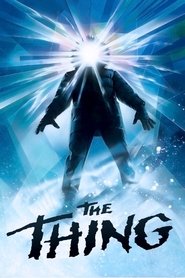
Directed by John Carpenter
John Carpenter’s The Thing uses an isolated Antarctic research station and a shape-shifting alien organism to turn scientific collaboration into mutual suspicion. The film’s extraordinary practical effects are central to its reputation, but its paranoid structure and uncertainty about identity are just as important. A major studio feature, it occupies a very different industrial position from the regional exploitation movies that populate much of the Section 3 list. Its inclusion demonstrates how the authorities’ concerns about home-video violence crossed distinctions of budget, distributor and critical prestige. The 1982 film must be distinguished from the earlier adaptation and later prequel with similar titles. The supplementary designation should not be used to assert that Carpenter’s work was successfully prosecuted under the obscenity law or that its later availability was unchanged from the initial cassette era.
UK classification record: UK records identify the original 1982 feature and later cinema and home-entertainment classifications. BBFC record ↗
76. Tomb of the Living Dead1969

Directed by Gerardo de León and Eddie Romero | Also known as: Mad Doctor of Blood Island
Mad Doctor of Blood Island was circulated under the alternative title Tomb of the Living Dead. This Philippine horror production employs a remote island setting, medical experimentation and grotesque creature imagery within an international exploitation format. Its story and effects connect it to earlier monster cinema, while its circulation under different names foreshadows the later VHS market’s habit of reshaping old productions for new audiences. The film was already more than a decade old when the video-nasty controversy developed. Its Section 3 association is therefore a record of re-release and distribution, without suggesting that it was made in response to British censorship. The film also helps document the global extent of the market: Asian horror and exploitation arrived through intermediaries who could entirely replace the title on the original print.
77. The Toy Box1971

Directed by Ronald Víctor García
The Toy Box is an American exploitation horror feature mixing sexual material with a surreal and threatening domestic scenario. Its fragmented, disorienting structure makes it less straightforward than the slashers usually invoked to explain the moral panic, although shocking images and provocative packaging made it suitable for video exploitation sales. The film predates the VHS controversy, so its Section 3 association arose from later circulation, years after the film was produced in 1971. This distinction is essential to a chronological account of the eighty-two titles. The title has also been reused for much later unrelated works. A correct catalogue link must refer to the older production instead of importing the imagery, cast or BBFC history of a namesake.
78. Werewolf Woman1976

Directed by Rino Di Silvestro
Werewolf Woman, also known by its Italian title La lupa mannara, is a psychological exploitation film in which trauma, delusion and violence are expressed through imagery associated with lycanthropy. Although its English name suggests a conventional monster transformation, the film operates closer to an eroticised psychological thriller with horror elements. That difference between marketing and content is integral to its historical identity. The film belongs to the international cycle of sensational Italian releases circulated under multiple translated names during the 1970s. Its presence in Section 3 records the British cassette trade’s response to such material, not an assertion that there was an actual supernatural transformation on screen. The case shows why a genre database and a censorship history need overlapping but distinct methods of description.
79. Wrong Way1972

Directed by Ray Williams
Wrong Way is a marginal entry in the supplementary list, associated with the exploitation and sexual-thriller marketplace rather than with horror. Its limited visibility in modern reference sources makes it particularly important not to invent a director, plot detail or current BBFC status merely to give the dossier a complete-looking set of records. A historical list can preserve a cassette title even when reliable filmographic metadata remains difficult to establish across releases and alternate names. The correct editorial approach is to identify the title, explain its place in the broader non-horror component of Section 3 and state the limits of available verification. Its inclusion demonstrates how the early video market also carried obscure material that never became part of the widely discussed genre canon.
80. Xtro1982

Directed by Harry Bromley Davenport
Harry Bromley Davenport’s Xtro begins with an apparent alien abduction and moves into grotesque bodily changes, uncanny domestic encounters and a child’s confrontation with a disturbed family reality. Its science-fiction premise is inseparable from the body-horror effects that made it memorable to video audiences. British production and modest financing place it in a different commercial position from the major studio entries on the supplementary list. The film’s disturbing imagery contributed to a reputation that became greater within horror collecting culture after the original controversy. The Section 3 listing is historically significant but should not be read as a successful obscenity conviction. Xtro also generated sequels of very different character, none of which should be substituted for the original when constructing a historically accurate film record.
81. Zombie Holocaust1980
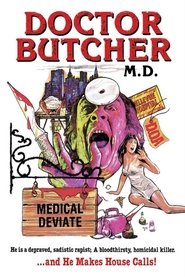
Directed by Marino Girolami | Also known as: Doctor Butcher, M.D.; Doctor Butcher M.D.
Zombie Holocaust, distributed in some English-speaking markets as Doctor Butcher, M.D., combines zombie horror, medical experimentation and Italian cannibal-film ingredients. Its strange mixture of genre conventions makes the work emblematic of the export market in which films were repeatedly retitled to emphasise whatever theme seemed most commercially promising. A consumer encountering Doctor Butcher, M.D. could easily fail to connect the cassette to a Section 3 list naming Zombie Holocaust. The original Italian identity, production year and British release history are consequently essential. Its supplementary listing does not put it among the thirty-nine films successfully prosecuted under the DPP’s original obscenity list. It instead documents the breadth of tapes subject to scrutiny and reinforces the importance of using accurate title cross-references in any horror archive.
82. Zombie Lake1981

Directed by Jean Rollin | Also known as: Zombies Lake
Zombie Lake, often distributed as Zombies Lake and originally Le lac des morts vivants, uses a lake and a wartime past as the source of renewed undead violence. The film belongs to the low-budget European zombie boom in which military history, rural landscapes and graphic shocks were blended for international exploitation audiences. Its uneven production circumstances and extensive retitling are characteristic of the period’s distribution practices. The Section 3 listing shows that such films remained available and visible enough in Britain to be placed within the supplementary enforcement inventory. It should not be confused with other zombie films set around lakes, military units or wartime cemeteries. Its place in the final entries of the eighty-two-title compilation offers a fitting example of how a dispersed international genre market was brought together retrospectively through British policing despite its varied production histories.
About the Shogun Assassin entry: Severin Films documents an additional eighty-two-title Section 3 compilation, but its published description does not name this film individually. The Video Nasties Podcast prints the title with an explicit warning disputing its presence on the video-nasties list. The film remains here as an entry in widely circulated supplementary compilations, with its exact historical administrative status explicitly unresolved.
Identifying the films and their alternative titles
Identifying the films requires comparing historical British release titles with original names, international aliases, credited filmmakers and production years. This is especially necessary for Schoolgirls in Chains (Abducted), Last Cannibal World (Cannibal), Alice, Sweet Alice (Communion), Strange Behavior (Dead Kids), Mansion of the Doomed (Massacre Mansion), The Prowler (Rosemary’s Killer), Primitives (Savage Terror) and Doctor Butcher, M.D. (Zombie Holocaust). A similar title is not enough when an unrelated remake or namesake exists.
The archive identifies the films represented by the historical British names, without equating a shared title with proof of the same production. Illustrative posters may come from later releases and should not be interpreted as images of the exact videocassettes examined by British authorities. The presence of non-horror works such as crime dramas and samurai films reflects the historical reach of the controversy.
An archive of censorship rather than a genre of films
The most important lesson of the eighty-two-title inventory is that a list assembled for practical enforcement can acquire a cultural life completely unrelated to its original purpose. Once films were grouped under the video-nasty label, collectors pursued them, later distributors marketed their notoriety and film historians began reconstructing the circulation histories that originally made them visible to police. The effect was to preserve the names of obscure productions alongside established classics in an accidental history of international exploitation cinema.
That history still requires careful boundaries. A cassette being associated with seizure is not proof that a filmmaker was prosecuted, that an individual proprietor was convicted, or that a modern classified release cannot legally circulate. Nor does the list automatically reveal the edit, language track or packaging of every tape involved. The eighty-two works must be approached as individual films and as evidence of a legal and commercial moment. Their combination reflects Britain’s response to the early home-video trade, not a manifesto signed by horror filmmakers.
The Section 3 record therefore complements the better-known DPP list by documenting a different enforcement mechanism. Examining both shows how the same controversy could operate through criminal prosecution, seizure, forfeiture, public controversy, retail anxiety and later film classification. Treating those events as separate is the foundation of a useful and durable encyclopedia of British censorship history.
Frequently asked questions
What were the 82 Section 3 Video Nasties?
They were the eighty-two additional films identified in the supplementary Section 3 inventory associated with the early-1980s British video-nasty controversy. They are separate from the familiar original DPP list of seventy-two films; their status concerns potential seizure and forfeiture and must be distinguished from successful criminal obscenity prosecutions.
Were all 82 films banned in the United Kingdom?
No. Section 3 was a legal mechanism for search, seizure and possible forfeiture of suspect articles. Inclusion on a historical supplementary list is not itself evidence of a permanent ban. Later BBFC records demonstrate that many films circulated through subsequent classification and re-release processes.
What is the difference between Section 2 and Section 3 of the Obscene Publications Act?
Section 2 established the offence of publishing obscene articles. Section 3 established powers involving search, seizure and applications for the forfeiture of particular material. The two mechanisms could have very different consequences for sellers, and neither should be confused with a BBFC age rating.
Why are films such as Foxy Brown and The Chant of Jimmie Blacksmith included?
The supplementary list concerned material circulating on videotape, not a consistent horror genre. Crime, action, war and historical drama could appear beside horror and exploitation. This dossier preserves those titles without misclassifying them as horror films.
Does Shogun Assassin definitively belong to the original Section 3 list?
Its presence in widely used eighty-two-title compilations is clear, but descriptions of its precise official status conflict. The title is retained to document the familiar compilation while the uncertainty is explicitly identified; independent examination of the underlying DPP paperwork would be needed to settle the discrepancy.
References and research method
Sources below establish the legal framework, wider video history and the documentary basis of the supplementary list. Their roles are distinct: a BBFC record documents a submitted version; the legislation explains statutory powers; the surviving reconstruction of the eighty-two-film sequence does not substitute for the judgment or forfeiture order in an individual case.
- UK Legislation — Obscene Publications Act 1959, Section 3 — Statutory text governing search warrants, seizure, forfeiture and appeal rights.
- BBFC — The Video Recordings Act — Official account of the pre-classification video market and subsequent regulatory changes.
- BFI / Sight and Sound — Vile VHS: Unspooling the History of the Video Nasty Controversy — Kim Newman’s historical examination of the DPP lists, culture and cassette distribution.
- Severin Films — Video Nasties: The Definitive Guide Part 2 — Distributor’s description of the documentary research and eighty-two-title Section 3 archive.
- BBFC — The Texas Chainsaw Massacre (1974) — Official case study showing why cinema refusal, video circulation and later approval must be differentiated.
Editorial method: The eighty-two-film sequence follows the widely circulated supplementary inventory documented by the film compilation above. Historical aliases and release years have been used to distinguish the listed works from unrelated productions with similar titles. Classification statements are given only where a film-specific BBFC record could be identified. The inclusion of a film does not establish the legal outcome of an individual proceeding. Historical research checked 20 October 2026; this is not a continuously updated record of present-day UK distribution rights.