




2026
Donald Pleasence
Horror Actor · Biography · Horror Filmography · Family · Collaborators · Credits
Horror subgenres & themes
Most represented across this person's horror filmography:
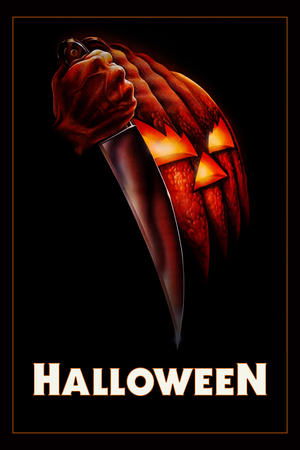
HALLOWEEN
• SLASHER
• HORROR ANTHOLOGY
• ANIMAL
Biography
Donald Pleasence and the Man Who Looked Into Evil
Donald Pleasence possessed one of the most distinctive presences in horror cinema. His small frame, bald head, controlled voice and intensely focused eyes allowed him to suggest intelligence, fear, authority and instability almost simultaneously. He could play the monster, the scientist, the investigator or the man desperately trying to convince everyone else that the monster was real. Horror repeatedly returned to him because few actors could make impossible danger sound so credible simply by describing it.
For generations of viewers, Pleasence became inseparable from Dr. Samuel Loomis in the Halloween series. Loomis is unusual among horror franchise characters because he is neither killer nor conventional final survivor. He is the witness. He has already encountered Michael Myers before the story begins and spends much of the series trying to make other people understand what he believes he has seen. Pleasence gave that conviction such force that the psychiatrist gradually became almost as essential to the mythology as the masked figure he pursued.
Yet Halloween represents only one part of an extraordinarily long career. Pleasence had already worked extensively in theatre, television, war films, crime dramas and British horror before meeting John Carpenter. Films such as The Flesh and the Fiends, Circus of Horrors, Death Line, From Beyond the Grave and The Mutations had established him as an actor capable of moving comfortably through the strange, macabre and grotesque. Later appearances in Dracula, Alone in the Dark, Phenomena and Prince of Darkness ensured that horror remained one of the central threads running through his career.
Worksop, the Railway and the Road to Acting
Donald Henry Pleasence was born in Worksop, Nottinghamshire, on October 5, 1919. His father worked for the railway, and Pleasence initially followed the same practical route, working as a railway clerk after leaving school. Acting remained the stronger ambition, however, and in 1939 he joined a repertory company in Jersey, beginning professionally as an assistant stage manager before moving into performance.
The early theatre experience gave Pleasence the technical discipline that would remain visible throughout his screen career. Repertory actors were expected to learn material quickly, adapt to changing roles and perform continuously. Those habits later served him particularly well in a film career whose extraordinary productivity often required him to move rapidly between very different characters and productions.
His first stage roles did not suggest that horror would eventually dominate his popular image. Pleasence developed as a character actor capable of moving between classical theatre, contemporary drama and experimental material. What eventually made him unusually valuable to genre cinema was precisely that he approached horror characters with the same seriousness he brought to more prestigious dramatic work.
War, the RAF and Captivity
The Second World War interrupted Pleasence's developing acting career. He initially registered as a conscientious objector, but later joined the Royal Air Force and served as a wireless operator in Bomber Command. He flew dozens of missions over occupied Europe before his Lancaster was shot down in 1944.
Pleasence survived the crash and became a prisoner of war, spending the final phase of the conflict in German captivity at Stalag Luft I. The experience later gave his performance in The Great Escape an unusual connection with reality. In that film he played Colin Blythe, a document forger whose deteriorating eyesight threatens both his own chances of escape and those of the men around him.
His wartime experience should not be treated as a simple explanation for his later performances, but it forms part of the remarkable personal history behind an actor who became so convincing when portraying fear under pressure. Pleasence understood confinement, danger and uncertainty through experience long before he began playing characters surrounded by fictional monsters.
Theatre, Television and the Development of an Unsettling Presence
After the war, Pleasence returned to acting and built a substantial stage career. He worked in classical and modern theatre and became especially associated with characters whose apparent fragility concealed something more complicated. His voice could remain almost conversational while creating considerable psychological pressure, a quality that translated exceptionally well to television.
His early television career included the BBC adaptation of George Orwell's Nineteen Eighty-Four, an important production in British television history. Pleasence's screen work increasingly demonstrated that he did not need conventional physical dominance to appear threatening. Stillness could be more disturbing than aggression.
This became one of the defining qualities of his acting. Pleasence often allowed another performer to occupy more physical space while controlling the scene through attention. He listened intensely, paused before responding and could transform a gentle sentence into something ominous by refusing to raise his voice.
The Flesh and the Fiends and Early British Horror
The Flesh and the Fiends (1960) placed Pleasence directly inside British Gothic horror through a dramatization inspired by the Burke and Hare murders. He plays William Hare, participating in the murder of vulnerable people whose bodies can then be sold for anatomical research.
The role allowed Pleasence to explore a type of evil very different from the supernatural figures with which he would later become associated. Hare is dangerous because murder has become practical. Human bodies possess financial value, and moral boundaries gradually disappear beneath opportunity and desperation.
Pleasence brings an unpleasant mixture of calculation and degradation to the character. There is little romantic Gothic grandeur in his criminality. The horror comes from poverty, alcohol, anatomy and the increasingly easy conversion of human life into merchandise.
Circus of Horrors and the Grotesque Spectacle
The same year, Pleasence appeared in Circus of Horrors, a film combining plastic surgery, murder and the visual spectacle of the circus. He plays Vanet, the owner of a failing travelling show who becomes connected with the fugitive surgeon Dr. Rossiter.
The role is relatively brief, but the film belongs to an important transitional period in British horror. Gothic settings were increasingly mixing with contemporary anxieties about bodies, surgery and physical transformation. Violence could become more explicit, and the spectacle of damaged flesh was beginning to occupy a larger place within the genre.
Pleasence's presence fits naturally inside this world because even minor characters acquire an immediate sense of unease when he enters the frame. By the beginning of the 1960s, filmmakers were already discovering how useful his appearance and vocal control could be for stories built around danger and moral instability.
Dr. Crippen and the Face of Respectable Murder
Dr. Crippen further developed Pleasence's ability to portray menace hidden beneath respectability. Playing the real-life murderer Hawley Harvey Crippen, he created a figure whose outward appearance hardly resembles the conventional cinematic villain.
This contradiction became one of Pleasence's great strengths. His characters could appear physically ordinary or even vulnerable while suggesting enormous psychological danger. The lack of obvious theatrical power forced the audience to search his face for information, which frequently made the performance more disturbing.
The association with criminal and psychologically unstable characters would follow him for years, but Pleasence rarely played them identically. Some were cold, others frightened, pathetic, obsessive or strangely sympathetic. Horror filmmakers would eventually use the same ambiguity when casting him as characters attempting to fight evil rather than embody it.
The Great Escape and Authority Without Physical Size
The Great Escape (1963) became one of Pleasence's most internationally recognizable films outside horror. As Blythe, the forger, he works on the documents required for the prisoners' escape while gradually losing his eyesight. The performance is restrained and vulnerable, demonstrating a gentleness that genre casting would sometimes overlook.
Pleasence's own history as an RAF prisoner of war gives the role additional resonance, but the performance does not depend upon biography. Blythe becomes memorable because Pleasence makes intellectual usefulness and physical fragility exist simultaneously. He is essential to the escape plan even as his ability to participate in it becomes increasingly doubtful.
This quality would later become central to Dr. Loomis. Pleasence could convincingly portray someone whose authority came from knowledge rather than strength. He did not need to overpower Michael Myers physically. His importance came from understanding the threat before anyone else did.
Blofeld and the Construction of an Iconic Villain
In You Only Live Twice (1967), Pleasence played Ernst Stavro Blofeld, the head of SPECTRE and one of James Bond's defining enemies. The character had previously been concealed or partially shown, but Pleasence gave Blofeld a complete physical identity through the bald head, facial scar, controlled voice and almost complete absence of conventional emotional display.
The performance became extraordinarily influential. Blofeld's appearance would later be imitated and parodied repeatedly, but its effectiveness depends on restraint. Pleasence does not attempt to compete physically with Sean Connery's Bond. He operates from a position of absolute institutional power and behaves as though violence is simply administration.
Although not horror, Blofeld strengthened the screen persona that genre filmmakers would later use differently. Pleasence had demonstrated that his face could communicate danger before he performed any openly violent action. A decade later, Halloween would reverse that expectation by making the same actor the person warning everyone about the danger.
Death Line and Horror Beneath London
Gary Sherman's Death Line (1972), released in the United States as Raw Meat, gave Pleasence one of his strongest pre-Halloween horror roles. He plays Inspector Calhoun, a London police investigator examining disappearances around Russell Square Underground station.
The film gradually reveals a subterranean history involving descendants of workers trapped during nineteenth-century construction. The horror therefore exists beneath modern London both literally and historically. A functioning city has developed above people whose suffering was effectively forgotten.
Pleasence's Calhoun prevents the film from becoming purely grim. He is irritable, sarcastic and frequently funny, treating the investigation with the impatience of a working policeman rather than the solemnity of a Gothic hero. His performance adds personality without reducing the horror of what is eventually discovered beneath the station.
The role is significant because it anticipates one of the functions he would later perform as Loomis. Calhoun is again an investigator moving toward a truth other characters either misunderstand or would prefer not to confront, but the dry humor makes him very different from the haunted psychiatrist of Haddonfield.
From Beyond the Grave and the Amicus Tradition
From Beyond the Grave (1974) brought Pleasence into the British anthology tradition associated with Amicus Productions. The film uses an antique shop operated by Peter Cushing's mysterious proprietor to connect several stories involving supernatural consequences.
Pleasence appears as Jim Underwood in one of the episodes, alongside his daughter Angela Pleasence. Their characters become involved in a strange relationship with another man whose dissatisfaction with his ordinary life opens the door to increasingly disturbing events.
The segment benefits from Pleasence's ability to make apparently mundane interaction uncomfortable. The supernatural element does not need to announce itself immediately because his performance already suggests that the social situation contains something fundamentally wrong.
The Mutations and the Mad Scientist
Jack Cardiff's The Mutations (1974), also known as The Freakmaker, allowed Pleasence to occupy one of horror cinema's oldest roles: the scientist whose ambition eliminates ordinary moral limits. He plays Professor Nolter, a university biologist experimenting with the possibility of combining human and plant biology.
Nolter approaches his work as scientific advancement even though obtaining subjects requires kidnapping and grotesque experimentation. The familiar mad-scientist structure becomes especially effective with Pleasence because he does not need to behave hysterically. The character can discuss impossible biological transformations with the calm professionalism of a lecturer.
The film combines laboratory horror with sideshow imagery and practical mutation effects, placing Pleasence at the center of another story where intellectual authority becomes dangerous. This pattern would return repeatedly throughout his horror career: doctors, scientists, priests and psychiatrists whose knowledge places them near forces ordinary characters cannot understand.
Halloween and the Birth of Dr. Samuel Loomis
Halloween (1978) permanently transformed Pleasence's relationship with horror. John Carpenter and Debra Hill's independent film follows Michael Myers as he escapes confinement and returns to Haddonfield, Illinois, fifteen years after murdering his sister as a child. Pleasence plays Dr. Samuel Loomis, the psychiatrist who has spent years attempting to understand him.
Loomis enters the film already convinced that ordinary psychiatric language is inadequate. He no longer discusses Michael primarily in terms of illness or rehabilitation. Years of observation have convinced him that the patient represents something closer to pure destructive intent.
This could easily have become ridiculous in the wrong performance. Pleasence makes it credible because Loomis does not appear excited by his own conclusions. He appears exhausted by them. The character speaks like a doctor who has spent years trying to apply rational explanation and has finally reached a conclusion he finds terrifying.
That distinction is fundamental. Loomis is not frightened because he believes in superstition. He becomes almost superstitious because experience has destroyed his faith in conventional explanation.
Loomis as the Voice of the Film
Michael Myers speaks almost nothing, which means much of the mythology surrounding him must come from other characters. Loomis becomes the principal voice describing what the Shape represents. Through Pleasence, the film can suggest an evil larger than the physical man visible behind the mask without providing a detailed supernatural explanation.
The performance therefore occupies a difficult position between exposition and atmosphere. Loomis needs to communicate essential information while sounding like someone responding emotionally to personal experience rather than delivering information for the audience's convenience.
Pleasence solves the problem through intensity. His descriptions of Michael feel less like narrative explanation than testimony. Loomis has seen something, has failed to convince the institutions around him of its seriousness and now believes catastrophe is inevitable.
The result makes Loomis a second source of suspense. Michael creates danger through silence and physical presence, while Loomis creates danger through prediction. Every warning encourages the audience to imagine something worse than what has already appeared on screen.
Michael Myers and the Failure of Psychiatry
Loomis is technically Michael's psychiatrist, yet their relationship represents the collapse of psychiatric treatment rather than its success. By the time Halloween begins, Loomis does not believe Michael can be cured. His objective is containment.
This gives the character a peculiar dramatic position. He belongs to the medical institution responsible for understanding Michael, but he has effectively rejected the assumption that understanding remains possible. He uses clinical authority to argue for something that sounds increasingly metaphysical.
Pleasence makes this contradiction productive. Loomis never completely stops behaving like a professional, even when his language approaches descriptions of absolute evil. The tension between medical authority and supernatural interpretation becomes one of the most distinctive elements of the film.
The Ordinary Man Facing the Shape
Loomis also differs from many horror protagonists because Pleasence makes no attempt to transform him into a conventional action hero. He is middle-aged, physically unremarkable and spends much of the film waiting, searching and talking to police officers who only partially believe him.
When confrontation finally comes, his weapon is not evidence of physical superiority. It is simply the last available method of stopping a threat that has ignored everything else. Pleasence's vulnerability makes the confrontation stronger because Michael appears capable of overwhelming him as easily as anyone else.
This lack of conventional heroism became part of Loomis's identity throughout the series. His authority comes from persistence. Michael survives, therefore Loomis continues.
Dracula and a Return to Classical Gothic Horror
In John Badham's Dracula (1979), Pleasence returned to classical Gothic material as Dr. Jack Seward. Frank Langella plays Dracula and Laurence Olivier plays Van Helsing, placing Pleasence inside a production that approached the vampire mythology with greater romantic emphasis than many previous screen versions.
Seward's position as the head of an institution again placed Pleasence close to the boundary between rational medicine and supernatural reality. The character exists within a world where conventional authority gradually becomes inadequate once Dracula's presence begins reshaping the lives around him.
The film demonstrates how naturally Pleasence could inhabit both modern slasher horror and older Gothic traditions. Within a year he could move from the suburban streets of Haddonfield to a version of Bram Stoker's world without appearing misplaced in either.
Halloween II and Loomis After the Impossible
Halloween II (1981) continues immediately from the ending of the first film. Loomis has shot Michael repeatedly and seen him disappear, eliminating whatever remaining uncertainty he might have possessed about the nature of the threat.
Pleasence therefore plays Loomis differently. The doctor is more agitated, more aggressive and increasingly unwilling to tolerate disbelief from police or medical authorities. His certainty has become absolute because he has personally witnessed something that should not have been physically possible.
The hospital setting isolates Laurie Strode while Loomis spends much of the story outside attempting to understand Michael's movements and history. The two narrative lines eventually converge as the doctor again places himself directly between Michael and his intended victim.
The final confrontation intensifies Loomis's role from observer to participant. By the end, his struggle with Michael has become personal enough that self-preservation is secondary to stopping him.
Escape from New York and the Carpenter Relationship Beyond Horror
Between the first two Halloween films, Pleasence worked again with John Carpenter on Escape from New York (1981). He plays the President of the United States, whose aircraft crashes into a future Manhattan transformed into a maximum-security prison.
The role is important because it demonstrates that Carpenter saw more in Pleasence than simply Dr. Loomis. The President begins as a symbol of institutional power but spends much of the story stripped of that authority and held captive inside a place where official status offers little protection.
Pleasence gives the character fear, arrogance and ultimately a disturbing ability to return quickly to political performance after surviving the ordeal. The collaboration broadened the relationship between actor and director before Carpenter returned to him again for one of the most unusual roles of Pleasence's later horror career.
Alone in the Dark and the Psychiatrist Who Refuses the Institution
Jack Sholder's Alone in the Dark (1982) places Pleasence back inside psychiatric horror but gives him almost the opposite philosophy from Dr. Loomis. He plays Dr. Leo Bain, who runs an institution where patients are treated with an unusually permissive approach and rejects conventional language surrounding incarceration.
The film follows several dangerous patients who escape during a blackout and target a newly arrived psychiatrist and his family. Pleasence's Bain is eccentric, calm and difficult to categorize. His humane philosophy initially appears dangerously naive given the violence occurring around him, yet the film refuses to make him a simple caricature of incompetent psychiatry.
The role becomes especially interesting because audiences already familiar with Loomis encounter Pleasence playing another psychiatrist responsible for dangerous patients while approaching the entire problem from almost the opposite direction. Loomis believes one patient must never be released. Bain questions the assumptions behind treating patients as prisoners.
The contrast demonstrates how much Pleasence could alter apparently similar roles through tone alone.
Phenomena and the Entomologist
Dario Argento's Phenomena (1985) placed Pleasence inside Italian horror as Professor John McGregor, a paraplegic entomologist assisting a young American student who appears capable of communicating telepathically with insects. The character provides scientific knowledge inside a film that constantly moves between murder mystery, supernatural fantasy and grotesque horror.
Pleasence brings warmth and authority to McGregor, creating an important counterweight to the increasingly bizarre world surrounding Jennifer. His scientific expertise makes the insects legible as evidence rather than merely atmosphere, while his openness toward Jennifer's unusual ability prevents him from becoming another adult dismissing what she experiences.
Argento's cinema frequently places rational investigation beside irrational imagery, and Pleasence fits naturally inside that structure. He can explain insect behavior calmly while the narrative moves toward situations no ordinary scientific explanation can fully contain.
The collaboration also connected Pleasence directly with one of European horror's most distinctive filmmakers, expanding a genre career already spanning British Gothic, American independent horror and mainstream studio production.
Prince of Darkness and Father Loomis
John Carpenter reunited with Pleasence for Prince of Darkness (1987), casting him as a priest associated with a secret kept beneath an abandoned Los Angeles church. The character is identified as Father Loomis, an unmistakable echo of their earlier collaboration even though the film has no narrative connection with Halloween.
The story brings scientists and religious figures together to investigate a container holding a mysterious green substance that may represent a physical manifestation of ancient evil. Faith and physics gradually begin describing the same threat from different directions.
Pleasence is ideally suited to the premise because his presence already carries the memory of a man attempting to explain evil through language that ordinary institutions resist. Father Loomis again possesses knowledge before understanding its full implications, but this time the problem reaches beyond one killer into cosmic and theological territory.
The performance is less frantic than some of his later appearances as Sam Loomis. Pleasence gives the priest weariness and fear, suggesting a man whose religious framework is being forced to accommodate something much more physically immediate than abstract belief.
Halloween 4 and the Return of the Pursuit
Halloween 4: The Return of Michael Myers (1988) restored both Michael and Dr. Loomis to the active franchise after the anthology experiment of Halloween III. Ten years had passed since the original film, and Pleasence's aging presence became part of the mythology rather than something the series attempted to hide.
Loomis now carries visible evidence of his previous confrontation with Michael. The character's body has effectively become a record of the franchise. He has survived the same history he continues trying to explain to everyone around him.
The film introduces Jamie Lloyd, Laurie's young daughter, giving Loomis another person to protect while Michael again returns to Haddonfield. Pleasence approaches the situation with even less patience for institutional disbelief because, from Loomis's perspective, the same failure has already occurred before.
The role demonstrates why the character remained useful. Michael is almost completely silent, while Loomis gives continuity to the mythology through memory. He remembers every previous failure and carries that knowledge into each new confrontation.
Halloween 5 and Obsession Taking Over
Halloween 5: The Revenge of Michael Myers (1989) pushes Loomis into darker territory. His determination to stop Michael increasingly overrides normal emotional restraint, and Pleasence allows the character's obsession to become uncomfortable.
Loomis is no longer simply the calm authority warning others. Years of failed attempts to contain Michael have changed him. He can be manipulative, impatient and frightening in his own right because the boundary between understanding the monster and becoming consumed by the pursuit has begun to collapse.
This development prevents Loomis from remaining static across the sequels. The man in the original Halloween already believed Michael represented evil, but he still functioned recognizably as a doctor. By the fifth film, the pursuit has become almost entirely personal.
Pleasence gives that deterioration continuity because the audience has watched the same actor age with the character. What might otherwise feel like exaggerated sequel escalation becomes part of a visible history.
The House of Usher and the Pleasure of Genre Work
Pleasence continued working throughout the late 1980s in productions ranging from major films to very modest genre pictures. His willingness to appear in low-budget horror became part of his reputation, and he rarely behaved as though inexpensive material deserved less commitment.
In an adaptation of The House of Usher, he returned to Gothic material through another role involving madness, family decay and enclosed architecture. By this stage Pleasence carried decades of genre associations with him, meaning that his appearance could establish unease before the narrative had fully explained a character.
This was one reason independent horror producers valued him. Pleasence did not need enormous screen time to give a production authority. His history already existed in the viewer's memory.
Donald Pleasence and the European Horror Circuit
Pleasence's horror career was unusually international. He worked in British Gothic and contemporary horror, American independent productions, Italian genre cinema and multinational European films. This mobility reflects a period when established English-speaking character actors frequently moved between national industries according to financing and distribution.
The quality of these productions varied enormously, but Pleasence's performances were rarely dependent on budget. He approached strange material with almost complete sincerity, which often gave inexpensive films a seriousness their surrounding production could not always provide.
His presence became particularly useful in European horror aimed at international markets. A familiar English-speaking actor could provide recognizable value on posters and video covers while also helping anchor casts assembled across several countries.
Why Pleasence Worked So Well in Horror
Pleasence rarely looked like the conventional leading man, and horror turned that difference into an advantage. His face could appear gentle, exhausted, frightened or sinister depending upon lighting and context. The same eyes that made Blofeld threatening made Loomis appear haunted.
His voice was equally important. Pleasence could speak quietly without losing intensity. This allowed him to deliver exposition that might sound ridiculous if performed too dramatically. Stories involving immortal killers, supernatural insects or ancient evil became easier to accept when Pleasence described them as though the danger had already been established beyond argument.
He also understood that fear does not always require visible panic. Many of his most effective horror performances involve characters attempting to remain controlled after they have already recognized the scale of the threat. The tension comes from watching discipline struggle against certainty.
The Doctor, the Scientist and the Priest
One of the recurring patterns across Pleasence's horror filmography is professional authority. He plays doctors, psychiatrists, professors, investigators and priests, characters expected to possess knowledge when everyone else is uncertain.
Horror repeatedly uses that expectation against him. Professor Nolter abuses scientific knowledge in The Mutations. Loomis discovers that psychiatric categories cannot explain Michael Myers. McGregor uses science productively in Phenomena but exists inside a story that exceeds rational boundaries. Father Loomis attempts to reconcile religion with a physical manifestation of cosmic evil in Prince of Darkness.
Pleasence became particularly effective at portraying the moment when authority discovers its own limitations. His characters frequently know more than everyone else and still do not know enough.
Fear Without Hysteria
Horror acting can easily become exaggerated because characters are asked to respond to impossible situations. Pleasence often solved this problem by lowering rather than raising his performance. He could make fear convincing through concentration, hesitation or a sudden change in vocal rhythm.
This restraint makes his more explosive moments especially effective. When Loomis finally shouts or becomes physically aggressive, the intensity feels earned because it contrasts with the control normally associated with the character.
The technique also allowed Pleasence to survive enormous tonal differences between films. He could perform inside serious psychological horror, campy monster films, Gothic melodrama and slasher sequels without fundamentally changing his commitment to the character's reality.
Donald Pleasence and John Carpenter
The partnership between Pleasence and John Carpenter represents the most important horror collaboration of the actor's later career. Carpenter used him in Halloween, Escape from New York and Prince of Darkness, finding radically different applications for the same distinctive screen presence.
As Dr. Loomis, Pleasence is the prophet of danger. As the President in Escape from New York, he is institutional authority stripped of protection. As Father Loomis, he becomes a religious figure confronted by evidence that collapses the boundary between theology and physics.
What connects the roles is not character type but pressure. Carpenter repeatedly places Pleasence in situations where structures that should provide security stop functioning. Medicine cannot contain Michael Myers, political power is useless inside Manhattan and organized religion has hidden something it cannot control.
Pleasence gives each failure a human face.
Loomis and the Structure of the Halloween Franchise
Across five Halloween films, Dr. Loomis gradually becomes the franchise's memory. Michael Myers can disappear for years and return without explanation because Loomis remains available to connect the new violence with what happened before.
The character also gives the sequels a point of view that Michael cannot provide. The Shape has no meaningful dialogue and little conventional psychology, while new victims frequently enter the story without knowledge of previous events. Loomis carries the entire history with him.
This makes his aging increasingly useful rather than problematic. Every wrinkle and scar reinforces the impression that pursuing Michael has consumed a substantial portion of his life. Pleasence's real physical aging therefore becomes part of the fiction.
Halloween: The Curse of Michael Myers
Halloween: The Curse of Michael Myers was Pleasence's final appearance as Dr. Loomis. The production attempted to expand the mythology surrounding Michael through explanations involving a mysterious cult and forces connected with his repeated violence.
Pleasence returned once again as the figure linking the new story with Haddonfield's past. Loomis is older and visibly tired, but the possibility of Michael's return pulls him back toward the history he has spent years attempting to escape.
The film underwent extensive changes during production and post-production, resulting in substantially different versions. Pleasence died before the theatrical release, making the film's troubled editing especially significant because his final portrayal of Loomis could no longer be adjusted through additional performance.
Whatever the problems surrounding the finished versions, his presence provides emotional continuity. The franchise had changed directors, writers, protagonists and explanations repeatedly, but Pleasence still represented the direct human connection with the night Michael Myers first returned to Haddonfield.
The Death of Donald Pleasence
Donald Pleasence died in Saint-Paul-de-Vence, France, on February 2, 1995, at the age of seventy-five. His death followed complications related to heart surgery, ending a career that had extended across roughly half a century of theatre, television and cinema.
He had continued working almost until the end. That extraordinary productivity is essential to understanding his career. Pleasence did not carefully ration appearances in order to protect an image of prestige. He worked continuously across major productions, television, international co-productions and extremely inexpensive genre films.
This sometimes produced an uneven filmography, but it also made him one of the most visible character actors of his generation. Horror benefited enormously from that willingness to work.
Beyond Dr. Loomis
The enormous popularity of Halloween can obscure how much horror Pleasence had already made before 1978 and how much variety remained afterward. Death Line gives him dry working-class humor. The Mutations makes him a morally corrupted scientist. Alone in the Dark gives him an eccentric philosophy of psychiatric care. Phenomena uses him as a sympathetic scientist. Prince of Darkness transforms him into a priest confronting cosmic evil.
These characters share certain external similarities, particularly age, intelligence and professional authority, but Pleasence rarely makes them interchangeable. His horror career is therefore much richer than a simple collection of Loomis variations.
The connection between the roles is his ability to make knowledge dramatic. Pleasence often plays the character who understands one piece of the situation before anyone else. Horror begins when that knowledge proves either insufficient or impossible to communicate.
The Voice That Made Evil Sound Real
Many horror performers become iconic through appearance. Pleasence became equally recognizable through sound. His slightly breathy delivery could make even ordinary dialogue feel private and urgent, as though the character were revealing information that should not be spoken loudly.
This quality became indispensable to Loomis. Much of Michael Myers's mythic status originates not from anything the killer says but from how Pleasence speaks about him. The doctor effectively teaches the audience how seriously the Shape should be taken.
The same skill appears throughout Pleasence's career. Scientists explain experiments, policemen reconstruct crimes and priests describe ancient threats, but Pleasence rarely allows exposition to feel completely neutral. Information acquires emotional weight through the person delivering it.
From Villain to Guardian
One of the most interesting developments in Pleasence's career is the reversal of his screen identity. Earlier films often used his appearance to suggest villainy or psychological danger. Blofeld became one of the clearest examples, permanently connecting his face with cinematic evil.
Halloween transformed those associations. Pleasence still looked like someone who could have been dangerous, but now that intensity belonged to the man attempting to protect others. The audience initially encounters a character speaking about a child with extraordinary severity, and only gradually discovers that his fear is justified.
The casting therefore uses Pleasence's previous screen history rather than ignoring it. Loomis appears unsettling because the actor himself already carries associations with sinister authority. The film then redirects that unease toward Michael.
A Career Without Genre Snobbery
Pleasence's extraordinary productivity suggests little interest in dividing acting into respectable and disreputable categories. He could work in Harold Pinter, international war films, James Bond, television drama and low-budget horror without behaving as though one form of performance automatically deserved more commitment than another.
This attitude made him exceptionally important to genre cinema. Horror frequently depended upon recognizable character actors willing to lend credibility to stories involving material that mainstream dramatic culture might dismiss. Pleasence could make a modest production feel more substantial simply because he approached the premise seriously.
His presence was particularly valuable once home video expanded the audience for international and low-budget horror. Films made under wildly different circumstances could sit beside one another on the same shelves, connected by the familiar face of an actor who had worked across nearly every level of the industry.
Donald Pleasence's Horror Legacy
Donald Pleasence remains one of horror cinema's defining character actors because he could perform both sides of fear. He could be the source of danger or the person who recognized it before anyone else. His villains were frightening because they rarely needed physical dominance, while his heroes were convincing because they were allowed to be afraid.
Dr. Samuel Loomis became the greatest expression of this balance. The character is authoritative but not invulnerable, rationally trained but increasingly willing to describe Michael Myers in metaphysical terms, persistent enough to continue the pursuit but gradually damaged by the obsession. Pleasence played him across five films, allowing the character to age from concerned psychiatrist into the exhausted living memory of the franchise.
His larger horror filmography connects several eras that might otherwise appear separate. The Flesh and the Fiends and Circus of Horrors belong to the changing landscape of postwar British Gothic horror. Death Line reflects the darker urban horror of the early 1970s. Halloween helped define the American slasher explosion. Phenomena connected him with Italian supernatural giallo, while Prince of Darkness placed him inside Carpenter's cosmic horror.
Few actors moved through so many different horror traditions without losing their identity. Pleasence could enter almost any strange world and immediately appear as though he had been waiting there before the audience arrived.
That may be the quality that best explains his endurance. Horror needs characters who believe the impossible before the audience is ready to believe it. Donald Pleasence could look at an empty doorway, describe what might come through it and make the space frightening before anything appeared. In a genre obsessed with showing monsters, he understood the power of simply knowing that one was coming.
Known Among Horror Fans For
Notable Horror Collaborators
Notable collaborators and creative partners throughout Donald Pleasence's horror career.
 John Carpenter
Defining Director Collaborator
Carpenter directed Pleasence as Dr. Loomis in Halloween, worked with him again through Halloween II, which Carpenter co-wrote and produced, and later cast him as the priest in Prince of Darkness.
 Moustapha Akkad
Franchise Producer
Akkad was the principal producing figure behind Pleasence's Halloween career, spanning Halloween, Halloween II, Halloween 4: The Return of Michael Myers, Halloween 5: The Revenge of Michael Myers and Halloween: The Curse of Michael Myers.
 Alan Howarth
Musical Collaborator
Howarth contributed to the musical identity of several Pleasence horror films, including Halloween II, Halloween 4, Halloween 5, Halloween: The Curse of Michael Myers and Prince of Darkness.
 Peter Cushing
Frequent Horror Co-Star
Cushing and Pleasence shared four British and European horror films: The Flesh and the Fiends, From Beyond the Grave, The Uncanny and Land of the Minotaur.
 Milton Subotsky
Horror Producer Collaborator
Subotsky produced four anthology horror films featuring Pleasence: Tales That Witness Madness, From Beyond the Grave, The Uncanny and The Monster Club.
Donald Pleasence Horror Movies
Acting (47 credits)
2013
2003
1996
1995
1990
1989
1989
1989
1989
1988
1988
1988
1987
1987
1986
1985
1985
1985
1985
1984
1984
1983
1982
1981
1981
1979
1978
1978
1977
1976
1975
1974
1974
1974
1973
1973
1973
1972
1968
1967
1963
1961
1960
1960
1960
1959