


2021
Debra Hill
Horror Writer · Biography · Horror Filmography · Collaborators · Credits
Horror subgenres & themes
Biography
Debra Hill and the Architecture Behind Modern American Horror
Debra Hill occupies an unusual position in horror history because some of the most famous films associated with her career are usually discussed through the names of their directors. Yet Halloween, The Fog, Halloween II and other productions central to late twentieth-century horror were shaped by Hill not only as a producer but as a writer capable of turning abstract genre concepts into recognizable human environments. Her contribution was frequently practical, structural and invisible by design, the kind of work that allows a film to appear effortless after an enormous number of decisions have already been made behind the camera.
Hill emerged from production crews rather than entering Hollywood immediately as an executive. She worked as a production assistant, assistant editor, script supervisor and assistant director before becoming a writer and producer. That background gave her an unusually complete understanding of filmmaking as physical labor. A screenplay had to become a schedule, actors had to move through real locations, props had to be available when needed and a low-budget production could collapse if seemingly minor details were not controlled.
Her partnership with John Carpenter became one of the defining creative relationships in American genre cinema during the late 1970s and early 1980s. Carpenter supplied a powerful visual and musical sensibility, while Hill combined writing, production experience and an instinct for characters whose ordinary lives made supernatural or homicidal threats more disturbing. Their collaboration helped transform a modest independent production about babysitters and a masked killer into one of horror cinema's most durable mythologies.
Haddonfield and the Road Into Film Production
Debra Hill was born on November 10, 1950, and grew up in Haddonfield, New Jersey, a town whose name would later become permanently associated with horror. Long before Michael Myers appeared in fictional Haddonfield, Illinois, the real Haddonfield had been part of Hill's personal geography. The use of the name in Halloween gave an invented Midwestern town an ordinary, believable identity derived from a place she actually knew.
Hill entered the film industry through the crew ranks, performing jobs far removed from the glamour normally associated with Hollywood careers. She worked in documentary and production environments before accumulating credits as a production assistant, assistant editor, script supervisor and assistant director. This progression mattered because she learned how a set functioned from inside its practical machinery.
By the time she began producing features, Hill understood the concerns of departments that producers without crew experience might encounter only indirectly. The knowledge became particularly valuable on low-budget filmmaking, where insufficient resources increase the importance of preparation and communication. Every production problem consumes money, and independent films have very little money available to absorb mistakes.
Assault on Precinct 13 and Meeting John Carpenter
Hill became professionally connected with John Carpenter during the period surrounding Assault on Precinct 13 (1976), on which she worked in the production process, including script supervision and assistant editing. The film was not conventional horror, but its siege structure, relentless attackers and stripped-down suspense already contained qualities that would later connect naturally with the horror work Carpenter and Hill developed together.
The collaboration grew beyond the boundaries of individual crew assignments. Carpenter encouraged Hill to write, and the pair began developing material together. Their skills were complementary. Carpenter was already thinking strongly in terms of visual rhythm, suspense and genre structure, while Hill brought an understanding of everyday dialogue, production reality and character behavior.
This relationship became decisive when producer Irwin Yablans proposed a low-budget film centered on babysitters being murdered on Halloween night. The premise was simple enough to describe in a sentence. Turning that premise into Halloween required constructing the town, characters, mythology and production system around it.
Halloween and the Creation of Haddonfield
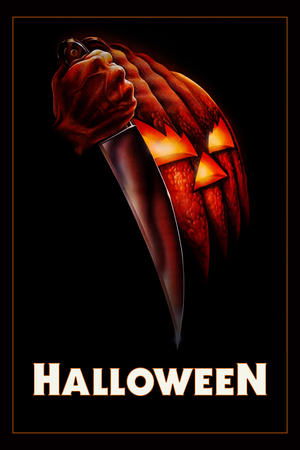
Halloween (1978) was co-written by John Carpenter and Debra Hill, with Hill also serving as producer. The fictional town of Haddonfield took its name from the New Jersey community in which Hill had grown up, helping ground a story about almost abstract evil inside a place that felt intentionally ordinary.
The screenplay divided naturally between the writers' strengths. Hill was particularly responsible for the teenage girls and babysitter dialogue, drawing upon the rhythms of conversations she understood from personal experience. Carpenter concentrated heavily on Michael Myers, Dr. Loomis and the mythology of evil surrounding the escaped killer. The division was not absolute, but it produced an important balance between everyday life and the force invading it.
That balance is essential to the film. Laurie Strode, Annie Brackett and Lynda Van Der Klok do not spend the entire story discussing death or behaving like characters waiting to enter a horror movie. They talk about school, relationships, babysitting and ordinary social concerns. Michael Myers becomes frightening partly because he moves silently around a world whose inhabitants are occupied with matters that seem completely unrelated to him.
Hill's contribution therefore reaches deeper than individual lines of dialogue. The normality of Haddonfield creates the surface that Michael violates. Without convincing everyday life, the Shape would have nothing meaningful to interrupt.
Producing Halloween on Almost Nothing
The original Halloween was made for roughly $300,000, a budget that demanded extreme discipline. Hill's experience in production became critical. The film needed to create the impression of autumn in Illinois while shooting primarily in Southern California, work with limited equipment and locations, and complete an ambitious suspense feature without the infrastructure available to studio productions.
Leaves had to be gathered and reused to suggest the season. Existing houses and streets replaced constructed sets. Clothing, vehicles and props were selected according to what could realistically be obtained. The production's apparent simplicity hides the number of logistical decisions required to make one neighborhood convincingly represent another part of the country.
Hill was also physically present within the filmmaking process rather than operating only from an office. Her hands were used in portions of the opening sequence involving the young Michael Myers, another small example of how personnel on low-budget films frequently performed whatever additional functions were necessary to complete a shot.
This practical flexibility became part of the film's character. Halloween does not feel impoverished because Carpenter and Hill organized its limitations around suspense rather than spectacle. The killer required a mask, a knife and movement through familiar spaces. Much of the horror could therefore be produced through framing, timing and anticipation instead of expensive effects.
Laurie Strode and the Babysitters
Laurie Strode became one of the defining protagonists of slasher cinema, but much of her effectiveness comes from how little the screenplay initially treats her as an exceptional person. She is responsible, intelligent and somewhat reserved, yet she remains recognizable as a teenager performing a routine babysitting job.
Hill's understanding of the girls' conversations helps separate Laurie, Annie and Lynda without requiring elaborate exposition. Their personalities emerge through the way they speak to one another, discuss relationships and react to responsibility. The dialogue creates friendship before the plot begins systematically separating them.
This becomes particularly important once Michael begins killing. The victims are not simply bodies introduced moments before their deaths. The audience has spent time inside their ordinary social world, making the destruction of that world more effective.
The approach would become widely imitated as slasher cinema expanded during the following years. Teenagers, suburban houses and babysitting became familiar genre territory, but Halloween had demonstrated how much suspense could be extracted from making those spaces believable before violating them.
Michael Myers and the Idea of Evil Without Explanation
The screenplay avoids giving Michael Myers a conventional psychological explanation capable of making his behavior comfortable. Dr. Loomis repeatedly describes him in terms closer to elemental evil than psychiatric diagnosis. Michael returns to the town where he killed his sister, but the film offers no ordinary motive explaining why he chooses the people he stalks.
Hill and Carpenter understood that excessive explanation could reduce the character. The less Michael communicated, the easier it became to imagine something unknowable behind the mask. His blank face removed emotional information at precisely the moment when viewers wanted to understand what he intended.
This principle helped create the distinction between Michael and many later slasher killers. He does not need elaborate personality or dialogue to dominate the film. His presence becomes meaningful through where he appears, how long he remains visible and when he disappears again.
The Success That Changed Independent Horror
Halloween became an extraordinary commercial success, ultimately earning many times its production cost and establishing itself as one of the landmark independent films of its era. Its success immediately changed the professional position of Carpenter, Hill and Jamie Lee Curtis while demonstrating the commercial possibilities of carefully controlled low-budget horror.
The film did not invent every element later associated with the slasher genre, but its financial success helped prove that the structure could be repeated profitably. A limited number of locations, a young cast and one memorable killer could generate substantial theatrical returns when combined with effective suspense and marketing.
For Hill, the success was especially significant because female producers remained uncommon at the level of authority she had exercised. She had not simply entered an established production. She had helped build the project creatively and practically from the screenplay forward.
The Fog and the Expansion of the Carpenter-Hill Partnership
The Fog (1980) allowed Hill and Carpenter to move from a minimalist stalker story toward supernatural ensemble horror. They co-wrote the screenplay, Hill produced and Carpenter directed. The film follows the coastal community of Antonio Bay as a mysterious fog brings the ghosts of murdered sailors back to punish the descendants of the people responsible for their deaths.
The story expands one of the ideas already present beneath Halloween: apparently peaceful communities can conceal histories of violence. In Halloween, one suburban house contains a murder committed years earlier. In The Fog, an entire town has been constructed upon a crime deliberately erased from its official history.
The supernatural threat is therefore inseparable from civic memory. The founders of Antonio Bay acquired wealth through betrayal and murder, and the modern community celebrates an anniversary without understanding what actually happened. The ghosts return because prosperity has been built upon a story nobody wants remembered.
Hill again helped populate the film with recognizable personalities rather than treating the supernatural mythology as sufficient by itself. Radio broadcaster Stevie Wayne, hitchhiker Elizabeth Solley, Kathy Williams and the other inhabitants create a network across the town, allowing the fog to threaten an entire community rather than one isolated protagonist.
Jamie Lee Curtis, Janet Leigh and a Horror Lineage
The Fog reunited Hill and Carpenter with Jamie Lee Curtis while also casting Curtis's mother, Janet Leigh, forever associated with Alfred Hitchcock's Psycho. The combination created an unusually visible connection between two generations of American horror filmmaking.
Curtis had emerged through Halloween, but Hill and Carpenter did not simply reproduce Laurie Strode. Elizabeth Solley is older, more independent and occupies a different position within the ensemble. The casting allowed Curtis to remain associated with horror without forcing every performance into the same character type.
Hill's production career repeatedly benefited from this kind of continuity. Actors and technicians returned because successful relationships had already been established. The crews surrounding Carpenter and Hill during this period developed into a recognizable creative network rather than a completely new organization assembled for each film.
Halloween II and the Problem of Continuing the Night
The extraordinary success of Halloween made a sequel commercially inevitable. Hill and Carpenter returned as writers and producers on Halloween II (1981), while Rick Rosenthal directed. The story begins immediately after the original film, effectively turning the two features into one extended night.
Moving much of the action into Haddonfield Memorial Hospital changed the geography while preserving the central pursuit between Laurie and Michael. Empty corridors, dark treatment rooms and a strangely understaffed building became the new environment through which the Shape moved.
The sequel increased the explicit violence significantly, reflecting a horror marketplace that had changed rapidly after the first film. By 1981, audiences had already seen a wave of more graphic slashers, and the continuation responded with a larger body count and more elaborate deaths.
The screenplay also introduced the revelation that Laurie was Michael's sister, a narrative decision that would shape much of the franchise for decades. The connection supplied a clearer reason for Michael's pursuit, although it also moved the mythology away from the terrifying randomness that had distinguished the original.
Halloween III and the Attempt to Free the Series From Michael Myers
Halloween III: Season of the Witch (1982) represented one of the most ambitious decisions associated with the early franchise. Rather than continue Michael Myers again, Hill and Carpenter produced a completely different story directed by Tommy Lee Wallace. The intention was to allow the Halloween name to become an anthology banner under which new stories could appear.
The film follows a physician investigating Silver Shamrock Novelties, a company preparing a nationwide Halloween promotion involving masks, television signals, ancient ritual and mass murder. Its combination of corporate conspiracy, technology, witchcraft and body horror could hardly be further from the suburban stalking structure of the original.
Audiences expecting Michael Myers reacted negatively to his absence, and the anthology concept did not continue. Yet the decision reveals something important about Hill and Carpenter's relationship with the property at the time. They were not necessarily interested in producing endless variations of Michael stalking new victims. They wanted the Halloween season itself to become the unifying principle.
The film's later reassessment has made that experiment easier to appreciate. What appeared commercially disastrous in the context of franchise expectations now demonstrates an alternative path horror sequels might have taken.
Escape from New York and Producing Beyond Horror
Hill also produced Carpenter's Escape from New York (1981), demonstrating that their partnership was never limited to horror. The dystopian action film imagines Manhattan transformed into a maximum-security prison and follows Snake Plissken as he enters the city to rescue the President of the United States.
The production was substantially larger than Halloween, requiring ruined urban environments, action sequences and a much broader ensemble. Hill's movement from a tiny independent horror production into a project of this scale illustrates how quickly her responsibilities expanded.
Although Escape from New York belongs primarily to science fiction and action cinema, its atmosphere shares elements with horror. Darkness, decay and isolated figures moving through abandoned streets create an urban nightmare where civilization appears physically close but socially unreachable.
The film also demonstrates why Hill should not be understood only through the success of Halloween. She was becoming a producer capable of operating across genre boundaries while retaining the efficiency learned during lower-budget filmmaking.
The Dead Zone and Horror Without Carpenter
The Dead Zone (1983) became particularly important in Hill's career because it demonstrated that her horror credentials did not depend exclusively upon John Carpenter. She produced David Cronenberg's adaptation of Stephen King's novel, starring Christopher Walken as Johnny Smith, a man who awakens from a coma with the ability to perceive hidden events through physical contact.
The film is quieter than much of the horror surrounding Hill's earlier career. Johnny's ability initially appears miraculous but gradually becomes a burden. Knowledge isolates him, destroys the possibility of returning to his previous life and ultimately forces him to decide whether seeing a future disaster creates a responsibility to prevent it.
Cronenberg's direction avoids turning psychic ability into simple spectacle. The horror comes from information that cannot be forgotten. Johnny repeatedly discovers things that other people are protected from knowing, and each revelation increases the distance between him and ordinary life.
Hill's presence as producer connects two major currents of modern horror: the independent American genre filmmaking that produced Halloween and the psychologically complex body and identity horror associated with Cronenberg. The project showed that she could recognize and support a completely different directorial voice.
Moving Beyond John Carpenter
During the 1980s, Hill increasingly developed projects independently from Carpenter. Their early creative partnership had established both careers, but remaining permanently attached would have underestimated her ambitions as a producer.
She moved into comedy, drama, fantasy and mainstream studio filmmaking while continuing to carry the organizational experience developed in genre cinema. Her later career included productions such as Clue, Adventures in Babysitting, Heartbreak Hotel, Gross Anatomy and The Fisher King.
This broader work is significant even within an horror-focused biography because it demonstrates that Hill did not remain trapped by the commercial identity of Halloween. The film had created enormous professional recognition, but she used that recognition to enter other areas of the industry rather than endlessly reproducing the same formula.
Hill/Obst Productions and Lynda Obst
Hill formed Hill/Obst Productions with Lynda Obst during the mid-1980s, creating a production partnership led by two women at a time when women remained significantly underrepresented in positions of industrial power. Their projects moved beyond horror and demonstrated Hill's determination to establish herself as a producer across mainstream American cinema.
The partnership produced films including Adventures in Babysitting and Heartbreak Hotel, while Hill's broader producing work increasingly demonstrated an ability to move between radically different tones and audiences.
This phase of her career also makes the scale of the transition from Halloween clearer. A producer who had once needed to stretch every dollar of a $300,000 independent horror film was now operating inside larger corporate production structures and negotiating projects intended for mass-market audiences.
The Fisher King and Prestige Production
The Fisher King (1991), directed by Terry Gilliam and starring Jeff Bridges and Robin Williams, stands far outside conventional horror but represents one of Hill's most important productions. The film combines drama, fantasy, trauma and dark comedy through characters struggling with guilt and psychological damage.
Producing a filmmaker as visually distinctive as Gilliam required a different kind of management from producing minimalist genre films, but the underlying skill remained similar. A producer had to protect the creative identity of the project while still transforming unusual ideas into a finished feature that financiers and distributors could support.
The film's critical recognition further expanded Hill's reputation beyond the genres through which she had initially become famous. By this stage, describing her simply as the producer of Halloween no longer captured the range of her work.
Returning to Carpenter for Escape from L.A.
Hill and Carpenter eventually reunited creatively for Escape from L.A. (1996), which they wrote with Kurt Russell. The sequel returned Snake Plissken to a dystopian future while expanding the satirical elements already present in the original film.
The reunion demonstrated the durability of the professional relationship despite the very different directions their careers had taken. Their collaboration had begun in the low-budget production world of the 1970s and could still be resumed within a considerably larger studio production two decades later.
Although the film belongs primarily to science fiction and action, its existence is important to Hill's career because it confirms that her connection with Carpenter was never reducible to one early period or one horror franchise.
Halloween as a Legacy That Refused to End
The success of Michael Myers eventually transformed Halloween into a franchise far larger than the film Hill and Carpenter had originally produced. Sequels continued after their direct involvement had diminished, while characters, ideas and story elements originating in the first films repeatedly returned.
This creates an unusual relationship between Hill and later installments. Her contribution exists even when she was not actively producing a particular sequel because the mythology continues using characters and concepts she helped create. The town of Haddonfield, Laurie Strode and the original dramatic structure became intellectual foundations for decades of later filmmaking.
Later films therefore carried her creative history forward in ways that exceeded normal production credit. Every reinvention of Haddonfield begins inside a fictional place whose name Hill brought from her own life.
Women Behind the Camera
Hill's career developed during a period when women were still frequently excluded from high-level production positions. Her achievement was not simply that she worked on successful films. She exercised creative and logistical authority on projects that became major commercial properties.
Her route through crew work gave her unusual credibility because she understood the filmmaking process from practical experience. Carpenter later emphasized that she knew what making a picture actually required because she had worked through numerous departments rather than entering production only at the executive level.
Hill also became an advocate for greater opportunities for women within the industry. She supported professional organizations and spoke openly about the disparities women continued facing in employment, authority and compensation.
Women in Film honored her in 2003 with its Crystal Award, recognizing a career that had helped expand opportunities for women within the screen industries. The honor was particularly appropriate for someone whose early work had already challenged assumptions about what kind of films women were expected to produce.
Horror Through a Producer's Eyes
Hill's horror career demonstrates why producers are often difficult to evaluate through conventional auteur criticism. A director leaves visible evidence in framing, editing and performance. A producer's best work may consist of problems that never become visible because they were solved before reaching the screen.
Yet patterns emerge across Hill's horror films. She repeatedly supported strong genre concepts that could be explained quickly but developed into richer stories through character and atmosphere. A masked killer enters suburban streets in Halloween. Murdered sailors return inside supernatural fog. A psychic sees events he cannot emotionally escape in The Dead Zone.
These films do not require enormous mythology before the audience understands the threat. Their premises are immediately legible, allowing filmmakers to concentrate on execution rather than exposition. Hill understood the commercial strength of clarity without assuming that clarity required creative simplicity.
Ordinary Spaces Made Dangerous
One of the strongest connections across Hill's horror work is the corruption of familiar spaces. Halloween turns suburban streets, bedrooms and babysitting houses into hunting grounds. The Fog transforms a picturesque coastal community into a place haunted by the crime that created it. The Dead Zone turns schools, homes and political events into locations where hidden futures suddenly become visible.
This use of ordinary environments creates a specific kind of horror. The threat does not require characters to travel into a distant Gothic world. Horror already exists inside the places designed to make people feel secure.
Hill's own background made this especially appropriate for Halloween. Naming Haddonfield after the town where she had grown up gave the fictional location a personal connection with exactly the kind of apparently peaceful American community the film intended to destabilize.
The Fog Remake and the Final Return to Horror
A new version of The Fog entered production during the final period of Hill's life. The 2005 remake, directed by Rupert Wainwright, reinterpreted the story Hill and Carpenter had created twenty-five years earlier for a new generation of horror audiences.
Hill received a producer credit on the film but died before its theatrical release. The project therefore became one of the final connections between her career and the genre that had originally established her reputation.
The remake also illustrates the durability of the concepts created during the Carpenter-Hill period. By the twenty-first century, Halloween had become a continuing franchise and The Fog could be remade for a new theatrical market. Stories originally created within relatively modest productions had become recognizable intellectual properties decades later.
Illness and the Final Years
Hill continued working after being diagnosed with cancer. Her illness did not immediately remove her from production, and she remained professionally active during the final period of her life. She died in Los Angeles on March 7, 2005, at the age of fifty-four.
Her death prompted filmmakers and colleagues to emphasize not only the importance of her individual films but her role as a woman who had entered Hollywood from crew positions and risen to become a major producer. Carpenter described her as a pioneer and stressed her practical knowledge of filmmaking.
The description is particularly appropriate because Hill's influence operates on both sides of cinema. She helped create stories audiences remember, but she also represented the production labor required to transform those stories into finished films.
Debra Hill and the Identity of Halloween
Modern discussions of Halloween naturally emphasize John Carpenter's direction, Dean Cundey's cinematography, Carpenter's music, Jamie Lee Curtis's performance and the visual presence of Michael Myers. Hill belongs inside that same essential creative structure.
She co-wrote the screenplay, produced the film, helped define the teenage characters and contributed the name of its fictional town from her own history. These are not peripheral contributions. They determine where the story takes place, who inhabits it and how the production was physically able to exist.
The fact that many of these contributions are less immediately visible than a musical theme or a mask reflects the nature of producing rather than their importance. Horror history becomes incomplete when the people who created the conditions for a film are treated as secondary simply because their work occurs behind the most recognizable images.
Debra Hill's Horror Legacy
Debra Hill's horror filmography is not enormous compared with directors or actors who spent entire careers inside the genre, but its concentration is extraordinary. Halloween, The Fog, Halloween II, Halloween III: Season of the Witch and The Dead Zone connect her directly with several of the most important developments in American horror between the late 1970s and early 1980s.
Through Halloween, she helped build the film that became a major model for the modern slasher. Through The Fog, she helped create a supernatural story in which historical guilt literally returns to attack the present. Through Halloween III, she participated in an ambitious attempt to transform a successful franchise into an anthology. Through The Dead Zone, she supported David Cronenberg in creating one of the most restrained and emotionally tragic Stephen King adaptations.
Her broader career proves that these achievements were not accidents produced only through one creative partnership. Hill went on to build production companies, work with filmmakers radically different from Carpenter and produce films across comedy, drama, fantasy and studio entertainment. Horror opened the door, but she demonstrated the ability to operate throughout the industry once she walked through it.
The most lasting evidence remains Haddonfield itself. A New Jersey town from Hill's own life became the name of a fictional Illinois community where ordinary teenagers encountered an apparently indestructible killer. Decades of sequels, remakes and reinterpretations have returned to that name. Every time horror cinema goes back to Haddonfield, it returns to something Debra Hill brought with her before Michael Myers ever stepped onto the street.
Known Among Horror Fans For
Notable Horror Collaborators
Notable collaborators and creative partners throughout Debra Hill's horror career.
 John Carpenter
Defining Creative Partner
Carpenter was Hill's defining horror collaborator. Together they co-wrote Halloween, The Fog and Halloween II, and produced Halloween III: Season of the Witch, helping shape one of the most influential creative partnerships in modern American horror.
 Jamie Lee Curtis
Defining Horror Actor
Curtis became the central performer of Hill's early horror career through Halloween, The Fog and Halloween II, later also contributing an uncredited voice appearance to Halloween III: Season of the Witch.
 Dean Cundey
Cinematography Collaborator
Cundey photographed four major Hill horror productions in succession: Halloween, The Fog, Halloween II and Halloween III: Season of the Witch, helping establish their distinctive visual identity.
 Tommy Lee Wallace
Creative Collaborator
Wallace worked across several key Hill horror productions, editing and designing Halloween, editing and designing The Fog, and later writing and directing Halloween III: Season of the Witch.
 Moustapha Akkad
Producing Collaborator
Akkad was a central producing figure alongside Hill during the formative Halloween period, supporting Halloween, Halloween II and Halloween III: Season of the Witch.
 Charles Cyphers
Frequent Horror Actor
Cyphers appeared in three major Hill horror productions, playing Sheriff Leigh Brackett in Halloween and Halloween II and Dan O'Bannon in The Fog.
Debra Hill Horror Movies
Writing (11 credits)
2018
2007
2005
2002
1998
1995
1988
1981
1980
1978
Directing (2 credits)
1988
1977
Production (6 credits)
2005
1983
1982
1981
1980
1978
Acting (3 credits)
2006
2003
1980