



2019
H.R. Giger
Horror Special Effects · Biography · Horror Filmography · Collaborators · Credits
Horror subgenres & themes
Most represented across this person's horror filmography:
BODY HORROR
• MONSTER
• HAUNTED HOUSES
Biography
H. R. Giger and the Visual Architecture of Modern Horror
H. R. Giger (February 5, 1940 – May 12, 2014) was a Swiss painter, sculptor and film designer whose work gave modern screen horror an exceptionally coherent conception of alien life. His contribution to Ridley Scott's Alien (1979) encompassed the adult creature, elements of its reproductive cycle and the architecture of an extraterrestrial environment where biological structures appear inseparable from machinery. Later commissions on Poltergeist II: The Other Side (1986), Alien 3 (1992) and Species (1995) brought that imagery into supernatural horror, biological transformation and stories of predatory reproduction. The extent to which his designs survived the practical decisions of each production varied considerably, making the distinction between concept artwork and finished effects especially important.
Giger approached monsters as an established visual artist with a highly developed vocabulary. Before entering a major film studio, he had painted figures with exposed skeletal structures, respiratory tubes, ribbed cavities and surfaces resembling engineered tissue. Birth, sexual anatomy, death and the vulnerability of the body recur throughout those images. Filmmaking introduced scale, movement and interaction with performers. An organism that could exist freely on paper now required articulated joints, a believable surface and a practical means of functioning under photographic lighting. His influence on horror extends beyond the xenomorph's recognizable silhouette to the underlying idea that a monster's anatomy and its environment might be parts of one disturbing biological system.
Early Artwork, Industrial Design and the Origins of Biomechanics
Hans Ruedi Giger was born in Chur, Switzerland, and studied interior architecture and industrial design in Zurich during the 1960s. His father was a pharmacist, and the artist grew up around objects associated with scientific and medical practice. His subsequent work drew from fantastic painting, surrealism, dreams and literature with unsettling supernatural or psychological subjects. Professional design training was particularly relevant to his later film assignments because a sculpted character and a constructed environment must occupy actual space, with dimensions and supporting structures that survive examination by a moving camera.
Early projects including Atomkinder and Birth Machine established the relationship between reproductive imagery and industrial forms that became central to his art. He developed from ink drawing into large airbrushed paintings, exploiting gradual tonal transitions to produce surfaces whose material remains uncertain. Apparent polished metal may resolve into bone, while mechanical housings acquire the contours of muscles and exposed tissue. Within horror, these ambiguities make it difficult to establish whether a structure is alive, dangerous or capable of reproduction.
Giger called his fusion of organism and mechanism biomechanics. The term describes a visual method with concrete consequences for creature construction. Ribs can become conduits, a skull can extend into a rigid armature, and exposed joints can suggest engineering without corresponding to any familiar animal. Human figures in his paintings frequently merge with restrictive structures that seem to pass through the body. Such images offered filmmakers a vocabulary for depicting an alien organism with anatomical characteristics that viewers could recognize individually but could not assemble into a conventional biological category.
The illustrated collection Necronomicon, published in 1977, brought his work to an international audience. Its title refers to the fictional forbidden book in the stories of H. P. Lovecraft, although the artwork was Giger's own. The 1976 painting Necronom IV proved especially consequential: its eyeless head, elongated cranium and skeletal body supplied the starting point for the adult creature in Alien. The figure already looked functional in its own unfamiliar terms, a quality that would be tested when technicians tried to transform a static image into a physical film character.
Dan O'Bannon, the Unmade Dune and the Path to Alien
Giger's path to the American film industry passed through an unrealized adaptation of Frank Herbert's Dune developed by Alejandro Jodorowsky. His designs for Harkonnen environments and furniture presented architecture as an oppressive physical system. The project was abandoned, so its designs cannot be described as effects shown in a completed horror film. Its relevance to his cinematic career rests chiefly in the connection it established with people who later worked on Alien, especially screenwriter Dan O'Bannon.
O'Bannon and Ronald Shusett developed the screenplay that became Alien, built around a predatory extraterrestrial species brought aboard a commercial spacecraft. The creature's appearance was a central production problem: an obviously artificial costume would weaken the threat established by the story. O'Bannon knew Giger's paintings and introduced his work to the filmmakers. The artist also produced early images for the reproductive organism that attaches itself to the human face. That assignment was tied directly to the screenplay's central mechanism of parasitic invasion.
When Ridley Scott examined Necronomicon, he recognized the kind of alien anatomy he wanted. Giger was commissioned to design the principal organism and related extraterrestrial environments, ultimately traveling to Shepperton Studios in England. The work placed him inside a production system governed by actors, workshops, budgets and shooting schedules. It also gave the film a visual foundation in which the creature, egg chamber and derelict vessel could be developed according to related structural principles.
Alien: Designing and Constructing the Adult Creature
The adult monster drew upon Necronom IV and related paintings. Its most distinctive feature is the long eyeless head, which prevents the audience from interpreting its intentions through familiar facial cues. The exposed structures of the torso suggest both skeleton and manufactured apparatus. Even when the camera shows the creature clearly, viewers lack a stable anatomical model for understanding which surfaces are rigid, flexible or vulnerable.
The full-scale costume was fitted to Bolaji Badejo, whose exceptional height and slender proportions preserved the elongated outline of the concept. Giger worked directly on its physical construction, developing sculpted material around the performer's body cast and incorporating tubes and other structural details. The artistic challenge differed from painting. A drawing can impose impossible relationships among limbs and body sections; a suit has to allow its wearer to walk, balance and breathe through repeated takes. The design was repeatedly refined to reconcile those requirements.
Scott's approach to photographing the monster addressed some of the limitations. Partial views, close details and movement through narrow interiors allowed the audience to encounter a threatening presence without fully examining the mechanics of the costume. Giger later acknowledged that the relatively brief appearances created more suspense than the longer exposures he had initially anticipated. He was less satisfied with a full-body view that made the dependence on a human performer easier to perceive. His retrospective comments show how the design's effect changed through framing and editing.
The creature's head also required mechanical articulation. Carlo Rambaldi was hired to develop the mechanisms for its moving features, including the extendable inner jaws, and other specialists completed further technical work. A preserved headpiece in the Academy Museum credits both Giger and Rambaldi for design and construction. The division of responsibilities is essential: Giger conceived the appearance and worked on substantial physical fabrication, while effects engineers supplied specific movements that a conventional costume could not perform.
The mouth exemplifies the interaction between image design and horror dramaturgy. For much of a scene the smooth head reveals little information about the animal's capacity to attack. The sudden extension of a second set of jaws changes the viewer's understanding of its biology at the moment of violence. Giger created a creature whose form allows the film to withhold crucial anatomical information. That uncertainty supports the story's continuing discovery of a species more dangerous than the crew initially comprehends.
The Egg, Facehugger and Chestburster: Reproduction as Horror
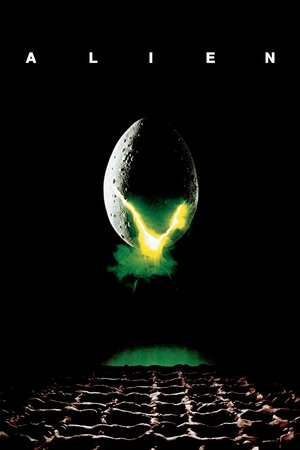
Alien organizes its central terror around a reproductive process in which a human being becomes the unwilling host of another species. Giger developed designs for the life cycle and for the environment where the crew discovers the eggs. The egg is presented as a living container with an opening that exposes a dangerous organism. Its sculptural exterior and moist interior already suggest the film's recurring confusion between constructed surfaces and exposed flesh. A seemingly inactive object can suddenly behave as a predator.
The facehugger's concept required an organism capable of fastening to a human head, with grasping limbs and a long tail. Its appearance was linked to the story's invasive biological premise. In the completed production, the smaller alien forms were co-designed and made by Roger Dicken, whose specific practical contribution is recorded by the British Film Institute. Giger's broader authorship of the species should therefore be distinguished from the fabrication and operation of individual puppets developed for particular shots.
The chestburster transforms this reproductive scheme into a direct spectacle of bodily injury. A new organism violently emerges through the torso of a living host, revealing that the earlier encounter has initiated an internal gestation. The filmed effect required a separate practical construction, fabricated anatomy and fluids handled by the effects crew. Giger's conception helped establish the stages of the extraterrestrial species, while the mechanics of the bursting scene depended on additional specialists. This collaboration made a speculative biological process appear physically immediate.
Each successive form introduces a different threat. The egg conceals the danger, the facehugger forces biological contact, and the chestburster reveals the consequence of that contact through the victim's body. By the time the adult creature appears, its rapid development has already been established as part of an unfamiliar life cycle. This progression gives the monster a history inside the narrative and makes reproductive violence a defining component of its screen identity.
The Derelict Ship, Space Jockey and Extraterrestrial Landscapes
Giger's environmental work for Alien is fundamental to the film's atmosphere. The wrecked extraterrestrial vessel contains shapes whose purpose cannot be read as ordinary industrial equipment. Curving passages, ribbed architecture and massive structural forms make the setting resemble the interior of an unknown organism. The human explorers seem to enter a place whose biological logic has been preserved in physical space. Because the surface language is consistent with the creature, the environment suggests a much larger system of life beyond what the characters directly encounter.
The enormous seated figure generally called the Space Jockey occupies a central position in the ship. Its skeletal form appears integrated with a surrounding apparatus, leaving unclear where a body ends and its equipment begins. Giger designed the figure and worked on sculptural elements of the setting. It performs a precise narrative function: before the crew discovers the eggs, it provides physical evidence of an earlier catastrophe involving an unfamiliar species. The unexplained condition of the figure allows the film to suggest a vast history without supplying an exposition scene.
Giger used drawings, miniatures and full-scale constructions to develop the landscape and vessel interiors. He employed skeletal references and was interested in combining bones with mechanical objects. In a retrospective interview he explained that some of his more extensive ideas could not be realized within the available production resources. The surviving settings nevertheless preserve distinctive surfaces and proportions that differ from the functional machinery of the human spacecraft. The contrast between those environments reinforces the characters' intrusion into a world they are unable to interpret.
The relationship between the ship and its occupant has remained important to cosmic horror imagery. An unfamiliar artifact can imply an extinct civilization, a biological function or an act of violence without proving which explanation is correct. The derelict vessel makes the discovery of the eggs more disturbing because it embeds them in an environment already marked by an unexplained disaster. Giger's design supplies visual information that the script deliberately leaves incomplete.
Poltergeist II: The Great Beast and a Troubled Translation from Drawing to Film
MGM commissioned Giger to develop creature artwork for Poltergeist II: The Other Side (1986), directed by Brian Gibson. The sequel elaborates on the supernatural force associated with Reverend Henry Kane and required several manifestations of a demonic entity. Working mainly from Switzerland, Giger prepared drawings in response to the screenplay and sent them to Los Angeles. His assignment centered on the progression from a worm-like apparition to increasingly grotesque supernatural bodies and the final creature known as the Great Beast.
The surviving studies show an extensive investigation of transformation. The worm was conceived as an invasive presence linked to the human body; subsequent phases incorporate distorted limbs and progressively more complex anatomy. Drawings for the creature expelled during a vomiting scene and for the final monster treated metamorphosis as a sequence of related physical events. The designs gave the effects department a detailed progression for a supernatural antagonist whose body could change form within the story.
Steve Johnson, working through the Boss Film effects organization, translated the concepts into practical constructions. Pneumatic mechanisms, controlled puppets and prosthetic effects supported the creature's appearances. John Bruno and the visual effects team also worked on the staging and technical planning. The final sequence emerged through decisions made by several departments, including changes requested during production. Giger was not present in the workshop with the same continuity he had enjoyed during the original Alien.
He later expressed dissatisfaction with the results, arguing that important characteristics of his designs had been lost in their execution. A published facsimile of his Poltergeist II drawings preserves the sketches and correspondence surrounding his concerns. The project illustrates the distance that can arise between a painter's carefully controlled images and effects photographed after multiple stages of reinterpretation. His creative contribution was the development of the creature's forms and metamorphoses; Johnson's team supplied the operative mechanisms and tangible figures seen in the film.
For horror history the distinction is unusually instructive. Elaborate concept artwork can shape the identity of a monster without determining its exact movement, material texture or duration on screen. The finished Great Beast retained connections to Giger's imagery, but the artist regarded its cinematic embodiment as unsatisfactory. The surviving paper record makes it possible to study both the original direction and the practical version without equating them.
Alien 3: A Redesigned Creature That the Film Did Not Fully Use
Giger was asked to develop ideas for Alien 3 (1992), the feature directed by David Fincher. The production's creature was to possess different physical characteristics from its predecessors, linked to the animal from which it originated. Giger welcomed the opportunity to revise aspects of his original design and prepared new drawings and a large physical model in his own studio. His work belongs to the development history of the sequel, even though relatively little of it was incorporated into the finished organism.
The proposed anatomy was more streamlined and included changes to the lips, claws and neck. Giger explored additional means of attack and a second skin with openings that might produce sounds as air passed through them. His concepts also addressed a modified facehugger. These proposals show an artist interested in evolving the creature as a biological subject with new behaviors, taking account of the practical limitations he had observed in the earlier film.
Giger subsequently described serious difficulties in communication with the production. He believed his new work had been largely disregarded. The finished monster maintained the essential character established in 1979, with fresh effects developed by the film's practical creature team. It would misrepresent the record to credit every aspect of the released quadrupedal creature to his unused redesign. The commission is best understood through the contrast between the artwork preserved by his archive and the decisions visible in the completed feature.
Later entries in the franchise created another problem of attribution. A monster can appear repeatedly because earlier designs have become recognizable intellectual and visual property, even when the original artist was not hired to contribute new work. Giger did not directly design the Alien Queen for James Cameron's Aliens (1986), and he was absent from that sequel's effects development. In discussing Giger's horror career, authorship of the original xenomorph must remain separate from his actual employment on subsequent films.
Teito Monogatari and Killer Condom: Smaller Horror Commissions
Giger also accepted work on productions far removed from Hollywood's largest effects operations. For Teito Monogatari (1988), directed by Akio Jissoji, he was commissioned to design the supernatural guardian Goho Dohji. The Japanese film draws on historical and occult material, using fantastic beings within a narrative concerned with threats to Tokyo. Giger developed an unfamiliar interpretation of the guardian spirit, with its body organized around circular and cutting structures. The commission demonstrates how his treatment of anatomy could be adapted to a creature rooted in a different religious and narrative tradition.
He supplied drawings and construction guidance but was unable to supervise the Japanese effects workshop. Accounts of the production describe problems translating the intended scale and form, leaving him dissatisfied with the finished figure. The situation resembles his later complaints about Hollywood work: initial paintings supplied a specific design, while the crew responsible for the model made decisions he could no longer direct. The surviving concept artwork remains important evidence of his contribution to the film.
In Kondom des Grauens (Killer Condom, 1996), directed by Martin Walz, Giger received a creative consultant credit. The German horror comedy concerns predatory condoms whose monstrous anatomy transforms an ordinary object into an attacker. Practical effects were supervised by filmmaker Jörg Buttgereit, so the finished mechanisms should be attributed to that production team. Giger's consultancy belongs to his documented work in horror cinema, but it was a much smaller role than the creature development he undertook for Species.
Species: Sil and the Construction of a Translucent Alien Body
Species (1995), directed by Roger Donaldson, gave Giger another substantial commission to develop an original creature for a commercial horror film. The narrative follows Sil, a hybrid of human and extraterrestrial genetic material whose rapid maturation and reproductive drive create a threat concealed within an apparently ordinary woman. Giger designed the creature's nonhuman form and contributed related conceptual imagery. The premise connected directly with concerns present in his paintings before Alien, especially the relationship between recognizable sexual anatomy and the suggestion of unfamiliar biological functions.
Sil retained a generally female silhouette but possessed elongated structures and a surface that appeared partly translucent. The skull extended into an elaborate shape, while the torso exposed rib-like elements that no ordinary human body could accommodate. The creature's appearance was designed to make the revelation of her alien identity dramatically distinct from the human character's everyday movements. That contrast is essential to the film's threat: a being capable of passing among people reveals an anatomy that exposes its reproductive and predatory nature.
Steve Johnson and his company XFX were responsible for turning Giger's artwork into a physical creature. Their construction required articulated mechanisms and materials capable of allowing light to pass through the outer surface. Contemporary reporting in the Los Angeles Times documented the difficulty of producing a figure that could both move and appear transparent. The team experimented with flexible materials and an internal mechanical structure to produce an unusual balance between mobility and translucency. These practical choices were separate from Giger's initial visual concepts, although they were guided by the same intended appearance.
The project also generated paintings and designs for unsettling dream imagery. Giger's ideas for a nightmarish train demonstrate his interest in giving familiar manufactured objects an organic presence. Such environments extend the logic of his creature paintings into spaces that can threaten the viewer through shape alone. Not every drawing or proposed sequence reached the screen, and the completed film reflects choices made by the director and studio during production.
Species is important within his screen career because it introduced a new monster conceived specifically for a story about the concealment of nonhuman biology inside a human appearance. The practical figure formed a bridge between Giger's art and the mechanical expertise of the effects crew. Its development also established a second substantial horror production shared by Giger and Johnson, who had previously worked on the material realization of his designs for Poltergeist II.
Species II, Design Credits and the Limits of Artistic Control
Giger contributed new material during development of Species II (1998), but the sequel repeated difficulties he had encountered on previous Hollywood productions. Much of the effects planning was already underway when he became involved, and his work addressed selected scenes. After viewing a cut of the completed film, he maintained that his designs had been ignored or substantially changed. The disagreement was consequential enough for him to ask that his new creature-design credit be withdrawn.
MGM agreed to identify him as the original designer of the species, a narrower acknowledgment of the earlier creation. Contemporary accounts from 1998 record his request and the studio's response. His involvement should therefore be described precisely: he provided material for the sequel's development but rejected attribution of its finished monster effects as a faithful realization of that work. The surviving documentation illustrates how a recognizable creature could continue through a franchise while its originator had diminishing control over subsequent versions.
Prometheus and the Return to Ridley Scott's Alien World
Ridley Scott invited Giger to participate in the development of Prometheus (2012), returning to the extraterrestrial civilization suggested by the derelict spacecraft in the first Alien. Giger produced a number of new sketches and contributed suggestions regarding the environments. Scott publicly discussed work on murals, and the artist's museum confirms that the two met in London during the commission. Materials prepared decades earlier for Alien also informed the contemporary design department.
The scope of this involvement was more limited than his work at Shepperton Studios. Important decisions about the film's appearance had already been taken by the time he joined the project. Giger himself described the relatively late request and acknowledged that the finished film combined ideas from several designers. The production therefore offers a documented renewal of his collaboration with Scott, while the environments and creatures of Prometheus remain collective creations shaped by a large art and effects team.
His late return is relevant to the original film's unresolved visual questions. The seated Space Jockey and the derelict vessel had implied a civilization without explaining its history. Prometheus revisited that imagery within a story about creation and dangerous biological experimentation. Giger's designs continued to provide an artistic reference, and his new participation connected the later film to the original author of its most distinctive extraterrestrial forms.
Influence on Creature Design, Body Horror and Interactive Media
Giger's importance to horror goes beyond projects that commissioned original material. The xenomorph introduced a screen organism whose predatory capabilities, reproductive system and physical surfaces seemed to belong to one unfamiliar biology. Its design allowed the camera to reveal new information about how the creature functioned during an attack. The derelict ship extended the same sensibility into environmental design, suggesting that architecture itself could preserve the remains of alien life. Such approaches supplied later creature artists with a model for linking anatomical form to the events of a horror narrative.
His paintings also helped make bodily transformation and the instability of physical boundaries prominent visual subjects. Mechanical elements appear implanted into human figures; familiar cavities become compartments with unknown functions; sexual and skeletal motifs occupy the same sculptural surface. These relationships are relevant to horror because they make the body capable of behaving like an alien environment. The resulting unease does not require a traditionally monstrous expression or an explicit injury effect.
Interactive horror adapted aspects of this vocabulary. The adventure game Dark Seed (1992) and its sequel made direct use of Giger's artwork. The later game Scorn (2022) drew inspiration from his images as well as work by Zdzisław Beksiński. Its developers also stressed the independent ideas underlying their own fictional world. Such distinctions help separate direct artistic contribution from later interpretation. Giger's visual approach circulated widely, but resemblance alone cannot establish participation in the production of another work.
His influence is also apparent in the continued production of alien-creature horror. The adult monster from Alien remained commercially recognizable even after substantial redesigns and changes in effects technology. This continuity resulted from the strength of its original appearance and the way the first film associated that appearance with specific forms of bodily danger. Designers could introduce new costumes, animatronics or digital methods while retaining the species' characteristic head and anatomical structure.
Recognition, Archives and the Preservation of Horror Designs
Giger shared the Academy Award for Visual Effects for Alien at the 1980 ceremony with Carlo Rambaldi, Brian Johnson, Nick Allder and Denys Ayling. The group award reflects the combined visual and technical effort behind the film's creature and effects. His conception determined a remarkable part of the finished imagery, while the contributions of mechanical specialists and other crew members made it possible to record those ideas as moving photographic subjects.
He purchased Château St-Germain in Gruyères, Switzerland, in 1997, and the HR Giger Museum opened there in 1998. The collection preserves paintings, sculpture and preparatory material from the film projects. Designs for Alien, Poltergeist II, Alien 3 and Species are especially valuable because they reveal decisions invisible in the finished productions. The archive allows researchers to follow the development of a screen organism from an independent artwork through technical adaptation, alteration or rejection.
Giger died in 2014 after a fall. The continuing importance of his work to horror history rests on this unusually well-documented relationship between autonomous painting and practical creature filmmaking. Alien remains the clearest example of his imagery being translated into a coherent cinematic world under his direct supervision. His later commissions reveal how strongly filmmakers wanted access to the same artistic imagination, and how dependent the results were on the choices of the departments responsible for putting the drawings on screen.
Selected Work
Notable Horror Collaborators
Notable collaborators and creative partners throughout H.R. Giger's horror career.
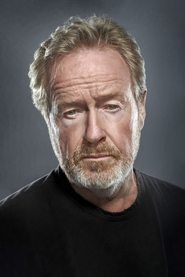 Ridley Scott
Director / Creature and Environment Designer
Scott commissioned Giger to design and construct the adult alien and extraterrestrial environments for Alien (1979). He invited the artist to contribute new drawings and mural concepts to Prometheus (2012), renewing a direct collaboration across two science-fiction horror productions.
 Steve Johnson
Creature Concept Artist / Practical Effects Artist
Johnson interpreted Giger's Great Beast concepts into practical creature effects for Poltergeist II: The Other Side (1986). His XFX company subsequently constructed the translucent alien creature designed by Giger for Species (1995), making their work together significant across two horror productions.
H.R. Giger Horror Movies
Special FX / Practical FX (6 credits)
2019
2007
1992
1986
1979
Production Design / Art Department (4 credits)
2012
1995
1989
1986
Acting (1 credits)
1967
Production (1 credits)
1967
Other Crew (1 credits)
1996