




2026
Eli Roth
Horror Director · Biography · Horror Filmography · Family · Collaborators · Credits
Horror subgenres & themes
Most represented across this person's horror filmography:
BODY HORROR
• CANNIBAL
• SLASHER
• SPLATTER
Biography
Eli Roth and the Cinema of Physical Horror
Eli Roth emerged as one of the most visible American horror filmmakers of the early twenty-first century by making bodily vulnerability the center of his cinema. From the flesh-eating infection of Cabin Fever to the industrialized violence of Hostel, the ritualized cruelty of The Green Inferno and the elaborate slasher murders of Thanksgiving, Roth repeatedly builds horror around the moment when apparently safe environments become physically hostile. Vacation cabins, European hostels, remote villages and familiar American holidays are transformed into spaces where ordinary social expectations collapse and the body becomes the final measure of danger.
His films are frequently remembered for gore, but Roth's horror depends just as strongly on anticipation, social embarrassment and the gradual destruction of security. Characters often enter situations through recognizable pleasures such as travel, friendship, sex, tourism or celebration before discovering that the environment has been organized according to completely different rules. Roth then uses practical effects and prolonged physical consequences to prevent violence from remaining abstract. Wounds remain visible, bodies deteriorate and survival rarely restores the characters to the condition in which they began.
Cabin Fever and the Fear of the Body
Cabin Fever established Roth as a feature director through a premise in which the enemy cannot be reduced to one conventional monster. A group of young people renting an isolated cabin becomes exposed to a flesh-eating disease, and the resulting horror grows from the realization that infection may already be inside the group before anyone understands how it spreads. Roth combines disease horror with black comedy and the structure of a rural nightmare, allowing paranoia among the characters to become almost as destructive as the infection itself.
The film also established several characteristics that would remain important throughout Roth's directing career. Practical makeup makes bodily deterioration unavoidable, humor appears inside situations that remain genuinely dangerous and apparently ordinary local characters become increasingly unsettling as the visitors lose control of the environment. The horror is not only that the body can fail, but that friendship and social responsibility rapidly collapse once everyone begins seeing everyone else as a potential source of contamination.
Nathan Barr and the Sound of Roth's Early Horror
Composer Nathan Barr became one of the most important creative collaborators of Roth's formative period. Barr scored Cabin Fever, Hostel and Hostel: Part II, giving the three films musical continuity even as Roth moved from disease horror into increasingly severe stories of organized human violence. Their collaboration continued indirectly through other Roth-associated horror productions, including The Last Exorcism, demonstrating that Barr's connection to Roth extended beyond one isolated film.
The scores are particularly useful because Roth's films constantly move between tones. Humor, travel, sexuality and casual conversation can suddenly give way to dread or graphic violence, requiring music capable of supporting the transition without announcing every change too early. Barr became part of the recognizable texture of Roth's early horror just as practical effects and aggressive tonal shifts became part of its visual language.
Hostel and the Horror of Tourism
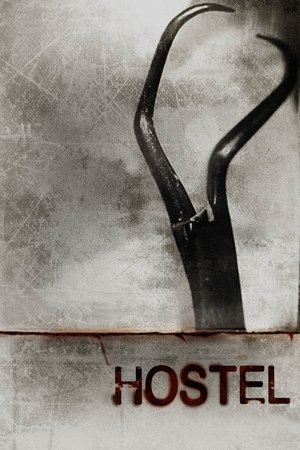
Hostel transformed Roth from a successful independent horror director into one of the central names associated with 2000s extreme horror. The film begins with American backpackers travelling through Europe in search of pleasure and gradually reveals an organization in which wealthy clients pay for the opportunity to torture and murder abducted victims. Roth turns the assumptions of tourism against the characters. Freedom of movement, anonymity and the excitement of entering unfamiliar places become weaknesses once the travelers discover that they have entered a system designed specifically to exploit outsiders.
The Elite Hunting concept gives the violence a social structure rather than presenting it as the behavior of one isolated killer. Money transforms human beings into products, and the horror lies partly in discovering how many ordinary-looking people participate in the machinery surrounding the victims. Roth uses graphic effects to make the physical consequences difficult to ignore, but the larger nightmare is organizational. The characters have not simply met a psychopath; they have entered an economy in which their suffering has already been purchased.
Quentin Tarantino and the Breakthrough of Hostel
Quentin Tarantino served as executive producer on Hostel and Hostel: Part II, becoming one of the most significant connections surrounding Roth's breakthrough period. His involvement gave the first film additional visibility while Roth retained control of the writing and direction. The relationship is important specifically within Roth's horror career because it coincides with the moment when Hostel moved from an aggressive genre concept into a widely discussed theatrical horror film.
Tarantino's presence did not turn Hostel into a Tarantino film, and Roth's horror identity remained distinctly his own. What the association provided was support for a filmmaker willing to push graphic material and uncomfortable humor into a commercial release. The collaboration continued into the sequel, giving the first two films a consistent production connection while Roth expanded the mythology of the Elite Hunting organization.
Scott Spiegel and the Hostel Production Network
Scott Spiegel became another important figure around the Hostel cycle. He executive produced the first two films and later directed Hostel: Part III, extending the property after Roth had completed his own directorial involvement. Spiegel and Roth were also connected through Raw Nerve, the production company formed with Boaz Yakin, making their relationship broader than one isolated sequel.
The partnership demonstrates how Roth's career expanded from directing individual horror films into helping create production structures around genre material. Hostel could continue beyond the specific stories Roth directed because the underlying concept had become recognizable enough to support another filmmaker and location. Spiegel therefore connects the personal authorship of the first films with the moment the property became an independent horror franchise.
Hostel: Part II and the Expansion of the System
Hostel: Part II shifts attention from male backpackers to a group of young women while revealing much more about the people purchasing access to the Elite Hunting organization. Roth no longer depends primarily on the mystery of what happens inside the facility because audiences already understand the central mechanism. Suspense instead comes from seeing potential killers move through the same system as their intended victims and from discovering that the organization extends far beyond the physical location introduced in the first film.
The sequel also gives Roth an opportunity to complicate assumptions about victimhood and power. Characters who appear weak can adapt, while people who believe money guarantees control discover that the system is capable of turning on them as well. The violence remains graphic, but the film increasingly treats the organization itself as the monster: a network in which privilege, anonymity and commerce allow cruelty to become a purchased experience.
Gabriel Roth and the Early Production Years
Gabriel Roth became a recurring presence around Eli Roth's formative horror productions. He appears within the production history of Cabin Fever and the early Hostel films, working in documentary and production capacities as Roth's career moved from an independently financed debut toward an internationally recognized horror franchise. That continuity places him inside the small circle surrounding some of the films most responsible for defining Roth's early screen identity.
The connection is significant because low-budget horror depends heavily upon collaborators capable of performing several functions around a production. The development of Roth's early films involved not only directing and effects work but extensive documentation, promotion and the creation of material that helped explain how the movies had been constructed. Gabriel Roth participated in that environment while the films themselves were acquiring cult status.
Chris Briggs and the Hostel Franchise
Producer Chris Briggs worked across Hostel, Hostel: Part II and Hostel: Part III, giving the franchise another important production constant. His involvement spans the period in which Roth personally wrote and directed the first two installments and the later continuation directed by Scott Spiegel. This makes Briggs especially relevant as a connection between Roth's original films and the broader production life of the property.
The relationship illustrates an important part of Roth's career that can disappear behind his public identity as director. Horror filmmaking at this scale depends upon producers who can repeatedly convert difficult material into actual productions, especially when the movies are built around explicit violence and international settings. Briggs belongs to the infrastructure that allowed Hostel to grow beyond one film.
Producing New Horror Voices
Roth increasingly used his visibility to produce horror directed by other filmmakers. The Last Exorcism approached possession through found-footage aesthetics and religious fraud, while Ti West's The Sacrament used a documentary framework to construct a nightmare around an isolated religious community. Roth also produced Clown, which began with a fake trailer that falsely presented itself as an Eli Roth production before Roth became genuinely involved, and later produced Scott Beck and Bryan Woods' Haunt.
These projects show that Roth's horror career is larger than the films carrying his name as director. His producer role repeatedly gravitates toward filmmakers working with clear high-concept premises that can be communicated immediately but still allow substantial tonal variation. Possession, cult horror, killer clowns and extreme haunted attractions differ visually, yet all fit a model in which an easily understood situation becomes progressively more physically dangerous.
The Green Inferno and Cannibal Horror
The Green Inferno marked Roth's direct return to feature horror after the two Hostel films and openly engaged with the tradition of Italian cannibal cinema. A group of student activists travels to the Amazon intending to intervene in an environmental conflict and becomes trapped by an isolated community. Roth uses the premise to attack the characters' confidence that good intentions and social visibility will protect them once they leave the systems in which those qualities have meaning.
The film is deliberately confrontational in its use of bodily violence and practical gore, but its structure again reflects one of Roth's recurring concerns. People enter an unfamiliar environment believing that they understand their role inside it and discover that they have completely misread the balance of power. The movement from confident activism to physical helplessness turns cultural distance, technology and idealism into sources of vulnerability rather than protection.
Thanksgiving and the Long Road to John Carver
The feature version of Thanksgiving arrived in 2023 after beginning as Roth's faux trailer for Grindhouse in 2007. Roth and Jeff Rendell had imagined a Thanksgiving slasher long before the feature existed, and the eventual movie allowed them to convert the exaggerated fragments of the original trailer into a complete contemporary story set in Plymouth, Massachusetts. A catastrophic Black Friday riot becomes the origin point for a masked killer using Thanksgiving imagery as the basis for a series of murders.
The film returns Roth directly to the slasher structure while retaining his fascination with elaborate practical deaths and the physical consequences of group behavior. John Carver is built as a recognizable masked figure, but the movie also uses social media, consumer panic and public spectacle to update the holiday-horror concept for a different era. The sixteen-year distance between trailer and feature makes Thanksgiving one of the clearest examples of Roth returning persistently to an idea until production circumstances finally allowed him to realize it.
Jeff Rendell and the Thanksgiving Collaboration
Jeff Rendell is central to the history of Thanksgiving. A longtime friend of Roth, he shared the original enthusiasm for creating a Thanksgiving-themed slasher and eventually co-wrote the feature screenplay. The collaboration therefore predates the finished film by many years and belongs to the concept itself rather than simply its final production stage.
Rendell also participated in developing the killer's mythology, including the use of Plymouth history and the John Carver identity. Their partnership demonstrates a different side of Roth's horror career from Hostel: instead of transforming travel anxiety into extreme horror, they build a new slasher mythology from a familiar American holiday and the rituals surrounding food, shopping and communal celebration.
Ice Cream Man and the 2026 Return to Extreme Horror
In 2026 Roth returned with Ice Cream Man, an unrated horror film built around an apparently idyllic town thrown into violent chaos after children consume treats distributed by a mysterious ice cream man. The premise again turns a familiar element of childhood and suburban life into a mechanism for bodily violence, continuing Roth's preference for corrupting environments or rituals normally associated with pleasure and safety.
The film also demonstrates that Roth remained committed to practical gore and deliberately excessive horror more than two decades after Cabin Fever. Rather than moving away from the physical extremity that made his early work controversial, he continued searching for new structures through which that extremity could operate. The result connects his latest period directly with the filmmaking instincts that established him in the first place.
Eli Roth as Horror Historian and Advocate
Roth's public relationship with horror has also extended through documentary and curatorial work. Eli Roth's History of Horror placed him in conversation with filmmakers, actors, writers and scholars discussing major movements and themes across the genre. The project reflects a part of Roth's identity that has always existed beside the provocateur image: he approaches horror as a historical tradition whose subgenres, practical techniques and filmmakers continually reference one another.
This awareness is visible throughout his own films. Cabin Fever understands infection horror and rural exploitation, Hostel draws on international travel nightmares and extreme cinema, The Green Inferno engages directly with cannibal films and Thanksgiving embraces the history of holiday slashers. Roth rarely hides those influences. His work tends instead to expose them and ask what a contemporary version might look like when pushed toward his own preferred level of physical excess.
Eli Roth's Horror Legacy
Eli Roth's importance to modern horror comes from the combination of filmmaker, producer and genre advocate. Cabin Fever established his fascination with bodily destruction and social collapse, while Hostel and Hostel: Part II made organized human cruelty the center of a new horror mythology. The Green Inferno returned to an older exploitation tradition, Thanksgiving created a new holiday slasher after years of development and Ice Cream Man demonstrated that his attraction to excessive practical violence remained intact in 2026.
The collaborators surrounding those films reveal the production network behind the persona. Nathan Barr gave Roth's formative horror a recurring musical language. Scott Spiegel and Chris Briggs helped establish and extend the Hostel production world. Quentin Tarantino supported the two films that transformed Roth's international profile, while Gabriel Roth belonged to the collaborative environment surrounding the earliest productions. Jeff Rendell represents the opposite end of the timeline, carrying a childhood fascination with holiday horror into the eventual creation of Thanksgiving.
Across these different periods, Roth continually returns to one fundamental principle: horror should make the audience feel the vulnerability of the body. Infection, torture, cannibalism, knives or corrupted food may provide different mechanisms, but the films refuse to let violence remain clean or theoretical. That insistence on physical consequence is the thread connecting more than two decades of Eli Roth's horror cinema.
Photos (4)
Images: TMDB
Selected Work
Notable Horror Collaborators
Notable collaborators and creative partners throughout Eli Roth's horror career.
 Nathan Barr
Defining Horror Composer
Barr scored Cabin Fever, Hostel and Hostel: Part II, giving Roth's formative directing period a recurring musical identity and continuing within other Roth-produced horror.
 Scott Spiegel
Defining Hostel Collaborator
Spiegel executive produced Hostel and Hostel: Part II before directing Hostel: Part III, linking Roth's original films with the later continuation of the franchise.
 Quentin Tarantino
Defining Hostel Executive Producer
Tarantino executive produced both Hostel and Hostel: Part II, supporting the two horror films that established Roth as a major international genre director.
JR
Jeff Rendell
Defining Slasher Writing Collaborator
Rendell developed Thanksgiving with Roth from its long-standing holiday-horror concept and ultimately co-wrote the feature that introduced John Carver.
GR
Gabriel Roth
Recurring Horror Production Collaborator
Gabriel Roth worked within the production history of Cabin Fever and the early Hostel films, connecting several of the projects that defined Roth's formative horror period.
CB
Chris Briggs
Hostel Franchise Producer
Briggs produced Hostel, Hostel: Part II and Hostel: Part III, providing production continuity across the central franchise created by Roth.
Eli Roth Horror Movies
Directing (13 credits)
2025
2024
2023
2022
2018
2015
2015
2014
2013
2007
2006
2003
Acting (24 credits)
2026
2026
2025
2021
2018
2018
2018
2016
2015
2015
2014
2014
2012
2011
2010
2010
2009
2006
2005
2004
2004
2003
2001
1999
Writing (15 credits)
2026
2025
2024
2024
2023
2023
2022
2016
2015
2014
2012
2011
2007
2006
2003
Production (24 credits)
2026
2025
2025
2025
2024
2023
2022
2022
2019
2016
2015
2015
2014
2014
2014
2013
2013
2012
2010
2007
2006
2005
2004
2003
Other Crew (6 credits)
2023
2022
2015
2013
2013
2004