



2026
Linnea Quigley
Horror Actor · Biography · Horror Filmography · Family · Collaborators · Credits
Horror subgenres & themes
Biography
Linnea Quigley and the Rise of the Modern Scream Queen
Linnea Quigley became one of the most recognizable faces of 1980s horror without belonging to a single franchise. Her importance came from something broader. During the explosion of slashers, direct-to-video productions, splatter comedies and independent genre films, Quigley developed into a performer whose presence itself told audiences what kind of movie they were about to see. Punk attitude, black comedy, physical vulnerability and an unusual willingness to participate in the excesses of low-budget horror made her one of the central figures of the era.
Her career also reflects a period when horror stars could be created outside the major studios. Quigley moved between theatrical releases, regional productions and increasingly important home-video films, working with directors who understood that the growing VHS market could sustain strange and highly specific genre movies. The budgets were often small, the schedules compressed and the material deliberately outrageous, but these films built audiences that remained loyal decades after their original release.
The label "scream queen" eventually became inseparable from Quigley's public identity, yet her best-known performances are more varied than the term suggests. She could play a victim, a punk outsider, a possessed seductress or an aggressive survivor. In films such as The Return of the Living Dead, Night of the Demons, Silent Night, Deadly Night and Sorority Babes in the Slimeball Bowl-O-Rama, the vulnerability traditionally associated with women in horror exists beside humor, sexuality and an increasingly self-aware relationship with the genre.
From Iowa to Los Angeles
Barbara Linnea Quigley was born in Davenport, Iowa, on May 27, 1958. She moved to Los Angeles while still young, initially without a clear plan to become a horror performer. Modeling and small acting jobs gradually led her toward film, and Quigley later described her entrance into acting as something she largely fell into rather than the result of a carefully designed career strategy.
Her earliest appearances were small and often belonged to extremely modest productions. Like many actors working around the margins of the Los Angeles film industry, she accumulated experience through background work, minor roles and low-budget features rather than through a single prestigious breakthrough. This environment placed her in direct contact with the kind of independent filmmakers who would soon become central to her career.
Horror was not initially a deliberate specialization. Quigley later explained that the genre seemed to find her rather than the other way around. Yet once filmmakers began casting her in horror, several qualities made the relationship natural. She was comfortable with exaggerated material, willing to work under difficult production conditions and capable of shifting between sincerity and humor without treating inexpensive genre cinema as something beneath her.
Graduation Day and the Early Slasher Era
Graduation Day (1981) placed Quigley inside the rapidly expanding slasher cycle. The film follows members of a high-school athletic team being murdered after the death of a young runner, using graduation festivities as the setting for a series of killings. Quigley plays Dolores, one of the students caught inside the developing mystery.
The role was not large enough to establish her as a star, but the production connected her to the genre at exactly the moment when American independent horror was searching for new faces. The enormous success of films such as Halloween and Friday the 13th had created a market for inexpensive murder films, and performers could move quickly between productions attempting to reach the same young audience.
Quigley's early horror appearances were therefore part of a much larger industrial change. The slasher boom lowered the barrier between aspiring actors and theatrical genre features, while the coming home-video market would expand that opportunity even further. Her career developed alongside those changes rather than after they had already been established.
Savage Streets and the Tougher Side of Linnea Quigley
Savage Streets (1984) occupies a space between exploitation thriller and revenge cinema rather than pure horror, but it became important to Quigley's cult reputation. Linda Blair plays Brenda, a Los Angeles teenager whose group of friends becomes the target of a violent gang. Quigley plays Heather, Brenda's deaf and mute younger sister, whose assault becomes one of the events driving the story toward revenge.
The role demonstrates a side of Quigley's screen presence different from the punk confidence that would soon define Trash in The Return of the Living Dead. Heather is vulnerable, and the violence committed against her is designed to produce anger rather than the playful excess associated with many of Quigley's later films. The performance contributed to her growing visibility among exploitation audiences while connecting her with another actress, Linda Blair, already permanently associated with horror.
The film also illustrates how fluid genre boundaries could be during this period. Horror performers frequently moved through revenge films, science fiction, erotic thrillers and action exploitation because the same distributors, theatres and video stores served overlapping audiences. Quigley's identity as a horror actress emerged inside this broader ecosystem of independent genre cinema.
Silent Night, Deadly Night and the Controversial Christmas Slasher
Silent Night, Deadly Night (1984) became one of the most controversial slashers of the decade because its killer wears a Santa Claus costume. The film follows Billy Chapman, whose childhood trauma involving the murder of his parents eventually develops into a violent breakdown. Quigley plays Denise, one of Billy's victims during the film's most famous killing sequences.
Denise is lifted and impaled on mounted deer antlers, an image that became one of the film's signature deaths. Quigley later described the practical setup required to create the effect, including a harness and false antler points attached to her body. The scene demonstrates the physical reality behind low-budget horror effects. An image lasting only moments on screen could require the actor to remain in an uncomfortable position while lighting, camera placement and surrounding action were completed.
The film's promotional campaign generated protests from parents and religious organizations disturbed by advertisements depicting a murderous Santa. The controversy helped make the film notorious, and Quigley's antler death remained one of the images most frequently remembered by genre audiences long after the initial debate had faded.
For Quigley, the film was another step toward the identity that would soon define her career. She was becoming recognizable not simply as an actress who occasionally appeared in horror but as someone repeatedly associated with memorable moments inside the genre.
The Return of the Living Dead and the Creation of Trash
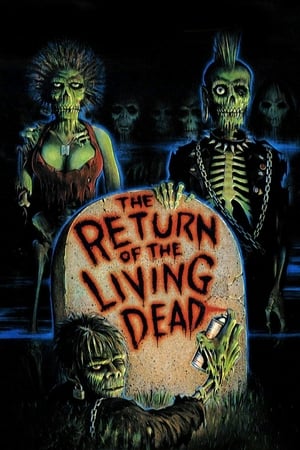
The Return of the Living Dead (1985) transformed Quigley's career. Written and directed by Dan O'Bannon, the film begins when employees at a medical supply warehouse accidentally release a military chemical that reanimates the dead. What follows combines punk culture, apocalyptic horror, black comedy and an influential reinvention of zombie mythology.
Quigley plays Trash, one of a group of young punks who gather near the warehouse. The character immediately stands apart through her fascination with death, exaggerated sexuality and complete lack of embarrassment about either. Trash does not behave like a conventional horror victim waiting for the story to attack her. She seems almost attracted to the possibility of destruction long before the dead begin leaving their graves.
The film's famous cemetery sequence became the defining image of Quigley's career. Trash climbs onto a tomb and performs an improvised dance while discussing fantasies about death. Quigley later recalled auditioning with both a reading and a dance to demonstrate that she would not become uncomfortable during the required nudity. The production eventually used a prosthetic covering during the sequence, while road flares, body makeup and the physical conditions of the night shoot added further complications.
The scene could easily have been remembered only for its provocation, but Trash's larger role gives it more meaning. Her fascination with being attacked by old men becomes grotesquely prophetic when zombies later surround and kill her, after which she returns as one of the undead. The film converts the character's own fantasy into a literal nightmare.
A Different Kind of Zombie Film
The Return of the Living Dead became influential far beyond Quigley's performance. O'Bannon introduced zombies capable of speaking, running and specifically demanding brains, elements that would become deeply embedded in popular culture despite being absent from George A. Romero's original conception of the modern zombie.
The film also treats comedy and horror as inseparable. Characters behave absurdly, but the consequences become increasingly hopeless. Once the outbreak begins, conventional solutions repeatedly make the situation worse. Burning bodies contaminates the atmosphere, rain carries the chemical into the cemetery and each attempt at containment expands the disaster.
Trash fits perfectly inside this tonal instability. Quigley plays her broadly enough to belong with the punk caricatures around her but never signals that the character understands she is inside a joke. This seriousness is essential because the film's comedy depends upon people responding sincerely to increasingly impossible circumstances.
The role established Quigley internationally and permanently associated her with cult horror. Unlike many performances that become famous through a franchise, Trash appears in only one film. The character survived culturally because a relatively small amount of screen time produced several images strong enough to remain recognizable decades later.
Creepozoids and the Direct-to-Video Horror Economy
Creepozoids (1987) moved Quigley into the low-budget science-fiction horror world of director David DeCoteau. Set in a post-apocalyptic future, the film follows survivors who take shelter inside an abandoned laboratory and discover that the building contains something far more dangerous than the poisoned environment outside.
The production represents an important stage in Quigley's career because it belongs directly to the expanding home-video market. By the late 1980s, a horror film no longer needed a major theatrical release to become profitable or develop an audience. Video stores required enormous quantities of new material, creating opportunities for filmmakers able to produce distinctive genre films quickly.
Quigley plays Bianca, a member of the surviving group, inside a story built around confined spaces, mutation and creature effects. The film's limitations are obvious, but that became part of the culture surrounding many direct-to-video horror productions. Audiences learned to approach them for imaginative monsters, outrageous concepts and familiar genre performers rather than major-studio polish.
Quigley's willingness to work repeatedly within this production system made her particularly valuable. Her name could provide immediate recognition on a VHS box, helping small films distinguish themselves inside crowded video-store horror sections.
David DeCoteau and a Recurring Low-Budget Collaboration
David DeCoteau became one of Quigley's most frequent directors. Their horror work included Creepozoids, Nightmare Sisters and Sorority Babes in the Slimeball Bowl-O-Rama, among other later collaborations. Quigley has described DeCoteau as an extremely efficient filmmaker, someone capable of moving rapidly through a production without wasting time.
That efficiency was essential to the kind of films they were making. Budgets were extremely limited, locations were often available only during specific hours and effects needed to be completed quickly. Rather than treating these restrictions as exceptional circumstances, DeCoteau built his filmmaking process around them.
Quigley became an ideal collaborator because she understood the same production reality. She could move between horror, comedy and exploitation without requiring the elaborate preparation associated with larger productions. This professionalism helped create a network of recurring performers who became recognizable to fans independently of any single film.
Nightmare Sisters and the Scream Queen Trio
Nightmare Sisters (1988) brought Quigley together with Brinke Stevens and Michelle Bauer, two performers who would become closely associated with her in the history of 1980s horror. The film follows three socially awkward young women who are transformed after accidentally summoning a supernatural force, allowing the performers to shift from broad comedy into demonic horror and exploitation.
The production was completed with extraordinary speed, reflecting the economics of independent video filmmaking. Rather than hiding the simplicity of the premise, the film embraces it, allowing personality and outrageous situations to carry scenes that could never have competed with studio productions on technical scale.
Quigley, Stevens and Bauer became strongly associated as a group because they repeatedly appeared around the same low-budget horror culture. Their careers overlapped through filmmakers, conventions, magazines and later retrospectives, helping define the modern idea of the independent scream queen as a star with her own fan base rather than simply an interchangeable victim.
This distinction matters. Horror had always created memorable female performers, but the video era allowed certain actresses to become marketable specifically because genre audiences recognized their names. Quigley was one of the clearest examples of that transition.
Sorority Babes in the Slimeball Bowl-O-Rama
Sorority Babes in the Slimeball Bowl-O-Rama (1988) reunited Quigley with David DeCoteau and placed her alongside Brinke Stevens and Michelle Bauer again. The deliberately absurd title describes a horror comedy involving college students, a bowling alley and an imprisoned supernatural creature capable of granting wishes with disastrous consequences.
Quigley plays Spider, a tough outsider whose personality differs substantially from many of her more vulnerable characters. She later recalled choosing the role because she enjoyed the opportunity to play someone aggressive and capable. Spider enters the story with an attitude closer to an action character than a traditional scream queen.
The film demonstrates why Quigley's cult reputation cannot be explained only through nudity or victim roles. Spider possesses confidence and physical agency, and Quigley's enjoyment of the character is visible in the performance. The film may operate at the deliberately ridiculous end of horror comedy, but within that framework she gets to play someone who fights back rather than simply waiting for the monster.
Hollywood Chainsaw Hookers and the Art of the Exploitation Title
Few titles summarize late-1980s exploitation cinema as efficiently as Hollywood Chainsaw Hookers (1988). Directed by Fred Olen Ray, the film combines detective parody, horror comedy and chainsaw violence around a cult whose members murder victims as part of ritual activity. Quigley stars alongside Michelle Bauer and The Texas Chain Saw Massacre actor Gunnar Hansen.
The film is deliberately aware of its own absurdity. Rather than attempting to compete with serious horror, it uses the title as a promise of exactly the kind of exaggerated experience the audience expects. Quigley's Samantha becomes central to the film's mixture of sexuality, comedy and violence, including another elaborate dance sequence involving chainsaws.
The connection with Gunnar Hansen also gives the film a self-aware relationship with horror history. The actor behind Leatherface now appears inside a comedy built around the cultural power of chainsaws, while Quigley represents the newer generation of video-era horror stars. The result feels less like a conventional slasher than a celebration of exploitation imagery itself.
Night of the Demons and the Lipstick Scene
Night of the Demons (1988) gave Quigley another of the defining images of her career. Directed by Kevin S. Tenney, the film follows a group of teenagers who hold a Halloween party inside an abandoned mortuary, accidentally releasing demonic forces that begin possessing the guests.
Quigley plays Suzanne, initially presented as sexually confident and provocative before possession transforms those qualities into something much more disturbing. The character does not simply become physically monstrous. Her sexuality itself becomes uncanny because the demon exaggerates behavior already associated with her until it no longer appears human.
The most famous sequence involves Suzanne applying lipstick to her body before apparently pushing the entire tube inside herself. Special-effects artist Steve Johnson created a prosthetic appliance molded to Quigley's body that made the illusion possible. The effect remains memorable because the scene begins as something playful and erotic before changing suddenly into impossible body horror.
Director Kevin Tenney later explained that the sequence was designed specifically around this transformation in tone. The disturbing element is not merely the physical effect. It is the moment when an apparently familiar gesture crosses into something that should be anatomically impossible.
Possession, Performance and the Female Body
Night of the Demons also reveals a recurring complication in Quigley's horror career. Many of her films deliberately used her body as part of their marketing and spectacle, yet Quigley often found ways to turn that expectation into performance. Suzanne's body becomes literally unreliable once possession begins, making sexuality itself part of the supernatural transformation.
The same principle appears differently in The Return of the Living Dead. Trash initially displays her body through personal choice, but death later transforms it into a zombie body controlled by appetite. In both cases, the film begins with sexuality and gradually converts the same physical presence into something grotesque.
This transformation is one reason Quigley's most famous roles remained memorable beyond the exploitation context in which they were produced. The body is not merely shown. It changes meaning during the story, moving from attraction toward danger, decay or supernatural corruption.
A Nightmare on Elm Street 4 and Horror Recognition
Quigley made a brief appearance in A Nightmare on Elm Street 4: The Dream Master (1988), one of the most commercially successful entries in the Freddy Krueger series. Her role is extremely small, appearing among the souls associated with Freddy, but the cameo demonstrates how recognizable she had become within horror by the end of the decade.
A performer did not need a substantial role for genre audiences to notice the appearance. By this point Quigley's name already carried associations with The Return of the Living Dead, Silent Night, Deadly Night and the expanding collection of low-budget films surrounding her. A brief image could function as an additional connection inside a culture where fans followed actors from one production to another.
This network of recognition became one of the defining characteristics of video-era horror. Casts increasingly contained performers whose value came partly from previous genre appearances, allowing independent films to create a sense of continuity across otherwise unrelated stories.
Witchtrap and the Continuing Kevin Tenney Connection
Quigley worked again with Kevin S. Tenney in Witchtrap (1989), another supernatural horror film centered on an apparently haunted building. A team including paranormal investigators and security personnel enters an isolated property, where the spirit associated with the house begins attacking them.
Quigley plays Ginger Kowalski, continuing her association with characters capable of balancing humor and danger inside low-budget horror. The production lacks the cultural visibility of Night of the Demons, but it demonstrates how frequently successful working relationships continued through the independent horror community.
Directors who knew an actor could handle difficult effects, compressed schedules and tonal changes had strong reasons to hire that performer again. Quigley's career is filled with these repeated collaborations, and they help explain why she accumulated such an unusually large horror filmography.
Linnea Quigley's Horror Workout and the Star Becomes the Genre
Linnea Quigley's Horror Workout (1990) is perhaps the clearest evidence that Quigley's name itself had become a horror brand. Structured partly as an exercise video and partly as a parody of horror and fitness culture, the production places Quigley's public persona at the center rather than asking her to disappear completely into a fictional character.
The project combines workouts with zombies, gore, clips and deliberate self-parody, acknowledging the audience's familiarity with her career. By this stage the scream queen identity could be used directly as entertainment. The viewer was no longer simply watching another horror film containing Linnea Quigley. The subject was Linnea Quigley as a horror personality.
This represents a significant shift in genre stardom. Quigley's value had moved beyond individual characters. Conventions, magazines and home video created a direct relationship between performer and audience, allowing actors working far outside mainstream celebrity culture to sustain devoted followings of their own.
Innocent Blood and Moving Through Larger Productions
John Landis's Innocent Blood (1992) gave Quigley a supporting appearance inside a much larger production combining vampires, crime and black comedy. The role is modest, but it places her inside another film where horror and humor coexist rather than being treated as incompatible genres.
By the early 1990s, this mixture had become central to Quigley's screen identity. Her association with horror did not depend primarily upon solemn supernatural stories. Many of her most characteristic films acknowledge the absurdity of their premises and invite the audience to enjoy gore, monsters and ridiculous situations simultaneously.
This ability to operate comfortably within tonal instability helped keep her active even as the slasher boom that had shaped the early part of her career declined. The market changed, but independent genre filmmaking continued finding uses for performers with established cult audiences.
Pumpkinhead II and the 1990s Video-Horror Landscape
Pumpkinhead II: Blood Wings (1994) placed Quigley inside another established horror property. The sequel follows a group of teenagers whose actions contribute to the resurrection of a supernatural creature seeking vengeance. Quigley appears as Nadine, joining a production designed primarily for the home-video market.
The film represents the environment in which many horror performers worked during the 1990s. Theatrical opportunities for low-budget genre films had decreased, but video distribution allowed sequels, creature features and independent productions to continue reaching international audiences.
For performers such as Quigley, this meant that horror careers no longer depended upon the same theatrical infrastructure that had existed a decade earlier. A recognizable name on a video cover could retain considerable value, particularly for viewers who had grown up renting the films that established her reputation.
Fatal Frames and an Italian Horror Connection
Fatal Frames (1996) provided Quigley with one of her relatively rare connections to Italian genre production. Directed by Al Festa, the film combines slasher imagery, music-video aesthetics and an international cast that also includes Donald Pleasence shortly before his death.
Quigley later noted that despite the enormous importance of Italian horror during the period when she was building her career, she had not spent the 1980s moving through Italian productions in the way several other genre performers had. Fatal Frames therefore occupies an unusual position in her filmography as a direct connection with that filmmaking tradition.
The production also demonstrates the international reach her scream queen identity had acquired. The VHS era had allowed American low-budget horror actors to become recognizable far beyond the original distribution territories of individual films.
Brinke Stevens, Michelle Bauer and the Culture of the Scream Queen
Quigley's association with Brinke Stevens and Michelle Bauer became historically important because the three performers came to symbolize a particular version of 1980s horror stardom. They appeared together, circulated through many of the same productions and developed fan bases sustained by magazines, video stores and horror conventions rather than conventional Hollywood publicity.
Their careers demonstrate that "scream queen" had evolved beyond its older meaning of a woman simply screaming while threatened by a monster. These actresses could become attractions in their own right, often receiving prominent billing because the audience recognized them from previous films. Independent producers understood that familiarity could help sell extremely inexpensive productions.
The documentary Screaming in High Heels: The Rise & Fall of the Scream Queen Era later examined this period through Quigley, Stevens and Bauer, treating their careers as part of a specific industrial moment created by the explosion of home video. The title captures both the opportunity and the limitations of the label. It created a form of fame while also encouraging producers to repeat the same expectations.
Nudity, Typecasting and the Economics of Independent Horror
Quigley has spoken openly about the complicated relationship between nudity and her career. During the early 1980s, actresses were often warned that appearing nude could damage future opportunities, while low-budget exploitation films simultaneously treated nudity as a commercial requirement. Quigley chose to accept some roles involving it and reject others she considered excessive or unsuitable.
This choice became part of her public image and contributed to typecasting. Producers increasingly expected certain things from a "Linnea Quigley film," just as audiences did. The same reputation that generated employment could narrow the kinds of roles being offered.
Yet Quigley has generally embraced the scream queen identity rather than distancing herself from the genre that created it. She has repeatedly expressed affection for horror and for the audiences that continued supporting these films long after their commercial moment appeared to have passed. That relationship distinguishes her from performers who spent later careers attempting to escape genre associations.
Music, Punk Culture and the Quigley Persona
Music also contributed to Quigley's screen identity. She performed with the all-female band The Skirts during the early part of her career and brought an authentic connection with Los Angeles punk and rock culture into films that frequently attempted to imitate it. This background made Trash in The Return of the Living Dead especially effective because the character's visual style did not feel completely disconnected from the subculture the film was exploiting.
The soundtrack of The Return of the Living Dead, filled with punk and death-rock bands, became central to the film's identity. Quigley's performance belongs naturally inside that world because Trash appears to understand rebellion as something expressed through clothing, movement, sexuality and attitude rather than merely through dialogue.
Later films continued using aspects of that persona even when the characters changed. Quigley could immediately suggest outsider status, giving low-budget filmmakers a recognizable visual identity before a scene had spent much time establishing character.
The Physical Reality of Low-Budget Horror
Quigley's filmography also documents the physical demands placed on performers in practical-effects horror. She worked beneath rain machines, body paint and prosthetic appliances, was suspended for effects sequences, covered in artificial blood and repeatedly placed in uncomfortable positions necessary to create images that would later last only seconds on screen.
The antler death in Silent Night, Deadly Night, the cemetery shoot and zombie transformation in The Return of the Living Dead, and the prosthetic lipstick effect in Night of the Demons all required direct interaction with practical mechanisms. These scenes could not be completed by asking an actor to react to an object that would be added digitally months later. The effect existed physically and the performance needed to work around it.
This helps explain the durability of many of Quigley's most famous scenes. The effects may reveal the materials from which they were made, but the actor and illusion occupy the same space. Horror audiences often respond to that physical interaction even when the technique itself is visibly inexpensive.
Later Horror and the Persistence of a Cult Career
Quigley continued appearing in independent horror long after the era that originally made her famous had ended. Her later filmography contains numerous small productions whose visibility varies enormously, but the continuity itself is significant. She did not treat horror as a temporary phase that needed to be abandoned once the 1980s ended.
Instead, later filmmakers could cast her precisely because decades of genre history accompanied her presence. A small role could connect a contemporary production with the VHS era, while larger roles allowed directors who had grown up with her films to work directly with one of the performers who helped define their understanding of low-budget horror.
The convention circuit strengthened this relationship. Horror conventions created physical spaces where cult performers could maintain direct contact with audiences, transforming films that once appeared commercially disposable into a continuing culture built around screenings, autographs, reunions and shared memory.
The Return of Trash as a Cultural Image
No single image from Quigley's career has proven more durable than Trash dancing in the cemetery. It has been reproduced through posters, collectibles, clothing and retrospective material, becoming one of the visual shorthand images for 1980s cult horror.
The endurance is notable because the role could easily have disappeared into the enormous number of sexually provocative characters produced during the decade. Instead, Trash possesses enough personality to remain identifiable as an individual. The bright hair, punk clothing, morbid dialogue and complete confidence before the outbreak create a character rather than merely a body placed inside a horror scene.
Her later zombie appearance completes that identity by giving Trash two immediately recognizable forms: the living punk dancing among graves and the dead version who becomes part of the nightmare she seemed almost to desire. That visual symmetry helped turn a supporting performance into an enduring horror icon.
Linnea Quigley's Style and Legacy
Linnea Quigley's importance to horror cannot be measured through awards, box-office totals or the conventional hierarchy of Hollywood stardom. Her career belongs to another history, one built through drive-ins, independent distributors, VHS shelves, horror magazines and conventions. In that world, repeated visibility could create a star just as effectively as a major studio campaign.
She arrived at exactly the moment when home video made that form of career possible. Films such as Creepozoids, Nightmare Sisters, Sorority Babes in the Slimeball Bowl-O-Rama and Hollywood Chainsaw Hookers could reach audiences whose local theatres would never have booked them. Quigley's face and name became a guide through that enormous landscape of independent horror.
Her performances also embody the tonal freedom of the period. She could move from the relatively straightforward slasher violence of Silent Night, Deadly Night to the punk apocalypse of The Return of the Living Dead, the supernatural body horror of Night of the Demons and the deliberate absurdity of her collaborations with David DeCoteau and Fred Olen Ray. The films did not demand one fixed version of the scream queen.
Most importantly, Quigley helped transform the label from a description of what happened to a female character into a recognizable category of genre celebrity. Audiences followed her between unrelated films because Linnea Quigley herself had become part of the attraction. That transition makes her one of the essential figures of 1980s cult horror, not because she belonged to one great franchise, but because she became one of the faces through which an entire era of independent horror is remembered.
Known Among Horror Fans For
Notable Horror Collaborators
Notable collaborators and creative partners throughout Linnea Quigley's horror career.
 David DeCoteau
Defining Horror Director
One of Quigley's most important recurring horror directors. DeCoteau directed her in Creepozoids, Sorority Babes in the Slimeball Bowl-O-Rama and Nightmare Sisters, helping define her late-1980s scream queen period.
 Michelle Bauer
Frequent Horror Co-Star
Bauer and Quigley became two defining faces of the VHS-era scream queen scene, appearing together in Nightmare Sisters, Sorority Babes in the Slimeball Bowl-O-Rama and Hollywood Chainsaw Hookers, among later reunions.
 Brinke Stevens
Frequent Horror Co-Star
Stevens and Quigley became closely associated with the independent scream queen movement, sharing Nightmare Sisters, Sorority Babes in the Slimeball Bowl-O-Rama and the later horror production Trophy Heads.
HH
Hal Havins
Frequent Horror Co-Star
Havins shared three cult horror productions with Quigley in rapid succession: Night of the Demons, Sorority Babes in the Slimeball Bowl-O-Rama and Witchtrap.
 Kevin Tenney
Horror Director Collaborator
Tenney directed Quigley in Night of the Demons and Witchtrap, then remained connected to her horror career as a producer of the 2009 Night of the Demons remake, in which Quigley returned for a cameo.
JS
John Schouweiler
Producing Collaborator
Schouweiler produced three key Quigley horror films from her late-1980s cult period: Creepozoids, Sorority Babes in the Slimeball Bowl-O-Rama and Nightmare Sisters.
Linnea Quigley Horror Movies
Acting (115 credits)
2026
2023
2023
2023
2023
2022
2022
2022
2022
2021
2021
2021
2021
2021
2020
2020
2020
2020
2020
2020
2020
2020
2020
2020
2020
2019
2019
2019
2019
2018
2018
2018
2018
2018
2017
2017
2017
2017
2016
2016
2015
2014
2014
2014
2014
2014
2014
2014
2013
2012
2012
2012
2012
2012
2011
2010
2010
2009
2009
2009
2008
2007
2006
2005
2005
2003
2003
2003
2002
2001
2001
2001
1999
1999
1999
1998
1998
1997
1996
1995
1995
1995
1995
1995
1994
1992
1991
1991
1991
1990
1989
1989
1989
1989
1989
1989
1988
1988
1988
1988
1988
1988
1987
1987
1987
1987
1985
1984
1984
1982
1981
1981
1979
1975
Production (7 credits)
2023
2015
2014
2010
1990
1989
1987
Special FX / Practical FX (1 credits)
1998
Directing (1 credits)
2021
Other Crew (1 credits)
2002