

2026
Kane Hodder
Horror Actor · Biography · Horror Filmography · Collaborators · Credits
Horror subgenres & themes
Biography
Kane Hodder and the Physical Language of the Slasher
Kane Hodder became one of horror cinema’s most recognizable physical performers by treating the masked killer as an acting role rather than simply a costume worn by a stuntman. His identification with Jason Voorhees began relatively late in the Friday the 13th series, yet Hodder became the first performer to return as Jason across four consecutive feature films. He later created a second enduring slasher figure as Victor Crowley in Adam Green’s Hatchet series, giving him the unusual distinction of becoming strongly identified with two different masked killers across separate generations of American horror. In both cases, the face is largely hidden beneath makeup or a mask, making posture, breathing, timing and physical movement essential parts of the characterization.
Hodder’s importance to horror therefore cannot be understood simply by counting kills or appearances. His performances belong to a tradition in which the body itself becomes the principal acting instrument. Jason and Victor rarely communicate through ordinary dialogue, so intention must be visible through the way they enter a room, look toward another character, prepare an attack or remain completely still. Hodder brought decades of stunt experience into that process, allowing physical violence to feel powerful while still being precisely choreographed for the camera. The combination of acting and stunt technique became the foundation of his horror identity.
Stunt Work, Fire and Physical Discipline
Hodder entered the film industry primarily through stunt work rather than conventional acting. Early in his career, a fire stunt demonstration went catastrophically wrong and caused severe burns, beginning a long and difficult recovery. The accident might easily have ended a career built around physical risk, but Hodder eventually returned to stunt performance and continued performing fire work despite what had happened. He later described the recovery as extending far beyond the immediate pain because scarred skin restricted movement and required extensive effort before normal physical function returned.
That experience became part of the discipline he carried into horror. Hodder understood that screen violence depends upon performers making dangerous-looking actions appear uncontrolled while the actual execution remains carefully planned. His later reputation for brutal physical characters can therefore obscure the technical precision underneath them. A stunt performer cannot simply become aggressive in front of the camera; distance, timing, body position, props, effects and the safety of the other performer all have to remain controlled. Hodder’s monsters feel dangerous partly because the performer inside them understands exactly how close simulated violence can come to looking real without becoming real.
Prison and John Carl Buechler
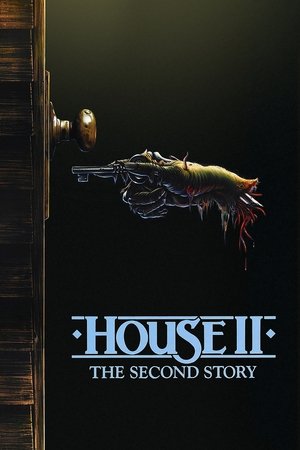
A decisive step toward Jason came through Prison, the 1987 supernatural horror film directed by Renny Harlin. Hodder worked on the production as stunt coordinator and stunt performer, while special-effects artist John Carl Buechler observed what he could do physically. Buechler later gave Hodder an opportunity to perform under extensive prosthetic makeup during the production. The experience demonstrated that Hodder could communicate character even when much of his face and body were concealed beneath effects.
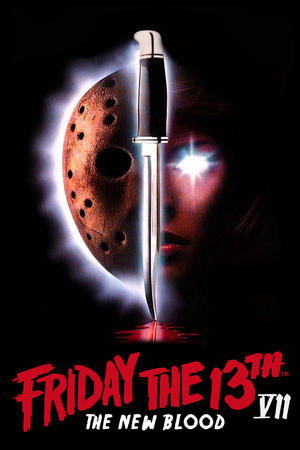
When Buechler was hired to direct Friday the 13th Part VII: The New Blood, he pushed for Hodder to play Jason Voorhees. Buechler later recalled that there was resistance because Hodder was not considered physically large enough, but he argued that makeup and costume would create the necessary silhouette and that Hodder possessed the acting and mime skills required for the role. A screen test helped secure the casting. That decision changed Hodder’s career permanently and created the professional relationship that would eventually connect him to another defining horror character almost two decades later.
Friday the 13th Part VII and Becoming Jason
Friday the 13th Part VII: The New Blood introduced Hodder as Jason in 1988. By that stage the character had already been played by several performers, and the franchise had established many of the visual elements associated with him. Hodder nevertheless approached the role as something that could be developed physically rather than merely reproduced. Buechler’s makeup presented Jason as a visibly decomposed figure whose damaged body revealed years of accumulated punishment, while Hodder supplied an aggressive bodily rhythm that made the character appear permanently ready to attack.
One of Hodder’s most recognizable choices was the intensity of Jason’s breathing and posture. Rather than moving like a completely passive mechanical figure, his Jason often appears visibly enraged beneath the mask. The shoulders rise and fall, the head follows potential victims and the body can remain still while suggesting enormous contained force. Hodder also emphasized the transition between stillness and sudden violence, allowing Jason to appear heavy and deliberate before attacking with explosive speed. These choices gave his version a distinctive physical personality even though the character remained almost entirely silent.
The film also produced what Hodder repeatedly identified as one of his favorite Jason kills. A victim inside a sleeping bag is lifted and slammed against a tree, turning an ordinary camping object into the weapon. The sequence became sufficiently associated with his version of Jason that Jason X later included a deliberately exaggerated callback to it. The importance of the scene lies less in gore than in physical simplicity: Jason’s strength is communicated through one brutally efficient movement.
Jason Takes Manhattan and the First Returning Jason
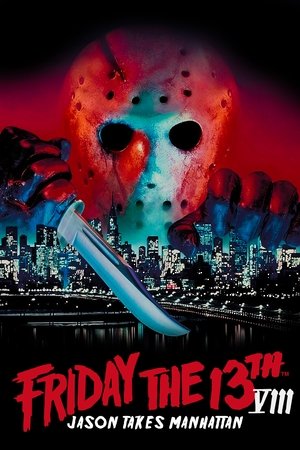
Hodder returned for Friday the 13th Part VIII: Jason Takes Manhattan in 1989, making him the first actor to reprise Jason across consecutive feature films. The continuation mattered because he was no longer interpreting an established character only once. He could preserve specific physical habits and develop a consistent version of Jason across different directors and environments. The film moves the killer away from the traditional Crystal Lake setting, first placing him aboard a ship and eventually bringing him into New York.
The change of location gives Hodder opportunities to play Jason against environments far removed from summer camps and forests. One of the film’s best-known encounters involves boxer Julius attempting to defeat Jason through an extended series of punches. Hodder remains almost completely unmoved until Jason responds with a single blow, turning the contrast between human effort and the killer’s impossible strength into the entire joke and horror of the scene. Even when the film embraces increasingly exaggerated situations, Hodder maintains the same fundamental physical identity established in Part VII.
Jason Goes to Hell and Sean S. Cunningham
Jason Goes to Hell: The Final Friday brought Hodder into the New Line phase of the franchise under producer Sean S. Cunningham, director and producer of the original Friday the 13th. Directed by Adam Marcus, the film radically alters the conventional Jason structure by destroying his familiar body early and allowing his supernatural essence to move through other people. This means Hodder spends far less of the running time physically playing Jason than audiences might have expected, yet his incarnation remains the visual reference point through which the character is understood.
Hodder also served as stunt coordinator and appeared in another role during the film, demonstrating how thoroughly his horror career continued to overlap acting and stunt work. Most famously, he provided the hand wearing Freddy Krueger’s glove during the final image in which the glove emerges from the ground and pulls Jason’s mask downward. Years before Freddy vs. Jason finally reached the screen, Hodder therefore participated physically in the image that promised the crossover. The irony became stronger when the eventual crossover used another performer as Jason.
Cunningham remained important to Hodder’s Jason period because he also produced Jason X. Their collaboration belongs specifically to the stage in which Jason had moved beyond Paramount and was being reconstructed as a broader New Line horror property. Hodder provided continuity through that transition, keeping the same performer inside the character even when the mythology and production context changed dramatically.
Jason X and the Transformation into Über Jason
Jason X pushed the franchise into science-fiction horror by moving Jason hundreds of years into the future and placing him aboard a spacecraft. James Isaac directed while Sean S. Cunningham produced and Harry Manfredini returned to the musical world of the franchise. The setting deliberately abandons any attempt to preserve the rural simplicity of Crystal Lake, instead treating Jason as a horror icon durable enough to survive genre mutation itself.
For much of the film Hodder performs a recognizable version of Jason before the character is catastrophically damaged and reconstructed through futuristic technology as the armored Über Jason. The transformation gives Hodder a new physical design while preserving the same fundamental performance underneath it. The body becomes heavier and more explicitly artificial, but the character’s purpose remains unchanged. Jason simply adapts to another environment and begins killing again.
The virtual-reality Crystal Lake sequence provides a particularly self-aware moment in Hodder’s history with the character. Jason encounters a simulation of stereotypical camp counselors and reproduces the sleeping-bag kill from Part VII in an intentionally absurd escalation. The scene acknowledges that both the franchise and Hodder’s specific performance history had developed their own mythology. What began as one creative kill had become part of Jason iconography recognizable enough to parody from inside the series itself.
Four Films and a Single Physical Jason
Hodder’s four-film run gave him a relationship with Jason unlike that of any previous performer. The character had always been larger than the actor beneath the mask, but repetition allowed audiences to begin recognizing individual physical choices. Hodder could make Jason appear angry without dialogue and could distinguish between the killer observing someone, preparing to strike and simply occupying a space. His stunt background allowed attacks to feel forceful without losing the control necessary for complicated effects sequences.
The continuity also strengthened the connection between performer and horror audience. By the time Jason X arrived, Hodder was no longer simply one of several men who had worn the hockey mask. Convention appearances, interviews and the repetition of the role had made his own identity part of the franchise’s culture. That is why his absence from Freddy vs. Jason became so widely discussed among fans. The film ultimately cast Ken Kirzinger as Jason, ending Hodder’s continuous feature-film run after four appearances, but the association between Hodder and the character remained intact.
Leatherface, Wishmaster and the Horror Community
Hodder’s genre work was never limited to Jason. During Leatherface: The Texas Chainsaw Massacre III, he served as stunt coordinator and doubled Leatherface for stunt work, giving him a physical connection to another of American horror’s foundational masked killers. Decades later, he also contributed performance work to the Texas Chain Saw Massacre video-game world, reinforcing the unusual way his stunt career intersected with multiple major slasher mythologies.
Wishmaster placed Hodder inside another important concentration of horror performers. Robert Englund, Tony Todd, Angus Scrimm, Ted Raimi and other genre veterans appear throughout Robert Kurtzman’s film, while Hodder plays a security guard who encounters the Djinn. The role is small, but the casting reflects a broader development in 1990s horror: performers associated with major monsters had themselves become recognizable to fans. Hodder could now contribute horror history to a film without wearing Jason’s mask.
Adam Green and the Creation of Victor Crowley
The most important post-Jason relationship in Hodder’s career began with Adam Green. Green was developing Hatchet as an intentionally practical-effects-driven return to old-school American slasher horror and wanted a performer capable of giving Victor Crowley genuine physical identity. John Carl Buechler, who had originally fought to cast Hodder as Jason, recommended him to Green. The connection therefore forms a remarkable bridge between the two monsters that ultimately defined Hodder’s career: the filmmaker who gave him Jason helped lead him toward the filmmaker who gave him Victor Crowley.
Green and Hodder developed a close creative relationship around the character. Unlike Jason, Victor was being created with Hodder in mind rather than inherited after several previous interpretations. The heavy makeup concealed him again, but the role allowed greater freedom to build a different form of physical killer. Crowley is more feral and openly explosive than Hodder’s Jason, and the Hatchet films deliberately design kills around extreme practical gore and impossible bodily destruction. Green understood that Hodder’s stunt abilities could become part of the spectacle rather than something hidden behind it.
Hodder also plays Victor’s father Thomas Crowley in flashbacks, giving him the opportunity to appear without the monster makeup and perform emotional material connected directly to Victor’s origin. Hodder himself emphasized how meaningful this was because audiences accustomed to seeing him as silent killers could encounter another dimension of his acting. The dual role made Hatchet more than simply another masked-killer assignment and helped establish Victor Crowley as a character personally tied to Hodder from the beginning.
Hatchet II, Danielle Harris and Tony Todd
Hatchet II expanded Victor Crowley’s mythology and surrounded Hodder with performers deeply connected to horror history. Danielle Harris took over the role of Marybeth Dunston, becoming the principal survivor directly opposed to Crowley, while Tony Todd returned as Reverend Zombie and received a much larger role in explaining the events surrounding the swamp. Adam Green again wrote and directed, preserving the creative relationship that had established Victor in the first film.
Harris became particularly important because Marybeth gives Victor a recurring adversary rather than another interchangeable group of victims. Their confrontation continues into Hatchet III, where Harris again plays Marybeth and B. J. McDonnell takes over directing while Green remains the writer and creative architect. Hodder’s physical performance and Harris’s increasingly aggressive survivor create a direct clash between two performers already associated with different periods of slasher history.
Tony Todd represents another kind of connection. He and Hodder had already shared the horror ensemble of Wishmaster, and the Hatchet films placed them inside a new franchise designed consciously around the heritage of practical-effects horror. Todd’s Reverend Zombie operates through voice and mysterious authority while Hodder’s Victor is almost entirely physical. Their contrasting performance styles make them useful counterpoints inside a series built partly as a celebration of horror personalities audiences already recognized.
Hatchet III and the Expansion of Victor Crowley
Hatchet III changes directors but preserves Hodder as the absolute physical constant of the franchise. B. J. McDonnell, who had worked behind the camera on the earlier films, directs while Green writes and retains creative involvement. The movie increases the scale of the confrontation by sending armed forces into the swamp and treating Crowley almost like an unstoppable supernatural opponent capable of absorbing extraordinary levels of physical punishment.
Hodder’s stunt experience becomes increasingly important as the series escalates. Victor does not simply stab victims. Bodies are torn, crushed, dismembered and used as physical objects inside elaborate practical-effects set pieces. The performer must interact with prosthetic bodies and other actors while maintaining the illusion of uncontrolled supernatural strength. Hodder’s ability to combine stunt precision with character movement is therefore part of the franchise’s practical-effects identity rather than merely a production necessity.
Victor Crowley and the Return to the Swamp
Adam Green secretly returned to the series with Victor Crowley in 2017, again directing Hodder as the title killer. The film was initially presented without publicly announcing that a fourth Hatchet feature had been completed, turning its unveiling into a surprise for audiences familiar with the franchise. Hodder returned without needing to reinvent the character fundamentally because Victor’s physical vocabulary had already become as recognizable within the series as Jason’s had been during his earlier career.
The fourth film also reinforces the repertory nature of Green’s horror world. Parry Shen returns, Tony Todd again appears as Reverend Zombie and Danielle Harris briefly reconnects the new film with Marybeth. The accumulation of recurring performers makes the Hatchet series feel increasingly like a horror ensemble built around Hodder’s monster. Victor remains the constant around whom surviving characters, returning actors and increasingly elaborate kills can be reorganized.
Harry Manfredini and the Sound Around Hodder’s Jason
Harry Manfredini belongs to Hodder’s horror network from a different creative direction. His music had been central to Friday the 13th long before Hodder put on the mask, but several important points of Hodder’s Jason period remained connected to Manfredini’s work. Material from Manfredini contributes to the musical identity surrounding The New Blood, while he returned directly for Jason Goes to Hell and composed the score for Jason X. The collaboration therefore links Hodder’s first Jason film with two of his later appearances across substantially different versions of the franchise.
This matters because Jason’s identity is not created by physical performance alone. The series had already developed musical signals that could make the character present before he entered the frame. Hodder supplied a new body language while Manfredini’s musical vocabulary connected that body with the longer history of Crystal Lake. Their overlapping work helped Hodder’s interpretation feel both new and unmistakably part of the same mythology.
The Difference Between Jason and Victor Crowley
Hodder has resisted treating Jason and Victor Crowley as interchangeable masked killers, and the distinction is visible in the films. His Jason is controlled, deliberate and heavily defined by stillness. Even when visibly angry, the character often allows the victim to understand that he is present before the final attack. Victor is more explosive and animalistic, frequently throwing his entire body into violence and appearing driven by a more immediate supernatural rage. The makeup, narrative mythology and practical-effects style of Hatchet encourage a level of physical excess that would have felt different inside the Paramount-era Friday the 13th films.
The contrast demonstrates why Hodder should be considered an actor as well as a stunt performer. Two silent killers could easily become the same performance hidden beneath different makeup. Instead, the accumulated movements, attack rhythms and physical attitudes create different personalities. The audience may recognize Hodder’s body inside both characters, but Jason and Victor do not behave as though they are the same creature.
Kane Hodder’s Horror Legacy
Kane Hodder’s horror career is built around physical continuity. John Carl Buechler recognized that quality while working with him on Prison and fought to place him behind Jason’s mask in Friday the 13th Part VII: The New Blood. Hodder then carried Jason through Jason Takes Manhattan, Jason Goes to Hell and Jason X, becoming the first actor to establish a sustained multi-film physical interpretation of the character. Sean S. Cunningham and Harry Manfredini connect important later stages of that run to the wider history of the franchise.
Adam Green subsequently gave Hodder something equally significant: a monster that belonged to a new generation rather than one inherited from horror history. Victor Crowley allowed Hodder to apply everything learned through stunt work and Jason while creating another physical vocabulary from the beginning. Danielle Harris became one of his most important recurring adversaries through Marybeth, while Tony Todd joined him repeatedly within a modern horror culture increasingly conscious of the iconic performers who had shaped earlier decades.
The connection between these two careers explains Hodder’s unusual position in horror. Many stunt performers contribute essential work without becoming recognizable to audiences, while many horror actors depend upon their faces and voices to construct identity. Hodder became famous largely while hidden. His posture, breathing, movement and approach to screen violence allowed audiences to recognize the performer through characters designed specifically to conceal him. Jason Voorhees gave him the mask; Victor Crowley proved that the physical language behind it belonged to Kane Hodder.
Photos (1)
Images: TMDB
Selected Work
Notable Horror Collaborators
Notable collaborators and creative partners throughout Kane Hodder's horror career.
 Adam Green
Defining Horror Creator & Director
Green created Victor Crowley around Hodder and directed him across the Hatchet saga, giving Hodder the second defining monster of his horror career after Jason Voorhees.
 John Carl Buechler
Defining Horror Director & FX Collaborator
Buechler fought to cast Hodder as Jason in Friday the 13th Part VII after working with him on Prison and later helped connect him with Adam Green and Victor Crowley.
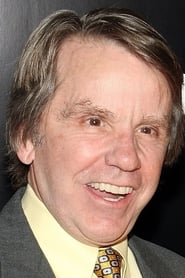 Sean S. Cunningham
Defining Friday the 13th Producer
Cunningham produced Jason Goes to Hell and Jason X, connecting Hodder directly with the creator of Friday the 13th during the later phase of his four-film run as Jason.
 Danielle Harris
Defining Hatchet Co-Star
Harris became Hodder’s principal human adversary as Marybeth in Hatchet II and Hatchet III, giving Victor Crowley a recurring survivor capable of confronting him directly.
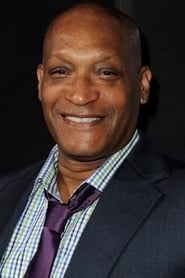 Tony Todd
Recurring Horror Co-Star
Todd repeatedly shared Hodder’s horror world through Wishmaster and the Hatchet franchise, linking two major genre performers across several generations of modern horror.
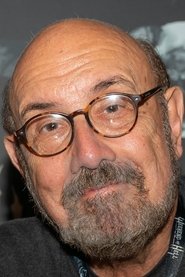 Harry Manfredini
Recurring Friday the 13th Composer
Manfredini’s music accompanied crucial stages of Hodder’s Jason era, including Jason Goes to Hell and Jason X, while connecting his interpretation to the longer sonic identity of Friday the 13th.
Kane Hodder Horror Movies
Acting (82 credits)
2026
2026
2024
2024
2024
2023
2023
2023
2022
2022
2022
2022
2021
2021
2021
2021
2020
2020
2020
2019
2019
2018
2018
2018
2018
2018
2017
2017
2017
2016
2016
2015
2015
2015
2015
2014
2014
2014
2014
2013
2013
2012
2012
2011
2011
2011
2011
2011
2010
2009
2009
2008
2008
2007
2007
2007
2007
2006
2006
2006
2005
2005
2003
2001
1998
1998
1997
1995
1995
1995
1993
1992
1991
1990
1990
1989
1988
1987
1987
1987
1980
Stunts (30 credits)
2019
2017
2015
2014
2013
2011
2011
2010
2009
2007
2007
2006
2005
1998
1998
1997
1997
1995
1993
1992
1992
1992
1990
1989
1989
1988
1988
1988
1987
1986
Production (2 credits)
2014
2007