



2026
Bill Oberst Jr.
Horror Actor · Biography · Horror Filmography · Collaborators · Credits
Horror subgenres & themes
Most represented across this person's horror filmography:
BODY HORROR
• CHRISTMAS
• CLOWN
• EXTREME
Biography
Bill Oberst Jr. and the Monsters of Independent Horror
Bill Oberst Jr. became one of the most prolific and recognizable character actors in American independent horror by embracing precisely the qualities that conventional screen casting initially treated as limitations. His angular features, intense eyes, physical thinness and ability to project menace without dialogue made him a natural presence in horror, but the longevity of his genre career came from something deeper than appearance. Oberst repeatedly approached monsters, killers, cult leaders and damaged men as wounded human beings rather than decorative villains. Across films including Children of Sorrow, Coyote, Circus of the Dead, The Dooms Chapel Horror, The Chair, Hunting Grounds, Dis, Ayla, Lifechanger, Death House, 3 from Hell and The Good Things Devils Do, he became closely associated with the low-budget horror world in which performance, personality and commitment frequently matter more than production scale.
Oberst has described himself as a lifelong monster fan. Growing up in South Carolina, he identified with creatures and outsiders long before horror became his professional home. Monsters offered companionship to a child who felt different, and classic horror imagery became part of his imagination through films, monster magazines and makeup culture. He studied the work of performers such as Lon Chaney, Boris Karloff, Peter Lorre and Vincent Price, actors who could make frightening figures sympathetic without neutralizing what made them frightening. Lon Chaney in particular became a central reference point. Oberst's later preference for wounded monsters, characters whose violence or grotesque appearance conceals grief, loneliness or spiritual damage, belongs directly to that tradition.
From Stage Performance to the Dark Side of the Camera
Before becoming identified with horror cinema, Oberst spent many years working professionally on stage. His theatrical career included historical figures and solo performance, giving him experience in sustaining characters through voice, posture and physical presence rather than relying on editing or cinematic effects. When he eventually moved more seriously into film and television, that background did not initially translate into easy screen employment. He has repeatedly told the story of struggling for work in Los Angeles until a casting professional advised him to stop pursuing conventional roles and instead go as dark as possible. The advice changed the direction of his career.
The transformation was particularly appropriate because horror had always been part of Oberst's private imagination. Once filmmakers began casting him as killers, monsters, damaged outsiders and threatening authority figures, the gap between fan and performer disappeared. He did not regard genre work as a temporary route toward more respectable material. In interviews he has described horror as the place where aspects of human experience that other genres suppress can be confronted directly: mortality, violence, guilt, fear, evil and the uncomfortable parts of the self that people normally conceal.
Early screen roles gradually pushed him toward that identity. Projects such as Dismal, in which he played the cannibalistic Ranger Dale, and the slasher The Devil Within established him as a performer whose face could immediately signal danger. Nude Nuns with Big Guns and other exploitation-oriented productions moved him further into the network of low-budget filmmakers, distributors and genre audiences that would support much of his subsequent career. The films varied dramatically in ambition and quality, but Oberst's willingness to commit fully to unusual material became one of his defining professional traits.
Take This Lollipop and Digital Horror
The 2011 interactive project Take This Lollipop gave Oberst international visibility through an unusually modern form of horror. Directed by Jason Zada, the project used information from a viewer's Facebook account to create the illusion that Oberst's disturbing online stalker was searching specifically for that individual. The concept transformed ordinary social-media information into part of the threat, making the viewer's own photographs and personal data elements of a short horror narrative.
Oberst's performance contains almost no conventional dialogue. The stalker is constructed through his stare, breathing, small gestures and the growing sense of obsession visible on his face as he studies the viewer's profile. That made the role particularly suited to the actor's strengths. Instead of explaining the character through exposition, the film allows his physical behavior to create unease. The effect crossed language barriers and helped the project spread internationally as a viral experience.
Take This Lollipop became one of the most widely recognized projects connected with Oberst and won the 2012 Daytime Emmy Award for New Approaches in Daytime Entertainment. Its importance to his horror career extended beyond the award. It demonstrated that the same unsettling qualities that worked in microbudget feature films could function in an experimental interactive format and reach an enormous audience. Oberst later identified the project as one of the roles that confirmed what kind of screen character suited him best: someone frightening whose internal damage is suggested rather than explained.
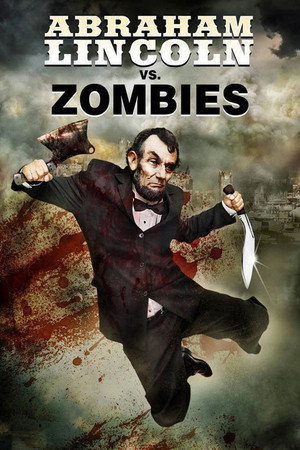
Abraham Lincoln vs. Zombies and the Collision of History with Horror
Abraham Lincoln vs. Zombies gave Oberst one of the most unusual lead roles of his career. The Asylum production could easily have been treated entirely as parody, but Oberst and director Richard Schenkman approached Lincoln with greater seriousness. Oberst had already performed the historical president on stage, so instead of playing a caricature he used his previous research and treated the premise as though the real Abraham Lincoln had simply been forced to confront an outbreak of the undead during the Civil War.
The contrast became the film's central comic and dramatic mechanism. The situation is absurd, but Oberst's Lincoln attempts to remain recognizably presidential, using the familiar gravity, melancholy and rhetoric associated with the historical figure while physically fighting zombies. The performance illustrates an important part of Oberst's genre method. Even when the surrounding film is deliberately outrageous, he generally tries to locate a sincere internal reality for the character rather than signalling that the actor considers the material ridiculous.
That ability made him particularly useful to independent horror. Many of the productions in which he appeared depended on performers who could give credibility to extreme concepts without large budgets or extensive visual effects. Oberst's seriousness frequently became a stabilizing element, whether the threat involved zombies, cults, demons, killer clowns, supernatural creatures or psychologically fractured humans.
Children of Sorrow and the Horror of Charisma
In Children of Sorrow, Oberst played Simon Leach, the leader of an isolated cult. The role moved away from the immediately visible monster and toward a form of horror based on manipulation. Simon presents himself as a spiritual authority capable of offering belonging to damaged and vulnerable people, but that apparent compassion gradually reveals itself as domination. The violence of the film therefore grows out of the character's ability to control others psychologically before controlling them physically.
Oberst has described the role as one of the performances that disturbed him personally. He viewed Simon through the idea of deception and evil disguised as reassurance, an interpretation that made the character less dependent on theatrical madness than on calm certainty. Simon's conviction is what makes him dangerous. He does not behave like someone who questions whether he is right, and Oberst uses that absolute confidence to make ordinary conversation increasingly threatening.
The performance became one of the most honored of his early horror career. Oberst received Best Actor recognition for Children of Sorrow at horror festivals, helping establish that his reputation within independent genre cinema was based not simply on appearing in an enormous number of productions but on his capacity to dominate difficult roles. The film also reinforced a theme that appears repeatedly in his work: the most effective monster is often one who believes in what he is doing.
Coyote and Psychological Disintegration
Trevor Juenger's Coyote offered Oberst a very different kind of horror performance. Rather than playing a clearly defined supernatural entity or external villain, he portrays an insomniac writer descending through paranoia, hallucination and increasingly unstable perception. The film uses surreal and grotesque imagery to place the audience inside a mind whose relationship with reality is deteriorating.
The role allowed Oberst to use physical exhaustion, nervous movement and facial tension as part of the narrative. His body becomes evidence of the character's disintegration. The performance received Best Actor recognition at the PollyGrind Film Festival, another indication that his most effective work often came when independent filmmakers gave him enough space to explore psychological disturbance rather than merely asking him to provide a frightening face.
Coyote also demonstrates the breadth of Oberst's horror identity. His career cannot be reduced to slashers or exploitation films. He has appeared in supernatural horror, creature films, found-footage projects, extreme cinema, psychological horror, zombie films, horror comedy and experimental work. The budgets vary, but the characters frequently share some form of isolation or internal fracture.
Circus of the Dead and Papa Corn
Papa Corn in Billy Pon's Circus of the Dead became one of Oberst's defining screen monsters. The character is the leader of a group of sadistic clowns who transform a family man's life into an extended ordeal of humiliation, violence and psychological destruction. Papa Corn is not designed as a sympathetic figure in any conventional sense. He is manipulative, sexually violent, murderous and almost completely without ordinary moral restraint. Yet Oberst approached him as more than a collection of shock effects.
The character had existed in Billy Pon's imagination and haunted-attraction work before the feature was made, and Oberst treated the responsibility seriously. His performance combines physical menace with humor, theatricality and unpredictable changes in intensity. Papa Corn can appear amused by his own cruelty, suddenly become threatening and then return to an almost conversational calm. That instability makes the character more disturbing because the audience cannot rely on a consistent emotional rhythm.
Oberst has said that the role frightened and disturbed him, an important distinction in a career filled with violent characters. Papa Corn represented an extreme version of the human monster, someone without the normal barriers of remorse or empathy. Pon described the character as an expression of the side of humanity that civilization normally suppresses. Oberst's performance gave that idea a face and voice.
Circus of the Dead became a major title within Oberst's independent-horror reputation and earned him multiple Best Actor honors. The character also strengthened his association with filmmakers who wanted performers willing to take abrasive or transgressive material seriously. Years later, Dread Central continued to identify Papa Corn as one of the roles central to Oberst's status within indie horror.
The Dooms Chapel Horror, The Chair and Human Monsters
The Dooms Chapel Horror placed Oberst inside a rural supernatural story built around guilt, religious fear and a community damaged by the past. As Jordan, he again occupied the space between ordinary human behavior and the suggestion that something much darker is operating beneath the surface. The film belongs to the strand of Oberst's career in which Southern or rural environments become part of the horror, connecting physical isolation with buried family or community trauma.
The Chair gave him another major antagonist as the Warden of a brutal prison. Based on the comic by Peter Simeti, the film centers on a death-row inmate subjected to psychological and physical torment inside an institution where the people controlling punishment become more horrifying than the condemned prisoners. Oberst's Warden is an authoritarian monster, using the legitimacy of his position as a cover for sadism.
The performance belongs to a recurring Oberst type: the character who possesses institutional or psychological power and uses certainty as a weapon. Like Simon in Children of Sorrow, the Warden does not need supernatural abilities to become monstrous. The horror arises from human control, the ability to define the rules and the absence of meaningful limits on cruelty.
Hunting Grounds and Sympathy for the Vulnerable
John Portanova's Hunting Grounds, also known as Valley of the Sasquatch, gave Oberst an opportunity to move away from the straightforward antagonist. He plays Bauman, one of a group of men who encounter Sasquatch creatures in the wilderness. Oberst specifically noted that the role appealed to him because Bauman remains fundamentally human rather than functioning as the source of evil.
The distinction is useful when considering his larger horror career. Although filmmakers frequently cast him because he could look threatening, Oberst has repeatedly expressed greater interest in conflict and vulnerability than in uncomplicated evil. His affection for classic monsters is rooted in the idea that frightening beings can also be outsiders, victims or damaged creatures. Hunting Grounds allowed him to inhabit the vulnerable side of a monster narrative rather than its predatory center.
Dis and Extreme Horror
Adrian Corona's Dis pushed Oberst into more abstract and extreme territory. He plays Ariel, a former soldier who enters an isolated landscape inhabited by a demonic presence harvesting material from its victims for a mandrake garden. The film depends heavily on atmosphere, bodily imagery, silence and ritual rather than conventional plot mechanics.
Oberst's performance is correspondingly stripped down. Ariel carries the weight of a violent past, and much of the character is communicated through physical behavior and reaction rather than extended explanation. The film's harsh imagery and minimalism made it one of the more demanding projects in his filmography. Oberst later described the shooting conditions as difficult, but regarded the resulting work as worthwhile because of its commitment to an unusual artistic vision.
Dis received recognition within the extreme-horror festival circuit, including Best Extreme Feature Film and Best Actor honors connected to Oberst's performance. The project illustrates why he became such a useful figure in independent horror: he was willing to move between accessible creature features and films deliberately designed to challenge or repel viewers.
Ayla, Lifechanger and Supernatural Identity
Ayla placed Oberst in a supernatural story concerned with grief, memory and the impossible return of the dead. The film follows a man who recreates the sister he lost as a child, only for that act of longing to develop into something increasingly disturbing. Oberst appears as Billy and Andy within a cast that also includes Dee Wallace. The film's emphasis on mourning and distorted desire fits naturally within Oberst's preference for horror built around emotional damage rather than anonymous threat.
Justin McConnell's Lifechanger used Oberst differently, casting him as the voice of Drew, a shapeshifting entity forced to move from body to body in order to survive. The physical performer changes throughout the film, but Oberst's voice provides continuity to the creature's consciousness. The role is particularly appropriate to his long-standing interest in sympathetic monsters. Drew kills in order to continue existing, yet the narrative is constructed around loneliness, identity and obsession as much as around body horror.
The voice performance allows Oberst to separate monstrosity from appearance completely. The audience follows the same consciousness through different bodies, making voice rather than face the stable element. For an actor whose screen reputation had been strongly associated with distinctive physical features, Lifechanger demonstrated that the emotional qualities underlying his monster performances could survive without his visible presence.
Death House and the Community of Horror Performers
Death House gathered an unusually large ensemble of performers associated with horror history, including Kane Hodder, Bill Moseley, Dee Wallace, Sid Haig, Tony Todd, Barbara Crampton, Michael Berryman, Felissa Rose, Sean Whalen and others. Oberst appears as a delusional inmate convinced that he created Satan, while Sean Whalen plays a man who believes he actually is Satan.
For Oberst, the film also symbolized his movement from outsider fan to recognized member of the horror acting community. He had grown up admiring monster performers and genre figures, then spent years working in small independent productions before appearing alongside actors associated with several generations of American horror. The significance was therefore less about the size of his role than about the company in which he was placed.
3 from Hell and Rob Zombie
Rob Zombie's 3 from Hell gave Oberst another connection to contemporary cult horror. He appears as Tony Commando in the continuation of the Firefly family story that began with House of 1000 Corpses and The Devil's Rejects. The film again placed him alongside performers such as Bill Moseley, Sid Haig and Dee Wallace, while connecting his independent-horror career to one of the most recognizable American horror filmmakers of the period.
Oberst later expressed particular gratitude toward Zombie and described him as a filmmaker whose abilities extend beyond the genre label. The appearance was relatively small compared with roles such as Papa Corn or Simon Leach, but it carried symbolic weight inside Oberst's career because it joined his long microbudget and festival history with a highly visible cult-horror franchise.
The Good Things Devils Do and the Continuing Indie Horror Network
The Good Things Devils Do returned Oberst to a lead role within a more playful combination of crime, gore, vampires and Halloween horror. He plays Richard, a criminal attempting to complete one final job before leaving that life behind. The situation collapses when the robbery intersects with the resurrection of an ancient vampire. Kane Hodder and Linnea Quigley appear alongside him, further connecting the film to the wider network of performers whose careers repeatedly circulate through American independent horror.
The role contains several elements familiar from Oberst's earlier work. Richard has committed violence and is capable of intimidation, but he is not simply the film's monster. The supernatural threat forces an already morally compromised character into a situation where survival and family become more important than criminal identity. Once again Oberst is most effective when a role contains conflict rather than pure villainy.
The Wounded Monster
The phrase that best explains Oberst's horror career is the one he has used himself: the wounded monster. His strongest characters often contain a visible contradiction. They can be repellent but lonely, violent but damaged, grotesque but emotionally recognizable, or apparently ordinary while concealing profound instability. Even when playing characters with very little redeeming value, he looks for the internal logic that allows them to believe in themselves.
This approach connects his work back to Lon Chaney and the classic monsters he admired as a child. Horror becomes a place where physical difference, fear, death and social rejection can be shown rather than hidden. Oberst has spoken openly about discovering that features he once tried to disguise for conventional auditions became professional assets inside horror. The genre allowed the qualities that made him feel visually unusual to become central to his screen identity.
That relationship with horror audiences eventually received symbolic recognition when Ron Chaney presented him with the inaugural Lon Chaney Award for Outstanding Achievement in Independent Horror Films. For an actor who had grown up identifying with monsters and idolizing Chaney, the award carried unusual personal significance. It also accurately summarizes his place in the genre. Oberst is not primarily associated with one major studio franchise or one famous monster. His importance comes from decades of sustained participation in independent horror and from treating even the smallest production as an opportunity to make its monster psychologically specific.
Selected Work
Notable Horror Collaborators
Notable collaborators and creative partners throughout Bill Oberst Jr.'s horror career.
 Dee Wallace
Frequent Horror Co-Star
A recurring horror co-star across three very different projects: Ayla, Death House and 3 from Hell. Wallace and Oberst repeatedly intersected within the modern independent-horror network, from supernatural grief to ensemble cult horror.
 Kane Hodder
Horror Co-Star
A recurring genre connection through Death House and The Good Things Devils Do. Both films place Oberst alongside Hodder within ensembles built around recognizable independent-horror performers and violent supernatural threats.
 Bill Moseley
Horror Co-Star
Oberst and Moseley share Death House and Rob Zombie's 3 from Hell, two ensemble films that connect different generations of American cult horror and place both actors inside densely populated genre casts.
 Sid Haig
Horror Co-Star
A recurring screen connection through Death House and 3 from Hell. Haig and Oberst occupy different generations of cult horror, making the two shared films notable meeting points within the American genre-actor community.
 Sean Whalen
Horror Co-Star
Whalen and Oberst appear together in Death House and 3 from Hell. In Death House their characters are directly linked by the film's Satanic delusions, with Whalen claiming to be Satan and Oberst playing the man convinced he created him.
 Tomas Boykin
Horror Co-Star
A two-film horror connection through The Chair and 3 from Hell. Boykin and Oberst first share the brutal prison world of The Chair and later reappear within Rob Zombie's large cult-horror ensemble.
Bill Oberst Jr. Horror Movies
Acting (62 credits)
2026
2026
2025
2024
2024
2024
2023
2023
2022
2022
2022
2022
2022
2022
2021
2021
2020
2020
2020
2020
2019
2019
2019
2018
2018
2018
2018
2018
2017
2017
2017
2016
2016
2016
2015
2015
2015
2015
2015
2015
2014
2014
2014
2014
2014
2014
2014
2013
2013
2013
2013
2012
2012
2012
2012
2012
2011
2011
2011
2011
2009