Ken Russell and the horror of repression
Ken Russell was a British film and television director whose contribution to horror developed from a much broader career concerned with imagination, sexuality, religious belief, institutional authority and the representation of disturbed mental states. His most important horror and horror-related productions include The Devils, Altered States, Gothic and The Lair of the White Worm. Although these films differ substantially in production circumstances and subject matter, they share methods Russell had developed during his earlier work for British television: the transformation of psychological experience into visible events, extensive stylization of historical material and a willingness to challenge the boundary between objective reality and an individual character’s perceptions.
Russell entered horror as an established filmmaker rather than as a specialist trained within commercial genre production. His experience as a dancer, photographer and director of television films about composers and artists shaped his understanding of performance, physical space and subjective imagery. He was particularly interested in people whose desires conflict with the religious, political or social structures surrounding them. Within horror, that interest produced stories involving accusations of demonic possession, bodily transformation, hallucination, persecution and the supernatural consequences of repressed sexuality.
His historical importance is especially apparent in The Devils, which uses the persecution of a seventeenth-century priest to examine the political exploitation of religious hysteria, and Altered States, which translates altered consciousness into physical and visual transformation. Russell subsequently returned to literary and Gothic horror during a difficult period for his career, directing Gothic and The Lair of the White Worm under more restricted conditions. These productions helped establish a distinctive connection between British experimental filmmaking and the international horror cinema of the 1970s and 1980s.
Early life, photography and the development of a visual language
Henry Kenneth Alfred Russell was born in Southampton, Hampshire, England, on July 3, 1927. His father, Henry Russell, operated a shoe business, and Russell grew up in an environment far removed from the professional film industry. He attended Pangbourne College and subsequently spent time in the Merchant Navy and the Royal Air Force. His early adult life included several attempts to find a suitable artistic occupation before directing became his principal work.
Russell trained and performed as a dancer and developed an interest in ballet, theatre and choreographed movement. He also studied photography at Walthamstow School of Art and worked as a freelance photographer. These experiences became important to his later filmmaking because they connected visual composition with physical performance. He learned to organize bodies in space, recognize the dramatic potential of gesture and construct images whose meaning depended on more than dialogue or straightforward narrative information.
Photography also gave Russell a method of creating scenes before he possessed the resources of professional cinema. He produced portraits and staged photographs that reflected his interest in unusual characters and carefully controlled imagery. When he began making amateur films, he could combine skills developed through photography with the movement and timing he understood from dance. His subsequent horror would frequently depend on these same abilities, particularly when fear or psychological disturbance needed to be expressed through choreographed groups, distorted physical behavior or highly organized visual compositions.
The BBC years and the representation of psychological experience
Russell began making amateur films during the 1950s and eventually attracted the attention of television producers. His entry into the BBC brought him into the arts documentary tradition associated with the programme Monitor and its influential presenter and editor Huw Wheldon. Russell initially worked within a broadcasting environment that was generally cautious about dramatization, especially when presenting the lives of historical artists and composers.
He gradually challenged those conventions by treating biography as an opportunity to explore subjective experience. Films about Edward Elgar, Claude Debussy, Frederick Delius, Isadora Duncan and other cultural figures combined research with dramatized episodes, stylized performances and images intended to convey emotional or imaginative states. Elgar in 1962 and Song of Summer in 1968 became particularly important achievements in this phase of his career.
Russell was developing a method that would later become fundamental to his horror. A subjective image did not need to represent a literal event witnessed by other characters. It could express anxiety, memory, desire or an imagined possibility. This approach allowed him to introduce visual material that conventional historical drama might have excluded while retaining a connection with the psychological experience of the people represented.
His television work also established an interest in the suffering and instability of creative individuals. Russell often examined artists whose professional ambitions conflicted with physical illness, personal relationships or restrictive social conventions. That concentration on psychological pressure became increasingly disturbing as he acquired the freedom to work with more explicit images and larger theatrical productions.
Religious belief, sexuality and institutional power
Religious imagery occupies an important place in Russell’s cinema, but its significance cannot be reduced to a simple hostility toward religion. Russell was a practicing Catholic during the production of The Devils and later explained that he did not regard the film as an attack on faith. His central concern was the use of religious authority for political purposes and the damage produced when institutions exploit fear, sexuality and collective belief.
He repeatedly examined characters whose private desires become unacceptable under the moral codes governing their societies. In Russell’s work, religious ritual and institutional ceremony may provide an outward appearance of order while individuals experience increasingly intense psychological conflict. The resulting images often combine formal discipline with emotional instability. Religious costumes, elaborate spaces and organized public behavior can become threatening when they are used to enforce obedience or justify punishment.
This interest made horror particularly compatible with Russell’s existing concerns. Possession, supernatural visions and bodily transformation allowed psychological or political conflicts to acquire visible physical form. The frightening element was not always the existence of an external monster. Frequently it was the willingness of people in authority to define another person as monstrous and then act violently on that definition.
Russell also understood that audiences might interpret provocative religious images differently from the way he intended them. He was prepared to accept controversy when he believed a disturbing scene served the material. That conviction repeatedly brought him into conflict with censorship authorities, distributors and producers who regarded the commercial consequences of such images differently.
The Devils and Russell’s approach to historical horror
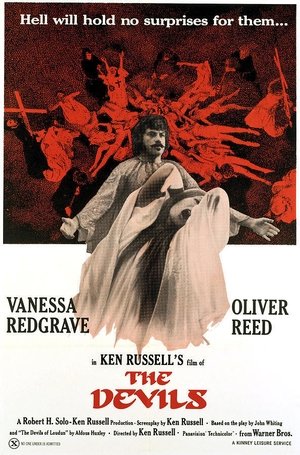
The Devils became the decisive intersection of Russell’s interest in history, Catholicism, political persecution and psychological disturbance. He developed the film from John Whiting’s stage play and Aldous Huxley’s historical account The Devils of Loudun. The material concerns the persecution of the Catholic priest Urbain Grandier in seventeenth-century France and allegations of demonic possession within a convent of Ursuline nuns.
Russell regarded the events as a case in which religious hysteria could be manipulated to achieve political objectives. Grandier’s position in Loudun placed him in conflict with authorities interested in weakening the independence of the town. The accusations surrounding the convent therefore offered a mechanism through which personal obsession, religious spectacle and political coercion could become connected.
The director approached the material through historical research while deliberately rejecting conventional period-film realism. He wanted the events to retain their political meaning for modern audiences rather than appear safely confined to the seventeenth century. The production consequently combined researched incidents with highly stylized costumes, architecture, group movement and performance.
Russell considered the film one of his clearest statements about political power. In a 1995 discussion of its production and censorship, he described it as his one explicitly political film and emphasized the relationship between collective manipulation and the destruction of individual freedom. This interpretation helps explain why the historical subject remained important to him long after the original release controversy had subsided.
The creative environment and censorship of The Devils
Russell worked with several collaborators whose contributions were essential to the film’s visual identity. Derek Jarman, then at the beginning of his feature-film career, became production designer and constructed an architectural environment that emphasized the institutional and political character of the story. Costume designer Shirley Russell developed clothing that distinguished authority, religious office and social position. Cinematographer David Watkin and editor Michael Bradsell helped translate these elements into the finished production.
These relationships demonstrate Russell’s method as a director. He could arrive with highly specific visual ideas while allowing designers and technicians substantial opportunities to transform them into practical film images. His interest in costume and set construction was closely connected with his background in photography and theatre. Physical environments were expected to convey information about institutions and characters rather than simply establish historical location.
The film encountered major censorship difficulties before and after its 1971 release. British censor John Trevelyan objected particularly to the duration and graphic presentation of certain torture sequences. Warner Bros. subsequently imposed additional alterations for American distribution, producing versions that differed substantially from Russell’s preferred assembly. Religious objections and controversy over sexual imagery further complicated the film’s public reception.
Russell continued discussing these changes for decades because he believed that the removal of certain material damaged the relationship between political persecution, religious behavior and the fate of Grandier. The disputes became central to his professional reputation. The Devils established him as a director capable of attracting major critical recognition while simultaneously creating serious commercial and institutional problems for companies distributing his work.
The consequences extended well beyond the original release. Russell and Bradsell supervised a reconstruction of his preferred version in 2004, assisted by Mark Kermode and Paul Joyce. That edit later became the basis for a definitive 4K restoration prepared by Warner Bros. and presented at the Cannes Film Festival in 2026. Its theatrical release by Warner Bros. Clockwork and the British Film Institute finally made Russell’s approved reconstruction publicly accessible in a form that had not been available during his lifetime.
Entering American horror with Altered States
Russell’s move into American science-fiction horror came with Altered States, released in 1980. The production was developed from Paddy Chayefsky’s novel and screenplay and centered on a scientist investigating the relationship between consciousness, sensory deprivation and human biological history. Russell became involved after another director had departed, entering a project whose writer already possessed considerable professional authority.
The subject was particularly compatible with Russell’s established interests. His BBC films had repeatedly explored imagined experience through physical imagery, while The Devils had demonstrated his ability to connect psychological disturbance with bodily and institutional control. Altered States gave him a narrative in which altered perception could produce increasingly elaborate visual transformations and eventually disturb the distinction between mental experience and physical reality.
The collaboration with Chayefsky became difficult. The writer and director disagreed over dialogue, performance, design and the degree of freedom Russell should exercise during production. Chayefsky ultimately used the screenplay credit Sidney Aaron. The conflict illustrates a recurring problem within Russell’s career: he regarded direction as the interpretation of written material through cinema, while some writers and producers expected closer adherence to a previously established conception of the work.
Despite these difficulties, the film became one of Russell’s most important horror-related productions. It was also William Hurt’s feature-film debut. Russell directed an ensemble including Hurt, Blair Brown and Bob Balaban while working with specialists responsible for complex physical and visual effects. The production demonstrated that his subjective visual method could function within a large American studio film, even when the collaborative environment was contentious.
Hallucination, bodily change and Russell’s directing method
Russell was interested in experiences that could not be represented adequately through ordinary dialogue. His work frequently makes emotional or mental states visible through symbolic environments, changes in physical scale, altered movement or unexpected combinations of images. In horror, these methods become especially important because the audience is not always given a clear distinction between something a character imagines and something occurring in the fictional world.
Altered States expanded this method by connecting hallucination with biological transformation. Russell worked with effects specialists including Dick Smith and Bran Ferren, but his contribution lay primarily in the dramatic and visual organization of experiences that the screenplay described through scientific and philosophical ideas. The effects needed to appear as extensions of the protagonist’s experiments rather than as unrelated spectacles.
The relationship between actor and image remained important. Russell did not simply replace human performance with elaborate transformation scenes. The scientist’s intellectual curiosity and increasingly dangerous behavior had to remain legible as his experiences became more extreme. Russell therefore directed the performers within a production that repeatedly threatened to overwhelm recognizable behavior with impossible imagery.
The film’s reception also reinforced his reputation as a director whose work could divide critics. Admirers valued his ability to transform abstract ideas into intensely visual cinema, while detractors questioned whether his stylistic decisions sometimes displaced the narrative. This disagreement followed Russell through much of his theatrical career and became especially prominent during his later horror period.
Performance, visual planning and creative conflict
Russell’s working method developed from his unusual professional background. His experience as a dancer encouraged attention to gesture and the movement of groups. Photography gave him control over composition, while television taught him to create complex ideas under restricted resources. He carried these skills into productions that could involve large sets, elaborate costumes and demanding performances.
Actors frequently described Russell as a director who permitted unusually expressive acting. His films can contain abrupt changes in emotional intensity because he did not insist that every performance remain within the restrained conventions of mainstream British drama. This freedom was important to his horror, where possession, fear, obsession and altered consciousness required characters to behave in ways that might appear excessive in a conventional realistic setting.
Russell was equally willing to alter material while shooting. His authority could become a source of disagreement when writers expected the screenplay to determine every scene precisely. His approach treated the camera, actors and available physical environment as additional instruments of writing. A carefully planned sequence might be changed when a visual idea emerged during rehearsal or production.
The method produced some of his most individual work, but it also made his relationships with producers and distributors complicated. Russell was not indifferent to budgets or production circumstances, yet he often believed that the visual effectiveness of a scene justified solutions that others regarded as excessive. The resulting tension contributed to the uneven industrial history of his later career.
Gothic and the return to literary horror
During the 1980s Russell faced increasing difficulty obtaining financing for ambitious theatrical projects. His directing became more concentrated in productions where the available budget was comparatively limited and where independent or smaller distributors could offer opportunities unavailable through the major studios. Horror provided a means of continuing to explore subjects involving artists, imagination and psychological instability.
Gothic, released in 1986, brought Russell back to the relationship between creativity and mental disturbance that had occupied his BBC biographies. The screenplay by Stephen Volk drew upon the famous 1816 gathering of Lord Byron, Percy Bysshe Shelley, Mary Shelley, Claire Clairmont and John Polidori near Lake Geneva. The historical event was associated with the origins of two foundational works of horror literature, Mary Shelley’s Frankenstein and Polidori’s The Vampyre.
Russell responded to the screenplay by emphasizing the characters’ fears, sexual tensions and imaginative experiences rather than attempting a conventional literary biography. Volk later recalled that Russell removed a framing structure from the original screenplay and introduced additional imagery during filming. The writer characterized some of these changes as a form of rewriting accomplished directly through camera and staging.
The production therefore returned Russell to a method developed decades earlier for television. Historical artists became the subjects of a dramatized psychological experience in which imaginative images were presented with the immediacy of physical events. The difference was that Gothic employed the visual conventions of supernatural horror rather than the framework of a television arts documentary.
Russell directed performers including Gabriel Byrne, Julian Sands, Natasha Richardson, Timothy Spall and Myriam Cyr, working with cinematographer Mike Southon, editor Michael Bradsell and production designer Christopher Hobbs. The film also provided Volk with an important early screenwriting experience before he became widely associated with British supernatural television through Ghostwatch.
Adapting Bram Stoker and confronting British Gothic traditions
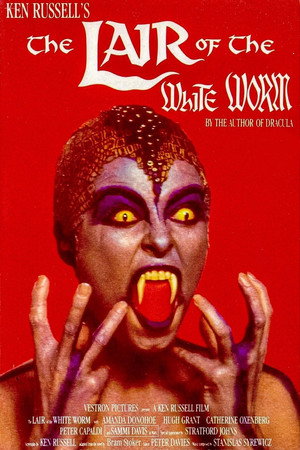
The Lair of the White Worm in 1988 gave Russell another opportunity to work directly within literary horror. He wrote the screenplay from Bram Stoker’s 1911 novel, transforming material from the author of Dracula into a contemporary production combining English folklore, supernatural threat, religious imagery and deliberately extravagant humor.
Russell approached the adaptation with considerable freedom rather than treating the novel as a narrative that needed to be reproduced faithfully. The story’s connection with ancient creatures and local legend allowed him to develop conflicts involving pagan imagery and established Christian traditions, subjects already central to his work. Its use of sexuality and bodily threat also connected it with his previous examinations of repression and forbidden desire.
The film was made under relatively modest production conditions and involved performers including Amanda Donohoe, Hugh Grant, Peter Capaldi, Catherine Oxenberg and Sammi Davis. Russell acted as writer, director and producer, giving him a combination of creative responsibilities different from his position on larger studio productions. He could adapt the subject to his own interests while working within the limits of available financing.
The result also demonstrated Russell’s continuing willingness to combine horror with comedy and deliberate theatrical excess. He did not approach Gothic fiction as a category that required consistent solemnity. His humor could coexist with grotesque transformation and violent imagery because the same concerns with religious authority and sexuality remained beneath the changing tone.
This characteristic distinguishes Russell from many directors who entered British supernatural horror through the established Hammer tradition. He drew upon related literary and visual material, but his preferred approach emerged from music, television biography, staged performance and subjective imagery rather than from a long apprenticeship in conventional horror production.
Sexual fear, theatricality and the later independent period
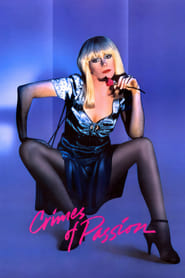
Russell’s relationship with horror extended beyond films generally marketed under that label. Crimes of Passion in 1984, starring Kathleen Turner and Anthony Perkins, continued his exploration of sexuality, religious judgment and psychological disturbance within an erotic-thriller framework. Its confrontation between private desire and moral condemnation belongs to the same larger body of work as The Devils, although the production does not require classification as straightforward supernatural horror.
Salome’s Last Dance in 1988 returned him to Oscar Wilde, theatrical performance and biblical violence. Russell wrote and directed a film built around a staged version of Wilde’s Salomé, using performance within performance to examine censorship, sexual power and the destruction of a religious figure. The connection with horror is thematic rather than a reason to treat the film as one of Russell’s principal genre productions.
During the 1990s Russell continued working in television and independent production, but his opportunities to direct major theatrical films diminished. The British and American industries had changed, and his reputation for conflict and stylistic excess made financing increasingly difficult. He continued seeking projects and experimenting with visual material rather than retiring from creative work.
The arrival of inexpensive digital cameras eventually allowed him to produce films on a much smaller scale. The Fall of the Louse of Usher in 2002 used Edgar Allan Poe as the basis for a deliberately irreverent combination of Gothic horror, comedy and music. Russell directed, wrote, photographed, edited and performed in the production, returning to a degree of personal control closer to his earliest amateur filmmaking than to the large productions of his commercial peak.
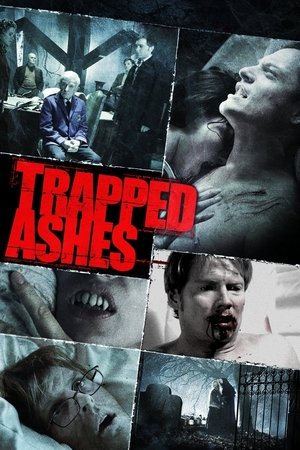
His contribution to the 2006 anthology Trapped Ashes demonstrated a continuing interest in body horror. Russell directed the segment The Girl with Golden Breasts, a grotesque story concerning cosmetic surgery and the consequences of a procedure involving unusual biological material. The assignment placed him alongside other directors from different generations of genre filmmaking and became one of his final substantial horror directing credits.
Long-term collaborators and Russell’s visual authorship
Russell’s films are strongly identified with his personal style, but that style depended on relationships with artists who could translate demanding visual concepts into practical work. Derek Jarman’s contribution to The Devils is especially important because his production design gave architectural form to Russell’s interpretation of religious and political authority. Shirley Russell’s costume work supplied another major component of the same production.
Editor Michael Bradsell worked with Russell on both The Devils and Gothic, among other productions outside horror. Their relationship eventually returned to The Devils when they supervised the reconstruction of Russell’s preferred edit in 2004. This gives the collaboration an unusual historical importance extending from the original production to the preservation of the director’s intentions more than three decades later.
Production designer Christopher Hobbs provides another example. His early professional work included the art department of The Devils, and he later became production designer on Gothic. The progression demonstrates how Russell’s working environment could help artists develop from early assignments into major creative responsibility.
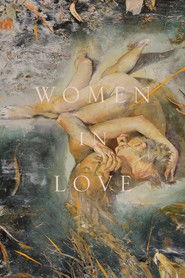
Russell’s most famous actors were also important, although many relationships were spread across horror and other genres. Oliver Reed appeared in several Russell productions and gave one of his defining performances as Grandier in The Devils. Glenda Jackson’s work with Russell likewise extended across different types of material, from Women in Love to Salome’s Last Dance. These sustained relationships helped Russell explore performance styles that could move between psychological realism and heightened theatrical expression.
Critical reception, censorship and historical reassessment
Russell experienced unusually polarized critical reception throughout his career. His technical ability and visual imagination attracted substantial recognition, including an Academy Award nomination for directing Women in Love. At the same time, critics repeatedly questioned his treatment of historical material, his sexual imagery and his preference for conspicuous stylistic devices.
Horror intensified these disputes because the material itself often involved taboo subjects. The Devils provoked objections relating to religion, sexuality and violence, while the bodily imagery of Altered States and the more extravagant Gothic productions challenged expectations of restrained British filmmaking. Russell’s methods made him a significant figure in horror without establishing him as a conventional genre specialist.
Later reassessment increasingly placed his work within broader histories of experimental cinema, British television, religious horror and body horror. The relationship between his documentaries and theatrical features became especially important because it demonstrated that apparently unrelated productions shared an interest in representing subjective experience through highly constructed images.
The restoration history of The Devils became central to this reevaluation. The film had circulated for decades in compromised versions, and access to Russell’s preferred edit remained restricted. The definitive restoration presented at Cannes in 2026 and subsequently distributed theatrically created a new opportunity to examine his intentions, the original contributions of his collaborators and the role of censorship in shaping the film’s reputation.
Death and Ken Russell’s place in horror history
Ken Russell died on November 27, 2011, aged eighty-four. His career had extended from staged photography and experimental amateur film through the BBC arts programmes of the 1960s, internationally distributed theatrical productions and eventually independent digital filmmaking. The horror films formed only part of that career, but they became among its most historically consequential achievements.
His contribution to horror lies in the application of methods that developed outside the genre. Russell brought theatrical movement, musical structure, experimental biography and subjective visual storytelling into films concerned with possession, persecution, hallucination and bodily change. His treatment of religious authority in The Devils and the physical consequences of altered consciousness in Altered States demonstrated that horror could accommodate political and psychological material without relying on conventional monster narratives.
Russell also helped establish an alternative form of British Gothic filmmaking through Gothic and The Lair of the White Worm, combining literary tradition with contemporary visual experimentation and unconventional performance. His films remain difficult to classify because he repeatedly crossed boundaries between historical drama, horror, fantasy, satire and psychological cinema. That range is fundamental to his historical significance: Russell approached horror as another means of exploring the conflicts that had occupied him throughout his professional life, particularly the relationship between individual experience and the institutions claiming authority over it.