

2009
Stephan Dupuis
Horror Special Effects · Biography · Horror Filmography · Collaborators · Credits
Horror subgenres & themes
Most represented across this person's horror filmography:
BODY HORROR
• ANIMAL
• HAUNTED HOUSES
• MEDICAL
Biography
Stephan Dupuis and the Craft of Practical Body Horror
Stephan Dupuis is a Canadian makeup and creature-effects artist whose contributions to horror are most closely associated with David Cronenberg's Scanners (1981) and The Fly (1986). His work ranges from the construction of artificial human anatomy to the daily application of extensive prosthetics on performers. Dupuis shared the Academy Award for Makeup with Chris Walas for The Fly, a production in which the changing appearance of scientist Seth Brundle carries much of the film's account of disease, physical deterioration, and lost identity. He subsequently supervised makeup for The Fly II (1989) and helped develop the grotesque creature imagery of Naked Lunch (1991).
His career is significant for the work performed between the initial concept of a monster and its finished appearance on camera. A design conceived by a supervisor must become an appliance that fits an individual face, survives the lights and schedule, and permits an actor to speak. Dupuis worked directly with performers as well as with technicians preparing sculptures, molds, and fabricated body parts. This combination of workshop knowledge and on-set execution was particularly valuable in films that made prolonged human transformation the source of horror.
Training in Montreal and the Influence of Dick Smith
Dupuis grew up in Montreal and began experimenting with foam-latex makeup in his parents' basement. His experiments developed while he studied cinema at the Sir George Williams campus, where he completed a master's degree in Cinema Fine Arts. The Canadian disaster film City on Fire (1979) provided an early professional assignment. Initially hired to assist the production's senior makeup artist, he eventually led its effects-makeup department. The work offered practical experience in organizing materials and artists under the conditions of feature production.
Dick Smith noticed his work and invited him to collaborate in New York. Smith was an established authority on facial appliances, aging, and the fabrication of convincing anatomical effects. That contact was particularly important for a young artist learning to make prosthetics compatible with facial movement. Dupuis's later assignments would include synthetic skin, injured faces, and extensive makeup applied repeatedly to the same performer. Such work depends on reliable methods of casting, adhesion, coloring, and removal; a visually impressive sculpture can be unusable if it cannot be safely applied or maintained during filming.
Scanners and the Mechanics of Psychic Violence
Dupuis joined the effects team for Cronenberg's Scanners, whose telepathic conflicts are represented through physical damage. He and Chris Walas helped execute practical makeup under circumstances that also drew on advice from Dick Smith. The most notorious assignment involved an artificial head made to rupture during a public demonstration of psychic power. Cinematographer Mark Irwin later recalled that the model contained food materials, gelatin, and latex scraps intended to resemble the irregular textures of tissue. Early attempts using pyrotechnic squibs produced sparks that looked inconsistent with a supposedly internal psychic attack.
Special-effects supervisor Gary Zeller supplied the decisive solution: the dummy was struck from behind by a shotgun blast using salt, with several cameras recording the result. The completed image has frequently been credited in simplified accounts to an individual makeup artist, but the effect depended on several specialists. Dupuis helped prepare the fabricated anatomy; Zeller's physical method produced the final rupture. Irwin also remembered that additional versions were photographed amid concerns about the violence of the original, but the first result remained in the film.
The sequence provided a clear demonstration of the demands placed on a practical-effects crew. Its credibility came from the appearance of the head before the impact, the behavior of the material when it broke apart, and the camera's ability to capture the event at precisely the required moment. Dupuis's involvement belongs within that collaborative process. The film began a long professional association with Cronenberg, whose subsequent productions repeatedly called for unusual facial and bodily effects.
Canadian Horror Assignments and Disturbed Human Bodies
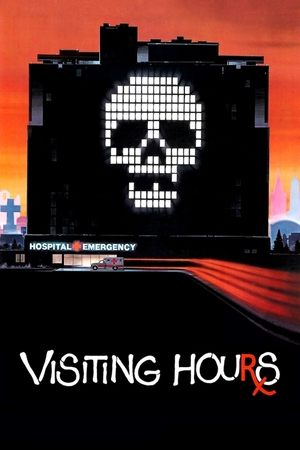
During the early 1980s, Dupuis worked on other productions centered on bodily injury and threatening behavior. In Visiting Hours (1982), a Canadian slasher directed by Jean-Claude Lord, he was credited with special-effects makeup. The story's assaults occur in a hospital, a location where damaged bodies must look credible within a recognizably clinical environment. His assignment concerned the practical representation of injury, distinct from the mechanical destruction of the model head in Scanners. Gary Zeller also worked on the production in a separate effects capacity.
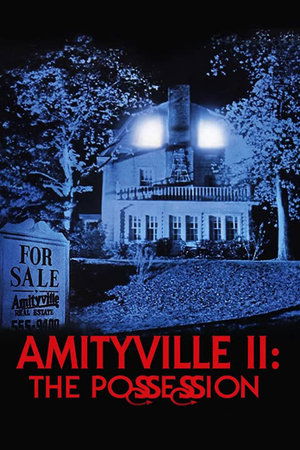
On Amityville II: The Possession (1982), directed by Damiano Damiani, Dupuis received an assistant makeup credit. The film uses a narrative of supernatural influence inside a family home, culminating in the visible alteration of its possessed character. His documented position was supporting work in the department. The principal design decisions cannot be assigned to him solely from that credit, even though the production belongs to the same period in which he was acquiring experience with complex horror applications.
His credits also include Of Unknown Origin (1983), a thriller about a man's escalating confrontation with a rat in his New York home, and Spasms (1983), involving a dangerous snake. These jobs connected his technical specialization to stories in which attacks, injuries, and animal threats required convincing physical consequences. The available credit records establish his participation, but do not reliably identify particular individual shots as his sole creations.
The Fly: Applying the Stages of Seth Brundle's Decay
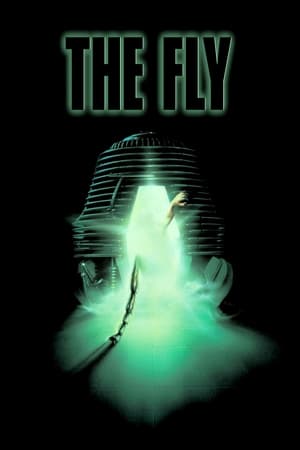
The Fly was the defining assignment of Dupuis's career in horror. Cronenberg's remake concerns a scientist whose experiment accidentally combines his genetic material with that of a housefly. Chris Walas designed and oversaw the creature program, with an extensive team working through successive stages of transformation. Dupuis contributed to the creature effects and personally applied the elaborate makeup worn by Jeff Goldblum. The gradual progression from subtle abnormalities to severely altered tissue required continuity across filming days and close attention to the performer's distinctive features.
Goldblum later recalled spending approximately five hours in a makeup chair with Dupuis, followed by further time needed to remove the appliances. He had to deliver dialogue while wearing facial prosthetics and, in some phases, extensive coverings that changed the apparent surface of his body. The practical question was therefore how to reproduce increasing damage without concealing the acting. Walas described studying Goldblum's expressions, particularly his eyes and mouth, when devising appliances capable of supporting sustained scenes.
The makeup charts Brundle's deterioration through altered skin color, lesions, changes in the face, and the loss of familiar bodily characteristics. The effects are closely connected to the film's presentation of illness: the scientist documents his condition while viewers can inspect the damage in ordinary interior lighting. Dupuis's responsibility for applying the prosthetics helped translate the larger creature design into a repeatable screen appearance. Consistency mattered because individual stages were photographed across a production schedule, then assembled into a continuous account of decline.
The eventual insect-human figure also demanded constructed creature components beyond the makeup fitted to Goldblum. Walas's workshop fabricated models and puppets for actions impossible for the performer. Dupuis's Academy recognition belongs to the combined makeup achievement, and does not mean that he personally sculpted or operated every piece used in the film. His direct contact with the actor is, however, unusually well documented by Goldblum's recollections. At the March 1987 Oscars, the makeup award went jointly to Walas and Dupuis.
For horror effects history, his contribution is especially revealing because it concerns the sustained labor needed to make an elaborate transformation playable. A creature seen for seconds can be photographed around a carefully positioned puppet. Brundle, by contrast, remains a speaking character while his body changes. The successful illusion depends as much on fitted surfaces and their daily maintenance as on the spectacular final creature.
Poltergeist III and The Fly II: Makeup Under Production Constraints
Dupuis served as a key special makeup artist on Poltergeist III (1988), directed by Gary Sherman. Its supernatural menace is staged largely through reflective surfaces and the appearances of transformed human figures. The department included designers John Caglione Jr. and Doug Drexler, while Dick Smith acted as a consultant. Surviving production photographs show Dupuis and Kevin Haney applying the makeup associated with the spectral preacher Kane to a stand-in for Heather O'Rourke. The images identify a concrete part of his work without attributing every apparition or mirror effect to him.
The use of a stand-in also indicates how an effects department could address the physical demands of elaborate applications. The final stages of the Kane makeup were placed on a performer whose facial proportions suited the appliances, allowing the young lead actress to spend less time undergoing the process. The production depended on coordinated casting, prosthetic construction, and practical application because its transformations were photographed alongside intricate in-camera effects.
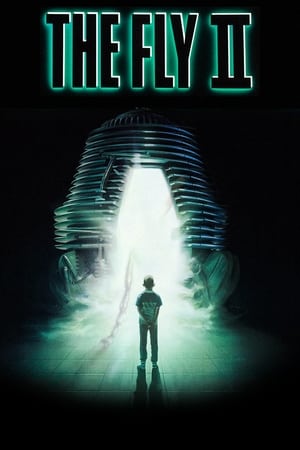
Dupuis's collaboration with Walas resumed on The Fly II, directed by Walas himself. His official credit was credited as special-effects makeup supervisor for the Walas studio The sequel follows Martin Brundle, played by Eric Stoltz, through another progression of bodily mutation. This time the main performer had to be given a recognizably different insect-human appearance while remaining emotionally legible during the story's extended transformation. The makeup operation was only one part of a production also involving large mechanical creatures and elaborate injury effects.
Stoltz remembered long applications, including one day that lasted about seven hours, and specifically praised Dupuis for making the experience manageable. His testimony establishes the artist's direct role with the actor. Walas directed the film and guided the monster design; other shop specialists engineered and operated its larger effects. Dupuis supervised the makeup work that connected those designs to the actor's performance. The two productions show the value of this specialization across different filmmaking arrangements, one involving an ensemble of independent effects departments and the other led by the supervisor from the preceding film.
Naked Lunch and the Design of Grotesque Organisms
Dupuis returned to Cronenberg's cinema for Naked Lunch (1991), the director's adaptation of William S. Burroughs. Its hallucinatory world includes giant insects, organic typewriters, and creatures whose bodies combine recognizable animal structures with unsettling human features. Unlike the fitted character makeup of The Fly, many of these effects were independent puppets operated by teams of technicians. Contemporary production reporting identified Dupuis and Walas as central creature designers, with James Isaac supervising construction for Chris Walas Inc.
The designs called for unusually expressive artificial anatomy. Insect-like objects appear to speak through openings resembling bodily orifices, creating a disturbing overlap between communication and biological function. A typewriter transformed into an insect had to work as both a recognizable piece of equipment and a character with articulated parts. Different versions of its puppet were constructed for close dialogue, movement across a desk, and other actions. Sculptor Harold Weed described the assembly of the Clark Nova creature and named Dupuis among the artists who assisted when the sculpting schedule became demanding.
The film's grotesque images belong to a surreal literary adaptation, yet they draw heavily on the language of body horror. Dupuis's design involvement is significant because the creatures possess narrative functions: they converse, offer instructions, and interrupt ordinary behavior. Their mechanical construction was organized around those actions. The result broadened his contribution beyond prosthetic transformation to the design of disturbing characters that could sustain extended scenes.
Later Horror Makeup and Professional Significance
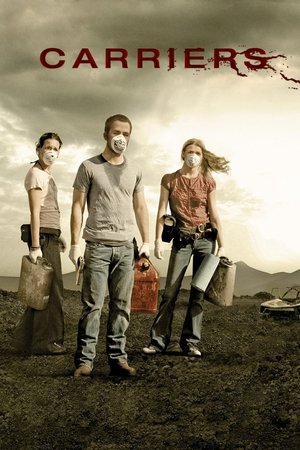
Subsequent horror assignments included Deep Rising (1998), where Dupuis worked on practical makeup, and Carriers (2009), where he served as key makeup artist. The first places its characters aboard a ship attacked by predatory organisms; the second concerns survivors navigating a contagious disease outbreak. In both cases, his credit relates to makeup work on human performers, and does not establish authorship of the principal computer-generated creatures or every visible sign of infection.
His broader career continued through collaborations with Cronenberg and assignments involving realistic facial prosthetics. Although several of those films fall outside horror, the same demands of anatomical observation and invisible application underpin the work for which Dupuis is best known. The official biography prepared for A Dangerous Method describes a professional relationship with Cronenberg extending from Scanners across several decades. That continuity is relevant to horror because the director repeatedly sought ways of treating biological change as an observable event within an actor's performance.
Dupuis's place in practical horror effects is unusually clear in the firsthand testimony about his work. The artificial head in Scanners records a collaborative solution to a violent one-shot illusion; Goldblum's account of The Fly identifies the person responsible for the long applications that made Brundle's progressive decay filmable; Stoltz's account of its sequel confirms a similar working relationship under a different director. Together with the creature design of Naked Lunch, these examples document an artist whose expertise operated where invented anatomy, technical execution, and the needs of an individual performance meet.
Selected Work
Notable Horror Collaborators
Notable collaborators and creative partners throughout Stephan Dupuis's horror career.
 Chris Walas
Makeup Effects / Creature Design
Walas and Dupuis collaborated on the practical effects of Scanners (1981), The Fly (1986), and The Fly II (1989), where Dupuis supervised makeup for the Walas company. Their shared work on The Fly received the Academy Award for Makeup.
 David Cronenberg
Director / Makeup and Creature Effects Artist
Cronenberg worked with Dupuis on Scanners (1981), The Fly (1986), and the creature designs for Naked Lunch (1991). Their films linked physical makeup and puppetry to transformations central to the drama.
 Dick Smith
Mentor / Makeup Effects Collaborator
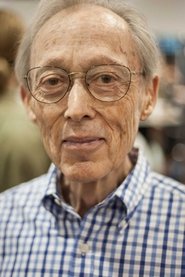
Smith recognized Dupuis early in his career and invited him to collaborate in New York. Their documented horror overlap includes Scanners (1981), where Smith consulted on the physical effects, and Poltergeist III (1988), where Smith advised the special makeup department and Dupuis served as a key artist.
Stephan Dupuis Horror Movies
Special FX / Practical FX (8 credits)
1998
1989
1986
1983
1982
1982
1981