


2026
Jeffrey Combs
Horror Actor · Biography · Horror Filmography · Family · Collaborators · Credits
Horror subgenres & themes
Most represented across this person's horror filmography:
BODY HORROR
• MEDICAL
• SPLATTER
• CANNIBAL
Biography
Jeffrey Combs and the Face of Lovecraftian Horror
Jeffrey Combs became one of the most recognizable character actors in modern horror through a career built on intensity, precision and an unusual ability to make obsession feel completely rational from inside the character. Born in Oxnard, California, in 1954, Combs trained as an actor before establishing himself on the West Coast stage and moving into film and television. His career would eventually range far beyond horror, including extensive work in science fiction and voice acting, but the genre gave him the roles that most clearly defined his screen identity.
That identity is inseparable from scientists, intellectuals, investigators and authority figures whose confidence gradually reveals something unstable underneath. Combs rarely plays horror through physical intimidation alone. His performances tend to work through speech, posture and concentration, creating characters who often appear most dangerous when they are calmly explaining why everyone else is wrong. That quality made him particularly suited to the worlds of H. P. Lovecraft, where knowledge itself can become a threat and rational inquiry can lead directly into the impossible.
Stage Training and the Road to Film
Combs studied acting at the Pacific Conservatory of the Performing Arts and the University of Washington before working in regional theatre. His stage background became important to the way he approached later genre material because it encouraged commitment rather than distance: even when the situation was grotesque or absurd, the character had to believe completely in what was happening. By the early 1980s he was appearing in film, including small roles outside horror and the supernatural production Frightmare.
The decisive change came through theatre rather than through a conventional horror audition circuit. A casting director saw Combs performing on stage in Los Angeles and brought him to the attention of Stuart Gordon, who was preparing his first feature film. Gordon later recalled that Combs did not physically resemble H. P. Lovecraft’s description of Herbert West, but that the actor immediately captured the character’s attitude during the audition. The choice created one of the most durable actor-director relationships in American cult horror.
Re-Animator and Herbert West
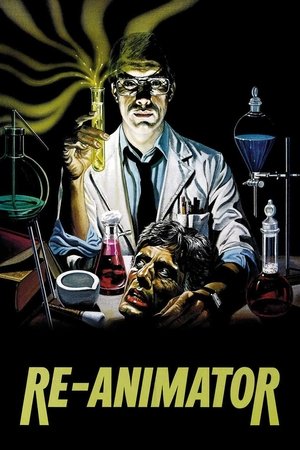
Re-Animator (1985) gave Combs the role that permanently changed his career. Herbert West is a medical student obsessed with defeating death through a serum capable of reanimating dead tissue, and Combs avoids playing him as a conventional hysterical mad scientist. West is controlled, impatient and contemptuous of emotional hesitation, treating death as a technical problem and catastrophe as evidence that the experiment needs refinement rather than abandonment.
The performance is central to the film’s balance of horror and black comedy. Gordon approached the material seriously, and Combs plays West with the same conviction even when the story moves into decapitation, reanimated corpses and extreme practical gore. The humor therefore develops from the collision between West’s rigid certainty and the increasingly impossible consequences around him. The film became a cult success and made Herbert West the character most closely associated with Combs.
Re-Animator also established the creative network that would shape a large part of his horror career. Stuart Gordon directed, Brian Yuzna produced, Dennis Paoli co-wrote, Richard Band composed the score and Barbara Crampton played Megan Halsey. Several of those collaborators would return repeatedly, giving Combs a professional environment closer to a recurring theatre company than to a series of unrelated genre productions.
From Beyond and the Stuart Gordon Ensemble
Combs reunited with Gordon and Crampton almost immediately for From Beyond (1986), another adaptation of Lovecraft. This time he played Crawford Tillinghast, an assistant to a scientist whose Resonator machine stimulates the pineal gland and reveals creatures existing beyond ordinary human perception. The role reverses much of the Herbert West dynamic: Tillinghast begins as the traumatized survivor of an experiment rather than the man confidently controlling it, and the film gradually subjects him to physical and psychological transformation.
The collaboration continued through other forms of horror. In The Pit and the Pendulum (1991), Gordon cast Combs as Francisco within an Inquisition story built around Edgar Allan Poe, while Castle Freak (1995) gave him one of his most emotionally damaged leading roles. As John Reilly, Combs plays a husband and father carrying guilt, alcoholism and family collapse into an inherited Italian castle, allowing Gordon to use the actor in a much more vulnerable register than the intellectual aggression of Herbert West.
Castle Freak also reunited Combs with Barbara Crampton and several recurring collaborators from the Gordon circle, including writer Dennis Paoli, composer Richard Band and producer Charles Band. The repetition mattered because the films did not simply cast the same people in equivalent roles. Combs and Crampton move from adversarial tension in Re-Animator, to scientific partners confronting the Resonator in From Beyond, to a fractured married couple in Castle Freak, demonstrating how the same ensemble could be reconfigured around very different emotional relationships.
Brian Yuzna and the Re-Animator Sequels
Brian Yuzna became another major figure in Combs’s horror career. After producing Re-Animator and From Beyond, Yuzna moved into the director’s chair for Bride of Re-Animator (1990), returning Combs to Herbert West and expanding the original premise from reanimating corpses to constructing new life from assembled body parts. Combs preserved the character’s essential logic: even after the disasters of the first film, West remains convinced that the problem is not the idea itself but the imperfect execution of it.
The partnership continued with Beyond Re-Animator (2003), again directed by Yuzna, where West conducts new experiments after years in prison. The long interval between sequels gave Combs the unusual opportunity to revisit the same obsessive character across different stages of his own career without turning West into a fundamentally different person. Yuzna also directed Combs in Faust: Love of the Damned, extending their association beyond the franchise that had first connected them.
Lovecraft Beyond Herbert West
Combs’s association with Lovecraftian cinema quickly expanded beyond Herbert West. In the 1993 anthology Necronomicon: Book of the Dead, he portrayed H. P. Lovecraft himself in the wraparound story, turning the actor most identified with a Lovecraft creation into an on-screen version of the author. The casting added another layer to a career already repeatedly connected to forbidden knowledge, altered bodies and characters confronting realities that rational thought cannot fully contain.
His Lovecraft connection was never limited to literal adaptations. Even in films not based on the writer, Combs repeatedly returned to characters whose curiosity, arrogance or professional authority places them in contact with forces they cannot control. That continuity helped make him a recognizable presence within American cosmic and body horror while allowing individual performances to remain distinct from Herbert West.
The Frighteners and a Wider Horror Career
Peter Jackson’s The Frighteners (1996) gave Combs one of his most eccentric roles outside the Gordon-Yuzna circle. As FBI agent Milton Dammers, he plays an investigator whose professional authority is inseparable from paranoia, trauma and increasingly bizarre behavior. The performance is deliberately heightened, but Combs keeps Dammers internally consistent enough that his extremity becomes part of the film’s supernatural world rather than a detached joke.
Other horror roles used different aspects of the same screen presence. In House on Haunted Hill (1999), Combs appears as Dr. Richard Benjamin Vannacutt, the physician associated with the violent history of the abandoned psychiatric hospital at the center of the story. In Would You Rather (2012), he plays Shepard Lambrick, a wealthy host who subjects financially desperate guests to an escalating series of cruel choices. Lambrick is effective precisely because Combs removes much of the manic energy associated with Herbert West and replaces it with controlled politeness and detached authority.
Across these films, Combs repeatedly avoids becoming a single type of horror performer. He can function as protagonist, antagonist, victim, investigator, scientist, patriarch or grotesque supporting presence, yet the performances often share a fascination with characters who possess strong private systems of logic. Even when the audience recognizes that logic as dangerous or delusional, Combs plays it from the inside rather than signaling that the character understands his own absurdity.
Edgar Allan Poe, The Black Cat and Nevermore
Another important extension of Combs’s horror work came through Edgar Allan Poe. Stuart Gordon cast him as Poe in the Masters of Horror episode The Black Cat, a dramatized nightmare that merges elements of the writer’s life with one of his most famous stories. The role allowed Combs to use his theatrical background in a performance built less around scientific obsession than around poverty, illness, imagination and psychological collapse.
The portrayal eventually moved from television back to the stage. Gordon developed Nevermore: An Evening with Edgar Allan Poe as a one-man theatrical work for Combs, who performed Poe through readings and biographical material rather than simply repeating the horror persona associated with Herbert West. The project connected several strands of his career at once: stage acting, literary horror, his long collaboration with Gordon and his ability to make historically or intellectually driven characters dramatically immediate.
Science Fiction and Character Acting Beyond Horror
Although horror remains central to Combs’s public identity, his career has never been confined to it. He became particularly visible in the Star Trek franchise through multiple recurring characters, including Weyoun and Brunt on Deep Space Nine and Shran on Enterprise. Those performances reinforced qualities already familiar from his horror work—precise vocal control, sharply defined physical behavior and the ability to create memorable personalities within limited screen time—while placing them in a very different genre tradition.
Combs has also worked extensively in animation and voice performance, where the same vocal precision becomes even more important. The breadth of those roles matters to understanding his horror career because it shows that the intensity associated with Herbert West is not a limitation imposed by one famous part. It is one application of a broader character-acting technique that can be redirected toward comedy, science fiction, historical material or animation.
Jeffrey Combs’s Horror Legacy
Jeffrey Combs occupies an unusual position in horror history because his reputation was not built around one monster costume or one long-running villain franchise, even though Herbert West became an iconic character. Instead, his genre identity developed through repeated collaboration. Stuart Gordon, Brian Yuzna, Barbara Crampton, Dennis Paoli, Richard Band and Charles Band form a recurring network around many of the films that established him, and that network helped create a recognizable branch of American cult horror rooted in Lovecraft, practical effects, black comedy and theatrical performance.
His strongest horror performances share a commitment to characters who believe deeply in their own reasoning even when the world around them becomes grotesque. Herbert West tries to conquer death, Crawford Tillinghast is transformed by forbidden perception, John Reilly struggles against guilt and family collapse, Milton Dammers converts trauma into obsessive authority, and Shepard Lambrick organizes cruelty as though it were a formal social experiment. The roles are very different, but Combs gives each one a coherent internal structure rather than reducing eccentricity to surface mannerism.
That consistency explains why his work remains important beyond nostalgia for 1980s cult cinema. Combs helped give a human face to a period of horror in which literary adaptation, body horror, practical effects and dark comedy could exist in the same film without cancelling one another out. His career demonstrates how a character actor can become part of the genre’s identity through recurring creative partnerships, distinctive technique and decades of performances that continue to connect classical horror literature with modern cult filmmaking.
Photos (1)
Images: TMDB
Selected Work
Notable Horror Collaborators
Notable collaborators and creative partners throughout Jeffrey Combs's horror career.
 Stuart Gordon
Defining Director
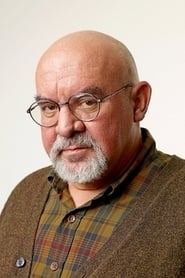
Combs’s most important recurring horror director. They worked together on Re-Animator, From Beyond, The Pit and the Pendulum and Castle Freak, with Gordon later directing Combs as Edgar Allan Poe in The Black Cat.
 Brian Yuzna
Producer-Director Collaborator
Yuzna worked with Combs across Re-Animator, From Beyond, Bride of Re-Animator, Beyond Re-Animator and Faust: Love of the Damned, first as a producer and later as a director.
 Barbara Crampton
Frequent Co-Star
Crampton and Combs share three central Stuart Gordon horror films: Re-Animator, From Beyond and Castle Freak. Their changing screen relationships became a defining part of that recurring ensemble.
 Richard Band
Musical Collaborator
Band composed the scores for Re-Animator, From Beyond, Bride of Re-Animator, Castle Freak and The Pit and the Pendulum, linking five major Combs horror performances through a recurring musical identity.
 Dennis Paoli
Screenwriting Collaborator
Paoli wrote or co-wrote Re-Animator, From Beyond, Castle Freak and The Pit and the Pendulum, giving Combs major roles across four productions shaped by the same recurring Gordon creative team.
 Charles Band
Production Collaborator
Band was a recurring production figure on Combs projects including From Beyond, Castle Freak, Cellar Dweller, The Pit and the Pendulum and Lurking Fear, connecting several phases of Combs’s independent horror career.
Jeffrey Combs Horror Movies
Acting (64 credits)
2025
2025
2025
2025
2023
2022
2020
2019
2019
2019
2018
2018
2017
2014
2013
2013
2012
2010
2010
2009
2009
2008
2007
2007
2007
2007
2006
2006
2006
2006
2005
2005
2005
2005
2004
2003
2002
2002
2002
2001
2000
1999
1998
1998
1997
1996
1996
1996
1995
1994
1993
1992
1991
1991
1990
1988
1988
1988
1988
1987
1986
1985
1981