


2021
Tom Holland
Horror Director · Biography · Horror Filmography · Family · Collaborators · Credits
Horror subgenres & themes
Most represented across this person's horror filmography:
BODY HORROR
• SLASHER
• SPLATTER
• VAMPIRE
Biography
Tom Holland and character-centered American horror
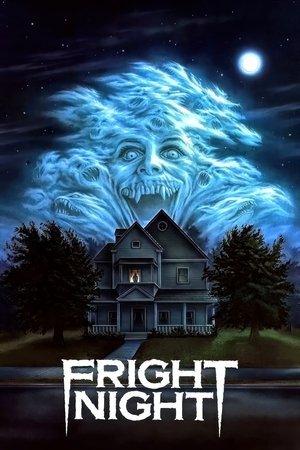
Tom Holland established himself as an important American horror filmmaker during the 1980s after an unusually varied professional development through acting, screenwriting and eventually directing. His major contributions include the screenplay for Psycho II, the creation and direction of Fright Night, his work on the development and direction of Child’s Play and later adaptations of Stephen King. Across these projects Holland became particularly interested in suspense generated by differences in knowledge: one character recognizes a threat while other people continue to interpret the same evidence through ordinary explanations.
His films also reflect the perspective of someone who spent years working as an actor before becoming a writer. Holland has repeatedly emphasized character motivation, performance and the emotional trajectory available to an actor. Even productions remembered for vampires, elaborate creature effects or an animatronic killer doll depend heavily on the audience understanding why individual characters behave as they do. His transition into directing developed partly from the desire to protect those relationships after seeing how substantially a screenplay could change when interpreted by another filmmaker.
Early life, acting and professional training
Thomas Lee Holland was born in Poughkeepsie, New York, on July 11, 1943. His family moved frequently during his childhood, an experience he later connected with a recurring feeling of being the new person in unfamiliar environments. He developed an interest in performance while young and pursued acting seriously before entering filmmaking as a writer.
Holland trained as an actor and studied with Lee Strasberg at the Actors Studio. He also completed university studies before spending years working professionally in television, film and commercials. During the 1960s and 1970s he appeared under his own name and occasionally as Tom Fielding, taking roles in episodic television and features. The work taught him how actors process dialogue, marks, camera positions and rapidly changing production demands.
Acting as the foundation of Holland’s writing
Holland’s acting experience became central when he began writing screenplays. He has described constructing characters partly according to the material an actor needs in order to understand an emotional progression from the beginning of a film to its end. This concern later became decisive in Psycho II, where Anthony Perkins had to be persuaded that Norman Bates was worth playing again after more than two decades.
Holland also developed a strong awareness of the physical environment around performers. A screenplay could specify where a character entered, what another character was able to see and which object would become important several minutes later. These details allowed suspense to emerge through staging rather than through explanatory dialogue. His later directing retained this writer’s attention to geography.
The move from acting into professional screenwriting
During the late 1970s Holland increasingly shifted toward writing. Early work included television projects such as The Initiation of Sarah, whose supernatural material already placed him near the genre with which he would later become strongly associated. Screenwriting offered a more direct form of narrative control than acting because Holland could determine the sequence of information before performers or directors became involved.
His theatrical screenwriting career developed through projects including The Beast Within, Class of 1984, Psycho II, Cloak & Dagger and Scream for Help. The subjects varied from physical transformation to school violence and family suspense. The common professional lesson was structural: a feature screenplay requires the writer to control audience attention over a sustained period while continually changing the information available to individual characters.
Visual suspense and Holland’s study of Alfred Hitchcock
Alfred Hitchcock became especially important to Holland while he was preparing Psycho II. Holland has described returning systematically to Hitchcock’s films, including early work, in order to study visual set pieces and the distinction between surprise and suspense. The exercise changed the way he thought about screenwriting. Dialogue could establish character, but images could place viewers in possession of information that a character did not yet have.
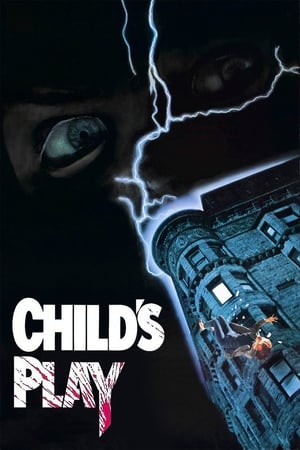
Holland later carried this principle directly into his own directing. A threatening object may already exist inside a scene while the protagonist remains unaware of it. The viewer then waits for the character to discover what has already been revealed. This mechanism became particularly important in Child’s Play, where the audience learns that Charles Lee Ray has entered the doll before Karen Barclay accepts that her son is telling the truth.
Psycho II and writing for an established character
The assignment of writing a sequel to Alfred Hitchcock’s Psycho carried obvious professional risk. Hitchcock’s film had become an established classic and Anthony Perkins had spent years dealing with the effect Norman Bates had on his career. Holland therefore concentrated first on giving Perkins a character arc substantial enough to justify returning. Norman begins the film after long psychiatric treatment and genuinely attempts to function outside institutional care.
This decision reorganized the sequel around sympathy and uncertainty. Viewers know Norman’s history but are repeatedly given reasons to believe that someone else may be manipulating him. Holland considered the emotional involvement with Norman more important than reproducing the structure of the original film. Richard Franklin’s direction and the return of Perkins then translated that screenplay into the production that significantly advanced Holland’s career.
Richard Franklin and learning how written space becomes filmed space
Richard Franklin became an important influence on Holland’s development as a filmmaker. Franklin wanted to make extensive use of the Bates house and motel, giving Holland a defined physical geography within which to write. Rooms, staircases and viewpoints could therefore be constructed into the suspense before production began.
Holland later credited Franklin with teaching him a great deal about visual storytelling. The collaboration helped move his thinking beyond dialogue and plot mechanics toward the relationship between a screenplay and the actual space a director photographs. By the time Holland directed his own first feature, he had already watched an experienced filmmaker translate one of his most important scripts into visual sequences.
Writing characters whose perceptions are dismissed
A recurring dramatic structure became visible across Holland’s work during this period. A character identifies a genuine threat while people around that person have reasonable grounds for disbelief. The resulting isolation creates suspense because the audience is allowed to understand more than the authorities or family members inside the story.
Cloak & Dagger uses a child whose claims appear connected with imagination and games. Fright Night gives a teenager knowledge of the vampire living next door while adults regard the accusation as absurd. Child’s Play places a young boy in a similar position when adults believe that the killer doll he describes cannot possibly be alive. Holland repeatedly found horror in the delay between recognition and belief.
Why Holland became a director
Holland did not originally treat directing as the inevitable destination of his screenwriting career. The decisive experience was Scream for Help, a screenplay he had written and valued highly. Michael Winner directed the finished film, and Holland was deeply dissatisfied with the result. He later summarized the effect by saying that he became a director in self-defense.
The experience changed his understanding of authorship. A screenplay could be carefully constructed and still become a substantially different work once another director controlled tone, performance and staging. When Holland completed Fright Night, he was sufficiently protective of the script that he preferred to accept the risk of directing for the first time rather than hand it to someone whose interpretation he could not control.
Fright Night and the transition from writer to filmmaker
Fright Night gave Holland the opportunity to apply the lessons accumulated through acting, screenwriting and his collaboration with Richard Franklin. The premise places horror-film fan Charley Brewster beside an actual vampire and gives him enough genre knowledge to recognize what he is seeing. That knowledge provides no immediate advantage because the people around him regard vampires as fiction.
The film also allowed Holland to bring older horror traditions into contemporary suburban life. Peter Vincent, played by Roddy McDowall, is an aging actor whose screen reputation as a fearless vampire hunter contrasts with his real personality. Jerry Dandrige, played by Chris Sarandon, operates successfully as a socially convincing adult before revealing his supernatural nature. Holland uses the relationship among these characters to examine how familiarity with horror movies affects people when their fictional assumptions become real.
Roddy McDowall, Chris Sarandon and Holland’s work with actors
McDowall was particularly important to Holland because he brought decades of professional experience and personal knowledge of Hollywood history to Peter Vincent. Holland allowed the character to develop beyond simple parody. Peter is frightened, commercially obsolete and uncertain of his own courage, giving McDowall an emotional progression that parallels Charley’s movement from isolated fan to active participant.
Sarandon required a different form of control. Jerry Dandrige needed enough social credibility to make Charley appear unreasonable. Holland consequently delayed the more elaborate creature effects and allowed Sarandon to establish the vampire first through ordinary interaction, confidence and manipulation. The contrast between performers became more important than continuous visual spectacle.
Horror and comedy inside the same dramatic reality
Holland frequently combines humor with horror, but his most successful work does not depend on characters recognizing that they are inside a joke. Comedy emerges from personality, social embarrassment and the collision between genre expectations and ordinary behavior. Peter Vincent can be funny because his public image is far braver than the man himself while the vampire threatening him remains completely serious.
This tonal balance became one of the most difficult aspects of Fright Night and later influenced Holland’s treatment of Child’s Play. A horror film can permit humor without making the threat harmless, provided the characters continue responding to danger according to the internal reality of the story.
Practical effects as part of performance
Holland entered feature direction during a period when major horror transformations were created largely through physical makeup, puppetry and mechanical effects. Fright Night required progressively more elaborate creature work as the story moved from suburban suspicion toward direct confrontation with vampires. The effects therefore had to interact with actors rather than exist as separate spectacle.
Holland’s acting background affected the way he approached this material. Creature effects still needed timing, eyelines and reactions from performers. The technical apparatus could only succeed if the human actors remained emotionally connected to what the audience was seeing.
Collaborative authorship and the development of Child’s Play
The origins of Child’s Play require a collaborative account. Don Mancini wrote the original screenplay and created the fundamental killer-doll premise that became the basis of the film and later franchise. Producer David Kirschner acquired the material, while John Lafia and Tom Holland participated in substantial subsequent development. Holland ultimately directed and shared screenplay credit with Mancini and Lafia.
The finished 1988 film therefore cannot accurately be assigned to one creator. Mancini supplied the original concept and remained the principal continuing creative figure across later Chucky productions. Holland contributed heavily to the structure and suspense of the first film, Lafia to screenplay development, Kirschner to production and Kevin Yagher’s team to the physical creation of the doll. Brad Dourif gave Charles Lee Ray and Chucky the vocal and performative identity that carried into the franchise.
Suspense instead of concealing the killer doll
One of Holland’s important decisions was to let the audience understand early that Charles Lee Ray has transferred himself into the Good Guy doll. The film could have been organized as a mystery concerning whether Andy himself was committing the murders. Holland preferred suspense. Viewers know that the doll represents a genuine danger and must wait for Karen and the police to discover the same fact.
This decision follows directly from his study of Hitchcock. Information is distributed unevenly among audience and characters. A seemingly harmless toy can remain in the room while adults continue talking because they do not possess the information viewers already have. The doll’s visual innocence becomes more useful once the audience knows what it contains.
Kevin Yagher and directing an artificial performer
Chucky required one of the most complicated practical-effects operations Holland had encountered. Kevin Yagher and his team constructed different versions of the doll for particular movements and expressions, and numerous puppeteers could be required simultaneously. Sets, camera positions and actor movements had to leave space for cables, operators and mechanical controls.
The technical requirements made preplanning essential. Holland could not simply ask the doll to alter a performance spontaneously in the way a human actor might. Each physical action had to be designed according to what a particular puppet could achieve. The process reinforced his interest in constructing suspense visually before shooting.
Working with child actors and the responsibility of horror performance
Alex Vincent was very young when cast as Andy Barclay, and Holland has discussed feeling a particular responsibility toward him during production. His conversations with Roddy McDowall, who had experienced the transition from child stardom into an adult acting career, had made Holland sensitive to the pressures placed on young performers.
Andy needed to remain emotionally credible because much of the film depends on adults interpreting his accurate statements as childish fantasy. If the performance became excessively theatrical, the central mechanism would fail. Holland therefore treated Vincent as a dramatic actor carrying a major part of the film rather than simply as a child reacting to a special-effects character.
Holland and the limits of franchise ownership
Both Fright Night and Child’s Play continued beyond Holland’s original films, but his relationship with the two properties developed differently. Fright Night originated directly from his screenplay and remained closely connected with his personal authorship. Child’s Play developed into a franchise in which Don Mancini became the principal continuing writer and creative custodian.
This distinction is useful when assessing Holland’s horror legacy. His importance does not depend on claiming ownership over every development associated with characters he helped bring to the screen. His work on the first Child’s Play is historically substantial precisely because the film represents a successful collaboration among several people whose contributions can be identified separately.
Television and the attraction of compact genre storytelling
Holland continued working in television after his theatrical successes, directing episodes and television films across horror and suspense. Anthology formats were particularly compatible with his preference for compact narrative mechanisms because a supernatural problem could be established and resolved without requiring the infrastructure of a full theatrical production.
His later participation in Masters of Horror placed him among directors from several generations of genre filmmaking. He directed We All Scream for Ice Cream, written by David J. Schow from John Farris’s story. The project returned Holland to supernatural revenge and childhood history within a production model designed to emphasize the identity of individual horror directors.
Stephen King and long-form adaptation
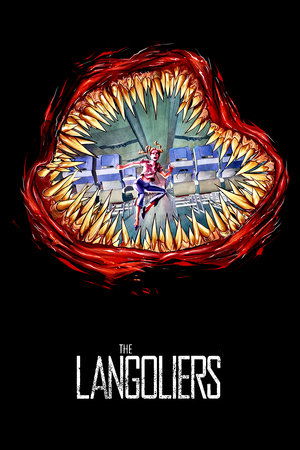
Holland’s relationship with Stephen King became an important part of his 1990s work. He wrote and directed the television adaptation of The Langoliers, which required transforming a novella involving an airline flight, temporal displacement and a large group of characters into a network miniseries. King supplied notes during development and appeared briefly in the finished production.
Holland later co-wrote and directed Thinner, adapted from the novel King had originally published as Richard Bachman. These projects demanded a different discipline from the tightly structured suspense of his 1980s films. Television allowed more narrative duration, while literary adaptation required decisions about which internal or descriptive material could be converted into behavior and images.
Writing fiction and returning to prose
Later in his career Holland increasingly published prose fiction and revisited storytelling outside screen production. The shift returned him to direct authorship without the industrial machinery required by film or television. His fiction includes novels and short stories alongside projects extending worlds associated with his earlier screen work.
This phase also reflects his long identity as a writer. Although Fright Night and Child’s Play made Holland famous as a director, screenwriting preceded directing and remained fundamental to the way he understood filmmaking throughout his career.
Documenting his own production history
Holland has also spent considerable time documenting how his major films were made. Retrospective books on Psycho II and Child’s Play combine production photographs, scripts, treatments and personal recollection. These publications preserve information about decisions that would otherwise survive mainly through scattered interviews and memories.
The retrospective work is particularly valuable because many collaborators from Holland’s early career are no longer alive. His accounts can be compared with surviving material and the testimony of other participants, giving later horror scholarship additional primary evidence about the development of significant 1980s productions.
Returning to acting later in life
Holland never completely abandoned acting and became more visible in front of the camera again during his later years. Appearances in contemporary horror connected him with younger filmmakers who had grown up watching his own work. The return also brought his professional history full circle: before he became known as a writer-director, acting had been the craft through which he first learned how film production functioned.
That background continued to distinguish his discussions of directing. Holland tends to describe scenes through characters, actor arcs and audience information rather than through technology alone. Practical effects and visual construction matter because of what they permit performers and viewers to experience.
Tom Holland’s contribution to modern horror
Holland’s most important period coincided with the expansion of American horror during the 1980s, but his contribution is more specific than participation in a successful genre cycle. He helped demonstrate that established horror properties could be continued through character rather than simple repetition in Psycho II, created a vampire film organized around contemporary horror fandom in Fright Night and helped transform an original killer-doll screenplay into the first film of one of the genre’s longest-running franchises.
The consistent element is his interest in character and information. Holland’s protagonists often know too little, know something that nobody believes or gradually discover that ordinary explanations cannot account for the danger around them. His background as an actor taught him to build those situations around performance, while his apprenticeship as a screenwriter taught him to control what the audience knows. Directing became the stage at which those two parts of his career could finally be combined.
Photos (2)
Images: TMDB
Selected Work
Notable Horror Collaborators
Notable collaborators and creative partners throughout Tom Holland's horror career.
 Stephen King
Writer-Director / Author Collaborator
Holland adapted King’s The Langoliers for television and later co-wrote and directed Thinner. Their two principal horror collaborations established an ongoing professional relationship and allowed Holland to work with King material in both long-form television and theatrical production.
 Richard P. Rubinstein
Writer-Director / Producer Collaborator
Rubinstein was a principal producer behind Holland’s Stephen King adaptations The Langoliers and Thinner. Although the relationship falls below the usual three-title threshold, the two productions form a substantial and clearly defined phase of Holland’s 1990s horror career.
MG
Mitchell Galin
Writer-Director / Producer Collaborator
Galin worked on both The Langoliers and Thinner with Holland, helping carry the director’s Stephen King work from a large television miniseries into theatrical horror. The collaboration consists of two major genre productions.
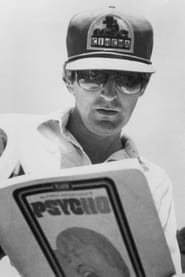 Richard Franklin
Writer / Director Collaborator
Franklin directed Holland’s screenplay for Psycho II and became an important influence on Holland’s understanding of visual suspense, physical geography and character-centered filmmaking. Their shared horror work is concentrated in one major film, but its effect on Holland’s later directing was substantial.
 Roddy McDowall
Director / Actor Collaborator
McDowall played Peter Vincent in Fright Night after previously working from Holland’s writing in Class of 1984. His performance became central to Holland’s first feature as director, and his experience as a former child actor also influenced Holland’s approach to directing young performers.
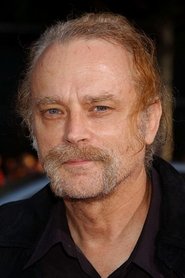 Brad Dourif
Director-Writer / Actor Collaborator
Dourif played Charles Lee Ray and provided Chucky’s voice in Child’s Play, establishing the performance that connected the killer’s human and doll identities. The direct collaboration is concentrated in the first film, but Dourif’s work was fundamental to the character Holland helped bring to the screen.
Tom Holland Horror Movies
Directing (12 credits)
2019
2014
2007
2005
1996
1995
1991
1989
1988
1985
1985
Acting (19 credits)
2026
2024
2024
2022
2021
2020
2020
2019
2019
2018
2015
2012
2010
2010
2009
2007
1995
1994
1983
Writing (14 credits)
2021
2014
2011
2006
1996
1995
1989
1988
1988
1985
1984
1983
1982
1978
Other Crew (1 credits)
2017