



2010
Brian Yuzna
Horror Director · Biography · Horror Filmography · Collaborators · Credits
Horror subgenres & themes
Most represented across this person's horror filmography:
BODY HORROR
• CHRISTMAS
• EVIL DOLL
• ZOMBIE
Biography
Brian Yuzna and the Horror of the Body Without Limits
Brian Yuzna built one of the most recognizable careers in modern cult horror around a simple principle: the human body is never as stable as people imagine. It can be resurrected, stretched, fused with another body, invaded by parasites, transformed by technology or reduced to material for somebody else's experiment. His films repeatedly begin with characters who believe they understand the rules governing flesh, society or science, then destroy that confidence through increasingly grotesque physical consequences.
Yuzna entered horror primarily as a producer rather than a director, helping Stuart Gordon bring Re-Animator, From Beyond and Dolls to the screen before establishing his own directing identity with Society. That progression is crucial because Yuzna learned filmmaking by creating conditions in which other directors could work. Financing, practical effects, international sales and the realities of independent production were part of his understanding of cinema from the beginning.
When he eventually moved behind the camera himself, his films became more openly interested in social satire, sexuality, mutation and grotesque humor. Society, Bride of Re-Animator, Return of the Living Dead 3, The Dentist and Beyond Re-Animator are extremely different films, but all contain characters whose apparent control over themselves or others eventually collapses. Yuzna's horror repeatedly exposes the body as a structure that can be reorganized.
From Manila to Independent Filmmaking
Brian Yuzna was born in Manila, Philippines, on August 30, 1949, to American parents. His childhood and youth were spent across different countries before he eventually settled in the United States. He did not grow up assuming that filmmaking would become a profession, although horror and special effects fascinated him from an early age.
Yuzna later recalled experimenting with film without formal training and learning production largely by doing it. He acquired a 16mm camera and became involved in an independent feature project, gradually discovering that the process of organizing people, effects and images interested him as much as the films themselves. The experience was imperfect, but it convinced him that filmmaking could become a career.
He eventually moved to Los Angeles with the intention of working professionally. Unlike filmmakers who entered the industry through established studio hierarchies, Yuzna approached cinema as something that could be assembled independently. This attitude would remain central throughout his career, particularly when horror allowed modest financing to produce images and concepts that larger companies often considered too strange.
Re-Animator and the Beginning of a Horror Partnership
Yuzna's major breakthrough came as producer of Stuart Gordon's Re-Animator (1985). Based on H. P. Lovecraft's stories about Herbert West, the film follows a medical student whose experiments with a fluorescent reagent can restore life to dead tissue. The concept immediately creates a problem that becomes fundamental to both Gordon and Yuzna's later horror: scientific success does not necessarily produce anything that should exist.
Jeffrey Combs's Herbert West treats death as a technical obstacle. Every catastrophe becomes evidence that another adjustment is required rather than proof that the experiment itself is wrong. Yuzna recognized the strength of this attitude and helped create a production environment where the material could become more excessive rather than being softened into conventional supernatural horror.
The film combines gore, black comedy, sexuality and practical effects with an unusual confidence. Severed heads remain active, corpses become violent and medical spaces turn into laboratories for physical chaos. The tone would become enormously influential on Yuzna's own directing career because it demonstrated that graphic horror and humor could reinforce rather than cancel one another.
Re-Animator also created several relationships that would continue for decades. Stuart Gordon, Jeffrey Combs, Barbara Crampton, Dennis Paoli and effects artists associated with the production repeatedly reappeared around Yuzna's later work. Instead of treating each film as an isolated project, Yuzna gradually developed something closer to a repertory company for independent horror.
From Beyond and the Body Beyond Perception
Yuzna continued his collaboration with Gordon on From Beyond (1986), serving as producer and contributing to the screenplay. The film again begins with scientific curiosity. A machine called the Resonator stimulates the pineal gland, allowing human beings to perceive creatures occupying another dimension alongside ordinary reality.
The experiment immediately destroys the distinction between seeing and becoming. Characters who are exposed to the Resonator do not simply gain access to another dimension. Their own bodies begin changing, as though perception itself has rewritten their biology. This connection between knowledge and physical transformation would become one of the clearest recurring ideas in Yuzna's career.
The film also intensified the combination of sexuality and mutation that would later dominate Society. Desire becomes chemically and physically unstable, while the creatures revealed by the Resonator exist in a world where ordinary anatomical boundaries mean little. Yuzna's horror repeatedly returns to this possibility that the human shape is only temporary.
Dolls and the Expansion of the Gordon-Yuzna World
Yuzna again produced Gordon's Dolls (1987), moving from scientific body horror toward a dark fairy-tale environment. Travelers become trapped in a mansion inhabited by an elderly toymaker and a collection of dolls capable of judging and violently punishing adults. The film is less aggressively grotesque than Re-Animator or From Beyond, but its dependence on practical creatures and physical performance belongs to the same creative culture.
The production reinforced Yuzna's interest in filmmakers who could make tangible effects part of storytelling. Puppets, prosthetics and mechanical creatures were not merely substitutes for more expensive technology. They gave actors something physical to fight, fear or touch, making the special effect part of the performance itself.
These first three major horror productions established Yuzna before he had directed a commercial feature. He had already learned how to protect unusual material, work with practical effects crews and package independent horror for audiences who wanted something more extreme than conventional studio genre films.
Honey, I Shrunk the Kids and an Unexpected Branch of the Same Imagination
Yuzna's collaboration with Gordon also contributed to the story that eventually became Honey, I Shrunk the Kids (1989). The finished Disney film is family entertainment rather than horror, but the underlying idea remains connected to interests visible throughout their genre work: science alters the physical scale of the human body and forces characters to navigate an environment that has suddenly become biologically dangerous.
The connection illustrates how flexible the creative ideas surrounding Gordon and Yuzna could be. A concept involving bodily transformation did not automatically require gore. By changing tone, the same fascination with altered physical reality could support adventure and comedy rather than horror.
Yuzna nevertheless remained most strongly drawn toward material where transformation produced anxiety rather than wonder. His first film as director would take the idea of unstable flesh further than almost anything he had previously produced.
Society and the Horror of the Upper Class
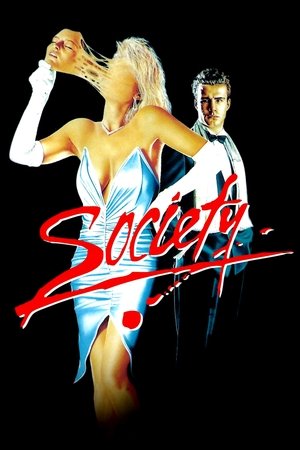
Society (1989) gave Yuzna his directorial debut and immediately established an identity distinct from Stuart Gordon. Billy Warlock plays Bill Whitney, a wealthy Beverly Hills teenager who has always felt strangely disconnected from his family and social environment. His suspicions gradually become more extreme as he discovers evidence that the people surrounding him may not simply belong to a different social class but to an entirely different biological order.
The brilliance of the premise is that Bill's paranoia begins as something emotionally recognizable. He is surrounded by wealth, privilege and social rituals that should make him feel fortunate, yet he experiences them as evidence that everyone else understands rules he has never been allowed to learn. Yuzna turns the familiar fear of not belonging into literal body horror.
The revelation confirms that the wealthy elite are creatures capable of physically merging with one another and consuming outsiders. Social class therefore becomes biological structure. The rich do not merely metaphorically feed upon the lower classes. Their bodies have evolved to perform the act directly.
Yuzna's satire avoids subtlety deliberately. The grotesque final gathering transforms economic inequality into a physical ritual, allowing the social elite to stretch, penetrate, absorb and reorganize bodies through an event known as the Shunting. The joke works because the metaphor becomes so literal that it crosses from political anxiety into anatomical nightmare.
Screaming Mad George and the Shunting
The effects created by Screaming Mad George were essential to making Society unlike almost any other body-horror film of its period. Faces move into impossible positions, human forms fuse together and individual bodies cease to behave as separate organisms. The climax abandons realistic anatomy completely without losing its ability to disgust.
Yuzna understood that conventional prosthetic realism would not have been enough. The creatures needed to appear biologically impossible because their entire society operates according to rules unavailable to ordinary human beings. Flesh becomes elastic, communal and almost liquid.
The Shunting also established a visual principle Yuzna would revisit repeatedly. Transformation is most disturbing when identity remains partially visible inside it. A completely unfamiliar monster can be frightening, but a recognizable human face stretched into an impossible configuration creates another kind of horror because the audience can still see the person inside the mutation.
The sequence became the defining image of Yuzna's directing career. Decades later, Society remains one of the clearest examples of body horror functioning simultaneously as practical-effects spectacle, black comedy and social satire.
Bride of Re-Animator and Inheriting Herbert West
Yuzna returned to the world that had launched his professional horror career by directing, producing and co-writing Bride of Re-Animator (1990). Jeffrey Combs returned as Herbert West and Bruce Abbott as Dan Cain, now continuing their experiments with reanimation while attempting increasingly ambitious manipulation of human tissue.
The sequel moves beyond restoring complete corpses. West begins treating individual body parts as raw material that can be combined and reanimated independently, producing bizarre organisms assembled from incompatible pieces. The logical progression is perfect for Yuzna because resurrection becomes manufacturing.
The creation of the Bride pushes this principle toward emotional territory. Cain hopes that a body assembled from dead tissue can somehow restore the woman he has lost, while West views the project primarily as proof that he can construct life. Grief and scientific arrogance therefore become partners in an experiment neither man fully understands.
The film also expands the practical-effects spectacle of the original. Small creatures made from disconnected body parts crawl through the laboratory, while the Bride herself becomes both beautiful and visibly artificial. Yuzna emphasizes the tragedy contained within the grotesque image: the assembled body carries expectations that no reconstructed person could realistically satisfy.
Silent Night, Deadly Night 4 and the Refusal to Repeat a Franchise
Yuzna's Silent Night, Deadly Night 4: Initiation (1990) is remarkable for how little interest it shows in repeating the formula suggested by its title. The earlier films had been associated with Christmas-themed slasher horror, but Yuzna largely abandoned that mythology in favor of witchcraft, insects, ritual and body transformation.
The film follows a young woman investigating a mysterious death and gradually becoming entangled with a group whose rituals transform both identity and flesh. Instead of using a masked killer, Yuzna builds horror around bodily invasion and the fear that membership in a hidden community requires physical change.
The film therefore belongs much more naturally beside Society and From Beyond than beside the original Silent Night, Deadly Night. Again, an outsider encounters a secret social system and discovers that joining it means surrendering control over the body.
Yuzna's willingness to disregard franchise expectations would become characteristic. When hired to make sequels, he often seemed more interested in discovering what new form the material could support than in reproducing the film that had previously succeeded.
The Guyver and the Mechanical Body
Yuzna produced The Guyver (1991), directed by Screaming Mad George and Steve Wang and based on the Japanese manga. Although the film combines science fiction, action and creature fantasy more than straightforward horror, its imagery belongs naturally within Yuzna's fascination with transformation.
The Guyver unit bonds with a human body and converts it into a biomechanical fighting organism, while other characters transform into monstrous Zoanoids. Technology, biology and identity become inseparable. Instead of wearing armor in the conventional sense, the human body becomes armor.
The project also extended Yuzna's relationship with effects-driven filmmaking. Creature suits and physical transformations dominate the screen, making the production another example of his willingness to build films around artists capable of inventing bodies that could not exist outside genre cinema.
Return of the Living Dead 3 and the Zombie as Tragic Lover
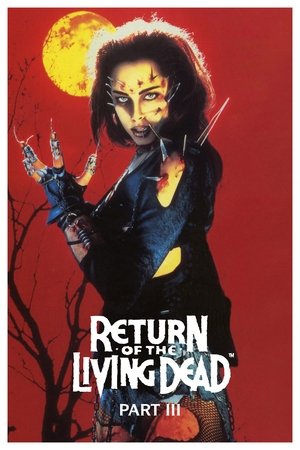
Return of the Living Dead 3 (1993) gave Yuzna another franchise and another opportunity to ignore the obvious approach. The previous Return of the Living Dead films were strongly associated with black comedy, punk culture and talking zombies. Yuzna retained the mythology of intelligent flesh-eating dead but transformed the story into a tragic romance.
Curt and Julie are young lovers whose relationship is destroyed when Julie dies in an accident. Curt uses military reanimation technology to bring her back, refusing to accept death even though the consequences are immediately visible. The basic situation echoes Bride of Re-Animator: love becomes dangerous when grief refuses to respect the physical boundary of death.
Melinda Clarke's Julie gradually discovers that pain can temporarily distract her from the hunger for human flesh. She begins piercing and cutting her own body, transforming herself into one of the most distinctive zombie designs of the 1990s. The imagery combines self-mutilation, sexuality and undeath without reducing Julie to a simple monster.
Yuzna treats her transformation with surprising emotional seriousness. Julie remains capable of love even as her biological needs become incompatible with human life. The tragedy comes from the fact that personality survives after the body has become something the relationship cannot accommodate.
Love, Death and the Yuzna Monster
Several Yuzna films use romantic attachment as the reason characters cross boundaries they would otherwise respect. Dan Cain wants to reconstruct a lost woman in Bride of Re-Animator. Curt resurrects Julie because accepting her death would mean accepting the end of their relationship. Later films repeatedly return to pregnancy, possession and bodily transformation as extensions of intimacy.
This pattern makes Yuzna's monsters unusually emotional. Mutation does not always destroy attachment. Sometimes the attachment becomes the mechanism that allows mutation to happen in the first place.
The result is a form of horror where the rational decision would often be to walk away, but emotional need makes that impossible. Yuzna seems fascinated by the moment when love becomes indistinguishable from refusal, particularly the refusal to accept mortality or bodily autonomy.
Necronomicon and the Return to Lovecraft
Necronomicon (1993) brought Yuzna directly back to the literature of H. P. Lovecraft through an anthology structure. Jeffrey Combs appears as a fictionalized Lovecraft investigating a mysterious library containing the forbidden Necronomicon, while the book introduces separate stories directed by Christophe Gans, Shūsuke Kaneko and Yuzna.
The anthology format allowed several different interpretations of Lovecraftian horror to coexist. Resurrection, forbidden knowledge, ancient creatures and human bodies altered by contact with forces beyond ordinary understanding appear across the stories without requiring a single consistent visual style.
Yuzna's participation demonstrates how strongly Lovecraft remained connected to his career even when Stuart Gordon was not directing. The attraction was understandable. Lovecraft repeatedly wrote about people discovering that human perception, identity and biology occupy only a tiny part of a much larger reality, exactly the kind of idea Yuzna preferred to make physical.
Jeffrey Combs's appearance as Lovecraft also strengthens the sense that the films created by Gordon and Yuzna had developed their own repertory mythology. The actor who embodied Herbert West now appears as the writer whose fiction inspired the entire creative network.
The Dentist and Horror Under Bright Lights
The Dentist (1996) forced Yuzna into a different kind of horror. Corbin Bernsen plays Dr. Alan Feinstone, a successful dentist whose obsession with cleanliness and perfection collapses after he becomes convinced that his wife has betrayed him. His professional environment gradually becomes the location through which psychological breakdown is expressed physically.
Yuzna later described the film as a challenge because his previous horror had depended heavily upon monsters, mutation and supernatural or science-fiction elements. The Dentist takes place largely in brightly lit professional spaces and uses an ordinary fear shared by millions of people: being trapped in a dental chair while somebody places metal instruments inside the mouth.
Feinstone's profession gives him complete physical control over patients who are expected to remain still and trust him. Once his mental stability disappears, the normal structure of treatment becomes terrifying because every instrument already has the capacity to cause pain. Yuzna does not need to invent an impossible machine. Dentistry itself supplies the equipment.
The film also reveals another side of Yuzna's body horror. Teeth represent order, cleanliness and physical integrity for Feinstone. Decay becomes morally offensive to him, allowing personal jealousy and professional obsession to fuse into a single form of madness.
The Dentist 2 and the Impossibility of Starting Again
The Dentist 2 (1998) returns to Alan Feinstone as he attempts to build another identity after escaping confinement. The premise depends upon the idea that geography cannot repair obsession. A new town and a new name provide temporary distance from the past, but the same psychological structure remains intact.
Corbin Bernsen's performance becomes essential because the character needs to alternate between professional calm and increasingly uncontrollable rage. Yuzna again uses the dental office as a place where ordinary authority can turn into private torture while everyone outside assumes legitimate medical work is taking place.
The sequel confirmed how effective a non-supernatural Yuzna monster could be. Feinstone does not require resurrection chemicals, alien organisms or mutant biology. His horror comes from the fact that a socially respected professional can use the ordinary tools of his occupation as instruments of bodily domination.
Progeny and the Horror of Reproduction
Progeny (1998) returned Yuzna to science-fiction horror through a story involving alien abduction, pregnancy and the fear that an intimate human relationship has been invaded by something impossible to identify. Instead of treating extraterrestrial contact primarily as spectacle, the film concentrates on what happens when evidence of that contact begins developing inside the body.
Pregnancy becomes a form of biological uncertainty. The characters cannot easily separate ordinary reproductive experience from the possibility that another species has intervened. Medical knowledge provides information without providing emotional reassurance.
The premise fits naturally beside Yuzna's previous work because the body again becomes territory claimed by competing explanations. Science, sexuality, identity and biological transformation overlap until the characters can no longer assume that the human organism belongs entirely to the person living inside it.
Fantastic Factory and the Attempt to Build a Horror Studio
At the beginning of the 2000s, Yuzna entered one of the most ambitious phases of his career by partnering with Spanish producer Julio Fernández and Filmax to create Fantastic Factory in Barcelona. The objective was larger than producing one film at a time. Yuzna wanted a continuing genre label capable of making modestly budgeted horror, science fiction and fantasy films in English for the international market.
The model reflected traditions such as American International Pictures and Hammer Films. Experienced international genre filmmakers could work alongside Spanish crews and emerging local directors, creating films designed from the beginning to travel across national markets. Yuzna was therefore attempting to apply the production philosophy he had developed in American independent horror to a European industrial structure.
Fantastic Factory officially emerged around 2000 and produced a run of English-language genre films including Faust: Love of the Damned, Arachnid, Dagon, Darkness, Beyond Re-Animator, Romasanta, Rottweiler, The Nun and Beneath Still Waters. The quality varied, but the ambition was unusually coherent: build an identifiable factory for international horror rather than treat each project as an isolated Spanish production.
The experiment also connected Yuzna with filmmakers who would become important to the development of modern Spanish genre cinema. Fantastic Factory existed during the period in which Spain was becoming increasingly visible internationally through horror, fantasy and thriller production, making Yuzna part of a broader shift in where commercially ambitious genre films could be manufactured.
Faust: Love of the Damned and Comic-Book Horror
Faust: Love of the Damned became the first major Fantastic Factory production and gave Yuzna another story built around bodily transformation. Adapted from the comic created by David Quinn and Tim Vigil, the film follows a man whose desire for revenge connects him with supernatural power and gradually transforms him into something monstrous.
The material allowed Yuzna to combine comic-book exaggeration with the practical gore and sexuality already associated with his cinema. Power is again inseparable from loss of bodily control. The protagonist may initially believe transformation gives him the ability to impose his will upon the world, but every supernatural gift comes with ownership attached.
The film also demonstrates the international strategy of Fantastic Factory. American genre traditions, Spanish production resources and European locations could be combined inside an English-language film intended for worldwide sales. Yuzna was not simply relocating his directing career to Spain. He was attempting to construct a repeatable production system.
Dagon and the Lovecraft Project That Refused to Die
One of Fantastic Factory's most important films was Stuart Gordon's Dagon (2001), produced after Gordon and his collaborators had spent many years attempting to develop a version of Lovecraft's The Shadow over Innsmouth. The project had repeatedly proven difficult to finance because its story of an isolated community transforming into aquatic creatures was considered too strange and expensive for conventional low-budget horror.
The Spanish production environment finally made the film possible. The story was relocated to a coastal European setting, where narrow streets, constant rain and decaying architecture create the sense that the entire town belongs to another biological history.
For Yuzna, bringing Dagon into production represented more than another collaboration with Gordon. It demonstrated exactly what Fantastic Factory was intended to accomplish: take a long-delayed genre project, combine international creative talent with Spanish resources and manufacture a film for the global horror market.
The production also became one of the later major collaborations between Gordon and Yuzna, closing a creative relationship that had begun with Re-Animator nearly two decades earlier.
Beyond Re-Animator and Herbert West in Europe
Beyond Re-Animator (2003) allowed Yuzna to return to Herbert West after more than a decade. Jeffrey Combs again plays the scientist, now imprisoned but still completely incapable of abandoning experimentation. A younger doctor enters the institution and provides West with another opportunity to continue researching the boundary between life and death.
The prison setting is ideal for Yuzna because it places resurrection experiments inside an already closed social system. Guards, prisoners and medical personnel become available material once the experiment escapes control. Authority is everywhere, yet nobody possesses meaningful control over what West has created.
The film adds new ideas to the reanimation process while retaining the black comedy and practical grotesquerie associated with the series. West has not grown morally despite years of consequences. If anything, confinement has reinforced his conviction that the problem was never the experiment but the people who prevented him from completing it properly.
Producing the third film through Fantastic Factory also demonstrates the unusual continuity of Yuzna's career. A franchise begun in American independent horror in 1985 could be revived nearly twenty years later through a Spanish production company created specifically to make internationally marketable genre cinema.
Rottweiler and the Mechanical Predator
Rottweiler (2004) gave Yuzna another hybrid of science fiction and horror. A fugitive becomes pursued by a seemingly unstoppable dog whose body contains mechanical components, converting the familiar animal-attack structure into a technological nightmare.
The concept again treats the body as something that can be reconstructed. The animal is dangerous not simply because it is aggressive but because biology has been reinforced through machinery. Flesh and technology become difficult to separate.
The film belongs to the less celebrated period of Yuzna's directing career, but its imagery remains completely consistent with his larger interests. Whether the subject is a human corpse, an alien pregnancy, a wealthy mutant or a mechanical dog, the recurring question remains what happens when the body is redesigned for purposes its original owner never chose.
Beneath Still Waters and the Buried Town
Beneath Still Waters (2005) moved Yuzna toward supernatural horror through the story of a town deliberately submerged beneath a reservoir after evil becomes associated with the community. Years later, the drowned location begins exerting influence upon the world above the water.
The premise gives Yuzna another form of hidden society. Instead of a secret existing behind the mansions of Beverly Hills or beneath a medical institution, an entire physical community has been removed from sight. Submerging the town does not destroy its history. It merely hides the evidence.
The film's imagery of buildings preserved beneath water turns architecture itself into a corpse. The location remains physically present even after society has attempted to erase it, creating a supernatural version of one of Yuzna's recurring ideas: something repressed eventually returns in another form.
Fantastic Factory as an Industrial Experiment
Fantastic Factory did not become a permanent European equivalent of Hammer or American International, but its significance lies partly in the attempt. Yuzna was thinking about horror not only as an individual filmmaker but as a production ecosystem. Directors, crews, effects artists, distributors and international buyers all needed to function together if modest genre films were going to survive outside the studio system.
The films ranged from established American filmmakers such as Stuart Gordon and Jack Sholder to Spanish directors who were becoming increasingly important within European horror. This mixture reflected Yuzna's belief that recognizable genre expertise could be combined with local talent rather than imported wholesale.
The company also demonstrates how international Yuzna's career had become. Born in Manila, raised across different environments, established professionally in American horror and later operating from Barcelona, he never treated Hollywood as the only place from which genre cinema could legitimately emerge.
Amphibious and the Continuing Creature Film
Amphibious (2010) returned Yuzna to creature horror through a production developed in Southeast Asia and involving a dangerous marine organism. Decades after the practical monsters of his earliest films, Yuzna remained attracted to stories in which human characters discover that the biological world contains forms they do not understand.
The production combines aquatic horror with the international filmmaking model that had become increasingly important during the later stages of his career. Rather than returning permanently to Los Angeles production, Yuzna continued treating horror as a genre capable of being manufactured through international collaboration.
The film also reinforces the continuity between his earliest and latest directing interests. Technology and production methods changed enormously between Society and Amphibious, but Yuzna remained fascinated by physical threat, creatures and the collapse of assumed boundaries between human beings and other forms of life.
The Producer as Creative Author
Yuzna's career is unusual because some of his most important horror contributions came from films he did not direct. Re-Animator, From Beyond, Dolls and Dagon belong formally to Stuart Gordon, yet Yuzna's role in bringing them into existence is fundamental to understanding his place in genre history.
Producing independent horror requires creative judgment long before a camera begins recording. The producer decides which strange idea can realistically become a film, what budget can support it, which collaborators need to be protected and how the finished product can reach an audience. Yuzna repeatedly performed this function for material that could easily have been rejected as too grotesque, too comic or too difficult to categorize.
This background also shaped him as a director. Yuzna rarely appears interested in pretending resources are unlimited. His films tend to build toward concentrated sequences where effects, design or grotesque imagery can create maximum impact. The producer is visible inside the director's decisions.
Practical Effects and the Pleasure of Transformation
Yuzna belongs to a generation of horror filmmakers for whom transformation usually needed to exist physically in front of the camera. Prosthetic faces, animatronic corpses, creature suits and artificial body parts could be manipulated directly by actors and photographed as objects occupying real space.
His films frequently make this construction part of their entertainment. Society does not hide its effects quickly. Bride of Re-Animator allows impossible combinations of body parts to crawl around the laboratory. Return of the Living Dead 3 turns Julie's transformed body into the visual center of the film.
Yuzna understands that a practical effect can become fascinating even when the audience knows intellectually that it is artificial. The pleasure lies partly in wondering how the image was constructed. Horror therefore becomes a collaboration between narrative disgust and technical curiosity.
This attitude helped make his films particularly durable within cult cinema. Fans remember not only characters and stories but individual effects, creatures and transformations. The image often becomes the film's cultural memory.
Black Comedy Without Safety
Humor runs throughout Yuzna's horror, but it rarely functions as reassurance. A scene can be funny precisely because the physical situation has become so extreme that ordinary emotional responses stop functioning. The laugh arrives without making the gore disappear.
Herbert West provides the clearest example. His complete inability to recognize the moral absurdity of his experiments allows catastrophe to become comic without requiring him to behave like a comedian. Society works similarly, turning class exploitation into an orgy of impossible anatomy while allowing the political metaphor to remain intact.
Yuzna therefore occupies a space between straight horror and parody. He does not usually mock the genre from outside. He accepts the horror premise completely, then pushes it so far that grotesque comedy emerges naturally from excess.
Outsiders, Hidden Groups and the Fear of Belonging
Another recurring structure in Yuzna's films involves characters who discover that a community contains rules they do not understand. Bill Whitney in Society suspects that his family belongs to something from which he has been excluded. Silent Night, Deadly Night 4 surrounds its protagonist with a hidden ritual group. Fantastic Factory productions repeatedly return to isolated communities, secret organizations and environments whose social order conceals physical horror.
The anxiety works in two directions. Being excluded can be terrifying because the outsider lacks power, but being accepted may be worse because membership requires transformation. Yuzna often presents belonging as something that consumes individuality rather than protecting it.
This gives his body horror a social dimension. The body does not change randomly. It changes because another group, institution, lover, scientist or biological force wants something from it.
Brian Yuzna's Style and Horror Legacy
Brian Yuzna's importance to horror lies partly in the films he directed and partly in the films he made possible. Without his production work, the careers of Stuart Gordon and several recurring collaborators would look very different. Without his directing career, modern body horror would be missing some of its most outrageous images.
Society alone would secure him a place in cult horror history because few films have made social hierarchy physically disgusting with such commitment. Yet Bride of Re-Animator, Return of the Living Dead 3 and The Dentist demonstrate that his interests could survive very different structures. Resurrection, romantic tragedy and psychological breakdown all become opportunities to investigate bodily control.
His production career is equally significant. Re-Animator, From Beyond and Dagon show his long relationship with Lovecraftian cinema, while Fantastic Factory reveals an ambition extending beyond individual films. Yuzna wanted to create an industrial environment where unusual genre cinema could continue being made internationally at budgets capable of supporting experimentation.
His work also represents a particular era of horror in which practical effects artists could become central creative collaborators. Screaming Mad George's mutations in Society, the constructed bodies of the Re-Animator films and Julie's transformation in Return of the Living Dead 3 are inseparable from the identity of the films themselves. Yuzna did not merely use effects to illustrate horror. He frequently built the entire dramatic idea around what transformation could look like.
Across his career, the body remains the central object of uncertainty. Wealth can change it, science can restart it, love can refuse to let it die, technology can rebuild it and hidden communities can absorb it. Yuzna's horror repeatedly strips away the comforting belief that a person owns a fixed physical identity. Beneath the skin, everything remains available for reconstruction.
Known Among Horror Fans For
Notable Horror Collaborators
Notable collaborators and creative partners throughout Brian Yuzna's horror career.
 Stuart Gordon
Defining Director Collaborator
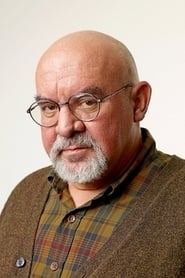
One of Yuzna's most important horror collaborators. Gordon directed Re-Animator, From Beyond, Dolls and Dagon with Yuzna working as producer, writer or creative producer across the projects.
 Jeffrey Combs
Defining Horror Actor
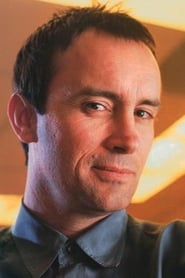
Combs became one of the central performers of Yuzna's horror career through Re-Animator, From Beyond, Bride of Re-Animator and Beyond Re-Animator, with Herbert West forming the core of their collaboration.
 Screaming Mad George
Special Effects Collaborator
Screaming Mad George helped define Yuzna's body-horror imagery across Society, Bride of Re-Animator, Silent Night, Deadly Night 4: Initiation, Faust: Love of the Damned and Beyond Re-Animator.
DP
Dennis Paoli
Screenwriting Collaborator
Paoli collaborated with Yuzna on several major horror projects, including Re-Animator, From Beyond, The Dentist and Dagon, linking Yuzna's Lovecraft adaptations with his later psychological horror.
JF
Julio Fernández
Fantastic Factory Partner
Fernández partnered with Yuzna in creating Fantastic Factory and worked with him across horror productions including Faust: Love of the Damned, Dagon, Beyond Re-Animator and Rottweiler.
WK
Woody Keith
Writing Collaborator
Keith collaborated with Yuzna on three key body-horror and supernatural films: Society, Bride of Re-Animator and Silent Night, Deadly Night 4: Initiation.
Brian Yuzna Horror Movies
Directing (14 credits)
2005
2004
2003
2000
1998
1998
1996
1993
1993
1990
1990
1990
1978
Acting (16 credits)
2026
2026
2025
2025
2024
2024
2024
2022
2022
2020
2019
2018
2011
2009
1996
1993
Production (21 credits)
2023
2023
2010
2008
2007
2005
2004
2003
2002
2001
2001
1993
1993
1993
1991
1990
1989
1986
1986
1985
1978
Writing (9 credits)
2008
2005
2004
1993
1991
1990
1990
1986
1978