



2028
Christopher Landon
Horror Writer · Biography · Horror Filmography · Family · Collaborators · Credits
Horror subgenres & themes
Most represented across this person's horror filmography:
HAUNTED HOUSES
• SLASHER
• SPLATTER
• ZOMBIE
Biography
Christopher Landon and contemporary high-concept horror
Christopher Landon developed a recognizable position in contemporary American horror through a career that combines franchise screenwriting with films built around clear supernatural or slasher mechanisms. His sustained work on the Paranormal Activity series gave him extensive experience with serialized mythology before he established himself as a director through Paranormal Activity: The Marked Ones, Scouts Guide to the Zombie Apocalypse, Happy Death Day, Happy Death Day 2U, Freaky and We Have a Ghost. Several of these films combine horror with structures usually associated with comedy, science fiction, coming-of-age stories or family drama while maintaining recognizable genre mechanics.
Landon’s strongest work is organized around systems that characters must understand. The demonic mythology of Paranormal Activity, the time loop of Happy Death Day and the body swap of Freaky each establish rules that determine how the protagonist can act. Those rules also create opportunities for character development. Tree Gelbman learns from repeated versions of the same day, while Millie Kessler experiences how radically other people respond when her consciousness occupies a physically intimidating adult body. Landon therefore uses high-concept premises as narrative structures rather than as isolated marketing ideas.
Early screenwriting and entry into Paranormal Activity
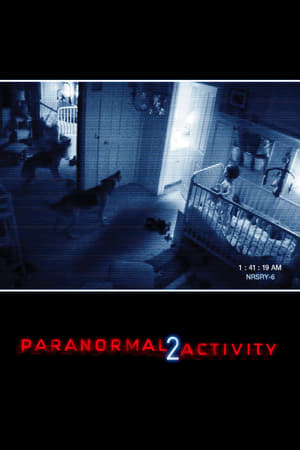
Landon was born in Los Angeles on February 27, 1975 and worked as a screenwriter before horror became the central area of his career. His long association with Paranormal Activity began with Paranormal Activity 2, where he shared screenplay credit with Michael R. Perry and Tom Pabst. The sequel had to expand a film whose success depended heavily on restraint, domestic realism and very limited mythology. Rather than abandoning the structure of the original, the second film connected the haunting surrounding Katie and Micah with Katie’s sister Kristi, her husband Daniel and their young son Hunter.
The sequel established family history as the principal route through which the franchise could expand. Events that initially seemed confined to one couple became part of a supernatural pattern extending across relatives and generations. Landon became increasingly important to this mythology over the following films, helping turn a contained haunting into a serialized narrative while retaining the found-footage format that defined the series.
Paranormal Activity 3 and the development of the family mythology
Landon received sole screenplay credit on Paranormal Activity 3, directed by Henry Joost and Ariel Schulman. The film moves backward to Katie and Kristi’s childhood and uses the prequel structure to explain earlier manifestations of the supernatural force associated with the family. This shift allowed the series to develop history without simply escalating events after the second film. The girls’ childhood experiences, the invisible figure Kristi calls Toby and the activities surrounding their grandmother become part of the mythology later installments would continue examining.
The film also expanded the visual possibilities of found footage while remaining within domestic recording technology. One of its best-known devices places a camera on the base of an oscillating fan, creating a slow mechanical pan between rooms. The camera repeatedly leaves areas of interest and returns to them later, producing suspense through predictable movement rather than handheld instability. Although the device belongs primarily to the directors and production team, Landon’s screenplay provided a domestic supernatural structure in which such delayed observation could function effectively.
Paranormal Activity 4 and the problem of continuing an expanding franchise
Landon returned as screenwriter for Paranormal Activity 4, which moved the story forward after the events involving Katie and Hunter. The film continued the use of household recording devices while introducing newer consumer technology into the visual language of the series. By this stage, however, the franchise faced the difficulty common to long-running supernatural narratives: each new installment needed to preserve uncertainty while audiences already understood much more about the mythology than viewers of the original film had known.
The response to the fourth film encouraged the production team to reconsider how much the series could continue within the same suburban environment. Landon’s next major contribution therefore changed location, cultural setting and character energy while maintaining links with the mythology he had helped develop across the previous sequels.
Paranormal Activity: The Marked Ones
Paranormal Activity: The Marked Ones in 2014 became Landon’s first horror feature as director and gave him greater control over material he had already been writing for several years. The film follows Jesse, a recent high-school graduate living in a working-class Latino community in Oxnard, California. After the death of a woman living in the same apartment building, Jesse and his friend Hector begin investigating unusual objects and events connected with her home. Jesse subsequently develops physical abilities that initially appear exciting before becoming evidence of possession.
The social environment distinguishes the film from the houses associated with Katie and Kristi. Landon places the camera around apartment buildings, courtyards, streets and gatherings where Jesse’s relationships with friends and family are visible before the supernatural threat becomes dominant. He researched local spiritual practices while developing the story and sought to place the characters inside a recognizable community rather than treating ethnicity as decoration around an existing franchise formula.
The film eventually reconnects Jesse’s experience with the wider Paranormal Activity mythology, including the network of women associated with the supernatural force and the temporal consequences of the franchise’s occult system. Landon therefore used his directing debut to expand the series geographically and socially while continuing the mythology developed through his earlier screenplays.
Scouts Guide to the Zombie Apocalypse
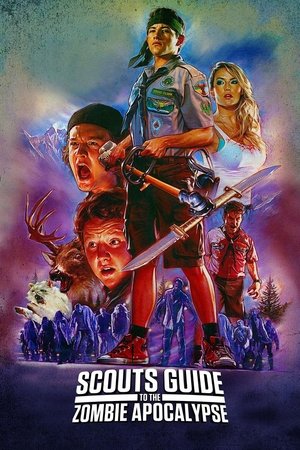
Scouts Guide to the Zombie Apocalypse in 2015 moved Landon into overt horror comedy. The story follows Ben, Carter and Augie, three teenage scouts whose friendship is beginning to change when a zombie outbreak overwhelms their town. The premise allows Landon to combine practical gore and broad comedy with a conventional coming-of-age conflict. The protagonists must deal with a large-scale horror event at the same time that their childhood friendship is becoming less secure.
The film established a tonal approach Landon would refine considerably in later work. Graphic violence can exist beside comic situations without requiring the horror itself to be treated as imaginary. The characters understand that the threat is real even when the circumstances become absurd. Landon’s later films use a more controlled version of this principle, allowing humor to change the rhythm of a slasher story while preserving physical danger and emotional consequence.
Happy Death Day and the time-loop slasher
Happy Death Day in 2017 became the film that most clearly established Landon’s individual directing identity. Jessica Rothe plays Theresa Gelbman, known as Tree, a college student who wakes on her birthday, moves through an ordinary day and is murdered by a masked killer wearing the university mascot’s baby face. Immediately after dying, she wakes again at the beginning of the same day. The repetition converts a conventional slasher mystery into a process of investigation in which every death supplies additional information.
The time loop also gives Landon an unusual method of developing the protagonist. Tree initially treats several people around her poorly and maintains an emotionally detached relationship with much of her social environment. Repeated exposure to the same events allows her to observe those relationships from different positions. Her growing understanding of the people around her becomes inseparable from the search for the killer. The structure therefore makes personal change part of the mechanism required for survival.
Tree Gelbman and grief beneath the slasher structure
Tree’s relationship with her deceased mother gives Happy Death Day an emotional foundation beyond the murder mystery. Her birthday is also associated with her mother, and the anniversary intensifies grief that Tree has avoided addressing directly. The loop gives her repeated opportunities to reconsider the way that loss has affected her behavior. Jessica Rothe’s performance is crucial because the film requires Tree to remain compelling while beginning from a deliberately abrasive position.
Landon allows the character to change without removing the comic energy of the film. Tree becomes more observant and emotionally open as she accumulates knowledge across repeated days. The deaths themselves can sometimes be played with dark humor because the audience understands that the loop will reset, but the psychological experience continues accumulating for Tree even when the physical world returns to its starting point.
The Babyface killer and the mechanics of repetition
The Babyface mask gives Happy Death Day a recognizable slasher image while the time loop changes the usual relationship between victim and killer. Tree can test suspects, alter her route through the day and deliberately use information acquired during previous deaths. The final girl therefore gains an advantage unavailable in most slashers: repeated experience of the same threat. Landon uses that advantage to make the investigation progressively more active.
The film’s structure also depends on careful repetition without reproducing every scene identically. Dialogue and locations recur, but Tree’s changing behavior modifies their meaning. The audience gradually learns which moments are fixed and which can be altered. This rule-based storytelling became a central element of Landon’s subsequent horror work.
Happy Death Day 2U and the expansion into science fiction
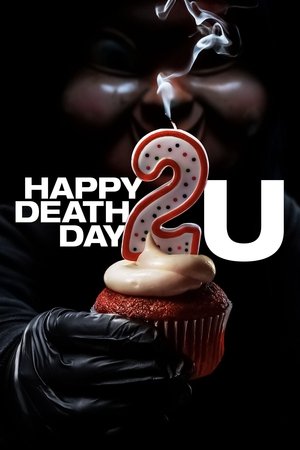
Happy Death Day 2U in 2019 refuses to reconstruct the first film as another straightforward slasher mystery. The sequel introduces a scientific explanation involving Ryan Phan’s experimental reactor and expands the loop into alternate realities. Tree finds herself in a version of her life where relationships differ significantly from the world she knows. The most important difference is that her mother is alive.
This development changes the dramatic purpose of the time loop. Tree is no longer concerned primarily with learning how to survive a murderer. She must decide whether remaining in a reality where her mother lives is worth losing the relationships and experiences belonging to her original life. Landon uses the science-fiction expansion to return directly to the grief that had remained underneath the first film.
The sequel received a more divided response partly because it moved further away from conventional slasher horror, but the decision is representative of Landon’s creative approach. Once a narrative mechanism has been explained, he tends to modify its function rather than repeat the same structure. The second film therefore extends the characters while changing the genre balance around them.
Freaky and the body-swap slasher
Freaky in 2020 combines another established comic device with slasher horror. Kathryn Newton plays Millie Kessler, a high-school student who becomes the target of the Blissfield Butcher, played by Vince Vaughn. An ancient ceremonial dagger causes their consciousnesses to switch bodies. Millie wakes inside the body of an adult male serial killer while the Butcher gains access to the body and social environment of a teenage girl.
The body swap creates two distinct performance challenges. Vaughn must communicate Millie’s personality while retaining the physical presence of the killer, and Newton must suppress the familiar behavior established for Millie while playing the Butcher. Landon and co-writer Michael Kennedy use these performances to examine how differently the same consciousness is treated depending on the body other people see.
Physical power, identity and slasher violence in Freaky
Millie’s experience inside the Butcher’s body gives her access to physical confidence and social space that she previously lacked, while the killer benefits from being underestimated in Millie’s body. The concept therefore affects the mechanics of the slasher directly. Other characters make decisions based on appearance, and the Butcher can exploit expectations surrounding gender, age and perceived vulnerability.
Landon also allows the film to be considerably more graphic than Happy Death Day. The opening killings establish an explicit slasher tone before the body-swap comedy begins. Maintaining that violence is important to the hybrid structure because the killer must remain dangerous after the comic premise takes over. The film consequently shifts between broad performance comedy and practical gore while treating both as parts of the same narrative world.
Female protagonists and character development
Tree Gelbman and Millie Kessler occupy different social positions but demonstrate a recurring element in Landon’s horror. Both protagonists change substantially through the supernatural structure imposed on them. Tree begins with confidence and social status but needs greater awareness of other people. Millie begins insecure and marginalized and gradually develops stronger control over her own identity. The horror mechanism places each character in circumstances that expose these weaknesses repeatedly.
This approach gives Landon’s slasher films more interest in character development than the body-count structure alone would suggest. Survival remains necessary, but reaching the end of the film requires an internal change as well as successful resistance to the killer. Jessica Rothe and Kathryn Newton therefore carry much of the emotional responsibility for films whose concepts could otherwise have remained primarily mechanical.
Grief and family relationships
Loss appears repeatedly across Landon’s work. Tree’s mother is central to both Happy Death Day films. Millie’s family in Freaky is also living with bereavement, and the strained relationships inside We Have a Ghost exist before the supernatural discovery at the center of the story. Landon often uses a horror or fantasy mechanism to make characters revisit emotional situations they have tried to avoid.
The recurrence of grief gives continuity to films whose high concepts differ considerably. Time travel, body swapping and haunting each become opportunities to examine relationships altered by death or family conflict. Landon’s comic tone makes these films accessible without requiring the emotional material to disappear when the supernatural premise becomes more elaborate.
We Have a Ghost and supernatural family comedy
We Have a Ghost in 2023 moves Landon further from slasher horror toward supernatural family comedy. A family discovers a silent ghost named Ernest living in their new house, and footage of him quickly becomes an internet phenomenon. The story uses haunting as a source of public attention rather than maintaining the traditional secrecy surrounding a supernatural presence.
The film examines how recording technology changes the meaning of a ghost story. Ernest becomes online content, attracting strangers, media attention and government interest. The family’s private supernatural discovery is rapidly transformed into a public spectacle. Landon retains his interest in younger protagonists and unresolved family relationships while using a much lighter form of horror than in Freaky or The Marked Ones.
Returning to Paranormal Activity
Landon later returned to the franchise that had established his horror career as screenwriter and executive producer of Paranormal Activity: Next of Kin. The film largely separates itself from the Katie and Kristi mythology and follows a young woman investigating an Amish community while attempting to learn about her biological mother. This reset demonstrates how far the series had moved from the original domestic haunting by that stage.
For Landon, the return also completed a long period of involvement with Paranormal Activity across writing, directing and production. Few filmmakers outside Oren Peli and the principal producers contributed to as many stages of the franchise’s development. His work therefore represents an important part of the transition from the minimal mythology of the first film toward the broader supernatural systems of the sequels.
Producing and writing other contemporary horror
Landon has continued working in horror even when another filmmaker occupies the director’s chair. He produced My Best Friend’s Exorcism and Time Cut and later co-wrote and produced Heart Eyes. These projects show the same interest in accessible premises and young protagonists visible in his directing career. Time Cut again combines slasher mechanics with temporal displacement, while Heart Eyes places a romantic-comedy structure inside a masked-killer story.
Heart Eyes is particularly consistent with Landon’s established approach because the narrative depends on two genre structures functioning together rather than one serving merely as parody of the other. The romantic relationship has to develop according to recognizable expectations while a killer targeting couples provides an independent source of danger. Landon’s participation as writer and producer demonstrates that this form of genre recombination has become part of his creative identity beyond the films he personally directs.
Jason Blum and the production environment around Landon’s horror
Jason Blum became one of Landon’s most important recurring production collaborators. Their association extends from the Paranormal Activity sequels through Happy Death Day, Happy Death Day 2U and Freaky. The Blumhouse production model was well suited to Landon’s high-concept films because relatively controlled budgets allowed unusual combinations of genre to reach mainstream theatrical audiences without requiring the financial scale of major studio blockbusters.
The relationship also connects two phases of Landon’s career. He entered Blumhouse horror as a writer helping maintain an already successful franchise and later directed films whose identities were much more closely associated with his own storytelling. That progression from franchise screenwriter to writer-director is central to understanding his professional development within modern horror.
Henry Joost and Ariel Schulman
Henry Joost and Ariel Schulman directed Paranormal Activity 3, Paranormal Activity 4 and Viral from screenplays involving Landon. The repeated collaboration gave Landon experience writing for filmmakers interested in consumer recording technology, youthful characters and narratives where ordinary environments become progressively unstable. The two Paranormal Activity films represent a substantial part of the franchise period in which Landon’s writing became most influential.
Viral moves into outbreak horror rather than supernatural found footage, demonstrating that the working relationship could continue outside the franchise. Biological threat replaces demonic mythology, but young protagonists and rapidly changing rules remain central. The collaboration therefore covers multiple forms of horror while preserving several narrative concerns that later appear in Landon’s own directing.
Christopher Landon’s contribution to contemporary horror
Christopher Landon’s horror career developed through two complementary areas. His work on Paranormal Activity contributed to the construction of one of the major supernatural franchises of the 2000s and 2010s, particularly during the period when the films expanded from one couple’s haunting into a multigenerational mythology. His subsequent directing established a more personal interest in high-concept structures capable of reorganizing familiar horror forms.
Happy Death Day and Freaky are the clearest examples. Both remain recognizably slasher films while using narrative systems uncommon within the traditional cycle. The time loop changes how the final girl acquires knowledge, while the body swap changes how victim and killer are perceived by everyone around them. Landon’s contribution lies in treating these mechanisms seriously enough that they alter character, suspense and violence rather than functioning as temporary jokes.
His work demonstrates the continuing flexibility of commercial horror. Familiar masks, killers and supernatural threats can be reorganized around science fiction, comedy and family drama without losing their genre identity. Landon has built much of his career inside that territory, first by learning how a successful franchise develops rules and later by creating films whose primary appeal comes from changing those rules in controlled ways.
Selected Work
Notable Horror Collaborators
Notable collaborators and creative partners throughout Christopher Landon's horror career.
 Jason Blum
Writer-Director / Producer Collaborator
Blum worked with Landon across the Paranormal Activity series and later produced Happy Death Day, Happy Death Day 2U and Freaky. Their collaboration spans Landon’s development from franchise screenwriter to director of original high-concept horror within the low-budget production model associated with Blumhouse.
 Oren Peli
Writer-Director / Producer Collaborator
Peli and Landon share several Paranormal Activity productions beginning with the second film and continuing through later installments. Landon helped expand the family mythology created from Peli’s original film and eventually directed The Marked Ones while Peli remained part of the franchise production structure.
SS
Steven Schneider
Writer / Producer Collaborator
Schneider worked within the production team on Paranormal Activity 2, Paranormal Activity 3 and Paranormal Activity 4 while Landon contributed the screenplays and later production work. Their repeated collaboration belongs to the period in which the original haunting was developed into a larger serialized mythology.
 Henry Joost
Writer / Director Collaborator
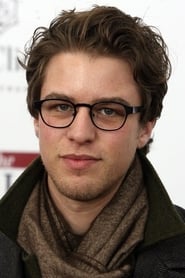
Joost directed Landon’s scripts for Paranormal Activity 3, Paranormal Activity 4 and Viral. Their three shared horror films move from supernatural found footage to outbreak cinema while retaining young protagonists, changing narrative rules and an emphasis on contemporary recording technologies.
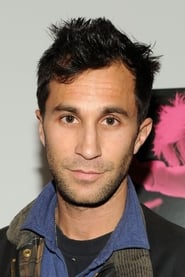 Ariel Schulman
Writer / Director Collaborator
Schulman co-directed Paranormal Activity 3, Paranormal Activity 4 and Viral from screenplays involving Landon. The recurring partnership covers two major installments in the Paranormal Activity mythology and a separate outbreak-horror production outside the franchise.
 Akiva Goldsman
Writer / Executive Producer Collaborator
Goldsman served as executive producer on Paranormal Activity 2, Paranormal Activity 3 and Paranormal Activity 4 while Landon worked as screenwriter across the same trilogy of franchise entries. Their shared credits cover the period in which Paranormal Activity expanded most substantially from the minimal mythology of the original film.
Christopher Landon Horror Movies
Writing (14 credits)
2025
2023
2021
2020
2019
2017
2016
2015
2014
2012
2011
2010
2007
Directing (6 credits)
2023
2020
2019
2017
2015
2014
Production (8 credits)
2028
2025
2024
2023
2022
2021
2012
2011
Acting (2 credits)
2021
2018