



2027
Jason Blum
Horror Producer · Biography · Horror Filmography · Family · Collaborators · Credits
Horror subgenres & themes
Most represented across this person's horror filmography:
HAUNTED HOUSES
• SLASHER
• HOME INVASION
• EVIL DOLL
Biography
Jason Blum and the economics of modern horror production
Jason Blum became one of the most influential producers in contemporary horror by developing a production system that combined independent financing methods with the distribution capacity of major Hollywood studios. Through Blumhouse, he helped establish a commercially durable space for horror films made at comparatively low production costs while allowing directors unusually extensive authority over the finished work. The system became particularly visible after the success of Paranormal Activity and was subsequently used for original films, continuing franchises and established horror properties.
Blum’s importance to the genre is primarily industrial. He is neither a director nor the principal writer responsible for the individual styles associated with Blumhouse films. His contribution has been the organization of financing, development and distribution around conditions that make certain creative risks economically manageable. Low production expenditure reduces the amount of capital endangered by an unsuccessful release and can permit filmmakers to retain choices that would normally attract greater executive intervention on a larger studio production. Over time this approach altered the relationship between independent horror production and wide theatrical distribution in the United States.
Education and the decision to become a producer
Blum studied drama at Vassar College and graduated in 1991. During college he became interested in cinema and formed relationships that later contributed to his professional career. Noah Baumbach was among his contemporaries, and Blum subsequently helped raise financing for Baumbach’s first feature, Kicking and Screaming. The project gave him an early producing credit and introduced him to the practical problem that would continue to define his career: finding financial and institutional support for filmmakers whose projects existed outside the most obvious commercial channels.
Blum has described his interest in producing as deliberate from an early stage. He was attracted to the organizational position occupied by the person who helps a project exist rather than viewing production as a temporary route toward directing. This distinction remained important throughout his later career. His professional decisions consistently centered on assembling financing, identifying material, connecting filmmakers with distribution and creating conditions under which production could proceed.
Malaparte Theatre Company and independent production experience
During his early years in New York, Blum became producing director of the Malaparte Theatre Company, whose artistic leadership included Ethan Hawke. The company operated with limited resources and mounted new theatre while attempting to maintain affordable ticket prices. Blum handled practical producing responsibilities and participated directly in finding audiences, raising support and keeping productions operating. Hawke later described him as unusually committed to the producer’s role at an age when many of their contemporaries were primarily interested in acting or directing.
The experience supplied an early version of several working principles later associated with Blumhouse. Production depended on adapting creative ambitions to a fixed pool of resources, and the producer’s work continued after a show had been created because an audience still had to be found. Blum also developed a long professional relationship with Hawke, who decades later became an important performer in Blumhouse productions including Sinister, The Purge and The Black Phone.
Arrow Films and learning acquisition, sales and marketing
Blum’s first sustained employment in the film business came at Arrow Films in New York. He worked in acquisitions and eventually became involved with sales, marketing and production as well. Arrow handled both very inexpensive genre pictures and independent art films, exposing Blum to different levels of the independent distribution market. He has recalled approaching television buyers directly in an effort to license inexpensive films, experience that gave him a practical understanding of how projects could generate revenue after production.
This period was important because Blum learned the commercial side of independent filmmaking before establishing himself as a producer. A completed film had value only if someone could sell it to exhibitors, broadcasters or later home-entertainment markets. The distinction between production cost and distribution capacity became one of the central questions of his later business model.
Miramax and the acquisitions business
Blum subsequently joined Miramax and became co-president of acquisitions during the company’s highly successful period in independent film distribution. The position required him to attend festivals, evaluate completed films and negotiate for distribution rights. He has credited the experience with teaching him persistence in pursuing material he believed could work commercially. His acquisitions work included involvement in obtaining films for a company that had become exceptionally effective at positioning independent productions for larger audiences.
Blum eventually concluded that acquisitions did not give him the kind of creative participation he wanted. He was evaluating projects largely after other people had created them and was expected to anticipate the tastes of senior executives. When he left Miramax around 2000, he entered a difficult period as an independent producer and later described having to rediscover his own judgment after years spent trying to predict what employers wanted to buy.
Independent producing before the Blumhouse horror model
The years following Miramax did not immediately produce the business identity later associated with Blumhouse. Blum worked on independent films and television projects and attempted to establish himself as a producer across different types of material. He also experienced conventional studio production directly and found the studio development process more restrictive than the independent work he preferred. At the same time, he was impressed by the infrastructure major distributors possessed once a film was ready to reach an audience.
This combination of dissatisfaction and admiration became important. Blum wanted the relative flexibility of independent production while retaining the marketing and distribution apparatus available to a studio. The eventual Blumhouse model developed from an attempt to separate those two stages: make the film under independent financial conditions, then use a major distributor when the completed project demonstrated the potential for broad theatrical release.
The origin of Blumhouse
Blum developed his independent production activity during the 2000s, and the Blumhouse name eventually became the institutional identity attached to it. Company histories commonly trace Blumhouse Productions to 2000, when Blum left Miramax and began operating independently. Blum has also explained that the name itself became formal when the company was incorporated under the Blumhouse name in 2009. The apparently different dates therefore refer to the development of his production company and its later formal branding.
The name originated informally among friends before becoming a commercial label. Its later strength depended less on conventional corporate branding than on the repeated association of the company with a specific category of production. By the early 2010s audiences and filmmakers increasingly understood Blumhouse as a company where horror could be produced cheaply and still receive the possibility of major theatrical distribution.
Paranormal Activity as the industrial turning point
Oren Peli created Paranormal Activity outside the conventional studio system, filming principally in his own home with an extremely small production budget. Blum became involved as the project moved from its independent origins toward commercial distribution. The film ultimately demonstrated the combination he had been searching for: a movie produced with very little capital could be released through the infrastructure of a major distributor without being rebuilt as an expensive studio production.
The importance of Paranormal Activity to Blum’s career goes beyond its exceptional profit relative to cost. It supplied evidence that independent production and studio distribution could remain separate stages of the same commercial process. In later interviews Blum repeatedly identified this arrangement as the central insight behind Blumhouse. The company could accept the creative and financial conditions of an independent film while relying on established distributors when a finished project justified a wide release.
Keeping production costs low after commercial success
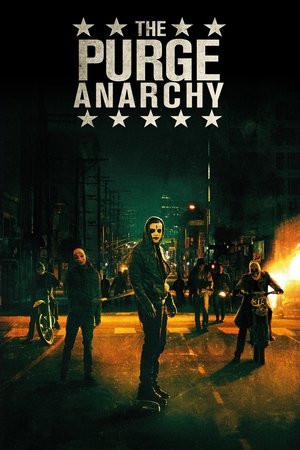
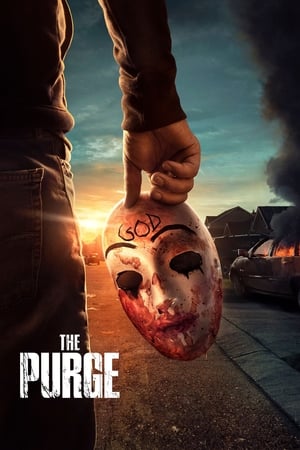
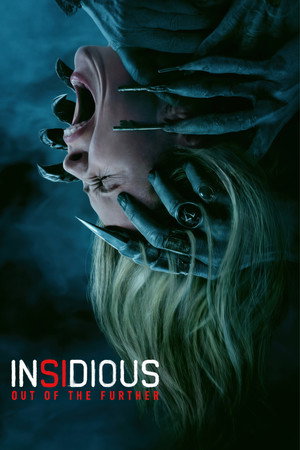
Hollywood success commonly encourages higher budgets on subsequent projects. Blum adopted the opposite policy for much of the company’s early horror production. After Paranormal Activity became a major commercial success, Blumhouse continued making inexpensive films rather than using the revenue as justification for moving immediately into large studio budgets. Insidious was made for roughly one million dollars, while early productions such as Sinister and The Purge remained within the low single-digit millions.
This decision became fundamental to the company’s economics. A successful film did not permanently raise the minimum production cost expected from the next director. Blum could therefore continue testing original premises without requiring every project to generate blockbuster-level revenue. The budget ceiling changed over time as labor and production costs increased, but the relationship between restricted cost and manageable financial exposure remained a defining principle.
Budget limits as a form of production governance
Blum’s model uses the budget itself as one of the principal mechanisms controlling a production. Filmmakers are informed clearly how much money is available, and the agreed ceiling is treated as firm. Within that boundary, the director can receive substantial creative authority. Blum has described this as an explicit exchange: the company restricts financial resources while reducing interference with creative decisions.
The arrangement is particularly suited to directors who already understand professional production. Blum has repeatedly stated that he often prefers experienced filmmakers because they know what a short schedule means in practice and can determine which scenes, locations and effects are achievable. The system requires a director capable of making decisions before and during shooting because additional money cannot simply be added whenever the original plan becomes difficult.
Creative control and compensation
During the development of the early Blumhouse system, some principal filmmakers and performers accepted reduced upfront compensation in return for greater creative authority and the possibility of participating financially if the film succeeded. Blum discussed this arrangement publicly while producing The Purge and later described final-cut authority as an important attraction for experienced directors willing to work inside the company’s budget restrictions.
The structure aligned financial incentives in a way unusual for conventional studio films. A filmmaker could sacrifice guaranteed compensation and production scale while retaining a greater stake in the completed work. A successful release could provide substantial upside. A failure left the company with a comparatively limited production loss. The precise terms differ from film to film, but the principle became one of the most discussed features of Blumhouse production during its expansion.
Why experienced directors became important to Blumhouse
Low-budget filmmaking is often associated with first-time directors, yet Blum has explained that his system frequently works best with filmmakers who already possess professional experience. James Wan, Scott Derrickson, James DeMonaco and M. Night Shyamalan had directed features before working within the Blumhouse structure. Leigh Whannell had spent years writing and working on professional productions before directing for the company.
Experience matters because a restricted shoot leaves little room for learning basic production management on set. Directors need to understand coverage, scheduling and the consequences of losing a location or effect. The attraction for an established filmmaker is creative authority. Blumhouse can provide a smaller production than a major studio would offer while allowing the director to make choices that might be subject to extensive notes and approvals on a larger budget.
Character and premise in project selection
Blum’s interviews reveal two recurring criteria in his evaluation of material. The film needs a premise capable of being communicated clearly to an audience, and the characters must sustain interest after the premise has been understood. The first requirement helps marketing. A strong concept such as an annual period in which crime becomes legal or a family discovering that supernatural events follow their child can be described quickly without requiring an expensive advertising campaign simply to explain what the movie is about.
The second requirement concerns the film itself. Blum has stated that sophisticated visual craftsmanship cannot compensate for characters and dialogue that fail to involve the audience. This priority helps explain why the company can work within limited physical production resources. The model assumes that narrative engagement and performance carry more commercial value than increasing the number of locations or effects solely to make a film appear expensive.
Testing films before deciding the scale of distribution
One of the less visible components of the Blumhouse system is the distinction between making a film and deciding how widely it should be released. Blum has described completing low-budget productions and testing them with audiences before determining whether a major theatrical campaign is justified. A film made with the expectation of a wide release can still move toward a smaller distribution path if audience response suggests that the expense of a large marketing campaign would create unnecessary risk.
This stage protects both producer and distributor because theatrical marketing can cost many times the production budget of the film itself. A movie costing a few million dollars can still create a large financial loss if tens of millions are spent promoting an unsuccessful release. Blumhouse therefore treats the completed film as new information. Production expenditure has already been committed, while marketing expenditure can still be adjusted according to audience testing and perceived marketability.
Universal and the division between production and distribution
Blumhouse’s long relationship with Universal became one of the institutional foundations of the company. Universal identifies The Purge in 2013 as the beginning of a relationship that subsequently produced numerous successful films. The arrangement gave Blumhouse access to a major studio’s theatrical distribution and marketing departments while allowing the production company to preserve a degree of independence during development and shooting.
This division addressed the problem Blum had identified earlier in his career. Large studios possess specialized international distribution, publicity and exhibition relationships that are difficult for an independent producer to reproduce. Independent companies can operate with greater flexibility during production. Blumhouse built its business around maintaining those different advantages rather than attempting to turn itself into a vertically integrated major studio.
The producer’s role in recurring filmmaker relationships
Blumhouse developed long relationships with filmmakers whose methods proved compatible with the system. James Wan and Leigh Whannell became important through Insidious and later projects. Christopher Landon moved from writing within the Paranormal Activity franchise into directing several films for the company. Scott Derrickson returned after Sinister for the Black Phone films. David Gordon Green directed the recent Halloween trilogy before continuing with another established horror property.
These relationships reduce uncertainty in production. A producer already understands how a director handles schedule and budget, while the filmmaker understands what Blumhouse will permit and what the financial restrictions require. The resulting continuity resembles a modern production repertory built around filmmakers rather than contract players. Individual films retain their directors’ identities while the company provides a consistent economic framework.
Using the model to restore creative autonomy to established filmmakers
M. Night Shyamalan became an important example of Blum’s interest in filmmakers whose careers had moved into expensive studio production. Blum encouraged Shyamalan to consider working at a much lower budget. Shyamalan ultimately financed The Visit himself before Blumhouse joined the project, and the film began a relationship that continued through Split and Glass.
The case demonstrates an important feature of the model. Small-scale production was not intended solely as a training stage before a director moved toward more expensive filmmaking. For some established filmmakers it became a way to recover authority that had been reduced by larger budgets and greater studio supervision. Blum has continued to argue that increasing the amount spent on a successful director can undermine precisely the conditions that made the earlier work distinctive.
Get Out and the range permitted by controlled financial risk
Jordan Peele’s Get Out provided a particularly important demonstration of what Blum’s production structure could support. The screenplay dealt directly with racism through a horror narrative and marked Peele’s first feature as director. Blumhouse participated with QC Entertainment and Monkeypaw, while Peele retained strong authorship over the project. The relatively contained production cost reduced the commercial pressure to reshape the material into a more conventional studio thriller.
The film became a major theatrical and critical success and earned an Academy Award nomination for Best Picture, giving Blum one of his three nominations as a theatrical producer. Its significance to Blumhouse was industrial as well as cultural. It demonstrated that the company’s economic approach could provide room for a strongly individual filmmaker whose work did not resemble the supernatural franchises that had initially defined the company.
Failure as part of a portfolio production system
Blumhouse has released unsuccessful films alongside its major hits, and Blum has discussed failures unusually openly for a studio producer. This is partly compatible with the economics of the company. A system designed around repeated low-cost production does not require every title to become a franchise. The success of a smaller number of films can offset losses elsewhere in the slate.
Blum has also acknowledged failures that remained professionally important to him, including productions whose reception or release circumstances differed sharply from expectations. The model therefore reduces financial exposure without making prediction reliable. In 2025, after several Blumhouse releases underperformed theatrically, he publicly discussed the company’s mistakes rather than presenting the production system as immune to changing audience behavior.
Franchises and the preservation of production discipline
Successful Blumhouse films frequently generate sequels, creating a challenge to the original low-budget principle. Franchise growth normally increases salaries, effects requirements and audience expectations. Blum’s production strategy has generally attempted to raise spending selectively while preserving enough financial restraint for the original risk model to remain recognizable.
This is also why Blumhouse franchises can change directors and narrative emphasis between installments. The producer is responsible for maintaining the property and financing structure while filmmakers are given room to develop individual entries. Insidious, Paranormal Activity and The Purge all evolved through different directors and protagonists while retaining recurring creative personnel and producers.
Established horror properties and changes in scale
As Blumhouse grew, the company increasingly worked with properties that already had substantial histories. The Halloween films brought Blum into direct collaboration with Jamie Lee Curtis, David Gordon Green and John Carpenter. Universal monster projects created another relationship with long-established studio material. These productions required more negotiation with rights holders and existing audiences than original Blumhouse films.
The move also changed the company’s risk profile. Existing intellectual property can provide immediate recognition while creating contractual costs and expectations absent from an original screenplay. Blum’s later career consequently includes a greater balance between the micro-budget independent principles that built Blumhouse and the larger franchise-management responsibilities associated with modern studio horror.
Marketing, theatrical exhibition and audience behavior
Blum’s career in acquisitions and distribution has remained visible in his approach to horror marketing. He places considerable value on concepts that can be communicated quickly and on the communal theatrical experience of horror. The extraordinary release campaign for Paranormal Activity demonstrated how audience demand could become part of marketing, while later Blumhouse films benefited from Universal’s conventional promotional infrastructure.
His views on distribution have changed with the industry. Blum initially supported some accelerated or simultaneous release strategies during the disruption created by streaming and the COVID-19 period. He later argued that short and inconsistent theatrical windows can damage original genre films because audiences learn that a title will become available at home very quickly. This willingness to revise his position is consistent with a producer whose business model has repeatedly changed in response to distribution economics.
Blumhouse as a company rather than a single film label
Blumhouse gradually expanded beyond theatrical horror into television, documentary production and unscripted programming. The company also created a gaming division and invested in immersive and live experiences. These operations transformed Blumhouse from a specialist feature producer into a broader genre-oriented entertainment company.
The expansion nevertheless depends heavily on the recognition created by horror. Blumhouse became a consumer-facing name in a way uncommon for production companies whose brands remain largely invisible to general audiences. This brand recognition allows the company to market events, games and merchandise under an identity associated directly with a particular audience rather than only with individual stars or directors.
Atomic Monster and James Wan
Blumhouse and James Wan’s Atomic Monster completed their merger in January 2024 after already collaborating on projects including M3GAN. The transaction joined two of the most commercially significant contemporary horror-production operations. Wan remained the creative leader associated with Atomic Monster while Blum continued in an executive leadership role across the combined structure.
The merger reflects the changing scale of Blum’s business. Blumhouse began by demonstrating how very small independent productions could reach studio distribution. By the 2020s the company was also managing established intellectual property and a large catalogue while participating in television, games and other media. Atomic Monster added a substantial franchise-development operation built through Wan’s work in supernatural horror.
Blumhouse and the changing economics of Hollywood horror
The success of Blumhouse encouraged studios and independent producers to reconsider the amount of money required to make commercially viable horror. The genre had long supported inexpensive production, but Blum’s contribution was to link that tradition systematically with contemporary wide-release distribution. A low production budget ceased to imply automatically that a film belonged to a marginal theatrical market.
The approach also influenced career decisions by filmmakers. Directors with established studio experience could accept smaller productions in exchange for authority, while actors could participate for reduced initial compensation when a project offered strong material or financial participation. These practices did not originate entirely with Blumhouse, but Blum organized them into a repeatable production system operating at a scale unusual in modern Hollywood.
Recognition as a producer
Blum’s work outside conventional horror also established him within the broader American producing profession. He received Academy Award nominations as a producer of Whiplash, Get Out and BlacKkKlansman. These films demonstrated that the production structure and professional relationships built through Blumhouse could extend beyond supernatural or slasher material.
In 2026 the Producers Guild of America presented Blum with its Milestone Award, an honor recognizing historical contribution to the entertainment industry. The award placed institutional emphasis on his work as a producer rather than on the commercial success of any single franchise. By that stage his influence had become associated with a specific understanding of how independent production could operate in partnership with large distributors.
Jason Blum’s place in horror history
Jason Blum occupies an unusual position in horror history because his principal contribution is a method of production. Directors and writers created the monsters, characters and individual visual languages associated with Blumhouse. Blum constructed an economic framework that made repeated investment in those filmmakers possible while keeping production losses within limits the company could sustain.
That framework changed substantially as Blumhouse grew, and the company now operates on a scale far beyond the circumstances surrounding Paranormal Activity. The underlying relationship among controlled production expenditure, filmmaker authority and access to major distribution nevertheless remains central to Blum’s professional identity. His career provides one of the clearest contemporary examples of a producer influencing the direction of horror through financing and industrial organization rather than through direct authorship of the films themselves.
Photos (3)
Images: TMDB
Selected Work
Notable Horror Collaborators
Notable collaborators and creative partners throughout Jason Blum's horror career.
 James Wan
Producer Collaborator
Blum and Wan developed a long horror-production relationship through the Insidious series and later projects including M3GAN. Their companies formally merged in 2024, joining Blumhouse and Atomic Monster while preserving Wan’s major creative role within the combined horror operation.
 Oren Peli
Producer Collaborator
Peli and Blum worked together through the Paranormal Activity series and several Insidious productions. Paranormal Activity became the project through which Blum established the combination of independent low-cost production and major-studio distribution that shaped the early Blumhouse business model.
 Christopher Landon
Producer / Writer-Director Collaborator
Blum worked with Landon across multiple Paranormal Activity productions and later produced Happy Death Day, Happy Death Day 2U, Freaky and additional horror projects involving the filmmaker. Their collaboration follows Landon’s development from franchise screenwriter to recurring Blumhouse director.
 Leigh Whannell
Producer / Writer-Director Collaborator
Whannell worked with Blum throughout the Insidious series and later wrote and directed The Invisible Man and Wolf Man within the Blumhouse production system. The relationship spans franchise writing, acting and feature direction across more than a decade of modern horror.
 Scott Derrickson
Producer / Writer-Director Collaborator
Blum produced Sinister and later reunited with Derrickson and C. Robert Cargill for The Black Phone and Black Phone 2. Their recurring collaboration allowed Derrickson to make comparatively contained original horror projects between larger studio assignments.
 David Gordon Green
Producer / Director Collaborator
Blum produced Green’s Halloween, Halloween Kills and Halloween Ends and continued the relationship on The Exorcist: Believer. Their work represents Blumhouse’s major expansion from original low-budget horror into the management and continuation of historically established genre properties.
Jason Blum Horror Movies
Production (155 credits)
2027
2027
2027
2027
2027
2027
2027
2026
2026
2026
2026
2026
2026
2026
2025
2025
2025
2025
2025
2025
2024
2024
2024
2024
2024
2023
2023
2023
2023
2023
2023
2023
2022
2022
2022
2022
2022
2022
2022
2022
2022
2022
2021
2021
2021
2021
2021
2021
2021
2021
2021
2021
2021
2020
2020
2020
2020
2020
2020
2020
2020
2020
2020
2020
2020
2020
2020
2019
2019
2019
2019
2019
2019
2019
2019
2019
2019
2019
2019
2019
2019
2019
2019
2019
2019
2019
2019
2018
2018
2018
2018
2018
2018
2018
2018
2018
2018
2018
2018
2018
2018
2018
2018
2017
2017
2017
2017
2017
2017
2017
2016
2016
2016
2016
2016
2016
2016
2015
2015
2015
2015
2015
2015
2015
2015
2015
2015
2015
2015
2015
2015
2014
2014
2014
2014
2014
2014
2014
2014
2014
2014
2014
2013
2013
2013
2012
2012
2012
2012
2012
2011
2011
2010
2009
Acting (3 credits)
2021
2018
2017