


2020
Chloë Grace Moretz
Horror Actor · Biography · Horror Filmography · Collaborators · Credits
Horror subgenres & themes
Most represented across this person's horror filmography:
GHOST
• HAUNTED HOUSES
• MEDICAL
• WITCHCRAFT
Biography
Chloë Grace Moretz and horror from childhood to adult roles
Chloë Grace Moretz has worked across many genres, yet horror occupies a substantial place in her screen career. She entered the genre as a child performer in The Amityville Horror and later took on increasingly demanding roles in films such as Let Me In, Carrie, Suspiria and Shadow in the Cloud. These projects span different phases of her development as an actor and place her within several distinct traditions of modern horror, from haunted-house cinema and vampire drama to Stephen King adaptation, supernatural art horror and creature-feature filmmaking.
Several of these films also required Moretz to enter material with an established history. The Amityville Horror, The Eye, Let Me In, Carrie and Suspiria all followed earlier literary or cinematic versions known to genre audiences. Her performances therefore developed within productions that already carried strong expectations. The most substantial horror roles show her moving from childhood characters exposed to supernatural danger toward figures whose own bodies or identities become central to the horror, particularly Abby in Let Me In and Carrie White in Carrie.
The Amityville Horror and early genre work
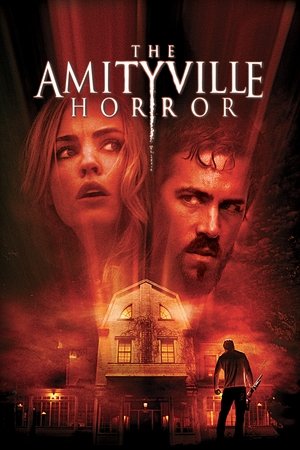
Moretz was born in Atlanta, Georgia, on February 10, 1997 and began acting professionally while still a child. One of her earliest feature roles came in the 2005 version of The Amityville Horror, directed by Andrew Douglas, where she played Chelsea Lutz. The character is the youngest member of the family moving into the Long Island house associated with the DeFeo murders and becomes connected with the ghostly figure of Jodie. Chelsea therefore occupies one of the familiar positions in haunted-house cinema, the child who perceives supernatural activity before the adults around her understand its extent.
The role was followed by appearances in several horror and supernatural films during her childhood, including Room 6, Wicked Little Things, Hallowed Ground and The Eye. These productions varied considerably in scale and importance, but they gave Moretz regular experience with horror sets, practical effects and scenes built around reactions to events that often existed only partially during filming. This period established her familiarity with genre performance well before she became widely known through larger mainstream productions.
Wicked Little Things and childhood horror
Wicked Little Things places Moretz inside a story where children are closely connected with the supernatural threat rather than functioning solely as its victims. The film concerns the ghosts of children killed while working in a mine and links their return to the exploitation that caused their deaths. Moretz plays Emma, part of a living family that moves into the area and becomes exposed to the history surrounding the dead children.
The film belongs to a group of mid-2000s supernatural productions that used children as unsettling figures while grounding the haunting in violence committed by adults. For Moretz, it continued an early pattern in which childhood perspective becomes important to the recognition of supernatural danger. The repeated experience of performing within this kind of material prepared her for a much more complex reversal of the same idea a few years later, when she played a child who was herself the supernatural being.
The Eye and supernatural perception
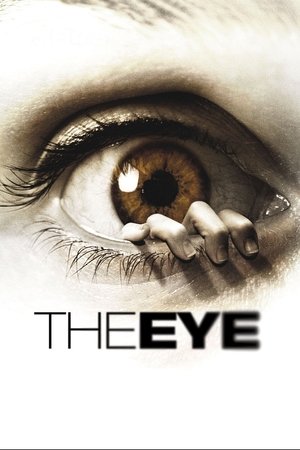
Moretz later appeared in The Eye, the American remake of the Hong Kong-Singaporean horror film by the Pang brothers. The story revolves around a woman whose corneal transplant allows her to perceive supernatural figures and disturbing events invisible to other people. Moretz appears as Alicia Millstone, a young cancer patient encountered within the film’s broader supernatural framework.
The role is relatively small compared with her later horror work, yet it belongs to the same early period in which she became accustomed to stories built around unreliable or inaccessible perception. Characters can see something other people cannot verify, and fear develops partly from the difficulty of proving that experience to others. That structure returns more strongly in later films in her career, particularly where young or socially vulnerable characters struggle to make their understanding of danger credible.
Let Me In and the role of Abby
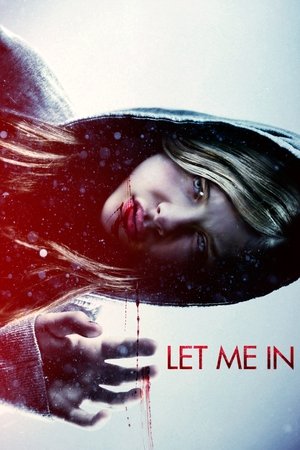
Let Me In in 2010 gave Moretz the most important horror performance of her early career. Directed by Matt Reeves and based on John Ajvide Lindqvist’s novel, the film followed the acclaimed Swedish adaptation Let the Right One In. Moretz plays Abby, a vampire who appears to be a young girl and develops a relationship with Owen, played by Kodi Smit-McPhee. Owen is isolated at home and subjected to serious bullying at school, while Abby lives according to rules he does not initially understand.
Moretz approached the role without modeling her performance directly on the earlier Swedish film. This allowed the relationship between Abby and Owen to develop according to Reeves’s version rather than through imitation of an existing interpretation. Abby needs to appear capable of genuine attachment while remaining physically dangerous. The film depends on that uncertainty because her relationship with Owen can be read through affection, loneliness and the practical needs of a vampire who has survived by relying on human companionship.
Abby, violence and emotional ambiguity
Moretz’s performance becomes especially effective through the contrast between ordinary interaction and sudden physical violence. Abby can speak to Owen with the awkwardness of someone apparently close to his age, then reveal strength and predatory ability far beyond any human child. Reeves avoids presenting those aspects as separate personalities. The same character can comfort Owen, warn him and kill when survival requires it.
The emotional ambiguity is central to the film. Owen receives companionship from someone who understands isolation, yet the viewer gradually becomes aware that Abby may have formed similar relationships before. Moretz therefore had to preserve enough emotional sincerity for the friendship to remain credible while leaving room for uncertainty about Abby’s motives and history. The result gave her a role with substantially greater psychological complexity than the child-victim parts that had defined much of her earlier horror work.
Let Me In and the experience of childhood isolation
The relationship between Abby and Owen also gives the film a strong coming-of-age dimension. Owen’s home life is marked by parental absence and his school life by humiliation. Abby becomes the one person with whom he can speak openly, even though her existence introduces risks he cannot fully understand. Moretz and Smit-McPhee carry much of the film through quiet scenes rather than through overt horror sequences, allowing the supernatural material to grow from the emotional bond rather than replacing it.
This approach helped distinguish Let Me In from vampire films centered primarily on mythology or spectacle. The violence remains important, but the story depends on loneliness and the need for protection. Moretz’s performance was widely recognized as a major step in her development because she had to make Abby credible as both a young companion and an experienced predator within the same scenes.
Carrie White and Stephen King adaptation
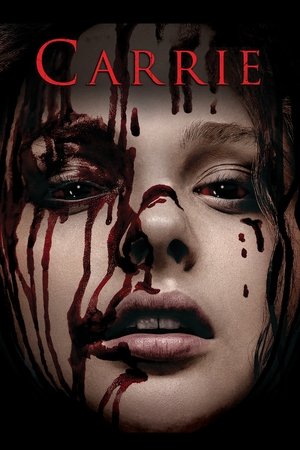
Moretz took the title role in Kimberly Peirce’s 2013 adaptation of Stephen King’s Carrie, entering one of the best-known adolescent characters in horror literature and cinema. King’s novel had already been adapted famously by Brian De Palma in 1976, with Sissy Spacek’s performance becoming inseparable from the cultural image of Carrie White. Peirce’s film therefore faced the difficulty of returning to material already strongly identified with another actress while attempting to address bullying and adolescent social behavior in a contemporary setting.
Moretz plays Carrie as a teenager raised under the religious control of her mother Margaret, played by Julianne Moore. Carrie begins the film with little understanding of menstruation and sexuality because her mother has deliberately restricted information about her body. The humiliation in the school shower establishes both the cruelty of her classmates and the extent of the isolation created at home. Her telekinetic ability develops alongside a growing awareness that Margaret’s interpretation of the world is not the only one available to her.
Margaret White and the domestic basis of Carrie’s horror
The relationship between Moretz and Moore provides the strongest dramatic foundation of the film. Margaret’s religious extremism produces physical punishment and emotional control while remaining connected with genuine maternal attachment. Carrie therefore cannot understand the conflict as a simple struggle against a stranger. The person responsible for much of her fear is also the parent on whom she has depended throughout her life.
Peirce places substantial emphasis on this domestic relationship before the prom sequence. Carrie’s developing telekinetic control gives her the first significant means of resisting Margaret physically, but increased power does not immediately free her from emotional dependence. Moretz has to show a teenager beginning to challenge the belief system in which she was raised while still seeking maternal approval. That tension gives the later violence context beyond the mechanics of supernatural revenge.
The prom and Carrie’s change from victim to aggressor
The prom sequence required Moretz to move rapidly through several emotional states. Carrie arrives having experienced a brief period of acceptance and confidence, then becomes the object of a carefully planned humiliation when pig’s blood is dropped over her in front of the students. The scene changes the meaning of her telekinesis. Until that point, the ability has increasingly represented private competence and the possibility of independence. During the attack it becomes an instrument of retaliation.
Moretz later discussed the physical demands of filming the sequence and the difficulty of maintaining Carrie’s emotional state while covered in artificial blood for long periods. The scene is technically elaborate, but its effect depends on the performance remaining connected to the character established earlier. Carrie’s violence becomes horrifying because viewers have followed the process through which humiliation, isolation and power have accumulated around her.
Carrie in the context of Moretz’s horror career
Carrie occupies an important position in Moretz’s genre work because it moves her decisively from the role of supernatural child toward a character whose adolescence and body are central to the horror. Abby in Let Me In appears physically young while possessing an identity extending far beyond childhood. Carrie is the opposite: a teenager denied the information and autonomy normally associated with growing up.
The two roles therefore use youth in very different ways. Abby’s apparent age conceals power, while Carrie’s social vulnerability exists alongside a power she has only begun to understand. Both films gave Moretz substantial responsibility for maintaining sympathy toward characters who can become extremely violent, a demanding position that distinguishes these performances from the earlier supernatural roles of her childhood.
Suspiria and Patricia Hingle
Luca Guadagnino’s Suspiria in 2018 placed Moretz inside another major reinterpretation of established horror material. Guadagnino’s film differs fundamentally from Dario Argento’s 1977 original in visual design, historical context and narrative emphasis. Moretz plays Patricia Hingle, a dancer from the Markos Dance Academy whose frightened conversation with psychotherapist Josef Klemperer opens the film and introduces the first detailed suggestion that something dangerous is operating inside the school.
Patricia’s claims initially resemble paranoia to Klemperer, who interprets them within a psychological framework. The film later confirms that her references to witches and ritual organization describe real elements of the academy. Her disappearance gives Klemperer a reason to continue investigating and connects the opening scenes with the larger history surrounding the company. Moretz’s screen time is limited, yet the character provides important narrative information before Susie Bannion becomes fully involved with the institution.
Suspiria and a more adult phase of Moretz’s career
The film arrived during a period when Moretz had begun reconsidering the direction of her career and choosing projects more selectively. Suspiria therefore belongs to a different professional phase from the horror films she made as a child. Guadagnino’s production asks her to contribute to an ensemble piece built around political history, dance, psychoanalysis and occult practice rather than carrying the primary horror narrative herself.
Patricia is also an adult whose testimony is dismissed through assumptions about mental instability. This gives the role a different version of a problem present in several earlier Moretz horror characters: the difficulty of communicating knowledge that other people cannot immediately verify. In Suspiria, that problem operates through psychiatry and institutional secrecy rather than childhood credibility.
Shadow in the Cloud and the adult horror protagonist
Shadow in the Cloud in 2020 gave Moretz one of her clearest adult genre leads. She plays Maude Garrett, a flight officer who boards a military aircraft during World War II carrying a confidential package. The crew immediately questions her authority and confines her to the lower turret, where much of the film’s first section takes place. A creature attacking the aircraft gradually introduces overt monster horror into a situation already defined by hostility from the men around her.
The restricted location places unusual demands on Moretz because she spends extended periods physically separated from most of the cast. Performance is carried through radio communication, facial reaction and limited movement inside the turret. When the film later opens into action and creature confrontation, Maude becomes a much more physically active protagonist. The progression distinguishes the role clearly from the child characters with which Moretz began her horror career.
Human hostility and creature horror in Shadow in the Cloud
The supernatural threat does not create Maude’s vulnerability by itself. She is already trapped inside an environment where the other characters distrust her and repeatedly challenge her account of what she sees. The gremlin therefore enters a story structured around credibility and authority. Maude must identify the external threat while defending her own position inside the aircraft.
The combination of war film, action and monster cinema makes Shadow in the Cloud difficult to classify narrowly, but it gives Moretz a role that demonstrates her transition into adult genre performance. She carries the central mystery, the physical action and the emotional stakes of the story while remaining the character through whom the audience encounters most of the threat.
Chloë Grace Moretz and the evolution of her horror roles
Moretz’s horror work forms a recognizable progression even though the films belong to unrelated productions. Her early characters are children situated near supernatural events that adults struggle to understand. Abby in Let Me In reverses that relationship by making the young character herself the supernatural being. Carrie White turns adolescent repression and social humiliation into telekinetic violence. Patricia Hingle functions as an adult witness to occult activity, while Maude Garrett becomes an active survivor responsible for confronting both a creature and the people who refuse to believe her.
This progression gives the horror portion of her career more coherence than a simple list of credits suggests. The genre repeatedly provided roles concerned with age, credibility and control over the body, while the scale of Moretz’s agency increased as she moved from childhood into adulthood. Her strongest horror performances remain those in which the character’s emotional life is inseparable from the supernatural premise, particularly Abby and Carrie White.
Moretz’s place in contemporary horror cinema
Horror represents one strand of a career extending through drama, comedy, science fiction, animation and action, yet Moretz has participated in several productions with significant positions in modern genre cinema. Let Me In remains a major English-language interpretation of Lindqvist’s vampire story, while Carrie placed her inside one of Stephen King’s foundational works. Her appearance in Suspiria connected her later career with Guadagnino’s ambitious reworking of a canonical Italian horror film.
The value of this filmography lies in the range of roles rather than in specialization. Moretz has played the endangered child, the vampire, the telekinetic adolescent, the witness to occult activity and the adult protagonist of a creature feature. These performances document how horror accompanied different stages of her development as an actor and gave her some of the darkest and most physically demanding material of her career.
Photos (15)
Images: TMDB
Selected Work
Notable Horror Collaborators
Notable collaborators and creative partners throughout Chloë Grace Moretz's horror career.
 Matt Reeves
Actor / Director Collaborator
Reeves directed Moretz as Abby in Let Me In, the most significant horror performance of her early career. Their collaboration developed an independent English-language interpretation of the vampire story around Abby’s relationship with Owen, with Moretz avoiding direct imitation of the earlier Swedish performance.
KS
Kodi Smit-McPhee
Acting Collaborator
Smit-McPhee starred opposite Moretz throughout Let Me In as Owen. Their performances carry the emotional structure of the film, with Owen’s isolation and exposure to bullying providing the circumstances through which his relationship with Abby becomes credible while her vampiric nature gradually complicates that bond.
KP
Kimberly Peirce
Actor / Director Collaborator
Peirce directed Moretz in Carrie, placing her in one of the best-known adolescent roles in horror literature and cinema. Their version emphasizes contemporary bullying, Carrie’s growing understanding of telekinesis and her damaged relationship with Margaret White while working from Stephen King’s established story.
 Julianne Moore
Acting Collaborator
Moore played Margaret White opposite Moretz in Carrie. Their mother-daughter scenes establish the domestic environment of religious control and emotional dependence that shapes Carrie before the prom, making the relationship central to the film’s horror well before telekinetic violence becomes public.
 Luca Guadagnino
Actor / Director Collaborator
Guadagnino directed Moretz as Patricia Hingle in Suspiria. Patricia’s opening testimony and disappearance establish crucial information about the Markos Dance Academy and give Moretz a compact but narratively important role in a major contemporary reinterpretation of Dario Argento’s horror film.
DJ
Dakota Johnson
Acting Collaborator
Johnson and Moretz play Susie Bannion and Patricia Hingle in Suspiria. Their characters occupy different stages of involvement with the academy, and Patricia’s earlier experience supplies part of the evidence through which the film gradually reveals the occult organization that Susie enters.
Chloë Grace Moretz Horror Movies
Acting (13 credits)
2018
2014
2013
2012
2011
2010
2009
2008
2007
2006
2006
2005