




2022
George A. Romero
Horror Director · Biography · Horror Filmography · Family · Collaborators · Credits
Horror subgenres & themes
Most represented across this person's horror filmography:
ZOMBIE
• HORROR ANTHOLOGY
• WITCHCRAFT
• ANIMAL
Biography
George A. Romero and the Horror of a Society Eating Itself
George A. Romero changed horror cinema by making the collapse of society feel frighteningly ordinary. His dead did not emerge from ancient castles, exotic curses or distant supernatural worlds. They appeared outside farmhouses, wandered through shopping malls, filled city streets and pressed against the doors of places that had seemed safe only hours earlier. The monsters were terrifying, but Romero was usually more interested in what happened to the living once familiar rules stopped protecting them. His films repeatedly suggest that catastrophe does not create human conflict from nothing; it reveals tensions, ambitions and prejudices that were already waiting beneath the surface.
Across more than four decades, Romero returned to communities under pressure. Families argue while danger waits outside, scientists and soldiers destroy their ability to cooperate, consumers rebuild a miniature version of the old world inside a shopping mall even after that world has effectively ended, and wealthy survivors create new walls and new classes. Cameras continue recording catastrophe because people still believe that controlling an image might help them control reality. This is why Romero's influence extends far beyond the modern zombie. His films use horror as a social laboratory, introducing one impossible event and then observing how people reorganize themselves around fear, power, prejudice, habit and desire.
Pittsburgh, Commercial Filmmaking and Learning Outside Hollywood
George Andrew Romero was born in New York City on February 4, 1940. He later moved to Pittsburgh to study at Carnegie Institute of Technology, now Carnegie Mellon University, and the city became inseparable from his career. Romero did not emerge from the traditional Hollywood studio system. He learned filmmaking through local laboratories, industrial films, commercials and other practical production work, developing skills in an environment where small crews had to solve problems quickly and where limited resources forced filmmakers to understand every stage of production.
After college, Romero became part of The Latent Image, a Pittsburgh production company created with collaborators including Russell Streiner. The company produced commercials and industrial films for regional and national clients, giving Romero access to equipment, technicians and a network of people who would later become essential to his first feature. That commercial background helped create a characteristic Romero attitude toward production. Filmmaking was not an abstract artistic identity separated from labor; cameras had to be carried, footage processed, locations found, equipment repaired and money stretched. The resourcefulness later celebrated in Night of the Living Dead came from years of making images under practical restrictions.
Pittsburgh also offered Romero something Hollywood could not easily provide: distance from an established industrial hierarchy. He could develop a group of recurring actors, technicians and producers who were not constantly being absorbed into the conventional studio system. The city became both a production base and part of the texture of his cinema. Industrial landscapes, rural roads, suburban houses and local institutions gave his horror a recognizably American environment without making it look like generic Hollywood space. That regional identity remained one of the most important foundations of Romero's work.
Night of the Living Dead and the Moment Horror Changed
Night of the Living Dead (1968) begins almost casually. A brother and sister drive to a cemetery, the landscape is quiet and there is no elaborate mythology or warning that civilization is about to disappear. Within minutes, a figure moving awkwardly through the cemetery attacks them and the familiar world begins to collapse. The film was not the first movie about zombies or revived corpses, but Romero and his collaborators created a new combination that became foundational: recently dead bodies returning in large numbers, moving slowly, attacking the living and consuming human flesh. Later films, television series, games and novels would turn these characteristics into standard zombie grammar.
Romero himself did not initially build the film around the modern meaning of the word zombie. The creatures are generally treated as ghouls or the living dead, and the mythology audiences now recognize developed through the film and its sequels rather than arriving as a fully established set of genre rules. This lack of explanation became part of the film's power. The catastrophe does not wait for characters to understand it before becoming dangerous, and the television and radio reports they receive remain fragmented and incomplete. Romero creates an apocalypse that feels larger than any single perspective.
The farmhouse structure is crucial because it turns survival into a social conflict. A small group of strangers barricade themselves inside while broadcasts reveal that the disaster is spreading across a much larger area. Information arrives, but information does not produce unity. Ben and Harry Cooper disagree constantly over where the group should hide, who should make decisions and what kind of risk is acceptable. Romero therefore makes the argument about survival almost as important as the creatures surrounding the house, establishing a pattern that would return throughout his career: the external threat exposes how difficult collective action becomes once fear enters the room.
Duane Jones gives the film its central performance as Ben. Romero later explained that the character had not originally been written specifically as a Black man and that Jones was cast because he was the strongest actor available to the production. The filmmakers chose not to rewrite the role around his race, yet the film entered American culture in 1968 during a period of intense racial conflict, civil-rights struggle and political violence. The ending made that historical context impossible for later audiences and critics to ignore. Ben survives the night only to be shot by an armed posse the following morning, and still photographs of his body being carried and burned close the film with imagery closer to news photography than traditional Gothic horror.
Night of the Living Dead also changed horror through texture. Its black-and-white photography, unknown actors, rough news-like images and limited locations make the apocalypse feel less like fantasy than an emergency accidentally captured by a local television crew. The supernatural has invaded ordinary America without changing the visual language of the world around it. Romero would return to this collision repeatedly, combining impossible horror with familiar environments so that the extraordinary always seemed capable of appearing just beyond the next road, house or television broadcast.
After Night: Witchcraft, Contagion and American Anxiety
The enormous later influence of Night of the Living Dead can make Romero's career appear more straightforward than it really was. He did not immediately begin producing zombie sequels and instead moved through projects that explored different kinds of social and psychological instability. Season of the Witch, also known as Hungry Wives, centers on a suburban woman drawn toward witchcraft while becoming increasingly dissatisfied with domestic life. The supernatural material exists alongside frustration, sexuality and the restrictions of middle-class expectations. Romero uses witchcraft less as an isolated fantasy than as a possible language for desires that ordinary social roles cannot comfortably contain.
The Crazies (1973) approaches apocalypse from another direction. A biological agent spreads through a Pennsylvania community while soldiers and officials attempt to impose control, and the film constantly cuts between civilians, military personnel and government structures. The infected are dangerous, but bureaucracy is equally frightening. Orders move through chains of command while people on the ground struggle to understand what is happening, and protective suits, weapons, containment procedures and official language fail to create certainty. The connection between The Crazies and the Dead films is therefore deeper than surface apocalypse because both ask what remains of authority when nobody can agree on the nature of the emergency.
Martin: The Vampire Without a Vampire
Martin (1977) became one of Romero's most unusual and personal horror films. John Amplas plays a young man who believes himself to be a vampire, while his older relative Cuda treats the family curse as literal truth. Martin does not transform into a bat, recoil magically from a crucifix or display the aristocratic characteristics associated with traditional vampire cinema. He uses razor blades, drugs and physical force, stripping the vampire of almost every romantic or supernatural convention usually attached to the figure.
The uncertainty is fundamental. The film does not need to establish whether Martin possesses anything supernatural because the mythology already controls the way he and the people around him interpret his behavior. He describes himself through the language of vampirism and Cuda condemns him through the same language, leaving the audience with a damaged young man whose violence is real even if the supernatural explanation may not be. Romero uses this ambiguity to strip glamour from the vampire, placing Martin not inside a castle but among declining Pittsburgh neighborhoods, buses, bedrooms and ordinary streets.
Black-and-white sequences resembling memories or fantasies complicate the question further. They may suggest an ancient history, but they may equally represent Martin's imagination and his attempt to place himself inside the romantic mythology he otherwise fails to embody. The result is a vampire film in which belief becomes more important than proof. Martin wants an explanation for himself, Cuda wants evil to fit an inherited religious pattern and Romero refuses to guarantee that either interpretation is correct. For a director permanently associated with zombies, Martin demonstrates how interested Romero was in monsters as cultural ideas rather than simply physical creatures.
Dawn of the Dead: The Mall at the End of the World
Ten years after Night of the Living Dead, Romero returned to the dead on a much larger scale with Dawn of the Dead (1978). Civilization is already losing the battle when the film begins. Television studios struggle to maintain useful information, police operations descend into chaos and the surviving characters eventually escape by helicopter. Their discovery of a shopping mall provides Romero with one of the most famous spaces in modern horror, simultaneously shelter, warehouse, playground and trap.
The mall contains food, clothing, weapons, entertainment and almost every material object the survivors might want. Once the zombies are removed, the building appears capable of recreating civilization in miniature, yet Romero gradually exposes the weakness of that fantasy. The survivors accumulate possessions that no longer have their previous social meaning. Money is nearly useless, but they play with it; jewelry and luxury goods remain attractive even though the economic structure that gave them value has collapsed. The old world has ended, but its habits survive inside the people attempting to build a new one.
The zombies themselves continue returning to the mall. One character suggests that some residual memory may draw them toward a place that had been important when they were alive, creating the film's most famous connection between the undead and consumer culture. The satire works because Romero does not reduce the mall to a simple symbol of stupidity. The living are attracted to the same place for understandable reasons because it genuinely provides comfort, supplies and protection. Consumer culture is not presented as an external disease imposed on innocent people; it is a system the characters understand, enjoy and reconstruct almost automatically.
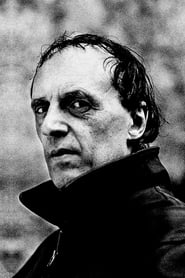
Dario Argento played an important role in bringing the project together, providing financial support through distribution arrangements and later preparing his own European version of the film. The collaboration linked Romero directly with the Italian horror industry and helped Dawn of the Dead develop different identities in different markets. Tom Savini's makeup and gore effects added another essential element, giving the film a physical intensity far beyond the first Dead film. Romero places much of this violence beside slapstick and absurdity, allowing bikers, zombies and survivors to turn the shopping mall into something halfway between fortress, battlefield and amusement park.
Tom Savini and the Physical Language of Romero's Dead
Romero's collaboration with Tom Savini became one of the defining director-effects relationships in horror cinema. Savini did not simply supply isolated gore shots; his effects helped determine how Romero could stage violence and what kind of physical reality the zombies could occupy. In Dawn of the Dead, a body is no longer simply attacked. It can be opened, bitten and visibly transformed into matter, making the collapse of social order bodily as well as political. The world is disintegrating, and Romero allows human anatomy to disintegrate with it.
The partnership reached another level in Day of the Dead. Savini and his team created some of the most detailed practical gore effects of the period, using prosthetics, mechanical effects and carefully staged interaction between performers and artificial bodies. The violence works because Romero gives it context. A death may be spectacular, but it also expresses the complete failure of the human systems surrounding it. Gore is not separate from the argument; the body becomes the final place where failed authority, hatred and panic leave visible evidence.
Knightriders and the Community Romero Wanted to Preserve
Knightriders (1981) is not primarily a horror film, yet it is crucial to understanding Romero. The story follows a traveling group that performs medieval-style jousting tournaments on motorcycles while attempting to live according to an alternative communal code. The central conflict concerns compromise and asks whether publicity, success and commercial opportunity will destroy the values that made the community meaningful in the first place. Romero transforms the struggle between independence and institutional pressure into a story about people trying to protect their own way of working.
The film also helps explain why communities matter so much in Romero's horror. He was not simply cynical about groups of people. He understood the value of collaboration deeply and built much of his career around recurring actors, producers and technicians. His pessimism emerges when cooperation fails or when power overwhelms the possibility of collective responsibility. The same director who repeatedly showed communities breaking apart also spent much of his working life trying to preserve one around his own filmmaking.
Creepshow: Horror as Comic Book Pleasure
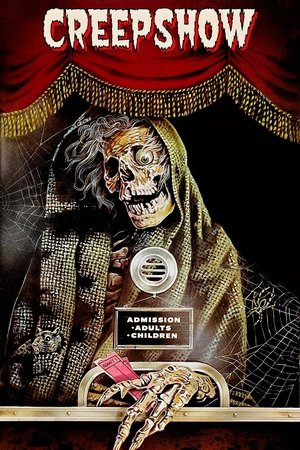
Creepshow (1982) brought Romero together with Stephen King and allowed both men to celebrate the lurid American horror comics they had loved. King wrote the screenplay, while Romero transformed the anthology into a moving comic book filled with colored lighting, exaggerated compositions, illustrated transitions and deliberately theatrical effects. The film reveals an important aspect of Romero sometimes obscured by discussions of social commentary: he loved horror as entertainment and understood the pleasure of a grotesque story told with complete commitment to its own artificiality.
Creepshow contains revenge, monsters, corpses, cockroaches and grotesque punishment, but it presents them with enormous pleasure in storytelling. Morality operates according to comic-book logic, with cruel or selfish characters receiving imaginative consequences that are both horrifying and satisfying. The collaboration with King continued beyond the film, and Romero later wrote the screenplay for Creepshow 2 based on King's stories. The project also demonstrates Romero's visual flexibility, proving that the rough documentary texture of Night of the Living Dead was never the only style available to him.
Day of the Dead: Humanity Underground
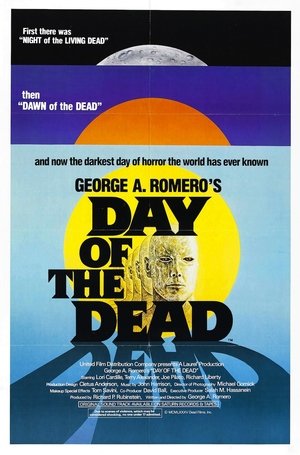
Day of the Dead (1985) reduces the surviving human world to a bunker. Scientists and soldiers occupy an underground facility while the dead appear to have inherited the surface, and the location turns ideological disagreement into claustrophobia. Nobody can simply leave. Scientists want time to understand the zombies, soldiers demand practical results and the chain of command deteriorates as Captain Rhodes becomes increasingly authoritarian. Romero creates a community that has survived the apocalypse physically while becoming incapable of building a stable social structure.
The film's most radical idea arrives through Bub, a captive zombie studied by Dr. Logan. Bub responds to objects, music and fragments of behavior associated with his former life, suggesting that the undead may retain or recover pieces of memory. This possibility changes the moral geometry of the series. If a zombie can recover fragments of recognition while the surviving humans lose their capacity for cooperation, the boundary between civilized living person and mindless monster becomes less stable. Romero later identified Day of the Dead as his favorite of his zombie films, and its combination of bleakness, philosophical curiosity and extraordinary practical effects has become central to his reputation.
Tales from the Darkside and Horror on Television
Romero's influence also entered television through Tales from the Darkside, the anthology series he created and executive-produced. Developed after the success of Creepshow, the series used a smaller production scale to deliver self-contained stories involving supernatural threats, science fiction, irony and moral punishment. The anthology format suited Romero's interest in sharp premises where an ordinary person encounters one impossible element and the consequences expose greed, cruelty, fear or bad judgment.
The show also extended the working community around Romero and producer Richard P. Rubinstein into another medium. Horror did not need theatrical budgets to survive and could move into syndicated television, where limited resources became part of the form rather than an obstacle that had to be disguised. Romero's involvement with television also reinforced one of the central ideas of his career: genre storytelling could remain independent in spirit even when the method of distribution changed.
Monkey Shines, The Dark Half and the Difficulty of Studio Horror
Romero entered a more conventional studio environment with Monkey Shines (1988). The film follows a recently quadriplegic man whose relationship with a trained capuchin monkey develops into a disturbing psychological and biological connection. The material is recognizably Romero because science attempts to improve human life, dependency complicates power and an intimate relationship becomes increasingly impossible to control. Yet the production also exposed the tension between Romero and studio expectations, particularly when additional authority entered decisions that he had previously made more directly within his independent production system.
The Dark Half, adapted from Stephen King's novel, returned Romero to questions of identity and authorship. A writer's pseudonymous violent persona begins behaving as though it possesses a life independent of its creator, allowing Romero to examine another version of something suppressed returning in physical form. These films show a Romero who was never limited to zombie mythology, even if the cultural weight of the Dead series repeatedly pulled attention back toward it. They also reveal the difficulty of preserving his preferred working methods inside larger industrial structures.
Land of the Dead: Class After the Apocalypse
Romero returned to zombies in Land of the Dead (2005), two decades after Day of the Dead. The world has changed, but humanity has reconstructed a familiar hierarchy. A fortified city protects surviving residents from the dead, while wealthy citizens occupy the luxury tower of Fiddler's Green and poorer people live under far harsher conditions. The apocalypse has destroyed national institutions but not class division, and Dennis Hopper's Kaufman treats both property and security as instruments of control.
Outside the walls, the zombies are changing. Big Daddy begins displaying recognition, leadership and the ability to communicate simple intentions to other dead, continuing an evolutionary idea already present in Bub. Romero reverses the expected direction of progress: the living rebuild systems of exploitation while the dead learn forms of cooperation. Land of the Dead was produced on a scale larger than most Romero films, but its central concerns remain consistent with the earlier work. Civilization can collapse and return wearing the same hierarchy.
Diary of the Dead and the Camera That Cannot Stop Recording
Diary of the Dead (2007) brought Romero back to smaller-scale production and reset the apocalypse to its beginning. Film students encounter the outbreak while making a project and begin documenting events as the world deteriorates. The change in form is significant because in Night of the Living Dead, television and radio provide information about catastrophe, while in Diary of the Dead ordinary people have become broadcasters themselves. Cameras, online video and amateur footage multiply perspectives without guaranteeing truth.
The characters record because they believe images matter. Documentation may preserve evidence, inform others or simply provide the illusion that somebody still controls the narrative. Romero had always been interested in media, with television screens appearing throughout the Dead films as windows through which characters attempt to understand a larger disaster. Diary updates that concern for a culture in which the person witnessing an event may also be filming, editing and distributing it. The apocalypse has not eliminated media behavior; it has intensified it.
Survival of the Dead and the Persistence of Old Hatreds
Survival of the Dead (2009) became Romero's final completed feature. The story centers on rival families whose feud continues even after civilization has collapsed, and the premise is almost brutally consistent with the director's worldview. Humanity has been given overwhelming evidence that the old world no longer functions, yet people continue carrying its conflicts into the new one. Catastrophe removes institutions but does not automatically remove history, pride or resentment.
One group believes zombies should be destroyed while another preserves undead relatives in the hope that some form of rehabilitation may eventually become possible. What begins as a disagreement about the dead turns into another structure for human hostility. The film closes Romero's completed Dead cycle with an appropriately bitter idea: death does not automatically end the argument. Hatred can survive longer than the society that originally produced it, and human beings remain capable of rebuilding conflict even when almost everything else has disappeared.
Satire, Politics and Romero's Refusal to Preach
Romero's films are frequently described through political interpretations, but he resisted the idea that they functioned as simple messages. His satire responded to what he saw around him rather than delivering fixed instructions to the audience. This distinction matters because Dawn of the Dead is not powerful simply because it can be reduced to the statement that consumerism is bad. The characters genuinely enjoy the mall and the mall genuinely protects them. Day of the Dead is not simply anti-military because scientific arrogance also contributes to the breakdown, while Night of the Living Dead acquired racial meanings that exceeded the original casting intention.
The films remain alive because their metaphors are not completely closed. Romero creates systems under stress and allows contradictions to remain visible. A shopping mall can be ridiculous and useful at the same time, a scientist can be humane and dangerously obsessive, a soldier can be necessary and authoritarian, and a camera can reveal truth while also distorting it. This openness gave Romero's zombie template extraordinary cultural flexibility because later filmmakers could use it to discuss other societies and other historical anxieties without reproducing his exact conclusions.
Editing, Space and the Romero Method
Romero's visual style changed significantly across his career. His earlier films often rely on energetic editing, abrupt changes of angle and images assembled with the instincts of someone trained in commercial and industrial production. Night of the Living Dead gains urgency from this roughness, while later films increasingly explore longer takes, more controlled movement and broader spatial organization. Romero never locked himself permanently into the aesthetic of his first success.
What remained consistent was an interest in geography. Romero wants the audience to understand the system trapping the characters, and the farmhouse, mall, bunker and fortified city each function as social diagrams. Who controls the doors, who controls the weapons, who controls information and who occupies the safest space are practical questions that quickly become political ones. Architecture often answers those questions before dialogue does. This is one reason his zombie films remain unusually clear despite large casts and chaotic action: the apocalypse may be confused, but the audience usually understands where people have chosen to place themselves inside it.
George A. Romero's Style and Legacy
Romero did not invent the zombie, and reducing his achievement to that claim obscures what he actually accomplished. He transformed older traditions of the walking dead into a modern cinematic system that could reproduce itself endlessly. The flesh-eating corpse became simple enough to understand immediately and flexible enough to carry almost any social anxiety. It could represent conformity, consumer habit, disease, political collapse, class division or simply death itself, allowing later filmmakers to use the basic structure without needing Romero's characters, locations or historical circumstances.
His influence also reaches far beyond zombies. Independent horror inherited his belief that filmmakers outside Hollywood could construct culturally important work from local resources, and regional filmmaking did not have to imitate a studio before it could matter. Romero showed that genre cinema could be inexpensive, socially alert, funny, graphic and formally inventive at the same time. The recurring Pittsburgh community around his films became part of that legacy because it demonstrated that horror could grow from a place rather than merely use a place as scenery.
Perhaps the most persistent Romero idea is that apocalypse does not automatically create a better humanity. His survivors repeatedly rebuild pieces of the society that has already failed, restoring hierarchies, accumulating possessions, defending territory and continuing old arguments. At the same time, the zombies gradually become capable of memory, recognition and cooperation. Bub remembers, Big Daddy learns and the dead begin organizing while the living continue fighting over authority. Romero died on July 16, 2017, leaving a body of work whose influence had already spread through cinema, television, literature, games and popular culture. His most enduring achievement was not simply making the dead walk, but using their return to ask what the living would reveal about themselves once the structures around them began to disappear.
Known Among Horror Fans For
Notable Horror Collaborators
Notable collaborators and creative partners throughout George A. Romero's horror career.
 Tom Savini
Effects and Acting Collaborator
Romero's defining practical effects collaborator, beginning with Martin and continuing through Dawn of the Dead, Knightriders, Creepshow and Day of the Dead. Savini also acted in several Romero films and later directed the 1990 remake of Night of the Living Dead from Romero's screenplay.
RR
Richard P. Rubinstein
Producing Collaborator
One of Romero's most important long-term producing partners, collaborating with him on projects including Martin, Dawn of the Dead, Knightriders, Creepshow and Day of the Dead.
MG
Michael Gornick
Cinematography Collaborator
A central visual collaborator during Romero's most important period, serving as cinematographer on Martin, Dawn of the Dead, Knightriders, Creepshow and Day of the Dead.
JH
John Harrison
Creative Collaborator
A recurring member of Romero's Pittsburgh filmmaking circle, working across acting, assistant directing and music on projects including Dawn of the Dead, Knightriders, Creepshow and Day of the Dead.
 John Amplas
Frequent Collaborator
A recurring performer in Romero's Pittsburgh ensemble, starring in Martin and later appearing in Dawn of the Dead, Knightriders, Creepshow and Day of the Dead.
 Dario Argento
International Collaborator
A major international horror collaborator who helped finance Dawn of the Dead and prepared its European cut. Romero and Argento later reunited as directors of the Edgar Allan Poe anthology Two Evil Eyes.
George A. Romero Horror Movies
Directing (17 credits)
2021
2010
2008
2005
2000
1993
1990
1988
1985
1982
1978
1977
1975
1973
1972
1968
Writing (28 credits)
2026
2022
2022
2020
2018
2011
2010
2010
2008
2008
2007
2005
2004
2000
1993
1990
1990
1990
1988
1987
1985
1984
1983
1978
1977
1973
1972
1968
Acting (24 credits)
2020
2015
2015
2014
2014
2013
2010
2009
2009
2008
2008
2007
2006
2005
2004
2001
2000
1993
1990
1985
1978
1977
1975
1968
Editing (7 credits)
1982
1978
1977
1975
1973
1972
1968
Production (7 credits)
2010
2009
1993
1990
1987
1985
1984
Cinematography (2 credits)
1972
1968
Creator (1 credits)
1984
Other Crew (3 credits)
2023
2020
2009