


1991
Kazuo 'Gaira' Komizu
Horror Director · Biography · Horror Filmography · Collaborators · Credits
Horror subgenres & themes
Most represented across this person's horror filmography:
SEXUAL
• SPLATTER
• BODY HORROR
• EXTREME
Biography
Kazuo 'Gaira' Komizu: Splatter-Eros, Body Horror and Underground Japanese Horror
Kazuo "Gaira" Komizu occupies a particularly strange corner of Japanese horror history. His genre filmography is not enormous, but during the mid-1980s he developed a recognizable form of filmmaking in which pink cinema, sexual exploitation, graphic gore and supernatural or biological horror collided with unusual directness. Films such as Entrails of a Virgin, Entrails of a Beautiful Woman and Rusted Body became cult examples of what would later be described as splatter-eros, while Guzoo: The Thing Forsaken by God moved toward compact creature horror and Battle Girl: The Living Dead in Tokyo Bay placed Komizu inside the early history of Japanese zombie cinema.
Born in Sendai, Miyagi Prefecture, in 1946, Komizu had already accumulated substantial experience in Japanese independent and erotic filmmaking before his most recognizable horror period. That background mattered because his horror developed not from the classical ghost tradition but from filmmaking already concerned with bodies, sexuality, transgression and low-budget production. When explicit horror entered that framework, the result was unusually physical. Flesh was not simply threatened. It became the raw material of mutation, dismemberment, contamination and grotesque transformation.
The nickname "Gaira" became closely associated with Komizu's directing identity and with the films that later reached international cult audiences. For horror viewers outside Japan, his name became particularly connected with the Entrails films, which circulated for years through specialist video culture before restored releases made them more accessible. Their reputation rests on excess, but also on the unusual way they fuse erotic exploitation with genuine monster and body horror rather than keeping the two forms separate.
Woman in a Box: Virgin Sacrifice and the Road into Horror
Komizu's horror period can be traced through Woman in a Box: Virgin Sacrifice in 1985. Directed by Masaru Konuma from a screenplay by Komizu, the film centers on the captivity of a young woman inside a domestic environment controlled by her abductors. The material emerged from Nikkatsu's erotic production system, yet its structure is fundamentally one of confinement, helplessness and sustained psychological terror.
The film is significant within Komizu's horror career because several people associated with it would reappear during the splatter cycle that followed. Producer Hiroshi Hanzawa became one of the central figures behind the Entrails productions, while Saeko Kizuki would return as a performer. The film therefore forms an important bridge between erotic exploitation and the explicitly monstrous horror Komizu was about to direct himself.
Rather than depending on supernatural imagery, Woman in a Box creates horror from control over another person's body and environment. That concern would remain visible in Komizu's subsequent films even when demons, mutations and practical gore entered the narrative. Bodies in his horror are rarely secure or autonomous. They are imprisoned, altered, violated or physically reconstructed by forces outside their control.
Entrails of a Virgin and the Birth of Komizu's Splatter-Eros Horror
Entrails of a Virgin in 1986 became Komizu's defining horror film. He directed and wrote the story, with Hiroshi Hanzawa and Toshio Satô producing and Yûichi Matsui contributing special makeup effects. The film begins around a group returning from an erotic photo shoot who become stranded in an isolated location. The familiar framework of sexual exploitation gradually gives way to monster horror as a grotesque attacker begins killing members of the group.
The importance of the film lies in the way Komizu refuses to treat horror as a minor interruption within erotic material. Once the creature enters the story, explicit gore and bodily destruction become central. The human body, already objectified by the photographic environment surrounding the characters, becomes vulnerable to a completely different form of physical violation.
The creature itself represents the fusion at the center of Komizu's horror. Sexuality and monstrosity are deliberately combined into one grotesque physical presence. The result is confrontational rather than seductive. Familiar erotic imagery is distorted until it becomes part of the threat, allowing the film to shift from exploitation into body horror without establishing a comfortable boundary between the two.
Practical effects are essential to that process. The violence depends upon artificial bodies, wounds, blood and creature makeup occupying the same physical spaces as the performers. The roughness of the effects becomes part of the film's handmade extremity rather than something concealed through visual refinement.
Entrails of a Virgin subsequently became one of Komizu's best-known films internationally. Its circulation among collectors helped establish his reputation outside Japan and associated the name Gaira with a particularly extreme form of Japanese underground horror long before extreme Asian cinema became a widely marketed international category.
Entrails of a Beautiful Woman and Body Horror as Revenge
Komizu returned almost immediately with Entrails of a Beautiful Woman, again working with producers Hiroshi Hanzawa and Toshio Satô and special makeup artist Yûichi Matsui. The film retains the fusion of sexual exploitation and splatter established by its predecessor but develops a more overt transformation narrative.
The story moves through criminal violence and revenge before the human body itself becomes unstable. A victim's physical destruction leads to grotesque rebirth, allowing Komizu to turn revenge into literal body horror. The avenger does not simply survive violence and retaliate. Violence produces a new monstrous anatomy capable of returning that brutality to the people responsible.
This transformation gives the film a more explicit biological horror identity than Entrails of a Virgin. Flesh merges, mutates and becomes weaponized. Human categories become physically unstable, and the monster's grotesque form carries the history of what has happened to the body before it.
The film also demonstrates how quickly Komizu and his recurring collaborators established a working horror system. Hanzawa and Satô provided production continuity, while Matsui's makeup supplied the material transformations necessary for the increasingly elaborate splatter. Komizu could therefore concentrate on escalating ideas rather than rebuilding a technical team for each project.
Guzoo: The Thing Forsaken by God
Also in 1986, Komizu directed and co-wrote Guzoo: The Thing Forsaken by God, a forty-minute creature-horror production that strips away much of the erotic framework associated with the Entrails films. Four young women arrive at an isolated house and discover that something monstrous is hidden beneath it.
Guzoo demonstrates that Komizu's interest in horror was broader than splatter-eros. The film works through classical creature mechanics: isolation, concealed knowledge, an enclosed building and an organism whose physical form is revealed gradually. The basement becomes the forbidden space at the center of the story, containing a creature that transforms an ordinary visit into a survival situation.
The short running time encourages economy. Komizu does not need to construct a complicated mythology around the creature. Its existence, its appearance and the reactions it produces are sufficient. The film therefore belongs to a tradition of compact monster cinema in which physical design carries much of the imaginative burden.
Its importance within Komizu's filmography is substantial because it demonstrates a direct engagement with body and creature horror independent of the pink-film structure. Where the Entrails films mutate erotic exploitation into horror, Guzoo begins from the horror premise itself.
Rusted Body and the Completion of the Entrails Cycle
Komizu completed the loose cycle in 1987 with Rusted Body, also known as Female Inquisitor and Guts of a Virgin III. Hiroshi Hanzawa and Toshio Satô again produced, Saeko Kizuki returned to the cast, Akihiro Itô photographed the film and Yûichi Matsui once again handled special makeup work.
The recurrence of these collaborators is important. By this point the series had developed a stable group capable of producing sexually explicit and graphically violent material with a recognizable texture. Although the three films do not form a conventional continuing narrative, they function as a cycle through personnel, thematic extremity and their treatment of the body.
Rusted Body places torture and sadism at the center of its imagery while continuing the series' mixture of exploitation and splatter. Komizu again treats physical cruelty not as something occurring safely outside the frame but as material that must be represented through makeup, artificial flesh and visible damage.
The three films consequently form the core of Komizu's horror identity. Their significance is less about narrative mythology than about a consistent filmmaking proposition: erotic cinema can be pushed into horror when desire, vulnerability and bodily transformation become impossible to separate.
Battle Girl: The Living Dead in Tokyo Bay
Komizu later moved into zombie horror with Battle Girl: The Living Dead in Tokyo Bay in 1991. The premise combines post-apocalyptic action with an outbreak that transforms Tokyo's population into flesh-eating undead. Professional wrestler Cutie Suzuki plays Keiko, a survivor moving through a quarantined city threatened by zombies and violent human forces.
The film belongs to a period before Japanese zombie cinema became internationally prominent. Western zombie mythology was already familiar in Japan, but locally produced features centered explicitly on armies of flesh-eating living dead remained relatively unusual. Battle Girl therefore occupies an interesting transitional position in the country's horror history.
Komizu approaches the material through the same low-budget physicality visible in his earlier work. Makeup, gore, action and inexpensive post-apocalyptic design create a world whose ambitions are deliberately larger than its resources. The resulting roughness is part of its identity as underground genre cinema.
The film also demonstrates Komizu's willingness to leave the sexual-horror territory with which he is most closely associated. Zombies require a different narrative scale. Rather than a small group becoming trapped with one creature or within one cycle of revenge, an entire city has been destabilized. Horror becomes epidemic.
Sex, Mutation and the Body in Komizu's Horror
The most consistent subject across Komizu's horror is the vulnerability of the body. In Woman in a Box, bodily autonomy is taken away through imprisonment. Entrails of a Virgin introduces a creature that transforms sexuality into predation. Entrails of a Beautiful Woman makes mutation the mechanism of revenge. Rusted Body returns to torture and physical domination, while Battle Girl imagines bodies altered by an outbreak on a much larger scale.
This explains why Komizu's work fits naturally within body horror even when individual films also belong to erotic exploitation, creature horror, zombie cinema or science fiction. The body itself is continually made unreliable. It can be controlled, penetrated, dismantled, merged with something else or returned in another form.
The practical effects used to represent these changes are equally important. Komizu's horror belongs to a pre-digital production culture in which transformation had to be physically fabricated for the camera. Prosthetics, artificial bodies and blood effects determine how far each film can push its central idea. The limitations of those techniques are visible, but so is their tactile impact.
Kazuo 'Gaira' Komizu's Place in Extreme Japanese Horror
Komizu is not a foundational figure of Japanese horror on the scale of filmmakers whose careers transformed the mainstream international perception of the genre. His contribution is narrower and more underground. Within that territory, however, the cluster of films he made between 1985 and the beginning of the 1990s is distinctive.
The Entrails cycle remains his central achievement because it established a recognizable meeting point between pink cinema and splatter horror. Guzoo shows his ability to work with relatively pure creature horror, while Battle Girl extends the filmography toward zombie apocalypse imagery before that form became common in Japanese genre cinema.
International cult distribution gave these films a second life far removed from their original production circumstances. Viewers encountering Japanese extreme cinema through imported tapes and specialist DVD labels found in Komizu a filmmaker whose work seemed to anticipate the fascination with transgressive Asian horror that would grow considerably during later decades.
His importance therefore lies in a specific intersection rather than in volume. Komizu helped create a small body of horror in which erotic exploitation, handmade gore, monsters and bodily transformation were deliberately fused. The results remain abrasive, uneven and difficult by design, but they preserve a particularly uncompromising strand of Japanese horror filmmaking from the 1980s and early 1990s.
Selected Work
Notable Horror Collaborators
Notable collaborators and creative partners throughout Kazuo 'Gaira' Komizu's horror career.
HH
Hiroshi Hanzawa
KEY HORROR PRODUCER
Komizu's principal horror producer across Woman in a Box: Virgin Sacrifice, Entrails of a Virgin, Entrails of a Beautiful Woman and Rusted Body, covering the entire period in which his splatter-eros style took shape.
TS
Toshio Satô
HORROR PRODUCER
Produced Entrails of a Virgin, Entrails of a Beautiful Woman and Rusted Body with Komizu, providing production continuity across the complete three-film cycle that defines his extreme horror reputation.
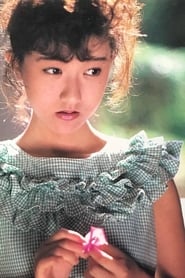 Saeko Kizuki
RECURRING HORROR ACTRESS
Appeared in Woman in a Box: Virgin Sacrifice, Entrails of a Virgin and Rusted Body, making her one of the recurring on-screen figures connecting Komizu's mid-1980s erotic and splatter horror period.
YM
Yûichi Matsui
SPECIAL MAKEUP FX ARTIST
Created special makeup effects for Entrails of a Virgin, Entrails of a Beautiful Woman and Rusted Body, providing the practical gore and physical transformations central to Komizu's three-film splatter cycle.
Saeko Kizuki
RECURRING HORROR ACTRESS
Appeared in Woman in a Box: Virgin Sacrifice, Entrails of a Virgin and Rusted Body, making her one of the recurring on-screen figures connecting Komizu's mid-1980s erotic and splatter horror period.
YM
Yûichi Matsui
SPECIAL MAKEUP FX ARTIST
Created special makeup effects for Entrails of a Virgin, Entrails of a Beautiful Woman and Rusted Body, providing the practical gore and physical transformations central to Komizu's three-film splatter cycle.
Kazuo 'Gaira' Komizu Horror Movies
Directing (6 credits)
1987
1986
1986
1986
1967
Writing (7 credits)
1990
1987
1986
1986
1986
1986
1985
Cinematography (2 credits)
1991
1986
Acting (1 credits)
1967
Production (1 credits)
2000