


2023
Richard Raaphorst
Horror Production Design · Biography · Horror Filmography · Collaborators · Credits
Horror subgenres & themes
Most represented across this person's horror filmography:
BODY HORROR
• MONSTER
Biography
Richard Raaphorst and the Creation of Industrial Horror
Richard Raaphorst is a Dutch director, concept artist and special effects practitioner whose most substantial contribution to horror cinema is Frankenstein's Army (2013). The film draws upon the Frankenstein tradition and wartime exploitation cinema to create a collection of surgically altered soldiers fitted with machinery. Its creatures, which Raaphorst called zombots, reflect his longstanding fascination with industrial equipment and damaged human anatomy. He developed their visual identities through drawings and physical fabrication, making creature design a principal source of the film's unsettling atmosphere.
His career encompasses directing, storyboarding, production design and effects supervision. The distinction between these responsibilities matters: much of his later genre work consists of contributions to films led by other directors. Raaphorst's particular interest is the construction of hostile environments inhabited by objects and bodies whose original functions have been violently rearranged. This approach links his early promotional films to his feature debut and the smaller Dutch horror projects he subsequently helped produce.
From Horror Illustration to Worst Case Scenario
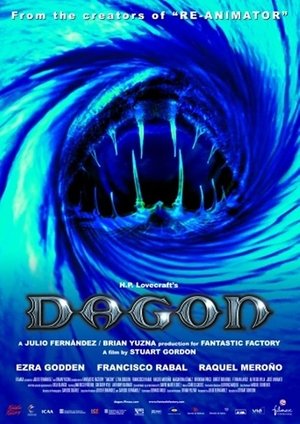
Raaphorst studied audiovisual media at the Willem de Kooning Academy in Rotterdam and began working professionally in storyboards and concept art. His early horror-related assignments included visual development for productions associated with Stuart Gordon and Brian Yuzna, among them Dagon (2001) and Beyond Re-Animator (2003). These were art-department contributions, not directing credits. Working through preliminary designs gave him experience translating grotesque ideas into imagery that another production team could use.
He attracted wider attention with two promotional shorts for Worst Case Scenario, made in 2004 and 2006. Their premise involved Nazi soldiers returning as monstrous undead figures, with the second promo introducing surreal airborne imagery. The footage circulated online and established interest in a proposed feature, but the project never reached completion. Raaphorst later explained that he did not retain the rights to continue developing it. When he began Frankenstein's Army, he created a new story and creature designs. The surviving connection was his interest in militarized corpses and a particular fusion of human remains with obsolete technology.
Raaphorst discussed the influence of James Whale's Frankenstein (1931), especially the angular silhouette of Boris Karloff's monster. He connected that shape to mechanical construction and explored the possibility of creatures assembled from wartime scrap. This was a conceptual starting point for his drawings, alongside childhood memories of industrial sites and heavy equipment. His idea of the monster consequently emerged from specific shapes, manufacturing materials and methods of bodily assembly.
Frankenstein's Army: Zombots, Costumes and Practical Effects
The feature takes place near the end of the Second World War, when Soviet soldiers investigating a mysterious installation encounter the experiments of a scientist played by Karel Roden. Within the fictional laboratory, human casualties have been reconstructed as weapons using scavenged machine parts. Raaphorst directed the film and developed its central creature concepts; the individual effects were fabricated and operated by a collaborative workshop. The resulting figures include bodies equipped with drilling mechanisms, bladed attachments, heavy metal casings and a prominent propeller mounted where a head would ordinarily be.
The constructions were guided by a simple material idea: machinery encountered in the wartime setting should appear to have been repurposed through brutal surgery. Raaphorst drew multiple variations of the creatures before selecting designs that the production could execute. He recalled that only a small portion of his drawings appeared in the finished film. His descriptions of Propellerhead, Mosquito and the squat mechanical figure Zompot reveal an interest in distinctive silhouettes and recognizably different methods of locomotion. Those differences help each encounter produce a separate visual threat.
Practical fabrication strongly influenced the direction. Costumed performers and physically constructed monster elements gave the camera objects with weight, surfaces and real spatial limitations. Raaphorst preferred effects that could be photographed on location and emphasized techniques appropriate to the story's period, although the production itself was a modern film. The industrial setting was equally consequential. An abandoned mining complex near Prague supplied tunnels, large rooms and surviving equipment; the filmmakers adapted portions of the story around what they discovered there. One existing machine was incorporated into a monstrous device within the laboratory environment.
The film's violence is concentrated in the encounter between defenseless bodies and tools intended for industrial labor or military manufacture. Mechanical attachments imply functions before they are used on screen, allowing danger to be communicated through design. This gives the creatures a different physical identity from conventional reanimated corpses. Their appearance also connects the scientist's experiments to the historical setting without presenting the fictional laboratory as a documented wartime operation.
Camera Perspective and the Experience of Pursuit
Raaphorst used a first-person camera within the Soviet group, presenting much of the action as material filmed during a military assignment. In interviews he described his intention as a documentary or propaganda viewpoint that gradually becomes chaotic reportage. The restricted perspective shapes the horror: the viewer encounters unfamiliar bodies at the same moment as the soldiers, often while moving through narrow passages or trying to escape. The camera's instability and limited field of vision affect how much of a creature can be examined before it attacks.
The method also creates constraints. Chases require space for camera movement, clear routes through the set and careful coordination with performers wearing cumbersome constructions. Raaphorst discussed these challenges when describing the production, whose creature workshop and locations were central to the shooting plan. The result resembles a succession of discoveries within an occupied industrial complex. Each new room changes the visual conditions and the kind of threat facing the characters, keeping attention on the physical designs.
Later Horror Design, Nightingale and Gnomes
After his first feature, Raaphorst continued working on genre productions through concept artwork and effects supervision. For the Dutch short Nightingale (2020), directed by Jasper de Bruin, he received a special effects supervisor credit. The film follows a nurse stalked during a demanding shift in a residential care facility. His participation belongs to the technical department; responsibility for the direction and screenplay rests with other filmmakers. The assignment reflects his continued involvement in small horror productions with specialized physical effects requirements.
Gnomes (2022) offered a more extensive creative role. Directed by Ruwan Heggelman, the short turns familiar garden folklore into a violent encounter with miniature predators. Raaphorst was a producer and co-writer and contributed to its production design. The creatures were realized through practical puppetry and mixed techniques. Heggelman later recalled that Raaphorst and the puppeteers built most of the gnomes, beginning with three figures that were repeatedly redressed to suggest a much larger population. Stephan Vos handled much of the gore work, including an artificial head and exposed intestines. Festival documentation confirms the division of credits between the director and Raaphorst.
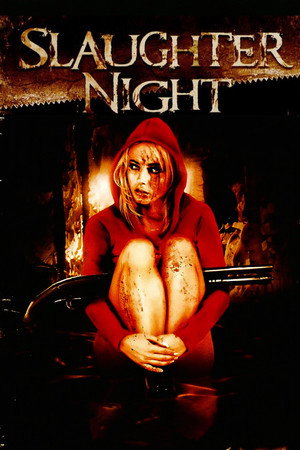
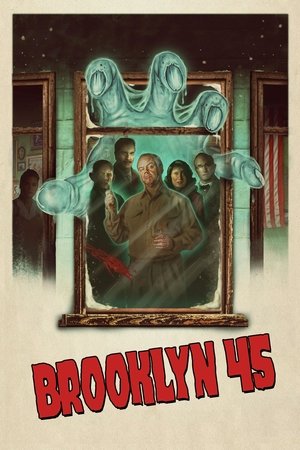
He also supplied concept art for Ted Geoghegan's Brooklyn 45 (2023), helping visualize the parlor setting where its supernatural drama unfolds. Earlier assignments such as Slaughter Night (2006) involved concept and title design. These projects establish the scope of his work beyond the single feature he directed: developing environments, images and practical effects for other horror filmmakers. His most recognizable artistic contribution remains his design of zombots constructed from corpses and machine components, a concentrated example of his interest in industrialized bodies.
Selected Work
Notable Horror Collaborators
Notable collaborators and creative partners throughout Richard Raaphorst's horror career.
ES
Eron Sheean
Special Effects / Cinematography
Sheean shared two Dutch horror shorts with Raaphorst: Nightingale (2020), where both were credited as special effects supervisors, and Gnomes (2022), for which Sheean worked on cinematography while Raaphorst produced and designed the creatures.
SV
Stephan Vos
Special Makeup / Production Design
Vos worked alongside Raaphorst on Nightingale (2020) and Gnomes (2022). On the latter, he contributed production design and created gore effects, including artificial remains and an animated creature, within the practical-effects team.
JT
Jesse Tamerius
Practical Effects / Production Design
Tamerius shared effects work with Raaphorst on Nightingale (2020), then joined the production design and visual-effects teams of the creature-horror short Gnomes (2022). Both films relied on specialized physical fabrication.
Richard Raaphorst Horror Movies
Production Design / Art Department (5 credits)
2022
2010
2006
2001
Writing (2 credits)
2022
2013
Special FX / Practical FX (1 credits)
2020
Directing (1 credits)
2013
Production (2 credits)
2022
2013