

2027
Oren Peli
Horror Producer · Biography · Horror Filmography · Collaborators · Credits
Horror subgenres & themes
Most represented across this person's horror filmography:
HAUNTED HOUSES
• BODY HORROR
• FOUND FOOTAGE
• WITCHCRAFT
Biography
Oren Peli and the production history of Paranormal Activity
Oren Peli entered professional filmmaking through an unusually direct route. An Israeli-born software programmer with no formal background in film production, he wrote, directed, photographed and edited Paranormal Activity largely inside his own San Diego-area house using a very small cast and crew. The film’s eventual theatrical success changed his professional life and provided one of the most important modern demonstrations that extremely inexpensive horror could move from home production into national studio distribution without being remade on a conventional Hollywood budget.
Peli subsequently became a producer and developer rather than maintaining a large personal directing filmography. He remained closely involved with the Paranormal Activity franchise, produced the Insidious series with Jason Blum, James Wan and Leigh Whannell, co-created the television series The River, wrote and produced Chernobyl Diaries and directed the found-footage science-fiction horror film Area 51. His historical importance therefore comes from both the original filmmaking method of Paranormal Activity and the production network that developed after its success.
Israel, software programming and work outside cinema
Peli was born and raised in Israel and developed professional skills in computer programming before entering film. He has described creating software with friends while still a teenager and later worked in the technology and videogame fields. Programming remained his primary professional background when he decided to attempt a feature film.
This distinction is significant because Paranormal Activity was not the culmination of years spent assisting established directors or moving through camera departments. Peli had to learn production procedures while developing the project itself. His existing technical experience with computers and digital tools, however, gave him confidence in solving practical problems independently and in handling much of the film’s post-production himself.
A new house and the origin of Paranormal Activity
The initial idea developed after Peli and his then-girlfriend Toni Taylor moved into a new house and began noticing ordinary noises that became unsettling during the night. Peli transformed the experience into the premise of a couple who suspect that something supernatural is entering their home while they sleep. The solution inside the story is technological: Micah places a video camera in the bedroom and records long periods of apparently uneventful night footage.
The concept matched Peli’s available resources unusually well. A story based around domestic surveillance did not require large sets, professional lighting packages or extensive location work. The house itself could become the principal environment, while the camera used by the characters could also justify the visual form of the finished film.
Designing a feature around the resources available
Peli approached production by reducing requirements before filming began. The story takes place principally inside one house. The cast is small. Expensive visible supernatural creatures are unnecessary because the threat can be represented through movement, sound and changes in the behavior of the characters. The camera has a narrative reason to remain stationary for long periods.
This resource-driven construction distinguishes the film from low-budget productions that attempt to imitate large studio spectacle without sufficient money. Peli chose a premise in which limited equipment and a domestic location could appear natural within the fiction. The resulting style was therefore connected directly with the production conditions rather than imposed afterward to disguise them.
Casting Katie Featherston and Micah Sloat
Peli cast Katie Featherston and Micah Sloat as the central couple. Because the film depended heavily on natural behavior and improvisation, conventional line readings were less useful than determining whether the performers could remain believable while creating dialogue around a prescribed situation. The characters retained the actors’ real first names, reinforcing the informal quality of the performances.
The relationship between Katie and Micah had to support long stretches in which nothing conventionally supernatural happens. Their disagreements over the camera, skepticism, fear and increasingly different responses to the haunting create the dramatic progression before the effects intensify. Peli’s decision to work with unknown performers also reduced the distance between documentary appearance and fictional narrative.
Improvisation instead of a conventional dialogue script
Peli developed the film through a detailed story structure while allowing much of the dialogue to be improvised. The actors knew the purpose of scenes and the information that needed to emerge but could express those ideas through their own speech. This method helped prevent domestic conversations from sounding heavily scripted within a visual format designed to resemble personal video recordings.
The technique required unusually close control during editing. Improvisation can produce natural moments but also repetition, inconsistent pacing and material that does not advance the story efficiently. Peli therefore needed to shape performance after shooting as much as during production.
The 2006 shoot and the small production unit
Peli filmed the original production during 2006 in approximately a week with a very small group that included friends and people close to him. The camera was a relatively inexpensive Sony digital model, and much of the work took place inside his own residence. The original cost has been reported differently according to which stages of production are included, but contemporary studio publicity later identified the film widely as a roughly fifteen-thousand-dollar production.
The limited crew required Peli to perform several jobs personally. He was writer, director, producer, cinematographer and editor on the project. Such concentration of responsibilities would have been impractical on a conventional studio feature but was compatible with a film deliberately constructed around one domestic location and minimal equipment.
The static bedroom camera
The most distinctive sequences in Paranormal Activity use a fixed camera watching Katie and Micah while they sleep. Instead of following the characters directly, the image leaves a large portion of the room visible continuously. Doors, shadows and other small changes can therefore occur without a cut telling the viewer exactly where to look.
Peli recognized that these scenes depended heavily on anticipation. The audience knows that the footage has been retained because something may happen but does not know when or where. The technique turns duration itself into part of the horror. A completely still frame can remain tense because viewers begin examining areas of the image for evidence of movement.
Editing for approximately ten months
Although principal photography was extremely short, Peli spent roughly ten months editing and experimenting with the material. He later emphasized that changes of only a few seconds could determine whether a supernatural event arrived before tension had developed or after viewers had become impatient. The long post-production process became much more substantial than the original shoot.
This period also demonstrates why the apparent simplicity of the film should not be confused with absence of construction. Static compositions and improvised dialogue generated large amounts of timing information that had to be organized carefully. Fast-forwarding through night footage, pauses before effects and the duration of reactions were all adjusted during editing.
Sound as evidence of an unseen presence
Because the supernatural force is rarely presented directly, sound becomes one of the film’s principal methods of indicating activity. Footsteps, impacts, movement elsewhere in the house and changes in ambient noise allow the audience to infer a presence without seeing a creature. These effects also preserve the domestic-video premise because characters can plausibly record noises that they do not understand.
Peli’s technical background helped him manipulate digital material independently during post-production. The finished film uses relatively modest individual effects, but they are placed inside sequences where the audience has already spent substantial time waiting for something to occur. Their effectiveness depends more on timing and context than on visual complexity.
Early private screenings and discovering audience response
Peli initially had difficulty judging whether the film worked because he had been involved in every stage of its creation. He began screening it for friends and watching their physical reactions. The response of viewers who became visibly uncomfortable during scenes he had constructed gave him the first evidence that the material could function for an audience unfamiliar with the production.
Festival screenings became more important because they provided reactions from strangers rather than personal acquaintances. Peli later recalled viewers reporting difficulty sleeping after seeing the film. Those responses encouraged him to believe that a project made inside his own home could have theatrical potential.
Screamfest, Slamdance and the search for distribution
Paranormal Activity screened at genre festivals before appearing at Slamdance in January 2008. The film attracted industry attention but did not fit easily into conventional acquisition strategies. Most distributors Peli approached were unsure how to market a production without famous actors, elaborate imagery or scenes that could be summarized easily in a conventional trailer.
Jason Blum became particularly important during this stage and helped guide the film toward larger industry consideration. DreamWorks eventually acquired the project with the expectation that Peli would direct a higher-budget remake while the original version would receive more limited circulation.
The proposed DreamWorks remake
The proposed remake illustrates how unusual the original appeared to industry executives. The underlying concept was considered commercially valuable, but the home-produced film itself initially seemed too unconventional for a major theatrical release. A larger version using professional production resources was therefore regarded as the safer path.
Peli negotiated an important condition: DreamWorks executives would have to watch the original with a real test audience before finalizing the decision. He believed the film’s effect depended on a collective viewing experience that could not be judged adequately from a private office screening.
Audience testing and preservation of the original film
The test screening changed the commercial trajectory of Paranormal Activity. Executives were able to observe audience reactions directly, and discussion of a full remake largely disappeared afterward. The existing film instead became the basis for further editing and testing intended to prepare it for theatrical distribution.
This episode became historically important because the project retained the physical characteristics of its micro-budget origin. A studio did not reproduce the same story with stars, elaborate sets and a larger crew. The film audiences eventually saw remained fundamentally the home-produced feature Peli had created.
Steven Spielberg and the theatrical ending
One area that changed significantly during the studio development process was the ending. Audience tests indicated that the original conclusion was less effective than the rest of the film. Peli and the producers considered alternatives, and one of the ideas involved input from Steven Spielberg. Several endings were filmed or considered before the theatrical version was selected through testing.
Peli accepted the change because he regarded audience response as evidence that the existing ending could be improved. The willingness to alter the conclusion after years of personal work on the film shows that his attachment was primarily to the effectiveness of the finished experience rather than to preserving every original creative decision unchanged.
Paramount and the Demand It campaign
Paramount eventually developed a distribution strategy built around audience demand. The film began with midnight screenings in a small number of markets, while viewers elsewhere could register online requests for it to play in their cities. Strong attendance and rapidly increasing demand led the studio to expand the number of theaters.
Peli was not the architect of the marketing campaign and explicitly credited Paramount with developing it. This distinction is important because the release strategy is often folded into the mythology of the film’s independent production. Peli created the movie, while Paramount designed the campaign that converted audience interest into a national theatrical rollout.
From limited screenings to a national phenomenon
Paramount reported more than 230,000 online requests by late September 2009. The campaign eventually passed one million demands, and the film expanded nationally. By November the studio announced that domestic box office had crossed one hundred million dollars, an extraordinary result for a production whose original cost was tiny by theatrical standards.
The revenue immediately changed assumptions about the commercial value of micro-budget horror. The lesson for producers was not simply that inexpensive films could be profitable, something exploitation cinema had demonstrated for decades. Paranormal Activity showed that a production made largely outside the professional film industry could retain that low-cost form and still receive contemporary national studio distribution.
Peli’s reluctance to turn Paranormal Activity into a franchise
The first film had been conceived as a self-contained story. Peli later stated that he never expected a sequel and was initially skeptical when the possibility was discussed. The problem was narrative as well as commercial. The original ending did not obviously require another film, and simply placing another couple in an unrelated haunted house would have weakened the identity already established.
Writer Michael R. Perry proposed moving backward into Kristi and Katie’s family history for Paranormal Activity 2. The idea provided a way to expand the mythology while connecting the new film directly with events from the first. Peli became producer rather than returning as director, beginning the professional role he would occupy for most of the franchise.
Moving from director to franchise producer
Peli’s continuing participation allowed Paranormal Activity to develop beyond the technical methods of one filmmaker. Tod Williams, Henry Joost, Ariel Schulman, Christopher Landon and Gregory Plotkin directed later installments while Peli and Jason Blum remained recurring producers. Steven Schneider also continued as an important production collaborator.
This structure changed Peli’s responsibilities considerably. Instead of making every camera and editing decision personally, he became involved in evaluating story directions, casting and the consistency of the franchise’s basic approach. Other filmmakers could introduce new devices as long as the films continued to resemble footage plausibly generated by characters or recording systems inside the story.
Paranormal Activity 3 and casting through improvisation
Peli has described casting the young versions of Katie and Kristi for Paranormal Activity 3 as particularly important because much of the film depended on believable child performances. Thousands of candidates were considered before Jessica Tyler Brown and Chloe Csengery were selected. Their ability to improvise around scenarios rather than simply recite dialogue was a major factor.
The process preserved a working method originating in the first film. Natural speech remained important even as budgets, crews and theatrical expectations increased. Peli’s role as producer therefore included maintaining elements of the original performance style after the franchise had moved far beyond the resources available in his house in 2006.
Christopher Landon and the expansion of the mythology
Christopher Landon became increasingly important to the Paranormal Activity series as a screenwriter, contributing to the second, third and fourth films before writing and directing The Marked Ones. Peli remained a producer while Landon helped transform the initially simple haunting into a broader mythology involving family history, covens and recurring supernatural rules.
The relationship demonstrates how Peli’s creation gradually became a collaborative franchise. Later writers introduced concepts that had not been planned when the first film was made. Peli’s task shifted toward deciding whether those additions remained compatible with the basic supernatural world originating from Katie and Micah’s domestic recordings.
Insidious and a parallel production career
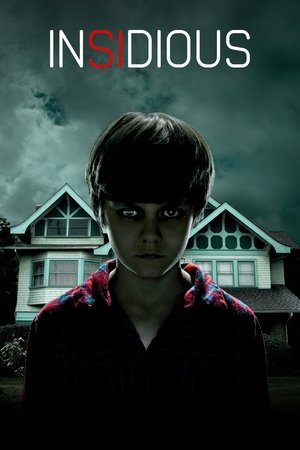
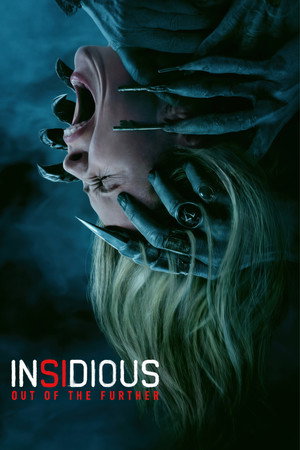
While the Paranormal Activity franchise was developing, Peli joined Jason Blum and Steven Schneider as producer of James Wan and Leigh Whannell’s Insidious. The film used conventional cinematography rather than found footage but shared the controlled-budget production environment that had become commercially attractive after Paranormal Activity.
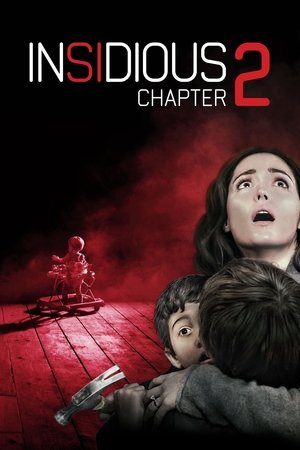
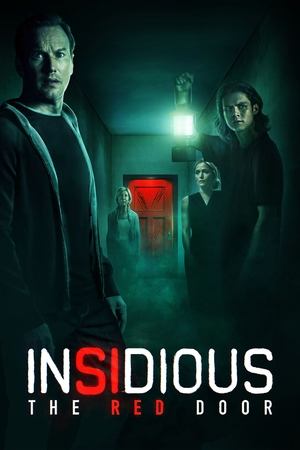
Peli remained a producer as Insidious expanded into a long-running series. James Wan and Leigh Whannell likewise continued in producing or writing capacities even after other directors took over individual installments. This became one of Peli’s longest professional relationships outside his own franchise.
James Wan and Leigh Whannell as recurring production partners
The Insidious series gave Peli sustained collaboration with Wan and Whannell across multiple films and more than a decade of production. Their responsibilities evolved over time, with Wan directing the early entries and Whannell writing, acting and later directing, while Peli remained principally a producer.
The partnership demonstrates that Peli’s influence after Paranormal Activity was not dependent on found footage. He could participate in conventional supernatural horror while applying experience gained from low-budget production and franchise development.
The River and adapting found footage to television
Peli co-created the 2012 ABC series The River with Michael R. Perry. The story concerns the disappearance of television explorer Emmet Cole and the documentary crew accompanying a search for him in the Amazon. The series uses footage generated within the narrative but gives it a different visual justification from Paranormal Activity.
Peli explained that the material is supposed to have been photographed by a professional documentary crew, allowing the images to be technically more sophisticated while retaining the found-footage principle. The series therefore represents an attempt to adapt his interest in diegetic cameras to episodic network television rather than simply copying the bedroom-camera aesthetic of his first film.
Chernobyl Diaries and horror production outside found footage
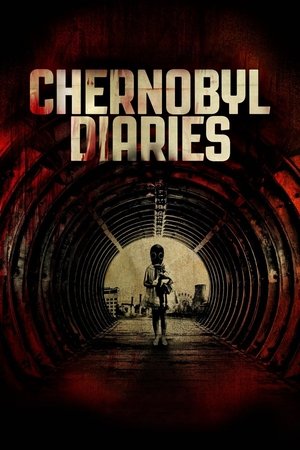
Peli created the story for Chernobyl Diaries and co-wrote the screenplay while serving as producer. Bradley Parker directed the 2012 film, which follows tourists entering the abandoned city of Pripyat near the Chernobyl nuclear site and discovering that they are not alone. Despite Peli’s reputation, the completed film does not use the same found-footage structure as Paranormal Activity.
The project is therefore useful in assessing his broader interests as a writer-producer. An inaccessible real-world location, a small group of characters and escalating evidence of unseen danger provide the basic structure, but conventional cinematography gives the director greater control over what the audience sees than Peli’s earlier first-person recording systems.
Area 51 and the difficulty of a second feature as director
Peli began developing Area 51 soon after the success of Paranormal Activity. The project again used unknown performers and found-footage methods, this time following young people attempting to infiltrate the highly restricted Nevada military facility associated with UFO mythology. Christopher Denham co-wrote the screenplay.
The film experienced a lengthy post-production history, with additional shooting and continued revision extending for years before release in 2015. Jason Blum later described the process as one of repeated tinkering similar in some respects to the long evolution of the first Paranormal Activity. The delayed release prevented Area 51 from becoming the immediate directorial follow-up originally anticipated after Peli’s breakthrough.
Found footage as a production system rather than a visual gimmick
Peli’s principal use of found footage is tied closely to narrative logistics. The audience needs a reason for the camera to exist, a reason for it to continue recording and a plausible explanation for the quality of the resulting image. In Paranormal Activity, Micah deliberately records the bedroom. In The River, a documentary crew is making a program. In Area 51, personal cameras document an attempted infiltration.
This attention to the recording mechanism helps separate his work from productions in which handheld photography functions only as an aesthetic imitation of documentary realism. The technical limitations of each camera become part of the story and determine what information the audience is allowed to receive.
The transition from first-time filmmaker to professional producer
The most significant change in Peli’s career occurred after his first film rather than during it. Paranormal Activity had concentrated virtually every important creative responsibility in one person. The success of the film placed Peli inside a professional network where his greatest continuing influence came from selecting, producing and developing other projects.
This transition explains the relatively small number of features he directed personally. Peli did not attempt to build a conventional auteur filmography after becoming successful. Producing the two major supernatural franchises connected with Jason Blum became a more sustained part of his professional activity.
Oren Peli’s place in modern horror history
Peli’s importance to contemporary horror begins with the specific circumstances of Paranormal Activity. The film demonstrated that digital technology, domestic locations and extensive post-production experimentation could support a theatrically viable horror feature without the infrastructure normally associated with commercial cinema. Its influence was visible in the large number of found-footage and micro-budget genre projects developed during the following years.
His later career gave that achievement an industrial continuation. As producer of Paranormal Activity and Insidious, Peli remained involved as small supernatural films became internationally recognized franchises managed by recurring groups of writers, directors and producers. His career therefore connects the individual experimentation of a first-time filmmaker working inside his own house with the franchise-production system that became one of the defining commercial structures of twenty-first-century American horror.
Photos (1)
Images: TMDB
Selected Work
Notable Horror Collaborators
Notable collaborators and creative partners throughout Oren Peli's horror career.
 Jason Blum
Filmmaker-Producer / Producer Collaborator
Blum became the principal producer who helped move Peli’s Paranormal Activity from independent festival circulation toward major distribution. They subsequently produced numerous Paranormal Activity and Insidious films together and continued working across both of the supernatural franchises most closely associated with Peli’s career.
SS
Steven Schneider
Producer Collaborator
Schneider served as executive producer on the original Paranormal Activity and remained involved across later entries in the franchise while also producing Insidious with Peli. Their repeated collaboration covers the transition from Peli’s independently made first film into long-running professional horror production.
 James Wan
Producer / Director-Producer Collaborator
Peli and Wan became recurring producers through the Insidious series beginning with Wan’s original film. Their shared work continued across multiple installments as Wan moved between directing and producing while Peli remained part of the franchise’s principal production group.
 Leigh Whannell
Producer / Writer-Director Collaborator
Whannell and Peli have worked together across numerous Insidious films, with Whannell serving as writer, actor, director and producer at different stages while Peli remained one of the recurring producers. The relationship extends from the original film through the franchise’s later development.
 Christopher Landon
Producer / Writer-Director Collaborator
Landon became a major creative contributor to Paranormal Activity while Peli remained producer, writing Paranormal Activity 2, Paranormal Activity 3 and Paranormal Activity 4 before writing and directing The Marked Ones. Their collaboration was central to the expansion of the mythology beyond the original film.
 Katie Featherston
Director-Producer / Actor Collaborator
Featherston was cast by Peli as Katie in the original Paranormal Activity and returned through later installments produced by him. Her continuing presence provided one of the principal character links connecting the independently made first film with the mythology developed across the franchise.
Oren Peli Horror Movies
Production (19 credits)
2026
2023
2021
2018
2015
2015
2015
2014
2013
2012
2012
2012
2012
2012
2011
2011
2010
2009
Writing (5 credits)
2015
2015
2012
2012
2009
Acting (4 credits)
2021
2021
2020
2018
Directing (2 credits)
2015
2009
Special FX / Practical FX (1 credits)
2009
Cinematography (1 credits)
2009
Editing (1 credits)
2009
Production Design / Art Department (1 credits)
2009