Jeremiah Kipp and Independent Horror Filmmaking
Jeremiah Kipp was an American filmmaker whose career developed inside the independent horror community, moving from production work and short films to features that combined supernatural threats with damaged, vulnerable characters. Rather than treating horror as a temporary stop on the way to another kind of filmmaking, Kipp repeatedly returned to the genre across different scales and formats. His directing work ranged from the body horror of Contact and the stripped-down menace of The Sadist to the Lovecraftian conspiracy of Black Wake, the grief-driven monster story Slapface, the Southern Gothic folklore of The Geechee Witch: A Boo Hag Story, and the video-game adaptation The Mortuary Assistant. The common thread was less a fixed visual formula than an interest in what fear does to people under pressure, especially when trauma, isolation, guilt or unstable family relationships make a supernatural or violent threat harder to separate from an emotional one.
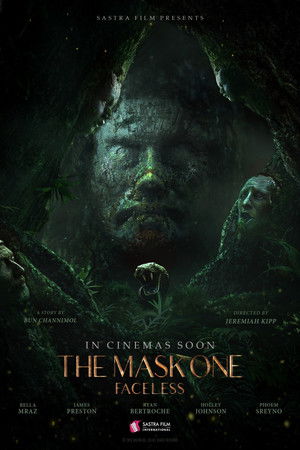
Kipp died on October 13, 2026. At the time his death became public, no cause had been announced. His final period had nevertheless been one of the most visible of his career, with The Mortuary Assistant reaching theaters and Shudder in 2026 and the Cambodian horror feature Faceless also appearing among his final directing credits. That late work capped a career built largely outside the studio system, where Kipp spent years learning through low-budget productions, recurring collaborators and the practical demands of independent filmmaking.
Rhode Island Horror Roots, NYU and Early Genre Work
Kipp grew up in rural Rhode Island, an environment he later connected directly to his attraction to horror. He recalled watching films such as The Texas Chain Saw Massacre, Dawn of the Dead and The Thing when he was young, while also absorbing the witches and threatening landscapes of traditional fairy tales. Woods, isolated houses and the possibility of danger beyond ordinary domestic space would remain recurring elements in his own work. He later studied film at New York University and entered professional production from the ground level. One of his early horror credits was as a production intern on Cindy Sherman's Office Killer in 1997, a modest position but one that placed him inside a feature production before he established himself as a director.
During the following years Kipp became part of the New York independent genre network associated with filmmakers and producers such as Larry Fessenden and the Glass Eye Pix orbit. He worked as an assistant director on horror productions including I Sell the Dead and The Blood Shed, while serving as both producer and assistant director on James Felix McKenney's Satan Hates You. These jobs were important to the way Kipp described his development. He did not present directing as an isolated auteur activity, but as a craft learned through sets, crews and repeated collaboration. The practical experience of organizing low-budget shoots, working with actors under pressure and solving problems with limited resources became part of the production discipline that later defined his own features.
Contact, Body Horror and the Dominick Sivilli Collaboration
Kipp's early short films allowed him to define a more personal horror language. Contact, released in 2009, became one of the key works in that process. Built around a young couple taking an underground drug, the film turns intimacy into a disturbing physical and psychological experience. Kipp openly acknowledged the unavoidable influence of David Cronenberg when working in body horror, but the short was not simply an exercise in mutation effects. Its high-contrast black-and-white photography, limited dialogue and slow movement created a dreamlike space in which desire, dependence and bodily transformation became difficult to separate.
Contact also established one of the central creative relationships of Kipp's career, with cinematographer and editor Dominick Sivilli. Kipp described Sivilli as a close collaborator whose visual decisions were developed through conversation about emotional effect rather than through a rigid catalogue of stylistic rules. Their work continued across projects including Crestfallen, The Sadist, The Days God Slept, the short version of Slapface and The Geechee Witch: A Boo Hag Story. The partnership helps explain why Kipp's low-budget films often place so much weight on location, contrast, darkness and controlled camera movement. In Crestfallen, a story organized around a possible suicide, light and shadow were used to turn psychological collapse into visual architecture. In later work, the same concern with atmosphere became less expressionistic but remained central to the construction of dread.
The early New York horror circle around Kipp was collaborative in a broader sense as well. Alan Rowe Kelly and Bart Mastronardi produced Contact, and both had already crossed paths with Kipp on The Blood Shed. Several members of the Contact team followed him to The Sadist. That continuity is significant because Kipp's career was not built around a single breakthrough followed by wholesale replacement of his collaborators. It grew through a network of filmmakers repeatedly helping one another make genre work at budgets where trust, flexibility and familiarity could be as important as equipment.
The Sadist and the Transition to Horror Features
The Sadist was Kipp's first feature as a director and represented a move from short-form experimentation into sustained genre storytelling. The film stars Tom Savini as a psychologically damaged veteran who becomes a predatory figure in the woods. Kipp was hired after the producers saw Contact, making the feature a direct example of how his short films generated professional opportunities. He approached the assignment as a work-for-hire project but still brought in collaborators from his earlier films, including Sivilli as cinematographer and members of the Contact production team.
The result belongs to the killer-in-the-woods tradition, but Kipp's comments about the film emphasized trauma rather than simple slasher mechanics. He described war as a form of madness and hell, using the antagonist's damaged history as a route into monstrous behavior without pretending that the film was a literal political statement about a specific conflict. Savini's presence also connected Kipp to a longer lineage of American practical-effects horror. For Kipp, who had grown up with Dawn of the Dead, directing Savini carried personal genre significance, but the collaboration was also a test of credibility. Kipp and Sivilli showed Savini footage from the production to demonstrate the visual direction of the film, after which the actor committed fully to the role.
Painkiller, Black Wake and Lovecraftian Horror
Kipp continued to move between short films and features rather than abandoning one form for the other. Painkiller, written by Jerry Janda, pushed again toward body horror through a story involving parasitic invasion. Kipp later connected its approach to Cronenberg, and the project became an important step in his collaboration with Janda. That relationship carried into Black Wake, a 2018 horror and science-fiction feature written by Janda, Kipp and CK Fernandez.
Black Wake expanded Kipp's scale while moving into Lovecraftian territory. The narrative assembles video diaries, recorded testimony, surveillance-style material and other fragments around a spreading threat connected to an ancient oceanic force. Kipp had previously expressed skepticism toward found-footage horror, which made the project a useful challenge rather than a comfortable repetition of his preferred methods. He cited films such as Cloverfield and [REC] as examples of how the approach could work when immediacy and point of view were used purposefully. Although Black Wake is more sprawling than his intimate shorts, it continued his interest in contamination, unstable perception and characters trying to interpret a danger that is already altering their understanding of reality.
Slapface, Grief and the Monster in the Woods
Slapface became the defining film of Kipp's career. The project first appeared as a short before Kipp expanded it into a feature, but the feature screenplay had been developing for years and the short functioned as a proof of concept rather than the origin of the idea. The story follows a boy dealing with the death of his mother, an abusive ritual with his older brother and a relationship with a creature living in the woods. Kipp drew on memories of rural Rhode Island and on a disturbing family story about face-slapping used as punishment, combining those elements with the image of an outsider monster observing a family from the margins.
What makes Slapface important within Kipp's horror work is the way it refuses to make the creature the only source of fear. Human cruelty, grief, bullying, neglect and confused affection are built into the same emotional system as the supernatural threat. Kipp was interested in the possibility that the humans could be more frightening than the monster, and the film's ambiguity depends on keeping the audience close to a child whose need for companionship affects how danger is perceived. The rural locations are not decorative. They isolate the characters, give the monster a physical territory and connect the feature to the backwoods environment Kipp remembered from childhood.
The feature also demonstrates the value of Kipp's long-term collaborators. Dominick Sivilli photographed the film, Katie Dillon edited it and Kat VanCleave handled production design. Kipp described the crew as people with whom he had already developed an extended creative dialogue, and the production used that familiarity to create a grounded, worn-in world rather than a glossy fantasy space. Slapface premiered at Cinequest and won the audience award in the thriller, horror and science-fiction feature category. Its later relationship with Epic Pictures Group and Shudder proved especially consequential, because those companies would become part of the path that led Kipp to The Mortuary Assistant.
The Geechee Witch and Southern Gothic Folklore
With The Geechee Witch: A Boo Hag Story, Kipp entered a different strand of supernatural horror. The 2024 feature follows a woman who relocates with her husband to his family's estate in coastal Georgia and becomes convinced that a Boo Hag has been unleashed against the family. The film draws its threat from Gullah Geechee folklore and uses the uncertainty between waking experience and nightmare to place its protagonist in a world where familiar spaces become unreliable.
The production again reunited Kipp with Sivilli, Dillon and VanCleave, reinforcing the continuity of his horror crew. The visual design leaned into Southern Gothic atmosphere, distorted textures and heightened spaces that could move between everyday reality and dream logic. Within Kipp's filmography, The Geechee Witch is important because it shows how his recurring concerns could be adapted to culturally specific folklore without simply repeating the creature dynamics of Slapface. Once again, the supernatural operates through a character already displaced from a stable sense of home.
The Mortuary Assistant and Video-Game Horror
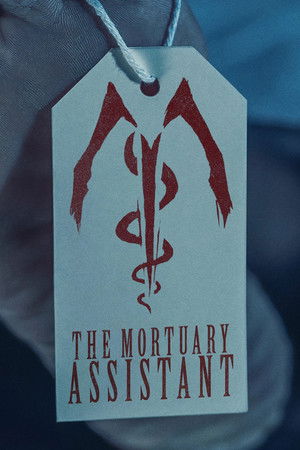
The Mortuary Assistant brought Kipp to one of the most recognizable horror properties of his career. Based on Brian Clarke's independent video game, the film follows mortuary worker Rebecca Owens during a night shift in which embalming procedures, demonic activity and her own troubled past begin to converge. Epic Pictures approached Kipp after its experience with Slapface, and Clarke was involved in the process of selecting the director. Kipp had not initially been looking for a video-game adaptation, but he responded to the game's characters, confined setting and sustained atmosphere of anticipated danger.
Kipp's approach was to translate the player's identification with Rebecca into cinematic point of view rather than attempting to reproduce gameplay literally. He compared the emotional mechanism to audience identification with a horror protagonist, where viewers mentally participate in decisions even though they cannot control the character. He also viewed the supernatural attacks through Rebecca's history of addiction, guilt, depression and self-destructive impulses, giving the demonic material a psychological dimension without reducing it to metaphor alone. Creator Brian Clarke remained closely involved through script development, production and post-production, an unusually direct collaboration between the source game's creator and the film team.
Released theatrically in 2026 and later on Shudder, The Mortuary Assistant brought together several qualities Kipp had been developing for years: limited spaces, vulnerable protagonists, slow-building dread, practical work environments and supernatural horror rooted in personal damage. The film was larger and more visible than many of his earlier projects, but its underlying method remained close to the intimate horror of Slapface. His 2026 directing credit Faceless, a Cambodian horror adventure about a medium and a ghost-hunting group confronting an entity that erases victims' faces, further showed his continued engagement with supernatural genre filmmaking during his final year.
Style, Recurring Collaborators and Place in Independent Horror
Kipp's horror career is best understood through continuity rather than through a single subgenre. Body horror, slashers, Lovecraftian science fiction, folklore, witch stories, demonic possession and creature features all appear in his work, but they are repeatedly organized around people whose emotional defenses are already weakened. Children, grieving families, isolated workers and damaged adults recur because Kipp's monsters are most effective when they enter a life that is already unstable. His films frequently use physical places as extensions of that instability: woods, decaying rooms, rural homes, mortuary spaces and environments that feel cut off from ordinary social protection.
Collaboration was equally central. Dominick Sivilli was the most persistent visual partner across Kipp's horror career, from early shorts through later features. Alan Rowe Kelly and Bart Mastronardi were part of the East Coast independent horror community that helped shape his early production network. Lukas Hassel appeared in multiple Kipp-directed genre projects, including The Minions and both versions of Slapface. Katie Dillon became a recurring editor on features including Black Wake, Slapface and The Geechee Witch. Jerry Janda's writing on Painkiller and Black Wake formed another important horror-specific partnership.
Kipp's significance is therefore not based on blockbuster scale or on creating a long-running franchise. It lies in a sustained body of independent horror work made across more than two decades, in his movement between crew positions and directing, and in the way smaller films could lead directly to larger opportunities without severing the collaborative relationships that formed his style. From Contact to Slapface and The Mortuary Assistant, his strongest horror work consistently treated atmosphere and character as mutually dependent rather than separate concerns.