


2025
Lance Henriksen
Horror Actor · Biography · Horror Filmography · Collaborators · Credits
Horror subgenres & themes
Most represented across this person's horror filmography:
BODY HORROR
• ANIMAL
• MEDICAL
• MONSTER
Biography
Lance Henriksen and the Human Edge of Science-Fiction Horror
Lance Henriksen became one of the most recognizable character actors in modern horror and science-fiction without ever depending upon one single monster, franchise or type of role. His face, weathered voice and restrained physical presence made him equally convincing as police officers, androids, grieving fathers, occult investigators, corporate figures and men whose authority gradually collapses under supernatural pressure. Across decades of genre cinema, Henriksen repeatedly occupied the space between ordinary humanity and something unknowable standing just beyond it.
His horror career is unusually broad. He moved through religious horror in Damien: Omen II, creature cinema with Piranha II: The Spawning, technological apocalypse in The Terminator, extraterrestrial horror in Aliens, vampire mythology in Near Dark, rural supernatural tragedy in Pumpkinhead, Gothic horror with The Pit and the Pendulum, serial-killer mythology in Millennium and later franchise work ranging from Scream 3 to Alien vs. Predator and Hellraiser: Hellworld. Few actors have travelled through so many different branches of modern horror while retaining such an immediately recognizable presence.
Before Horror
Henriksen was born in New York City in 1940 and reached professional acting later than many of his contemporaries. His early screen career developed through supporting roles in films such as Dog Day Afternoon, Network and Close Encounters of the Third Kind, often playing policemen, government agents or other figures whose authority could be communicated quickly through posture and voice.
That ability became extremely useful once Henriksen began moving into horror. He could enter a strange or supernatural story while remaining completely grounded. Even when the film around him became increasingly extraordinary, Henriksen rarely appeared to perform “horror” in an exaggerated way. His characters generally behave as though the danger is real, which gives the surrounding fantasy more weight.
Mansion of the Doomed and Early Horror
One of Henriksen's earliest horror films was Mansion of the Doomed (1976), a grim medical horror story involving a surgeon whose attempts to restore his daughter's sight lead to grotesque experimentation. The film belongs to a particularly physical tradition of 1970s horror in which medicine, bodily violation and obsession become nearly indistinguishable.
Although Henriksen had not yet become a genre star, the production connected him with makeup artist Stan Winston years before their most famous collaboration. That early intersection would become unexpectedly important as both men moved deeper into creature and effects-driven filmmaking.
Damien: Omen II and Apocalyptic Horror
Damien: Omen II (1978) placed Henriksen inside one of the major supernatural franchises of the decade. The sequel follows the Antichrist Damien Thorn as he becomes increasingly aware of his identity and power. Henriksen appears as Sergeant Neff, one of the military-school figures surrounding the young Damien.
The role is relatively contained, but the film helped establish Henriksen within professional studio horror at a moment when religious and apocalyptic themes were commercially powerful. The experience also demonstrated how naturally he could inhabit stories where ordinary institutions are gradually revealed to be useless against supernatural forces.
Piranha II and James Cameron
Piranha II: The Spawning became historically important less for the film itself than for the professional relationship it created between Henriksen and James Cameron. Henriksen plays police chief Steve Kimbrough in a story about genetically altered flying piranhas terrorizing a Caribbean resort.
The troubled production became Cameron's first feature directing experience, and Henriksen would later become one of the recurring actors associated with Cameron's early career. Their collaboration developed far beyond the modest creature sequel that first brought them together.
Henriksen's value to Cameron was straightforward: he could suggest intelligence, danger and authority almost immediately. That combination allowed the director to use him very differently in subsequent films while maintaining the same underlying seriousness.
The Terminator and the Man Who Might Have Been the Machine
Henriksen returned for Cameron's The Terminator (1984) as LAPD detective Hal Vukovich. The role places him on the human side of a story dominated by an apparently unstoppable killing machine sent backward through time.
Henriksen had been considered during the early development of the Terminator itself, and his lean physical presence helped shape some of Cameron's thinking about what the infiltrating machine might look like before Arnold Schwarzenegger ultimately took the role. Although Henriksen instead became Vukovich, the connection reveals how closely he was associated with Cameron's developing visual world.
Within the finished film, Henriksen provides another version of the grounded authority figure. Vukovich initially belongs to a police system unable to understand what it is facing. The Terminator's assault on the station then violently demonstrates how useless conventional institutional protection becomes once the machine enters the building.
Aliens and Bishop
Aliens (1986) gave Henriksen the role most permanently associated with his career. Bishop is introduced as the synthetic crew member aboard the Sulaco, immediately placing him in the shadow of Ash, the android whose betrayal defined one of the most disturbing revelations in Ridley Scott's original Alien.
Cameron and Henriksen deliberately moved in the opposite direction. Bishop initially appears suspicious because the audience understands what an android may represent, yet he gradually becomes one of the most reliable members of the group. His artificial nature does not prevent loyalty, courage or empathy. In a story filled with heavily armed humans, the synthetic character frequently behaves with greater moral clarity than the corporate representatives surrounding him.
Henriksen plays Bishop with extraordinary restraint. His speech is calm, his movements precise and his facial expressions controlled without becoming completely mechanical. The performance allows the audience to recognize that he is artificial without reducing him to an obvious robot.
Bishop's final mutilation by the Alien Queen became one of the film's most memorable practical-effects sequences. Torn in half yet still functioning, he remains committed to helping Ripley and Newt survive. The image reinforces the central irony of the character: the artificial person becomes one of the most humane figures in the film.
Stan Winston and the Creature Tradition
Aliens also placed Henriksen inside the effects world of Stan Winston, whose team created the Alien Queen and numerous creature effects for the film. The relationship between actor and effects artist soon became far more direct when Winston moved into feature directing.
Henriksen's genre career repeatedly intersected with filmmakers and technicians whose work depended upon practical creatures existing physically on set. This suited his performance style. Rather than acting against an abstract concept, he could respond to objects, prosthetics and performers occupying the same environment.
That tradition became especially important in Pumpkinhead, where Winston moved from effects design into the director's chair and Henriksen became the human center of the story.
Near Dark and the Vampire Family
Kathryn Bigelow's Near Dark (1987) gave Henriksen one of his defining horror characters. He plays Jesse Hooker, the leader of a nomadic group of vampires travelling through the American landscape in stolen vehicles and surviving through violence.
The film avoids much of the traditional Gothic vocabulary associated with vampires. There are no castles, formal aristocrats or theatrical capes. Instead, Bigelow presents vampirism through highways, bars, cheap rooms and isolated rural spaces, combining horror with the visual language of westerns and outlaw cinema.
Henriksen's Jesse is particularly effective because he does not need to prove his authority loudly. He behaves like someone who has survived for a very long time and expects the others to recognize that experience. The character suggests an enormous history without the film needing to explain every part of it.
Bill Paxton and Jenette Goldstein, both coming from Aliens, joined Henriksen in the vampire family. Their presence created an informal continuation of the ensemble chemistry established in Cameron's film while placing the performers inside a completely different kind of horror.
Pumpkinhead and Ed Harley
Pumpkinhead (1988) gave Henriksen one of his strongest leading roles and provided Stan Winston with his feature directorial debut. Henriksen plays Ed Harley, a rural shopkeeper and single father whose young son is accidentally killed by a group of visiting teenagers.
Overcome by grief, Harley seeks out a witch and asks for revenge. The ritual summons Pumpkinhead, a demonic creature that begins hunting the people responsible. The central horror does not come simply from the monster's appearance. It comes from Harley discovering that vengeance has connected him spiritually to the creature and forced him to experience the murders he requested.
Henriksen gives the film emotional gravity. Harley is neither an uncomplicated hero nor a conventional villain. His decision is understandable because it comes from unbearable grief, yet the consequences become increasingly horrifying as revenge moves beyond human control.
The relationship between Henriksen and Tom Woodruff Jr., who performed Pumpkinhead while also working within Winston's effects team, gives the film an unusual physical connection between protagonist and monster. The demon gradually becomes less an external creature than an embodiment of Harley's own rage.
The Pit and the Pendulum
Henriksen entered Gothic horror directly in Stuart Gordon's The Pit and the Pendulum (1991). Rather than playing another wounded protagonist, he became Torquemada, the Grand Inquisitor whose religious authority masks psychological repression and cruelty.
The role allows Henriksen to use the same severity that often made him convincing as police officers or military figures and redirect it toward fanaticism. Torquemada believes deeply in the structure that gives him power, making his brutality more unsettling than simple theatrical villainy.
The film combines Edgar Allan Poe imagery with the history and mythology of the Spanish Inquisition, creating another example of Henriksen's ability to move between radically different horror traditions without losing credibility.
Alien³ and the Changing Meaning of Bishop
Henriksen returned to the Alien universe in Alien³ (1992). The damaged remains of Bishop appear early in the film, allowing Ripley a final conversation with the synthetic companion who had survived the previous story only in fragments.
Henriksen also appears later as a human figure connected to the Weyland-Yutani expedition arriving on Fiorina 161. The deliberate resemblance complicates the relationship between human creator, corporate power and synthetic image without requiring the film to explain everything completely.
The return demonstrates how closely Henriksen had become identified with the visual language of the franchise. Even when Bishop could no longer function as a continuing protagonist, Henriksen's face remained useful as a symbol of the relationship between humanity, technology and corporate control.
Man's Best Friend and 1990s Creature Horror
Man's Best Friend (1993) returned Henriksen to laboratory horror through the role of Dr. Jarret, the scientist responsible for a genetically engineered dog whose apparent intelligence conceals increasingly dangerous biological modifications.
The film belongs to the long horror tradition in which scientific ambition creates an organism that cannot remain safely controlled. Henriksen again occupies the authority position, but unlike Bishop or Ed Harley, Jarret knows significantly more than the people around him and carries responsibility for the threat.
Roles of this kind became increasingly common during the 1990s because Henriksen could communicate questionable authority without immediately revealing whether a character should be trusted.
Millennium and Frank Black
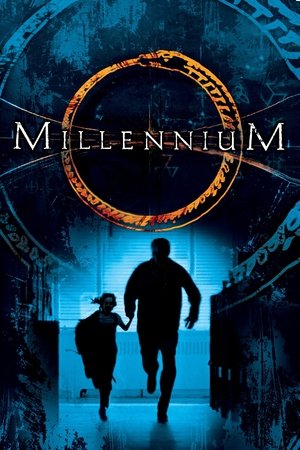
Television gave Henriksen one of the deepest roles of his career with Millennium, created by Chris Carter and first broadcast in 1996. Henriksen plays Frank Black, a former FBI profiler whose ability to understand violent offenders is presented through disturbing visual impressions that blur the boundary between psychological intuition and something more mysterious.
The series occupies an unusual space between crime procedural, serial-killer horror, apocalyptic mythology and supernatural drama. Frank investigates violence with an empathy that makes his gift as much a burden as an advantage. Understanding murderers requires him to enter mental spaces he would rather avoid.
Henriksen's restrained style is essential to the character. Frank rarely needs dramatic speeches to communicate exhaustion or fear. The horror accumulates through the sense that he has spent too long looking directly at what human beings are capable of doing to one another.
As the series developed, apocalyptic and supernatural elements became increasingly important, connecting Frank's personal investigations to anxieties surrounding the approaching millennium. The role gave Henriksen far more time than a feature film could provide to explore the psychological consequences of living permanently beside horror.
Scream 3 and the Meta-Horror Era
Henriksen entered another major horror franchise with Scream 3 (2000), playing film producer John Milton. By this point the Scream series had made horror history itself part of its subject, constructing mysteries around characters who understand slasher conventions and the movie industry that produces them.
Casting Henriksen inside that environment carried an additional genre resonance. He belonged to the generation of actors whose careers had helped create the horror history that the Scream films continually referenced and deconstructed.
Milton also connects the film's contemporary murders to an older and uglier history within Hollywood, making the producer another example of Henriksen's recurring ability to embody institutional authority with hidden consequences.
Alien vs. Predator and Charles Bishop Weyland
Alien vs. Predator (2004) returned Henriksen to the franchise in a new role as industrialist Charles Bishop Weyland. The casting deliberately uses the audience's memory of Bishop, suggesting an ancestral human image behind the synthetic form seen in the earlier films.
Weyland is physically vulnerable and aware of his mortality, making him almost the inverse of the artificial Bishop. He enters the Antarctic expedition hoping to leave behind something significant before his health fails, only to encounter two extraterrestrial species whose conflict reduces human ambition to something very small.
The film allowed Henriksen to connect several layers of genre history at once. His face belonged to Aliens, while the new story combined the Alien mythology with Predator and transformed familiar franchise elements into a shared monster universe.
Tom Woodruff Jr., Alec Gillis and Practical Creature Horror
Tom Woodruff Jr. and Alec Gillis became important recurring figures in the practical-effects world surrounding Henriksen. Their careers emerged from the Stan Winston tradition before they developed their own long history designing and performing creatures throughout modern genre cinema.
Woodruff's direct connection with Henriksen stretches from performing Pumpkinhead to appearing as Alien creatures within later franchise films. Gillis likewise worked across the effects side of the Alien universe before eventually directing Henriksen in Harbinger Down.
The collaborations are significant because Henriksen remained strongly associated with a form of science-fiction horror in which creatures possess actual weight, texture and physical presence. Practical effects were not simply technical achievements around his performances; they shaped the way actors could interact with the threat.
Harbinger Down and the Practical-Effects Tradition
Harbinger Down (2015), directed by Alec Gillis, consciously returned to practical creature horror inspired by films such as The Thing. Henriksen plays Graff, captain of a vessel whose crew encounters a frozen biological threat capable of grotesque transformation.
The casting gives the project a direct connection to the era of effects-driven horror it celebrates. Henriksen had already acted opposite some of the most influential practical creatures of the 1980s and 1990s, so his presence carries history before the new monster even appears.
The film demonstrates why Henriksen remained such a natural figure within independent genre cinema. He does not treat the smaller scale as a reason to reduce commitment. The same seriousness that grounded Aliens or Pumpkinhead can be used to make an intentionally old-school creature feature feel substantial.
A Career Built Across Horror Subgenres
Henriksen's horror filmography became enormous partly because he rarely restricted himself to one kind of production. He appeared in studio franchises, independent creature films, direct-to-video sequels, television horror and experimental genre hybrids. The quality and scale of the projects varied enormously, but his performances generally retained the same commitment to treating the fictional circumstances seriously.
That consistency made him particularly valuable to lower-budget horror. A filmmaker could place Henriksen inside an unusual supernatural premise and immediately gain a sense of history and authority. Audiences familiar with his earlier work understood that he belonged naturally within worlds of monsters, conspiracies, apocalyptic visions and damaged people.
His credits consequently became a map through several decades of genre change. Classical religious horror gives way to 1980s creature effects, cybernetic science fiction, vampire revisionism, 1990s serial-killer mythology, self-aware slashers and twenty-first-century franchise crossovers without Henriksen ever appearing entirely displaced by the next trend.
Lance Henriksen's Horror Legacy
Lance Henriksen never needed one definitive monster role because his contribution to horror rests on something broader: credibility. He can look at an impossible creature, a supernatural vision or a dying android and make the situation feel physically real. That quality allowed directors with radically different styles to use him as an anchor while the world around the character became increasingly strange.
James Cameron gave him Bishop, one of science-fiction horror's most sympathetic artificial beings. Kathryn Bigelow transformed him into an ancient vampire outlaw in Near Dark. Stan Winston placed grief at the center of Pumpkinhead. Stuart Gordon turned his severity toward religious fanaticism. Chris Carter used his introspection to build the haunted psychology of Frank Black. Later filmmakers repeatedly returned to Henriksen because those performances had already demonstrated how effectively he could bring emotional weight to genre material.
His strongest recurring collaborators also reveal how deeply his career is connected to the physical craft of horror. Stan Winston, Tom Woodruff Jr. and Alec Gillis represent generations of practical creature work, while Walter Hill, Gordon Carroll and David Giler connect Henriksen to the industrial history of the Alien franchise. He exists at the meeting point between actor, monster, effects artist and producer.
Across that history, Henriksen's characters are often men confronting forces larger than themselves. Some respond with courage, some with obsession, some with authority and some with terrible mistakes. What remains constant is the sense that the fear matters. Lance Henriksen rarely stands outside horror commenting on it. He enters the nightmare, believes in it completely and gives the audience permission to believe in it too.
Photos (8)
Images: TMDB
Selected Work
Notable Horror Collaborators
Notable collaborators and creative partners throughout Lance Henriksen's horror career.
 Stan Winston
Defining Horror Director & FX Collaborator
Winston directed Henriksen in Pumpkinhead and remained closely connected to the creature-driven films that defined much of his genre career.
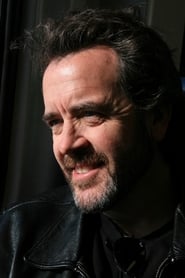 Tom Woodruff Jr.
Defining Creature Collaborator
Woodruff repeatedly shared Henriksen's creature-horror world, from Pumpkinhead and the Alien franchise to Harbinger Down.
 Walter Hill
Recurring Genre Producer
Hill repeatedly intersected with Henriksen through the Alien series, helping anchor several major chapters of his science-fiction horror career.
GC
Gordon Carroll
Defining Alien Producer
Carroll helped carry Henriksen and Bishop through multiple stages of the Alien mythology and its later expansion.
DG
David Giler
Defining Alien Creative Partner
Giler's writing and producing work repeatedly connected Henriksen to the evolving mythology of the Alien franchise.
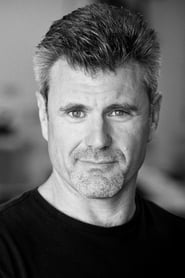 Alec Gillis
Creature FX Collaborator
Gillis connected Henriksen's Alien history with later practical-effects horror and eventually directed him in Harbinger Down.
Lance Henriksen Horror Movies
Acting (82 credits)
2021
2021
2021
2020
2019
2018
2018
2018
2018
2017
2017
2017
2017
2016
2016
2016
2016
2015
2015
2014
2014
2014
2014
2014
2013
2013
2013
2013
2012
2011
2011
2010
2009
2009
2009
2009
2009
2008
2008
2008
2008
2008
2008
2007
2007
2006
2006
2006
2006
2006
2005
2005
2004
2004
2004
2004
2004
2004
2003
2003
2003
2002
2002
2001
2001
2000
1996
1995
1993
1992
1991
1989
1989
1988
1987
1986
1983
1982
1979
1978
1976