



2026
Richard Band
Horror Music & Sound · Biography · Horror Filmography · Collaborators · Credits
Horror subgenres & themes
Most represented across this person's horror filmography:
EVIL DOLL
• BODY HORROR
• MONSTER
• SLASHER
Biography
Richard Band and the Sound of American Cult Horror
Richard Band is one of the composers most closely associated with American independent horror from the 1980s onward. His career developed in a production world where films were often made quickly and with limited budgets, yet Band repeatedly approached them as if their music deserved the scale, thematic detail and dramatic seriousness of much larger productions. That philosophy became central to his identity. Films such as Re-Animator, From Beyond, Ghoulies, Troll, TerrorVision, Puppet Master, Bride of Re-Animator, The Pit and the Pendulum and Castle Freak gave him a body of horror work that is unusually recognizable across several different styles, from grotesque horror comedy and Lovecraftian body horror to Gothic terror, killer puppets and creature features.
Band has composed music for well over one hundred film and television projects, but horror and fantastic cinema became the area in which his musical personality was most consistently heard. He was willing to use large orchestral gestures for films whose production values might otherwise have suggested a more disposable approach, and he also became increasingly comfortable combining acoustic instruments with synthesizers and electronic textures as technology and budgets changed. The result was not a single fixed Richard Band sound. His horror scores could be playful, melancholy, abrasive, romantic, ceremonial or grotesque, depending on the film. What remained consistent was an emphasis on memorable themes and on music that gave the fictional world an identity beyond simply marking shocks.
Early Film Music and the Road to Horror
Band developed an interest in music before establishing himself as a film composer. He has recalled becoming fascinated with guitar after encountering flamenco music in Spain, later studying music more formally after returning to the United States. His entry into scoring came with Laserblast, made with composer Joel Goldsmith. The project began a professional path that soon became increasingly connected to science fiction, fantasy and horror, genres in which strongly defined musical ideas could compensate for limited resources and help create worlds that the productions themselves could not always show at great scale.
That principle became particularly important during the early 1980s. The House on Sorority Row placed Band inside the slasher cycle but gave him an opportunity to treat the material with greater musical weight than a purely functional suspense score might have provided. Other genre assignments followed, including Parasite, The Alchemist and The Dungeonmaster. These films were very different from one another, but they helped establish Band as a composer who could move easily between supernatural horror, monsters, science fiction and fantasy while retaining a strong thematic approach.
The emerging Empire Pictures environment became crucial to this period. Low-budget genre production was expanding rapidly, and films needed music that could establish tone immediately. Band did not regard limited budgets as a reason to make the score aesthetically cheap. He has repeatedly explained that he wanted orchestral music to raise the perceived production value of the films he scored. That ambition became especially visible in the middle of the decade, when a remarkable concentration of cult horror projects placed his work alongside creatures, practical effects, black comedy and increasingly graphic violence.
Ghoulies, Troll and TerrorVision
Ghoulies became one of the clearest early examples of Band working within the creature-driven horror that would define a significant part of the Empire Pictures identity. The film combines demonic ritual, diminutive monsters and comedy, and Band approached that mixture without reducing the music to parody. His score gives the supernatural material genuine weight while leaving room for the increasingly bizarre personality of the creatures. This balance between taking the fictional world seriously and recognizing the eccentricity of the film would become important elsewhere in his career.
Troll allowed Band to work in a more openly fantastic register. He developed the song Cantos Profanae before the film had been shot, using the script and his own imagination to establish a musical language that could influence the rest of the score. The process illustrates how Band often treated thematic material as part of the architecture of a film rather than as decoration added after editing. The fantasy elements of Troll are lighter than the body horror of his Lovecraft adaptations, yet the film remains part of the same period in which practical creatures, dark fairy-tale imagery and offbeat horror increasingly became associated with his music.
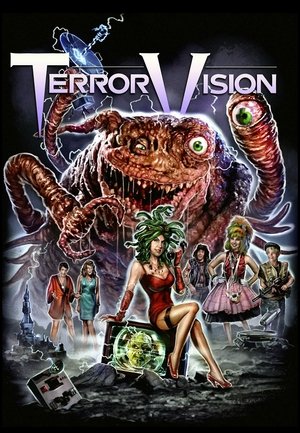
TerrorVision pushed the comic side even further. Its grotesque alien monster, satirical suburban setting and deliberately exaggerated visual style required a score capable of participating in the joke without undermining the horror completely. Together, Ghoulies, Troll and TerrorVision demonstrate that Band was already developing several different responses to horror comedy before his best-known collaboration with Stuart Gordon. He could write for monsters as threats, as tragic or fantastical beings, or as parts of deliberately outrageous genre worlds.
Re-Animator and a Signature Horror Score
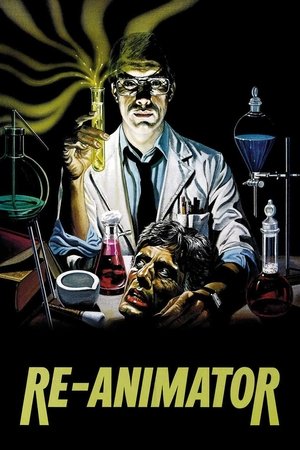
Re-Animator became the most important horror score of Richard Band's career and one of the defining collaborations between music and image in 1980s cult horror. Stuart Gordon's adaptation of H.P. Lovecraft combines graphic dismemberment, resurrection, sexual grotesquerie and increasingly absurd black comedy. The original expectation was that the film would receive a more conventionally severe horror score, but Band argued that treating every scene with unbroken seriousness would make the extreme material harder rather than easier for an audience to process. He wanted the music to function partly as a release valve, acknowledging that the film had a darkly comic energy even while the images became more violent.
The resulting score deliberately invokes Bernard Herrmann, particularly the musical vocabulary associated with Alfred Hitchcock's Psycho. Band did not hide the reference. The familiar sense of stabbing string movement is reshaped around his own thematic material and rhythmic ideas, creating a score that can sound classical, macabre and mischievous within the same sequence. Band has described using recurring musical gestures to signal that Herbert West is about to create another disaster, giving the character an almost musical behavioral pattern. Rather than merely warning the audience that danger is approaching, the motifs make the escalating experiments feel like part of a grotesque performance.
The strategy proved especially well suited to Jeffrey Combs' performance as Herbert West. The character is obsessive, controlled and often emotionally detached even while the world around him becomes increasingly chaotic. Band's music provides a complementary layer, allowing menace and absurdity to coexist instead of forcing the film into a single emotional category. The soundtrack became inseparable from the cult identity of Re-Animator, and its endurance has grown with the film. Decades later, the Sitges Film Festival described Band's work on the film as one of the most recognizable and influential soundtracks in genre cinema when celebrating the fortieth anniversary of Re-Animator.
The film also established the most significant directorial collaboration of Band's horror career. Stuart Gordon would repeatedly return to him for projects that demanded different musical solutions. Their partnership was never limited to reproducing the sound of Re-Animator. Instead, each new film tested how Band could retain a strong musical identity while responding to a different kind of horror.
From Beyond and Lovecraftian Body Horror
From Beyond reunited Band with Gordon and producer Brian Yuzna for another Lovecraft-derived story, but the musical problem was substantially different. Where Re-Animator benefits from nervous humor and recognizable thematic play, From Beyond is more overtly concerned with altered perception, sexualized mutation and the breakdown of the human body. Band responded with a darker and more textural score that combined electronic sound with a relatively small orchestra dominated by strings and percussion.
The integration of electronics was important. Band did not want the synthesized and orchestral elements to sound as though they belonged to two separate musical worlds. Instead, they were designed to merge, producing an unstable sonic environment suitable for a film in which a machine opens access to another dimension and begins changing the people exposed to it. The score helps transform the laboratory from a physical room into a space where perception itself becomes threatening. Electronics suggest something unnatural and difficult to locate, while the strings preserve the emotional and dramatic force of traditional horror scoring.
From Beyond also demonstrates how Band's collaborations were embedded inside a recurring group of horror filmmakers and craftspeople. Gordon directed, Yuzna produced, Mac Ahlberg photographed the film, Jeffrey Combs returned as a central performer, and John Carl Buechler contributed to its special-effects world. Band's music became one element within a larger practical and visual style that defined a significant branch of 1980s American body horror.
Dolls, Gothic Fantasy and The Pit and the Pendulum
Band's next projects with Stuart Gordon showed how far their collaboration could move from the particular tone of Re-Animator. Dolls is a dark fairy tale built around murderous toys, an isolated house and a morality structure in which cruelty is punished through fantasy. Band could therefore draw more strongly on childlike and storybook associations without abandoning menace. The film sits naturally beside his other creature and puppet-related work, but its Gothic atmosphere required a different balance between wonder and threat.
The Pit and the Pendulum allowed Band to move into period horror. Set against the Spanish Inquisition and inspired by Edgar Allan Poe, the film encouraged a more explicitly classical and ceremonial score. Band used orchestra, choir and vocal writing to give the religious and historical setting weight. He has described the project as particularly inspiring, with the combination of choir, bass and baritone voices helping create the oppressive spiritual atmosphere surrounding the Inquisition. The finale expands those ideas into an extended sequence in which orchestral and choral writing carry the film toward its conclusion.
The score is significant because it illustrates a recurring feature of Band's horror work. His music often treats the setting as seriously as the monster or killer. A mortuary laboratory, a Gothic castle, a puppet theater or an Inquisition prison each suggests a different musical history. Band rarely relied on a generic horror vocabulary when a more specific thematic or instrumental idea could give the film its own identity.
Puppet Master and the Musical Identity of Full Moon Horror
Puppet Master created the other major musical legacy of Band's horror career. By the time the film appeared in 1989, electronic technology was becoming increasingly practical for low-budget scoring. Band had spent much of his earlier career thinking orchestrally, so the project became a transitional point in which he attempted to preserve orchestral construction while working more extensively with electronic sounds and samples. What mattered most was not technological realism but the strength of the theme.
The central Puppet Master idea is built around a waltz. Band connected that triple-meter movement to the European background of André Toulon and to the period atmosphere surrounding the puppets' origins. He also wanted the theme to contain sadness. The puppets were not conceived musically as simple embodiments of evil. Their existence carries tragedy, memory and the suggestion of souls trapped inside artificial bodies. A slight circus quality acknowledges their physical nature as performing objects, while the melancholy prevents the theme from becoming merely whimsical.
That combination gave the franchise a musical identity strong enough to survive far beyond the first film. Band continued scoring entries in the series, and the main theme remained associated with Puppet Master even as directors, stories, budgets and production methods changed. For a direct-to-video horror franchise built around a group of distinctive killer puppets, the music became a major source of continuity. Band himself has noted that audiences often regard the theme and the films as difficult to separate.
The importance of Puppet Master also lies in what it represented for the economics of independent horror. A memorable musical signature could make a small production feel like part of a larger mythology. That lesson would become increasingly useful as Full Moon Entertainment developed a catalogue built around recurring monsters, sequels and interconnected cult properties.
Bride of Re-Animator, Demonic Toys and 1990s Horror
The 1990s allowed Band to extend several of the horror relationships established during the previous decade. Bride of Re-Animator returned to Herbert West under the direction of Brian Yuzna. The sequel expands the obsession with assembling life from dead tissue, and Band's involvement preserves a musical connection to the original while responding to a film whose grotesque inventions become even more elaborate. The continuity was valuable because Herbert West had already acquired a distinctive musical identity through Band's first score.
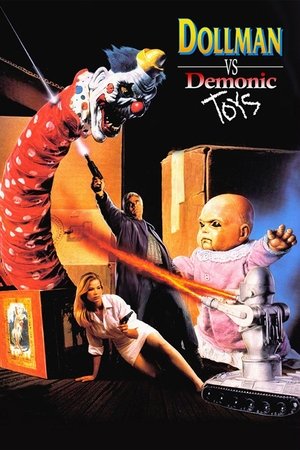
His horror work during the decade spread well beyond the Lovecraft cycle. Silent Night, Deadly Night 4: Initiation connected him again with Yuzna in a story built around occult transformation and body horror. The Resurrected, directed by Dan O'Bannon and derived from Lovecraft's The Case of Charles Dexter Ward, returned Band to cosmic and Gothic material without simply repeating his Gordon scores. Demonic Toys fit naturally within the Full Moon universe of animated objects and monstrous characters, while projects such as Seedpeople continued his association with creature-centered horror.
These assignments demonstrate why Band became such a useful composer for low-budget genre production. He could provide continuity to recurring properties without making every film sound identical. A franchise theme could be retained when necessary, while new films could receive their own harmonic, instrumental or thematic identities. That adaptability was particularly important for companies producing several horror titles each year.
Castle Freak and Chamber Horror
Castle Freak reunited Band with Stuart Gordon in 1995 and produced one of their most restrained and emotionally severe collaborations. The film abandons much of the overt humor associated with Re-Animator and centers on a damaged family, an inherited Italian castle and a deformed prisoner whose existence has been concealed for years. Gordon suggested an approach centered primarily on strings, recalling the restricted instrumentation Bernard Herrmann had used for Psycho.
Band turned that limitation into the foundation of the score. String writing gives the ancient castle an austere, almost classical character, but the same instrumental family can become violent when the horror erupts. String quartet material adds intimacy and tragedy, while aggressive attacks and percussion can turn the texture into something physically abrasive. This dual function mirrors the monster himself. Giorgio is dangerous, but the film gradually reveals a history of abuse and imprisonment that makes the horror inseparable from suffering.
The score therefore does not simply announce the creature as an external threat. It participates in the film's mixture of grief, family collapse and Gothic violence. Castle Freak is one of the clearest examples of Band working with reduced resources and still creating a score with a strong individual identity. It also shows the range of the Gordon partnership: the same composer-director relationship that produced the manic energy of Re-Animator could later produce music based on restraint, chamber textures and tragedy.
Masters of Horror and Dreams in the Witch House
Band returned to Stuart Gordon and Lovecraft in the Masters of Horror episode Dreams in the Witch House. The project connected several strands of his career: horror television, Lovecraft adaptation and a long-running creative relationship with Gordon. By this stage Band had decades of experience moving between acoustic and electronic scoring, and the episodic format required the music to establish an elaborate supernatural world within a much shorter running time than a feature film.
The score received a Primetime Emmy nomination for Outstanding Music Composition for a Series, one of the clearest instances of institutional recognition for Band's horror work. The nomination is significant because it came from precisely the kind of material most closely associated with his career rather than from an attempt to distance himself from genre filmmaking. A composer whose reputation had been built through cult horror, direct-to-video production and independent fantasy received major television recognition for another supernatural story connected to H.P. Lovecraft.
Later Horror Work and the Survival of the Richard Band Sound
Band continued working in horror long after the production landscape that created Empire Pictures and early Full Moon had changed. Later projects include films such as Shiver, Nightmare Cinema, Necropolis: Legion, Exorcism at 60,000 Feet, The Deep Ones and Don't Let Her In, along with renewed involvement in Full Moon properties and stories connected to long-established cult franchises. His later work demonstrates that his association with horror was not confined to nostalgia for the 1980s.
The continuing circulation and reissue of his earlier scores has also strengthened their status as independent works. Music from Re-Animator, From Beyond, Ghoulies, Troll, TerrorVision, Puppet Master and Castle Freak has remained available through soundtrack releases and collector editions. This matters in horror culture because many low-budget films of the period were originally produced without any expectation that their music would still be discussed decades later. Band's scores survived because they frequently possessed recognizable themes and structures independent of the films' production limitations.
Style, Collaboration and Richard Band's Place in Horror Music
Richard Band's contribution to horror music is defined by the tension between economy and ambition. Many of the films that made his reputation were independent productions operating far below major-studio budgets. His response was often to make the music more sophisticated rather than less. Orchestra, choir, chamber ensembles and later electronics could all be used to increase the scale of the imagined world. Even when technological limitations forced a greater reliance on synthesized sound, he continued thinking in terms of themes, motifs and orchestral relationships.
He also understood that horror does not always benefit from music that simply insists that the audience should be frightened. Re-Animator required quirkiness because relentless seriousness would have fought against the film's grotesque humor. Puppet Master required melancholy because its puppets carried tragedy as well as menace. Castle Freak required strings capable of expressing both violence and sadness. The Pit and the Pendulum demanded choral weight appropriate to religious oppression and historical setting. From Beyond needed electronics and orchestra to merge because the horror itself concerned a breakdown between ordinary physical reality and another dimension.
That adaptability was reinforced by recurring collaborators. Stuart Gordon provided the most important directorial partnership, while Brian Yuzna repeatedly connected Band to projects where body horror and black comedy overlapped. Cinematographer Mac Ahlberg, effects artist and filmmaker John Carl Buechler, filmmaker Ted Nicolaou and actor Jeffrey Combs all belonged to the wider production network in which Band's music developed. Their repeated presence helps explain why a group of relatively modest independent productions acquired such a coherent cultural identity.
Band's position in horror history therefore rests not on one soundtrack alone, even though Re-Animator remains his signature achievement. His larger importance comes from helping give American independent horror a musical scale and personality it was not always expected to possess. Across Lovecraftian experiments, demonic creatures, killer puppets, Gothic castles and supernatural television, his scores treated low-budget horror as material worthy of distinctive composition rather than anonymous accompaniment.
Selected Work
Notable Horror Collaborators
Notable collaborators and creative partners throughout Richard Band's horror career.
 Stuart Gordon
Director Collaborator
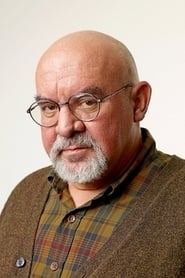
Band's defining horror director collaboration. Their work spans Re-Animator, From Beyond, Dolls, The Pit and the Pendulum and Castle Freak, followed by their reunion for Masters of Horror: Dreams in the Witch House.
 Brian Yuzna
Producer / Director Collaborator
A central creative figure in Band's Lovecraftian and body-horror period. Yuzna produced Re-Animator, From Beyond and Dolls, then directed Bride of Re-Animator and Silent Night Deadly Night 4: Initiation, all scored by Band.
 John Carl Buechler
Effects / Filmmaking Collaborator
One of the major practical-effects figures surrounding Band's Empire-era horror work. Their shared films include The Dungeonmaster, Ghoulies, Troll, TerrorVision, Re-Animator, From Beyond, Dolls, Seedpeople and The Caller.
 Ted Nicolaou
Filmmaking Collaborator
A long-running collaborator across the Empire and Full Moon eras. Nicolaou and Band share projects including The Day Time Ended, The Alchemist, The Dungeonmaster, Ghoulies, TerrorVision and Don't Let Her In.
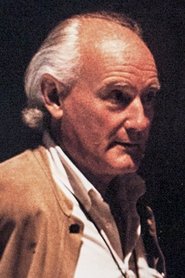 Mac Ahlberg
Cinematography Collaborator
A major visual collaborator across the same horror cycle in which Band established his orchestral genre sound. Their shared films include Parasite, The Dungeonmaster, Ghoulies, Re-Animator, From Beyond, Dolls and Prison.
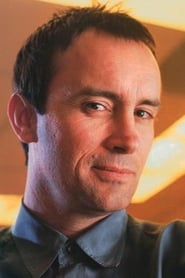 Jeffrey Combs
Acting Collaborator
A recurring performer at the center of Band-scored cult horror. Combs appears in Re-Animator, From Beyond, Bride of Re-Animator, The Pit and the Pendulum and Castle Freak, linking several of Band's most important genre scores.
Richard Band Horror Movies
Music & Sound (66 credits)
2025
2024
2023
2023
2022
2022
2022
2022
2021
2021
2021
2020
2019
2018
2018
2017
2016
2014
2013
2013
2012
2009
2008
2007
2007
2006
1998
1997
1996
1996
1994
1994
1993
1993
1993
1992
1992
1992
1992
1991
1991
1991
1990
1990
1990
1990
1990
1989
1988
1988
1987
1987
1986
1986
1986
1986
1985
1984
1984
1983
1982
1982
1980
1980
1978
Acting (2 credits)
2026
1976
Production (3 credits)
1986
1977
1976