



2013
Tobe Hooper
Horror Director · Biography · Horror Filmography · Collaborators · Credits
Horror subgenres & themes
Biography
Tobe Hooper and the Horror of Places That Should Never Feel Safe
Tobe Hooper made horror from environments that seem to have developed their own sickness. A farmhouse filled with bones and decomposing furniture, a roadside hotel built around a swamp, a carnival attraction hiding violence behind painted monsters, a suburban house invaded by forces beneath its foundations: his films repeatedly transform places into extensions of the people trapped inside them. The threat is rarely isolated to a single killer or creature. The entire environment seems contaminated, as though the walls, noise, heat and objects have joined the attack.
Hooper's horror is also unusually physical. Characters sweat, scream, collide with furniture, become overwhelmed by machinery and stumble through spaces that refuse to provide a clean escape. Even when relatively little blood is shown, as in The Texas Chain Saw Massacre, the experience can feel more violent than films containing far more explicit gore. Hooper understood that terror could be created through rhythm, sound, exhaustion and the sense that both character and audience were being pushed beyond a comfortable point.
His reputation rests heavily on two films, The Texas Chain Saw Massacre and Poltergeist, but the rest of his career reveals a much stranger filmmaker than those two titles alone suggest. He moved through Southern Gothic, television horror, carnival nightmares, science-fiction apocalypse, splatter comedy and supernatural stories while repeatedly returning to unstable families, predatory spaces and the grotesque underside of American normality.
Austin, Independent Film and the Road to Horror
Tobe Hooper was born in Austin, Texas, on January 25, 1943. His parents managed hotels and also owned a movie theatre in San Angelo, giving him an early connection with cinema that developed into formal film study at the University of Texas at Austin. His early work included shorts, documentaries and commercial filmmaking, experiences that taught him how to construct images with limited resources long before horror became the center of his career.
His first feature, Eggshells, was made independently in Austin and emerged from the counterculture of the late 1960s. The film is far removed from the disciplined terror of his later work, mixing everyday life, experimental imagery and surreal elements inside a loose portrait of young people inhabiting a communal house. Yet the interest in spaces occupied by unstable groups is already present, along with the feeling that ordinary reality may contain something irrational just beneath its surface.
Hooper also worked on documentary material, including a project involving the folk group Peter, Paul and Mary. This background in nonfiction and regional filmmaking became important when he turned toward horror. He did not approach The Texas Chain Saw Massacre from inside the established Hollywood industry; he approached it as a Texas filmmaker accustomed to small crews, local resources and images that could retain the texture of the real world.
The Texas Chain Saw Massacre and the Destruction of the American Road
The Texas Chain Saw Massacre (1974) begins with a journey through rural Texas and gradually turns the familiar American road into hostile territory. A group of young people travelling through the countryside encounter a landscape marked by slaughterhouses, abandoned property, economic decay and a family whose relationship with violence has become inseparable from its way of life. Hooper and co-writer Kim Henkel drew partly upon the crimes of Ed Gein, but the film creates its own mythology rather than attempting to reproduce Gein's case directly.
The Sawyer family is frightening because its members do not behave like invaders from another world. They appear to have grown naturally from the environment surrounding them. The house contains furniture built from human remains, the family's history is connected to slaughterhouse labor and Leatherface performs violence using tools associated with work rather than supernatural power. Industrial change and economic displacement hover behind the horror, suggesting a family whose skills have survived after the social world that once gave those skills a legitimate place has disappeared.
Leatherface became the film's most famous image, but Hooper does not initially present him as a conventional mastermind. He is enormous, dangerous and capable of sudden violence, yet he is also controlled and abused by the other members of his family. His masks change according to the role he is performing, making identity itself part of the disturbing household routine. He can appear as butcher, servant or grotesque domestic figure depending upon what the family requires from him.
The film is remarkably restrained in the literal amount of gore it shows. Much of its reputation for extreme violence comes from implication, sound design and the intensity with which Hooper traps the audience inside Sally Hardesty's experience. The camera emphasizes hooks, chainsaws, bones, screaming, metallic sounds and the oppressive Texas heat until the viewer begins to remember violence that the film never actually displays in detail.
The final pursuit pushes this method to its limit. Sally's escape becomes an almost abstract sequence of screaming, running and physical exhaustion, ending with Leatherface swinging his chainsaw against the sunrise after his victim has escaped. There is no restoration of order and no reassuring explanation. The film simply releases the audience after subjecting it to a world where normal social structures have ceased to provide protection.
Sound, Heat and the Physical Experience of Fear
Sound is one of the central reasons The Texas Chain Saw Massacre remains so disturbing. Hooper and Wayne Bell created a score built from metallic textures, industrial noises and abrasive sound rather than relying on conventional melodic horror music. The effect makes machinery itself seem hostile. The slaughterhouse, chainsaw and surrounding landscape appear to share the same mechanical nervous system.
Hooper repeatedly used sound as physical pressure throughout his career. Screams overlap machinery, dialogue disappears beneath noise and environments seem capable of attacking through volume. In Eaten Alive, the combination of cries, swamp sounds and mechanical textures turns the Starlight Hotel into an almost unbearable acoustic space. In The Texas Chainsaw Massacre 2, sound becomes even more exaggerated, matching the film's movement away from realism toward grotesque comedy.
This interest helps explain why Hooper's horror can remain effective even when individual effects have aged. The audience is not asked merely to observe a frightening object. Hooper tries to create an environment that affects the nervous system. His best films feel less like stories about people encountering horror than spaces through which viewers are forced to travel.
Eaten Alive and the Southern Gothic Nightmare
Hooper followed his breakthrough with Eaten Alive (1976), a film loosely inspired by the legend of Texas saloon keeper Joe Ball. Neville Brand plays Judd, the unstable proprietor of the Starlight Hotel, who murders guests and feeds bodies to a crocodile living in the swamp beside the building. Where The Texas Chain Saw Massacre achieved much of its power through documentary-like texture and rural daylight, Eaten Alive moves deliberately toward artificiality.
The film was largely constructed on a soundstage, allowing Hooper to flood the environment with unnatural reds, purples and sickly light. The hotel no longer resembles a location discovered by a camera crew; it looks like a feverish theatrical construction designed by the mind of the man who occupies it. This artificiality would become another important side of Hooper's style, showing that the rough realism of Chain Saw was a choice rather than the only visual language available to him.
The cast includes performers who would become closely associated with horror, including Marilyn Burns and a young Robert Englund. Yet the central attraction is the environment itself. Judd moves through the hotel like an extension of the building, surrounded by noise, animals and decaying surfaces. Hooper transforms another isolated business into a private universe where ordinary rules have been replaced by the obsessions of its owner.
Salem's Lot and Horror Entering the American Home
Hooper moved into television with Salem's Lot (1979), adapting Stephen King's novel into a two-part miniseries. The story follows writer Ben Mears as he returns to a small Maine town and gradually discovers that vampirism is spreading through the community. Television imposed different limits from independent exploitation cinema, but Hooper used those restrictions to emphasize atmosphere, anticipation and the corruption of apparently ordinary domestic spaces.
The image of a vampire child floating outside a bedroom window became one of the defining moments of television horror. Hooper turns a familiar suburban window into a boundary between safety and contamination, using scratching sounds, mist and unnatural movement rather than graphic violence. The scene demonstrates how effectively he could produce terror without the sensory assault associated with his Texas films.
Kurt Barlow, played by Reggie Nalder, was also transformed from King's more human vampire into a visibly monstrous figure recalling Nosferatu. The change gives the miniseries a strong visual center while allowing the infection spreading through the town to remain the deeper horror. Familiar neighbors and family members gradually become threats, turning community itself into something unreliable.
The Funhouse and the Horror Behind the Attraction
The Funhouse (1981) places Hooper inside a location almost designed for his obsessions. A group of teenagers visit a carnival and decide to spend the night inside a funhouse, where they witness a murder and become trapped with the people responsible. The environment is already filled with artificial monsters, distorted mirrors, mechanical figures and staged fear before anything genuinely dangerous happens.
Hooper spends a considerable amount of time observing the carnival before transforming it into a survival nightmare. Visitors stare at unusual bodies, entertainers exploit curiosity and horror imagery becomes merchandise. The teenagers enter the funhouse expecting artificial fear, only to discover that the mask separating spectacle from actual violence is dangerously thin.
The killer himself reinforces this idea because he initially hides behind a Frankenstein mask. When the mask is removed, the supposed artificial monster reveals another face underneath, one that the carnival has helped conceal and exploit. Hooper turns the entire location into a system of looking, hiding and exhibiting, where the audience's desire to see something disturbing becomes part of the film's own horror.
The film also shows how much control Hooper had gained since The Texas Chain Saw Massacre. The production is more polished, the camera movement more elaborate and the environment more carefully constructed, yet the underlying experience remains familiar. Once the characters are trapped, the space narrows around them until escape becomes a physical struggle against architecture as much as against another person.
Poltergeist and the Nightmare Beneath Suburbia
Poltergeist (1982) brought Hooper into a major studio production with Steven Spielberg serving as producer and co-writer. The story follows the Freeling family, whose comfortable suburban home becomes the center of increasingly violent supernatural activity after their daughter Carol Anne disappears into another dimension. The setting is crucial because the film begins inside an environment designed to represent security, prosperity and ordinary American family life.
The haunting first enters through familiar domestic objects. A television becomes a portal, kitchen furniture moves by itself, a tree attacks a child and a swimming pool excavation becomes filled with corpses. The supernatural does not invade an ancient house carrying visible history. It erupts from underneath a new suburban development built literally over the dead, turning modern housing into another Hooper location whose clean exterior conceals something corrupt beneath the surface.
The production has generated decades of argument over the extent of Spielberg's involvement. Hooper remained the credited director and described the film as a collaboration in which he and Spielberg complemented one another, while Spielberg publicly reaffirmed Hooper's directing role during the original controversy. The finished film clearly combines sensibilities associated with both men: Spielberg's emphasis on family and suburban life exists alongside Hooper's interest in predatory spaces, escalating sensory attack and domestic environments becoming physically hostile.
The final act is especially characteristic of Hooper's tendency to refuse a single climax. The family appears to survive one confrontation before the house erupts again in a much more violent assault, forcing Diane Freeling through mud, corpses and collapsing architecture. The suburban fantasy finally tears itself apart. A home constructed as a symbol of safety becomes something from which the family must physically flee.
Lifeforce and the Scale of the Cannon Years
After Poltergeist, Hooper entered a new phase through a three-picture relationship with Cannon Films. The first was Lifeforce (1985), an expensive science-fiction horror production adapted from Colin Wilson's novel The Space Vampires. Astronauts discover apparently human bodies inside an alien spacecraft, and their return to Earth unleashes an infection that eventually spreads across London.
The film expands Hooper's horror from isolated houses and towns to enormous apocalyptic scale. Matilda May's alien vampire drains human life rather than conventional blood, while victims transfer the condition to others until the city descends into chaos. The concept combines vampirism, science fiction, sexuality and mass infection in a film that frequently seems determined to become larger and stranger with every sequence.
Dan O'Bannon and Don Jakoby worked on the screenplay, while the production gave Hooper access to extensive effects work and resources far beyond his early independent films. The result was commercially unsuccessful at the time, but its excess has become one of its principal attractions. Lifeforce feels like Hooper using a large budget to create the same kind of escalation previously confined to smaller environments, allowing the entire city to become the nightmare space.
Invaders from Mars and Childhood Paranoia
Hooper remained with Cannon for Invaders from Mars (1986), a remake of William Cameron Menzies's 1953 science-fiction film. The story is viewed largely through the experience of a young boy who discovers that people around him are being controlled by alien invaders. Parents, teachers and authority figures become suspicious, creating a nightmare in which childhood dependence becomes a source of vulnerability.
Hooper deliberately moved away from explicit gore, concentrating on psychological horror, camera movement, lighting and elaborate production design. The film treats the boy's inability to make adults believe him as seriously as the creatures themselves. Normal behavior becomes terrifying because tiny changes in familiar people suggest that identity can be replaced without altering the face that others recognize.
The film also continues Hooper's fascination with communities hiding monstrous systems underneath everyday surfaces. Suburban America becomes another false exterior, much like the Freeling neighborhood in Poltergeist. The difference is perspective: instead of adults discovering that their house is unsafe, a child discovers that the adult world itself may already have been taken over.
The Texas Chainsaw Massacre 2 and the Joke Inside the Nightmare
Hooper completed his Cannon period with The Texas Chainsaw Massacre 2 (1986), but he refused to reproduce the first film's documentary realism. The sequel exaggerates everything. The Sawyer family now occupies an enormous underground environment, the violence becomes openly graphic and Tom Savini's effects make bodily damage impossible to hide behind implication.
The shift toward black comedy was not entirely a betrayal of the original because grotesque humor had always existed inside Hooper's horror. The dinner sequence in the 1974 film already contains absurd family behavior alongside terror. The sequel simply makes that element impossible to miss, transforming Leatherface and his relatives into characters inside a grotesque carnival of American excess.
Dennis Hopper's Lefty Enright enters the story as an equally obsessive force, eventually fighting the family with chainsaws of his own. Caroline Williams provides the film's emotional center as Stretch, while Bill Moseley's Chop Top became one of the sequel's most memorable creations. Instead of attempting to recreate the fear of discovering Leatherface for the first time, Hooper creates a film about what happens after a horror icon has already become recognizable.
The production also allowed Hooper to connect several recurring interests. The underground lair resembles a giant funhouse, the sound design becomes intentionally abrasive and the family has developed into an even more elaborate private society. The original film showed a nightmare hidden beside an ordinary Texas road. The sequel imagines that nightmare growing into an entire subterranean kingdom.
The Difficult Later Years
Hooper's career became more uneven during the 1990s and 2000s, with smaller budgets, television assignments and films that often received limited theatrical exposure. Spontaneous Combustion (1990) returned to the body through a story involving radiation, secret experimentation and a man whose physical condition becomes increasingly destructive. Night Terrors (1993) combined historical references, sadism and Robert Englund in another example of Hooper's willingness to push horror toward lurid excess.
The Mangler (1995), adapted from Stephen King, is among the clearest later examples of Hooper's fascination with hostile machinery. An industrial laundry press becomes possessed and begins killing workers, turning an oppressive workplace into a literal predatory organism. Robert Englund's grotesque factory owner belongs naturally inside a film where capitalism, machinery and bodily destruction become part of the same environment.
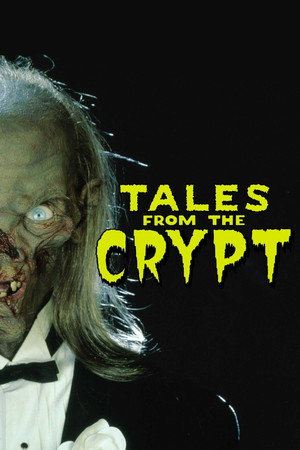
Hooper continued working in television as well, directing episodes of horror and fantasy series including Freddy's Nightmares, Tales from the Crypt, Dark Skies and Masters of Horror. Television had been part of his career since Salem's Lot, and these assignments allowed him to continue exploring genre material even when feature-film opportunities became less reliable.
Toolbox Murders, Mortuary and the Final Return to Confined Spaces
Toolbox Murders (2004) returned Hooper to one of his strongest subjects: a building that seems to generate its own violence. Rather than simply remaking the 1978 film from which it takes its title, Hooper constructs a story around an old Hollywood apartment building whose architecture conceals rooms, histories and threats invisible to its residents. The building gradually becomes more important than any individual killer.
The film demonstrates that Hooper's understanding of space remained intact decades after The Texas Chain Saw Massacre. Corridors become uncertain, walls conceal impossible areas and renovation exposes layers that should have remained hidden. Once again, characters discover that the place they inhabit has its own logic and that ordinary architecture cannot be trusted to remain passive.
Mortuary (2005) returned to another decaying property, combining a funeral home, family relocation and supernatural contamination. The film is more uneven than Hooper's strongest work, but its central imagery remains unmistakably connected to his career. Families continue entering spaces they believe they can control, only to discover that the environment has already absorbed a history far stronger than their intentions.
His final feature, Djinn (2013), was produced in the United Arab Emirates and again placed supernatural danger inside domestic architecture. Even at the end of his career, Hooper remained interested in what happens when a place that should protect its inhabitants develops another identity. The cultural setting had changed completely from rural Texas, but the underlying mechanism remained familiar.
Families, Work and the Grotesque Side of America
One of the strongest continuities across Hooper's horror is the presence of damaged social structures. The Sawyer family in The Texas Chain Saw Massacre and its sequel is the most obvious example, but families in Poltergeist, Salem's Lot and later films repeatedly encounter forces that expose vulnerabilities inside domestic life. Hooper rarely presents horror as something happening entirely outside society. It grows from work, property, family roles and environments that have already begun to fail.
Labor appears repeatedly as well. The Sawyer family has roots in slaughterhouse work, The Mangler turns industrial machinery into a killer and many Hooper spaces are connected to marginal businesses such as hotels, carnivals and funeral homes. These are not anonymous locations. They are workplaces transformed by isolation, economic decline or obsession until normal activity becomes indistinguishable from horror.
This interest gives Hooper's cinema a particularly American texture. Highways, suburbs, roadside attractions, amusement parks and industrial spaces become Gothic environments without needing castles or ancient ruins. The past remains important, but it appears through abandoned economic systems, buried bodies, obsolete occupations and families who continue living according to rules that the surrounding society has already left behind.
Tobe Hooper's Style and Legacy
Hooper's influence is easiest to see through The Texas Chain Saw Massacre, but his legacy becomes more interesting when the rest of the filmography is placed beside it. He demonstrated that horror could feel brutally real without depending upon graphic gore, then spent much of his later career deliberately moving away from that realism. Eaten Alive, Lifeforce and The Texas Chainsaw Massacre 2 are artificial, colorful and excessive, yet they remain connected to the same interest in environments overwhelming the people inside them.
His best horror also has an unusual relationship with humor. The comedy is rarely comforting. It emerges when characters, families or institutions become so grotesque that terror and absurdity begin occupying the same moment. Leatherface's domestic behavior, the Sawyer family's arguments and the splatter comedy of the sequel all demonstrate that Hooper understood laughter and panic as neighboring reactions rather than opposites.
The visual violence of his cinema also extends beyond what happens to bodies. Hooper attacks through framing, sound, color, production design and duration. A screaming face can become as important as a wound, an industrial noise as aggressive as a weapon and a cluttered room as disturbing as the person hiding inside it. This is why The Texas Chain Saw Massacre remains so difficult to imitate successfully. Reproducing a chainsaw and a masked killer is easy; reproducing the film's sense that the entire world has become physically unbearable is much harder.
Hooper died on August 26, 2017, leaving a career that was far less consistent than those of some of his contemporaries but also far stranger than the reputation built around a single masterpiece suggests. At his strongest, he understood that horror does not always need to arrive from somewhere else. It can already exist inside the family, the workplace, the house, the neighborhood or the entertainment people have paid to enter, waiting for the moment when an ordinary space stops behaving as though human beings are in control.
Known Among Horror Fans For
Notable Horror Collaborators
Notable collaborators and creative partners throughout Tobe Hooper's horror career.
KH
Kim Henkel
Writing and Producing Collaborator
Hooper's foundational creative partner and co-creator of The Texas Chain Saw Massacre. Henkel also adapted Eaten Alive and later reunited with Hooper as a producer on The Texas Chainsaw Massacre and The Texas Chainsaw Massacre: The Beginning.
WB
Wayne Bell
Sound and Music Collaborator
A recurring collaborator from Hooper's Texas horror period. Bell worked on the sound and music of The Texas Chain Saw Massacre, Eaten Alive and The Texas Chainsaw Massacre 2.
 Robert Englund
Frequent Horror Actor
Englund worked with Hooper across three separate horror films: Eaten Alive, Night Terrors and The Mangler, spanning nearly two decades of the director's career.
AJ
Alain Jakubowicz
Editing Collaborator
A recurring editor during Hooper's later horror career. Jakubowicz edited Invaders from Mars, The Texas Chainsaw Massacre 2 and Night Terrors.
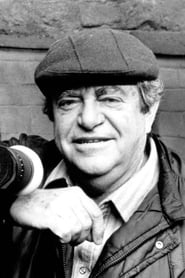 Menahem Golan
Cannon Producer
A key producer during Hooper's Cannon period. Golan produced Lifeforce, Invaders from Mars and The Texas Chainsaw Massacre 2, the three horror films Hooper made under his Cannon deal.
 Yoram Globus
Cannon Producer
Together with Menahem Golan, Globus produced Hooper's three-film Cannon horror cycle: Lifeforce, Invaders from Mars and The Texas Chainsaw Massacre 2.
Robert Englund
Frequent Horror Actor
Englund worked with Hooper across three separate horror films: Eaten Alive, Night Terrors and The Mangler, spanning nearly two decades of the director's career.
AJ
Alain Jakubowicz
Editing Collaborator
A recurring editor during Hooper's later horror career. Jakubowicz edited Invaders from Mars, The Texas Chainsaw Massacre 2 and Night Terrors.
Menahem Golan
Cannon Producer
A key producer during Hooper's Cannon period. Golan produced Lifeforce, Invaders from Mars and The Texas Chainsaw Massacre 2, the three horror films Hooper made under his Cannon deal.
Yoram Globus
Cannon Producer
Together with Menahem Golan, Globus produced Hooper's three-film Cannon horror cycle: Lifeforce, Invaders from Mars and The Texas Chainsaw Massacre 2.
Tobe Hooper Horror Movies
Directing (27 credits)
2006
2005
2005
2005
2004
2002
2001
2000
1997
1995
1993
1993
1990
1989
1989
1988
1986
1986
1985
1985
1982
1981
1979
1976
1974
1971
Writing (11 credits)
2022
2017
2013
2003
1995
1995
1990
1989
1986
1974
1971
Acting (8 credits)
2020
2012
2000
2000
1993
1992
1989
1986
Production (7 credits)
2017
2013
2006
2003
1986
1974
1971
Music & Sound (3 credits)
1986
1976
1974
Special FX / Practical FX (1 credits)
1971
Cinematography (1 credits)
1971
Editing (1 credits)
1971
Other Crew (2 credits)
2023
2010