

2011
Wes Craven
Horror Director · Biography · Horror Filmography · Family · Collaborators · Credits
Horror subgenres & themes
Most represented across this person's horror filmography:
SLASHER
• CANNIBAL
• HOME INVASION
• MEDICAL
Biography
Wes Craven and the Horror of Unsafe Places
Wes Craven spent much of his career destroying places that were supposed to be safe. A family home could become the site of unimaginable violence. A road trip could turn into a confrontation with another version of the American family. Sleep offered no escape because a killer could be waiting inside a dream. Eventually, even horror movies themselves became unstable territory, capable of crossing the boundary between fiction and reality.
Across more than four decades, Craven repeatedly returned to the same disturbing possibility: the structures people trust may offer little protection when violence arrives. Parents conceal terrible decisions from their children. Authorities misunderstand or ignore danger. Families can become sources of repression rather than security. Reality itself may prove less dependable than the stories created to explain it. These ideas connected films that otherwise moved through exploitation horror, supernatural fantasy, social satire, psychological horror and the self-aware slasher.
Craven's importance therefore extends far beyond creating Freddy Krueger or directing the Scream films. Few horror filmmakers managed to respond so directly to different generations of audiences. In the 1970s he confronted viewers with ugly, physical violence. In the 1980s he transformed dreams into a new landscape for the slasher film. In the 1990s he turned horror's own history, conventions and audience expectations into part of the nightmare.
From Fundamentalism to Filmmaking
Wesley Earl Craven was born in Cleveland, Ohio, on August 2, 1939. He grew up in a strict religious environment in which popular entertainment and cinema were heavily restricted. That background would remain relevant to his later work, not because every film can be reduced to autobiography, but because religious guilt, repression, authority and the conflict between forbidden desire and imposed morality repeatedly appear throughout his horror cinema.
Craven studied English at Wheaton College. His education was interrupted when he developed Guillain-Barré syndrome and was paralyzed for several months, delaying his graduation. He later completed graduate studies in philosophy and writing at Johns Hopkins University and worked as a teacher before abandoning academia for filmmaking.
The transition was unusually dramatic. Craven entered cinema relatively late and without the conventional path of a Hollywood filmmaker. He worked in New York and became involved in editing and low-budget productions before beginning a collaboration with producer Sean S. Cunningham. The move eventually placed a former teacher with a deeply religious upbringing inside one of the most confrontational periods in American exploitation cinema.
The Last House on the Left: Violence Without Distance
Craven's first feature as director, The Last House on the Left (1972), announced immediately that his horror would not be comfortable. Produced by Sean S. Cunningham, the film drew its basic narrative structure from Ingmar Bergman's The Virgin Spring (1960), but Craven removed the medieval setting and spiritual distance, relocating the story into contemporary America and pushing its violence toward the raw aesthetics of early-1970s exploitation cinema.
The premise is brutally simple. Two young women are abducted, humiliated and murdered by a group of criminals who later, without realizing it, seek refuge in the home of one victim's parents. When the parents discover what happened, they become capable of violence as extreme as that committed against their daughter.
What makes the film more disturbing than a conventional revenge story is the collapse of moral distance between victim, criminal and avenger. The violence does not restore order cleanly. By the conclusion, supposedly respectable parents have crossed into the same physical world of blood and brutality occupied by the killers. Craven refuses the comforting idea that civilization and savagery are permanently separated categories.
The film's rough construction, tonal irregularity and graphic cruelty became inseparable from its reputation. It was censored and condemned in several territories, and for years its notoriety frequently overshadowed discussion of its ideas. Yet the discomfort is fundamental to Craven's approach. Violence in The Last House on the Left is intentionally difficult to consume as elegant spectacle. The audience is forced into proximity with actions it might prefer to experience at a safer distance.
The Hills Have Eyes and the American Family at War
The Hills Have Eyes (1977) developed the conflict between civilization and savagery in a more concentrated form. An apparently ordinary American family becomes stranded in the desert and is attacked by another family living beyond conventional society. The opposition initially appears simple: suburban respectability against cannibalistic barbarism.
Craven gradually destroys that distinction.
As the Carter family is attacked, its surviving members adopt increasingly brutal methods of retaliation. Violence becomes something both families understand. The civilized family does not defeat savagery by remaining civilized; survival requires crossing boundaries that seemed absolute when the journey began.
The desert is crucial to the film. Removed from institutions, neighborhoods and familiar social structures, the characters are placed in an environment where the assumptions of ordinary American life offer no protection. The two families begin to resemble distorted reflections of one another, each capable of extraordinary violence when survival and family loyalty become the only meaningful rules.
Together, The Last House on the Left and The Hills Have Eyes established several ideas that would follow Craven throughout his career. Families contain secrets. Authority is unreliable. Violence can move between supposedly civilized and uncivilized worlds with alarming ease. Most importantly, the people who believe themselves protected by normality may discover that normality is only a temporary condition.
A Nightmare on Elm Street: Nowhere Is Safe
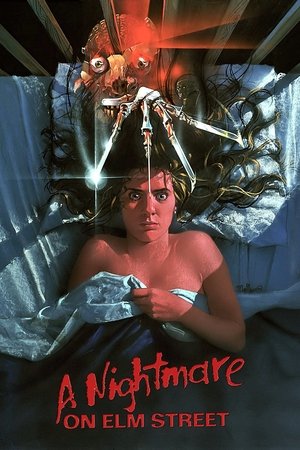
Craven found the idea that would permanently change his career with A Nightmare on Elm Street (1984). By that point the American slasher film had already developed a familiar geography. Teenagers could be threatened at summer camps, suburban houses, schools or isolated locations, but the basic assumption remained that the killer occupied physical space. Escape far enough and survival was at least theoretically possible.
Freddy Krueger destroyed that possibility.
Craven created a murderer who attacks teenagers while they sleep, transforming dreams into physical spaces where injury and death become real. Sleep is normally the final refuge from external danger. In A Nightmare on Elm Street, the biological need to sleep becomes the mechanism that exposes the characters to the killer. Every attempt to remain awake can only postpone the inevitable.
Freddy is also the product of an earlier crime. The parents of Elm Street hunted down and killed him after a legal failure allowed him to escape punishment for murdering children. Their children inherit the consequences. Nancy Thompson and her friends are therefore fighting something created by the previous generation and concealed from them by adults who believed the problem had already been solved.
That structure gives the film one of Craven's most persistent themes: adults create or suppress horrors that return through their children. The teenagers understand the danger before the authority figures around them are willing to accept it. Parents, police and medicine cannot protect Nancy because they interpret her experiences according to rules that Freddy no longer obeys.
Robert Englund's performance gave Freddy an identity radically different from the largely silent killers dominating contemporary slashers. Yet the Freddy of Craven's original film is darker and less theatrical than the pop-cultural figure that emerged through later sequels. He jokes, but his humor is cruel rather than reassuring. His burned body, glove and striped sweater create an instantly recognizable silhouette, while the dream setting allows Craven to alter space, gravity and physical reality without warning.
Heather Langenkamp's Nancy is equally important to the film. She survives not through physical strength but by learning how Freddy's world functions and eventually attempting to manipulate its rules herself. The confrontation becomes a battle over fear, perception and control rather than simply another chase between killer and victim.
A Nightmare on Elm Street turned Freddy Krueger into one of horror cinema's most recognizable figures and established a franchise that rapidly expanded without Craven's direct control. But its deeper achievement was conceptual. Craven had found a way to make the slasher film invade a territory from which nobody could permanently escape.
Dreams, Religion and American Nightmares
Craven's work around A Nightmare on Elm Street was far less uniform commercially, but many of the films reveal recurring interests that become clearer when viewed across his career. Deadly Blessing (1981) connected murder and supernatural suggestion with an isolated religious community, allowing Craven to explore repression, guilt and rigid belief systems through material particularly close to aspects of his own upbringing.
Swamp Thing (1982) moved toward comic-book fantasy, while Deadly Friend (1986) combined adolescent tragedy, technology and bodily resurrection. Neither possessed the cultural impact of Freddy Krueger, but both demonstrate Craven's willingness to move between tones and forms rather than build his career around one fixed type of horror.
The Serpent and the Rainbow (1988) approached Haitian Vodou through a story inspired by claims surrounding zombification. The film blends political violence, hallucination, buried bodies and supernatural imagery, frequently leaving the protagonist — and the audience — uncertain where altered perception ends and physical reality begins.
Shocker (1989) returned more directly to the idea of constructing a new supernatural killer. Horace Pinker survives execution in a transformed form and begins moving through electricity and television. The film's unstable relationship between media, supernatural power and physical reality anticipates ideas Craven would develop much more successfully in his work of the following decade.
The People Under the Stairs (1991) stands apart as one of his most openly social horror films. A young boy enters the home of wealthy landlords and discovers an apparently respectable household built upon imprisonment, abuse, economic exploitation and grotesque family secrets. The house becomes an exaggerated image of inequality: prosperity exists upstairs while suffering is literally hidden inside the structure.
Again, Craven's horror emerges by opening a supposedly secure American home and discovering what has been concealed inside it.
New Nightmare: Horror Becomes Aware of Itself
By the early 1990s Freddy Krueger had become something very different from the figure Craven originally created. Sequels, merchandise and popular culture had transformed him into a recognizable entertainment icon. Instead of attempting to ignore that history, Craven made the history itself the subject of Wes Craven's New Nightmare (1994).
The film exists in a world where A Nightmare on Elm Street is a movie, Freddy Krueger is a fictional character and Heather Langenkamp, Robert Englund, producer Robert Shaye and Craven himself appear as versions of themselves. Langenkamp begins experiencing events suggesting that something resembling Freddy is moving beyond the films and entering reality.
Craven's central idea is far stranger than a conventional franchise revival. The creature is not simply Freddy returning again. The familiar fictional character has functioned as a container for something older and more dangerous, an evil controlled as long as storytellers continue giving it a fictional form. When the stories stop, the boundary begins to weaken.
This transforms horror filmmaking itself into a protective ritual. Stories do not merely frighten audiences; they can give fear a shape and a place in which it can be confronted. The concept allowed Craven to examine his own relationship with Freddy while simultaneously questioning what happens when a fictional monster becomes culturally larger than its creator.
New Nightmare also changes Nancy's original struggle in a significant way. Langenkamp is now a mother protecting her son. A performer once associated with the vulnerable teenager of the first film becomes an adult forced to determine whether the fantasy surrounding her career can physically threaten the next generation.
The film's explicit movement between cinema and reality anticipated the phase of Craven's career that would make him central to another transformation of the slasher film.
Scream and the Generation That Knew the Rules
Two years later, Scream (1996) took self-awareness out of the film industry and placed it directly inside the audience.
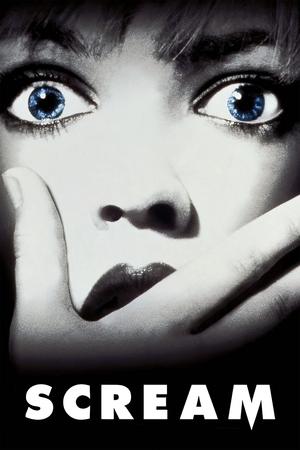
Written by Kevin Williamson and directed by Craven, Scream follows teenagers who already understand horror movies. They know the clichés. They discuss slasher rules, recognize familiar situations and understand what characters in films are normally expected to do. Horror history is no longer something existing outside the story. It has become part of the characters' understanding of the world.
The opening sequence immediately demonstrates why that knowledge offers limited protection. Casey Becker is questioned about horror movies by a caller who gradually transforms a playful conversation into a threat. Knowing the genre does not allow her to escape it. The sequence turns the audience's own familiarity with horror into part of the suspense.
Neve Campbell's Sidney Prescott gave Craven another central heroine defined by more than survival. Like Nancy Thompson, Sidney inherits violence connected to secrets kept by adults, but Scream places those secrets inside a culture obsessed with transforming real trauma into entertainment. Murder generates television coverage, public fascination and eventually the fictional Stab films within the series itself.
Craven was uniquely suited to Williamson's screenplay because he belonged to the horror history the script was dissecting. Scream references the conventions established by films such as Halloween and Friday the 13th, but Craven could also turn the joke toward his own work. Freddy Krueger, slasher sequels, horror audiences and the industrial repetition of successful formulas all become material for a film that still has to function as an effective murder mystery.
The balance is what distinguishes Scream from simple parody. Ghostface can be ridiculous, clumsy and frightening within the same sequence. Characters can joke about horror conventions and still die according to them. The film laughs at the genre without treating fear itself as meaningless.
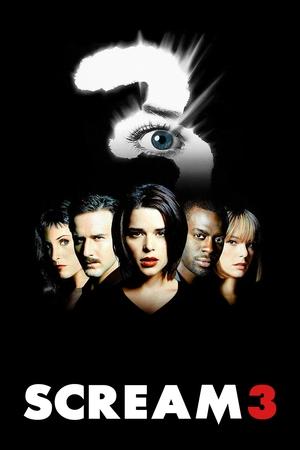
Scream became a major commercial success and was followed rapidly by Scream 2 (1997) and Scream 3 (2000), both directed by Craven. The sequels expanded the self-referential structure through sequels, celebrity, media coverage and the fictional film industry surrounding the Woodsboro murders.
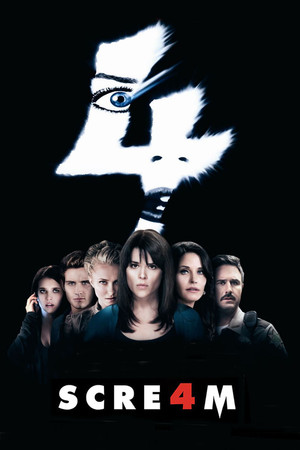
Craven returned once more for Scream 4 (2011). By then the horror landscape had changed again. Remakes, reboots, online celebrity and a generation raised not merely on slashers but on films commenting on slashers provided the new target. Craven was again directing a horror film about audiences who believed they understood how horror films worked.
Beyond Horror
Craven occasionally resisted being defined entirely by the genre that made him famous. The clearest example was Music of the Heart (1999), a drama starring Meryl Streep as music teacher Roberta Guaspari. The film demonstrated that Craven's interests and abilities extended beyond horror and earned Streep an Academy Award nomination for her performance.
Even when he returned to suspense, he did not always rely on supernatural imagery. Red Eye (2005) places much of its conflict inside an airplane, where Rachel McAdams' character discovers that the apparently charming stranger sitting beside her is manipulating her into participating in an assassination plot. The confined setting turns ordinary proximity into a trap and again removes a supposedly safe public space from the protagonist's control.
Other later projects were less successful. Cursed (2005) endured a difficult production and attempted to apply self-aware genre filmmaking to the werewolf movie. My Soul to Take (2010), Craven's first feature as both writer and director since New Nightmare, returned to supernatural slasher territory but failed to create the cultural response generated by his earlier work.
His final feature as director was Scream 4. Craven died from brain cancer on August 30, 2015, at the age of 76.
Violence, Censorship and the Craven Paradox
Craven's relationship with screen violence is one of the most interesting contradictions in his career. Some of his earliest films became notorious precisely because of their brutality, yet his horror repeatedly questions the meaning and consequences of watching violence rather than presenting it as morally neutral spectacle.
The Last House on the Left forces revenge to become ugly. The Hills Have Eyes makes civilization resemble the violence it is fighting. A Nightmare on Elm Street makes children suffer for what their parents attempted to bury. New Nightmare asks whether frightening stories contain or release fear. Scream places the relationship between fictional violence, real violence and audience fascination directly inside its dialogue and plot.
This does not mean Craven's films provide a single answer. They frequently contradict themselves. They are entertainment built from the same violence they interrogate. That contradiction may be one reason his best horror remains interesting. Craven understood that audiences can be frightened, amused, fascinated and repelled by the same image, sometimes within seconds.
His religious upbringing also gives this tension another dimension. Sin, punishment, repression and forbidden knowledge recur throughout his work, yet rigid moral authority is rarely trustworthy. Adults claiming to understand right and wrong frequently create the conditions that endanger younger characters. The horror comes not simply from breaking rules, but from discovering that the people who created those rules may be hiding something.
Parents, Children and the Failure of Authority
Few themes connect Craven's films as consistently as generational failure.
In The Last House on the Left, parents become killers after their daughter is murdered. In The Hills Have Eyes, two family systems fight until civilization and barbarism become difficult to separate. In A Nightmare on Elm Street, parents secretly murder Freddy Krueger and leave their children to confront what returns. The People Under the Stairs turns parental authority into imprisonment and abuse. New Nightmare transforms Heather Langenkamp from fictional daughter into protective mother. Scream repeatedly reveals that the supposedly independent lives of teenagers are shaped by crimes, secrets and betrayals originating in the adult world.
Craven's young characters are therefore rarely innocent because they know nothing. Their strength comes from realizing that the explanations inherited from adults are incomplete. Nancy survives because she believes what adults dismiss. Sidney survives repeated attempts to define her through her mother's history. Fool in The People Under the Stairs enters a house built on adult power and discovers an entire hidden population beneath it.
Authority repeatedly fails because it misunderstands the structure of the horror. Police search for physical killers when the threat is supernatural. Parents insist dreams cannot cause harm. Wealth disguises abuse. Respectability conceals violence. The characters survive only when they stop accepting the official version of reality.
Wes Craven's Style and Legacy
Craven never developed a visual signature as immediately identifiable as some of his contemporaries. His importance lies less in a consistent surface than in a remarkable ability to locate new structures for fear. He repeatedly discovered situations in which audiences believed they understood the rules and then removed the protection those rules seemed to offer.
The Last House on the Left removes the distance between civilized people and brutality. The Hills Have Eyes removes the distance between the normal family and the monstrous family. A Nightmare on Elm Street removes the boundary between waking life and dreams. New Nightmare removes the boundary between horror fiction and the people who create it. Scream removes the distance between horror movies and the audience that has learned how they work.
This ability allowed Craven to remain relevant across radically different periods of horror cinema. He participated in the confrontational independent horror of the 1970s, created one of the defining supernatural killers of the 1980s and helped establish the self-aware horror vocabulary of the 1990s. Many directors influence later filmmakers through style. Craven also influenced the way horror could think about itself.
Freddy Krueger became larger than A Nightmare on Elm Street. Ghostface became larger than any individual killer beneath the mask. Nancy Thompson and Sidney Prescott became enduring models of horror protagonists who survive by understanding the mechanisms of the nightmare rather than merely escaping from it.
But Craven's deeper legacy lies beneath those icons. His films repeatedly suggest that horror begins when a protective boundary fails: between parent and child, home and outside world, dream and reality, spectator and movie.
Wes Craven spent his career finding places where people believed they were safe.
Then he found a way inside.
Known Among Horror Fans For
Notable Horror Collaborators
Notable collaborators and creative partners throughout Wes Craven's horror career.
 Sean S. Cunningham
Early Collaborator
Producer of The Last House on the Left and a key collaborator during Craven's emergence as a horror filmmaker.
MM
Marianne Maddalena
Longtime Producer
Craven's longtime producing partner, collaborating with him across much of his later career including Shocker, The People Under the Stairs, New Nightmare, Scream and Red Eye.
 Robert Englund
Frequent Collaborator
The actor who embodied Freddy Krueger, Craven's most famous creation, in A Nightmare on Elm Street and later returned in Wes Craven's New Nightmare.
 Heather Langenkamp
Frequent Collaborator
Craven's iconic Nightmare heroine, starring as Nancy Thompson in A Nightmare on Elm Street and returning as herself at the center of Wes Craven's New Nightmare.
KW
Kevin Williamson
Creative Collaborator
Screenwriter whose collaboration with Craven on Scream helped redefine the modern self-aware slasher film.
 Neve Campbell
Frequent Collaborator
Star of Craven's four Scream films, with Sidney Prescott becoming one of the defining horror protagonists of his later career.
Wes Craven Horror Movies
Directing (25 credits)
2010
2005
2002
2000
1997
1996
1995
1994
1992
1991
1990
1989
1988
1986
1985
1985
1985
1984
1984
1982
1981
1978
1977
1972
Writing (25 credits)
2023
2013
2010
2010
2009
2007
2006
2006
2003
1994
1991
1991
1990
1989
1989
1988
1988
1987
1985
1985
1984
1982
1981
1977
1972
Acting (20 credits)
2011
2011
2011
2011
2008
2006
2005
2004
2002
2000
2000
2000
1997
1996
1996
1995
1994
1993
1989
1985
Production (21 credits)
2015
2015
2011
2010
2009
2007
2006
2006
2005
2000
1998
1998
1998
1997
1995
1994
1992
1991
1990
1989
1987
Other Crew (5 credits)
2023
2005
2003
2002
1998
Editing (2 credits)
1977
1972
Creator (1 credits)
1988
Cinematography (1 credits)
1978