


2024
Roger Corman
Horror Producer · Biography · Horror Filmography · Family · Collaborators · Credits
Horror subgenres & themes
Most represented across this person's horror filmography:
ANIMAL
• SLASHER
• HAUNTED HOUSES
• HOME INVASION
Biography
Roger Corman and the Machinery of Independent Horror
Roger Corman changed horror cinema not by building a single franchise or creating one famous monster, but by constructing an entire system in which strange ideas could become films quickly, cheaply and with remarkably little interference. His career moved through science fiction, Gothic horror, exploitation, biker movies, crime, comedy and almost every other form of inexpensive popular cinema, yet horror remained one of the places where his methods were most productive. Mutant creatures, alien invasions, disintegrating families, vampires, mad scientists and resurrected corpses could all be made economically because the genre rewarded imagination more than polish.
Corman understood that low budgets did not necessarily demand small ideas. They demanded concentration. A striking title, an unusual poster, a recognizable actor, a strong location and one memorable concept could sometimes accomplish more than elaborate production value. His films often reveal the limitations of their circumstances, but the speed with which he worked also prevented conventional studio caution from smoothing away their eccentricities.
As a director, he created one of the defining cycles of American Gothic horror through his Edgar Allan Poe films with Vincent Price. As a producer, he gave early opportunities to filmmakers, writers, actors and technicians who would later transform American cinema. As a distributor, he demonstrated that the same organization capable of selling exploitation pictures could also introduce American audiences to prestigious international films. Horror was only one part of that career, but it provides perhaps the clearest example of Corman's ability to convert limitations into style.
Engineering, Hollywood and the Decision to Work Independently
Roger William Corman was born in Detroit, Michigan, on April 5, 1926. He served in the United States Navy during the final years of the Second World War and later studied industrial engineering at Stanford University, graduating in 1947. The engineering background became an irresistible metaphor for his later filmmaking because Corman approached production as a problem of resources, efficiency and organization, yet he quickly discovered that engineering itself was not the career he wanted.
He entered the film industry at 20th Century-Fox, beginning at a low level and eventually working as a story analyst. The experience taught him how studios evaluated material but also convinced him that advancement through the established system could be slow and unrewarding. Corman increasingly concluded that the only reliable way to control his career was to create films himself.
He sold the story that became Highway Dragnet and used the proceeds to help move into independent production. During the mid-1950s he began producing and directing inexpensive features at a speed that would soon become legendary. Instead of waiting years for approval, Corman could identify a market, assemble financing, shoot quickly and move immediately to the next picture.
Monsters, Aliens and the First Corman Horror Films
The emerging drive-in and youth markets gave Corman an ideal environment in which to experiment. Films such as It Conquered the World (1956), Not of This Earth (1957), Attack of the Crab Monsters (1957) and The Undead (1957) combined horror and science fiction with sensational concepts that could be communicated immediately through a title or poster. The creatures and effects were inexpensive, but the films rarely behaved as though modest resources required modest imagination.
Not of This Earth is particularly representative of Corman's early approach. Its alien visitor arrives on Earth to obtain human blood, combining science-fiction invasion with imagery closer to vampirism. Rather than spending money on enormous spectacle, the film brings cosmic danger into ordinary locations and allows the central concept to carry much of the atmosphere.
Attack of the Crab Monsters uses mutation, radiation and monstrous creatures, but its strangest idea is psychological. The giant crabs can absorb the minds and voices of human victims, turning a simple creature feature into something more uncanny than its title might suggest. Corman repeatedly found ways to place one imaginative complication inside material that could easily have remained disposable.
The Undead moves in another direction entirely, using hypnosis and time travel to send a woman into an earlier existence associated with witchcraft. The film demonstrates how freely Corman moved between supernatural horror and science fiction without worrying about strict genre boundaries. What mattered was whether the premise generated enough visual and narrative possibilities to sustain the production.
The Wasp Woman and the Horror of Transformation
The Wasp Woman (1959) gave Corman another opportunity to connect contemporary anxieties with bodily transformation. Susan Cabot plays cosmetics executive Janice Starlin, who experiments with a treatment derived from wasp enzymes in an attempt to restore youth. The treatment works, but it also begins transforming her into a murderous human-insect creature.
The premise combines several elements that recur throughout Corman's horror work: science pursued for commercial reasons, fear of aging, bodily mutation and the possibility that apparent progress carries an uncontrolled physical cost. The production is inexpensive, but the concept directly connects the monster with the social pressure driving the character toward experimentation.
Corman frequently used genre premises this way. His monsters were often sensational enough to attract audiences while still carrying anxieties about technology, capitalism, sexuality or social change. The films rarely stopped to announce those themes formally. They simply allowed them to exist inside stories designed first to entertain.
A Bucket of Blood and The Little Shop of Horrors
At the end of the 1950s, Corman began combining horror with black comedy more openly. A Bucket of Blood (1959) follows Walter Paisley, a socially awkward busboy in a bohemian coffeehouse who accidentally kills a cat, covers the body in clay and discovers that the resulting sculpture is praised as art. Recognition encourages him to repeat the process with increasingly human materials.
The film is both murder comedy and satire, mocking artistic pretension, social conformity and the desire for recognition. Corman turns the horror premise into a mechanism through which an insignificant man can suddenly become celebrated, only to discover that continued success requires increasingly terrible acts.
The Little Shop of Horrors (1960) pushed the speed and absurdity even further. Famously shot on an extraordinarily compressed schedule, the film follows Seymour Krelborn and a carnivorous plant that demands human victims. The monster is ridiculous, the dialogue moves rapidly and the violence is treated with a playful indifference that anticipates the way later Corman productions would mix exploitation material with humor.
These films are important because they show that Corman understood horror could survive laughter. He did not always need viewers to believe completely in the monster. Sometimes the artificiality itself could become part of the entertainment, provided the film moved quickly enough and the central idea remained strong.
House of Usher and the Reinvention of Roger Corman
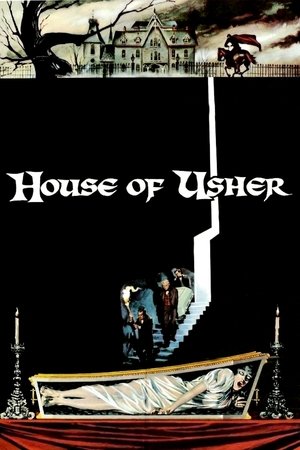
House of Usher (1960) represented one of the decisive changes in Corman's career. After years of extremely fast black-and-white productions, he persuaded American International Pictures to allow him to combine the budgets normally assigned to two smaller films into one more ambitious color production based on Edgar Allan Poe. Vincent Price was cast as Roderick Usher, beginning the most important actor-director relationship of Corman's horror career.
The decision immediately changed the visual world of his cinema. Instead of contemporary laboratories and inexpensive creature effects, House of Usher offered decaying interiors, elaborate color, family history and psychological deterioration. The house itself seems infected by the people and memories contained within it, turning architecture into an active part of the horror.
Corman understood that Poe did not offer the kind of conventional monster executives expected from horror. His solution was to treat the entire environment as monstrous. The Usher mansion becomes both tomb and diseased body, enclosing its inhabitants within a family history that cannot be escaped.
The film's success convinced AIP that this more ambitious Gothic approach could be commercially viable. Instead of returning immediately to the cheaper format that had defined his earlier career, Corman began a cycle that would occupy much of his directing work during the first half of the 1960s.
Vincent Price and the Human Center of the Poe Cycle
Vincent Price became essential to the Poe films because his acting could support both psychological instability and theatrical grandeur. Corman needed a performer capable of delivering elaborate dialogue while remaining believable inside environments filled with ancestral curses, premature burial, torture devices and decaying aristocratic families. Price's voice, posture and cultivated screen presence gave the films a seriousness that prevented the Gothic imagery from becoming purely decorative.
The collaboration also allowed Price to vary his persona from film to film. In one story he could appear fragile and tormented, in another cruel or manipulative, while still belonging to a recognizable Corman world. The actor became a stable element around which different versions of Poe could be constructed.
Price starred in seven of the eight films generally identified with Corman's Poe cycle. The exception was The Premature Burial, which starred Ray Milland. That consistency made Price and Corman almost inseparable within American Gothic horror of the period, even though both men maintained substantial careers beyond the films they made together.
The Pit and the Pendulum and the Architecture of Madness
The Pit and the Pendulum (1961) expanded the visual and psychological possibilities established by House of Usher. Price plays Nicholas Medina, a man traumatized by memories of his father, an inquisitor whose torture chamber remains hidden beneath the family castle. The past is therefore not metaphorically buried. It exists physically under the rooms in which the characters live.
Corman repeatedly used architecture to turn psychological states into physical locations. Secret passages, crypts, sealed rooms and underground chambers allow characters to move deeper into histories they would prefer to avoid. The Gothic house becomes a map of repression, with every descent revealing something that has been concealed.
The climax gives the title device its full theatrical power. The pendulum becomes an enormous visual mechanism rather than simply a literary reference, allowing Corman to convert Poe's short source material into a much larger narrative of inherited guilt, madness and revenge.
The Premature Burial, Tales of Terror and The Raven
The Premature Burial (1962) temporarily replaced Price with Ray Milland and built its horror around the obsessive fear of being buried alive. The subject was ideally suited to Corman's Gothic method because it allowed architecture, coffins, crypts and enclosed spaces to become instruments of psychological torture before anything supernatural was confirmed.
Tales of Terror (1962) took another approach by adapting several Poe stories within an anthology structure. Price appears in all three segments, joined by performers including Peter Lorre and Basil Rathbone. The film moves between tragedy, supernatural horror and increasingly broad black comedy, demonstrating how flexible the Poe cycle had already become.
The Raven (1963) pushed that comic direction much further. Price, Lorre and Boris Karloff play rival magicians inside a film that treats Poe primarily as a point of departure rather than a strict literary source. Corman allows the performers to use timing, personality and rivalry as major attractions, turning Gothic imagery into the setting for a supernatural comedy.
The tonal changes did not destroy the cycle because the visual identity remained recognizable. Castles, laboratories, ancient family histories and elaborate costumes continued connecting the films even when their attitudes toward the material shifted dramatically.
The Haunted Palace and Corman's Lovecraftian Detour
The Haunted Palace (1963) carries the title of a Poe poem but is fundamentally adapted from H. P. Lovecraft's The Case of Charles Dexter Ward. Price plays a man who returns to a New England community and gradually becomes connected with the history of an ancestor accused of witchcraft. The film brings Lovecraftian ideas of inherited evil, forbidden knowledge and ancient nonhuman forces into the visual framework Corman had already established through Poe.
The substitution works because Corman's Gothic world was already interested in families poisoned by the past. Lovecraft simply expands the scale of that inheritance, suggesting that the corruption reaches beyond individual psychology into something older and more cosmic.
The film therefore forms an important bridge between two major literary traditions in horror. It looks like one of Corman's Poe films and stars the same central actor, but the underlying mythology belongs to a different conception of supernatural terror.
The Masque of the Red Death and the Height of the Gothic Cycle
The Masque of the Red Death (1964) represents one of the most visually accomplished films Corman ever directed. Price plays Prince Prospero, an aristocrat who shelters inside his castle while plague destroys the surrounding population. Instead of fearing death, Prospero treats suffering as confirmation of his own philosophy and uses the crisis to indulge cruelty, ritual and spectacle.
The film was photographed by Nicolas Roeg, whose use of color gives the interiors a richness beyond the earlier Poe productions. Rooms become organized around distinct visual identities, while costumes and ceremonial movement create the sense that Prospero is staging his own private universe inside the castle.
Corman uses plague not merely as an external threat but as a force exposing the moral structure of the society enclosed within the walls. Wealth appears to provide protection until death demonstrates that the distinction between aristocrat and peasant has no final meaning. Prospero's confidence becomes horrifying because he interprets privilege as evidence that he stands outside ordinary human vulnerability.
The ending destroys that illusion with extraordinary simplicity. Death does not need to defeat Prospero through physical combat. It merely enters the space he believed he controlled and reveals that his elaborate rituals never placed him beyond the condition shared by everyone outside the castle.
The Tomb of Ligeia and the End of the Poe Cycle
The Tomb of Ligeia (1964) became the final film in Corman's principal Poe cycle. Price plays Verden Fell, a widower whose obsession with his dead wife contaminates his relationship with the living. Compared with several earlier entries, the film makes greater use of exterior locations and daylight, changing the visual texture without abandoning the cycle's fascination with death, memory and psychological imprisonment.
By this point Corman felt the formula had approached exhaustion. The films had moved through tragedy, comedy, Lovecraftian horror, plague allegory and supernatural romance, and continuing indefinitely risked turning the visual language into repetition.
His decision to leave the cycle demonstrates an important element of his career. Corman could exploit a successful format aggressively, but he was also unusually alert to the point at which audience interest might decline. He preferred moving toward a new market before the previous one had completely collapsed.
X: The Man with the X-Ray Eyes and Knowledge as Horror
Outside the Poe cycle, X: The Man with the X-Ray Eyes (1963) became one of Corman's strongest science-fiction horror films. Ray Milland plays Dr. James Xavier, a scientist who develops a substance capable of extending human vision beyond normal limits. What begins as scientific breakthrough gradually becomes a form of sensory and psychological destruction.
The central horror comes from seeing too much. Xavier's vision penetrates clothing, walls and eventually the surfaces that allow ordinary reality to remain comprehensible. Knowledge ceases to be empowering because the human mind has not evolved to process what the eyes can now perceive.
Corman again builds a large philosophical idea from relatively inexpensive means. The film does not require enormous futuristic sets because the experiment occurs inside the protagonist's perception. The final result is one of his clearest demonstrations that low-budget genre cinema could support ideas extending far beyond the immediate sensational premise.
The Terror and the Productive Chaos of Corman Filmmaking
The Terror (1963) became famous partly because its production history reflects the improvisational nature of the Corman system. Boris Karloff and Jack Nicholson appear in a Gothic story assembled through a complicated series of shoots involving several filmmakers. Corman began the production after realizing that he still had access to sets and resources from another film and wanted to use them before they disappeared.
The resulting picture is less coherent than the strongest Poe films, but it captures the economic logic behind much of Corman's career. Sets, actors and equipment were resources whose value continued only while they were available. If another feature could be generated from them, Corman considered that possibility worth pursuing.
This attitude has sometimes been interpreted simply as cheapness, but it also created opportunities. Young filmmakers could be given sequences, second-unit material or entire projects because Corman needed people capable of solving problems quickly. The pressure produced mistakes, but it also functioned as an informal training system.
Dementia 13 and the Corman School Begins to Expand
Corman's influence on horror became increasingly important through the filmmakers he supported. One of the clearest early examples is Francis Ford Coppola, who had worked within Corman's production system before directing Dementia 13 (1963). The film was produced cheaply in Ireland while Coppola was working on another Corman production and gave the young filmmaker an opportunity to direct his own Gothic murder story.
Dementia 13 contains family secrets, an isolated estate, psychological instability and sudden violence, but its larger historical importance lies in the production model surrounding it. Corman was willing to allow inexperienced filmmakers responsibility if they appeared capable of delivering a usable film within severe limitations.
This became one of the defining features of his career. He did not train filmmakers through classroom theory. He gave them budgets, schedules and practical problems. Success meant the film was completed and could be sold, and the people who survived the process often emerged with more practical experience than several years of conventional apprenticeship might have provided.
Leaving the Director's Chair and Building New World Pictures
By the beginning of the 1970s, Corman had become increasingly interested in production and distribution rather than directing every film himself. In 1970 he founded New World Pictures with his brother Gene, creating a company capable not only of producing inexpensive genre films but also distributing them directly.
This changed Corman's influence dramatically. Instead of being limited by the number of films he could personally direct, he could supervise many productions simultaneously and give opportunities to filmmakers whose work he believed could reach an audience. The genres remained commercial, but individual directors were often given considerable freedom within the financial boundaries Corman established.
New World became famous for exploitation films, but Corman also used the company to distribute prestigious international cinema in the United States. Films by Ingmar Bergman, Federico Fellini, François Truffaut and Akira Kurosawa passed through the same organization associated with nurses, prisoners, monsters and car crashes. Corman saw no contradiction between these audiences. Both required effective distribution and an understanding of how to make potential viewers interested.
Piranha and the Emergence of Joe Dante
Piranha (1978) is one of the clearest examples of Corman's importance as a horror producer. Directed by Joe Dante and written by John Sayles, the film was produced during the enormous commercial impact of Jaws. Instead of hiding its relationship with the blockbuster, Piranha embraces the basic premise of aquatic attack while moving it into a more satirical and openly exploitative direction.
The genetically modified fish allow the story to combine government experimentation, environmental danger, vacation culture and creature violence. Dante's humor prevents the film from functioning simply as imitation, while Corman's production model keeps the narrative moving efficiently toward each new attack.
The project also launched important careers. Dante would become one of the major American directors of horror comedy and fantasy, while Sayles developed into one of the most respected independent filmmakers and screenwriters in the United States. Corman's willingness to give responsibility to inexperienced talent once again produced results far beyond the immediate value of the film itself.
Humanoids from the Deep and Exploitation Horror at New World
Humanoids from the Deep (1980) represents a more controversial side of the Corman production machine. The film combines ecological mutation, monster attacks and explicit exploitation elements in a coastal community threatened by aquatic humanoids. Its mixture of creature horror, sexuality and graphic violence reflects New World's willingness to pursue material major studios would often avoid.
The production also illustrates the tensions inside Corman's system. Commercial requirements could collide with the intentions of individual filmmakers, and Corman's insistence that a picture deliver the exploitation elements promised to its audience sometimes overrode other creative priorities.
This tension is essential to understanding his legacy accurately. The freedom associated with working for Corman was never unlimited. Filmmakers were expected to meet budgets, schedules and market expectations. Within those boundaries they could experiment enormously, but the film still needed to satisfy the commercial premise that justified its existence.
Galaxy of Terror and Horror as a Training Ground
Galaxy of Terror (1981) became another important Corman production because of the talent assembled behind the camera. The story follows a space crew confronting manifestations of fear on a hostile planet, clearly operating in the science-fiction horror territory that had become commercially valuable after Alien.
Among the young technicians working on the production was James Cameron, who served as production designer and contributed substantially to the film's visual construction. The low budget required sets to be reused, transformed and photographed creatively, exactly the kind of problem-solving environment that Corman believed produced capable filmmakers.
Cameron later became one of the most technically ambitious directors in cinema, but the practical education of productions like Galaxy of Terror remained an important part of his development. Corman's system allowed people to gain responsibility earlier than conventional studio hierarchies often permitted.
The film therefore matters beyond its immediate status as an inexpensive science-fiction horror production. It demonstrates how Corman repeatedly turned genre cinema into a professional laboratory where future filmmakers learned to make ambitious images with insufficient resources.
Forbidden World and the Recyclable Corman Universe
Forbidden World (1982) continued the science-fiction horror cycle through a story involving genetic experimentation and a rapidly evolving creature inside an isolated research facility. Like many Corman productions, the film reused sets, techniques and ideas developed for earlier pictures, treating previous production expenditure as material that could generate new value.
This recycling was never hidden particularly well, but Corman understood that most audiences cared more about whether a film delivered its promised experience than whether a corridor had appeared somewhere else. Creative reuse became part of the economic language of the company.
The method anticipated practices that would become common across low-budget genre production. Sets, effects, costumes and even unused footage could move between projects, allowing money spent once to support several different films. Corman transformed limitation into infrastructure.
Carnosaur and Fighting the Blockbuster With Exploitation
During the 1990s, Corman continued demonstrating his ability to respond rapidly to changes in popular cinema. Carnosaur (1993), produced through his later production organization, arrived during the enormous public anticipation surrounding Steven Spielberg's Jurassic Park. Where Spielberg's film represented the cutting edge of studio effects and blockbuster production, Corman offered a far cheaper, bloodier dinosaur film aimed directly at exploitation audiences.
The contrast summarizes much of Corman's career. He never attempted to compete with major studios on their own financial terms. Instead, he identified what part of a cultural phenomenon could be reproduced cheaply and delivered a different experience around it. His dinosaurs could be rougher because the film offered gore, mutation and horror that the family-oriented blockbuster would not.
This method sometimes produced films remembered primarily as opportunistic copies, but it also reveals extraordinary speed in understanding the marketplace. Corman knew that exploitation cinema did not need to defeat the blockbuster. It needed to occupy the spaces the blockbuster left open.
Frankenstein Unbound and the Return to Directing
After roughly two decades away from feature directing, Corman returned with Frankenstein Unbound (1990), adapted from Brian Aldiss's novel. The film combines Mary Shelley's mythology with science fiction and time travel, following a scientist from the future whose experiments send him into nineteenth-century Europe, where he encounters Victor Frankenstein and the world surrounding the creation of the famous monster.
The project was appropriately strange for Corman's return. Rather than simply remaking Frankenstein, he approached the story through multiple layers of fiction, history and science fiction. The monster exists alongside Mary Shelley herself, collapsing the distinction between literary creation and fictional reality.
The film became Corman's final feature as director. Its position at the end of his directing career creates a fitting symmetry. A filmmaker who had spent decades working with monsters, scientists and impossible experiments concluded by returning to one of the foundational myths of modern horror and science fiction.
The Roger Corman Film School
Corman's influence cannot be measured only through the films carrying his name as director. Francis Ford Coppola, Martin Scorsese, Peter Bogdanovich, Jonathan Demme, Joe Dante, Ron Howard and numerous other filmmakers received significant early opportunities within his production system. Actors, writers, editors, composers and effects artists similarly used Corman films as places to acquire professional experience.
The so-called Roger Corman Film School had no campus and no formal curriculum. Its central lesson was practical responsibility. A young filmmaker might be asked to deliver a feature with inadequate money, an unforgiving schedule and a title already selected for marketing purposes. The challenge was to make those restrictions invisible enough that the audience remained entertained.
Corman believed that responsibility revealed ability faster than cautious apprenticeship. People who proved themselves could receive larger opportunities, while those who failed at least learned through actual production. The system could be harsh, but its historical results are difficult to dispute.
Horror benefited especially because the genre allows technical imagination to compensate for financial limitation. A strong creature, an effective death scene or an unusual visual concept could give an inexpensive film identity. Corman repeatedly created environments in which young filmmakers learned precisely how to achieve that.
Speed, Budgets and the Corman Method
Corman's reputation for speed became so extreme that stories about his production methods sometimes sound like mythology. The Little Shop of Horrors became famous for being completed in roughly two days and one night, while numerous other projects were shot on schedules that would have seemed impossible within conventional studio filmmaking.
The speed was not simply a stunt. Every additional shooting day cost money, so Corman planned around the assumption that decisions needed to be made quickly and rarely revisited. Actors and technicians were expected to arrive prepared because the production could not afford endless refinement.
This occasionally produced visible mistakes, thin performances and crude technical work, but it also generated energy. Films could retain unexpected ideas because there was no time for multiple layers of approval to remove them. Corman's best low-budget work feels alive partly because it exists close to the moment of invention.
He also understood the value of locations and resources with unusual clarity. If a set was available for another day, it might generate another sequence or another film. If actors were already assembled, their time could potentially be used more efficiently. Production was a system whose components should rarely remain idle.
Titles, Posters and the Audience Before the Film
Corman frequently understood that exploitation cinema begins before the audience enters the theatre. A title could generate curiosity before a screenplay existed, and a poster could sell an experience more effectively than any detailed description of the plot. Titles such as Attack of the Crab Monsters, The Wasp Woman and It Conquered the World function almost like miniature advertisements.
This approach placed marketing inside the creative process rather than treating it as something added afterward. If the title promised a monster, the film needed to deliver some version of that monster. If the poster promised violence or spectacle, Corman understood that disappointing those expectations could damage the relationship with the audience.
His method therefore differed sharply from filmmakers who considered commerce an external contamination of art. Corman saw the audience as part of the production equation from the beginning. The challenge was not to ignore commercial expectations, but to satisfy them while still finding room for imagination.
American International Pictures and the Business of Horror
Corman's long relationship with American International Pictures was essential to his development as a filmmaker. Samuel Z. Arkoff and James H. Nicholson built AIP around youth-oriented genre films, and Corman became one of the directors most capable of supplying them quickly. Their relationship was productive precisely because both sides understood the economic logic of inexpensive cinema.
The Poe cycle demonstrates what could happen when that logic was stretched rather than abandoned. Corman persuaded the company that slightly more money and time could produce a film with greater visual prestige while remaining profitable. House of Usher proved the argument commercially, making the following Gothic productions possible.
The relationship was not without conflict, particularly as Corman's ambitions and desire for independence increased. Eventually he moved toward creating his own distribution structures, allowing him to control more of the process and retain a larger share of the value created by his films.
New World, New Horizons and a Lifetime of Production
Corman eventually sold New World Pictures in the early 1980s and continued producing through later companies, including Concorde and New Horizons. The names changed, but the central method remained recognizable: identify a market, control the budget, move rapidly and give younger filmmakers enough responsibility to deliver the project.
His output became enormous. The Academy credited him with producing hundreds of films across his career, while the precise total varies depending upon how different types of producing credits are counted. What matters more than the exact number is the continuity. Corman remained professionally active across nearly seven decades of extraordinary technological and industrial change.
He moved from black-and-white drive-in pictures to home video, cable television and digital production without abandoning the basic principles that had allowed him to survive in the 1950s. Equipment changed, distribution changed and audiences changed, but inexpensive genre entertainment continued to require speed, clarity and an understanding of what viewers wanted.
Roger Corman's Horror Style
Corman's strongest horror films reveal a filmmaker more visually controlled than the stereotype of the hurried exploitation director suggests. The Poe cycle in particular uses architecture, color, mist, fire and elaborate interiors to create psychological spaces far removed from the crude realism of many low-budget contemporaries. Houses are rarely neutral locations. They contain family history, guilt and death in physical form.
His earlier science-fiction horror works differently, often using contemporary environments and small casts to suggest threats much larger than the budget could display. Radiation, alien invasion and scientific experimentation become useful because the audience can imagine consequences beyond what appears directly on screen.
Corman was also comfortable allowing horror to become comic. A Bucket of Blood, The Little Shop of Horrors and The Raven demonstrate that he did not treat laughter as incompatible with the genre. The important question was whether tone served the particular production rather than whether it conformed to a rigid definition of horror.
The Producer Who Made Other Horror Careers Possible
Some of Corman's greatest contributions to horror were films he did not direct. Joe Dante emerged from his production environment before making Piranha and later expanding horror comedy through films such as The Howling and Gremlins. John Sayles learned to write efficiently within strict commercial frameworks before developing a very different independent career.
James Cameron's technical work in the Corman system helped prepare him for increasingly ambitious science-fiction filmmaking. Francis Ford Coppola directed Dementia 13 under Corman's influence before becoming one of the central figures of the New Hollywood era. These careers moved far beyond horror, but inexpensive genre production provided the opportunity to learn.
The broader lesson was that commercial genre cinema and artistic development were not opposites. A monster movie could also be a place where a future major director learned how to schedule scenes, move a camera, manage effects and complete a film. Corman understood the educational value of production because he had taught himself through exactly the same process.
Recognition and the Honorary Academy Award
For much of his career, Corman worked outside the institutions normally associated with prestige. His budgets were small, his titles sensational and many of his films were designed primarily for drive-ins, neighborhood theatres or later home-video markets. Yet the scale of his influence gradually made it impossible for mainstream film culture to treat him merely as a producer of disposable entertainment.
In 2009, the Academy of Motion Picture Arts and Sciences selected Corman to receive an Honorary Award. The recognition emphasized not only the enormous quantity of films he had made but his ability to nurture filmmakers by creating a professional environment in which they could learn through direct experience.
The award represented an unusual institutional acknowledgement of exploitation cinema's role in American film history. Corman had spent decades working quickly and cheaply outside conventional prestige structures, only to discover that many of the filmmakers who had passed through his productions eventually came to define those structures themselves.
Roger Corman's Legacy
Roger Corman died on May 9, 2024, at the age of ninety-eight. By then his influence extended across several generations of filmmaking and far beyond the hundreds of productions carrying his name. His career had begun before the drive-in boom, continued through New Hollywood, home video and cable television, and survived into the digital era.
His horror legacy operates on several levels simultaneously. As a director, the Poe cycle remains one of the defining achievements of American Gothic cinema, while films such as Not of This Earth, The Wasp Woman and X: The Man with the X-Ray Eyes demonstrate how imaginative low-budget science-fiction horror could become. As a producer, he helped create films such as Piranha, Humanoids from the Deep and Galaxy of Terror, while giving new filmmakers opportunities they might otherwise have waited years to receive.
More fundamentally, Corman changed the perception of what limited resources could accomplish. He demonstrated that the absence of money could be approached as a production problem rather than a reason not to make the film. Sets could be reused, schedules compressed, young talent promoted and commercial trends answered before major studios had finished holding meetings about them.
The results were never uniformly good, and Corman never pretended that they were. His significance comes from the scale of the experiment. Across decades, he created a system in which hundreds of films could exist that a more cautious industry would never have attempted, and horror repeatedly benefited from that willingness to gamble on monsters, mad scientists, unknown directors and impossible ideas. Few filmmakers did more to prove that genre cinema could function simultaneously as entertainment, business, training ground and creative laboratory.
Known Among Horror Fans For
Notable Horror Collaborators
Notable collaborators and creative partners throughout Roger Corman's horror career.
 Vincent Price
Defining Horror Actor
Corman and Price formed one of American Gothic horror's defining director-actor partnerships, collaborating on House of Usher, The Pit and the Pendulum, Tales of Terror, The Raven, The Haunted Palace, The Masque of the Red Death and The Tomb of Ligeia.
RM
Richard Matheson
Screenwriting Collaborator
Matheson was a principal writer of Corman's Poe cycle, scripting House of Usher, The Pit and the Pendulum, Tales of Terror and The Raven.
FC
Floyd Crosby
Cinematography Collaborator
Crosby photographed many of Corman's key horror films, including House of Usher, The Pit and the Pendulum, Premature Burial, Tales of Terror, The Raven and The Haunted Palace.
DH
Daniel Haller
Production Design Collaborator
Haller was one of the principal architects of Corman's Gothic visual style, designing or art directing House of Usher, The Pit and the Pendulum, Tales of Terror, The Raven, The Haunted Palace and The Masque of the Red Death.
 Les Baxter
Musical Collaborator
Baxter scored several of Corman's central Gothic horror films, including House of Usher, The Pit and the Pendulum, Tales of Terror and The Raven.
 Charles B. Griffith
Writing Collaborator
Griffith was a key collaborator during Corman's early horror period, writing Not of This Earth, Attack of the Crab Monsters, The Undead, A Bucket of Blood and The Little Shop of Horrors.
Roger Corman Horror Movies
Production (129 credits)
2019
2015
2014
2013
2012
2011
2010
2010
2010
2009
2009
2007
2006
2006
2005
2004
2002
2002
2001
2000
1999
1999
1999
1998
1998
1997
1996
1996
1996
1996
1996
1996
1996
1996
1995
1995
1995
1995
1995
1995
1995
1995
1995
1995
1994
1994
1994
1994
1993
1993
1993
1993
1991
1991
1991
1991
1990
1990
1990
1990
1990
1990
1989
1989
1989
1989
1989
1989
1988
1988
1988
1988
1988
1988
1987
1987
1987
1986
1986
1986
1986
1983
1982
1982
1981
1981
1980
1978
1978
1978
1972
1972
1972
1972
1972
1971
1971
1971
1970
1970
1968
1966
1966
1964
1963
1963
1963
1963
1963
1962
1962
1961
1961
1960
1960
1959
1959
1959
1959
1958
1958
1958
1957
1957
1956
1955
1955
1954
Directing (23 credits)
1990
1965
1964
1963
1963
1963
1963
1962
1962
1962
1961
1961
1960
1960
1959
1959
1958
1957
1957
1957
1956
1955
1955
Acting (16 credits)
2020
2018
2015
2011
2010
2010
2009
2000
1999
1999
1996
1993
1981
1959
1958
1954
Writing (4 credits)
1990
1980
1963
1960