


2015
Jörg Buttgereit
Horror Director · Biography · Horror Filmography · Collaborators · Credits
Horror subgenres & themes
Most represented across this person's horror filmography:
EXTREME
• NECROPHILIA
• CANNIBAL
• HORROR ANTHOLOGY
Biography
Jörg Buttgereit and German underground horror
Jörg Buttgereit is a German director, screenwriter, producer, critic and theatre and radio author whose films became some of the most internationally recognizable examples of underground horror produced in West Germany during the 1980s and early 1990s. Born in West Berlin on December 20, 1963, Buttgereit developed outside the conventional German film industry and built his early work through Super 8 filmmaking, small groups of collaborators and self-organized screenings. His reputation rests principally on four feature films: Nekromantik, Der Todesking, Nekromantik 2 and Schramm. Together they examine death, sexual obsession, suicide, decomposition and serial murder through an approach that combines low-budget horror, experimental structure, black humor and images deliberately positioned beyond the limits accepted by mainstream German cinema of the period.
Buttgereit's importance to horror is disproportionate to the size of his feature filmography. Nekromantik became an international cult film and one of the best-known works dealing explicitly with necrophilia, while its sequel became the subject of legal action in Germany. Der Todesking abandoned conventional genre narrative for seven episodes concerning suicide and violent death, and Schramm reconstructed the consciousness of a serial killer through fragmented memories, hallucinations and bodily self-destruction. These films emerged from a small recurring production circle rather than an established horror industry. Buttgereit subsequently transferred many of the same interests into radio plays, theatre, writing and film criticism, returning to feature horror with his segment of the anthology German Angst in 2015.
West Berlin, monster films and Super 8 filmmaking
Buttgereit grew up in West Berlin and developed an early fascination with monster cinema. He has repeatedly identified Japanese kaiju films, especially the Godzilla series, as among his earliest cinematic experiences. The attraction was not limited to the monsters themselves. Practical effects, miniature cities, visible craftsmanship and the physical presence of performers inside creature suits remained important to his understanding of fantastic cinema. He later wrote extensively about Japanese monster films and continued presenting and discussing them long after his own feature directing career had become closely associated with extreme horror.
His practical education came through making films rather than attending film school. Buttgereit began shooting Super 8 shorts as a teenager, often with friends serving simultaneously as actors, technicians and effects assistants. Early projects included parody, monster films, violent comedy and deliberately primitive genre exercises. Captain Berlin, created in the early 1980s as a homemade superhero character, demonstrated his interest in transforming familiar popular genres through the specific environment of West Berlin. Other early shorts such as Horror Heaven, Gazorra: Beast from the Bowels of the Earth and Hot Love brought him progressively closer to the combination of horror, bodily effects and personal filmmaking that would characterize his first feature.
Buttgereit later described these productions as his actual film education. He screened them for friends and underground audiences, with each new project gradually attracting a larger informal following. When he was rejected by a Berlin film school during the period in which he was preparing his first feature, he continued independently rather than waiting for institutional approval. This position outside established production structures became essential to his horror. The limited resources imposed technical restrictions, but they also allowed material that would have been difficult to finance or approve inside the conventional German film industry.
Nekromantik, censorship and the creation of an underground landmark
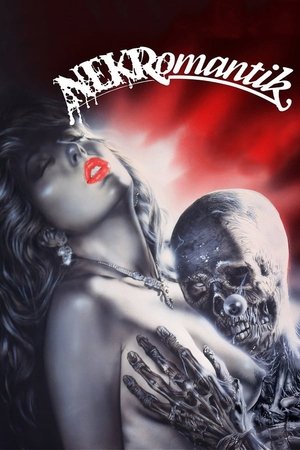
Nekromantik was shot during 1987 and premiered in Berlin in January 1988. Buttgereit wrote the film with Franz Rodenkirchen and made it with producer Manfred O. Jelinski, who became one of the key technical figures in his subsequent features. Daktari Lorenz plays Robert Schmadtke, an employee of a company responsible for cleaning accident scenes. Robert secretly brings human remains home to the apartment he shares with Betty, played by Beatrice Manowski. The discovery of a decomposing corpse allows the couple to incorporate death directly into their sexual relationship, eventually exposing differences between their desires and leaving Robert isolated.
The subject was deliberately confrontational, but Buttgereit has repeatedly connected the film to the cultural circumstances in which it was made. During the 1980s the availability of uncut horror films in West Germany was severely restricted, particularly as the expansion of home video intensified public and official concern about violent media. Buttgereit later described Nekromantik partly as a protest against that climate. Instead of attempting to make a horror film capable of passing easily through existing classification structures, he created a work whose central premise directly challenged conventional distinctions between acceptable and prohibited imagery.
The film was produced on minimal resources and relies heavily on handmade practical effects. The corpse was an artificial construction photographed and tested carefully because Buttgereit wanted it to possess sufficient physical presence for scenes in which actors interact closely with it. Actual animal material was also incorporated into some effects and documentary footage, contributing to the uncomfortable boundary between fabricated horror and images of real bodily processes. The rough texture of Super 8 and 16 mm material became part of the film's identity rather than merely evidence of its budget. Buttgereit later emphasized the importance of film grain and physical film stock to the atmosphere he wanted.
Music provides an important counterpoint to the imagery. John Boy Walton, Daktari Lorenz and Hermann Kopp contributed different musical elements, including the melodic piano theme that became closely associated with the film. The contrast between romantic music and decomposition was fundamental to Buttgereit's approach. Nekromantik does not present its characters only as objects of disgust or construct every scene around aggression. Moments of tenderness, melancholy and absurdity complicate the deliberately offensive premise, helping distinguish the film from a straightforward exercise in splatter effects.
The initial German circulation was extremely limited. Buttgereit and his collaborators transported prints themselves and relied on midnight screenings, underground venues and word of mouth. The small scale initially protected the production from the institutional attention that its subject might otherwise have attracted. International interest gradually changed that position. Nekromantik developed a cult reputation through festivals, tape circulation and specialist horror networks, making Buttgereit known far beyond the Berlin environment for which the film had originally been produced.
Der Todesking and the rejection of a conventional sequel
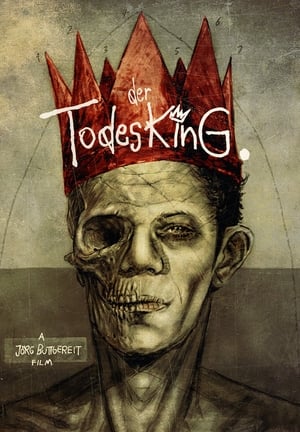
After the unexpected attention surrounding Nekromantik, Buttgereit did not immediately produce the sequel audiences expected. Instead he directed Der Todesking, released in 1990. Written with Franz Rodenkirchen and again produced by Manfred O. Jelinski, the film is structured around seven episodes corresponding to the days of a week. Suicide, murder and the desire for death replace the continuous narrative and recurring protagonists of a conventional horror feature. Between the episodes, images show a human corpse gradually decomposing.
The decision was characteristic of Buttgereit's resistance to audience expectations. He later explained that immediately supplying a more extreme Nekromantik 2 seemed predictable. Der Todesking therefore moved away from the premise that had brought him international attention and treated death more abstractly. Individual segments include private suicide, murder associated with media consumption and apparently ordinary people reaching points of emotional collapse. The film offers no central monster and little conventional suspense. Death is presented as something embedded within everyday environments rather than an external force entering them.
The recurring production team remained important despite the change in form. Jelinski served as producer, cinematographer and editor, while Rodenkirchen co-wrote, assisted direction and participated in editing. Daktari Lorenz, Hermann Kopp and John Boy Walton again contributed music. This continuity allowed Buttgereit to experiment structurally without rebuilding his production methods from the beginning. The small crew understood the mixture of practical necessity and formal experimentation required by films made with limited financing and outside normal German commercial production.
Der Todesking also clarified that Buttgereit's interest in death extended beyond sexual transgression. The film examines self-destruction, isolation and mortality without attempting to turn suicide into a single psychological explanation. Its episodic structure removes the reassurance of a protagonist whose survival might organize the story. The title figure is not a conventional character but an idea connecting otherwise separate deaths. This broader interest in the body at the boundary between life and death would continue through Nekromantik 2 and become increasingly psychological in Schramm.
Nekromantik 2 and the legal confrontation over horror
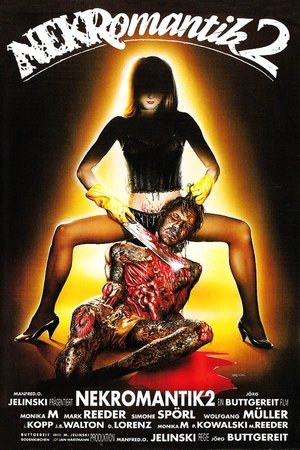
Nekromantik 2, released in 1991, returned to the world of the first film while changing its central perspective. Monika M. plays a woman who exhumes Robert's body after his death and attempts to maintain a relationship with the corpse. She later meets Mark, played by Mark Reeder, and begins a relationship with a living man while remaining emotionally and sexually attached to the dead. Buttgereit and Rodenkirchen again wrote the film, Jelinski produced and photographed it, and the soundtrack incorporated contributions from several musicians associated with the earlier films.
The sequel is longer and more controlled than its predecessor, with greater attention to Monika's emotional position. Buttgereit resisted the obvious commercial expectation that a sequel should simply increase the quantity of gore. The conflict is structured instead around Monika's attempt to reconcile an ordinary romantic relationship with desires that make such normality impossible. The film retains explicit imagery, including dismemberment and its final fusion of sex and death, but substantial sections concern domestic life, cinema-going and the uneasy development of the relationship between Monika and Mark.
The production became the point at which Buttgereit's conflict with German authorities ceased to be theoretical. A screening in Munich was raided and material connected with the film was confiscated. Buttgereit faced proceedings concerning the alleged glorification of violence, while searches and seizures also affected producer Manfred Jelinski. The process continued while Buttgereit was making Schramm. He later recalled that the legal outcome ultimately recognized the work within an artistic context, but the case prevented normal distribution for a significant period and demonstrated the practical consequences of producing extreme horror in Germany at the time.
The controversy contributed heavily to the film's later reputation, but it should not obscure its development of Buttgereit's filmmaking. Monika M.'s performance shifted the emotional center of the series from the socially weak Robert to a protagonist who actively controls her relationships with both living and dead bodies. Buttgereit later emphasized the importance of the character's apparent innocence and ordinariness. The contrast between her appearance and the behavior represented on screen was more important than creating an obviously monstrous figure. This interest in ordinary surfaces concealing private pathology became central to Schramm.
Schramm and the interior world of a serial killer
Schramm, completed in 1993, became Buttgereit's fourth major underground feature and his most concentrated study of an individual consciousness. Florian Koerner von Gustorf plays Lothar Schramm, an apparently unremarkable taxi driver whose private life includes murder, sexual obsession, self-mutilation and hallucination. Monika M. plays Marianne, his neighbor and the object of his frustrated affection. Buttgereit and Franz Rodenkirchen wrote the screenplay, while Manfred Jelinski again handled major production, cinematography and editing responsibilities.
The film abandons linear biography. Schramm is already dying at the beginning, and the narrative reconstructs fragments of his life through memories, fantasies and distorted perceptions. Events repeat or return from different mental positions, making it difficult to separate objective experience from hallucination. This structure moves Buttgereit away from the external provocation that had made Nekromantik notorious. Graphic violence remains present, but the film is organized around the psychological world that gives those images meaning to its protagonist.
Schramm's violence exists alongside extreme social banality. He works as a taxi driver, lives in an ordinary apartment and can appear polite to neighbors. His private fantasies transform bodies into objects while his inability to establish an ordinary intimate relationship with Marianne intensifies his isolation. Buttgereit does not construct him as a charismatic criminal mastermind. The character is pathetic, lonely and increasingly unable to distinguish desire from self-destructive fantasy.
Several of the film's most disturbing moments concern harm directed toward Schramm himself rather than his victims. Hallucinated bodily injury and explicit genital mutilation turn the killer's body into another site of violence. This internalization distinguishes Schramm from conventional serial-killer narratives built primarily around investigation or pursuit. Police procedure and social explanation remain peripheral. The audience is confined instead to a fragmented mental landscape in which sexuality, murder, shame and bodily anxiety repeatedly overlap.
Schramm circulated internationally through festivals, including the International Film Festival Rotterdam in 1994, and confirmed Buttgereit's reputation as more than the director of one controversial necrophilia film. It also effectively concluded the concentrated period of feature horror that had begun with Nekromantik. Buttgereit did not immediately continue producing comparable films, partly because such work offered little economic security within Germany and partly because his creative interests moved increasingly toward other media.
From underground film to theatre, radio and monster culture
After Schramm, Buttgereit increasingly worked in forms that are less internationally visible because many were produced in German for radio and theatre. He has explained that these areas eventually provided a much larger domestic audience than his underground horror films and offered professional possibilities that independent feature horror could not. His subsequent career includes radio drama, stage direction, writing, public lectures and film criticism, frequently retaining subjects associated with horror, exploitation and fantastic cinema.
His long-standing interest in Japanese monster films became particularly important. Buttgereit wrote books and presented programs on kaiju cinema, approaching Godzilla and related productions with the same seriousness he applied to underground horror. Practical monster effects, genre history and supposedly disreputable popular culture became recurring subjects of his criticism and stage work. Productions such as Green Frankenstein and SexMonster! translated B-movie, monster and exploitation conventions into theatrical performance, while Captain Berlin continued developing a homemade superhero mythology first created during his Super 8 period.
These projects demonstrate continuity rather than a complete departure from horror. Buttgereit transferred the aesthetics and cultural references of low-budget genre cinema into media where physical filmmaking was no longer required. Radio allowed him to construct violent or fantastic situations through sound, while theatre made artificiality visible rather than attempting cinematic realism. He has described this broader activity as bringing the subcultures and trash-film traditions that interested him into institutions normally associated with more conventional cultural material.
His position as a critic and genre historian also distinguishes his career from that of many directors associated with extreme cinema. Buttgereit has written and spoken extensively about horror, Japanese monster films, exploitation and censorship. The filmmaker who had originally worked outside established cultural institutions gradually became someone invited to discuss and contextualize the genres that had once placed him in conflict with those institutions.
German Angst and the return to feature horror
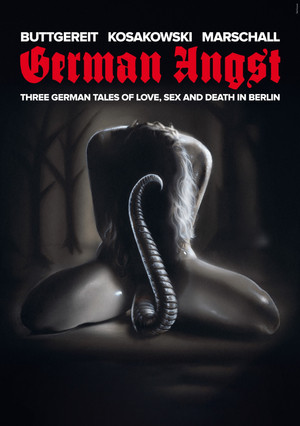
Buttgereit returned prominently to feature-length horror through German Angst in 2015, an anthology made with directors Andreas Marschall and Michal Kosakowski. Each filmmaker directed a separate segment while sharing aspects of the production environment. Buttgereit wrote and directed Final Girl, which centers on a young woman and a restrained man inside a Berlin apartment. The segment gradually reveals the relationship between victimization, revenge and bodily violence while deliberately leaving aspects of the situation open to interpretation.
The project appeared more than twenty years after Schramm and therefore became an opportunity to reconsider whether Buttgereit's methods still belonged only to the underground circumstances of the 1980s and early 1990s. His segment retained several recognizable concerns: the contrast between an ordinary domestic space and extreme private behavior, a female protagonist whose appearance does not announce the violence surrounding her, and practical bodily effects used within a story more interested in emotional disturbance than in conventional suspense.
Buttgereit spoke about deliberately introducing an element of unpredictability by casting a comparatively inexperienced young performer, connecting the approach with earlier decisions in films such as Nekromantik 2. German Angst also placed him alongside younger or differently established German horror filmmakers, making the anthology a point of contact between the underground generation associated with his early work and later German genre production.
The film did not lead to a new continuous cycle of Buttgereit horror features. His career remained distributed across theatre, radio, criticism, appearances and specialist projects. The significance of German Angst lies instead in demonstrating that the central interests of his early cinema had remained active after two decades spent largely outside feature horror.
Recurring collaborators and the handmade production of horror
Buttgereit's four principal underground features were created by a remarkably stable group. Franz Rodenkirchen co-wrote Nekromantik, Der Todesking, Nekromantik 2 and Schramm, while also contributing to editing, sound, assistant direction and other practical areas. The partnership was therefore more extensive than a conventional screenwriting relationship. Rodenkirchen participated directly in the small-scale filmmaking process through which stories were repeatedly adjusted to available performers, effects and locations.
Manfred O. Jelinski was equally fundamental. He produced the major features and performed numerous technical functions, including cinematography and editing. Buttgereit has credited Jelinski with providing equipment and practical knowledge during the transition from amateur Super 8 work to longer productions. Their collaboration gave the films a material infrastructure that Buttgereit did not possess independently and helped make sustained feature production possible without conventional studio support.
Music also developed through recurring personal relationships. Daktari Lorenz, who played Robert in Nekromantik and had already appeared in Hot Love and other early work, contributed music alongside John Boy Walton and Hermann Kopp. All three returned across the first films. Walton's melodic piano writing, Kopp's darker experimental textures and Lorenz's contributions created a soundtrack identity noticeably different from the aggressive rock or metal scoring that might have been expected from underground splatter cinema. The emotional contrast between music and imagery became part of Buttgereit's distinctive treatment of death and sexuality.
Monika M. joined this circle later but became crucial to its final phase. Her leading role in Nekromantik 2 fundamentally changed the perspective of the series, and she returned as Marianne in Schramm. The two characters are very different, yet both depend upon a naturalistic screen presence placed against material involving necrophilia, prostitution, murder and emotional isolation. Her performances became closely associated with Buttgereit's mature feature period despite the relatively small number of shared films.
Jörg Buttgereit's influence on extreme and underground horror
Buttgereit's place in horror history is closely connected with the conditions under which his films were made. West Germany had no substantial commercial horror industry capable of supporting work such as Nekromantik, and official restrictions made uncensored extreme cinema especially contentious during the home-video era. Buttgereit responded by working outside conventional production and distribution structures. Prints were carried between screenings, collaborators performed several jobs simultaneously and practical effects were constructed according to what the production could obtain rather than what a professional effects facility could supply.
This independence allowed the films to address subjects that remained unusual even within exploitation cinema. Necrophilia is the most obvious example, but the significance of the work extends to the refusal to separate death from intimacy, comedy, loneliness and everyday domestic environments. Der Todesking treats suicide without a conventional horror villain, while Schramm examines a murderer through subjective fragmentation rather than criminal investigation. Buttgereit consistently used extreme material as part of broader concerns with bodies, mortality and social isolation.
The films became particularly important through international cult circulation. Limited German distribution did not prevent them from reaching horror audiences through festivals, specialist video labels, bootlegs and later restored home-video editions. Nekromantik became the title most strongly associated with Buttgereit, but retrospective collections increasingly presented the four features as a coherent period of work. Restorations, commentaries, documentaries and soundtrack releases have preserved extensive information about their collaborative production and helped move films once circulated principally as forbidden underground objects into a documented history of European horror.
Buttgereit also occupies an unusual position between filmmaker and genre historian. His continued work as a critic, author and lecturer means that his relationship with horror did not end when regular feature production stopped. He became an advocate for monster movies, exploitation and other forms frequently excluded from respectable film culture, while his own early films underwent a comparable reassessment. The same work that once attracted censorship proceedings has subsequently been screened, restored and discussed as part of German independent and cult cinema history.
His direct filmography remains compact, which distinguishes him from prolific exploitation directors who produced dozens of horror features. Its influence instead comes from concentration. Four films made between the late 1980s and early 1990s established an immediately recognizable body of work based on physical film stock, handmade effects, taboo subjects and an unusually intimate treatment of death. Buttgereit's later return with German Angst confirmed the durability of those concerns, while his work in theatre, radio and criticism extended the same engagement with horror culture beyond conventional filmmaking.
Selected Work
Notable Horror Collaborators
Notable collaborators and creative partners throughout Jörg Buttgereit's horror career.
FR
Franz Rodenkirchen
Director / Screenwriter Collaborator
Rodenkirchen was Buttgereit's principal writing collaborator during his classic underground horror period, co-writing Nekromantik, Der Todesking, Nekromantik 2 and Schramm. He also contributed assistant direction, editing, sound and other production work, making the partnership central to the construction of all four major early features.
MJ
Manfred O. Jelinski
Director / Producer-Cinematographer Collaborator
Jelinski provided the production and technical foundation for Buttgereit's major underground films. He produced Nekromantik, Der Todesking, Nekromantik 2 and Schramm and repeatedly worked as cinematographer and editor, helping Buttgereit move from Super 8 filmmaking into sustained independent feature production.
DL
Daktari Lorenz
Director / Actor-Composer Collaborator
Lorenz worked with Buttgereit from the early horror shorts through his best-known features, including Hot Love and Nekromantik, where he played Robert Schmadtke. He also contributed music to Nekromantik, Der Todesking and Nekromantik 2, linking Buttgereit's early performance circle with the distinctive musical identity of the films.
HK
Hermann Kopp
Director / Composer Collaborator
Kopp composed music for three central films in Buttgereit's underground horror cycle: Nekromantik, Der Todesking and Nekromantik 2. His experimental and often unsettling contributions provided a darker musical counterpoint to the more melodic material used in the same films.
JW
John Boy Walton
Director / Composer Collaborator
Walton contributed music to Nekromantik, Der Todesking and Nekromantik 2 and created melodic material closely associated with the Nekromantik films. His piano-based writing helped produce the deliberate contrast between romantic music and the films' imagery of death, decomposition and necrophilia.
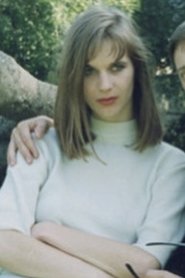 Monika M.
Director / Actor Collaborator
Monika M. became a defining performer in Buttgereit's mature underground period through the leading role in Nekromantik 2 and her subsequent performance as Marianne in Schramm. Although their principal horror collaboration consists of two features, both roles are central to the director's transition from necrophilic romance toward more psychological and character-based horror.
Monika M.
Director / Actor Collaborator
Monika M. became a defining performer in Buttgereit's mature underground period through the leading role in Nekromantik 2 and her subsequent performance as Marianne in Schramm. Although their principal horror collaboration consists of two features, both roles are central to the director's transition from necrophilic romance toward more psychological and character-based horror.
Jörg Buttgereit Horror Movies
Directing (13 credits)
2013
1993
1992
1991
1990
1988
1985
1984
1984
1984
1982
1982
Acting (19 credits)
2025
2024
2024
2023
2017
2015
2014
2013
2009
1992
1992
1991
1990
1988
1985
1984
1984
1982
1982
Writing (9 credits)
2019
2015
1993
1992
1991
1990
1988
1985
1982
Editing (6 credits)
1993
1991
1990
1988
1985
1982
Special FX / Practical FX (3 credits)
1996
1990
1988
Production (3 credits)
1993
1992
1988
Cinematography (1 credits)
1988
Production Design / Art Department (1 credits)
1988
Other Crew (1 credits)
1988