



1991
Lucio Fulci
Horror Director · Biography · Horror Filmography · Family · Collaborators · Credits
Horror subgenres & themes
Most represented across this person's horror filmography:
ZOMBIE
• CANNIBAL
• HAUNTED HOUSES
• ANIMAL
Biography
Lucio Fulci and the Horror of a World Coming Apart
Lucio Fulci occupies a strange and almost unique position in horror cinema. He became internationally famous for images of extreme physical destruction, yet reducing his work to gore means missing what makes his best films so unsettling. Fulci was fascinated not simply by bodies being damaged, but by worlds coming apart. In his horror cinema, logic weakens, reality becomes unstable, death loses its finality and the boundary between the physical and the supernatural can collapse without warning.
Long before zombies became inseparable from his name, Fulci had already spent years moving between genres. Comedy, westerns, thrillers, crime films and historical dramas formed a career built inside the highly adaptable Italian film industry, where directors frequently moved wherever audiences and producers led them. Horror did not create Fulci as a filmmaker; instead, it gave many of the instincts already present in his work their most extreme form.
The Giallo Years: Vision, Violence and Fatal Knowledge
His importance to horror can be traced through the giallo.
A Lizard in a Woman's Skin (1971) showed how naturally Fulci could combine mystery with hallucination, sexuality, psychological instability and sudden violence. The film moves through dreams and fragmented perceptions with a visual confidence that anticipates the more openly irrational horror he would embrace later. Fulci was already interested in the unreliability of sight, in characters who cannot completely trust what they have witnessed and in images whose emotional power matters more than their immediate explanation.
Don't Torture a Duckling (1972) pushed him somewhere darker. Set far from the fashionable urban environments associated with many Italian thrillers, the film places child murder inside an isolated southern community dominated by suspicion, superstition, repression and religious authority. Its violence is cruel, but the real horror extends beyond the killings. Fulci turns the community itself into a hostile environment, a place where prejudice and moral certainty can become almost as destructive as the murderer being hunted.
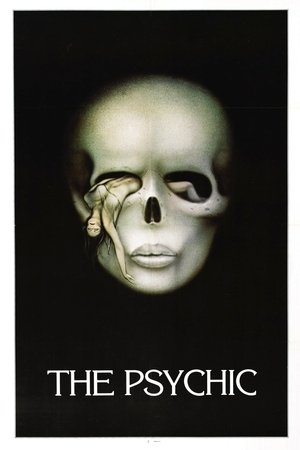
The Psychic (1977) continued his fascination with fractured perception and fatal knowledge. Visions, buried memories and clues to events that may not yet have happened create a mystery in which seeing more does not necessarily offer protection. This idea would become fundamental to Fulci's supernatural horror: knowledge can be dangerous, and understanding what is happening may arrive only when escape is no longer possible.
Zombie and the International Breakthrough
Then came Zombi 2 (1979).
Its Italian title deliberately positioned the film in the commercial wake of George A. Romero's Dawn of the Dead, released in Italy as Zombi, but Fulci's film rapidly developed an identity of its own. His living dead were not simply another version of Romero's creatures. They seemed ancient, filthy and physically connected to decomposition itself. Dirt clings to them, flesh separates from bone, worms inhabit their faces and death appears less like an event than a process that has continued long after burial.
The film contains some of the most famous images in Italian horror: an underwater confrontation between a zombie and a shark, the dead rising slowly from the earth and, most notoriously, an eye being drawn toward a splinter of broken wood. That sequence became an almost perfect expression of Fulci's relationship with the human eye.
Eyes recur throughout his horror cinema because seeing, for Fulci, is rarely passive. Characters witness things they should not see; eyes are threatened, pierced, destroyed or transformed; blindness can become another form of perception. The audience is placed in the same uncomfortable position. Fulci invites the viewer to look, then punishes the act of looking by refusing to cut away when instinct says that the camera should.
The international success of Zombi 2 opened the period on which Fulci's horror reputation rests most heavily.
The Gates of Hell Trilogy
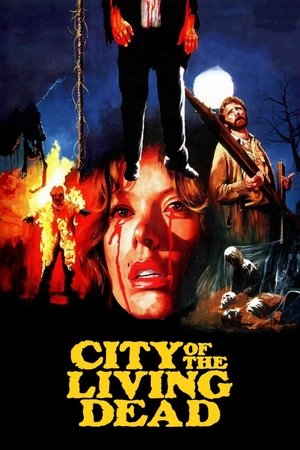
City of the Living Dead (1980) begins with a priest's suicide and expands into an apocalyptic nightmare in which the border between the living world and something infernal has been broken. Conventional cause and effect gradually become less important. People appear where they should not be, death operates according to nightmare logic and grotesque events arrive with the abrupt certainty of bad dreams.
Fulci was discovering that horror did not need to explain itself in order to be effective.
The Beyond (1981) pushed that principle much further. A Louisiana hotel stands above one of the gateways to Hell, but the premise is only a doorway into something far less orderly. Blindness, mutilation, spiders, corpses, flooded spaces and impossible geography gradually replace conventional narrative stability. Events seem connected by mood and dread as much as by plot.
The film's power lies partly in its refusal to make the supernatural manageable. There is no comforting system that the characters can completely understand and no reassuring suggestion that evil can be defeated if the correct rules are followed. The deeper they move into the mystery, the less dependable reality becomes.
The ending completes that idea with devastating simplicity. Fulci does not merely trap his characters in a dangerous place; he strips away the possibility that the world they understood still exists.
The House by the Cemetery (1981) forms the third part of what later became commonly known as Fulci's Gates of Hell trilogy. The connection between the films is thematic rather than narrative. Together they present variations on intrusion, corrupted space and the collapse of the boundary between life and death.
Here the nightmare is concentrated inside a family home. Dr. Freudstein, hidden beneath the house, turns domestic space into a structure built upon physical decay and stolen life. Fulci repeatedly transforms places that should provide security into traps: houses, hotels, hospitals, villages and city streets become environments in which ordinary rules no longer offer protection.
These films also demonstrate why Fulci cannot be understood purely through gore. The violence is unforgettable, but so are the silences, abandoned landscapes, fog, empty rooms, slow camera movements and faces staring toward something outside the frame. His horror often exists before anything violent happens. The gore is an eruption from a world that already feels diseased.
Atmosphere, Music and the Fulci Nightmare
Music was essential to that effect. The scores associated with Fulci's most celebrated horror films, particularly his collaborations with Fabio Frizzi, gave the images another layer of identity. Repetition, electronic textures and haunting melodic themes could make scenes feel simultaneously physical and unreal. The music does not simply accompany Fulci's worlds; it often seems to belong to them.
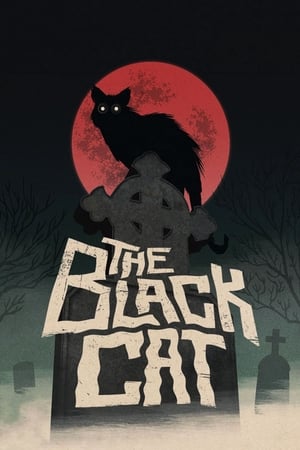
The Black Cat (1981) allowed him to approach Edgar Allan Poe, although Fulci's cinema had always been closer to a nightmare state than to conventional literary adaptation. The New York Ripper (1982), by contrast, removed much of the supernatural atmosphere and replaced it with an exceptionally vicious urban giallo. Its violence remains controversial, especially in its treatment of women, and the film is among the clearest examples of the hostility and pessimism that could surface in Fulci's work.
Manhattan Baby (1982) returned to supernatural territory, combining archaeology, possession and ancient evil. By this point the extraordinary concentration of films produced around Fulci in only a few years had established a recognizable cinematic language. Rotting bodies, wounded eyes and graphic death were the most visible elements, but underneath them lay recurring ideas about doomed knowledge, unstable perception, hostile spaces and forces that resist rational explanation.
The Later Years
Fulci's later career was far more uneven. Budgets declined, the Italian genre industry that had sustained filmmakers like him began to contract and the extraordinary momentum of his late 1970s and early 1980s work became difficult to maintain. Yet even the lesser-known films contain flashes of the obsessions that had always driven him.
Aenigma explored psychic revenge and bodily violation. Demonia returned to supernatural evil and religious imagery. A Cat in the Brain turned Fulci himself into the protagonist, playing a horror director overwhelmed by violent visions connected to his own films. Part self-parody, part compilation and part reflection on the reputation that had consumed him, it presents Fulci confronting the identity the horror world had created around his name.
Censorship, Cult Status and Critical Reassessment
That identity has changed considerably since his films were first released.
For years, Fulci was frequently discussed through censorship, gore effects and shock value. Several of his films became notorious during the British video nasty era, and this reputation helped turn him into a cult figure while also narrowing the way his work was perceived. What was once dismissed as disposable exploitation gradually received more serious attention through theatrical revivals, restored releases, critical writing and home video.
The reassessment makes sense because Fulci's strongest horror films are difficult to reproduce by simply copying their violence.
Lucio Fulci's Style and Legacy
His cinema has its own rhythm. Narratives can fracture instead of progressing cleanly. Characters may behave as though they are already halfway inside a dream. Locations carry more emotional weight than exposition. The camera can linger on beauty and decay with equal fascination. Violence does not always resolve tension; sometimes it makes the world even less understandable.
This is particularly clear when Fulci is compared with other major figures of Italian horror. Mario Bava often transformed horror into visual elegance. Dario Argento constructed elaborate nightmares through color, architecture and movement. Fulci's great horror films frequently feel less controlled, more contaminated. Their worlds seem to be decomposing while the viewer watches.
That quality is central to his legacy.
Fulci understood that horror could attack the body directly, but his most enduring films go further. They create the impression that something fundamental has gone wrong with reality itself. A corpse rising from a grave is frightening; in Fulci's cinema, the more disturbing possibility is that the grave and the living world may no longer be separate places.
His influence can be seen throughout later extreme horror and cult cinema, particularly among filmmakers attracted to practical gore, body destruction and unapologetic confrontation. Yet imitation of the surface rarely captures the atmosphere underneath. The eye wounds, crushed skulls, torn flesh and decomposing corpses are easy to catalogue. The strange melancholy surrounding them is harder to duplicate.
That is why The Beyond remains more than a collection of famous death scenes, why Don't Torture a Duckling survives beyond its mystery plot and why Zombi 2 became more than an opportunistically titled zombie film.
At his best, Lucio Fulci made horror feel contaminated.
Death spreads into architecture, landscapes, memory and vision. The living become uncertain of what they see; the dead refuse to remain where they belong. Logic offers less protection with every passing scene until the audience is left with images that continue to function even after explanation has failed.
Gore made Lucio Fulci notorious.
The worlds he created are what made him unforgettable.
Known Among Horror Fans For
Notable Horror Collaborators
Notable collaborators and creative partners throughout Lucio Fulci's horror career.
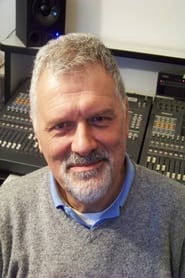 Fabio Frizzi
Defining Musical Collaborator
Frizzi worked with Fulci across fifteen years, creating music for films including Zombie, City of the Living Dead and The Beyond. His electronic textures and haunting themes became inseparable from the atmosphere of Fulci's supernatural horror.
DS
Dardano Sacchetti
Key Screenwriting Collaborator
Sacchetti helped shape the narrative foundations of Fulci's most important horror period, working on Zombie, City of the Living Dead, The Beyond and The House by the Cemetery. Their creative partnership helped define a crucial era of Italian horror.
 Sergio Salvati
Defining Cinematographer
Salvati photographed some of Fulci's most iconic films, including Zombie, The Beyond and The House by the Cemetery. His lighting, compositions and treatment of decay helped establish the visual identity of Fulci's classic horror period.
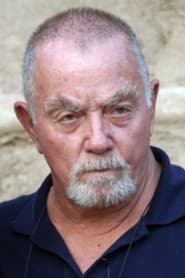 Giannetto De Rossi
Makeup & Special Effects
De Rossi helped turn Fulci's obsession with physical decay into unforgettable screen imagery. His makeup and effects work on Zombie and other collaborations contributed directly to the visceral gore and decomposing bodies associated with Fulci's cinema.
 Catriona MacColl
Recurring Lead
MacColl starred in City of the Living Dead, The Beyond and The House by the Cemetery, becoming the recurring human presence at the center of Fulci's supernatural peak and the face linking the unofficial Gates of Hell trilogy.
 David Warbeck
Recurring Actor
Warbeck worked with Fulci during the director's crucial early-1980s horror period, most notably in The Black Cat and The Beyond. His performances made him one of the recognizable English-speaking faces within Fulci's international genre productions.
Lucio Fulci Horror Movies
Directing (23 credits)
1991
1990
1990
1989
1989
1988
1988
1988
1987
1984
1983
1982
1982
1981
1981
1981
1980
1979
1977
1975
1972
1971
Writing (20 credits)
1997
1991
1991
1990
1990
1989
1989
1988
1988
1987
1985
1984
1982
1981
1981
1981
1980
1977
1972
1971
Acting (13 credits)
2019
1995
1991
1990
1990
1987
1984
1982
1982
1981
1981
1980
1979
Production (5 credits)
1989
1989
1988
1987
1980
Special FX / Practical FX (1 credits)
1987
Other Crew (2 credits)
2017
1995