
2008
Sergio Salvati
Horror Cinematographer · Biography · Horror Filmography · Collaborators · Credits
Horror subgenres & themes
Biography
Sergio Salvati and the visual language of Italian horror
Sergio Salvati was one of the most important cinematographers associated with Italian horror during its internationally influential period between the late 1970s and the 1980s. His work with Lucio Fulci helped establish the visual identity of films including The Psychic, Zombie, City of the Living Dead, The Black Cat, The Beyond and The House by the Cemetery. Later, Salvati carried his experience into English-language horror produced through Charles Band’s Empire Pictures and related companies, photographing films such as Crawlspace, Ghoulies II, Cellar Dweller, Catacombs and Puppet Master.
His importance to horror lies in the way he used lighting, contrast, color, framing and physical space to make low- and medium-budget productions appear coherent and atmospheric. Salvati did not approach cinematography as decorative photography detached from narrative. He repeatedly described the cinematographer’s job as helping a film persuade the audience that an artificial event is temporarily real. In horror, this meant controlling darkness without making images unreadable, shaping environments before violence occurred and photographing practical effects so that their physical construction remained convincing on screen.
Growing up inside the Italian film industry
Sergio Salvati was born in Rome on June 16, 1934 and grew up in Trastevere. His connection with filmmaking began through his father, Adolfo Salvati, who worked as a key grip during the early decades of the Italian film industry. As a child Sergio occasionally accompanied him to sets around Rome and saw crews working with heavy cameras, dollies and large lighting units at a time when film stocks were considerably less sensitive than those used in later decades.
The experience gave him an early understanding that cinematography depended on an entire technical structure. Camera operators, grips and electricians worked in close coordination because camera movement and light could not be separated easily. Salvati later remembered wanting to become one of the people operating the camera even before he fully understood the responsibilities of the cinematographer.
Learning film through the laboratory before the camera
When Salvati expressed a serious desire to enter cinematography, veteran cinematographer Enzo Serafin advised him not to begin immediately on a camera crew. Instead, Serafin sent him to work in a film laboratory, where Salvati spent roughly a year and a half learning development and printing. This was a traditional route into cinematography because negative exposure could be understood much more precisely after seeing what happened chemically once film left the camera.
The laboratory taught Salvati that cinematography did not end when a shot was exposed. Density, development, printing and the characteristics of film stock all affected the final image. Decades later, when digital monitoring had transformed production, he continued describing his generation of cinematographers as people who had been required to imagine the final result before seeing it projected.
Enzo Serafin and the beginning of formal camera training
After the laboratory apprenticeship, Salvati joined Enzo Serafin’s camera department. He remained with Serafin for several years and learned the progression of responsibilities that traditionally separated camera assistants, operators and directors of photography. The work gave him experience across productions considerably larger than the horror films for which he would later become internationally known.
Serafin provided the technical foundation. Salvati learned exposure, lenses, camera movement and the organization of a professional camera crew. More importantly, he learned that cinematography had to function reliably every day. A visually ambitious idea was useless if it could not be repeated, focused, processed and delivered within production conditions.
Leonida Barboni, Tonino Delli Colli and Ennio Guarnieri
Salvati subsequently worked with other major Italian cinematographers, including Leonida Barboni, Tonino Delli Colli and Ennio Guarnieri. Each represented a different visual tradition and expanded his understanding of what cinematography could accomplish. This long period as an assistant and camera operator meant that Salvati reached the position of director of photography only after observing experienced cinematographers respond to many kinds of directors and production environments.
His camera work included major films such as Sergio Leone’s The Good, the Bad and the Ugly and Pier Paolo Pasolini’s Medea. Salvati later remembered these assignments not primarily as prestigious credits but as educational experiences. Working under Delli Colli and Guarnieri showed him how a cinematographer could support a director with a strong visual personality without surrendering independent technical judgment.
From camera operator to director of photography
Salvati moved into principal cinematography at the beginning of the 1970s. By that point he had spent many years learning every stage between laboratory processing and camera operation. The transition therefore represented a change in responsibility rather than a sudden discovery of the craft.
As director of photography, Salvati was now responsible for the complete photographic strategy of a production: exposure, lighting, camera equipment, cooperation with grips and electricians, and communication with the director about how a scene should look and move. The role also required fast decisions because the Italian industry in which he worked rarely offered unlimited shooting time.
Commercial filmmaking as a school of adaptability
Before horror became central to Salvati’s reputation, he photographed material across westerns, comedy, adventure and other popular genres. This variety was characteristic of Italian production and became one of his greatest strengths. Salvati did not assume that every film should carry one permanent photographic signature.
He regarded the story and genre as the starting point. A cinematographer had to understand what emotional information an image needed to communicate and adjust lighting accordingly. The same professional could therefore create open western landscapes, brightly lit comedy or oppressive supernatural interiors without considering those approaches contradictory.
Meeting Lucio Fulci
Salvati first encountered Lucio Fulci while working on second-unit material connected with Challenge to White Fang. Producer Roberto Sbarigia had brought him onto the production to photograph additional landscape material in Austria. Fulci responded positively to Salvati’s work and subsequently asked him to photograph Four of the Apocalypse.
The meeting created the professional relationship that would define Salvati’s place in horror history. He later explained that he frequently received other offers but gave priority to Fulci whenever possible. Their partnership continued across different genres before becoming especially important during Fulci’s transition into the horror films that brought both men international cult reputations.
A working relationship based on visual shorthand
Salvati described his communication with Fulci as unusually immediate. They did not require lengthy theoretical discussions before every scene. Fulci could give a short indication, Salvati would propose a lighting or camera solution and the director would respond quickly. Over repeated films they developed enough familiarity that Salvati sometimes understood whether Fulci approved simply from the way he looked at the image.
This efficiency was particularly valuable in Italian genre production, where budgets and schedules often required rapid progress. Their collaboration also demonstrates why recurring director-cinematographer relationships can produce visual continuity without rigid rules. Salvati understood Fulci’s preferences well enough to anticipate them while remaining free to solve new problems independently.
The Psychic and a decisive move toward atmospheric lighting
Salvati identified The Psychic as an important transition in his work with Fulci. Their earlier films had used comparatively softer and more natural environmental light. The supernatural and premonitory structure of The Psychic required something different. Salvati began emphasizing shadows, controlled darkness and areas of the frame that suggested an event might occur before anything actually happened.
This became fundamental to the horror cinematography that followed. Instead of waiting for the violent moment to create fear, Salvati used lighting to prepare the audience psychologically. A corridor, room or face could carry a sense of approaching danger through the relationship between visible information and darkness surrounding it.
Using darkness without losing the image
One of Salvati’s central skills was creating blacks and deep shadows while preserving enough photographic information for the scene to remain readable. Horror lighting can easily fail if darkness simply removes visual detail. Salvati instead used selective illumination to control where the audience looked and what remained uncertain.
He described cutting light, creating shadows and deliberately darkening parts of the image according to the needs of the scene. These decisions became particularly important in Fulci’s horror because supernatural danger often exists before characters can identify it. The cinematography could therefore imply a threatening presence without showing a conventional monster directly.
Believability as Salvati’s theory of cinematography
Salvati repeatedly returned to the idea that cinema is artificial but must persuade the audience emotionally while the film is running. Lights are artificial, sets are artificial and special effects are artificial, yet all departments have to work together so that the viewer accepts the resulting event temporarily as true.
This belief explains why Salvati rejected strict divisions between cinematography and the rest of production. Lighting could not rescue an unconvincing performance, and makeup could not work if it was photographed badly. Horror was particularly dependent on this cooperation because practical effects, atmosphere, actors and camera frequently occupy the same image.
Zombie and photographing practical gore
Zombie placed Salvati inside a production where makeup effects and explicit violence were much more central than they had been in his previous work. The cinematographer needed to photograph the effects clearly enough for their impact to register while avoiding angles or lighting that would expose their construction.
Salvati later used the famous eye-injury sequence to explain the collaborative nature of filmmaking. The scene was assembled from several separate framings, moving from wider views toward extreme close-up. Makeup and practical effects supplied the physical illusion, Fulci determined how insistently the sequence should be shown and cinematography controlled how the effect survived examination by the camera.
Cinematography and practical effects as a shared craft
Salvati worked during a period when horror effects were created overwhelmingly in front of the camera. Makeup, mechanical effects, blood and prosthetics needed to exist physically under the lighting established for the scene. The cinematographer therefore became an important partner of the effects department.
A surface convincing under workshop lighting might become artificial once exposed strongly on film. Excessive darkness could hide expensive work completely, while excessive clarity could reveal edges, materials or mechanisms. Salvati’s experience allowed him to find a balance in which effects remained visible without losing their illusion.
The Fulci production group and recurring technical collaboration
The horror period surrounding Fulci developed through a relatively stable group of technicians and creative collaborators. Salvati repeatedly worked alongside editor Vincenzo Tomassi, writer Dardano Sacchetti, composer Fabio Frizzi, producers including Fabrizio De Angelis and several recurring makeup, effects and production personnel.
This continuity reduced the need to rebuild working relationships from one project to the next. Each department understood that Fulci valued strong visual and sensory effects, while Salvati knew how much photographic freedom the director expected. The films could therefore be made rapidly without starting their technical language completely from zero every time.
City of the Living Dead and the visual expansion of supernatural horror
With City of the Living Dead, Salvati’s photography moved fully into the supernatural atmosphere that had begun developing through The Psychic. The film required ordinary locations to suggest that normal physical rules were becoming unstable. The cinematography therefore relies heavily on contrast, mist, darkness and selective illumination rather than on a neutral recording of environments.
The production also required complex practical scenes to be integrated with character photography. Salvati’s responsibility was to maintain a coherent visual world so that an extreme effect did not appear to belong to a different film from the quieter material surrounding it.
Creating horror before the special effect appears
Salvati’s work demonstrates that horror cinematography is not limited to photographing monsters or gore. Some of his most important contributions occur before the visible event. By reducing portions of the frame, shaping backgrounds and allowing faces to emerge from controlled darkness, he could make the audience anticipate an attack that had not yet begun.
This strategy was economically valuable as well as dramatically effective. Low-budget horror cannot show an expensive effect continuously. Atmosphere allows the cinematographer and director to create tension using architecture, light and camera position while reserving physical effects for selected moments.
Location photography and the transformation of real places
Fulci frequently shot portions of his films outside Italy, and Salvati became accustomed to adapting real American and European locations to the fictional geography of the production. The goal was rarely documentary accuracy. A location was useful because of what its architecture, weather or available space could contribute to the film.
Salvati approached this material by identifying which physical qualities should remain recognizable and which should be altered through framing or light. Real streets, houses and landscapes could consequently become parts of a supernatural world without requiring complete studio reconstruction.
The Black Cat and adapting the photographic language again
The Black Cat required another adjustment because its rural British setting and Poe-derived material differed from the zombie and apocalyptic horror surrounding it. Salvati photographed the production in England and worked with actor Patrick Magee, whose face and performance supplied much of the film’s psychological intensity.
The assignment demonstrates Salvati’s refusal to impose exactly the same lighting scheme on every Fulci horror film. The underlying principles remained consistent, particularly the use of atmosphere and shadow, but location and subject determined the specific photographic approach.
The Beyond and the freedom of unreal space
The Beyond gave Salvati and Fulci some of their greatest freedom to move beyond ordinary spatial logic. The film shifts between recognizable locations and increasingly dreamlike or impossible environments. Cinematography had to preserve enough realism for the everyday world while allowing the supernatural material to feel as if the image itself were becoming unstable.
Salvati’s work is especially important because he could make inexpensive spaces carry a scale and abstraction not present physically on the set. This ability reached its clearest expression in the final landscape associated with the Beyond.
Finding the final landscape rather than designing it in advance
Salvati later recalled that the production initially did not know how the final vision of the Beyond should be created. While working at the De Paolis studios, he explored an unused soundstage and noticed its empty floor, dust and general desolation. He brought Fulci into the space and proposed using the existing emptiness as the basis of the sequence.
The final environment was achieved with comparatively simple means, including dust, sand and moving air. The episode is one of the clearest examples of Salvati’s practical imagination. The effect did not depend on an expensive constructed landscape. It depended on recognizing that an ordinary production space could become something abstract when photographed correctly.
Scale created through light, haze and composition
The visual effectiveness of such scenes comes from controlling depth. Dust and haze reveal light differently across the image and reduce precise information about where a space ends. A modest studio can therefore appear considerably larger when the audience cannot identify walls, ceiling or normal architectural reference points.
Salvati had learned throughout his career that cinematography can transform production limitations rather than merely conceal them. This capacity became one of the defining strengths of Italian horror, whose international visual reputation frequently exceeded the resources actually available during shooting.
The House by the Cemetery and photographing architecture as threat
The House by the Cemetery placed greater emphasis on domestic architecture. Salvati and Fulci used wide compositions, depth and movement through rooms to make the house itself participate in suspense. Salvati later recalled that the American locations offered unusually expansive interiors and exteriors that encouraged broader framing.
The film also demonstrates how his lighting could distinguish ordinary family space from areas associated with danger without creating two completely disconnected visual worlds. As characters move deeper into the building, changes in light and spatial restriction help shift the film toward increasingly claustrophobic horror.
The end of the principal Fulci collaboration
After an exceptionally concentrated period, Salvati and Fulci stopped working together regularly. Their separation was professional rather than the result of the hostility that sometimes ends long director-cinematographer partnerships. Salvati continued receiving assignments elsewhere, while Fulci’s later productions were photographed by other cinematographers.
Salvati remained deeply attached to the collaboration throughout his life. He described Fulci as both a difficult personality and an exceptionally cultured filmmaker whose understanding of cinema he respected. Decades later, when Fulci’s reputation had undergone major international reassessment, Salvati became one of the most important surviving witnesses to how those films had actually been made.
Carrying Italian horror craft into Empire Pictures
During the 1980s Salvati became increasingly involved with English-language productions associated with producer Charles Band and Empire Pictures. This period connected Italian crews and locations with American genre financing and distribution. Salvati’s experience made him especially useful because he could work quickly, communicate within international crews and deliver atmospheric horror without demanding large photographic resources.
The relationship included multiple horror productions rather than a single assignment. Crawlspace, Ghoulies II, Cellar Dweller, Catacombs and Puppet Master all placed Salvati inside a production culture different from Fulci’s films but similarly dependent on practical effects, economical schedules and clear genre imagery.
Charles Band and the economics of international horror production
Band’s companies regularly used European facilities and technicians to create films intended primarily for English-speaking genre markets. Salvati fitted this structure because his career had already been built through international co-productions and location work. He did not need the budget or crew size associated with major American studios in order to achieve controlled lighting.
This phase also demonstrates that Salvati’s horror reputation did not depend exclusively on one director. After the Fulci partnership ended, he remained employable specifically because producers believed his photographic experience could strengthen inexpensive genre productions.
Adapting cinematography to American-style horror
The Empire films required different visual priorities. Fulci’s supernatural work often permitted dreamlike discontinuity, while many of the Band productions depended on more direct narrative construction and clearly readable creature effects. Salvati adjusted by maintaining atmosphere without allowing the image to become so abstract that the central effects disappeared.
The ability to change visual grammar according to production was one of the advantages of his traditional training. Salvati did not define cinematography through one fashionable technique. He considered the director, story, sets, actors and available effects before deciding how aggressively he should shape the image.
Crawlspace and confined-space photography
David Schmoeller’s Crawlspace required Salvati to work within interiors dominated by narrow corridors, rooms and hidden observational spaces. The setting made controlled lighting especially important because characters needed to remain visible while the architecture suggested that they were being watched from areas outside their knowledge.
The production also illustrates Salvati’s ability to photograph a strong central performer within a stylized horror environment. Klaus Kinski’s face and body language carry substantial dramatic weight, so the cinematography needed to support performance rather than reduce the film to set atmosphere.
Practical monsters and late-1980s creature films
Films such as Ghoulies II, Cellar Dweller and Puppet Master returned Salvati repeatedly to practical creature effects. These productions required objects, puppets and prosthetics to appear integrated with human performers under relatively modest budgets.
His earlier experience with Fulci became directly useful. Salvati understood that an effect does not become convincing because more light is placed on it. Texture and movement have to be revealed selectively, and the cinematographer must recognize which parts of the fabrication will survive close examination.
Working quickly without treating photography as disposable
One of Salvati’s defining professional qualities was speed. Decades of commercial production had taught him to place lights efficiently and make decisions without endless testing. This did not mean treating inexpensive films casually. Salvati repeatedly expressed affection for the act of filmmaking regardless of budget.
For him, professionalism meant applying the same basic discipline even when a project could not afford elaborate equipment. The number of lamps might change, but composition, exposure and understanding of the story remained necessary.
The Wax Mask and a return to Italian Gothic horror
In 1997 Salvati photographed The Wax Mask, directed by effects artist Sergio Stivaletti and produced by Dario Argento and others from material developed originally with Lucio Fulci. The project placed Salvati back inside explicitly Italian Gothic horror many years after the period that had established his international reputation.
The production connected several generations and traditions of Italian genre cinema. Salvati brought photographic experience extending back to the 1950s, while Stivaletti came from the later practical-effects culture associated with the 1980s. The assignment demonstrated that Salvati’s approach remained adaptable even after the industrial structure surrounding Italian horror had changed dramatically.
A career extending far beyond horror
Although horror contains Salvati’s most internationally studied cinematography, he never became exclusively a genre specialist. He continued working in comedy, television, international drama and productions in North Africa. This broader career is important because it kept his craft from becoming dependent on one set of horror conventions.
Salvati maintained that the cinematographer should respond to the film rather than seek to make every production look recognizably like personal work. His horror imagery is therefore distinctive partly because it was created by someone capable of leaving that imagery behind when another genre required something else.
Morocco and the continuation of international cinematography
Salvati developed a substantial later relationship with Moroccan production. Work in Marrakech and Ouarzazate led to further assignments and to teaching activity in the region. Ouarzazate had become an important center for international location filmmaking, and Salvati’s long experience made him valuable both professionally and educationally.
This stage continued a pattern present throughout his career. He had always been comfortable working outside Italy, adapting to foreign crews and using real locations as visual resources. The geographic setting changed, but the practical method remained recognizable.
Teaching cinematography and passing on workshop knowledge
During his later years Salvati taught cinematography to younger filmmakers, including at the Centro Sperimentale di Cinematografia and in Morocco. Teaching allowed him to pass on knowledge acquired during an era when exposure, laboratory processing and physical lighting were learned through long apprenticeships.
His value as a teacher extended beyond technical instructions. Salvati represented a production culture in which cinematographers had progressed gradually from laboratory and camera assistance to complete photographic responsibility. Younger filmmakers working digitally could therefore learn not only individual lighting techniques but a broader conception of how every department contributes to the photographed image.
The AIC and cinematography as creative authorship
Salvati also became active within the Associazione Italiana Autori della Fotografia Cinematografica and served as its president. The organization has long argued for recognition of cinematography as creative authorship rather than merely technical execution.
This position corresponded closely with Salvati’s own career. He understood cameras, film stocks and laboratory processes technically, but his most important contribution came from deciding how those technical resources should create emotion. A cinematographer could be highly skilled with equipment and still fail if the resulting image did not serve the film.
Preserving the memory of Italian genre production
As international interest in Italian horror increased, Salvati became one of the most frequently interviewed technicians from Fulci’s principal period. Home-video documentaries, festival appearances and retrospective interviews allowed him to explain production methods that had rarely been documented carefully when the films were originally released.
His testimony became particularly valuable because cinematography often receives less historical attention than directing, acting or special effects. Salvati could explain why particular locations were chosen, how practical scenes were divided into shots and how apparently elaborate images were sometimes achieved through extremely simple physical solutions.
Reassessment of Fulci and Salvati’s changing reputation
During the original release of many Fulci films, Italian critical response was frequently dismissive and international distribution often emphasized exploitation value. Decades later, restored editions allowed viewers to examine the cinematography with far greater clarity than had been possible through worn theatrical or videotape copies.
This reassessment benefited Salvati directly. Images that had once circulated through dark, cropped or damaged transfers could be seen with their original composition and color relationships restored. His contribution consequently became more visible at the same time that Fulci’s status within horror history was being reconsidered.
Film restoration and the importance of photographic intent
The restoration of films photographed by Salvati also raises an important question about historical cinematography: darkness should not automatically be corrected simply because modern technology can reveal more information. Salvati frequently created deep blacks and selective visibility deliberately.
Restoration therefore depends on respecting photographic intention rather than maximizing brightness or detail. Contemporary high-resolution scans can reproduce much more information from original negatives, but the final presentation still has to preserve the balance between visible and hidden areas that the cinematographer designed.
A practical philosophy of light
Salvati never described cinematography primarily through abstract theory. He spoke in practical terms about placing lights, cutting them, creating shadows, selecting positions and understanding what a director wanted. The simplicity of this language can obscure the sophistication of the result.
His method developed from decades of experience. Because he understood exposure and physical production deeply, he did not need to transform every decision into a complicated explanation. The important question remained whether the image communicated the correct emotional information to the audience.
Working with directors rather than imposing on them
Salvati’s relationship with Fulci demonstrates his broader conception of collaboration. The cinematographer had creative responsibility but did not treat the film as an opportunity to override the director. He proposed solutions, Fulci responded and the two adjusted rapidly until the image served the scene.
This collaborative humility allowed Salvati to work with many directors whose films looked very different from one another. His craft remained recognizable through competence and atmosphere without becoming a visual formula forced onto every assignment.
Death and the end of a direct connection with classical Italian crews
Sergio Salvati died in Rome on September 17, 2025 at the age of ninety-one. By then his career had come to represent an extraordinary span of Italian filmmaking. He had entered the profession when cinematographers relied on laboratory apprenticeship and heavy lighting equipment, worked through the international expansion of Italian genre cinema and lived into an era dominated by digital cinematography and restoration.
His later interviews and teaching preserved knowledge from that earlier production culture. Salvati had worked beneath major cinematographers before becoming an author of photography himself, and his career demonstrates how expertise once moved through generations by direct contact on sets and in laboratories.
Sergio Salvati’s contribution to horror cinematography
Salvati’s principal contribution to horror was his ability to make atmosphere, physical effects and narrative space function as one photographic system. His shadows prepare violence before it appears. His lighting allows prosthetics and practical gore to remain visible without exposing their construction. His compositions transform modest locations into spaces that can feel supernatural, decayed or spatially uncertain.
The partnership with Lucio Fulci produced the most celebrated examples of this method, but Salvati’s later work demonstrates that the craft belonged to him rather than to one directorial relationship alone. From Italian supernatural horror to Empire Pictures creature films and The Wax Mask, he remained a cinematographer capable of adapting classical photographic training to changing forms of genre production. His work is therefore central not only to the visual history of Fulci but to the broader development of practical, atmospheric horror cinematography in the late twentieth century.
Selected Work

 Zombie Flesh Eaters
1979

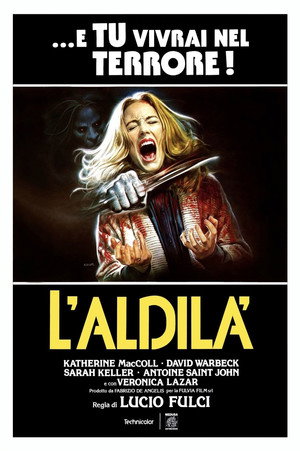 The Beyond
1981
 The Black Cat
1981
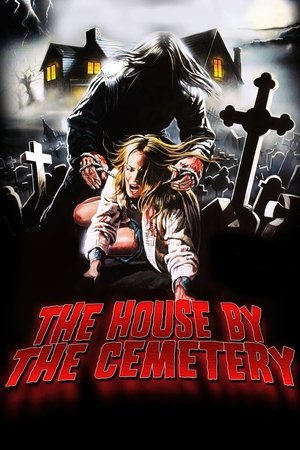 The House by the Cemetery
1981
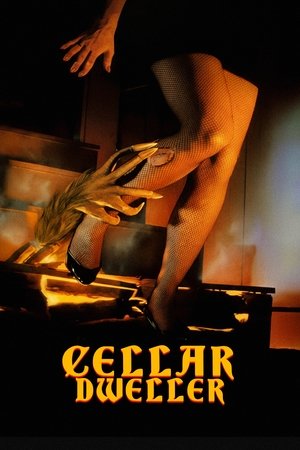 Cellar Dweller
1988
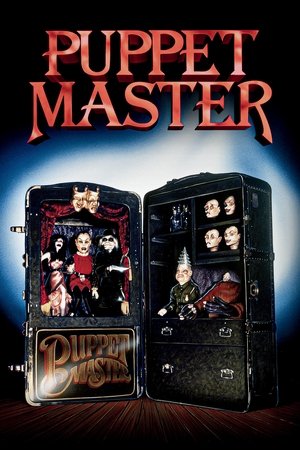 Puppetmaster
1989


Notable Horror Collaborators
Notable collaborators and creative partners throughout Sergio Salvati's horror career.
 Lucio Fulci
Cinematographer / Director Collaborator
Fulci was the defining director of Salvati’s horror career. Their recurring genre work includes The Psychic, Zombie, City of the Living Dead, The Black Cat, The Beyond and The House by the Cemetery, with Salvati helping establish the atmospheric lighting and visual continuity of Fulci’s most internationally influential horror period.
DS
Dardano Sacchetti
Cinematographer / Screenwriter Collaborator
Sacchetti and Salvati repeatedly worked within Fulci’s horror production group on The Psychic, Zombie, City of the Living Dead, The Beyond and The House by the Cemetery. Their shared films connect the narrative development and photographic identity of Fulci’s principal supernatural and zombie period.
 Fabio Frizzi
Cinematographer / Composer Collaborator
Frizzi and Salvati worked together on several major Fulci horror productions, including The Psychic, Zombie, City of the Living Dead and The Beyond. Their recurring collaboration linked Salvati’s atmospheric visual design with one of the defining musical identities of late-1970s and early-1980s Italian horror.
VT
Vincenzo Tomassi
Cinematographer / Editor Collaborator
Tomassi edited multiple Fulci horror films photographed by Salvati, including Zombie, City of the Living Dead, The Black Cat, The Beyond and The House by the Cemetery. Their recurring work connected Salvati’s framing and practical-effects photography with the editing rhythms of Fulci’s most important horror period.
 Fabrizio De Angelis
Cinematographer / Producer Collaborator
De Angelis produced Salvati-photographed horror productions including Zombie, The Beyond and The House by the Cemetery. Their three shared films belong to the commercially and visually important phase in which Fulci’s horror reached its widest international audience.
 Charles Band
Cinematographer / Producer Collaborator
Band repeatedly employed Salvati during the Empire Pictures period on horror productions including Crawlspace, Ghoulies II, Cellar Dweller, Catacombs and Puppet Master. The collaboration transferred Salvati’s Italian genre-cinema experience into a sustained cycle of English-language American horror production.
Sergio Salvati Horror Movies
Cinematography (19 credits)
1997
1989
1988
1988
1988
1988
1987
1986
1981
1981
1981
1980
1979
1979
1977
1975
1966
1965
Acting (1 credits)
1981