
1994
Michele Soavi
Horror Director · Biography · Horror Filmography · Collaborators · Credits
Horror subgenres & themes
Most represented across this person's horror filmography:
SPLATTER
• SLASHER
• ZOMBIE
• HOME INVASION
Biography
Michele Soavi and the Last Great Wave of Italian Horror
Michele Soavi emerged from the final great period of Italian genre cinema and became one of the filmmakers who most clearly transformed its traditions rather than simply repeating them. He learned inside the worlds of Lucio Fulci, Lamberto Bava and Dario Argento, working as an actor, assistant director and crew member before developing a visual language of his own. By the time he directed StageFright, The Church, The Sect and Dellamorte Dellamore, the commercial system that had sustained Italian horror for decades was already beginning to collapse. Soavi nevertheless produced a concentrated body of work that pushed the genre toward increasingly dreamlike, Gothic and existential territory.
His films are connected by a fascination with enclosed spaces and corrupted systems. A theatre becomes a slaughterhouse in StageFright. A cathedral becomes a prison built over ancient violence in The Church. Domestic space becomes the entrance to an occult conspiracy in The Sect. A cemetery in Dellamorte Dellamore becomes an entire universe where love, death and identity repeat themselves until reality itself begins to break apart. Soavi inherited Italian horror's love of violent spectacle, elaborate camera movement and surreal imagery, but increasingly used those elements to create worlds that feel psychologically unstable rather than merely dangerous.
Learning Horror from Inside the Industry
Soavi was born in Milan in 1957 and entered filmmaking from the bottom rather than arriving immediately as a director. He worked as an actor and took on numerous production jobs, including positions around the camera and assistant-directing departments. This practical education allowed him to observe genre filmmaking from several different angles at a moment when the Italian industry was producing horror, thrillers, action films and exploitation pictures at extraordinary speed.
That period placed him close to directors whose methods were radically different. On Lucio Fulci productions he encountered a filmmaker capable of creating extreme horror imagery under difficult production conditions. With Lamberto Bava he entered a more direct continuation of the Italian Gothic and giallo traditions. Dario Argento would become the decisive mentor, but Soavi's education was broader than one relationship. He learned within an industrial culture where crews, actors and technicians regularly moved from one genre film to another.
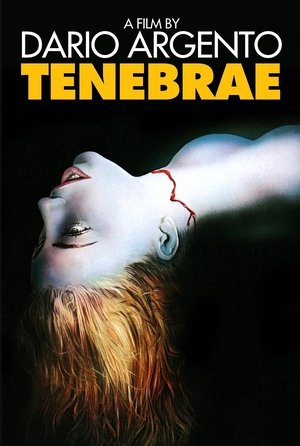
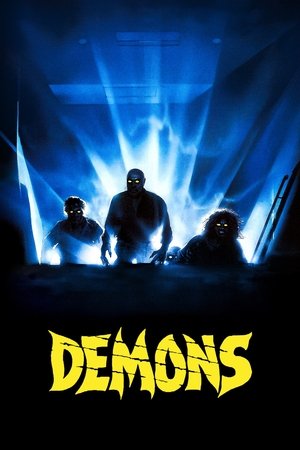
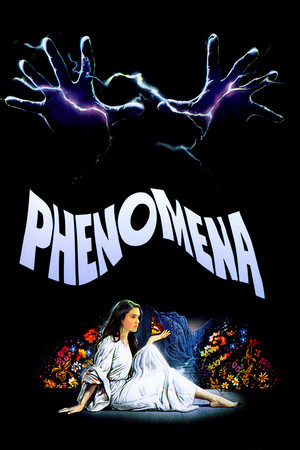
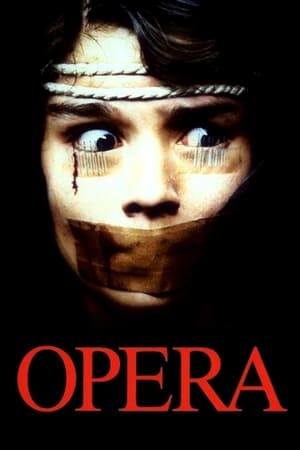
Soavi also appeared on screen in many of the productions surrounding his apprenticeship. His credits include films such as City of the Living Dead, The New York Ripper, Absurd, Tenebrae, A Blade in the Dark, Phenomena, Demons and Opera. The acting was rarely the destination. It placed him physically inside sets where he could watch experienced directors solve practical problems and construct horror imagery at close range.
Lucio Fulci and the Practical Education of Horror
One of Soavi's formative experiences came through Lucio Fulci. During the production of City of the Living Dead, Soavi was not only appearing before the camera but looking for opportunities to work behind it. He later recalled asking the production department what else he could do and being placed close to the camera crew, giving him the opportunity to observe Fulci directly.
This kind of experience mattered because Italian genre filmmaking depended heavily upon practical adaptability. Elaborate effects, international locations and extreme imagery often had to be created without the resources available to major American productions. A young filmmaker could therefore learn not simply where to place a camera but how to keep a production moving when time, equipment and money were limited.
Fulci's approach also provided one model for the physical side of horror. Soavi would never become a stylistic copy of Fulci, but his later films share an understanding that disturbing imagery can operate independently of conventional realism. Violence, bodies and architecture can become almost abstract visual material when a horror film pushes beyond ordinary narrative logic.
Lamberto Bava and the Italian Horror Network
Lamberto Bava became another important connection during Soavi's development. Their shared credits include A Blade in the Dark, Demons, Tenebrae and Bava's television version of The Mask of Satan. Soavi worked around Bava in both acting and assistant-directing capacities, gaining further experience within productions that combined the inheritance of classical Italian horror with the increasingly aggressive style of the 1980s.
Bava also played an important role in bringing Soavi more directly into Dario Argento's working circle. The Italian genre community of the period operated through precisely these overlapping relationships. A performer on one film might become an assistant on another, while writers, effects artists and technicians moved repeatedly between Argento, Bava and other directors.
Demons is particularly representative of this environment. Bava directed, Argento produced and co-wrote, Sergio Stivaletti handled major makeup effects, while Soavi worked both behind and in front of the camera. The film became a concentrated meeting point for the generation from which Soavi would soon emerge as a director himself.
Dario Argento and the Mentorship That Changed Everything
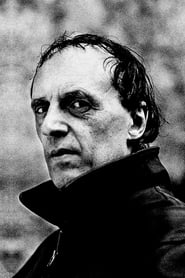
Dario Argento became the central creative relationship in Soavi's early career. Soavi had been fascinated by Argento's cinema before working with him professionally, particularly by the way the director used camera movement to manipulate attention and create fear. When the relationship eventually developed on set, Soavi moved increasingly close to the practical construction of Argento's films.
On Tenebrae, Soavi worked as a second assistant director while also making a small appearance. By Phenomena, his responsibilities had grown considerably. He served as first assistant director and worked closely with Argento during a technically demanding production. Soavi later described how detailed Argento could be in planning individual shots and how much responsibility fell upon the assistant-directing team to translate those ideas into the physical organization of the set.
The apprenticeship gave Soavi unusual access to Argento's visual thinking. He could observe how tracking shots, camera angles, music, editing and production design were conceived as parts of the same experience. This influence would remain visible throughout Soavi's horror work, yet his later films increasingly demonstrate a desire to move away from the straightforward imitation of his mentor.
Dario Argento's World of Horror
Soavi's first substantial directing project was the documentary Dario Argento's World of Horror, made while his professional relationship with Argento was deepening. The film examines Argento's work through interviews, production material and imagery from his films, but it also gave Soavi an opportunity to begin organizing cinematic material from a director's position rather than solely as an assistant.
The documentary is significant because it places Soavi at the threshold between apprenticeship and authorship. He was still documenting another filmmaker's universe, yet he was beginning to control structure, rhythm and presentation himself. The project also demonstrates the level of trust that had developed between Soavi and Argento.
That relationship would soon evolve again. Argento would not simply remain a mentor whose films Soavi helped make. He would become a producer and creative collaborator on several of Soavi's own major horror films.
StageFright and the Owl-Headed Killer
StageFright (1987) announced Soavi as a horror director with remarkable confidence. Produced by Joe D'Amato and written by Luigi Montefiori, better known as George Eastman, the film traps a theatre company inside its rehearsal space with an escaped killer who eventually adopts an enormous owl mask.
The premise belongs naturally to the slasher tradition, but Soavi treats the theatre as something more than a convenient location. The stage becomes a machine for transforming murder into spectacle. Curtains, spotlights, costumes and theatrical props continually blur the distinction between staged violence and actual killing.
The owl mask gives the murderer an unusually elegant silhouette. Instead of another conventional human face or crude disguise, the oversized bird head appears simultaneously beautiful and unnatural. The killer becomes part actor, part stage prop and part impossible creature.
Soavi structures the murders around visual choreography rather than simple surprise. Bodies are placed as though they belong to theatrical compositions, while the confined setting allows increasingly elaborate movement through corridors, backstage areas and the performance space itself.
Barbara Cupisti and the Recurring Human Presence
Barbara Cupisti became one of the performers most consistently connected with Soavi's horror world. Their professional paths had already crossed within the broader Italian genre industry before she became Alicia, the central survivor of StageFright.
Cupisti later returned in The Church and Dellamorte Dellamore, while their shared credits also extend into productions surrounding Soavi's years with Argento and other Italian horror filmmakers. Her presence therefore connects several stages of his career rather than belonging to a single film.
In StageFright, Alicia provides an essential human counterweight to the increasingly artificial environment surrounding the killer. The theatre becomes more stylized as the violence grows, but the character's fear remains immediate. Soavi repeatedly benefited from performers capable of remaining emotionally grounded while his imagery moved toward visual excess.
Sergio Stivaletti and the Material Body of Horror
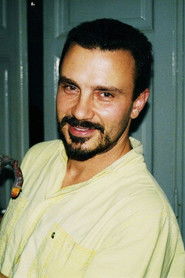
Special-effects artist Sergio Stivaletti became one of the strongest technical connections running through Soavi's horror career. Their shared work stretches across productions associated with Argento and Bava as well as Soavi's own films, including The Church, The Sect and Dellamorte Dellamore.
This continuity was particularly valuable because Soavi's cinema depends heavily upon the physical presence of impossible things. Demons, wounds, transformed bodies and supernatural creatures needed to occupy the same spaces as the actors. Practical effects allowed the camera to explore those objects directly rather than merely suggesting that something would be added later.
Stivaletti's work also fits Soavi's preference for imagery that is grotesque without becoming visually anonymous. The creatures and effects often possess elaborate silhouettes and textures, allowing horror to become part of the production design. The body is not simply destroyed; it becomes another surreal element inside the frame.
The Church and Gothic Architecture as a Monster
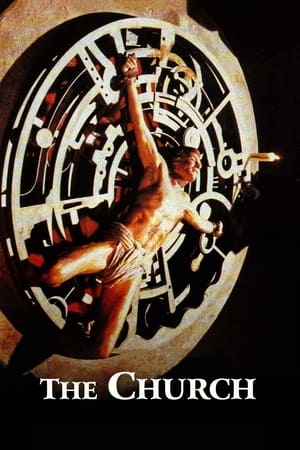
The Church (1989) expanded Soavi's ambitions dramatically. The project developed from material originally connected with the Demons cycle but became something much stranger and more Gothic under Soavi. Dario Argento produced and contributed to the screenplay, while Franco Ferrini was among the writers involved.
The film centers on a cathedral constructed over the site of an ancient massacre. When the structure's secrets are disturbed, the building effectively seals itself and traps the people inside as supernatural forces begin to emerge. Architecture therefore becomes one of the principal monsters.
Soavi treats the cathedral as a gigantic organism. Underground chambers, stairways, doors, sculptures and religious symbols create an environment where history seems physically embedded in stone. The horror does not simply enter the church; it has been waiting underneath it.
The imagery grows progressively less realistic as possession spreads. Medieval violence, demonic figures and contemporary characters begin to occupy the same symbolic space. Soavi uses the Gothic setting not as decoration but as a mechanism for collapsing different historical periods into one nightmare.
Franco Ferrini and the Writing of Visual Horror
Franco Ferrini belongs to the network of writers who helped define the Argento-Bava horror environment in which Soavi developed. Their shared credits connect Phenomena, Demons, Opera and The Church, making Ferrini an important bridge between Soavi's apprenticeship and directorial career.
The relationship is significant because Soavi's films often privilege visual logic over conventional narrative economy. Events can move according to dream associations, religious symbolism or sudden transformations rather than purely causal plotting. Writers experienced within Italian horror understood that a screenplay might need to provide a framework for images that would ultimately become more important than dialogue.
The Church is a particularly clear example. Its narrative begins as an archaeological and supernatural mystery but gradually becomes a procession of Gothic tableaux. The screenplay provides the architecture; Soavi turns that architecture into visual delirium.
The Sect and the Horror of Conspiracy
The Sect (1991) moved Soavi away from the enclosed Gothic grandeur of The Church toward occult conspiracy. The film follows a schoolteacher who becomes entangled with a Satanic organization whose influence reaches into her ordinary domestic life.
Dario Argento again produced and co-wrote, but Soavi's direction became increasingly independent in tone. The film moves freely between psychological unease, supernatural imagery and scenes whose dream logic resists easy explanation.
The result is less concerned with revealing a coherent occult system than with creating the sensation that the protagonist's reality has been infiltrated. A house, an animal, a stranger or an apparently ordinary encounter can suddenly acquire ritual significance.
This instability became one of Soavi's defining strengths. Rather than explaining the supernatural completely, he allows unrelated details to accumulate until the ordinary world feels contaminated. The audience experiences conspiracy before fully understanding its structure.
Giovanni Lombardo Radice and the Faces of Italian Horror
Giovanni Lombardo Radice provides another direct link between Soavi and the wider history of Italian horror. Their paths first crossed within films such as Fulci's City of the Living Dead, where both were still developing their genre careers.
Radice later appeared in Soavi's StageFright, The Church and The Sect. His recurring presence illustrates how strongly Soavi's filmmaking remained connected to the repertory nature of Italian genre cinema. Familiar performers could return in entirely different roles while carrying an accumulated cultural memory from earlier films.
That continuity helped Soavi construct a body of work that feels connected even when the stories have nothing in common. Actors, technicians and writers reappear as parts of an informal company, linking slashers, Gothic horror and occult nightmares through shared creative history.
Opera and the End of the Apprenticeship
Soavi remained closely involved with Argento even as his own directing career developed. On Opera he worked as second-unit director and also appeared briefly on screen. The production represents one of the final major moments in which he functioned directly inside Argento's filmmaking machinery before becoming increasingly identified with his own films.
Opera is important to the relationship because it demonstrates how long Soavi's apprenticeship lasted. He did not learn directing through one assistant job and immediately leave. Years of repeated collaboration allowed him to observe different productions, changing budgets and increasingly complex technical demands.
By the end of the 1980s, however, Soavi no longer needed to be understood primarily as Argento's protégé. StageFright and The Church had already shown that the visual education could be redirected toward a distinct sensibility.
Terry Gilliam and a Different Kind of Spectacle
Soavi also worked as a second-unit director on Terry Gilliam's The Adventures of Baron Munchausen. Although the film is fantasy rather than horror, the experience exposed him to a production scale radically different from the relatively compact Italian genre films on which he had been trained.
Gilliam's elaborate sets, large numbers of performers and highly constructed visual effects demonstrated another approach to cinematic excess. Soavi later described the experience as an important contrast to the methods he had learned from Argento and low-budget filmmakers such as Joe D'Amato.
The combination is revealing. Soavi's mature films contain both impulses: the resourcefulness of exploitation filmmaking and the desire to fill the frame with elaborate fantasy imagery. Dellamorte Dellamore would eventually push that combination further than any of his earlier work.
Dellamorte Dellamore and the Cemetery at the End of Italian Horror
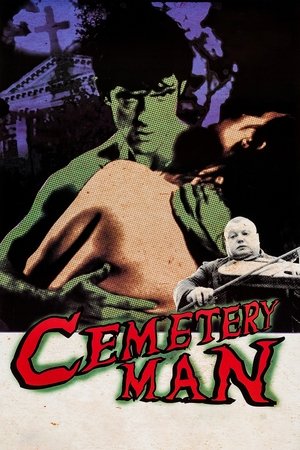
Dellamorte Dellamore (1994), released internationally as Cemetery Man, became Soavi's most complete statement as a horror filmmaker. Adapted from Tiziano Sclavi's novel, the film follows cemetery caretaker Francesco Dellamorte, played by Rupert Everett, whose routine includes killing the dead again when they return from their graves.
The premise initially resembles a blackly comic zombie film, but Soavi quickly moves beyond conventional genre structure. The dead return so regularly that resurrection becomes mundane. Francesco and his assistant Gnaghi treat zombie disposal almost like maintenance work. The strange becomes ordinary before the ordinary gradually becomes impossible.
Death therefore loses its expected finality. Characters die, return, resemble other people and reappear in altered forms. Francesco repeatedly encounters women played by Anna Falchi whose identities shift while his obsession remains constant. Love becomes as repetitive and unstable as resurrection.
The cemetery itself functions almost like a closed universe. Outside society appears increasingly absurd, while the supposedly supernatural cemetery operates according to rules Francesco understands. The distinction between life and death becomes less reliable with every repetition.
From Zombie Comedy to Existential Horror
What separates Dellamorte Dellamore from a conventional zombie film is its gradual abandonment of stable reality. Francesco begins as a cynical caretaker performing an impossible job, but his relationship with the world deteriorates until murder, resurrection and identity become increasingly interchangeable.
Soavi combines grotesque comedy with moments of extraordinary visual beauty. Graves, moonlight, ossuaries and decaying bodies coexist with romantic imagery. Death can be disgusting in one sequence and strangely seductive in the next.
The film also turns the history of Italian zombie cinema into material for reflection. Soavi had grown up professionally inside an industry that had produced enormous numbers of horror films, including some of the most famous Italian living-dead pictures. By 1994 that industrial system was collapsing. Dellamorte Dellamore feels simultaneously like an extension of that tradition and a farewell to it.
BFI has described the film as something close to the final chapter of Italy's great horror era, and the historical position is difficult to ignore. Soavi had inherited the technicians, performers and visual instincts of the previous generation, but the market capable of sustaining such films was disappearing around him.
Tiziano Sclavi, Dylan Dog and the Logic of Dellamorte
The source material came from Tiziano Sclavi, creator of the enormously successful Italian horror comic Dylan Dog. Soavi had been interested in Sclavi's work and ultimately gained access to the manuscript that became Dellamorte Dellamore.
Sclavi's mixture of horror, absurdism, romance and existential uncertainty suited Soavi exceptionally well. The story allowed him to retain practical monsters and graphic violence while moving toward more philosophical territory.
The result also explains why Dellamorte Dellamore feels different from Soavi's Argento-produced films. The earlier work often begins from a hidden supernatural mechanism that gradually reveals itself. Here, the impossible is present from the beginning. The deeper mystery is no longer why the dead return but whether the world outside the cemetery possesses any greater reality.
Leaving Horror for Television
After Dellamorte Dellamore, Soavi did not continue directing theatrical horror at the same pace. Italian genre production was contracting dramatically, and his career increasingly moved toward television and mainstream crime drama.
This transition can make his horror filmography appear surprisingly short when compared with directors such as Fulci or Argento. Yet that concentration is part of what gives it coherence. Four major horror features between the late 1980s and early 1990s trace a remarkably clear development from slasher mechanics through Gothic supernatural horror and occult conspiracy toward existential fantasy.
Soavi continued directing professionally, but the industrial environment that had produced his early work was effectively gone. His horror films consequently became documents not only of an individual filmmaker but of the final phase of an entire production culture.
Camera Movement, Architecture and Dream Logic
Soavi inherited from Argento a fascination with moving the camera beyond the requirements of straightforward storytelling. Tracking shots, overhead compositions and highly controlled visual transitions allow spaces to reveal themselves gradually rather than simply serving as backgrounds.
Architecture is especially important. The theatre in StageFright, cathedral in The Church, house in The Sect and cemetery in Dellamorte Dellamore all shape the behaviour of the characters trapped within them. Each location begins as a recognizable environment and becomes increasingly detached from ordinary physical logic.
His horror therefore often develops through spatial corruption. Doors lead toward danger, rooms conceal older structures and enclosed places acquire rules that outsiders do not understand. The monster may be human, demonic or undead, but the environment itself frequently becomes equally threatening.
Dream logic completes the effect. Images can carry meaning before narrative explanation arrives, and sometimes explanation never fully comes. Soavi trusted horror audiences to respond emotionally to a visual idea without demanding that every symbol be translated into conventional plot information.
Michele Soavi's Place in Horror History
Michele Soavi occupies an unusual position because he belongs simultaneously to the old Italian horror system and to its ending. He learned directly from filmmakers who had shaped the genre internationally, yet his own directing career began when the commercial structure supporting that cinema was already weakening.
Dario Argento gave him the most important mentorship and later supported his work as producer and writer. Lamberto Bava connected him to another branch of the same tradition. Sergio Stivaletti supplied physical creatures and effects across years of collaboration. Barbara Cupisti became a recurring human presence in his films, while Franco Ferrini and Giovanni Lombardo Radice link his directorial work to the larger network of Italian genre professionals from which it emerged.
What Soavi ultimately did with those influences was more important than simply inheriting them. StageFright turns the slasher into theatrical choreography. The Church turns architecture into supernatural machinery. The Sect turns conspiracy into hallucination. Dellamorte Dellamore turns the zombie film into a meditation on love, repetition, identity and death.
His horror career is comparatively compact, but its trajectory is unusually complete. Soavi entered the genre as an apprentice surrounded by its masters and left its great Italian production era as a director with an unmistakable visual identity of his own.
Photos (1)
Images: TMDB
Selected Work
Notable Horror Collaborators
Notable collaborators and creative partners throughout Michele Soavi's horror career.
 Dario Argento
Defining Horror Mentor
Argento became Soavi's central mentor before producing and creatively supporting the films that established him as a major Italian horror director.
 Sergio Stivaletti
Defining Special Effects Collaborator
Stivaletti connected Soavi's apprenticeship to his directing career, creating practical creatures and effects across many of their most important horror productions.
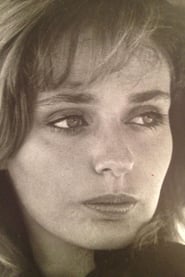 Barbara Cupisti
Recurring Horror Actress
Cupisti became one of Soavi's most important recurring performers, from the central role in StageFright through The Church and Cemetery Man.
 Lamberto Bava
Formative Horror Collaborator
Bava was a major figure in Soavi's apprenticeship, working with him across the Italian horror productions that prepared him for directing his own films.
 Franco Ferrini
Recurring Horror Screenwriter
Ferrini linked Soavi to the writing tradition surrounding Argento and Bava and collaborated on the Gothic mythology of The Church.
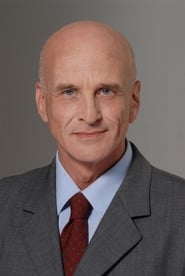 Giovanni Lombardo Radice
Recurring Horror Actor
Lombardo Radice accompanied Soavi from his early Italian horror years into StageFright, The Church and The Sect.
Michele Soavi Horror Movies
Directing (11 credits)
1991
1989
1987
1987
1985
1985
1985
1983
1982
1981
Acting (17 credits)
2019
1994
1991
1989
1989
1989
1987
1987
1985
1985
1983
1982
1982
1982
1981
1980
1980
Writing (4 credits)
1991
1991
1989
1982
Production (1 credits)
1994