
1998
Rob Bottin
Horror Special Effects · Biography · Horror Filmography · Collaborators · Credits
Horror subgenres & themes
Most represented across this person's horror filmography:
BODY HORROR
• WEREWOLVES
• ANIMAL
• HALLOWEEN
Biography
Rob Bottin and the development of modern practical horror effects
Rob Bottin became one of the most influential special makeup and creature-effects artists of modern horror during a period when practical effects were becoming increasingly complex, visible and central to the dramatic structure of genre films. His work on The Howling and The Thing helped bring prolonged bodily transformations directly into the frame, with mechanical effects unfolding visibly through sustained shots. He subsequently expanded into large prosthetic productions, character design, mechanical effects and conceptual creature work while retaining an approach rooted in sculpture, physical mechanisms and the interaction between fabricated bodies and human performers.
Bottin’s importance lies as much in how he thought about effects as in the individual creatures he produced. He entered the profession through drawing and monster fandom, learned directly from Rick Baker, developed within low-budget filmmaking and became responsible for entire effects departments while still extremely young. His strongest horror work treats a creature as a problem of character, movement, anatomy, cinematography and performance simultaneously. A prosthetic or puppet was never complete merely because it looked impressive in a workshop. It had to survive light, camera movement, actor interaction and the mechanical demands of the shot for which it had been built.
El Monte, monster culture and an unusually early professional beginning
Robin R. Bottin was born in El Monte, California, on April 1, 1959. He grew up fascinated by old horror films, monster movies and the specialist culture that developed around them through publications such as Famous Monsters of Filmland. Like many young effects artists of his generation, Bottin encountered monsters first as finished screen images and only gradually became interested in the people responsible for constructing them.
Drawing became one of his principal ways of studying creatures. Bottin studied the anatomy, expression and surface details of movie monsters, developing illustrations that eventually attracted professional attention. This visual ability remained important after he moved into sculpture and mechanics because creature effects begin long before fabrication. The artist first has to understand what the form is supposed to communicate and which parts of it must remain readable when the object is photographed.
Rick Baker and an apprenticeship built around actual workshop practice
Bottin’s career changed when, at approximately fourteen years old, he attempted to obtain an autograph from special makeup artist Rick Baker and included one of his drawings. Baker was impressed sufficiently to meet him and eventually allowed the teenager to work around his shop. What began as admiration therefore became an unusually direct apprenticeship with one of the leading young makeup-effects artists in American cinema.
Baker gave Bottin access to skills that were difficult to acquire through formal education at the time. Mold making, sculpting, foam and rubber work, painting, hair, appliances and mechanical experimentation were crafts normally learned inside specialist shops. Bottin could observe how an illustration was converted into three-dimensional anatomy and how that anatomy then had to be broken into materials capable of surviving an actual film set.
Learning that movie monsters are manufactured objects
The apprenticeship also stripped away the mystery surrounding finished screen effects. A monster might appear organic on film, but in the workshop it consisted of clay, molds, foam, fiberglass, cable mechanisms, paint, glue and repeated failures. Effects work required the artist to think simultaneously as sculptor and problem solver.
This practical attitude became fundamental to Bottin. He chose and combined materials according to the demands of each effect, drawing freely on different techniques. A transformation could use prosthetic appliances, inflatable bladders, mechanical extensions and puppetry inside the same sequence. The unity of the effect came from the finished image, not from technical purity behind the camera.
Entering professional filmmaking during the practical-effects boom
Bottin reached working age during an unusually productive period for creature effects. Science fiction, horror and fantasy production expanded rapidly during the late 1970s, while audiences increasingly expected monsters to remain visible for longer periods and perform more complicated actions. Effects artists therefore received opportunities that previous generations might have encountered only after much longer apprenticeships.
Bottin assisted on larger productions while simultaneously accepting work on inexpensive genre films. The contrast was valuable. Major productions demonstrated organization and specialized technical departments, while lower-budget horror required improvisation. Together they taught him both how an effects operation should ideally function and how to continue when ideal resources were unavailable.
Joe Dante and low-budget horror as a laboratory
Joe Dante became the director most important to Bottin’s early independent development. Piranha provided one of their first horror collaborations and belonged to the Roger Corman production culture in which limited budgets were balanced by considerable ingenuity. For a young effects artist, such films offered opportunities to perform responsibilities that would have been divided among more experienced specialists on a larger studio production.
The relationship with Dante developed because both filmmaker and effects artist were interested in older monster cinema without wanting merely to repeat it. Dante understood genre history and Bottin understood the technical tradition of movie monsters. Their collaboration gave Bottin increasing freedom to experiment with practical effects displayed openly for the audience to examine.
Moving from assistant work toward responsibility for complete effects sequences
The decisive professional transition for Bottin was the move from executing another artist’s design to becoming responsible for the concept, mechanics and final appearance of effects himself. This required more than technical confidence. A department head had to estimate whether an idea could be completed, divide work among assistants and communicate with the director about what the camera could realistically capture.
Bottin made this transition exceptionally early. His youth became a recurring point in accounts of his career because productions were assigning him major creature responsibilities at an age when many artists would still have been junior technicians. The advantage was enormous creative energy and a willingness to attempt effects for which established methods did not yet exist. The disadvantage was a tendency to assume more personal responsibility than one individual could safely sustain.
The Fog and the beginning of the John Carpenter relationship
Bottin worked with John Carpenter on The Fog, providing special makeup work and also appearing physically as the ghostly Captain Blake. The assignment gave him direct access to a director whose horror depended heavily on atmosphere, spatial control and the gradual revelation of threatening figures.
The relationship was important because Carpenter involved the effects department in staging decisions early in production. Bottin’s later work with him would demand an even closer connection between creature design, camera position and narrative structure.
Becoming a department head on The Howling
The Howling marked Bottin’s emergence as a major effects artist in his own right. Rick Baker had initially been connected with the production but left to fulfill his commitment to An American Werewolf in London. Bottin inherited responsibility for effects that included one of the most technically ambitious werewolf transformations attempted up to that point.
Joe Dante gave Bottin unusual freedom. The production gave the effects department considerable latitude to determine the physical stages of transformation. Bottin could therefore approach the scene not simply as someone illustrating written instructions but as a creator responsible for determining what bodily change should look like.
Transformation unfolding on screen
Traditional werewolf cinema often concealed transformation through dissolves, makeup stages, shadows or cuts between different appearances. Bottin wanted the audience to watch anatomy changing directly. The face could stretch, skin could shift and bone structure could appear to reorganize while the camera remained present.
This required a fundamentally mechanical understanding of makeup. A static prosthetic is designed to represent one condition. A transformation effect has to move between conditions. Bottin therefore combined appliances with inflatable bladders, articulated mechanisms and replaceable stages whose purpose was to create the illusion that one living body was becoming another in real time.
Mechanical distortion and the importance of controlled imperfection
Transformation effects do not need to reproduce literal biological processes in order to feel physical. Bottin recognized that the audience reads stretching skin, pressure beneath the face and changes in proportion as evidence of internal anatomy. The mechanisms could therefore exaggerate bodily change while creating the impression that the movement originated beneath the performer’s skin.
This approach became characteristic of Bottin’s horror. He was less interested in an academically plausible organism than in a physical effect whose behavior convinced the viewer moment by moment. The body becomes unstable because the materials themselves move, inflate, separate and collapse in front of the camera.
Working with actors inside restrictive makeup
Bottin’s effects also required unusually close collaboration with performers. Robert Picardo, who underwent the principal transformation in The Howling, later recalled that Bottin could advise him specifically about facial movement because the effects artist understood exactly how an expression would interact with the prosthetic mechanisms. Acting and mechanical operation therefore had to be coordinated.
This relationship between performer and makeup became increasingly important throughout Bottin’s career. Heavy appliances can suppress expression if they are treated simply as sculpture attached to a face. Bottin learned instead to identify which movements mattered most and to build effects around the performance that needed to remain visible.
Lighting as part of an effects design
Practical creatures are affected by cinematography in ways that workshop tests cannot completely predict. Surface texture, seams and mechanical limitations become more or less visible according to lens choice and lighting. Bottin consequently became highly attentive to how his work would be photographed.
On The Howling, cinematographer John Hora and Joe Dante helped create conditions in which Bottin’s mechanisms remained visible enough to make the transformation impressive without exposing every limitation of the materials. This balance became a recurring concern in practical horror effects: the audience has to see enough to believe the impossible event while the camera must avoid revealing why that event is technically possible.
The practical effect as a performance created by several people
A complex creature does not perform through one operator. Eyes, jaw, limbs and facial movement may require separate technicians working simultaneously. The apparent behavior of one monster therefore emerges from the coordinated actions of several people who cannot themselves appear in the frame.
Bottin’s increasing responsibilities forced him to think like a performance supervisor as well as a fabricator. Operators needed timing, actors needed eye lines and the director needed to know what the mechanism could repeat reliably. The effects department was effectively creating another member of the cast, but one whose body had to be manufactured before it could perform.
The Thing and Bottin’s most important conceptual contribution
Bottin’s collaboration with John Carpenter on The Thing became the defining work of his horror career. A fundamental design decision shaped the entire assignment. Carpenter had inherited a story about an organism capable of perfectly imitating other life forms. Bottin argued that such a creature should not possess one recognizable monster design to which it repeatedly returned.
Instead, the Thing could reveal fragments and biological possibilities accumulated through everything it had previously assimilated. One transformation could therefore look completely different from another while still belonging to the same organism. This idea gave Bottin enormous creative freedom but also removed the efficiencies that come from constructing one reusable creature.
Rejecting the idea of a definitive monster
Most creature productions depend on visual continuity. The monster is designed, approved and then reproduced for whatever scenes require it. Bottin’s concept for the Thing reversed that logic. Consistency came from behavior rather than appearance. The organism imitates, adapts and reorganizes living matter, so instability itself becomes the identifying characteristic.
This allowed human anatomy to combine with forms suggesting insects, animals and structures without a fixed taxonomic identity. Bottin attempted to avoid recognizable monster clichés because any familiar final form would imply that the Thing possessed a natural body hidden beneath its disguises. His designs instead suggest that every exposed state is temporary.
Concept design as collaborative exploration
Bottin worked closely with storyboard artist Mike Ploog while developing the transformations. The process encouraged increasingly unusual combinations of anatomy because drawings could test ideas before the shop committed months of labor to building them. Carpenter initially found some concepts extreme, but the drawings provided a practical way to determine whether the imagery could serve the film.
This stage demonstrates that Bottin’s authorship was not limited to fabrication. Creature effects begin through concept development, and his contribution to The Thing altered the visual grammar of the film before molds or mechanisms were constructed. The effects department participated in defining what the alien itself meant dramatically.
Engineering bodies in transformation
The creatures in The Thing frequently appear during an unstable transition. A chest becomes a mouth, a severed head reorganizes itself into another mobile form or a familiar body reveals anatomy incompatible with its apparent identity. Bottin therefore planned each transformation as a sequence of connected physical changes.
Each sequence required consideration of how one physical object would be replaced by another and how the audience’s attention could be directed through that substitution. The finished illusion depends on choreography among makeup appliances, full-scale puppets, mechanical rigs, editing and the human performers surrounding them.
Materials chosen according to the problem
Bottin’s team used a wide variety of materials because no single manufacturing system could satisfy every transformation. Foam latex could produce flexible skin. Fiberglass could provide rigid structure. Urethane and mechanical components could support moving appendages. Artificial fluids and food-derived substances could create wet organic textures.
The willingness to combine unrelated materials reflects Bottin’s fundamental pragmatism. Effects technology offered a flexible collection of methods that could be combined as needed. The correct technique was the one capable of surviving the shot while producing the desired visual behavior.
Building one of the largest effects operations of his early career
The scope of The Thing forced Bottin to expand from a young designer into the leader of a substantial effects unit. At its peak the department involved approximately thirty-five artists and technicians. Specialists were responsible for mechanics, molds, cosmetic finishing, hair and other processes while Bottin attempted to maintain creative continuity across the entire operation.
Managing such a team proved difficult for him. Bottin had developed as an artist accustomed to touching the work directly and remained inclined to involve himself personally in too many problems. As the number of creatures expanded, the same perfectionism that drove the designs became a serious production liability for his own health.
Perfectionism and the inability to release work to the department
Bottin later acknowledged his difficulty delegating tasks and his tendency to retain direct control over work. This approach can be productive on a small project because one artist maintains direct control over every surface and mechanism. On a large studio production it becomes physically impossible.
The Thing schedule exposed that limitation dramatically. Bottin worked for extremely long periods, slept around the production facilities and continued through sustained exhaustion. Carpenter later recalled that the workload became serious enough for Bottin to require hospitalization. The episode became one of the best-known examples of the extreme working culture that could surround practical-effects production during the period.
Stan Winston and the necessity of accepting outside help
When Bottin’s team needed relief, Stan Winston was brought in to handle the dog transformation sequence. Winston was already an accomplished effects artist and deliberately avoided claiming primary ownership of a production that remained creatively identified with Bottin. His contribution nevertheless demonstrates how collaborative even apparently auteur-driven effects work necessarily becomes.
The episode is important because Bottin’s reputation can otherwise encourage the false impression that he personally manufactured every object visible in The Thing. He established the principal design direction and supervised the overall creature work, but major practical films depend on teams and, when necessary, entire outside shops.
Dean Cundey and photographing unstable creatures
Cinematographer Dean Cundey became another essential collaborator during the execution of Bottin’s effects. Creature lighting required negotiation because Bottin wanted enough darkness to protect material while Carpenter and Cundey still needed the audience to understand the transformation.
The finished sequences often allow the viewer to see considerably more than traditional horror photography would have revealed. Carpenter has specifically recalled that Bottin encouraged placing the creature in visible light instead of hiding it completely. The risk was technical exposure, but the reward was forcing the audience to confront imagery whose physical construction occurred directly in front of the lens.
Body horror without a stable body
Bottin’s work on The Thing became especially influential because it expanded the possibilities of body horror beyond recognizable mutation. Earlier transformation effects often move from one identifiable body into another. Bottin’s creature can interrupt that process at any point and produce anatomies that have no final biological category.
The instability creates a particular kind of horror. The human body cannot be trusted to remain organized according to the relationships among face, torso, limbs and internal organs that normally define it. Bottin turned those assumptions into mechanical variables, allowing one anatomical function to be reassigned to another part of the body.
Effects spectacle and the film’s original reception
The extremity of the effects contributed to divided reactions when The Thing was released. Some contemporary criticism treated the transformations as excessive or regarded the visible gore as competing with the film’s suspense. Bottin’s work was therefore not immediately celebrated universally in the way it later would be.
The subsequent reassessment is important to his biography because the same effects eventually became central to the film’s canonical status. Later generations of artists studied the mechanics, design freedom and physical textures of the transformations as examples of what large-scale practical work could achieve before digital creature animation became widely available.
The cost of The Thing on Bottin personally
The film established Bottin internationally as a major effects artist while also revealing the unsustainable side of his working method. He had assumed extraordinary professional responsibility in his early twenties, often taking direct responsibility for technical problems across the production.
After such a production, continuing to work at the same physical intensity indefinitely would have been impossible. His later career increasingly involved larger teams, conceptual design and major productions where his responsibility could extend beyond personally manufacturing each effect.
Returning to Joe Dante and changing the visual language
Bottin’s later work with Joe Dante on the It’s a Good Life segment of Twilight Zone: The Movie demonstrated a markedly different use of practical creature design. Instead of the biological instability of The Thing, the assignment involved grotesque physical versions of imagery influenced by cartoon logic.
This became the third substantial horror collaboration between Dante and Bottin after Piranha and The Howling. The relationship is significant because Dante repeatedly allowed Bottin enough conceptual freedom to move beyond conventional makeup instructions. Their projects required different visual languages even though the same director-effects artist relationship remained underneath them.
From horror specialist to major character designer
Bottin’s reputation from horror opened opportunities far beyond the genre. Large fantasy and science-fiction productions needed exactly the combination of drawing, prosthetic knowledge and mechanical imagination he had developed while creating transformations. His career consequently expanded into projects requiring him to establish complete character designs across a range of genres.
This broader work is relevant to his horror biography because it changed the scale at which he could operate. Productions with large budgets allowed bigger shops, longer design processes and more complicated materials, while Bottin’s horror experience continued to shape how he thought about bodies, surfaces and performance.
Prosthetic character design and preserving an actor beneath the makeup
One of Bottin’s recurring concerns was the relationship between an elaborate design and the performer wearing it. Large prosthetics can easily convert an actor into a moving sculpture. Bottin instead tried to preserve areas of expression and engineer appliances that moved with underlying muscles whenever the role required recognizable acting.
This philosophy became increasingly sophisticated as his career progressed. The technical objective was not always to make the makeup invisible. Some characters were intentionally enormous or fantastic. The important question was whether the audience could still read intention, anger, fear or personality through the artificial anatomy.
Organic horror and hard-surface design
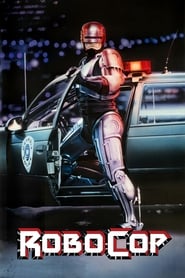
Bottin also demonstrated that his design ability was not limited to flesh. His later work on characters such as RoboCop required hard surfaces, armor and mechanical geometry, extending his design practice beyond organic mutation. The assignment proved that the visual thinking developed through creature work could be redirected toward completely different materials.
This versatility strengthened his professional position and prevented him from being confined to horror makeup. It also demonstrates that the qualities most specific to Bottin were conceptual rather than material. He could think about silhouette, movement and the relationship between body and costume regardless of whether the finished surface resembled skin or machinery.
Total Recall and recognition beyond the horror field
Bottin’s work on Total Recall brought together prosthetic characters, mechanical effects and large-scale visual illusion within one production. The project eventually received a Special Achievement Academy Award for visual effects shared by Eric Brevig, Bottin, Tim McGovern and Alex Funke.
The recognition confirmed that skills developed through practical horror had become important to mainstream visual-effects production. Bottin was no longer simply a young monster maker associated with cult films. He had become part of the highest level of studio effects work while continuing to approach artificial bodies through methods derived from hands-on fabrication.
Horror design during the transition toward digital effects
The 1990s changed the professional environment around artists such as Bottin. Digital imagery could increasingly accomplish transformations and creature movement that previously required large physical mechanisms. Practical shops remained important, but production pipelines were changing and conceptual design could become separated from final execution more easily than during the early 1980s.
Bottin continued contributing to horror in roles that reflected this transition. His contributions sometimes centered on creature design or visual consultation, with fabrication or digital execution handled by other teams.
Mimic and the role of the senior creature-design consultant
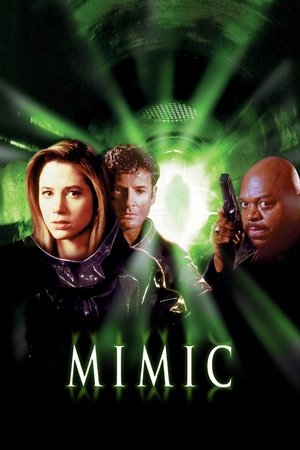
On Mimic, Bottin became involved with the design of the genetically engineered insects after earlier concepts had already been developed. Artists working on the production later recalled that he pushed the creatures toward a more threatening profile and encouraged exaggeration where literal insect anatomy produced insufficient dramatic impact.
This is characteristic of a mature Bottin approach. Natural reference remained useful, but horror design did not require biological obedience. A creature could begin with recognizable insect structures and then sharpen, enlarge or reorganize them according to what the audience needed to perceive immediately as dangerous.
Deep Rising and designing an invented organism
Bottin also served as principal creature designer during development of Deep Rising. The production explored numerous concepts before arriving at a tentacled organism influenced by marine life. Bottin supervised artists who developed the creature through drawings and sculpture while the finished film increasingly relied on digital execution.
The project illustrates how his professional role had changed from the period of The Thing. He no longer needed to fabricate every final creature personally in order to influence its anatomy. Conceptual authorship could occur earlier in the pipeline, with other specialists translating the design into final screen movement.
The Devil’s Advocate and design consultation
Bottin’s later genre work also included visual-effects design consultation on The Devil’s Advocate. Assignments of this kind used his ability to imagine bodily distortion and supernatural imagery without requiring the enormous dedicated practical shop that had characterized his earlier career.
The movement toward consultation reflects both Bottin’s seniority and the changing effects industry. The artist who had once been hired primarily because he could physically manufacture an unprecedented transformation could now be valuable because filmmakers wanted his visual judgment before deciding how an effect would ultimately be produced.
Freddy vs. Jason and an unrealized move into horror direction
Bottin had long expressed interest in directing, and during the prolonged development of Freddy vs. Jason New Line attached him to direct the crossover. The assignment was publicly announced in 1997 while numerous versions of the screenplay were circulating through development.
The project never reached production under Bottin. Scripts continued changing and the film remained trapped in development for years before a different creative team eventually made it. Bottin’s attachment is nevertheless important because it demonstrates that the industry regarded his knowledge of horror as potentially transferable from effects supervision into complete feature direction.
Why an effects artist might be considered for directing
By that stage Bottin had already performed many functions that overlap with direction. Major transformation sequences required storyboarding, actor coordination, camera planning, lighting discussions, crew leadership and decisions about rhythm. An effects supervisor working at Bottin’s level was effectively directing a specialized production within the larger film.
The transition would therefore not have been equivalent to giving a feature to someone whose experience ended at fabrication. Bottin had spent years determining how scenes needed to be photographed for effects to function. What he lacked was a completed feature demonstrating control over every department simultaneously.
A reduced public profile in the later career
Bottin took fewer high-profile assignments after the 1990s and gradually disappeared from the continuous production schedule that had defined his earlier decades. Public information about his later professional life is comparatively limited, and speculation about the reasons for his withdrawal has often exceeded what can be documented reliably.
An encyclopedic account therefore has to distinguish the observable career change from unsupported explanations. What is clear is that the period in which Bottin maintained a near-continuous succession of major makeup and creature assignments ended. His earlier work, meanwhile, became increasingly visible through restorations, documentaries and renewed interest in practical effects.
The rediscovery of practical effects culture
The digital era produced renewed interest in the handmade methods used by Bottin and his contemporaries. Behind-the-scenes material from The Howling and The Thing became educational resources for later effects artists because the finished films preserve techniques that are no longer the default solution for comparable scenes.
The attraction is not simply nostalgia. Physical effects expose a particular relationship among materials, performers and camera. A mechanism has to work within gravity and real space. It can malfunction, leak, tear or move imperfectly, but those same physical properties can produce textures and accidents that are difficult to anticipate completely before shooting.
Bottin’s influence on later creature artists
Artists who entered the industry after The Thing have repeatedly described Bottin’s work as a benchmark. Its influence involves more than foam latex or mechanical technique. The larger lesson is conceptual freedom. A creature does not have to resemble previous movie monsters if the biology of the story permits something more unusual.
This distinction is why later designers frequently discuss Bottin in relation to imagination as much as craftsmanship. The mechanisms of The Thing were technically difficult, but the most influential decision was the refusal to establish one permanent monster. Technology served an idea that had first expanded what the creature was allowed to be.
Practical effects as collaborative authorship
Bottin’s reputation is sufficiently strong that individual effects are sometimes described as if one person created them completely. His own career demonstrates why that description is inadequate. Rick Baker trained him. Joe Dante and John Carpenter gave him opportunities and creative freedom. Mike Ploog translated concepts into drawings. Dean Cundey and other cinematographers determined how effects would be seen. Mechanics, sculptors, painters, mold makers and puppeteers converted drawings into moving objects.
Bottin’s authorship lies in concept, design direction, problem solving and leadership within that collaboration. A major effects artist does not become less important because other specialists are essential. The ability to organize those specialists around one coherent creature is itself part of the craft.
Rob Bottin’s contribution to horror
Rob Bottin’s central contribution to horror was the expansion of transformation from makeup change into full physical performance. His work demonstrated that the audience could remain present while a body stretched, opened, reorganized or ceased to obey recognizable anatomy. Instead of concealing practical mechanisms completely, Bottin frequently made the transformation itself the event viewers had come to see.
His career also helped establish the modern creature-effects supervisor as a creative figure involved from concept development through photography. The transition from Rick Baker’s teenage apprentice to the designer of The Howling and The Thing occurred with extraordinary speed, but the influence lasted far longer than the period of Bottin’s most intensive production. His combination of drawing, prosthetic makeup, mechanical invention and radical anatomical imagination remains one of the major reference points in the history of practical horror effects.
Selected Work
 Humanoids from the Deep
1980
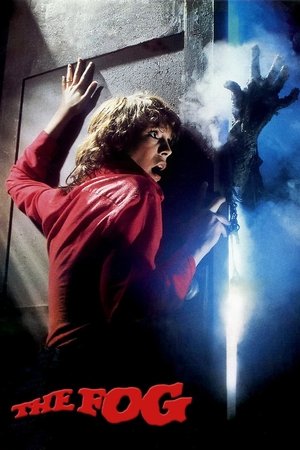 The Fog
1980
 The Thing
1982
 Twilight Zone: The Movie
1983


 The Witches of Eastwick
1987

 Mimic
1997
Notable Horror Collaborators
Notable collaborators and creative partners throughout Rob Bottin's horror career.
 Joe Dante
Special Makeup Effects / Director Collaborator
Bottin collaborated with Dante on the horror productions Piranha, The Howling and the It’s a Good Life segment of Twilight Zone: The Movie. Across those three projects Dante gave Bottin increasing creative responsibility, from low-budget effects work to full transformation and creature design.
 John Carpenter
Special Makeup Effects / Director Collaborator
Bottin collaborated with Carpenter on The Fog and The Thing. Although their direct horror collaboration consists of two films, it is historically fundamental: The Thing gave Bottin exceptional creative responsibility over the creature concept and produced the practical-effects work that became the defining achievement of his career.
Rob Bottin Horror Movies
Special FX / Practical FX (12 credits)
1997
1987
1985
1983
1982
1981
1980
1980
1980
1978
1978
Acting (4 credits)
2019
1981
1980
1980
Visual Effects (1 credits)
1985
Production (1 credits)
1981
Other Crew (1 credits)
1997