


2010
Ray Harryhausen
Horror Actor · Biography · Horror Filmography · Collaborators · Credits
Horror subgenres & themes
Most represented across this person's horror filmography:
TRUE CRIME
Biography
Ray Harryhausen and the Evolution of Cinematic Monsters
Ray Harryhausen (June 29, 1920 – May 7, 2013) was an American special effects artist and stop-motion animator whose work helped define the visual language of the giant-monster film. His most direct contribution to horror came during the 1950s, when he designed and animated creatures for The Beast from 20,000 Fathoms (1953), It Came from Beneath the Sea (1955), and 20 Million Miles to Earth (1957). These productions belong to the intersection of science fiction and horror that emerged during the atomic age, when prehistoric animals, extraterrestrial organisms, and other impossible life forms became cinematic expressions of scientific uncertainty and physical danger.
Harryhausen subsequently became associated primarily with fantasy adventure, including The 7th Voyage of Sinbad (1958), Jason and the Argonauts (1963), and Clash of the Titans (1981). His importance to horror nevertheless extends beyond the classification of individual films. The methods he developed for placing animated creatures into photographed environments provided filmmakers with a practical model for making imaginary organisms appear to inhabit the same physical space as human performers. His work also demonstrated that an artificial creature could possess recognizable behavior, apparent weight, and a degree of emotional expression. These qualities were especially important to the development of screen monsters whose effectiveness depended on their apparent existence as living beings.
Although Harryhausen became one of the most recognizable names in special effects, his creative position differed from that of a conventional film director. He generally worked within productions directed by others while exercising substantial control over the conception and execution of their effects sequences. He prepared drawings, designed models, constructed animation setups, and photographed the movements required to bring his creatures to the screen. The unusually close relationship between creature design and animation gave his work a consistency that remained identifiable across different productions and genres.
King Kong, Willis O'Brien, and the Foundations of Stop-Motion Creature Effects
Harryhausen was born in Los Angeles and developed an early interest in dinosaurs, prehistoric life, and fantastic cinema. A decisive experience came in 1933 when he saw King Kong, directed by Merian C. Cooper and Ernest B. Schoedsack, with effects animation supervised by Willis O'Brien. The film revealed the possibilities of model animation as a means of creating creatures that could move through photographed environments and interact with human actors. Harryhausen began experimenting with articulated figures, constructing miniature animals and studying the processes through which sequential photographs could produce continuous movement.
His early experiments required an understanding of physical structure as well as photographic technique. The miniature figures needed joints capable of holding precise positions between exposures, while their surfaces had to remain visually convincing under studio lighting. Harryhausen studied anatomy and movement and developed an interest in the behavior of animals as a basis for animation. During his youth, he also established contact with O'Brien, who encouraged him to improve his knowledge of anatomy. An ambitious early project, The Evolution of the World, involved prehistoric creatures and anticipated the dinosaur animation that would become central to several of his later films.
Harryhausen gained professional experience working on George Pal's Puppetoon productions during the early 1940s. His wartime activities included animation and filmmaking assignments associated with the military film unit led by Frank Capra. He also produced short films based on nursery rhymes and fairy tales. These projects provided experience with puppet construction, precise movement, and independent production, although their subjects were considerably removed from the monster cinema that would later establish his reputation.
His most important early feature assignment came with Mighty Joe Young (1949), directed by Ernest B. Schoedsack. Working under O'Brien, Harryhausen animated much of the action involving the film's giant gorilla. The production required expressive animal movement, close interaction with human performers, and elaborate combinations of miniature photography and live action. Its technical achievement was recognized with the Academy Award for Special Effects, awarded to O'Brien. For Harryhausen, the experience established the working principles that would guide his subsequent monster films: the creature had to function as a participant in the dramatic action, and its movements needed sufficient continuity and physical logic to sustain the illusion of life.
The Beast from 20,000 Fathoms and the Birth of Atomic-Age Monster Horror
The Beast from 20,000 Fathoms (1953), directed by Eugène Lourié, was Harryhausen's first major feature assignment as the principal creator of the animated creature effects. The film follows the consequences of an atomic test in the Arctic that releases a prehistoric animal from the ice. The creature, identified as a Rhedosaurus, eventually reaches the eastern coast of the United States and attacks New York City. Its appearances provided the film with its central attraction and helped establish a commercially influential form of science-fiction horror built around an enormous creature entering recognizable modern environments.
Harryhausen designed the Rhedosaurus as an imaginary prehistoric reptile rather than an accurate reconstruction of a known dinosaur. Its elongated body, powerful limbs, prominent jaws, and distinctive movement made it recognizable in both close views and wider compositions. The creature needed to communicate tremendous size while remaining sufficiently mobile to interact with buildings, vehicles, and people. Harryhausen achieved much of this effect through the relationship between miniature animation and live-action photography, using the surrounding environment to establish scale. A sequence in which the animal attacks a lighthouse remains especially important because the destruction occurs within a recognizable physical setting, allowing the effects work to become the principal source of suspense.
The film also shows how atomic-age science fiction incorporated established horror mechanisms. The revived animal is initially treated as an extraordinary scientific discovery, but its existence becomes a threat that conventional military force struggles to contain. The story adds the danger of an ancient infectious organism associated with the creature, expanding the consequences of its arrival beyond physical destruction. The narrative combines scientific investigation with increasingly destructive encounters, while the effects sequences supply the visible evidence of a danger that cannot be accommodated within ordinary experience.
The film had a documented connection to Ray Bradbury's story The Fog Horn, originally published under the title The Beast from 20,000 Fathoms. Rights to the story were acquired during the development of the production, particularly because of similarities involving a prehistoric creature and a lighthouse. Harryhausen and Bradbury had known one another before the film, but the completed feature should not be understood as a straightforward adaptation of the literary work. Its screenplay followed a substantially different narrative built around atomic experimentation and the destructive journey of the Rhedosaurus.
The success of The Beast from 20,000 Fathoms helped establish the giant-creature cycle that developed across American science-fiction cinema during the 1950s. It also formed part of the industrial background to the emergence of Godzilla (1954) in Japan. Producer Tomoyuki Tanaka encountered information about the American production while developing the project that became Gojira. The Japanese film adopted its own historical and cultural treatment of nuclear destruction, while Eiji Tsuburaya developed effects methods suited to its production requirements. Harryhausen had no involvement in Godzilla, but the international influence of The Beast from 20,000 Fathoms demonstrates the importance of his early work to the wider history of monster cinema.
It Came from Beneath the Sea and the Giant Octopus
It Came from Beneath the Sea (1955), directed by Robert Gordon, marked the beginning of Harryhausen's long professional association with producer Charles H. Schneer. The film centers on a giant octopus whose behavior has been disturbed by radioactive contamination associated with hydrogen-bomb testing. After attacking ships and coastal areas, the creature threatens San Francisco. The production follows the established pattern of the atomic-age monster film, combining scientific explanations, military intervention, and the spectacle of an animal whose extraordinary dimensions make ordinary defensive measures inadequate.
Harryhausen faced a different animation problem from the one presented by the Rhedosaurus. A giant octopus required multiple flexible appendages moving independently through water and around solid objects. The tentacles needed to appear powerful enough to damage ships and structures while remaining visibly connected to a single organism. Limited production resources influenced the design. Harryhausen constructed the animated creature with six tentacles rather than eight, relying on composition, partial concealment, and movement to prevent the reduced number from becoming an obvious limitation. The solution demonstrates how the design of a screen creature could be determined by the practical requirements of animation rather than by biological accuracy.
The film's principal effects sequences include the monster attacking maritime targets and damaging the Golden Gate Bridge. These scenes depend on the integration of animated appendages with photographs of recognizable locations. The spectacle arises from the contrast between the enormous artificial organism and structures whose actual dimensions are familiar to the audience. Harryhausen used that relationship to make the octopus appear physically threatening without requiring continuous full-body views. The selective presentation of the creature also served the film's suspense, allowing the audience to encounter its destructive capabilities before seeing its complete form.
It Came from Beneath the Sea strengthened Harryhausen's position within science-fiction horror and established a durable partnership with Schneer. Their collaboration would continue through much of Harryhausen's remaining feature career, eventually moving beyond contemporary monster stories into mythological fantasy. The film also brought Harryhausen into a second production with actor Kenneth Tobey, who had previously appeared in The Beast from 20,000 Fathoms. Tobey's recurring involvement connects two important entries in the 1950s American monster cycle, although his screen performances and Harryhausen's animation were separate creative responsibilities.
Earth vs. the Flying Saucers and the Visual Language of Alien Invasion
Earth vs. the Flying Saucers (1956), directed by Fred F. Sears, extended the collaboration between Harryhausen and Schneer into extraterrestrial invasion cinema. Unlike the preceding creature films, its principal visual attractions were mechanical objects rather than enormous animated animals. Harryhausen created effects involving flying saucers that maneuver through the sky and attack military installations and major American landmarks. The film belongs primarily to science fiction, but its invasion narrative and imagery of overwhelming external forces share important features with the period's horror cinema.
The production demonstrates Harryhausen's ability to adapt frame-by-frame animation to subjects without animal anatomy. The saucers required a different visual vocabulary, emphasizing mechanical movement, controlled changes of direction, and the impression of technological superiority. Animated models were integrated with photographic backgrounds to create aerial action and sequences of urban destruction. The attack on Washington, D.C., including the destruction of recognizable monuments, made the threat visually concrete through effects work that linked imaginary machines to familiar national architecture.
Its importance within Harryhausen's career lies in this expansion of the techniques established by his earlier monster films. He had already shown how a giant organism could occupy a photographed landscape; Earth vs. the Flying Saucers applied comparable methods to hostile extraterrestrial technology. The film is therefore relevant to the broader history of science-fiction spectacle and invasion imagery, although it should be distinguished from Harryhausen's direct work on creature-centered horror.
20 Million Miles to Earth and the Tragedy of the Ymir
20 Million Miles to Earth (1957), directed by Nathan Juran and produced by Charles H. Schneer, brought Harryhausen back to the giant-monster format. An American spacecraft returning from Venus crashes near Sicily, and a recovered specimen produces an unfamiliar living creature. The organism grows rapidly after reaching Earth, escapes human confinement, and eventually becomes the object of a military pursuit that culminates in Rome. Harryhausen developed the project around the possibilities offered by an extraterrestrial animal whose appearance and behavior could change as its body increased in size.
The creature became widely known as the Ymir, although that name is not spoken in the completed film. Its design combines reptilian features with a more upright and expressive physical structure. Harryhausen gave it long arms and a flexible body that allowed movement beyond the relatively conventional actions of a giant dinosaur. The model could reach, struggle, recoil, and respond to nearby objects with movements that suggested a distinct animal intelligence. These qualities were particularly important because the creature appears at several stages of development, beginning as a small organism emerging from a gelatinous mass before growing into a dangerous giant.
The early scenes involving the Ymir establish a relationship between physical vulnerability and the threat the creature eventually represents. It is an unfamiliar animal placed in an environment it does not understand, and much of its aggressive behavior follows human efforts to restrain or destroy it. Harryhausen exploited the contrast between its considerable strength and its reactive movements, allowing the creature to seem frightened or defensive even when its actions become destructive. This approach recalls the treatment of Kong in King Kong and distinguishes the Ymir from monsters designed primarily as expressions of malevolence.
The effects become increasingly complex as the animal grows. An encounter in a barn combines the animated creature with a dog and human activity, while the confrontation with an elephant at a Roman zoo requires the illusion of two substantial animals struggling within the same space. The sequence uses animated movement and compositing to coordinate the actions of the Ymir with photographed elements. Its dramatic effectiveness depends on the physical reactions of the participants, as both animals appear to respond to the force and position of the other.
The climactic pursuit through Rome culminates at the Colosseum, where the creature is confronted by military forces. The setting gives its increasing size a recognizable architectural reference, while the escalation of violence returns the film to the familiar conclusion of the giant-monster narrative. Harryhausen regarded 20 Million Miles to Earth as the conclusion of an important phase of his career, ending the sequence of black-and-white contemporary monster films that had begun with The Beast from 20,000 Fathoms. The Ymir remains one of his most developed contributions to horror because its animation supports both the physical spectacle and the tragic implications of the narrative.
Dynamation and the Techniques Behind Harryhausen's Monster Effects
Harryhausen's principal technical contribution involved the refinement of methods for combining stop-motion models with live-action photography. The approach later marketed under the name Dynamation allowed animated creatures to appear between different layers of photographed material. Instead of placing a model against a visibly separate miniature background, Harryhausen used projection and masking procedures to integrate the figure into the apparent depth of an existing scene. This process became especially important when monsters moved behind buildings, passed in front of actors, or interacted with objects occupying different areas of the image.
In the technique developed for The Beast from 20,000 Fathoms, a photographed background could be projected behind the model and selectively combined with foreground material through carefully controlled exposures. Parts of the projected image were masked while the animated figure was photographed, then the process was repeated to complete the composition. This created the illusion that the model existed within the same environment as the photographed performers. The method offered a practical alternative to more expensive compositing systems and was refined for subsequent productions.
Stop-motion itself required the animator to move a physical model through a sequence of individually photographed positions. At standard sound-film projection speed, twenty-four frames represented one second of screen time. A convincing performance therefore depended on the accuracy of very small adjustments made over extended periods. The model had to maintain its balance, preserve continuity of movement, and react consistently to the action established in the live-action footage. Errors in positioning or timing could become conspicuous when the completed sequence was projected.
Creature design and animation were closely connected within Harryhausen's working method. The internal armature established the range of possible movement, while the outer sculpture determined how convincingly that movement would register on film. A creature with insufficient flexibility could not perform complex actions, while excessive mechanical freedom could make it difficult to preserve a consistent posture. Harryhausen addressed these competing demands by constructing models suited to particular sequences and developing their behavior in relation to the requirements of the scene.
For horror cinema, the importance of these methods was practical as well as aesthetic. They made it possible to show a monster acting within a recognizable human environment rather than relying entirely on suggestion, isolated close-ups, or actors reacting to an unseen threat. Harryhausen also demonstrated that animated effects could contribute to characterization. The movements of his creatures supplied information about their apparent instincts, physical limitations, and responses to danger. Those possibilities remained relevant to later practical creature effects, even when filmmakers adopted different materials and animation systems.
Prehistoric Creatures, Skeletons, and Medusa: Horror Imagery Beyond the Monster Film
After 20 Million Miles to Earth, Harryhausen increasingly concentrated on fantasy adventure. The 7th Voyage of Sinbad (1958), directed by Nathan Juran, introduced a range of mythological creatures and marked an important transition to color production. The film includes a Cyclops, a dragon, and an animated skeleton that engages the human protagonist in sword combat. These characters belong to a fantasy narrative, but their visual design draws upon monstrous anatomy and supernatural imagery closely associated with horror. The Cyclops in particular was developed with grotesque physical details intended to make it appear as a distinct imaginary organism rather than a human performer wearing a costume.
Jason and the Argonauts (1963), directed by Don Chaffey, expanded the possibilities of animated figures interacting with live actors. Its celebrated battle against seven skeleton warriors required carefully coordinated movements between photographed performers and individually animated models. The sequence is particularly relevant to the history of horror effects because it demonstrates the convincing movement of animated human remains as apparently independent beings. The skeletons emerge from the earth and advance as armed opponents, combining imagery associated with the supernatural dead with the physical requirements of an action sequence. The scene influenced the wider visual tradition of animated skeletal enemies in fantasy and horror.
Harryhausen returned to prehistoric subjects in One Million Years B.C. (1966), a Hammer Films production directed by Don Chaffey. Its animated dinosaurs supplied the film with encounters between human figures and enormous prehistoric animals. Although the production is principally a prehistoric fantasy adventure, its creature sequences continue the tradition established by the earlier giant-monster films. The contrast between vulnerable human bodies and large predatory organisms remained central to the spectacle, with danger conveyed through animal movement and the relationship between animated creatures and photographed landscapes.
The Valley of Gwangi (1969), directed by Jim O'Connolly, provided a more direct return to the giant-creature narrative. The film combines Western adventure with a prehistoric animal discovered in an isolated valley and subsequently transported for public exhibition. Its central dinosaur eventually escapes and threatens people in a populated setting. The story shares important structural features with King Kong and Harryhausen's earlier monster films, particularly the capture of an extraordinary animal, its exploitation as an attraction, and the destructive consequences of removing it from its natural environment. The production allowed Harryhausen to revisit dinosaur animation with the experience gained during more than two decades of feature work.
Clash of the Titans (1981), directed by Desmond Davis, was Harryhausen's final major feature production. Its mythological creatures included the Kraken, giant scorpions, and Medusa. The Medusa sequence has particular significance for the relationship between fantasy effects and horror imagery. The creature moves through a darkened environment with a serpentine lower body and living snakes extending from her head, while the threat of petrification determines how the human protagonist must confront her. Harryhausen emphasized the physical movement of the figure and its interaction with the surrounding environment, creating a sequence in which suspense derives from the location, the creature's behavior, and the danger of direct visual contact.
Influence on Horror Filmmaking and the Preservation of Harryhausen's Work
Harryhausen's influence on later filmmakers extends across special effects, creature design, and animation. His work was an important point of reference for artists who subsequently entered fields including puppetry, prosthetic effects, model animation, and computer-generated imagery. The connection is especially apparent in the emphasis he placed on giving imaginary organisms recognizable physical behavior. For later creature artists, his films provided examples of how design and movement could support an audience response beyond the immediate spectacle of an unusual body or destructive action.
Filmmakers and effects artists including Peter Jackson, Steven Spielberg, George Lucas, and Phil Tippett have acknowledged Harryhausen as an important influence. Their work developed through different production methods and technological conditions, but the shared interest in making extraordinary creatures appear dramatically credible reflects an important continuity with his filmmaking. His example was also relevant to artists working directly within horror, including creature designers who grew up watching the giant-monster films of the 1950s. The career of Chris Walas, for example, illustrates how fascination with Harryhausen's animated creatures could precede professional work in practical monster effects and animatronics.
The historical significance of Harryhausen's effects is especially clear when considered in relation to changes in screen technology. Stop-motion animation was eventually supplemented or displaced in many large productions by computer-generated imagery, but the underlying problems of creature performance remained recognizable. A monster still required convincing movement, coherent interaction with actors, and behavior appropriate to its physical construction. Harryhausen addressed these problems through individually manipulated models and photographic compositing, often with a comparatively small technical operation and substantial personal control over the resulting images.
His professional achievements received formal recognition in 1992, when he was presented with the Academy of Motion Picture Arts and Sciences Gordon E. Sawyer Award for his contributions to motion-picture technology. The award recognized a career extending from the studio animation practices of the 1940s through the major fantasy effects productions of the early 1980s. Harryhausen also devoted considerable attention to preserving the models, drawings, and production materials associated with his films. The Ray and Diana Harryhausen Foundation, established in 1986, became responsible for maintaining and conserving his collection after his death in 2013.
Within the history of horror, Harryhausen occupies a particularly important position in the development of the screen monster as an animated physical presence. His direct genre contribution was concentrated in the atomic-age creature features, while his subsequent fantasy productions extended many of the same technical principles into other kinds of storytelling. The Rhedosaurus, the giant octopus, and the Ymir document the evolution of his methods during the period when giant creatures became a major form of popular cinematic terror. Their construction and animation remain useful historical examples of how practical effects established the appearance, movement, and dramatic function of impossible living organisms.
Selected Work
Notable Horror Collaborators
Notable collaborators and creative partners throughout Ray Harryhausen's horror career.
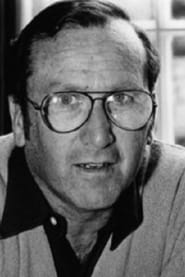 Charles H. Schneer
Producer / Visual Effects Artist
Schneer produced It Came from Beneath the Sea (1955) and 20 Million Miles to Earth (1957), two important examples of Harryhausen's atomic-age creature effects. Their partnership began with the former and continued across numerous fantasy and science-fiction productions.
 Kenneth Tobey
Actor / Visual Effects Artist
Tobey appeared in The Beast from 20,000 Fathoms (1953) and starred in It Came from Beneath the Sea (1955), both featuring creatures designed and animated by Harryhausen. The films represent their two shared contributions to the American monster cycle of the 1950s.
Ray Harryhausen Horror Movies
Acting (4 credits)
2008
1994
1957
Visual Effects (3 credits)
1957
1955
1953