

2024
Jeffrey Dean Morgan
Horror Actor · Biography · Horror Filmography · Family · Collaborators · Credits
Horror subgenres & themes
Most represented across this person's horror filmography:
POSSESSION
• ZOMBIE
Biography
Jeffrey Dean Morgan and the Charisma of the Horror Antihero
Jeffrey Dean Morgan developed one of the most recognizable modern horror identities through characters who rarely fit comfortably into the categories of hero or monster. His genre career moves from the haunted family mythology of Supernatural through psychological and supernatural horror films to Negan, the smiling tyrant who became one of the central human threats of The Walking Dead. Morgan's strongest horror performances depend on the same contradiction: warmth and menace can exist in the same face, sometimes within the same sentence.
That ambiguity has allowed him to work across very different forms of horror. John Winchester is a father damaged by supernatural obsession. Max in The Resident turns apparent charm into invasive menace. Clyde Brenek in The Possession is a parent attempting to save his daughter from an ancient entity. Gerry Fenn in The Unholy begins as a compromised journalist confronted with apparently miraculous events. Negan, meanwhile, moves from brutal antagonist toward something far more unstable: a killer capable of loyalty, humor, guilt and reluctant cooperation.
Morgan therefore occupies an unusual place in contemporary horror. He has played victims, hunters, predators and survivors, often using essentially the same charismatic screen presence for completely opposite purposes. The audience may trust him immediately or distrust him for exactly the same reason.
Supernatural and John Winchester
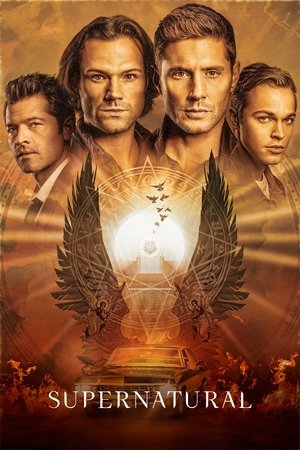
Morgan entered one of his most important genre roles with Supernatural, playing John Winchester, father of Sam and Dean Winchester. The series begins from a family trauma: the supernatural death of Mary Winchester drives John into a life devoted to hunting the forces responsible, and his sons grow up inside the consequences of that obsession.
John is therefore not simply the experienced monster hunter who teaches the younger protagonists how to survive. His absence, secrecy and emotional damage shape the Winchester brothers as much as his knowledge does. The family has been reorganized around horror long before the series begins.
Morgan gives the character authority without making him emotionally simple. John loves his sons, but his determination to prepare them for supernatural danger has also deprived them of an ordinary childhood. The contradiction became central to the early mythology of Supernatural: protecting a family from monsters can itself damage the family.
Jensen Ackles and the Father-Son Conflict
Jensen Ackles' Dean Winchester carries much of John's influence most visibly. Dean inherits his father's dedication to hunting, his attachment to the family mission and much of his willingness to suppress fear behind confidence and humor.
The relationship is never completely comfortable. Dean desperately values his father's approval, while the demands of the Winchester mission repeatedly force him into responsibilities far beyond those of an ordinary son. Morgan and Ackles therefore establish a relationship in which admiration, loyalty and resentment can exist simultaneously.
That dynamic helped give the supernatural mythology emotional weight. Ghosts, demons and other creatures matter because the Winchester family has already sacrificed enormous parts of itself to fighting them.
Jared Padalecki and the Other Winchester Son
Jared Padalecki's Sam Winchester responds very differently to John. Where Dean is more willing to accept the family mission, Sam initially attempts to escape it and create a life outside hunting.
This makes John's relationship with Sam another central source of conflict. Father and son share determination and stubbornness while frequently disagreeing about what the family should become. Morgan's performance allows John to remain understandable even when his decisions create emotional distance.
Together, Morgan, Ackles and Padalecki established the damaged family structure underneath the show's monster-of-the-week mythology. The supernatural danger is inseparable from the way the Winchesters respond to grief.
The Resident and Horror Behind the Walls
The Resident (2011) used Morgan in almost the opposite way. Hilary Swank plays Juliet Devereau, a doctor who moves into a new apartment and gradually realizes that the apparently safe space around her has been compromised.
Morgan plays Max, the landlord whose friendly and attractive exterior conceals obsessive behavior. The threat is not supernatural. It comes from violation of privacy, surveillance and the realization that someone who controls access to the home has been using that access against the person living inside it.
The casting works because Morgan does not initially look like an obvious horror villain. Max can appear attentive and reassuring, allowing the audience to understand why Juliet might lower her guard around him.
The film therefore turns Morgan's charisma against the viewer. The same ease that can make a character trustworthy becomes the mechanism that allows danger to remain hidden.
The Possession and Supernatural Fatherhood
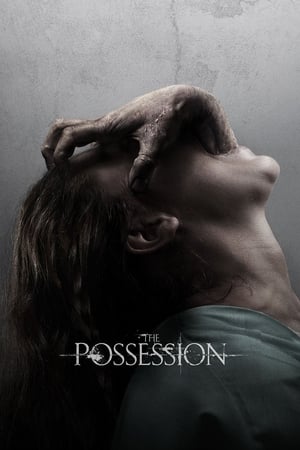
The Possession (2012) returned Morgan to supernatural family horror. Directed by Ole Bornedal, the film casts him as Clyde Brenek, a divorced father whose daughter Emma acquires an antique box connected to a destructive supernatural presence.
The story develops through the deterioration of the child rather than immediate spectacle. Changes in Emma's behavior initially appear explainable through family stress before evidence increasingly suggests something beyond ordinary psychology.
Morgan plays Clyde as a father attempting to remain rational while his explanations collapse. His role is therefore fundamentally protective. Horror enters through the fear that a parent may recognize that something is wrong with a child without possessing the knowledge required to stop it.
The film eventually identifies the threat with the mythology of the dybbuk box and moves toward exorcistic horror, but Morgan keeps the emotional center focused on the damaged family. Saving Emma also requires Clyde and his former wife to overcome some of the distance between them.
Ole Bornedal and Character-Driven Possession Horror
Ole Bornedal was important to Morgan's transition into feature horror because The Possession did not ask him simply to react to effects. Morgan has explained that he responded to the film as a story about people experiencing terrifying events rather than as an exercise built only around conventional horror mechanics.
That emphasis suited his performance style. Clyde must remain recognizable as a father before the supernatural material can become effective. The more ordinary the family appears, the more disturbing Emma's transformation becomes.
Bornedal also allows significant sections of the film to develop through atmosphere, family conflict and observation before the possession mythology fully takes control.
Sam Raimi and a Recurring Horror Connection
Sam Raimi became an important behind-the-scenes connection in Morgan's horror career through Ghost House Pictures. Raimi produced The Possession, bringing Morgan into a production company already strongly associated with supernatural horror.
The connection became more significant when Morgan later starred in The Unholy, another supernatural horror production associated with Raimi. These films are unrelated narratively, but both place Morgan at the center of stories where apparently understandable human situations gradually reveal a malevolent supernatural force.
The repetition is more meaningful than a simple shared credit. In both cases Morgan functions as the grounded adult through whom the audience enters a supernatural mystery, allowing the films to build horror around recognition, disbelief and eventual confrontation.
Negan and The Walking Dead
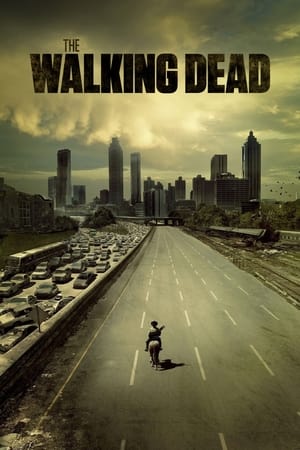
Morgan entered The Walking Dead as Negan at the end of the sixth season, and the character immediately changed the balance of the series. Negan leads the Saviors and controls communities through fear, violence and a system built around submission.
His introduction depends heavily upon performance. Negan talks constantly, jokes while threatening people and uses theatrical confidence to control a group before violence even occurs. Morgan developed a distinctive posture, rhythm and vocal delivery that made the character recognizable before his history had been fully explored.
The brutality of Negan's early appearances is inseparable from humor. He can appear genuinely entertained by himself while other characters are terrified. That collision makes him unpredictable because the audience cannot rely on a conventional separation between comic relief and threat.
Negan also demonstrates another recurring strength in Morgan's horror work: charisma itself can become dangerous. The character controls people partly through physical violence but also through the ability to dominate every conversation and make himself the center of attention.
Andrew Lincoln and the War with Rick Grimes
Andrew Lincoln's Rick Grimes becomes Negan's principal opponent during the period that defines Morgan's arrival in The Walking Dead. The conflict is larger than a confrontation between two individual men. Each represents a different structure for surviving the apocalypse.
Rick has built relationships around loyalty and community, even when his leadership becomes ruthless. Negan constructs order through hierarchy, punishment and the constant possibility of spectacular violence.
Morgan and Lincoln therefore play against each other as rival forms of authority. Negan attempts not merely to kill Rick but to break his certainty and demonstrate that resistance is pointless.
The relationship provides Morgan with one of the most important dramatic frameworks of his horror career. Negan becomes frightening because Rick, previously established as one of the series' strongest survivors, can be rendered powerless in his presence.
From Villain to Unstable Ally
Negan could easily have remained a fixed antagonist, but The Walking Dead gradually complicated him. Imprisonment, changing communities and new threats force the character into situations where brutality no longer automatically provides power.
Morgan uses those changes without pretending the earlier violence has disappeared. Negan can perform acts of genuine protection and still carry the consequences of what he did when controlling the Saviors.
This development separates him from horror villains whose identity depends upon permanent repetition. Negan changes because the social world around him changes, yet the possibility of the earlier man returning never completely disappears.
The tension becomes especially important in his relationship with Maggie, whose personal history gives her reasons that cannot be erased by Negan's later behavior.
Lauren Cohan, Maggie and the Weight of Memory
Lauren Cohan became Morgan's most important long-term horror co-star through Maggie Rhee. Their relationship begins with an act of violence that permanently defines the way Maggie sees Negan.
Unlike characters capable of encountering a changed Negan without direct personal history, Maggie cannot separate the man in front of her from the person responsible for one of the central traumas of her life. Morgan and Cohan therefore play a relationship in which cooperation never automatically becomes forgiveness.
This gives their scenes unusual tension even after Negan is no longer functioning as the primary villain. Every apparent moment of trust remains connected to a past neither character can remove.
The relationship proved strong enough to become the foundation of The Walking Dead: Dead City, moving Maggie and Negan away from the original ensemble and placing their unresolved history at the center of a new horror environment.
Dead City and Negan Beyond the Original Series
The Walking Dead: Dead City takes Negan and Maggie into a ruined Manhattan separated from the social structures of the original series. The vertical cityscape, enclosed streets and enormous population of walkers give the franchise a different physical environment while preserving its central mixture of undead horror and human conflict.
For Morgan, the series allows Negan to exist outside the role that originally introduced him. He is no longer simply the tyrant opposing Rick's group or the prisoner attempting to prove he has changed.
The history remains present, particularly through Maggie, but the new environment forces both characters into situations where older identities become useful and dangerous simultaneously.
By the third season, Morgan and Cohan remain the central pair, demonstrating how completely Negan evolved from a major antagonist into one of the continuing anchors of the wider Walking Dead horror universe.
The Unholy and Religious Horror
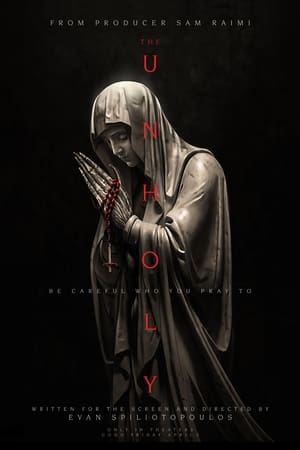
The Unholy (2021) returned Morgan to supernatural feature horror as Gerry Fenn, a disgraced journalist who discovers a young woman apparently capable of performing miracles after experiencing visions of the Virgin Mary.
The story initially offers Fenn exactly what he wants: a sensational event capable of restoring his damaged career. His willingness to exploit the story therefore becomes part of the mechanism drawing him deeper into it.
The apparent religious miracle gradually reveals a darker supernatural source. Morgan again plays the skeptical adult who must revise his understanding of events, but Gerry differs from Clyde Brenek in The Possession. Clyde enters horror through parental responsibility; Gerry enters through professional opportunism.
That difference gives Morgan another variation on supernatural confrontation. The character's eventual willingness to act carries greater weight because the film begins by establishing how willing he is to manipulate belief for personal benefit.
Horror Through Charisma
Across Morgan's horror work, charisma repeatedly changes meaning according to the character. John Winchester uses authority to organize a family around supernatural survival. Max in The Resident uses apparent warmth to hide violation. Clyde Brenek needs emotional credibility to protect his daughter. Gerry Fenn begins by using charm professionally. Negan turns charisma into a weapon of social control.
This continuity explains why Morgan can move between victim, protector and villain without losing his screen identity. The basic presence remains familiar while the moral meaning changes around it.
Horror benefits particularly from that instability because the genre frequently depends upon uncertainty about whom the audience should trust. Morgan can create that uncertainty before the screenplay reveals whether the character is dangerous.
Jeffrey Dean Morgan's Horror Legacy
Jeffrey Dean Morgan's horror career spans two major forms of twenty-first-century genre storytelling. Supernatural established him inside a family mythology built around ghosts, demons and inherited trauma. Films such as The Resident, The Possession and The Unholy then used him in very different variations on psychological and supernatural fear.
Negan ultimately became the defining horror character of his career. Morgan transformed a violent comic-book antagonist into a screen figure whose theatrical humor, cruelty and charisma could sustain years of development beyond the original villain arc.
Andrew Lincoln provided the principal human opposition during Negan's arrival, while Lauren Cohan became the collaborator who carried the character into a much longer and more complicated second life through Maggie and Dead City. Earlier, Jensen Ackles and Jared Padalecki had already helped establish Morgan's place in television horror through the Winchester family.
The connecting quality is not violence but uncertainty. Morgan is at his most effective when the audience recognizes the charm before deciding whether it represents protection or danger. Horror repeatedly gave him characters capable of making those two possibilities look almost identical.
Photos (4)
Images: TMDB
Selected Work
Notable Horror Collaborators
Notable collaborators and creative partners throughout Jeffrey Dean Morgan's horror career.
 Lauren Cohan
Defining Horror Co-Star
Cohan became Morgan's most important long-term horror counterpart, carrying the unresolved Maggie-Negan relationship from The Walking Dead into Dead City.
 Andrew Lincoln
Defining Walking Dead Co-Star
Lincoln's Rick Grimes provided the central opposition to Negan during the brutal storyline that established Morgan as a major figure in The Walking Dead.
 Jensen Ackles
Defining Supernatural Co-Star
Ackles played Dean Winchester opposite Morgan's John, making their difficult father-son relationship a foundational part of Supernatural's early horror mythology.
 Jared Padalecki
Defining Supernatural Co-Star
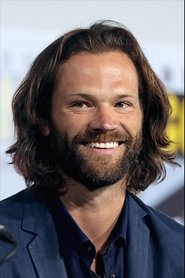
Padalecki played Sam Winchester opposite Morgan's John, with their conflicted father-son relationship helping define the family trauma at the center of Supernatural.
OB
Ole Bornedal
Supernatural Horror Director
Bornedal directed Morgan in The Possession, using him as the emotional center of a family confronted by an increasingly destructive supernatural force.
 Sam Raimi
Recurring Horror Producer
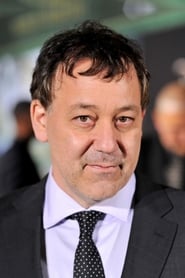
Raimi produced both The Possession and The Unholy, connecting two of Morgan's principal supernatural horror films across different periods of his career.
Jeffrey Dean Morgan Horror Movies
Acting (8 credits)
2023
2021
2012
2010
2005
2004
1999
Production (2 credits)
2024
2023