

1977
Eiji Tsuburaya
Horror Special Effects · Biography · Horror Filmography · Family · Collaborators · Credits
Biography
Eiji Tsuburaya: The Special Effects Director Who Shaped Japanese Monster Horror
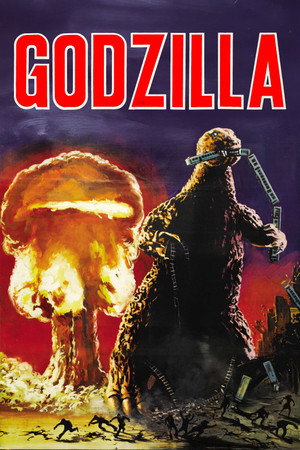
Eiji Tsuburaya (July 7, 1901 – January 25, 1970) was a Japanese cinematographer, special effects director, and producer whose work established many of the fundamental techniques and visual conventions of Japanese monster cinema. As the director of special effects on Godzilla (1954), he supervised the creation of one of the most influential cinematic monsters of the twentieth century and helped develop a production system capable of depicting giant creatures interacting with live-action performers, miniature cities, and large-scale destruction. His subsequent contributions to Rodan (1956), The H-Man (1958), Matango (1963), Frankenstein Conquers the World (1965), and The War of the Gargantuas (1966) extended those techniques across several distinct forms of science-fiction horror.
Tsuburaya played a central role in the development of tokusatsu, the Japanese tradition of live-action filmmaking organized around special photographic and practical effects. His work encompassed miniature construction, optical compositing, mechanical effects, puppetry, creature suits, and high-speed photography. At Toho Studios, he directed a specialized technical unit that frequently photographed its sequences separately from the principal dramatic production. This arrangement made the effects department an unusually important creative component of films in which the monsters themselves were essential to the narrative.
His contribution to horror also includes the transformation of human bodies, invisible characters, extraterrestrial organisms, and creatures derived from established literary traditions. Films such as The H-Man and Matango demonstrate that his techniques could support forms of horror considerably removed from the enormous reptiles and insects associated with the kaiju genre. During the 1960s, the production methods developed under his supervision became the foundation of a new generation of Japanese television effects through Ultra Q (1966), Ultraman (1966), and Ultraseven (1967).
Tsuburaya worked within a collaborative industrial system involving directors, producers, designers, technicians, and performers. Ishiro Honda directed many of his most significant horror productions, Tomoyuki Tanaka organized and produced major Toho monster films, and Haruo Nakajima developed the physical performances that made several creatures recognizable as individual characters. The historical importance of Tsuburaya lies in his direction of this technical and artistic process, including the development of practical methods that allowed increasingly elaborate monsters and fantastic environments to be represented on screen.
Early Career, Cinematography, and the Development of Japanese Special Effects
Tsuburaya was born in Sukagawa, Fukushima Prefecture. His early interests included aviation, mechanics, and model construction. After attending an aviation school that subsequently closed, he pursued technical studies and worked in a toy company before entering the Japanese motion-picture industry in 1919. He initially trained in camera work at a time when filmmakers were experimenting with equipment and photographic procedures that would become fundamental to the development of visual effects. His technical curiosity was closely associated with the photographic problems encountered during ordinary studio production.
During the 1920s, Tsuburaya developed his career as a cameraman and worked in an industry undergoing substantial technological change. His early professional experience included association with director Teinosuke Kinugasa and work in Japanese period filmmaking. He also participated in the cinematography of A Page of Madness (1926), Kinugasa's experimental silent film. His principal expertise gradually expanded from photographing actors and environments to manipulating the relationship between photographed elements, creating images that could not be captured through conventional camera placement alone.
The release of King Kong (1933) became an important influence on his approach to fantastic cinema. The American production, directed by Merian C. Cooper and Ernest B. Schoedsack, demonstrated how articulated models, miniature environments, and photographic compositing could create the appearance of a gigantic animal moving through recognizable spaces. Tsuburaya studied the film and became interested in methods for bringing similarly impossible subjects to Japanese screens. His later monster productions would employ techniques different from the stop-motion animation associated with Willis O'Brien, but the challenge of convincingly integrating a creature with its surroundings remained central to his work.
By the late 1930s, Tsuburaya had become an important figure in the special photographic techniques developed at Toho. His experience encompassed rear projection, miniature photography, and composite imagery, methods that could create apparent depth or combine separately photographed action. These techniques were relevant to many production genres, including historical drama, aviation films, and military spectacles. The expertise he accumulated before Godzilla explains why the monster films of the 1950s could be mounted with such elaborate miniature environments despite substantial limitations in budget, equipment, and production time.
Wartime Miniature Photography and the Road to Godzilla
During the Second World War, Tsuburaya supervised effects photography for Japanese military productions, most notably The War at Sea from Hawaii to Malaya (1942). The film recreated military operations, including the attack on Pearl Harbor, through extensive use of miniature ships, aircraft, installations, and controlled explosions. Its wartime propaganda purpose belongs to the historical context of the production. The technical methods developed for these sequences nevertheless became part of the professional foundation for his later work in science-fiction and monster cinema.
Large miniature environments required precise control over the relationship between scale, movement, lighting, and camera speed. Water, smoke, falling debris, and explosions behave differently when photographed at ordinary speed around reduced-scale objects. Tsuburaya developed methods of photographing these events at higher frame rates to create a more credible impression of size and weight when projected at normal speed. The construction and destruction of miniature military environments also provided practical experience that would become directly relevant to the depiction of urban catastrophes in Godzilla.
After the war, Tsuburaya faced restrictions connected to his involvement in wartime propaganda productions. He temporarily worked independently of Toho and established a special effects operation that supplied technical services to other studios. During this period, he continued developing photographic illusions and worked on productions involving extraordinary or supernatural subjects. He eventually returned to Toho, where the growing commercial potential of effects-driven cinema provided opportunities to apply his experience on a substantially larger scale.
His return coincided with a period of rapid change in Japanese filmmaking. The industry was recovering from the destruction and disruption of the war, while Japanese audiences were increasingly exposed to foreign productions with sophisticated visual effects. The challenge for Toho was to create technically ambitious films with domestic resources and a production structure capable of supporting repeated effects-heavy features. Tsuburaya brought experience in the direction of specialist technicians, the construction of miniature environments, and the coordination of independently photographed material. These capabilities became essential when Toho began developing Godzilla in 1954.
Godzilla (1954): Suitmation, Miniature Destruction, and Nuclear Horror
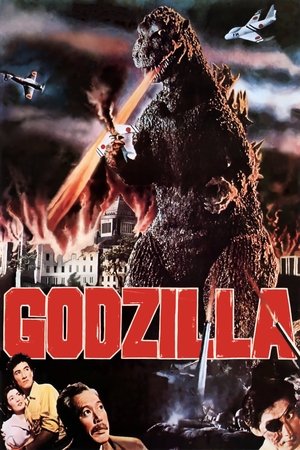
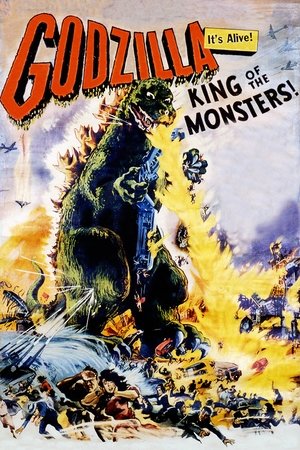
Godzilla (1954), directed by Ishiro Honda and produced by Tomoyuki Tanaka, was the decisive film in Tsuburaya's career as a special effects director. The production introduced a gigantic prehistoric creature associated with the destructive consequences of nuclear weapons testing. Its development occurred in a Japan still confronting the bombings of Hiroshima and Nagasaki and the continuing threat of radioactive contamination. The irradiation of the fishing vessel Daigo Fukuryu Maru during the American Castle Bravo nuclear test in March 1954 provided an immediate contemporary reference for the dangers represented in the film.
Tsuburaya supervised the effects sequences that made Godzilla appear to be a living organism of extraordinary size. Although he was strongly influenced by the stop-motion animation of King Kong, the time and resources available for Godzilla made extensive frame-by-frame creature animation impractical. The production consequently employed a performer inside a specially constructed monster costume, photographed within miniature environments. This approach became closely associated with Japanese monster cinema and is commonly described as suitmation.
Haruo Nakajima was the principal performer inside the original Godzilla costume, with Katsumi Tezuka also contributing to the creature performance. The suit imposed severe physical limitations because of its weight, restricted visibility, and demanding working conditions. Movement therefore required substantial preparation, including the coordination of the performer with miniature buildings, lighting, explosives, and the camera department. Tsuburaya supervised the translation of the physical performance into an image that suggested a creature approximately fifty meters tall. The relatively slow movement of the monster, the positioning of the camera, and the behavior of collapsing structures were essential elements of the resulting illusion.
The costume was one component of a broader visual effects system. Godzilla also required hand-operated miniature figures, mechanical devices, controlled pyrotechnics, and photographic effects. The monster's atomic breath was represented through visual techniques that differed from its physical appearance, allowing the film to distinguish between direct bodily destruction and the radiation-associated weapon emerging from its mouth. These techniques contributed to a threatening screen presence that combined recognizable animal movement with supernatural destructive capability.
The miniature city sequences were especially important to the film's effectiveness. Buildings, streets, electrical infrastructure, and military equipment were constructed at reduced scale and arranged to create the appearance of actual urban environments. Their destruction had to register as the collapse of substantial architecture rather than as the breakage of lightweight models. Effects photography, carefully chosen camera angles, and the coordination of explosions and falling debris were used to create convincing images of physical damage. The extensive destruction of Tokyo transformed familiar city structures into a setting of sustained catastrophe.
Akira Watanabe was responsible for special effects art direction, while Teizo Toshimitsu contributed to the construction of the monster. Sadamasa Arikawa and other technical personnel helped develop the photographic methods required by the production. Their work demonstrates the collaborative nature of Godzilla's creation. Tsuburaya directed the overall effects operation and determined how the separate elements would function within the dramatic material photographed by Honda.
The collaboration between Honda and Tsuburaya was fundamental to the film's relationship between monster spectacle and human catastrophe. Honda developed the dramatic treatment of evacuation, scientific investigation, military response, and civilian suffering. Tsuburaya supplied the images through which the audience encountered the creature and its destructive power. The two components reinforced one another, producing a film in which the monster could be regarded both as an extraordinary living organism and as a visual representation of nuclear devastation.
The importance of Godzilla to horror cinema extends beyond the introduction of a durable franchise character. It established a practical production model in which enormous creatures could be filmed as apparently physical beings within highly detailed miniature environments. This method would influence generations of Japanese effects artists and become one of the principal visual conventions of kaiju filmmaking. The film also demonstrated that elaborate creature effects could serve a serious narrative about collective trauma, technological danger, and the consequences of destructive scientific power.
Godzilla Raids Again and Rodan: Expanding the Giant-Monster Film
Following the commercial success of Godzilla, Toho quickly produced Godzilla Raids Again (1955), directed by Motoyoshi Oda. Tsuburaya returned as special effects director for a film that introduced Anguirus, a second enormous prehistoric creature. The production shifted the emphasis toward physical confrontations between monsters, establishing a format that would later dominate much of the Godzilla series. The central effects problem now involved coordinating the movements of two creatures as they fought within elaborate miniature surroundings.
The battles between Godzilla and Anguirus required precise interaction between performers and the effects environment. Unlike sequences in which a single monster advanced through a city, the new format depended on the appearance of physical contact, resistance, and changing balance between creatures. Their movements could cause extensive environmental destruction, making the coordination of suit performance with miniature damage particularly important. The film demonstrated how the practical methods established in the original Godzilla could be adapted to increasingly complex monster action.
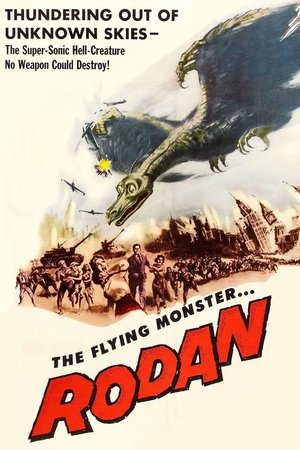
Rodan (1956), directed by Ishiro Honda, presented a substantially different technical challenge. Its story begins with disturbing events inside a mining community, including attacks by enormous insect larvae known as Meganulon. The early sequences employ the structure of a creature-horror mystery, with workers disappearing and dangerous organisms emerging from subterranean passages. The subsequent discovery of gigantic flying reptiles expands the narrative from localized horror to nationwide destruction.
Tsuburaya directed the effects for both the subterranean monsters and the enormous flying creatures. The film employed creature costumes, articulated puppets, suspended models, miniature environments, and optical techniques. The requirements of flight differed from those of the walking monsters in Godzilla. Rodan needed to appear capable of crossing substantial distances at extraordinary speed, generating destructive atmospheric disturbances and attacking densely populated environments. These effects depended on coordinated model movement and the presentation of buildings and landscapes subjected to the creatures' passage.
The production also required convincing images of the monsters moving through the sky and interacting with military aircraft. Wire-operated figures and miniature photography made it possible to depict movement that could not be performed by a suit actor. Other sequences employed human performers inside large costumes for action at ground level. Haruo Nakajima participated in the physical portrayal of Rodan, continuing the working relationship established during Godzilla.
Rodan was a major development in Toho's monster production because of its color photography and the expanded range of its effects. The conclusion, in which the creatures are overtaken by volcanic destruction, also retains the tragic treatment of extraordinary animals already present in the original Godzilla. The film demonstrates the capacity of effects-driven horror to move between predatory encounters, large-scale destruction, and the representation of creatures whose biological existence is ultimately incompatible with the human world.
The Technical System Behind Toho Monster Effects
Tsuburaya's films were produced through a specialized effects system involving miniature designers, sculptors, cameramen, lighting technicians, mechanical operators, and performers. The process required detailed preparation before the principal effects photography began. Sets had to be designed around the proportions of the creatures, and individual sequences needed a consistent relationship between the apparent size of the monster and the surrounding environment. Camera placement and lens selection were considered together with the construction of the miniature landscapes.
High-speed photography was a major component of this system. Miniature explosions, the collapse of structures, and other events involving apparent large-scale physical forces could be photographed at elevated frame rates and projected at standard speed. This reduced the apparent speed of the action and gave the effects a greater impression of mass. The method was particularly valuable when photographing debris, smoke, and other elements whose behavior could otherwise reveal the small scale of the objects involved.
Tsuburaya also employed optical compositing and projection to combine separately photographed material. Human performers could appear in proximity to enormous creatures even when the relevant elements were recorded at different times. The success of these images depended on the compatibility of lighting, perspective, and movement. Imperfect integration could expose the illusion, while carefully planned compositions helped establish the physical relationship between subjects that had never occupied the same space.
Creature performance remained central to the process. The effectiveness of a monster costume depended on the movement of the actor inside it, the articulation of the costume, and the visual information supplied by the surrounding environment. Tsuburaya frequently combined full costumes with puppets or partial models when an action could not be convincingly performed by a human body. This combination allowed the creatures to possess movements beyond the normal range of an actor while retaining a consistent appearance across different types of shots.
During the 1960s, the department continued expanding its methods through more complex puppetry, mechanical operations, and multiple-monster compositions. Akira Watanabe contributed to the visual design and construction of effects environments, while cinematographers including Sadamasa Arikawa supervised specialized photography. Teruyoshi Nakano developed within this technical environment and eventually became a major effects director in his own right. The relationship between these specialists helped establish continuity across Toho productions despite changes in subject, genre, and the demands of individual directors.
Invisible Men, The H-Man, and Human Transformation Horror
Tsuburaya's involvement in horror was not limited to gigantic creatures. The Invisible Man Appears (1949), directed by Nobuo Adachi for Daiei, provided an early opportunity to create photographic illusions involving an invisible human figure. Inspired by the tradition established by H. G. Wells, the film required visual effects capable of suggesting the presence and movement of a body that could not be photographed directly. Tsuburaya's work on the production belongs to the development of Japanese screen techniques for representing supernatural or scientifically impossible transformations.
He subsequently worked on Invisible Man (1954), directed by Motoyoshi Oda, another Japanese film employing invisibility as a central narrative device. Such productions required a different understanding of visual spectacle from the giant-monster films. The effect was often defined by the interaction of an unseen figure with ordinary objects and environments. The photographed results needed to suggest the behavior of a physical body while concealing the performer or the mechanism responsible for the movement.
The H-Man (1958), directed by Ishiro Honda, represents one of Tsuburaya's most substantial contributions to body horror. The story concerns human beings transformed into radioactive liquid organisms after exposure to the effects of nuclear testing. The creatures can flow through confined spaces, attack living victims, and reduce human bodies to empty clothing. The film combines a police investigation with an increasingly disturbing series of disappearances and transformations, moving away from the massive scale of conventional kaiju destruction.
Tsuburaya developed practical techniques for showing the movement of the liquid organisms through doors, across floors, and over surfaces. A contemporary account published in American Cinematographer described how certain effects were achieved by constructing sets in altered orientations, allowing liquid materials to move naturally under gravity while creating an apparently impossible direction of movement when photographed. The method turned a simple physical process into a convincing image of an organism capable of traveling through ordinary architectural barriers.
The disintegration of human victims required another approach. The effects department constructed inflatable human forms that could collapse during photography, producing the appearance of bodies rapidly losing substance. The technique was supported by careful editing and the relationship between actors, clothing, and the practical models. The resulting sequences were among the most disturbing images of bodily transformation in Toho's science-fiction cinema of the period.
The H-Man also employed miniature environments and optical effects to depict the movement and destruction of the creatures. Its conclusion, involving the use of fire within the Tokyo sewer system, required effects photography of underground spaces on a reduced scale. These sequences demonstrate that Tsuburaya's expertise in miniature destruction could be applied to relatively confined environments as effectively as to the destruction of entire cities.
The relationship between radioactive contamination and involuntary transformation connected the film to the historical concerns already present in Godzilla. In The H-Man, however, the effects of exposure are represented through the dissolution of the human body. The horror arises from the disappearance of recognizable physical boundaries and the possibility that the contaminated victim may become a danger to others. The film therefore occupies an important position in Japanese science-fiction horror and in the development of special effects used to represent radical bodily alteration.
Toho continued exploring related material in The Secret of the Telegian (1960) and The Human Vapor (1960). These productions developed different approaches to the transformation of human beings through scientific intervention. The Human Vapor, directed by Honda, centers on a man able to change into a gaseous state. Its visual effects again required the representation of an otherwise invisible transformation and the interaction of an altered human body with a conventional environment. Together, these films expanded the uses of tokusatsu into stories of criminality, psychological disturbance, and scientific experimentation.
Varan, Mothra, King Ghidorah, and the Expansion of Kaiju Cinema
During the late 1950s and early 1960s, Tsuburaya directed effects for several films that broadened the range of creatures and fantastic environments produced by Toho. Varan (1958), directed by Ishiro Honda, returned to the giant prehistoric monster format with a creature discovered in an isolated region of Japan. Its effects sequences required the depiction of a large reptilian animal moving through natural environments and threatening populated areas. The film continued the visual tradition of Godzilla and Rodan while operating within a comparatively straightforward monster narrative.
Mothra (1961), also directed by Honda, introduced a very different type of giant creature. Its story combines environmental damage, commercial exploitation, mythology, and the consequences of removing sacred figures from their homeland. The creature appears first as an enormous larva and later as a winged adult. These forms required different practical approaches, including large creature constructions and complex puppetry. The adult Mothra was represented through suspended models whose movement created the appearance of an enormous flying organism.
Mothra was significant because it expanded the emotional and narrative possibilities of Toho's monster cinema. The creature acts in response to the abduction of the small priestesses associated with Infant Island, and its destructive behavior belongs to a story in which the monster is also a protective and sacred figure. Tsuburaya's effects gave this concept a distinctive visual form. The later incorporation of Mothra into the Godzilla series contributed to the transformation of the kaiju genre from isolated monster disasters into a shared fictional world.
King Kong vs. Godzilla (1962) brought the American screen monster into direct confrontation with the Japanese creature. Tsuburaya supervised effects involving two enormous characters whose physical design and behavior differed substantially. The film reflects the increasing emphasis on creature interaction and spectacle within Toho's productions. Subsequent Godzilla films required the effects department to coordinate multiple creatures, elaborate miniature environments, and increasingly complicated action sequences.
Ghidorah, the Three-Headed Monster (1964) introduced one of the most technically demanding monsters of the period. King Ghidorah required the combination of a large costume with mechanically controlled necks, heads, wings, and tails. Puppetry and wire-operated movement were essential to the impression of a single creature possessing several independently moving anatomical structures. The film demonstrates the development of an effects system capable of coordinating several established monsters with a new adversary within the same sequence.
These productions gradually moved toward fantasy adventure and increasingly sympathetic or heroic representations of the monsters. Their relevance to horror history lies principally in the techniques and creature designs inherited from the more threatening films of the preceding decade. Tsuburaya remained responsible for many of the visual methods that had originally made giant organisms frightening, even as the narratives increasingly emphasized entertainment, rivalry, and spectacle.
Matango (1963): Fungal Mutation and Psychological Horror
Matango (1963), directed by Ishiro Honda, stands among Tsuburaya's most important horror productions outside the conventional giant-monster format. The film follows a group of people stranded on an isolated island after their yacht is damaged during a storm. As food becomes scarce and relationships deteriorate, they encounter strange fungal growths and evidence of an abandoned scientific expedition. Consumption of the mushrooms leads to physical and psychological transformation, threatening the remaining survivors with the gradual loss of their human identities.
The screenplay by Takeshi Kimura draws upon William Hope Hodgson's short story The Voice in the Night, adapting its central concept of fungal contamination and bodily transformation. The film incorporates concerns about environmental pollution, human vulnerability, and the breakdown of social relationships under extreme conditions. Its horror depends on the gradual emergence of unfamiliar organisms and on the realization that the environment itself may be transforming the people trapped within it.
Tsuburaya supervised the special effects, working with technicians including Akira Watanabe, Sadamasa Arikawa, and Teruyoshi Nakano. The production employed elaborate makeup and practical constructions to represent the stages of fungal infection. The designs associated with the mushroom people combined recognizable human anatomy with surfaces and growth patterns suggesting the progressive replacement of living tissue. These effects were essential to the film because its central threat involved a transformation of the human body rather than the arrival of an external gigantic creature.
Matango required a close relationship between the effects department and the dramatic performances. The transformation had to remain compatible with scenes involving confined spaces, human interaction, and the gradual revelation of the island's biological danger. The makeup effects and creature designs contributed to an atmosphere in which the boundaries between human beings and their surroundings became increasingly uncertain. Nakano later discussed the difficulties encountered in producing the transformation makeup, providing direct evidence of the practical problems faced by the effects team.
The film also demonstrates the importance of environmental design to Tsuburaya's horror work. The island, abandoned vessel, dense vegetation, and fungal growths function as parts of a single threatening setting. The danger is not concentrated in one enormous creature but distributed through the environment and through the bodies of the characters. The effects contribute to the gradual revelation of contamination and support a narrative built around isolation, suspicion, and the failure of the survivors to maintain their former social relationships.
Matango has a distinct position within the history of Japanese science-fiction horror because it combines the transformation motifs of The H-Man with the psychological and moral concerns of a survival narrative. Its practical effects anticipate later approaches to fungal infection and human mutation in horror cinema, while remaining closely associated with the specific technical resources and design practices of Toho during the early 1960s.
Frankenstein Conquers the World and The War of the Gargantuas
Frankenstein Conquers the World (1965), directed by Ishiro Honda, brought the Frankenstein tradition into Toho's kaiju cinema. The story links the legendary artificial human being to wartime scientific activity, atomic destruction, and the emergence of a gigantic humanoid organism. The creature grows to extraordinary dimensions and eventually confronts Baragon, a subterranean monster. The film combines concepts derived from European Gothic horror with the Japanese tradition of giant creatures threatening modern environments.
Tsuburaya directed the special effects for a production in which the central humanoid creature could be portrayed by a human actor with elaborate makeup. This offered different possibilities from the massive reptilian costumes used in Godzilla. The performer could communicate fear, confusion, and physical distress through recognizable bodily movement and facial expression. The visual effects department nevertheless had to preserve the appearance of gigantic scale when the character interacted with buildings, vehicles, natural environments, and the opposing monster.
The miniature environments were constructed to support these interactions. Their design needed to accommodate the proportions and movements of a humanoid figure while maintaining the apparent scale established in surrounding shots. The use of detailed practical settings was particularly important because the central creature often performed movements more closely associated with human behavior than those of a conventional giant reptile. The film also required the creation of Baragon as a distinct animal opponent, expanding the combination of human performance, creature construction, and miniature photography.
The War of the Gargantuas (1966), also directed by Honda, developed related material through the story of two enormous humanoid creatures known as Sanda and Gaira. Their relationship provides the narrative with a central conflict between different forms of monstrous behavior. Gaira is depicted as a dangerous predator responsible for attacks on human beings, while Sanda demonstrates a protective relationship toward humans and attempts to restrain the destructive actions of the other creature.
The effects allowed the Gargantuas to behave with greater physical agility and recognizable emotion than many earlier Toho monsters. Their relatively humanoid anatomy made it possible to stage struggles based on bodily strength, movement, and the apparent intentions of the performers. Their battles differ from those involving gigantic reptiles because the creatures can grapple, strike, and react with gestures approaching human physical expression. The result is a form of monster spectacle closely connected to the psychological characteristics assigned to the two beings.
Haruo Nakajima portrayed Gaira, contributing a demanding physical performance that involved direct interaction with miniature environments and the opposing performer. The film required elaborate coordination between the creature suits, set construction, and the photographic procedures used to establish scale. The attack sequences involving Gaira retain a strong horror emphasis, particularly through the suggestion that an enormous humanoid organism is actively hunting people. The involvement of Akira Ifukube as composer also contributed to the threatening character of the creatures through music associated with their movements and appearances.
The War of the Gargantuas illustrates an important development in Tsuburaya's approach to screen monsters. The creatures possess physical features that allow viewers to distinguish emotional states and behavioral differences while remaining visibly extraordinary organisms. Their conflict brings the giant-monster tradition into closer contact with the humanized monster narratives associated with Frankenstein. The film stands among the clearest examples of Toho's ability to combine effects-driven spectacle with the violent and tragic characteristics of horror.
Tsuburaya Productions, Ultra Q, and Television Monster Horror
In 1963, Tsuburaya established the company that developed into Tsuburaya Productions. The decision reflected his interest in extending special effects production beyond the feature-film system and into television, which was becoming an increasingly important medium in Japan. Television imposed different restrictions on resources, schedules, and photographic presentation. The specialized methods developed at Toho nevertheless provided a foundation for creating original fantasy and monster programs designed for regular broadcast.
Ultra Q premiered in January 1966 and became the company's first major television success. The series combined science fiction, supernatural mystery, and creature horror, generally following investigators who encounter extraordinary phenomena. Its stories involved unfamiliar organisms, unexplained transformations, and dangerous disturbances affecting ordinary environments. The structure allowed the program to explore different types of threats without requiring every episode to follow the same narrative formula.
Ultra Q occupies an important position in Japanese television horror because it brought elaborate monster effects into a serialized format. Its creatures and phenomena could be treated as objects of scientific investigation or sources of immediate danger, recalling earlier theatrical productions such as Rodan and The H-Man. The series also employed a visual style in which miniature environments, creature costumes, and photographic illusions were integrated with ordinary dramatic scenes. Its black-and-white photography reinforced its connection to the preceding decade of science-fiction thrillers.
The success of Ultra Q contributed to the development of Ultraman, which began broadcasting in July 1966. The new series established a recurring giant hero who confronted monsters and extraterrestrial adversaries. This format changed the dramatic function of the giant creature by placing an extraordinary defender at the center of the action. Monsters remained a major source of danger and spectacle, but their defeat became part of a serialized adventure structure directed toward a broad television audience.
Tsuburaya's influence remained visible in the practical effects employed by Ultraman. Large creature costumes, articulated models, miniature cities, pyrotechnics, and optical effects continued to provide the fundamental visual language of the productions. The format also encouraged the development of numerous individual monster designs, each requiring recognizable physical characteristics and distinctive abilities. The technical resources originally developed for destructive creatures in feature films were adapted to the production of frequent televised encounters.
Ultraseven (1967) continued the expansion of this television tradition through extraterrestrial invasion narratives, unusual biological threats, and confrontations with dangerous organisms. The series explored a range of science-fiction situations that occasionally approached the darker material associated with earlier Japanese monster and transformation films. The continuing development of these programs demonstrated that tokusatsu could sustain an independent television industry rather than functioning exclusively as a department within theatrical filmmaking.
Tsuburaya Productions became an important institution in the preservation and development of these methods. Its early programs introduced new generations of viewers to miniature destruction, mechanical effects, and physical monster performance. The technical practices associated with the company also helped establish professional opportunities for designers, performers, cinematographers, and directors who would continue working in effects-driven Japanese cinema and television after Tsuburaya's death.
Collaborators, Special Effects Apprentices, and the Toho Production System
The films associated with Tsuburaya depended on sustained collaboration between the dramatic production and the special effects department. Ishiro Honda was his most important directorial collaborator, particularly on Godzilla, Rodan, The H-Man, Matango, Frankenstein Conquers the World, and The War of the Gargantuas. Honda was responsible for the dramatic direction and the performances of the principal cast, while Tsuburaya supervised the specialized effects sequences. Their working relationship required coordination between the narrative requirements of the film and the technical construction of its monsters and environments.
Producer Tomoyuki Tanaka was equally important to the industrial development of the Toho monster cycle. His involvement provided continuity across productions and helped establish the monster film as a recurring component of the studio's output. Composer Akira Ifukube contributed to several of the most significant productions, including Godzilla, Rodan, Frankenstein Conquers the World, and The War of the Gargantuas. His music supported the presentation of enormous creatures by providing rhythmic and dramatic associations that complemented the visual effects.
Haruo Nakajima developed a particularly important working relationship with Tsuburaya through the physical performance of monsters. His contributions to Godzilla, Rodan, Varan, and The War of the Gargantuas demonstrate the importance of an experienced performer to the effectiveness of a creature costume. Although costume construction and photography established the appearance of the monster, the performer determined how the creature moved and reacted. The coordination of these responsibilities was essential to the effectiveness of the practical effects.
Within the technical department, Sadamasa Arikawa became a major collaborator through his work in special effects photography. His credits include productions such as Godzilla Raids Again, The H-Man, Matango, and several later monster films. Arikawa eventually assumed greater directorial responsibility for special effects, including the work on Destroy All Monsters (1968), for which Tsuburaya was credited as effects supervisor. Teruyoshi Nakano also developed his professional expertise within this environment, contributing to Matango and other Toho effects productions before becoming one of the principal directors of Japanese special effects cinema in the following decade.
The continuing careers of these technicians demonstrate that Tsuburaya's influence involved the organization and transmission of practical knowledge as well as the appearance of the completed films. Specialized knowledge about model construction, camera speeds, photographic compositing, and creature movement passed through direct production experience. The department therefore provided the foundation for later generations of effects artists who could develop new methods while retaining essential elements of the Toho production system.
Final Productions, Death, and Influence on Horror Special Effects
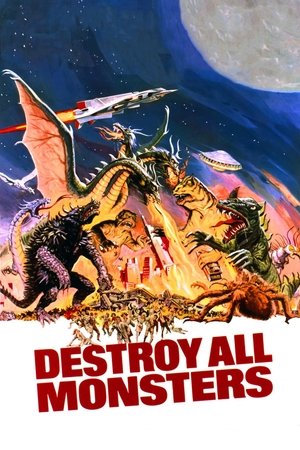
By the late 1960s, Tsuburaya had become an established figure in Japanese filmmaking and television production. His work on the Godzilla series continued during a period in which the franchise increasingly emphasized encounters between multiple monsters. Destroy All Monsters (1968), directed by Ishiro Honda, featured a large ensemble of established Toho creatures. Tsuburaya received the special effects supervisor credit, while Sadamasa Arikawa directed the effects. The production illustrates the transition toward a new generation of technicians working within the system developed during the preceding decade.
His later feature credits also included the science-fiction adventure Latitude Zero (1969). Although the film belongs primarily to fantasy and adventure, its elaborate creature and miniature effects demonstrate the continued application of his technical methods outside the conventional kaiju format. During this period, Tsuburaya was also managing the demands of his independent production company and the television franchises that had become closely associated with his name.
Tsuburaya died on January 25, 1970, at the age of sixty-eight. His death occurred while Toho was preparing further effects-driven productions. Space Amoeba (1970), directed by Honda, is associated with his name in some filmographic records, but its effects direction was carried out by Sadamasa Arikawa after Tsuburaya's death. The distinction is important because a later release or supervisory attribution does not necessarily establish his direct participation in the completed effects sequences.
His influence on horror and science-fiction filmmaking is most clearly visible in the practical traditions that emerged from Toho and Tsuburaya Productions. The techniques developed under his supervision provided methods for representing impossible creatures through physical construction, performer movement, miniature environments, and photographic manipulation. Later Japanese monster films continued to employ these techniques while introducing new materials, increasingly elaborate animatronics, and eventually digital effects.
The significance of Tsuburaya's work also extends beyond Japan. Godzilla and the Toho monster films contributed to an international understanding of the giant creature as a screen character capable of sustaining narrative attention through physical behavior. The effects sequences offered filmmakers a practical model for representing extraordinary organisms within recognizable environments, while the more disturbing productions, especially The H-Man and Matango, demonstrated how special effects could support stories centered on contamination, bodily transformation, and biological threat.
Tsuburaya's surviving work remains essential to the study of Japanese horror production during the postwar period. Godzilla established the foundations of a new form of monster cinema, Rodan expanded the possibilities of large-scale creature movement, The H-Man applied practical photographic techniques to the destruction and transformation of the human body, and Matango combined effects design with psychological and biological horror. The later Frankenstein productions developed increasingly expressive humanoid monsters, while Ultra Q brought related forms of creature horror to television. These films and series document the evolution of a production tradition in which the special effects department became a central creative force in the presentation of fantastic and monstrous subjects.
Selected Work
Notable Horror Collaborators
Notable collaborators and creative partners throughout Eiji Tsuburaya's horror career.
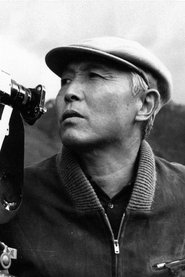 Ishirō Honda
Director / Special Effects Director
Honda and Tsuburaya collaborated on Godzilla (1954), Rodan (1956), The H-Man (1958), Matango (1963), Frankenstein Conquers the World (1965), and The War of the Gargantuas (1966). Their work established central conventions of Japanese monster and science-fiction horror.
 Tomoyuki Tanaka
Producer / Special Effects Director
Tanaka produced many of the Toho monster films for which Tsuburaya directed special effects, including Godzilla (1954), Rodan (1956), The H-Man (1958), and Matango (1963). Their collaboration helped establish sustained theatrical production of Japanese creature horror.
 Akira Ifukube
Composer / Special Effects Director
Ifukube composed the music for several major Tsuburaya effects productions, including Godzilla (1954), Rodan (1956), Frankenstein Conquers the World (1965), The War of the Gargantuas (1966), and Destroy All Monsters (1968). Their contributions shaped the audiovisual identity of Toho monster cinema.
 Haruo Nakajima
Creature Performer / Special Effects Director
Nakajima performed creatures in numerous films supervised by Tsuburaya, including Godzilla (1954), Rodan (1956), Varan (1958), and The War of the Gargantuas (1966). His physical performances were central to the development of Japanese suitmation and practical monster effects.
 Sadamasa Arikawa
Special Effects Cinematographer / Director
Arikawa worked in the Toho special effects department under Tsuburaya on films including Godzilla Raids Again (1955), The H-Man (1958), and Matango (1963). He subsequently directed special effects for productions such as Destroy All Monsters (1968), with Tsuburaya credited as supervisor.
 Teruyoshi Nakano
Special Effects Assistant / Director
Nakano developed his special effects career under Tsuburaya at Toho, contributing to Matango (1963), Ghidorah, the Three-Headed Monster (1964), Frankenstein Conquers the World (1965), and The War of the Gargantuas (1966). He later became a principal director of Toho special effects.
Eiji Tsuburaya Horror Movies
Special FX / Practical FX (24 credits)
1977
1970
1968
1967
1966
1965
1964
1963
1959
1958
1958
1957
1957
1957
1956
1956
1956
1955
1955
1954
1954
1949
1949
Visual Effects (16 credits)
1977
1967
1966
1964
1963
1959
1957
1957
1957
1956
1956
1955
1955
1954
1954
1949
Writing (4 credits)
1977
1957
1957
1954
Cinematography (2 credits)
1954
1926
Production (1 credits)
1968