


1974
Terence Fisher
Horror Director · Biography · Horror Filmography · Collaborators · Credits
Horror subgenres & themes
Biography
Terence Fisher and the Reinvention of Gothic Horror
Terence Fisher became one of the central architects of British horror by directing the films that transformed Hammer Films from a small production company with occasional genre interests into the studio most closely associated with Gothic horror during the late 1950s and 1960s. Beginning with The Curse of Frankenstein and continuing through Dracula, The Revenge of Frankenstein, The Mummy, The Brides of Dracula, The Curse of the Werewolf, The Gorgon, Dracula: Prince of Darkness, The Devil Rides Out and several further Frankenstein films, Fisher helped create a new screen language for monsters that cinema audiences believed they already knew. His films retained castles, laboratories, crypts and ancient curses, but placed them inside a more physical world of colour, blood, sexuality and moral conflict.
Fisher did not modernize Gothic horror simply by increasing violence. His most characteristic films reorganize the moral balance of familiar stories. Peter Cushing's Frankenstein is often more disturbing than the creatures he creates because intelligence and ambition have detached themselves from ordinary ethical restraint. Christopher Lee's Dracula is aristocratic but also aggressively physical, capable of shifting from controlled seduction to animal attack almost instantaneously. Fisher repeatedly finds horror in people who believe that knowledge, social position or personal conviction gives them the right to cross boundaries that should remain intact.
The Curse of Frankenstein and the Birth of Hammer Gothic
The Curse of Frankenstein (1957) became the decisive film in Fisher's horror career and in the development of Hammer horror. Peter Cushing plays Baron Victor Frankenstein as a brilliant scientist whose determination to create life gradually overwhelms almost every moral restraint, while Christopher Lee plays the assembled Creature. Jimmy Sangster's screenplay shifts much of the dramatic emphasis toward Frankenstein himself, allowing Fisher to build the film around obsession rather than treating the Creature as the only source of horror. The result differs sharply from the Universal Frankenstein tradition that had dominated popular screen memory.
Colour was fundamental to the effect. Laboratories, surgical procedures, damaged bodies and blood could now be presented with an immediacy unavailable to the earlier monochrome cycle. Fisher does not use that physical detail merely as decoration. The increasingly graphic imagery reflects the Baron's willingness to reduce human beings to usable material. Bodies can be acquired, brains replaced and lives sacrificed because scientific achievement has become more important to him than the people surrounding the experiment. Hammer had found a form of Gothic horror capable of feeling simultaneously classical and newly dangerous.
Peter Cushing and the Fisher Protagonist
Peter Cushing became Fisher's most important recurring actor and the performer through whom many of the director's central horror ideas acquired human form. Their collaborations include The Curse of Frankenstein, Dracula, The Revenge of Frankenstein, The Hound of the Baskervilles, The Mummy, The Brides of Dracula, The Gorgon, Frankenstein Created Woman, Frankenstein Must Be Destroyed and Frankenstein and the Monster from Hell. Cushing could embody moral authority as Van Helsing or Sherlock Holmes and then redirect the same precision toward obsession as Frankenstein.
Fisher understood the dramatic value of that contradiction. Cushing rarely appears uncontrolled even when his characters become dangerous. The hands remain precise, the voice measured and the intelligence visible, which makes Frankenstein especially unsettling because increasingly terrible actions are performed with professional confidence. As Van Helsing, those qualities become protective rather than destructive. He studies vampirism almost scientifically, improvises weapons and physically confronts Dracula. Fisher repeatedly uses Cushing to ask whether knowledge will preserve moral order or become the mechanism through which that order is destroyed.
Christopher Lee and the Physical Monster
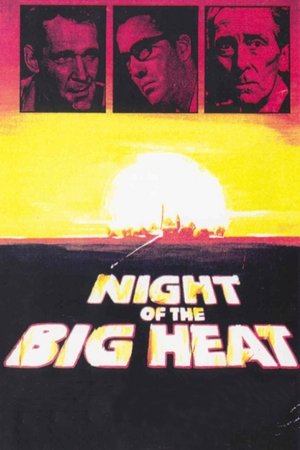
Christopher Lee supplied the complementary force in Fisher's horror. In The Curse of Frankenstein, his Creature is damaged, largely silent and physically imposing without repeating Boris Karloff's famous interpretation. In Dracula, the same height and bodily control are transformed into aristocratic predation. In The Mummy, Lee again works through movement beneath heavy makeup, while The Gorgon, Dracula: Prince of Darkness, Night of the Big Heat and The Devil Rides Out allow Fisher to use his presence in very different ways.
Fisher recognized that Lee did not need constant dialogue to dominate a scene. Stillness could make sudden movement more violent, while height could create authority before a character had explained anything about himself. The director repeatedly placed Lee opposite Cushing because their contrasting performance styles gave the films an immediate dramatic structure: intellect against physical force, discipline against appetite, investigation against ancient power. Yet The Devil Rides Out demonstrates that Fisher understood Lee more deeply than simple monster casting. As the Duc de Richleau, the same authority becomes the principal defense against occult evil.
Dracula and the Transformation of the Vampire
Dracula (1958), released in the United States as Horror of Dracula, became Fisher's other foundational Hammer film. Jimmy Sangster dramatically compresses Bram Stoker's novel, while Fisher turns the conflict between Dracula and Van Helsing into a fast-moving physical confrontation. Lee's Count retains aristocratic control but also introduces a new sense of appetite and sexual danger. Blood is vividly visible, female desire is treated more openly than in many earlier vampire films and Dracula can suddenly become ferocious after appearing completely composed only moments earlier.
Cushing's Van Helsing provides the necessary opposition because he is not merely a scholar explaining the supernatural to other characters. Fisher makes him active, practical and capable of physical risk. The climax, in which Van Helsing uses daylight and an improvised cross to destroy Dracula, summarizes the film's approach: traditional supernatural rules remain important, but Fisher expresses them through action. The success of the film helped make Cushing and Lee international horror stars and established Hammer's version of the vampire as a major alternative to the image created by the earlier Universal cycle.
Jimmy Sangster and the Rewriting of Familiar Monsters
Jimmy Sangster became one of Fisher's most important writing collaborators because his screenplays supplied the narrative architecture for many of the films that established Hammer Gothic. He wrote The Curse of Frankenstein, Dracula, The Revenge of Frankenstein, The Man Who Could Cheat Death, The Mummy and The Brides of Dracula, and also worked on Dracula: Prince of Darkness. His adaptations frequently reduce sprawling literary sources to concentrated conflicts that Fisher can develop visually and dramatically within Hammer's production limitations.
The simplification is rarely passive. Sangster changes relationships, removes characters, alters chronology and shifts moral emphasis in order to create versions of the stories that belong specifically to Hammer. Fisher benefits from this economy because his strongest horror rarely depends upon exhaustive mythology. The films establish a small number of rules, characters and desires, then move relentlessly toward the consequences. The partnership between Sangster's narrative compression and Fisher's directorial clarity is one of the central mechanisms through which familiar nineteenth-century monsters became newly effective in postwar British cinema.
Anthony Hinds and the Production of Hammer Horror
Anthony Hinds was another decisive collaborator because he helped shape Fisher's horror from the production side before increasingly contributing to scripts as well. He produced The Curse of Frankenstein, Dracula, The Revenge of Frankenstein, The Hound of the Baskervilles and The Brides of Dracula, among other Fisher films. Later, writing under the name John Elder, he contributed directly to films including The Curse of the Werewolf, The Phantom of the Opera, Frankenstein Created Woman and Frankenstein and the Monster from Hell.
This long relationship matters because Fisher's Gothic style developed within a production system that repeatedly reused personnel, locations, sets and technical expertise while still attempting to make each supernatural threat distinct. Hinds understood how to produce ambitious-looking horror within Hammer's resources and later wrote material specifically suited to the studio's established strengths. His collaboration with Fisher therefore spans both the commercial breakthrough of the late 1950s and the increasingly dark Frankenstein films that carried the partnership into the 1970s.
The Mummy and the Weight of the Supernatural Body
The Mummy (1959) reunited Fisher, Cushing and Lee around another monster strongly associated with Universal horror, but again the result is not a simple recreation of the earlier film. Lee's Kharis becomes a heavy, physically destructive force whose supernatural persistence is connected with an ancient act of loyalty and punishment. Cushing's John Banning must understand the historical mechanism behind the attacks while simultaneously surviving a creature that can break through ordinary physical barriers with little difficulty.
Fisher uses the contrast between ancient ritual and modern investigation to give the film its structure. Archaeological curiosity has consequences because the past is not safely dead, and knowledge acquired through excavation can reactivate obligations that modern characters do not recognize until too late. Lee's physical performance and Roy Ashton's makeup help make the mummy feel materially present rather than spectral, allowing Fisher to stage the supernatural through bodies colliding with doors, windows and human resistance.
Roy Ashton and the Physical Face of Hammer Horror
Makeup artist Roy Ashton became a major recurring collaborator across Fisher's horror work, contributing to films including The Curse of Frankenstein, The Hound of the Baskervilles, The Man Who Could Cheat Death, The Mummy, The Brides of Dracula, The Two Faces of Dr. Jekyll, The Curse of the Werewolf, The Gorgon and Dracula: Prince of Darkness. His work was essential to a studio identity built around monsters that had to look convincing in colour and often in direct close view.
The Curse of the Werewolf provides one of the clearest examples. Oliver Reed's transformation into Leon's wolf form needed to remain recognizably human while suggesting that something animal had overtaken the body. Ashton's makeup creates a creature capable of expressing tragedy as well as aggression, supporting Fisher's decision to treat Leon as a doomed figure rather than merely a beast waiting to be destroyed. Across multiple films, Ashton gave Fisher tangible faces for supernatural corruption, resurrection and transformation.
The Brides of Dracula and Horror Beyond the Count
The Brides of Dracula demonstrates that Fisher's vampire cinema did not depend entirely upon Christopher Lee. Peter Cushing returns as Van Helsing, but Dracula himself is absent. Fisher instead constructs another aristocratic vampire threat around Baron Meinster, allowing the film to preserve the rules and atmosphere established by Dracula while proving that Hammer's vampire world could exist independently of its most famous Count.
The film is especially important to Fisher because it concentrates many of his Gothic strengths: a remote setting, diseased aristocracy, religious imagery, sexual danger and an active protagonist who understands that supernatural threats must be confronted through specific physical rules. The climactic use of the windmill shadow as a cross turns architecture itself into a weapon, demonstrating Fisher's ability to make religious symbolism function through action rather than exposition.
The Curse of the Werewolf and Gothic Tragedy
The Curse of the Werewolf (1961) allowed Fisher to approach another classical monster through tragedy rather than simple pursuit. Oliver Reed plays Leon, whose lycanthropy is connected with the circumstances of his conception and with a curse that precedes his ability to make meaningful choices about his own life. The film therefore presents the werewolf as both threat and victim, continuing Fisher's interest in characters damaged by forces created before they fully understand them.
The horror grows from fatalism. Leon can experience love, self-control and the possibility of an ordinary life, yet the curse repeatedly threatens to make those things temporary. Fisher refuses to make the werewolf only an exciting transformation effect. Roy Ashton's makeup, Reed's physical performance and the increasingly desperate emotional structure all support a story in which monstrosity is experienced as an inherited catastrophe.
James Bernard and the Sound of Hammer Gothic
Composer James Bernard became one of the major sonic architects of Fisher's horror. His scores accompany films including The Curse of Frankenstein, Dracula, The Hound of the Baskervilles, The Gorgon, Dracula: Prince of Darkness, Frankenstein Created Woman, The Devil Rides Out, Frankenstein Must Be Destroyed and Frankenstein and the Monster from Hell. Bernard's dramatic brass, strings and strongly defined thematic writing helped give Hammer productions a scale larger than their physical resources might otherwise suggest.
The music works particularly well with Fisher because both filmmaker and composer favor clarity. Threats are not buried beneath unnecessary ambiguity when the dramatic moment requires direct force. Bernard can make Dracula's presence feel enormous, give laboratories an atmosphere of obsession or turn occult ritual into something ceremonial and dangerous. His scores became part of the Hammer identity so thoroughly that the sound of Fisher's Gothic cinema is difficult to separate from Bernard's music.
The Gorgon and the Expansion of Hammer Mythology
The Gorgon (1964) demonstrates Fisher's ability to extend Hammer horror beyond the most familiar Gothic monsters. The film draws upon Greek mythology, placing the Gorgon legend inside the studio's recognizable world of European villages, medical authority and supernatural investigation. Cushing and Lee appear again, but the structure does not simply rearrange Frankenstein or Dracula. The threat is tied to identity, transformation and the danger of looking directly at something capable of destroying the observer.
Fisher treats mythology with the same seriousness he applies to vampires and resurrection. Characters search for explanations through medicine, history and folklore until those systems begin converging around a supernatural conclusion. The film reinforces a central principle of Fisher's horror: rational investigation is valuable, but reason becomes useful only when the investigator is willing to accept that the evidence may lead somewhere conventional knowledge initially considers impossible.
Dracula: Prince of Darkness and the Return of Christopher Lee
Dracula: Prince of Darkness (1966) returned Christopher Lee to the role after an eight-year absence from Hammer's Dracula films. Fisher makes the resurrection itself central to the horror, using blood and ritual to restore a vampire whose presence then dominates the film despite the absence of spoken dialogue. Lee must therefore build Dracula almost entirely through gaze, posture and sudden physical movement, returning the character to the predatory body that Fisher had emphasized in 1958.
The film also demonstrates how effectively Fisher could generate tension from familiar mythology. Audiences already know who Dracula is and broadly understand the danger he represents, so mystery is unnecessary. Suspense instead comes from watching characters enter his environment without possessing the knowledge viewers already have. Fisher uses that imbalance to turn hospitality, travel and the apparent safety of a castle into mechanisms leading directly toward resurrection and entrapment.
The Devil Rides Out and Occult Horror
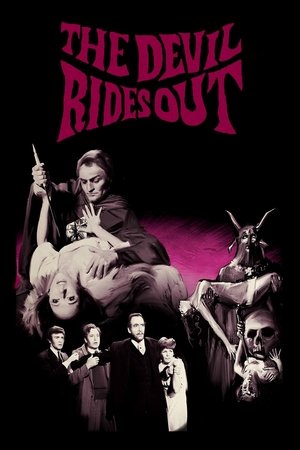
The Devil Rides Out (1968) became one of Fisher's strongest excursions beyond the Frankenstein and Dracula cycles. Adapted by Richard Matheson from Dennis Wheatley's novel, the film casts Christopher Lee as the Duc de Richleau, an occult expert attempting to rescue a young friend from a Satanic circle controlled by Mocata. The reversal of Lee's familiar Hammer image is essential. His authority now protects rather than threatens, allowing Fisher to use the actor's absolute conviction as the foundation for a world in which ritual magic must be treated seriously.
The film turns occult rules into practical suspense. Protective circles, psychic influence, ritual spaces and supernatural manifestations operate according to a system the protagonists must understand if they are to survive. Fisher does not undermine the material with irony. The characters' belief in the danger becomes the condition through which the audience can believe in it as well. The result is one of Hammer's clearest examples of horror generated through faith, temptation and invisible forces rather than through a familiar physical monster.
Frankenstein Created Woman and the Expansion of the Experiment
Frankenstein Created Woman moves Fisher's Frankenstein cycle away from the simple construction of bodies and toward the possibility of transferring the human soul. Cushing's Baron remains driven by scientific certainty, but the experiment now produces a horror in which identity itself can survive death and occupy another body. Fisher uses the premise to combine revenge, romance and metaphysical speculation while retaining the central problem that has always surrounded his Frankenstein: discovery matters to the Baron more than the emotional consequences suffered by other people.
The film demonstrates how flexible the Fisher-Cushing Frankenstein series had become. There was no need to recreate the same Creature because Frankenstein himself supplied continuity. Each new experiment allowed Fisher to examine another boundary between life and death, body and consciousness, scientific possibility and moral responsibility. That freedom kept the series from becoming a simple succession of monster resurrections.
Frankenstein Must Be Destroyed and the Monster as Scientist
Frankenstein Must Be Destroyed presents one of the darkest versions of Cushing's Baron. The intellectual fascination visible in earlier films has hardened into ruthlessness, and Fisher increasingly removes any comfortable distinction between brilliant scientist and monster. Frankenstein manipulates, coerces and destroys other people while continuing to understand his actions as necessary steps toward knowledge.
This development is central to Fisher's interpretation of the myth. The horror does not depend upon a creation unexpectedly becoming violent while its innocent maker watches in regret. Frankenstein repeatedly chooses to continue. His intelligence allows him to understand consequences better than almost anyone around him, which makes his refusal to accept moral limitation more disturbing rather than less.
Frankenstein and the Monster from Hell
Frankenstein and the Monster from Hell became Fisher's final feature and returned him once more to the character who had launched Hammer Gothic seventeen years earlier. Cushing's Frankenstein now works inside an asylum, a setting that gives him access to vulnerable bodies and another protected environment in which experiments can continue. The circumstances have changed, but the obsession remains intact.
The film creates a grim conclusion to Fisher's Frankenstein cycle because years of failure have not produced humility. The Baron simply continues working. Fisher ends his directing career with the same central horror that had helped establish it: intelligence pursuing creation while treating human life as material. The circularity gives the film unusual historical weight. Hammer's classical Gothic period effectively ends in the laboratory where Fisher had helped begin it.
Terence Fisher's Horror Legacy
Terence Fisher changed horror by demonstrating that Gothic monsters could be revived without becoming museum pieces. The Curse of Frankenstein and Dracula brought colour, blood, sexuality and physical energy into stories whose screen traditions already seemed firmly established. The Mummy, The Brides of Dracula, The Curse of the Werewolf, The Gorgon and The Devil Rides Out then proved that the method could extend across different supernatural traditions without reducing them to one formula.
The recurring collaborators are inseparable from that achievement. Peter Cushing gave Fisher intelligence that could function as heroism or monstrosity. Christopher Lee supplied physical and aristocratic authority across creatures, vampires and occult heroes. Anthony Hinds helped produce and later write the Gothic cycle, while Jimmy Sangster constructed the compressed screenplays that allowed Fisher to reinvent familiar mythology. James Bernard gave the films their musical force, and Roy Ashton supplied the makeup through which monsters and transformations could survive the unforgiving visibility of colour photography.
Fisher's horror is ultimately defined by seriousness. He does not apologize for vampires, resurrection, werewolves or Satanic ritual, and his strongest performers follow the same rule. The supernatural becomes convincing because characters behave as though its consequences matter completely. That commitment allowed relatively modest British productions to reshape international horror and made Terence Fisher one of the essential directors of Gothic cinema.
Photos (1)
Images: TMDB
Selected Work
Notable Horror Collaborators
Notable collaborators and creative partners throughout Terence Fisher's horror career.
 Peter Cushing
Defining Horror Actor
Cushing became Fisher's principal recurring star across the Frankenstein cycle, Dracula, The Mummy, The Brides of Dracula and numerous other Hammer horrors.
 Christopher Lee
Defining Horror Actor
Lee worked repeatedly with Fisher from The Curse of Frankenstein and Dracula through The Mummy, The Gorgon, Dracula: Prince of Darkness and The Devil Rides Out.
AH
Anthony Hinds
Defining Hammer Producer & Writer
Hinds produced Fisher's foundational Hammer horrors and later wrote several of his Gothic films, linking the director's breakthrough period with his later Frankenstein cycle.
 Jimmy Sangster
Defining Hammer Screenwriter
Sangster wrote many of Fisher's formative horror films, including The Curse of Frankenstein, Dracula, The Revenge of Frankenstein, The Mummy and The Brides of Dracula.
JB
James Bernard
Defining Horror Composer
Bernard scored a long run of Fisher horrors from The Curse of Frankenstein and Dracula through The Devil Rides Out and Frankenstein and the Monster from Hell.
RA
Roy Ashton
Defining Horror Makeup Collaborator
Ashton created makeup across numerous Fisher productions, including The Mummy, The Brides of Dracula, The Curse of the Werewolf, The Gorgon and Dracula: Prince of Darkness.
Terence Fisher Horror Movies
Directing (21 credits)
1969
1968
1967
1967
1966
1966
1964
1964
1964
1962
1961
1960
1960
1959
1959
1959
1959
1958
1958
1957