



1992
Dick Smith
Horror Special Effects · Biography · Horror Filmography · Collaborators · Credits
Horror subgenres & themes
Most represented across this person's horror filmography:
BODY HORROR
• POSSESSION
• VAMPIRE
• ANIMAL
Biography
Dick Smith: The Development of Modern Horror Makeup Effects
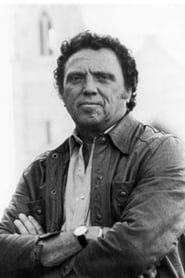
Dick Smith (June 26, 1922 – July 30, 2014) was an American makeup artist whose innovations in prosthetic construction, artificial aging, mechanical effects, and bodily transformation helped establish the technical foundations of modern horror cinema. His work on The Exorcist (1973), Altered States (1980), Scanners (1981), Ghost Story (1981), and The Hunger (1983) demonstrated how practical makeup could represent supernatural possession, physiological mutation, violent injury, and the deterioration of the human body. Across these productions, Smith developed methods for altering the appearance of actors while preserving their capacity to perform and for constructing independent artificial body parts capable of movements impossible for a human performer.
Smith became particularly influential through his use of multiple overlapping foam-latex appliances instead of large, rigid facial masks. The method allowed individual areas of the face to move more naturally and made extensive transformations possible without completely concealing the expressions of the actor. He also developed techniques involving inflatable bladders beneath artificial skin, mechanical heads, prosthetic body sections, and specially formulated makeup materials. These methods became essential to the visual representation of bodily alteration in horror filmmaking during the 1970s and 1980s.
His career extended substantially beyond horror, including acclaimed work on Little Big Man (1970), The Godfather (1972), Taxi Driver (1976), and Amadeus (1984). These productions are relevant to his horror effects because they demonstrate his continuing investigation of artificial anatomy, aging, injury, and the relationship between prosthetic materials and human expression. Smith also exerted considerable influence as a teacher, sharing technical information with younger artists including Rick Baker, Greg Cannom, and Ve Neill. His willingness to document his methods contributed to the development of special makeup effects as a recognized professional discipline.
Early Career, NBC Television and the Development of Prosthetic Makeup
Richard Emerson Smith was born in Larchmont, New York. He attended Yale University, where he originally pursued studies associated with a possible career in dentistry. His interest in theatrical makeup developed after encountering a book about stage makeup techniques. Smith began experimenting independently with cosmetic materials, artificial facial features, and methods for changing the appearance of the human face. These experiments established an interest in practical transformation that would become central to his professional work.
In 1945, he joined NBC and helped establish its makeup department. Early television created demanding technical conditions for makeup artists. The intense lighting required by contemporary cameras could affect the appearance and durability of cosmetics, while live broadcasts allowed little opportunity to correct problems during a performance. Makeup intended for television also had to accommodate the limited tonal reproduction of early broadcasting systems. Smith investigated materials and application techniques capable of producing consistent results under these conditions.
His work included dramatic anthology programs and historical character portrayals. He developed makeup for television productions requiring aging, injury, and significant changes in facial appearance. These assignments encouraged the use of separate prosthetic elements that could be applied to different regions of the face. Rather than depending on a complete artificial mask, Smith sought methods that permitted the underlying facial muscles to continue moving naturally.
The development of sectional foam-latex appliances became one of his most important technical contributions. Each appliance could be sculpted and fitted to a particular area of an actor's face, allowing the artist to create wrinkles, altered contours, or additional tissue without completely immobilizing expression. The technique was especially important for close photography, where rigid or poorly integrated prosthetics could reveal the artificial construction. Smith continued refining these methods throughout his career, applying them to both realistic character makeup and increasingly elaborate horror effects.
His early television work also included The Strange Case of Dr. Jekyll and Mr. Hyde (1968), a production based on the Robert Louis Stevenson narrative of physical and moral transformation. The subject presented an opportunity to use makeup as a visible expression of changes in identity and behavior. The relationship between external appearance and internal transformation would recur throughout Smith's career, particularly in films involving demonic possession, mutation, and unnatural aging.
Dark Shadows and the Revival of Gothic Horror Makeup
Smith became involved with Dark Shadows, the American daytime television series developed by Dan Curtis. The program incorporated vampires, ghosts, witches, werewolves, and other supernatural figures into an ongoing dramatic narrative. Its frequent production schedule required practical solutions for creating fantastic characters without the time and resources available to major theatrical films. Smith contributed makeup work during the development of the supernatural material that became central to the identity of the series.
Dark Shadows provided an important connection between older traditions of Gothic horror makeup and the emerging technical possibilities of modern prosthetics. The supernatural characters required recognizable visual identities, while their appearances had to remain compatible with the demands of television performance. Smith brought his experience in facial appliances and character transformation to a production that relied heavily on dialogue, close photography, and recurring performers.
He subsequently worked on House of Dark Shadows (1970), the theatrical feature directed by Curtis and derived from the television series. The film presented the vampire Barnabas Collins within a more explicitly violent horror narrative. Its theatrical format allowed more elaborate imagery than the original daytime program, including attacks and supernatural transformations. Smith contributed makeup effects to the production, extending his association with Gothic horror into feature filmmaking.
The collaboration with Curtis also connected Smith to a period in which American television and cinema were reconsidering traditional monsters through more graphic visual treatments. The development of practical prosthetics made it possible to move beyond conventional theatrical makeup and present damaged or transformed bodies with greater anatomical detail. This shift became particularly important when horror filmmakers began demanding increasingly convincing representations of supernatural violence and physical deterioration.
Little Big Man, The Godfather and the Anatomy of Artificial Aging
Little Big Man (1970), directed by Arthur Penn, represented a major achievement in Smith's development of realistic aging makeup. The film required Dustin Hoffman to portray a character whose life extends to the age of 121. Smith designed multiple prosthetic appliances intended to reproduce the effects of extreme age while preserving the recognizable facial identity and expressions of the performer. The assignment required careful observation of anatomical changes associated with aging, including alterations in skin texture, facial volume, and the distribution of wrinkles.
The resulting makeup demonstrated the effectiveness of sectional prosthetics in a demanding dramatic context. Separate pieces could move with the face and reduce the artificial appearance associated with rigid full-face constructions. Smith applied these techniques with particular attention to the relationship between skin movement and the underlying facial structures. The transformation became an important reference for later artists working on characters whose physical appearance needed to change substantially during a narrative.
For The Godfather (1972), directed by Francis Ford Coppola, Smith developed the characteristic facial appearance of Marlon Brando as Vito Corleone. The work involved subtle manipulation of facial contours and aging rather than the extreme transformations associated with horror. Its significance lies in the integration of artificial features with a dramatic performance. Smith continued refining this approach in The Godfather Part II (1974), contributing aging makeup and blood effects.
These assignments have particular relevance to his horror career because the same techniques could be used to represent unnatural age, disease, and the visible consequences of physical transformation. The boundaries between realistic character makeup and special makeup effects were frequently determined by narrative context. A convincing artificial wrinkle or altered facial structure could serve a historical drama, a supernatural possession story, or a film about biological mutation. Smith developed methods capable of operating across those different requirements.
The Exorcist (1973): Demonic Possession and the Transformation of Regan MacNeil
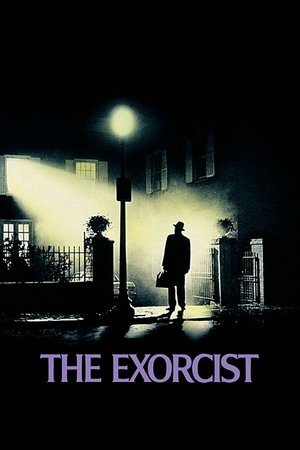
The Exorcist (1973), directed by William Friedkin, became the most widely recognized horror production associated with Dick Smith. Adapted from the novel by William Peter Blatty, the film follows the apparent demonic possession of Regan MacNeil, portrayed by Linda Blair. The progressive deterioration of the character required a series of makeup effects that could transform the appearance of a young performer while preserving her ability to participate in sustained dramatic scenes.
Smith developed several stages of possession makeup, introducing changes in complexion, facial texture, injuries, and the apparent condition of the skin. The effects became increasingly pronounced as the narrative progressed. Their design required a balance between recognizable human anatomy and the disturbing physical characteristics associated with the supernatural presence. The transformation was presented through close photography and prolonged encounters between Regan and the other characters, placing considerable demands on the credibility of the makeup.
The makeup applications included damaged skin, discolored areas, and facial prosthetics that altered the apparent anatomy without completely concealing the performance. Smith tested different appearances to establish the degree of deterioration appropriate to successive stages of the narrative. The results supported the gradual transition from an apparently ill child to a figure whose behavior and physical appearance suggest an external supernatural influence.
One of the most technically demanding effects involved the complete rotation of the head. Smith developed a life-size mechanical replica of Linda Blair that could be used when the required movement became physically impossible for the performer. The artificial figure needed to remain convincing during an extreme action in which the audience could closely examine the face. The effect combined an accurate facial likeness with internal mechanical components capable of producing controlled movement.
Another important effect involved the expulsion of green fluid from the mouth of the possessed character. Smith developed a concealed apparatus that allowed the liquid to be projected during filming. Its success depended on the construction of the mechanical component, the consistency of the fluid, and the precise coordination of the effect with the actor and camera. The scene became one of the most recognizable practical effects in supernatural horror.
Smith also aged Max von Sydow, who portrayed Father Lankester Merrin. Although the actor was considerably younger than the character, the makeup created the appearance of an elderly priest through carefully fitted prosthetic appliances. The transformation maintained facial mobility and allowed the performer to communicate exhaustion, concentration, and physical vulnerability. Its realism was particularly important because the character needed to appear credible alongside the more overtly supernatural effects.
Rick Baker worked as an assistant to Smith during the production. Their professional relationship became historically important because Baker subsequently developed into one of the leading special makeup effects artists of the following decades. Smith shared technical knowledge and practical methods with his assistant, contributing to the transmission of techniques that would be used in later transformation and creature films.
The Exorcist established a new level of visibility for special makeup effects within mainstream horror filmmaking. The makeup was fundamental to the presentation of the possessed character and allowed the film to represent supernatural events through the apparent alteration of an actual human body. The techniques developed for the production influenced later representations of possession, bodily corruption, and mechanically simulated transformations.
Burnt Offerings, The Sentinel and Horror Effects in the 1970s
Smith continued working in horror throughout the 1970s, applying his techniques to films involving supernatural forces, physical injury, and grotesque transformation. His professional credits include Burnt Offerings (1976), directed by Dan Curtis, a haunted-house narrative in which an isolated residence exerts a destructive influence on its occupants. The film required visual effects and character makeup supporting its gradual movement from domestic drama toward supernatural horror.
His work also included The Sentinel (1977), directed by Michael Winner. The film follows a young woman who moves into an apartment building associated with disturbing supernatural activity. Smith contributed horror makeup to a production that used grotesque physical appearances as part of its representation of the supernatural. The makeup required the transformation of human faces and bodies into disturbing figures capable of occupying ordinary architectural environments.
The Fury (1978), directed by Brian De Palma, involved psychic abilities and violent physical consequences. Smith developed effects associated with the representation of extraordinary bodily phenomena. His professional records identify design work for the production, and the relationship between this material and his later work on Scanners is particularly relevant. Both films demanded techniques for depicting forces acting from within the human body, including visible disturbances beneath the skin.
Smith also contributed to the practical representation of violence in films outside the supernatural genre. His work on Taxi Driver (1976), directed by Martin Scorsese, included blood and injury effects used during the climactic gunfight. Such assignments allowed him to refine methods for representing bodily damage with a degree of anatomical detail that could subsequently be adapted to horror productions. The relationship between realistic injury and fantastic transformation became a recurring component of his technical practice.
Altered States (1980): Biological Mutation and Inflatable Prosthetics
Altered States (1980), directed by Ken Russell, provided Smith with one of his most complex assignments involving bodily transformation. The film follows scientist Edward Jessup, portrayed by William Hurt, whose experiments with sensory deprivation and psychoactive substances lead to disturbing changes in his physical state. The narrative combines speculative science with images of regression and mutation, requiring the special makeup to represent processes occurring within and upon the body.
Smith designed prosthetic effects that allowed the surface of the human body to appear unstable. Among the most distinctive techniques were inflatable bladders positioned beneath artificial skin. By controlling the movement of air through these concealed components, the effects team could produce visible swelling and displacement of the surrounding surface. The resulting movements suggested an internal biological process taking place beneath the skin.
The technique required careful integration between flexible prosthetic materials and mechanical components. The artificial skin had to preserve an appearance compatible with ordinary human anatomy while remaining sufficiently elastic to deform during inflation. The movement also needed to be controlled so that the effect could be repeated for photography. Smith's approach combined the observation of real skin behavior with an exaggerated physical process designed to communicate unnatural transformation.
The film also required more extensive bodily alterations, including the representation of a primitive human form associated with the experiments. These sequences involved additional design and makeup requirements beyond the localized skin effects. The work demonstrated how prosthetic techniques could support a narrative in which identity and physical form were progressively destabilized.
Altered States became an important reference for body horror effects because its transformations were represented as processes rather than static appearances. The viewer could observe physical changes occurring within a shot, producing a different response from that associated with a character appearing in completed makeup. The visible movement of artificial tissue became a method that later artists could adapt to infection, mutation, and supernatural transformation.
Scanners (1981): Psychic Violence and Mechanical Body Effects
Scanners (1981), directed by David Cronenberg, is among the most important films associated with Smith's practical effects work. The story concerns people possessing extraordinary telepathic abilities capable of affecting other minds and bodies. Its horror derives partly from the physical consequences of these powers, including the apparent destruction of human tissue through forces that cannot be seen directly.
The film is especially associated with a sequence in which a human head violently explodes during a public demonstration of telepathic ability. Smith contributed design and practical effects work to the production, particularly for the final confrontation between the principal psychic adversaries. The film involved several effects artists, and it is important to distinguish the different responsibilities rather than attributing every major image to one technician.
For the climactic psychic confrontation, Smith developed mechanical and prosthetic effects involving visible changes beneath the skin. Building upon methods used in earlier films, he employed concealed inflatable elements to create the impression of pressure and movement within the body. Some effects used artificial blood instead of air, allowing the distended components to rupture and release fluid in a controlled manner.
The sequence required the creation of artificial body components, including a mechanical head capable of performing effects that could not be carried out on an actor. The combination of close photography, prosthetic surfaces, and internal mechanisms made it possible to depict extraordinary physical injuries as they occurred. The work contributed to the distinctive presentation of psychic conflict as a form of direct bodily destruction.
Scanners illustrates the relationship between Smith's technical methods and the developing body horror cinema of Cronenberg. The supernatural or speculative power of the characters is represented through anatomical events. Skin, blood vessels, and other bodily structures become the visible site of conflict. Smith practical techniques allowed these transformations to be presented as physical processes with observable consequences.
Ghost Story and The Hunger: Supernatural Aging and Decaying Bodies
Ghost Story (1981), directed by John Irvin, provided Smith with an opportunity to combine realistic character makeup with supernatural horror. Adapted from the novel by Peter Straub, the film centers on a group of elderly men whose shared past is connected to a threatening supernatural presence. Its narrative depends on the relationship between aging, memory, guilt, and the physical return of a figure associated with an earlier traumatic event.
Smith developed makeup illusions for the supernatural manifestations, including representations of a decaying female figure associated with the character portrayed by Alice Krige. The effects involved detailed changes in facial anatomy, skin condition, and the apparent state of the body. Smith created artificial head-and-shoulder figures based on the performer to achieve transformations that could not be produced through ordinary makeup alone.
The construction of these figures required careful observation of the original face and the development of prosthetic forms representing different stages of deterioration. The supernatural figure needed to remain connected visually to the human character while appearing to exist in an altered physical condition. The resulting effects combined the techniques of realistic aging with the grotesque anatomical distortions associated with corpse makeup.
The Hunger (1983), directed by Tony Scott, presented a different interpretation of supernatural aging. The film concerns vampires and the consequences of immortality, particularly the sudden deterioration of individuals whose apparent youth can no longer be maintained. Smith created special makeup illusions for the production, including the rapid aging of characters whose bodies undergo extraordinary changes.
The transformations required a series of prosthetic applications capable of representing increasingly advanced age. The physical appearance of the affected characters changes dramatically, making the effects essential to the narrative treatment of prolonged life and bodily decay. Smith's experience with extreme aging in Little Big Man and other productions provided a foundation for the representation of accelerated deterioration within a supernatural context.
The Hunger demonstrates the close relationship between Smith's realistic makeup and his horror work. Changes that could plausibly occur over decades are compressed into a much shorter period, transforming the familiar signs of aging into an unsettling biological process. The effects become particularly disturbing because they remain connected to recognizable human anatomy rather than to the appearance of an entirely imaginary creature.
Later Horror Work, Teaching and the Transmission of Makeup Techniques
Smith continued participating in horror and fantasy productions during the 1980s and early 1990s, although his professional activity increasingly included design, consultation, and instruction. His credits include Poltergeist III (1988), for which he contributed special makeup work, and Sweet Home (1989), the Japanese horror film directed by Kiyoshi Kurosawa, on which he served as a special makeup consultant. His work on Sweet Home helped connect his experience in American practical effects with Japanese artists developing elaborate horror imagery.
Smith also served as a consultant on productions including the television horror anthology Monsters and later films requiring specialized makeup techniques. These assignments differed from projects in which he personally constructed and applied every effect. His involvement could include design recommendations, technical problem-solving, or the transmission of knowledge to the responsible effects department. Such contributions reflected his increasingly established position as an expert consulted by other professionals.
His influence was strengthened by the publication of Dick Smith Do-It-Yourself Monster Make-Up Handbook, originally issued in 1965. The publication provided detailed instruction on creating artificial injuries, unusual facial features, and other makeup effects with materials accessible to readers outside the professional industry. The book became an important resource for aspiring horror makeup artists and helped establish Smith's reputation for openly sharing professional knowledge.
During the 1980s, he developed an advanced professional makeup course designed to provide systematic technical instruction. His teaching covered sculptural preparation, mold construction, prosthetic fabrication, and application methods. Smith encouraged students to understand the underlying physical and chemical properties of their materials rather than simply reproduce the appearance of existing effects. This approach made the course relevant to artists working across realistic character makeup, fantasy creatures, and horror transformations.
Rick Baker became the most widely recognized of his former students and collaborators. Other artists influenced by his teaching included Greg Cannom and Ve Neill. These professionals developed their own important careers in special makeup effects, bringing techniques associated with Smith into productions made under changing technological conditions. His influence also extended to younger artists who learned through correspondence, instructional material, and demonstrations rather than direct studio employment.
Smith received the Academy Award for Makeup for Amadeus (1984), sharing the award with Paul LeBlanc. The film required elaborate aging effects for F. Murray Abraham as Antonio Salieri. He later received another nomination for Dad (1989), in which he designed aging makeup for Jack Lemmon. These awards recognized the importance of techniques that had also played a central role in his horror productions.
In 2011, Smith received an Academy Honorary Award for his contributions to motion-picture makeup. The recognition acknowledged a career that extended from the early years of American television to the development of increasingly sophisticated practical effects in feature filmmaking. He died on July 30, 2014, at the age of ninety-two.
His surviving professional materials, including molds, prosthetic appliances, and mechanical components, have been preserved in museum collections. The Museum of the Moving Image received an important donation of his effects materials in 1991. These objects provide evidence of the construction methods and technical experimentation underlying the completed film images.
Within horror cinema, Smith's influence can be traced through the development of possession makeup, mechanical body effects, artificial aging, and the representation of biological transformation. The Exorcist demonstrated how prosthetics could support supernatural characterization, Altered States introduced highly visible movements beneath artificial skin, Scanners applied related techniques to bodily destruction, and Ghost Story and The Hunger extended realistic aging into the representation of supernatural decay. His professional teaching helped make these methods accessible to subsequent generations of makeup artists, contributing to the technical development of practical horror effects well beyond his own filmography.
Selected Work
Notable Horror Collaborators
Notable collaborators and creative partners throughout Dick Smith's horror career.
Dick Smith Horror Movies
Special FX / Practical FX (15 credits)
1989
1983
1983
1981
1981
1981
1980
1977
1977
1975
1973
1970
1968
1959
Acting (2 credits)
1998
1989