


2021
Georges Méliès
Horror Director · Biography · Horror Filmography · Family · Collaborators · Credits
Biography
Georges Méliès and the Origins of Horror Cinema
Georges Méliès (8 December 1861 – 21 January 1938) was a French filmmaker, illusionist, actor, producer and pioneer of cinematic special effects whose work established some of the earliest visual conventions associated with supernatural horror. His films introduced screen audiences to haunted buildings, devils, animated skeletons, ghostly apparitions, severed heads and human bodies undergoing impossible transformations. Developed during the first years of motion-picture exhibition, these subjects formed part of a broader tradition of theatrical fantasy, stage illusion and popular entertainment. Méliès adapted them to the camera and demonstrated how recorded images could represent events that could never occur in front of a conventional theatre audience.
His importance to horror history rests particularly on Le Manoir du diable (1896), frequently identified as one of the earliest surviving examples of horror cinema. The film combined a Gothic setting, supernatural characters and a succession of transformations within a short staged performance. Méliès continued exploring related imagery in works including La Tentation de Saint-Antoine (1898), Le Diable au couvent (1899), Barbe-Bleue (1901), Le Chaudron infernal (1903) and Les Quat’cents farces du diable (1906). Across these productions, the supernatural became a recurring visual subject, supported by increasingly elaborate studio techniques.
Méliès worked before horror was firmly established as a distinct film genre. His devils were frequently comic, his supernatural disturbances were presented as magical attractions, and his frightening imagery shared the screen with theatrical spectacle. Nevertheless, his productions helped establish a repertoire of moving-image effects and fantastic situations subsequently associated with horror cinema. His contribution can be identified through surviving films, production records and the development of early cinematic trick photography rather than through claims of direct influence on every later horror filmmaker.
Stage Magic, Phantasmagoria and the Foundations of Supernatural Cinema
Méliès was born in Paris into a family involved in the manufacture of footwear. His interest in drawing, mechanical devices and theatrical illusion developed before his filmmaking career. During a period in London in the 1880s, he became increasingly involved with stage magic, later establishing himself professionally as an illusionist. In 1888, he acquired the Théâtre Robert-Houdin in Paris, an established venue devoted to magical performances and mechanical illusions. The theatre provided a practical environment in which he could develop the techniques that later characterized his films.
European theatrical entertainment already possessed a substantial tradition of supernatural spectacle. Magic-lantern exhibitions, particularly phantasmagoria performances, employed projected images of ghosts and other apparitions. Stage illusionists used concealed mechanisms, lighting effects, movable scenery and controlled appearances to create events that seemed to violate ordinary physical laws. Méliès entered cinema with experience of this theatrical vocabulary, including the use of supernatural figures to demonstrate the capabilities of illusion.
The relationship between these traditions and early horror cinema is central to understanding his work. Audiences were familiar with representations of devils, disembodied figures and fantastic transformations from theatre, popular prints and spectacular entertainments. Cinema offered a different means of presenting these subjects. Through interruption and manipulation of recorded action, a performer could vanish without a visible exit, a human figure could turn into another object, or a supernatural character could materialize in a space previously shown as empty.
After attending a Lumière cinematograph demonstration in Paris in December 1895, Méliès began acquiring and developing the equipment necessary to make and exhibit films. His first productions appeared in 1896. He soon moved beyond the recording of ordinary activities toward staged scenes constructed around visual transformations. This shift created the conditions for his earliest supernatural films, in which cinematic manipulation operated alongside conventional stage machinery.
Le Manoir du diable (1896): An Early Horror Film
Le Manoir du diable, internationally associated with the title The Haunted Castle, occupies a prominent position in histories of early horror cinema. Produced in 1896 by Méliès and his Star Film enterprise, the short film presents a sequence of supernatural incidents within a Gothic interior. A bat transforms into a demonic figure, and further appearances, disappearances and changes of form structure the action. The imagery includes familiar elements of Gothic fiction and supernatural entertainment, transferred into a moving-image performance lasting only a few minutes.
The film is significant because it brings together recognizable horror iconography within a deliberately constructed fictional setting. The bat, the devil, the castle interior and the succession of threatening apparitions belong to a visual vocabulary that would remain recognizable in later supernatural cinema. Its purpose, however, was primarily spectacular and entertaining. The supernatural figures operate within a succession of theatrical tricks, and the performance depends heavily on surprise and comic exaggeration. Describing the work as an early horror film is justified by its subject matter and later historical classification, while recognizing that its form belongs to the culture of late nineteenth-century cinematic attractions.
Méliès relied on substitution effects to make figures appear, disappear or change identity. The camera could be stopped while a performer or object was replaced, after which recording resumed from essentially the same viewpoint. When projected continuously, the discontinuity produced an instantaneous transformation. This process allowed the film to place apparently supernatural activity directly within the photographed scene. The spectator could observe the same stage space while its inhabitants underwent transformations impossible in ordinary performance.
Its historical importance should also be approached with precision. Claims that Le Manoir du diable was definitively the first horror film depend on how the genre is defined, particularly because early cinema developed before modern genre classifications and numerous films from the period have been lost. It remains an exceptionally early and well-documented example of supernatural screen entertainment with elements subsequently identified as characteristic of horror. The film demonstrates how Méliès established an audiovisual vocabulary for devils, hauntings and monstrous transformations at the beginning of commercial filmmaking.
Devils, Temptation and Supernatural Trick Films, 1897–1901
Following Le Manoir du diable, Méliès repeatedly returned to supernatural situations involving apparitions, infernal characters and environments disturbed by magical activity. These productions developed within a catalogue that also included comedies, historical reconstructions, fairy tales and mechanical spectacles. The recurrent use of demonic imagery is particularly important to his relationship with horror history, since it provides evidence of sustained interest in material connected to religious fantasy, Gothic entertainment and popular conceptions of the supernatural.
La Tentation de Saint-Antoine (1898) drew upon the religious and artistic tradition of the temptation of Saint Anthony, a subject historically associated with demonic interference, visions and the struggle against temptation. Méliès treated the material as a short spectacle of supernatural appearances. Its significance within his horror-related output lies in the application of cinematic illusion to imagery already familiar from religious art and theatrical representation. The fantastical events emerge through trick photography, allowing supernatural disturbances to take visible form within the scene.
Le Diable au couvent (1899) placed diabolical interference within a religious setting. The film extended Méliès’s recurrent opposition between infernal and sacred figures and developed the devil as a theatrical character capable of changing appearances and disrupting an established environment. The treatment was broadly comic and spectacular, but the underlying imagery belongs to the same cultural traditions from which later supernatural horror drew its iconography. The film also demonstrates that Méliès regarded diabolical subjects as repeatable material rather than as an isolated experiment undertaken in 1896.
Other trick films from this period employed haunted or enchanted spaces in which seemingly ordinary objects or human figures ceased behaving according to physical expectations. The disappearance of bodies, the independence of heads and limbs, and the animated behavior of inanimate objects became recurring elements of his screen performances. These devices are important to horror history because they helped establish ways of representing physical impossibility, although many individual examples belong more accurately to fantasy or comic illusion than to horror.
Barbe-Bleue (1901), based on the Bluebeard tale, approached darker material through a familiar literary and theatrical source. Its subject involved a murderous husband and the concealed fate of his wives, giving the production a relationship to violent Gothic storytelling beyond the simple appearance of a devil or ghost. The film incorporated the tale into the visual language of theatrical fantasy and early narrative cinema. It consequently occupies a distinctive place among Méliès’s darker productions, connecting supernatural spectacle with a story centered on threatened women, forbidden discovery and murder.
Le Chaudron infernal (1903) and Infernal Imagery
Le Chaudron infernal (1903), also known in English as The Infernal Cauldron, provides one of the clearest examples of Méliès’s use of explicitly macabre imagery. The production takes place in an elaborately decorated chamber associated with the infernal world. A demonic figure throws human victims into a large cauldron, where their bodies are subjected to supernatural destruction and transformation. Ghostlike forms and fiery apparitions emerge from the vessel, turning an act of infernal punishment into a sequence of visual effects.
The film is especially relevant to the prehistory of horror effects because its transformations are centered on the human body. The cauldron supplies a physical object around which the action is organized, while cinematic manipulation changes the visible state of the victims. Human figures disappear into the apparatus and subsequently reappear in forms that cannot be produced through ordinary bodily movement. The scene anticipates an enduring concern of fantastic and horror cinema: representing the destruction, disappearance or alteration of the human body through a combination of constructed scenery and photographed illusion.
Its imagery also reflects a theatrical understanding of the infernal. Demonic figures are presented through costume, performance and scenic decoration rather than through the later conventions of realistic creature design. Fire, smoke and apparitions contribute to the depiction of a supernatural environment. The film makes no attempt to establish the psychological realism that later became important to some horror productions. Its effects function as visible spectacles, with each transformation providing another demonstration of cinematic possibility.
The surviving film is also valuable evidence of early color practices. Méliès issued hand-colored films in which selected areas of the image were painted to heighten costumes, scenery and visual transformations. In an infernal setting, color could reinforce the distinction between ordinary figures, flames and supernatural manifestations. The importance of Le Chaudron infernal therefore extends beyond its subject matter to the practical coordination of staging, optical manipulation and color in early fantastic cinema.
The Grotesque Body, Decapitation and Cinematic Transformation
One of Méliès’s most important contributions to the visual development of horror was his treatment of the human body as an object capable of impossible transformation. His films repeatedly separated heads from bodies, multiplied performers, altered apparent scale and made human figures vanish or reappear. These techniques were often used for comedy and magician performances, but their technical implications were considerable for later representations of bodily abnormality, supernatural powers and physical disintegration.
Un homme de têtes (1898), commonly known as The Four Troublesome Heads, demonstrated the possibility of separating the visible human head from the performing body through multiple photographic arrangements and carefully controlled staging. Méliès presented the effect as a comic illusion, with independent heads becoming part of the performance. The film matters to the history of cinematic special effects because it made bodily separation visually convincing within a continuous staged scene. Similar manipulations subsequently became useful for fantastic characters, disembodiment effects and representations of impossible anatomy.
Dislocation mystérieuse (1901), known in English as The Mysterious Dislocation, pursued another variation on bodily fragmentation. The performer separates parts of his body and manipulates them as independent objects. The effect depends on the presentation of physical separation without the normal consequences of injury. Although the treatment remains playful, the film directly explores a visual premise that could be adapted to more disturbing contexts: a recognizable human form is dismantled while retaining apparent animation and control.
It is necessary to distinguish these early optical and theatrical illusions from modern prosthetic makeup or practical gore effects. Méliès did not establish the techniques of anatomical prosthetics used in twentieth-century horror. His documented importance lies in demonstrating how photographic substitution, masking, multiple exposure and staged mechanical effects could alter the appearance of bodies on screen. The historical connection to subsequent horror effects concerns this shared technical problem of making physically impossible events visible to an audience.
Les Quat’cents farces du diable (1906) and the Expansion of Fantastic Spectacle
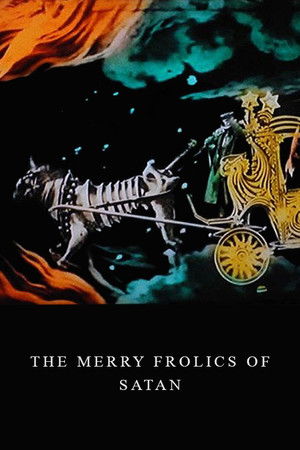
Les Quat’cents farces du diable (1906), often known in English as The Merry Frolics of Satan, represents a more elaborate development of Méliès’s interest in infernal entertainment. By this stage, his productions increasingly incorporated complex scenery, extended sequences and spectacular journeys. The film drew upon traditions of theatrical féerie and devil-centered fantasy, using the screen to develop scenes of supernatural interference on a scale greater than many of his earliest shorts.
The production illustrates the progression from simple transformations within a fixed theatrical scene toward increasingly elaborate fantastic constructions. Demonic characters operate within a world organized around supernatural events, while stage design and cinematic effects expand the range of possible situations. The film belongs chiefly to spectacular fantasy, yet its use of infernal figures and supernatural action maintains a clear relationship with the darker subjects recurring throughout the Méliès catalogue.
Other productions, including La Fée Carabosse ou Le Poignard fatal (1906) and Satan en prison (1907), continued his exploration of supernatural characters and magical transformations. Their inclusion in a history of early horror requires attention to genre boundaries. Their visual language overlaps with horror through sorcery, menace and infernal imagery, but their narrative conventions remain closely connected to fairy-tale spectacle and comic fantasy. Together, these works demonstrate how supernatural screen imagery circulated across several popular genres before the separation of horror, fantasy and science fiction became more established.
Special Effects, Studio Production and the Visual Language of Horror
Méliès’s development of cinematic effects was inseparable from his experience as a stage magician. He constructed and coordinated theatrical spaces in which visual events could be controlled with great precision. In 1897, he established a purpose-built filmmaking studio at Montreuil, near Paris. Its glass construction helped provide the strong natural illumination required by contemporary photographic materials, while the stage area accommodated painted scenery, performers and mechanical apparatus. The studio offered a stable production environment for increasingly complicated trick films.
Substitution splices became a major element of his technique. By stopping the camera and altering the scene before resuming photography, he created appearances, disappearances and transformations. Multiple exposures allowed the same performer or different visual elements to occupy the photographed space in unusual ways. Masking and related techniques helped control which portions of an image were exposed. Changes in position and scale made objects and figures appear unusually large or small. These procedures were often combined with conventional theatrical equipment, including trap mechanisms, costumes and movable scenery.
For horror history, their significance lies in the capacity to depict events for which no photographic reality existed. A ghost could materialize, a person could disappear into a cloud of smoke, and a severed head could remain animated. Such effects provided technical solutions for supernatural and physically impossible actions. Later filmmakers would employ substantially different equipment and develop more elaborate methods, but early trick photography established the principle that cinematic images could be manipulated to represent nonexistent events as visible occurrences within a fictional world.
Méliès generally framed these effects through stable camera positions and carefully organized stage compositions. This allowed the spectator to observe the transformation clearly. The technique was compatible with the visual expectations of theatrical illusion, where the audience watches a performer and attempts to understand the apparent impossibility of the trick. Early supernatural cinema inherited this relationship between spectacle and observation, making transformation itself a central attraction.
The relationship between his special effects and horror is therefore both technical and historical. His films supplied early screen examples of supernatural appearances, bodily transformations and infernal environments created through deliberate manipulation of recorded images. His broader body of work established methods used across many forms of fantastic cinema, while particular productions demonstrated their suitability for subjects subsequently recognized as horror.
Decline, Rediscovery and Influence on Horror Film History
During the first decade of the twentieth century, Méliès faced increasing competition from larger film companies and changing production practices. The industrial organization of filmmaking, longer narrative formats and increasingly extensive distribution networks placed pressure on his independent Star Film operation. Financial difficulties eventually brought an end to his filmmaking activities. By the period surrounding the First World War, his position within the industry had deteriorated significantly, and much of his film production had become commercially inaccessible.
The surviving Méliès filmography represents only part of his original output. Prints and negatives were lost, destroyed or dispersed, and the history of individual titles has consequently depended upon catalogues, surviving copies, archival discoveries and restoration work. This incomplete survival affects attempts to establish a definitive chronology of early supernatural cinema. The films available today cannot be assumed to represent every experiment with fantastic or frightening imagery undertaken during the first decades of motion pictures.
Interest in Méliès revived during the later 1920s, when film historians and cultural figures began recovering and reassessing his work. His historical position was subsequently strengthened through preservation, archival research and the reconstruction of surviving films. These efforts have been particularly important for horror scholarship because they preserve examples of supernatural imagery created before horror cinema developed its recognizable industrial and narrative conventions.
His influence is best understood through specific developments rather than general claims of authorship over the modern genre. Méliès helped establish that moving images could depict supernatural beings, animated objects, impossible transformations and invented environments through cinematic manipulation. Films such as Le Manoir du diable and Le Chaudron infernal document the application of those techniques to Gothic and infernal subjects. His work also demonstrates that horror-related imagery emerged from several intersecting traditions, including popular theatre, magic performances, religious iconography and fantastic literature.
Méliès died on 21 January 1938. His place in horror history remains closely connected to the first years of film production, when the possibilities of cinematic illusion were still being explored. The surviving supernatural films provide primary historical evidence of how devils, ghosts, haunted settings and transformations entered the moving-image medium, while the technical methods developed throughout his career form a significant part of the early history of cinematic special effects.
Photos (2)
Images: TMDB
Selected Work
Notable Horror Collaborators
Notable collaborators and creative partners throughout Georges Méliès's horror career.
Georges Méliès Horror Movies
Directing (21 credits)
1912
1906
1906
1903
1903
1902
1901
1901
1900
1899
1899
1899
1899
1898
1897
1897
1897
1896
1896
1896
Acting (18 credits)
2025
2021
1912
1906
1906
1903
1903
1902
1901
1901
1900
1899
1899
1899
1897
1896
1896
1896
Writing (5 credits)
1900
1899
1897
1896
1896
Production (9 credits)
2021
1903
1900
1899
1899
1897
1896
1896
1896
Production Design / Art Department (5 credits)
1899
1897
1896
1896
1896
Editing (3 credits)
1900
1897
1896
Special FX / Practical FX (1 credits)
1900
Other Crew (1 credits)
1979