


2022
Dylan Minnette
Horror Actor · Biography · Horror Filmography · Credits
Horror subgenres & themes
Most represented across this person's horror filmography:
HOME INVASION
• SLASHER
Biography
Dylan Minnette and a Career Shaped by Horror Fandom
Dylan Minnette developed an unusually consistent relationship with horror while moving between child acting, mainstream television, independent film and music. His genre career includes supernatural television, vampire cinema, R.L. Stine adaptations, home-invasion horror and one of the defining modern slasher franchises. From Let Me In and Don't Breathe to The Open House and Scream, Minnette repeatedly returned to horror even as his wider career expanded through dramatic television and his work as a musician.
That pattern was not accidental. Minnette has described himself as a committed horror fan whose interest began extremely early. He watched films such as Child's Play when he was very young, grew up fascinated by haunted attractions and later identified John Carpenter's Halloween as one of the films that most strongly affected him. R.L. Stine's Goosebumps books were another important part of his childhood. By the time he began receiving significant horror roles, he already understood the genre from the perspective of an audience member rather than simply as an actor taking available work.
Minnette has also been selective about that association. He has said that he did not want horror to become a repetitive acting pattern and that he would continue accepting genre projects when the scripts and characters offered something different. His filmography reflects that approach. He has played a human threat in a vampire story, a frightened teenager inside supernatural anthology television, an ordinary boy surrounded by escaped monsters, a young burglar trapped inside another man's house, a grieving son targeted by an unseen intruder and a cautious Woodsboro teenager attempting to survive Ghostface.
Early Television Horror and Supernatural
Before his major horror film roles, Minnette appeared in television series that introduced him to supernatural storytelling. In 2008 he guest-starred in Ghost Whisperer, a series structured around communication between the living and the dead. The following year he appeared in the Supernatural episode Family Remains as Danny Carter, a boy whose family moves into an apparently haunted house.
Family Remains is particularly interesting because it deliberately begins like a conventional ghost story before revealing that the danger is human. Sam and Dean Winchester initially investigate what appears to be a supernatural presence inside the Carter family home, but the threat comes from feral siblings who have been secretly living within the building. Minnette's Danny therefore occupies a familiar horror position, the young family member endangered by a house whose hidden spaces contain something violent, while the episode uses audience expectations about ghosts against them.
The appearance was brief, but it placed Minnette inside a series deeply invested in American horror mythology. More importantly, it preceded the film that would give him his first substantial role in a critically prominent horror production.
Let Me In and the Human Violence Around a Vampire Story
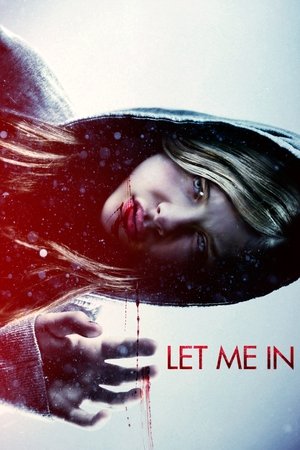
Matt Reeves' Let Me In gave Minnette one of his earliest important feature roles. Adapted from John Ajvide Lindqvist's novel and closely related to the Swedish film Let the Right One In, the story centers on Owen, an isolated boy who forms a relationship with Abby, a seemingly young girl who is actually a vampire. Minnette plays Kenny, the principal bully tormenting Owen at school.
Kenny is not supernatural, but his violence is essential to the emotional architecture of the film. Owen already lives inside an unstable home environment and struggles with loneliness, fear and humiliation. Kenny and his friends transform school into another place where he has no control. Their abuse helps explain why Owen becomes so receptive to Abby. She represents companionship and protection even after he begins to understand that she is connected to acts of extreme violence.
Minnette therefore serves an important function within a film where the boundary between monster and human cruelty is deliberately unstable. Abby kills because of what she is, but the ordinary children surrounding Owen are capable of calculated cruelty without supernatural influence. Kenny's aggression escalates beyond verbal harassment, turning the school environment into a physical threat and pushing Owen toward confrontation.
The role also demonstrated an early willingness by Minnette to play against sympathy. Much of his later screen work depends on vulnerability or anxiety, but Kenny is one of the sources of fear rather than one of its victims. Minnette later recognized the difference when discussing his subsequent horror roles, noting that he had already played the bully in Let Me In and wanted new genre characters to avoid repeating what he had done before.
R.L. Stine's The Haunting Hour
Minnette returned to youth-oriented horror through R.L. Stine's The Haunting Hour. He appeared twice in the anthology, playing different characters in stories separated by two years. In Brush with Madness, he plays Corey, a young artist whose encounter with a strange comic creator and apparently supernatural drawing materials turns artistic fantasy into danger.
The episode works within the tradition of cursed creative objects. Drawing and imagination cease to be harmless activities when the boundary between images and physical reality begins collapsing. Minnette's role places him at the center of a story where youthful fascination becomes the mechanism that exposes the character to horror.
He returned to the series in Funhouse as Chad. The story follows Chad and his sister Kelly as problems inside their family make a mysterious carnival attraction increasingly tempting. Chad enters a sinister funhouse that appears capable of responding to anger, resentment and hidden desires. The attraction does not simply frighten him with external monsters. It manipulates emotional weakness and threatens to transform him through his own darker impulses.
The two episodes gave Minnette different positions within the anthology format while strengthening his connection to R.L. Stine. That connection would become much more visible when he joined the feature adaptation of Stine's most famous series.
Goosebumps and Gateway Horror
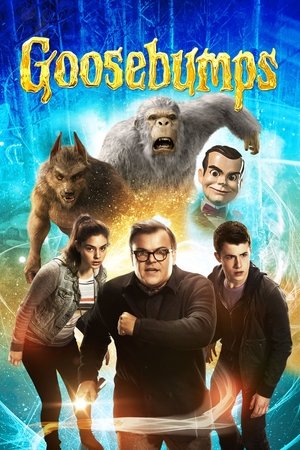
In 2015 Minnette starred as Zach Cooper in Goosebumps, directed by Rob Letterman. The film does not function as straightforward adult horror and Minnette himself distinguished it from the more intense genre films he would later make. It nevertheless belongs to the tradition of gateway horror, introducing younger audiences to monsters, haunted objects and supernatural threats through comedy and adventure.
Zach moves to a new town and discovers that his neighbor is R.L. Stine, played by Jack Black. When manuscripts containing Stine's fictional creations are opened, creatures from the Goosebumps books escape into the real world. The film turns decades of children's horror imagery into a large-scale monster crossover involving Slappy the Dummy, werewolves, ghouls and other figures associated with the book series.
For Minnette the project had a personal connection. He had grown up reading Goosebumps and later described the books as a major part of his childhood. His favorite was Say Cheese and Die!, and he connected the books with the early development of his interest in horror. After already appearing in The Haunting Hour, starring in the Goosebumps feature effectively placed him inside two different branches of R.L. Stine's screen legacy.
Don't Breathe and Fear Without Dialogue
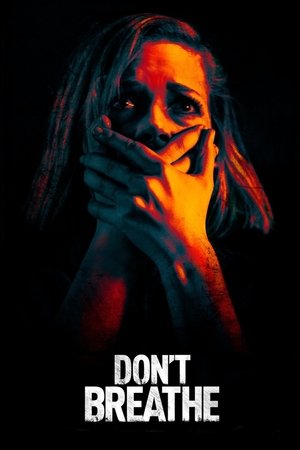
Fede Alvarez's Don't Breathe became the most accomplished horror film of Minnette's early adult career and gave him a role built almost entirely around tension. He plays Alex, one of three young Detroit burglars alongside Rocky and Money. Believing that a blind military veteran is hiding a large amount of cash inside his isolated home, the group enters the house expecting an easy robbery. The apparent victim quickly becomes the dominant threat.
Alex is the most reluctant member of the group. His father works for a security company, giving him access to information that allows the burglaries to happen, but he is less comfortable than the others with escalating their crimes. His feelings for Rocky also complicate his decision to participate. The character therefore enters the house already divided between loyalty, desire and the awareness that they are doing something dangerous and morally wrong.
The structure of Don't Breathe reverses the normal home-invasion scenario. Alex and his friends are the intruders, but once the Blind Man begins hunting them inside the building, their control disappears. The house becomes a maze whose owner understands every room better than they do. Silence becomes essential because sound can reveal their position to a man who cannot see them.
Minnette described this as one of the central acting challenges. Large portions of the film require fear to be communicated without dialogue. He was conscious that repeated frightened expressions could become artificial or unintentionally comic, so the performance depended on finding different physical reactions while keeping the panic believable. That concern suits Alvarez's approach, which frequently forces the actors to remain physically present inside long stretches of suspense rather than relying only on editing to create danger.
The film also allowed Minnette to participate in one of the most effective horror mechanisms of the period: the progressive redefinition of the antagonist. The Blind Man initially appears to be a vulnerable target selected by young criminals. As the invasion continues, the audience learns more about the house and its owner, changing the moral balance of the story without transforming the burglars into conventional heroes.
Minnette was already an enthusiastic horror fan when he made the film. He spoke about loving Halloween, having watched horror from childhood and attending Halloween Horror Nights repeatedly. At the same time, he resisted the idea of accepting genre films simply because they were horror. He wanted scripts that felt distinct, and Don't Breathe appealed to him because its premise and execution were different from the horror characters he had previously played.
The Open House and Domestic Vulnerability
Minnette returned to horror in the Netflix film The Open House in 2018. He plays Logan Wallace, a teenager whose father dies suddenly, leaving Logan and his mother Naomi emotionally and financially destabilized. They temporarily move into a relative's large mountain house, which is periodically opened to prospective buyers. The arrangement creates an immediate vulnerability because strangers are repeatedly allowed to move through the same space in which mother and son are trying to recover from grief.
The film turns the ordinary practice of showing a property to strangers into the basis of its horror. Objects begin moving, unexplained sounds occur and the possibility develops that someone may have remained inside after an open house ended. Unlike the supernatural spaces of The Haunting Hour, the central fear comes from the possibility that another person can enter an apparently safe domestic environment without being noticed.
Minnette was attracted to the project partly because it combined horror with grief. Logan is already emotionally damaged before the external threat becomes clear, and the relationship with his mother is strained by the death surrounding them. He also believed that Netflix was an appropriate platform for the story because viewers would experience the film inside their own homes, the exact environment the narrative attempts to make unsafe.
Scream and the Horror Fan Inside Woodsboro
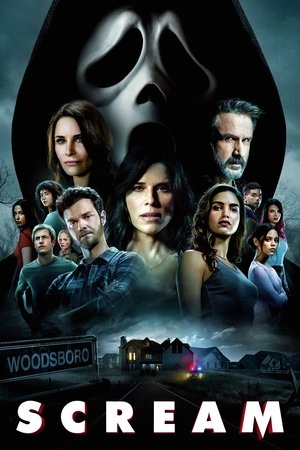
In 2022 Minnette entered the Scream franchise as Wes Hicks, the son of Sheriff Judy Hicks. Directed by Matt Bettinelli-Olpin and Tyler Gillett, the film returns to Woodsboro twenty-five years after the original murders and introduces another group of young characters connected to the history of Ghostface.
Wes is one of the more cautious teenagers in the group. His mother's position in law enforcement has made him unusually conscious of danger, and Minnette described the character as someone who absorbs Judy's protective instincts and then directs them toward his friends. His caution makes him an easy target for jokes within the group, but in a Scream film the character who appears excessively worried about a killer is often behaving more rationally than everyone around him.
The name Wes carries obvious importance inside a film deeply concerned with the legacy of Wes Craven. The filmmakers constructed the entire production as a tribute to Craven, who directed the first four Scream films, and the film itself ultimately makes that dedication explicit. Minnette entered the franchise as both actor and genuine fan. He described the experience of speaking about Ghostface on screen with returning cast members as surreal.
His personal connection to the original film was equally strong. Minnette identified the 1996 Scream as his favorite horror movie and praised the way it can mock the genre while simultaneously respecting it. That balance between self-awareness and genuine suspense had become one of the qualities he valued most in horror filmmaking.
Wes and Judy eventually become the center of one of the film's most deliberately suspenseful sequences. Ghostface uses the relationship between mother and son to create two linked attacks, manipulating Judy's fear for Wes before turning the danger toward the house itself. Minnette's death scene also plays with audience expectations. The sequence repeatedly suggests that Ghostface may appear from an open doorway or hidden corner while Wes performs ordinary domestic actions, stretching the anticipation before the attack finally arrives.
The aftermath produces one of the film's most direct tributes to Craven when the surviving characters hold a memorial toast to Wes. The line functions simultaneously inside the story for Minnette's character and outside it for the filmmaker whose work created the franchise. That double meaning gives Wes Hicks an unusual position within Scream: he is a new-generation victim whose identity is built directly into the film's remembrance of its original director.
Dylan Minnette's Place in Modern Horror
Dylan Minnette does not have the volume of genre credits associated with actors who spend most of their careers in horror, but the titles he has chosen cover several important branches of twenty-first-century horror. Let Me In places him inside a serious American interpretation of modern vampire fiction. The Haunting Hour and Goosebumps connect him to children's and adolescent horror. Don't Breathe places him inside a stripped-down home-invasion thriller built around physical suspense. The Open House again corrupts the safety of domestic space, while Scream connects him directly to one of the foundational self-aware slasher franchises.
The consistency comes from Minnette's relationship with horror as a fan. He understands the genre's history well enough to distinguish between projects that merely repeat familiar material and those that use familiar forms in a different way. His characters also occupy different positions within horror narratives. Kenny creates fear. Corey and Chad confront supernatural forces. Zach experiences monsters through adventure. Alex begins as an intruder before becoming prey. Logan is trapped inside an unsafe home. Wes understands the rules of Woodsboro but discovers that awareness cannot guarantee survival.
That variety explains why Minnette's horror work remains significant despite representing only part of his career. He has repeatedly returned to the genre without building the same character twice, moving from childhood horror into increasingly adult forms of suspense while retaining the enthusiasm of someone who had been watching monsters long before he began appearing beside them.
Selected Work
Dylan Minnette Horror Movies
Acting (7 credits)
2018
2016
2015
2010
2010
2005